General Chemistry Chapter 2
 Call Kai
 Learn
Learn Practice Test
 Spaced Repetition
 Match
Match Flashcards
 Knowt Play
1/44

There's no tags or description
Looks like no tags are added yet.
Name | Mastery | Learn | Test | Matching | Spaced | Call with Kai | Chat |
|---|
No analytics yet
Send a link to your students to track their progress
45 Terms
Atom
An atom is the smallest quantity of matter that still retains the properties of matter.
Element
An element is a substance that cannot be broken down into two or more simpler substances by any means.
• Examples: gold, oxygen, helium.
Dalton
atoms, of which all matter consists, are tiny, indivisible particles.
Once a single atom has been obtained, dividing it smaller produces subatomic particles.
Tool commonly used in the 1800s
cathode ray tube,

Cathode Ray Tube and Radiation
Radiation is energy emitted through space as waves. A cathode ray tube passes voltage across metal plates in a vacuum, emitting invisible rays from the cathode to the anode.
Fundamental Rule of Electrostatic Charges
Like charges repel each other, and opposite charges attract one another.
J.J. Thomson's Atomic Discoveries
Discovered electrons (negatively charged particles in cathode rays) and calculated their charge-to-mass ratio as 1.76×10⁸ C/g.
R.A. Millikan's Oil Drop Experiment
Determined the fundamental charge of a single electron to be −1.6022×10⁻¹⁹ C.
Mass of an electron

Who discovered X-rays They were not deflected by magnetic or electric fields, so they could not consist of charged particles.
Wilhelm Rontgen (18 45–19 23).
discovered radioactivity the spontaneous emission of radiation.
Antoine Becquerel (18 52–19 08)
Alpha (α) rays consist of
positively charged particles, called α particles
Beta (β) rays, or β particles, are
electrons so they are deflected away from the negatively charged plate
Gamma (γ) rays, like X rays, have
no charge and are unaffected by external electric or magnetic fields
Ernest Rutherford used α particles to
prove the structure of atoms.
The majority of particles penetrated the gold foil undeflected.
Sometimes, α particles were deflected at a large angle.
Sometimes, α particles bounced back in the direction from which they had come.
Protons are
positively charged particles found in the nucleus.
Neutrons are
electronically neutral particles found in the nucleus.
Neutrons are
slightly larger than protons.
Electrons are
negatively charged particles distributed around the nucleus.
Electron
Particle | Mass (g) | Mass (amu) | Charge (C) | Charge Unit |
Electron* | 9.10938 × 10 superscript -2 | 5.4858 × 10superscript -4 | −1.6022 × 10superscript -19 | −1 |
Proton
Particle | Mass (g) | Mass (amu) | Charge (C) | Charge Unit |
Proton | 1.67262 × 10superscript minus-4 | 1.0073 | +1.6022 × 10superscript -19 | +1 |
Neutron
Particle | Mass (g) | Mass (amu) | Charge (C) | Charge Unit |
Neutron | 1.67493 × 10superscript minus-24 | 1.0087 | 0 | 0 |
atomic number (Z) is
the number of protons in the nucleus.
Atoms are neutral, so it’s also the number of electrons
mass number (A) is
the total number of protons and neutrons.
Element symbol(Atoms are neutral so the number of electrons equals the number of protons.)

Atomic mass is
the mass of an atom in atomic mass units (a m u).
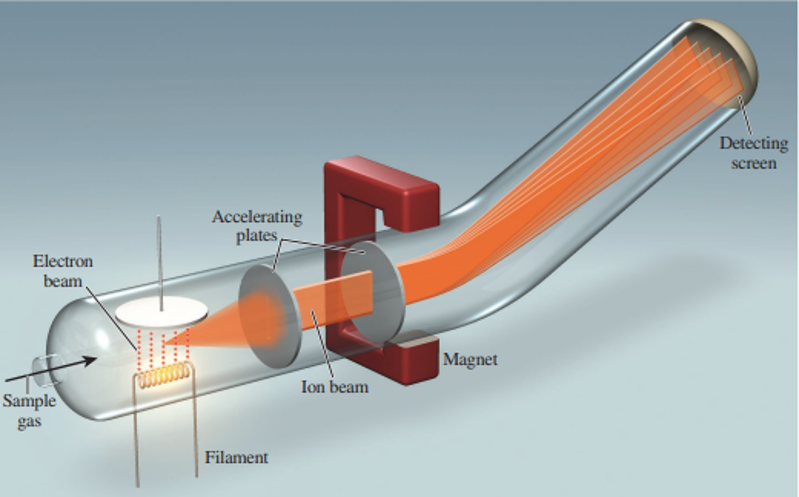
Measuring Atomic Mass
The most direct and most accurate method for determining atomic and molecular masses is mass spectrometry, using a mass spectrometer.
The periodic table is
a chart in which elements having similar chemical and physical properties are grouped together.
Metals are
good conductors of heat and electricity.
Nonmetals are
poor conductors of heat or electricity.
Metalloids have
intermediate properties.
Group 1 elements (L i, N a, K, R b, C s, F r) are called

alkali metals
Group 2 elements (B e, M g, C a, S r, B a, R a) are called
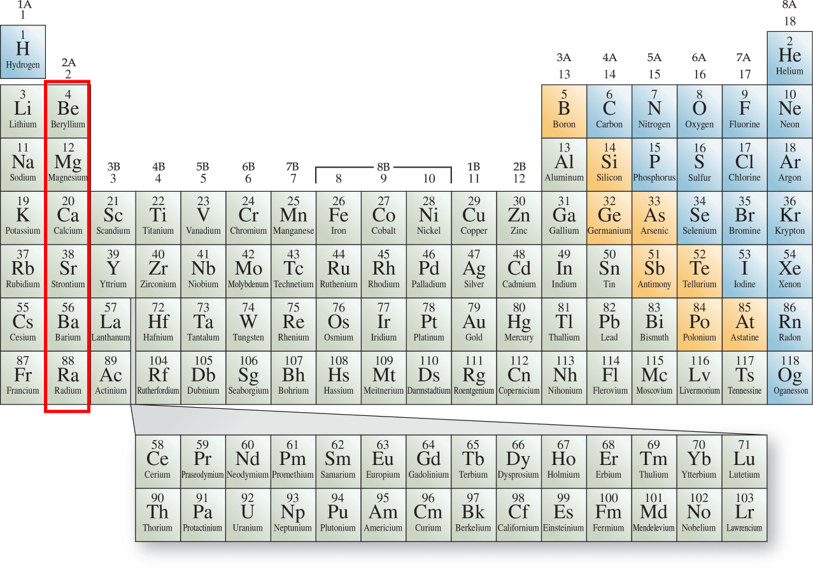
alkaline earth metals.
Group 16 elements (O, S, S e, T e, P o) are called .
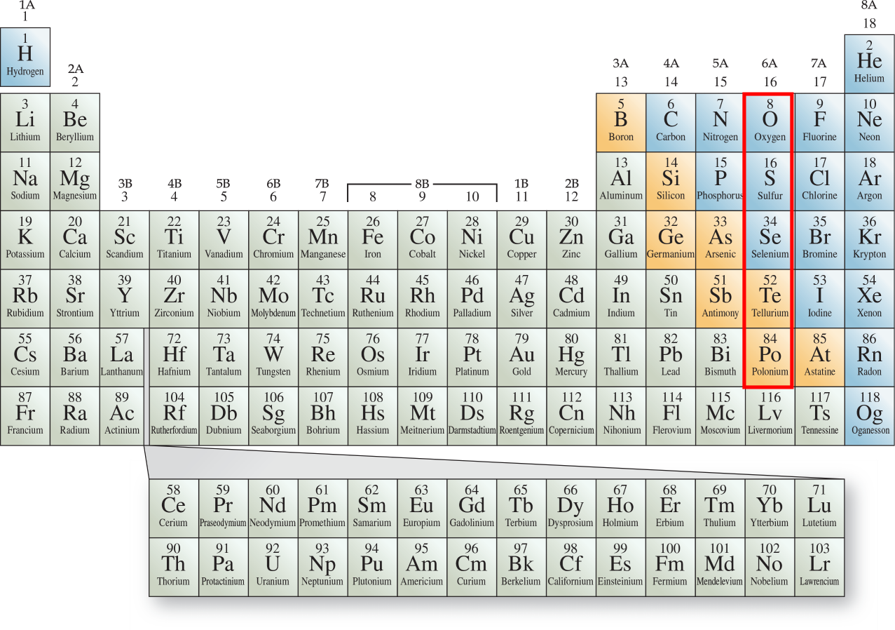
chalcogens
Group 17 elements (F, C l, B r, I, A t) are called .

halogens
Group 18 elements (H e, N e, A r, K r, X e, Rn) are called .
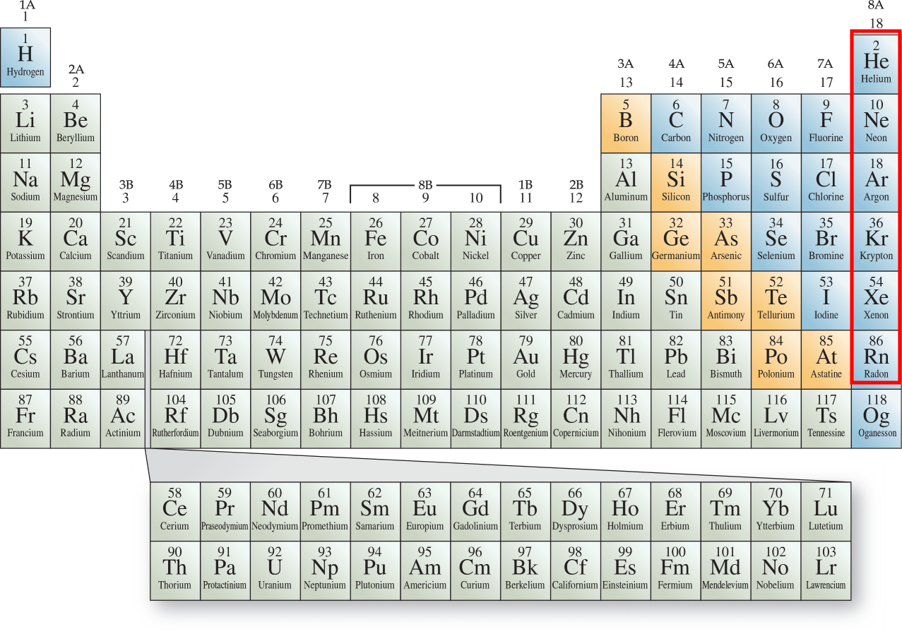
the noble gases
Groups 3 to 11 are called the .
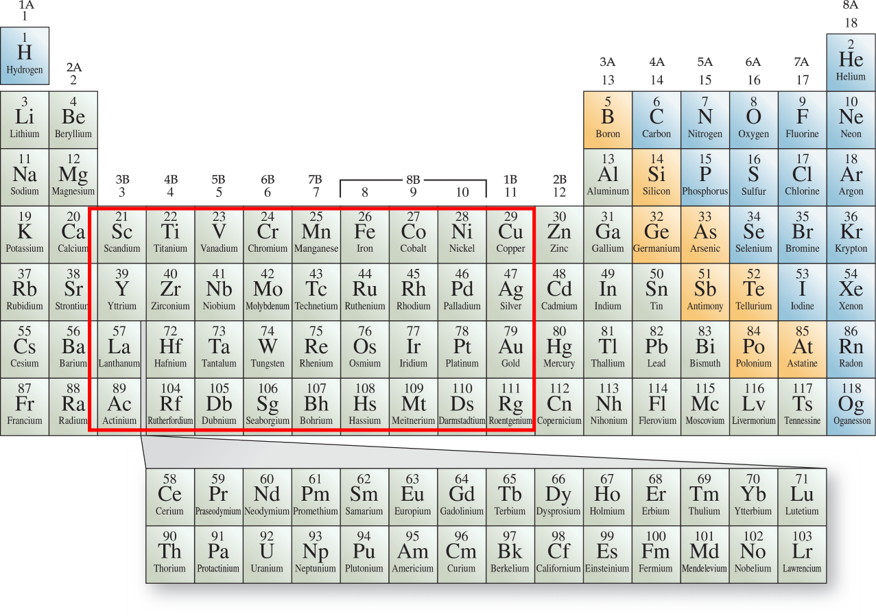
transition elements or transition metals