Elements of Fiction Review
 Call Kai
 Learn
Learn Practice Test
 Spaced Repetition
 Match
Match Flashcards
 Knowt Play
1/15

There's no tags or description
Looks like no tags are added yet.
Name | Mastery | Learn | Test | Matching | Spaced | Call with Kai | Chat |
|---|
No analytics yet
Send a link to your students to track their progress
16 Terms
Plot
the main events that occur throughout a story (ex: conflicts, resolutions, and climax)
The plot can be broken down into what six elements?
exposition
inciting incident / complication
rising action
crisis
climax
falling action / resolution
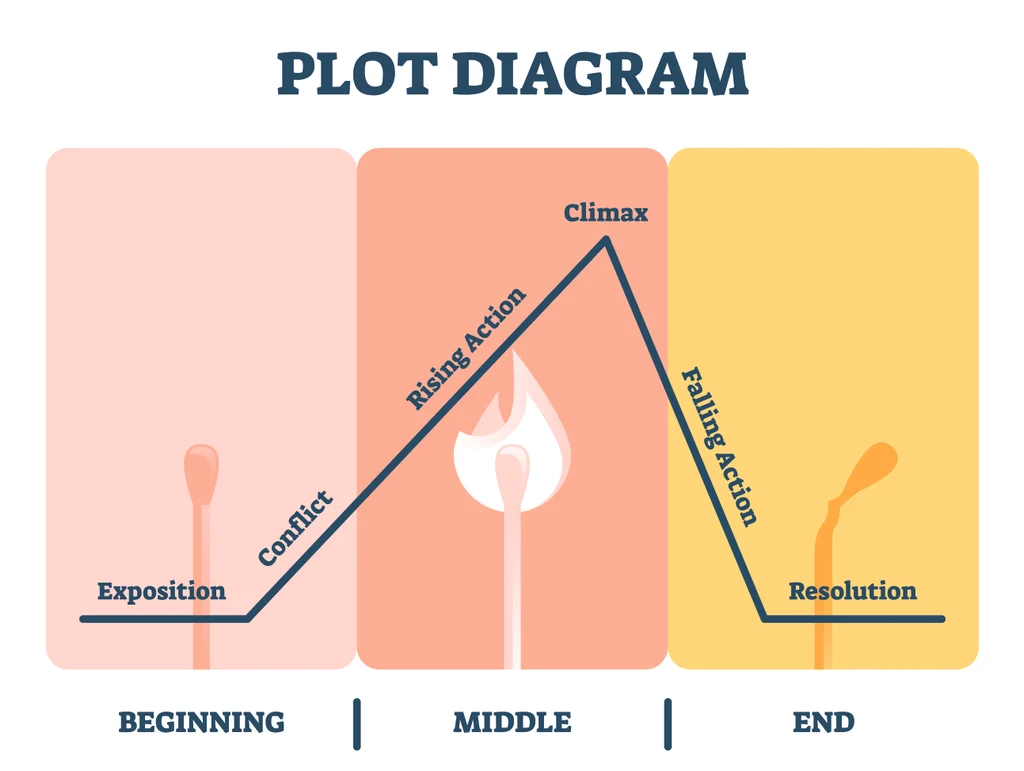
Exposition
the introduction that sets the stage for the story
we learn about the characters, setting, and background information
Inciting Incident / Complication
a single event that foreshadows the main conflict
Rising action
the story builds and gets more exciting
Crisis
the turning point; the point where the conflict reaches its greatest tension
Climax
the consequence of the crisis
the story’s high point
may take the shape of an action, decision, or realization
Resolution / Falling Action
the end of the story
this is where final questions are answered and secrets are revealed
Setting
the time, place, social and historical context of a story
Theme
the main idea of the story (what’s the subject and what truth is the author trying to reveal about it?)
Point of view
the perspective from which a story is told (1st, 2nd, 3rd person)
Style
the writer’s choice of language, the type of sentences they use, and how they structure their writing
Tone
the writer’s attitude toward the subject and readers
Figurative language
the use of words or expressions with a meaning that is different from the literal interpretation, often to create imagery or convey emotions (ex: similes, metaphors, and personification)
Imagery
language that appeals to the senses and creates vivid pictures in the reader's mind.
Symbolism
the use of symbols to represent ideas or qualities beyond the literal meaning of the thing (ex: an owl may represent wisdom)