NPTE: MSK Advanced Differentials and Interventions
 Call Kai
 Learn
Learn Practice Test
 Spaced Repetition
 Match
Match Flashcards
 Knowt Play
1/43

There's no tags or description
Looks like no tags are added yet.
Name | Mastery | Learn | Test | Matching | Spaced | Call with Kai | Chat |
|---|
No analytics yet
Send a link to your students to track their progress
44 Terms
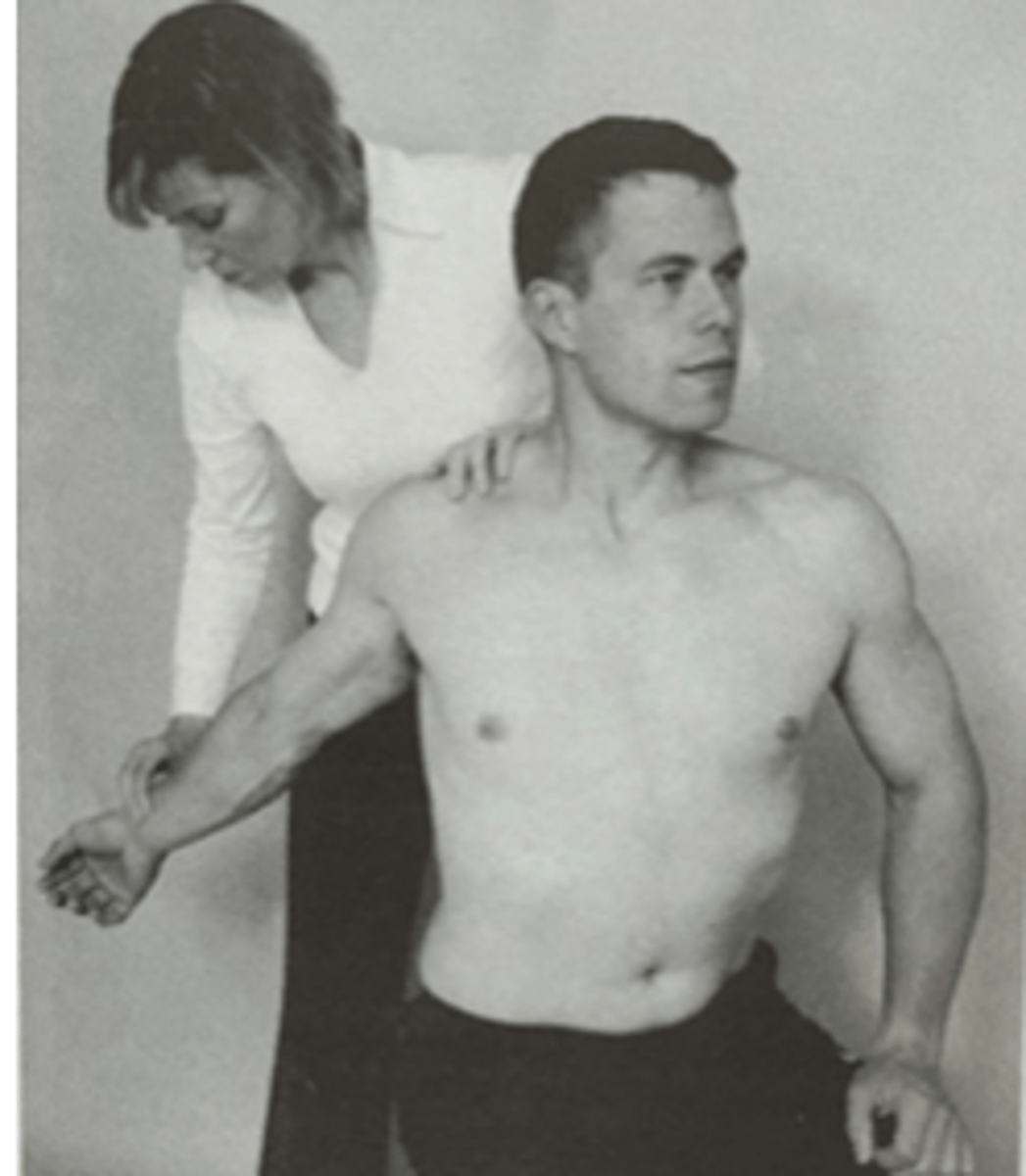
A patient presents with reports of pain and numbness in the right arm extending to the thumb. The physical therapist performs the special test, as shown in the picture below. If the test is positive, which is the MOST APPROPRIATE intervention?
Stretch the right pec minor and SCM muscles (grade 3 manips of the first and second ribs was wrong answer because you need a grade 5)
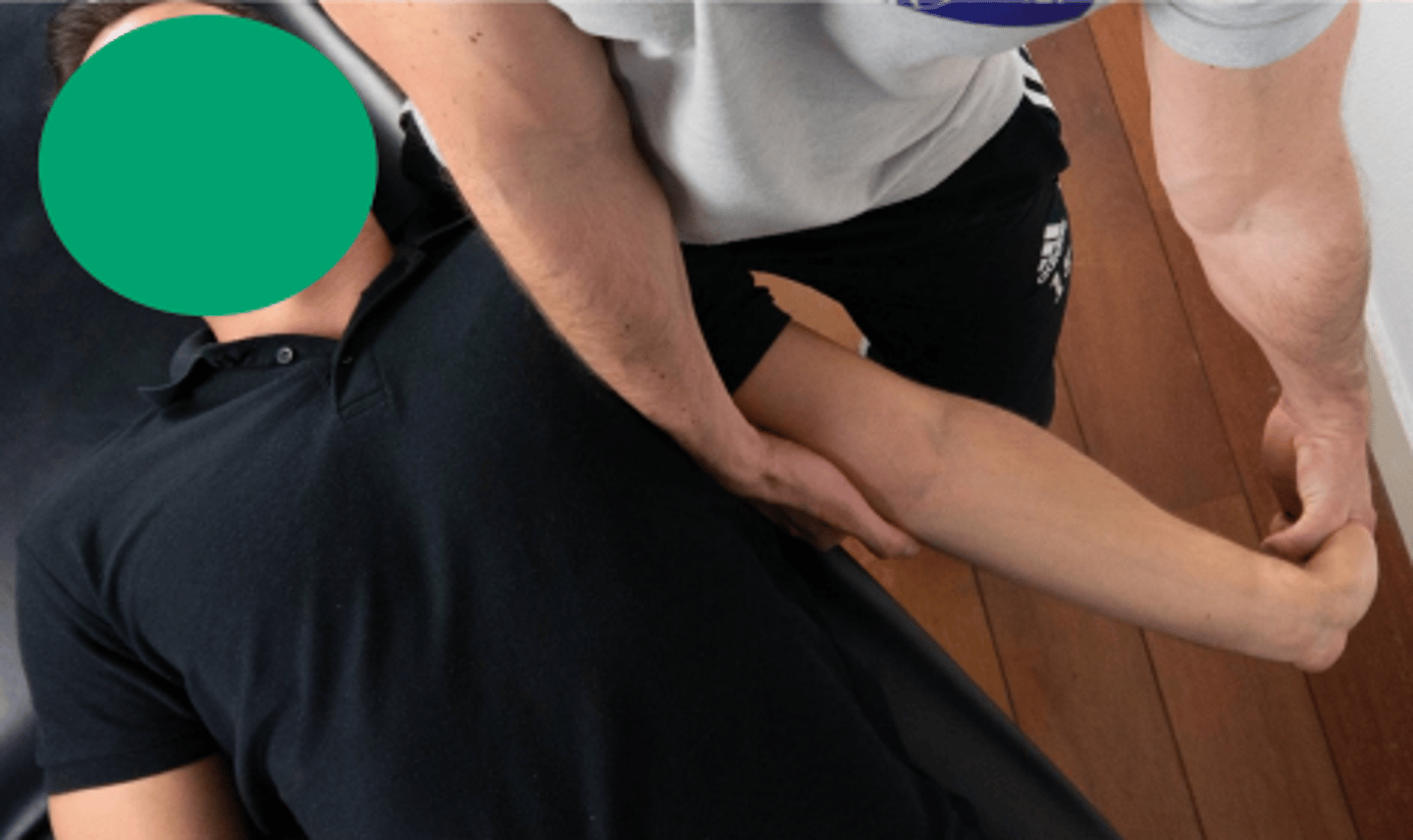
The patient reports of numbness and tingling in the forearm. The
physical therapist decides to perform upper limb tension test on the
patient. The test in the picture below is found to be positive. Based on
the findings, which nerve is MOST LIKELY causing the numbness and
tingling?
musculocutaneous
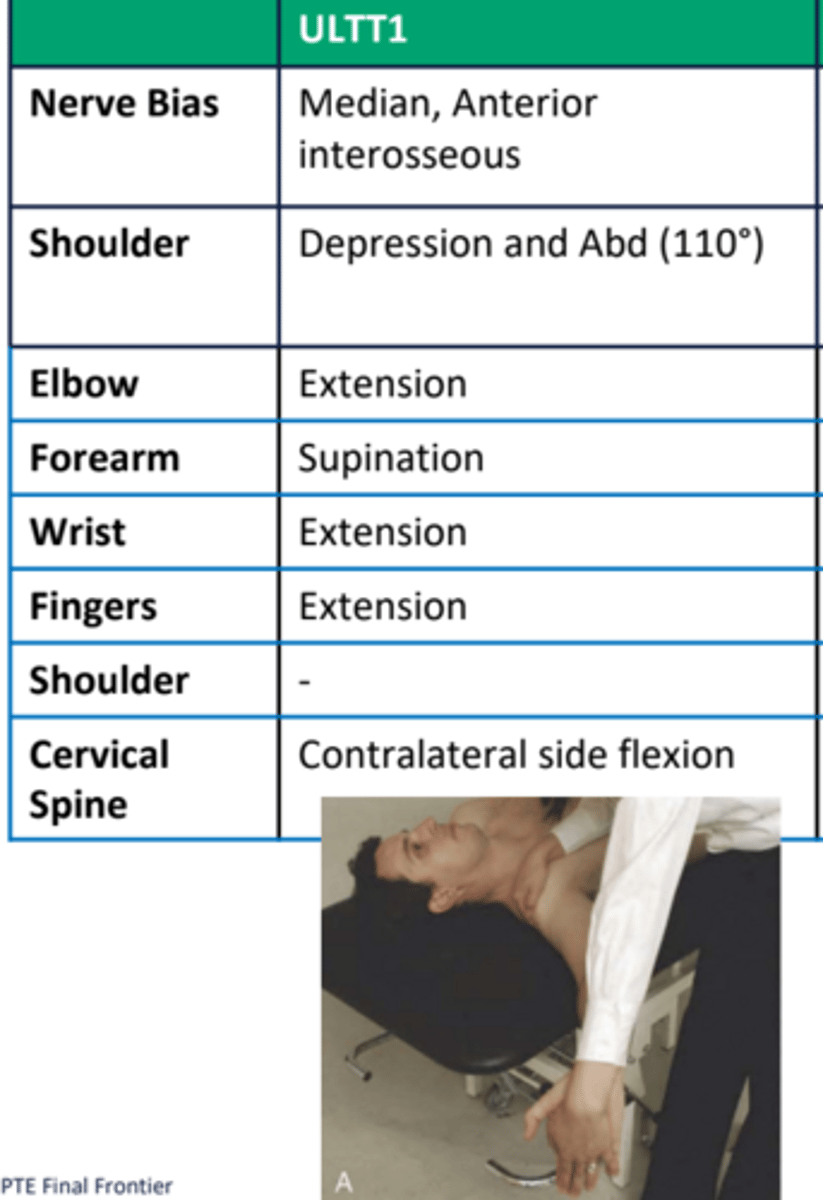
Median, anterior interosseous nerve bias
MAIN
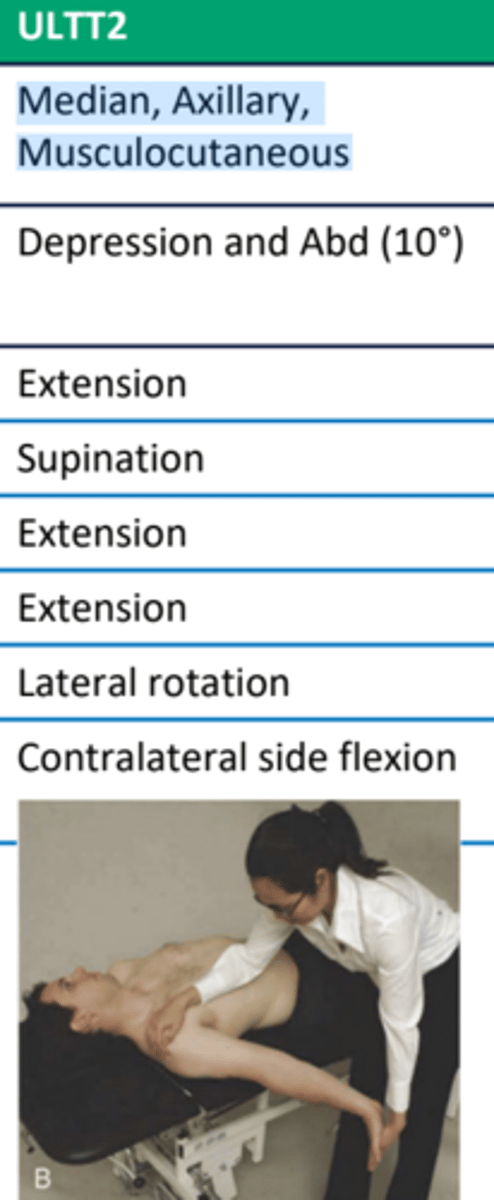
Median, Axillary, Musculocutaneous nerve bias
MAM
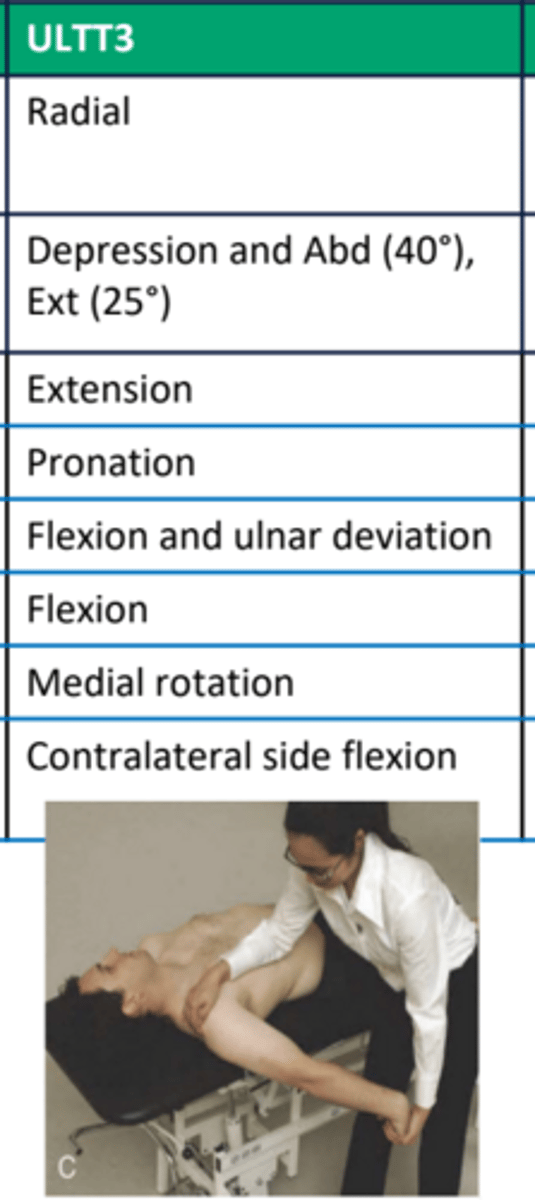
Radial nerve bias
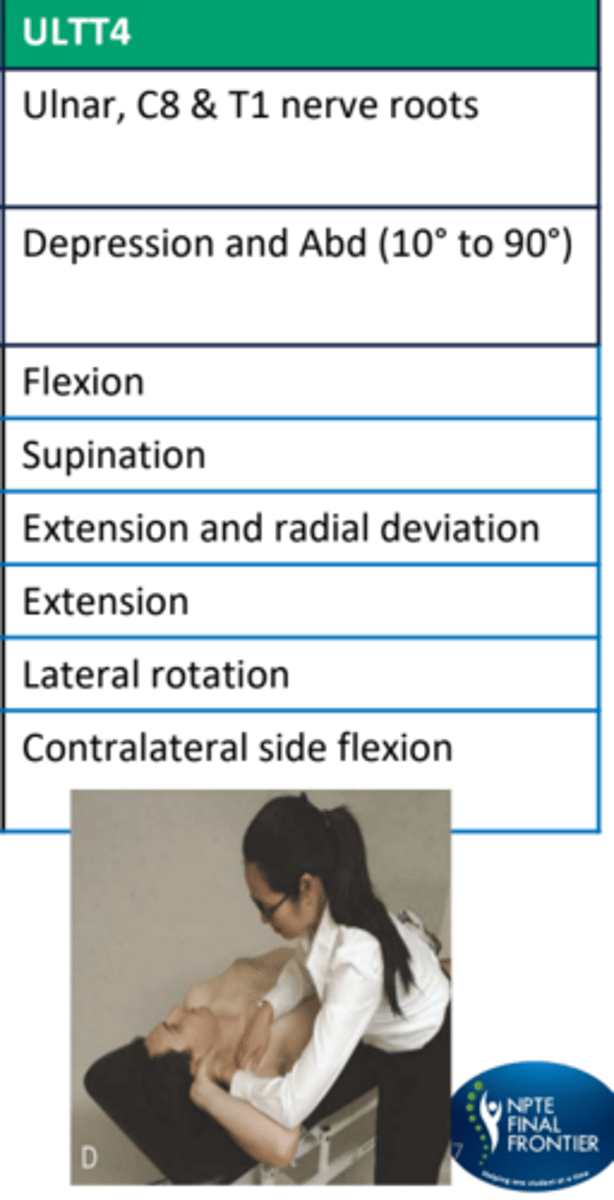
Ulnar, C8, T1 nerve bias
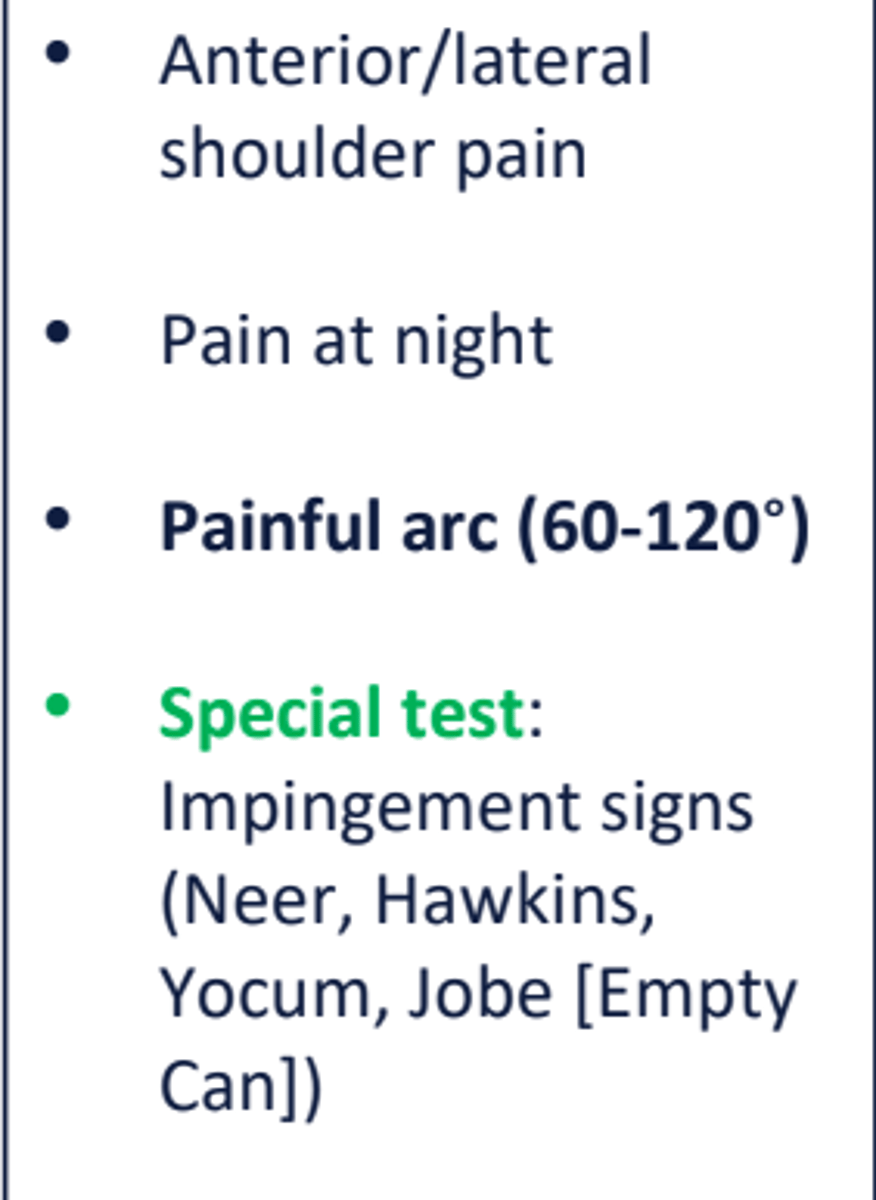
Subacromial impingement
RTC tear
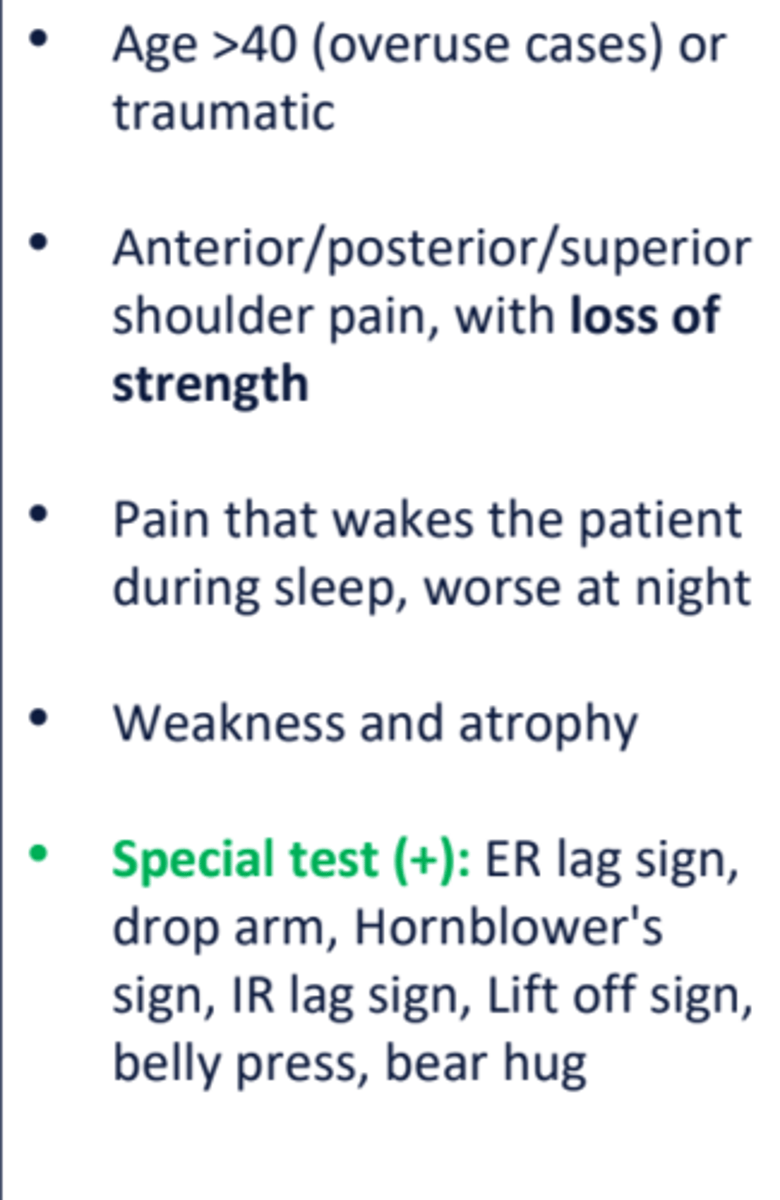
Slap labrum tear
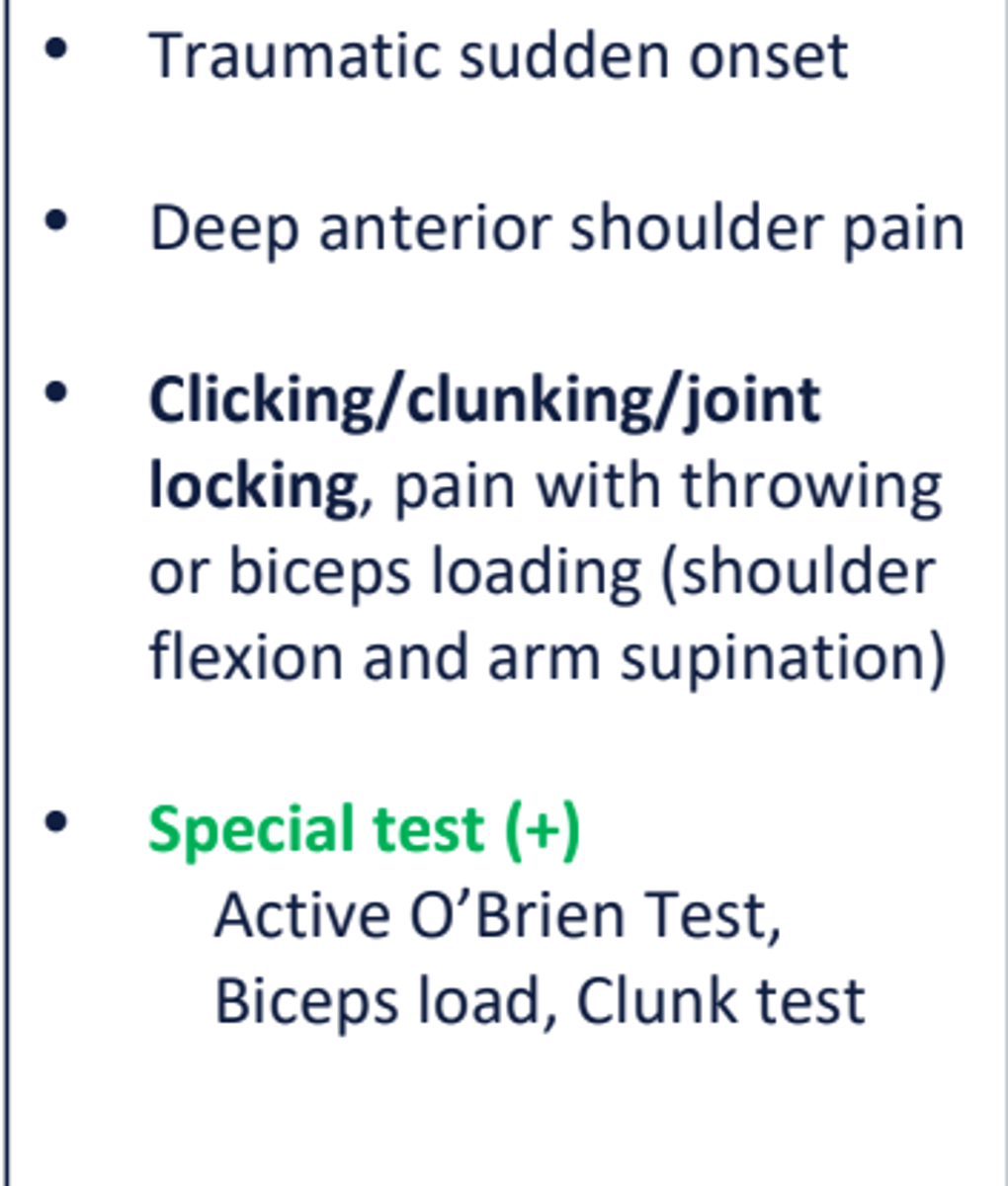
AC joint injury
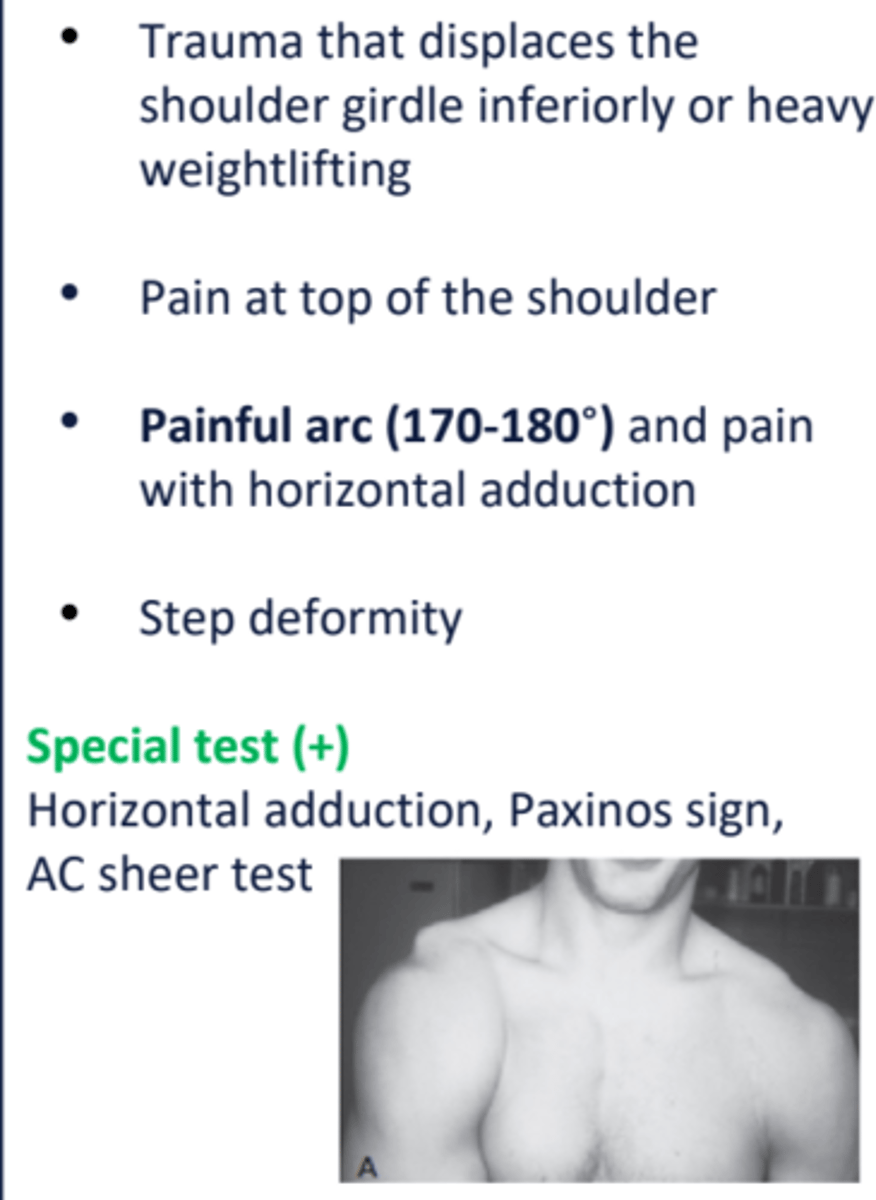
A patient reports pain in the right shoulder, particularly with horizontal
adduction and active elevation beyond 120°. The lag sign and clunk test
were negative. This finding is MOST INDICATIVE of which shoulder
pathology?
Acromioclavicular joint injury
Painful arc is ___-___ degrees
60-120
Coracoacromial Arch
A key site of pathology and an active treatment site
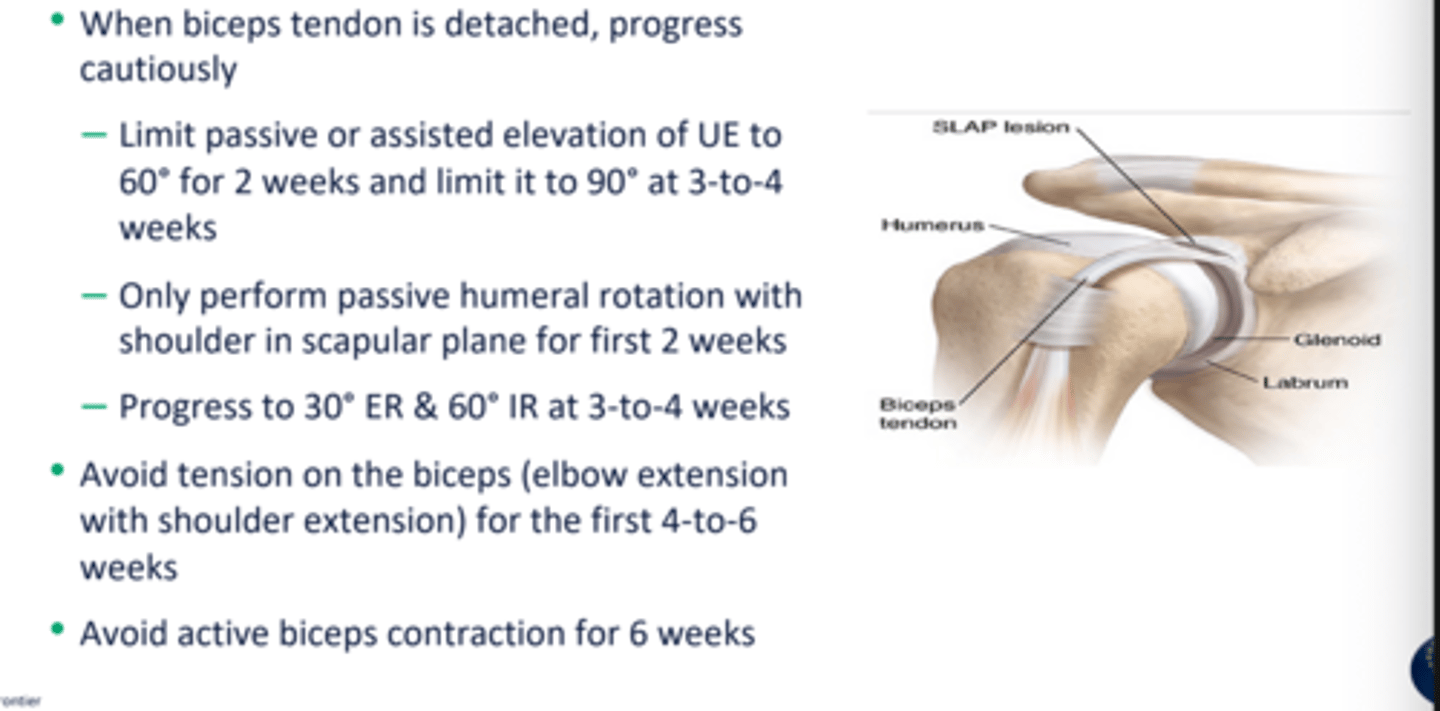
• Superior Labrum Anterior Posterior (SLAP) lesion is superior
labrum tearing or pulling away by the biceps insertion, which is
under the subacromial arch
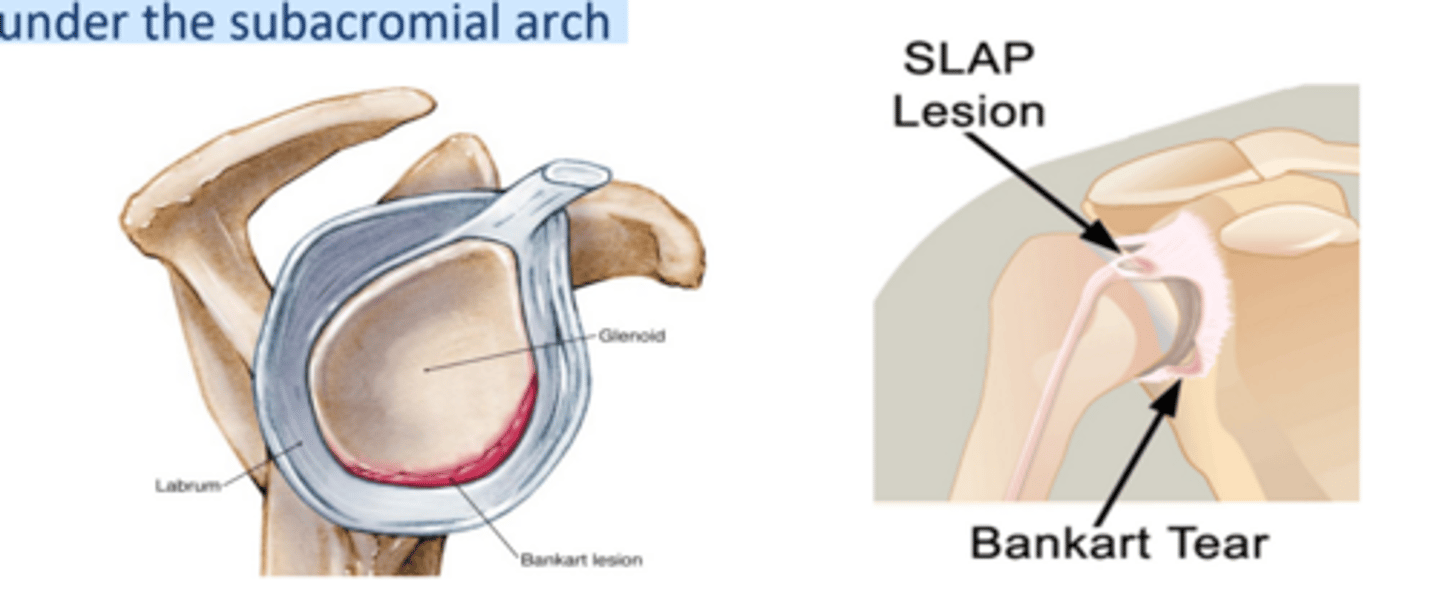
Repair of a SLAP lesion
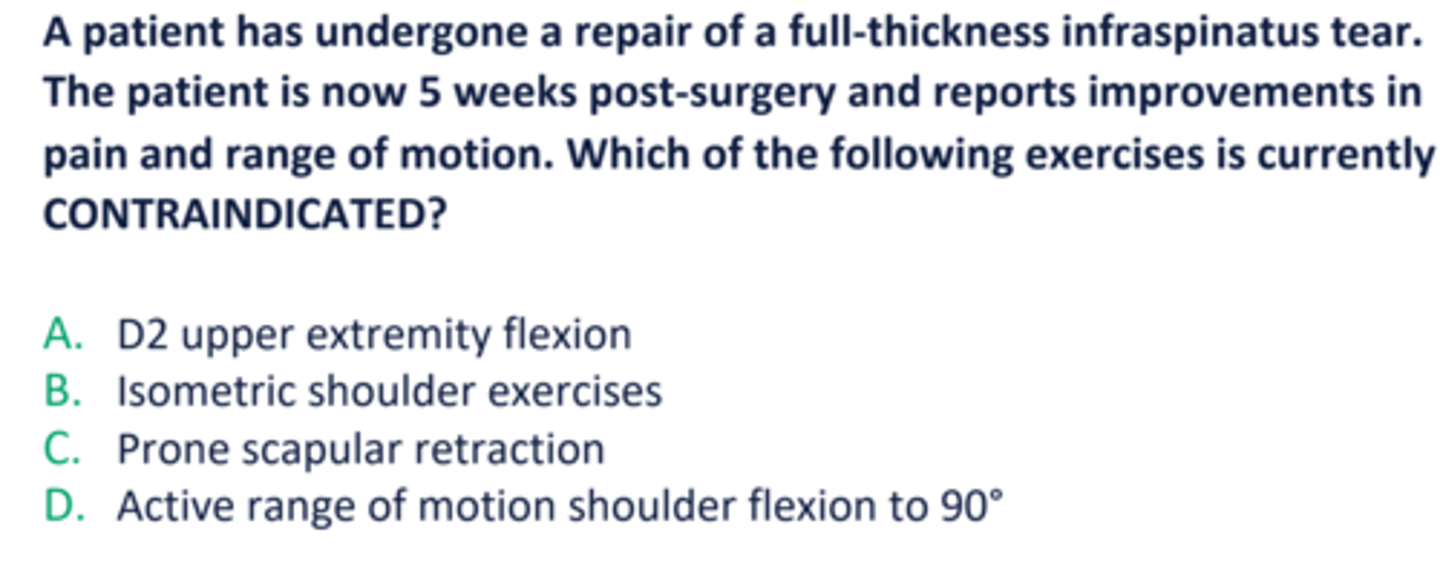
A patient has undergone a repair of a full-thickness infraspinatus tear.
The patient is now 5 weeks post-surgery and reports improvements in
pain and range of motion. Which of the following exercises is currently
CONTRAINDICATED?
D2 upper extremity flexion
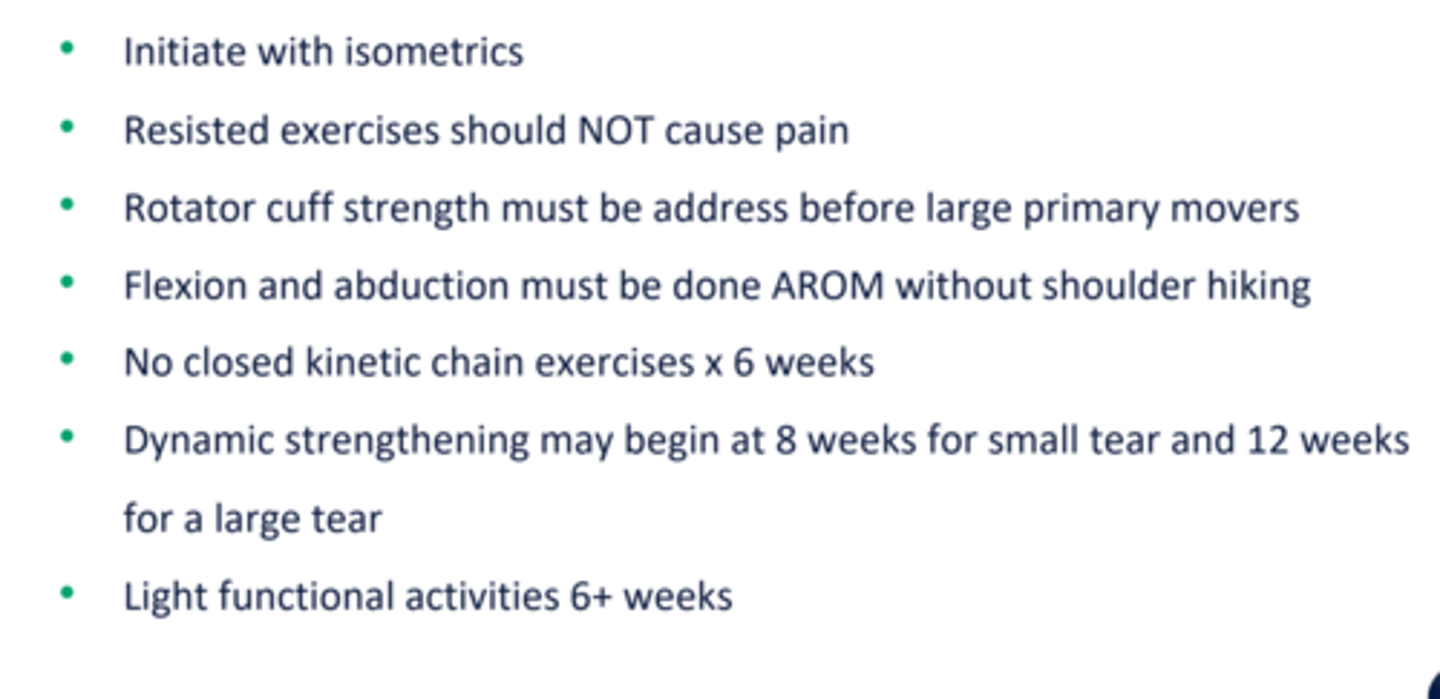
RTC rehab KEY POINTS
The patient presents to physical therapy with a 2-month history of pain along
the radial side of the right wrist. The patient reports that the pain worsens
with activities, such as lifting their infant and gripping objects. On
examination, there is tenderness over the first dorsal compartment of the
wrist. The Phalen's and Tinel's signs are negative. Range of motion of the
thumb is limited due to pain. Which of the following structures is MOST
LIKELY involved in the patient's condition?
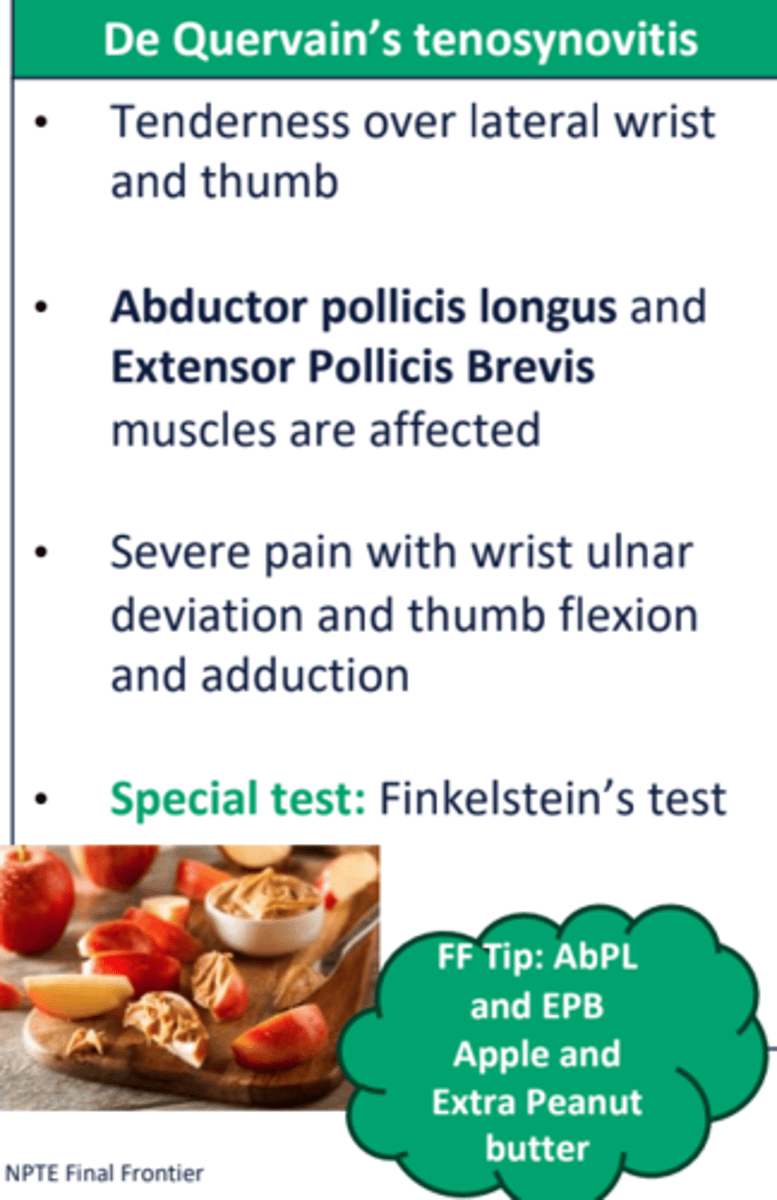
Abductor Pollicis Longus and Extensor Pollicis Brevis (presentation consistent with de quervains tenosynovitis)
apple and extra peanut butter for APL and EPB
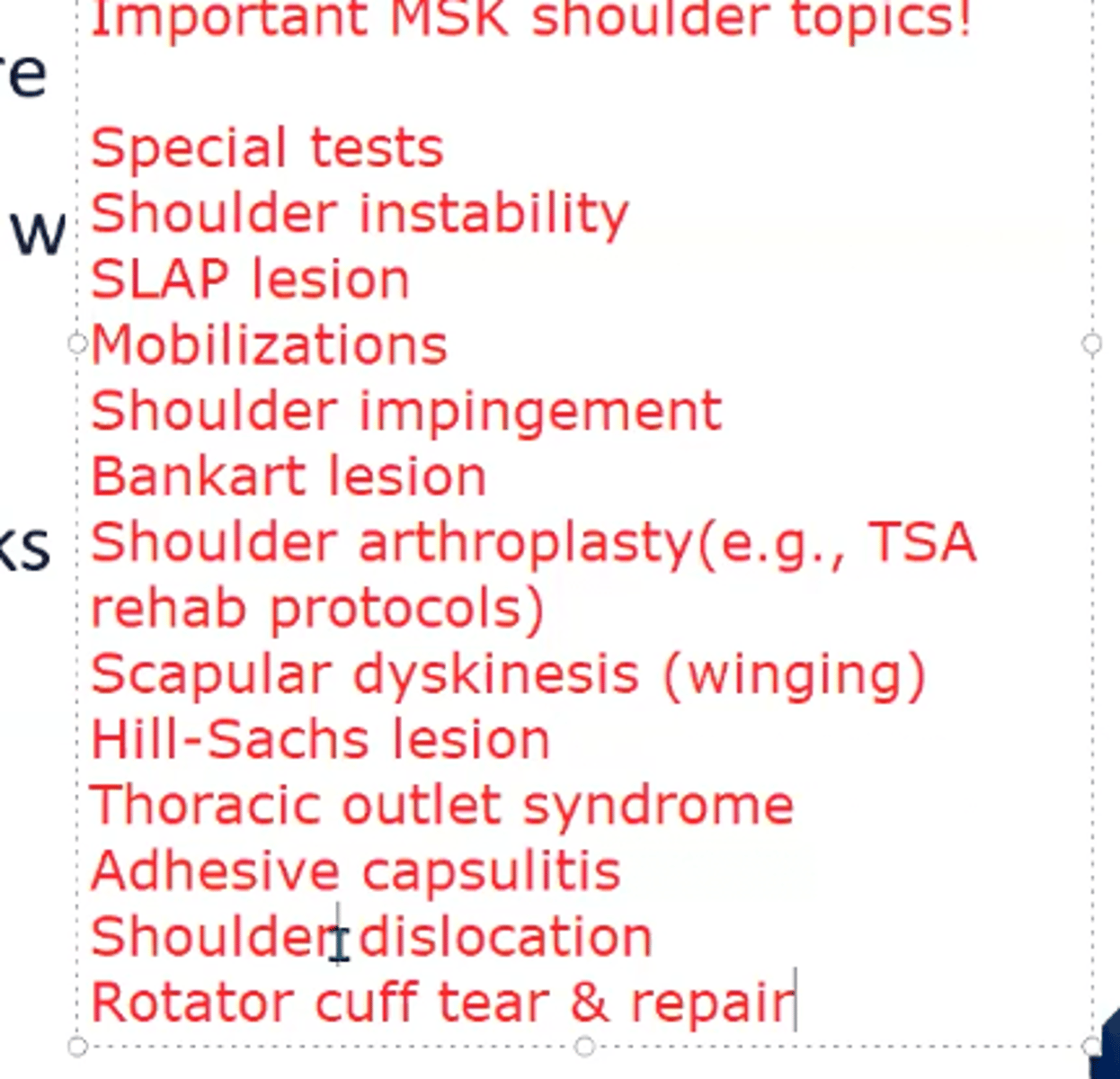
important MSK shoulder topics
Dequervain's tenosynovitis
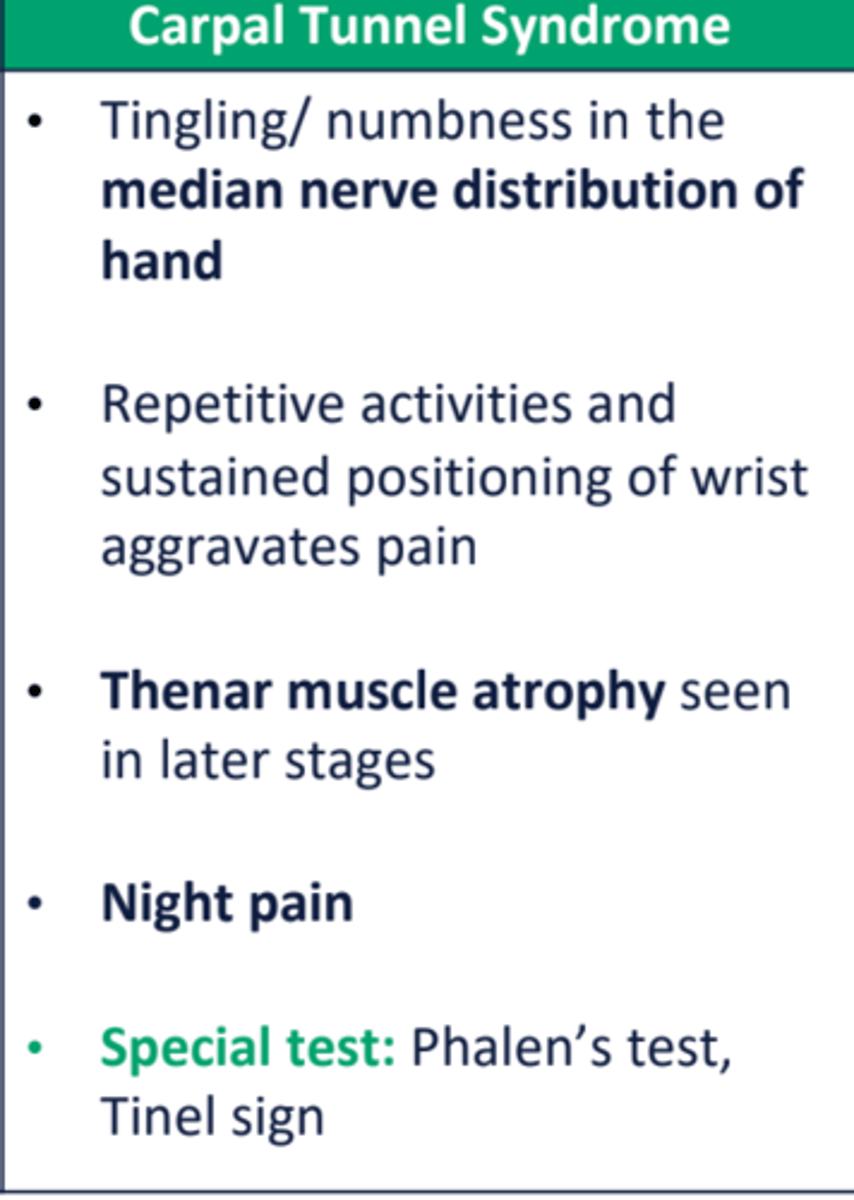
Carpal tunnel syndrome
thenar muscle atrophy --> ape hand
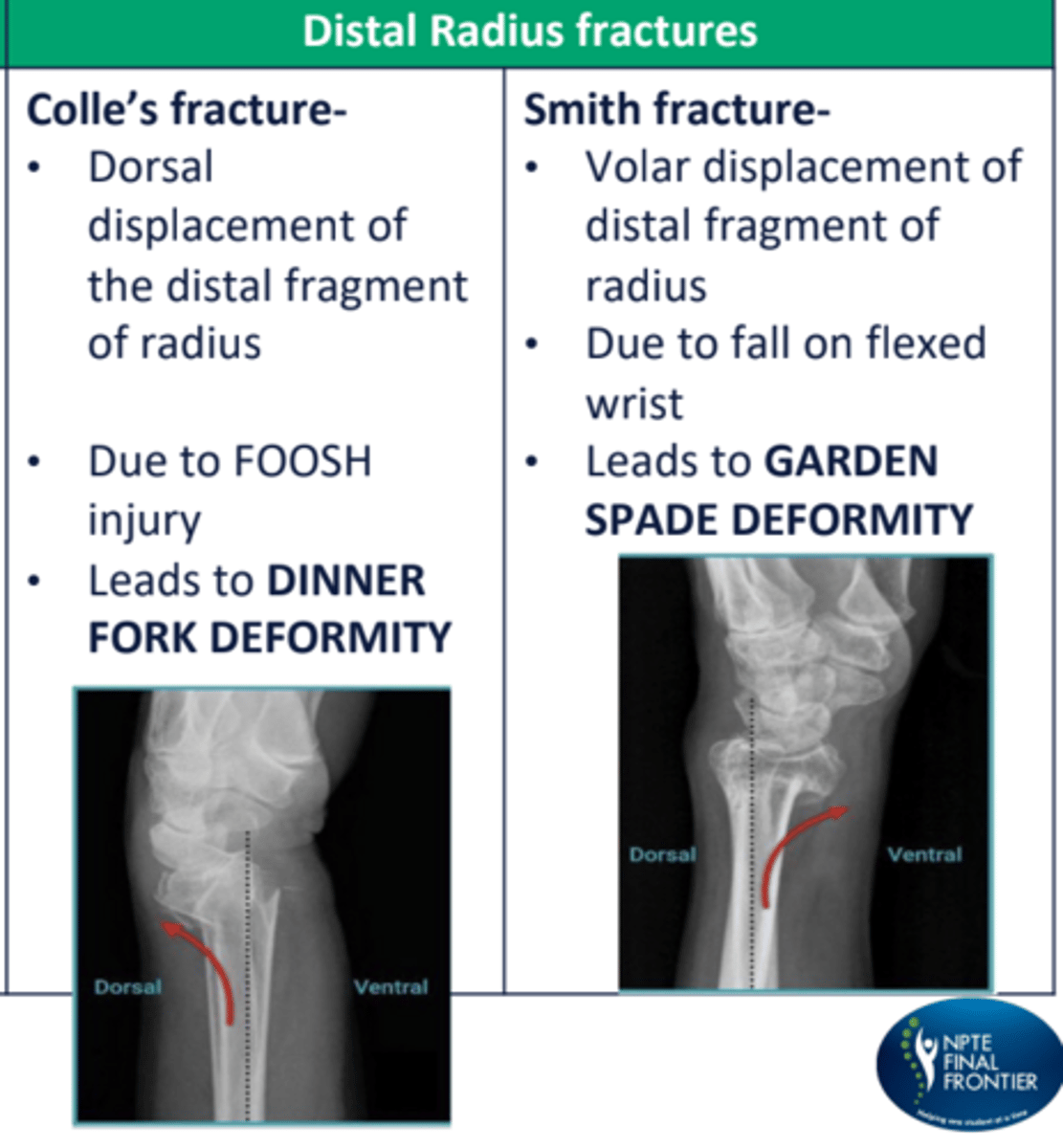
Colles vs smith fracture
call me back for dinner
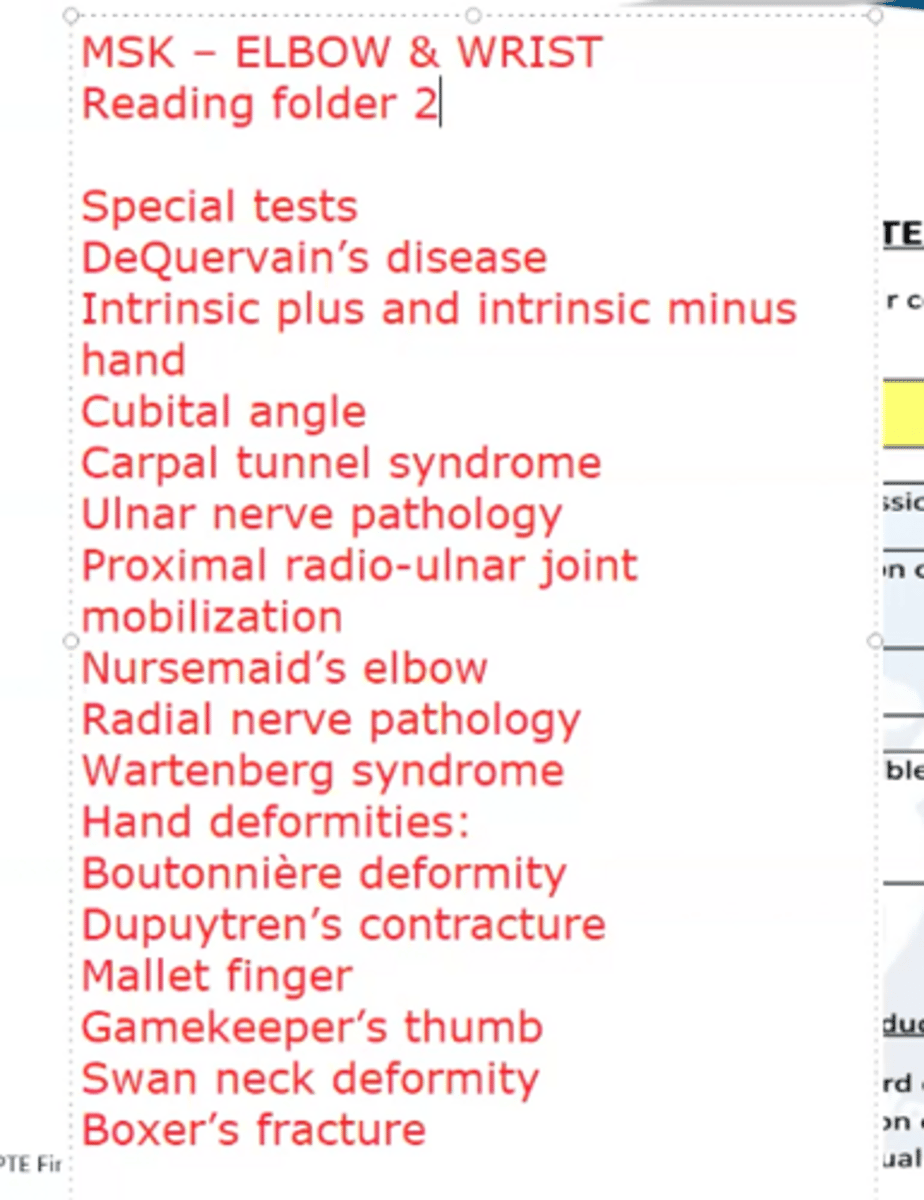
Elbow and wrist conditions
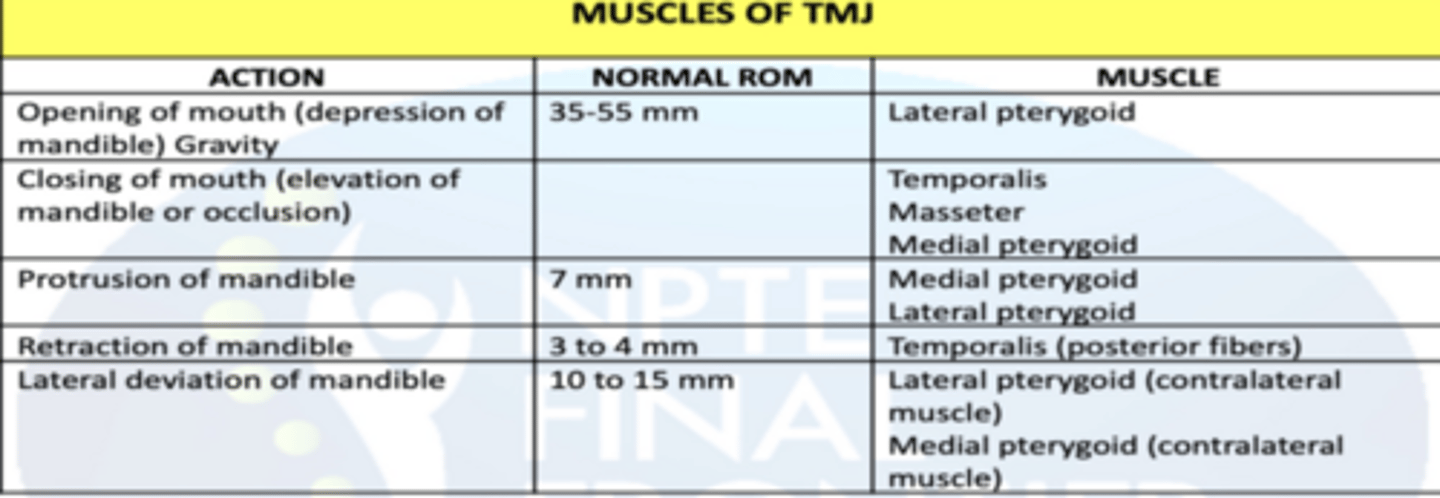
Opening, closing, protrusion, retraction, lateral deviation TMJ muscles and normal ROM
opening: L (say L with mouth open)
closing: MMT (say M with mouth closed)
A patient presents with right sided temporomandibular joint dysfunction. On examination, the patient has mouth opening of 25 mm and jaw deviates to the right side while opening. There is no significant pain or swelling. What is the MOST LIKELY diagnosis based on the patient's symptoms?
Hypomobility
TMJ hypomobility
Decreased mouth opening and deviation to same side
TMJ Hypermobility
Increased mouth opening and deviation to opposite side
TMJ Disc displacement with reduction
Clicking heard. No deviation, no difficulty with mouth opening
TMJ Synovitis
Pain and limited mouth opening, no deviation
TMJ Capsulitis
Pain, limited mouth opening and deviation to same side
Legg calve perthes vs slipped capital femoral epiphysis
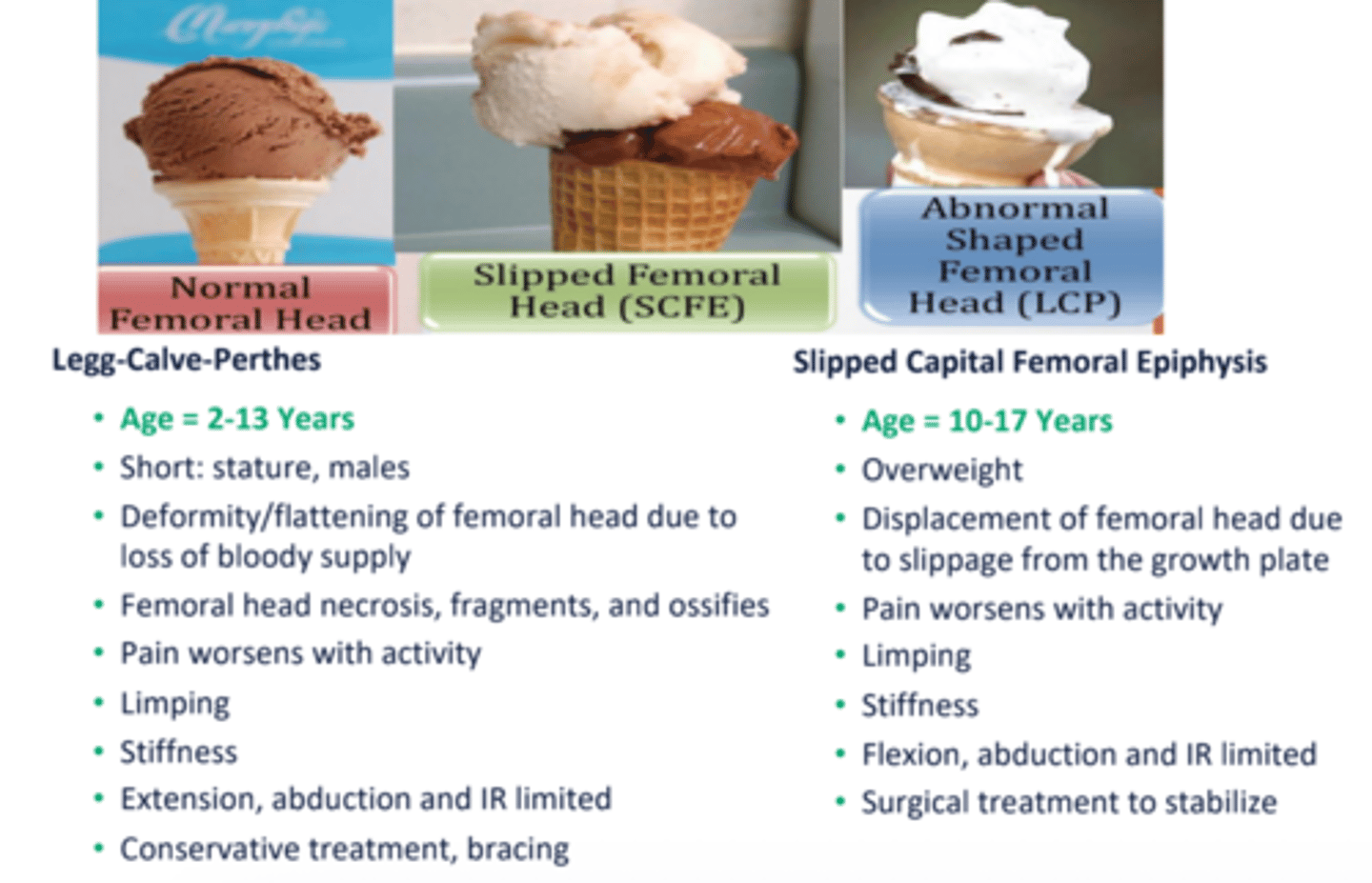
What is the most appropriate intervention for legg calve perthes
Improving the containment of the femoral head in acetabulum using the brace
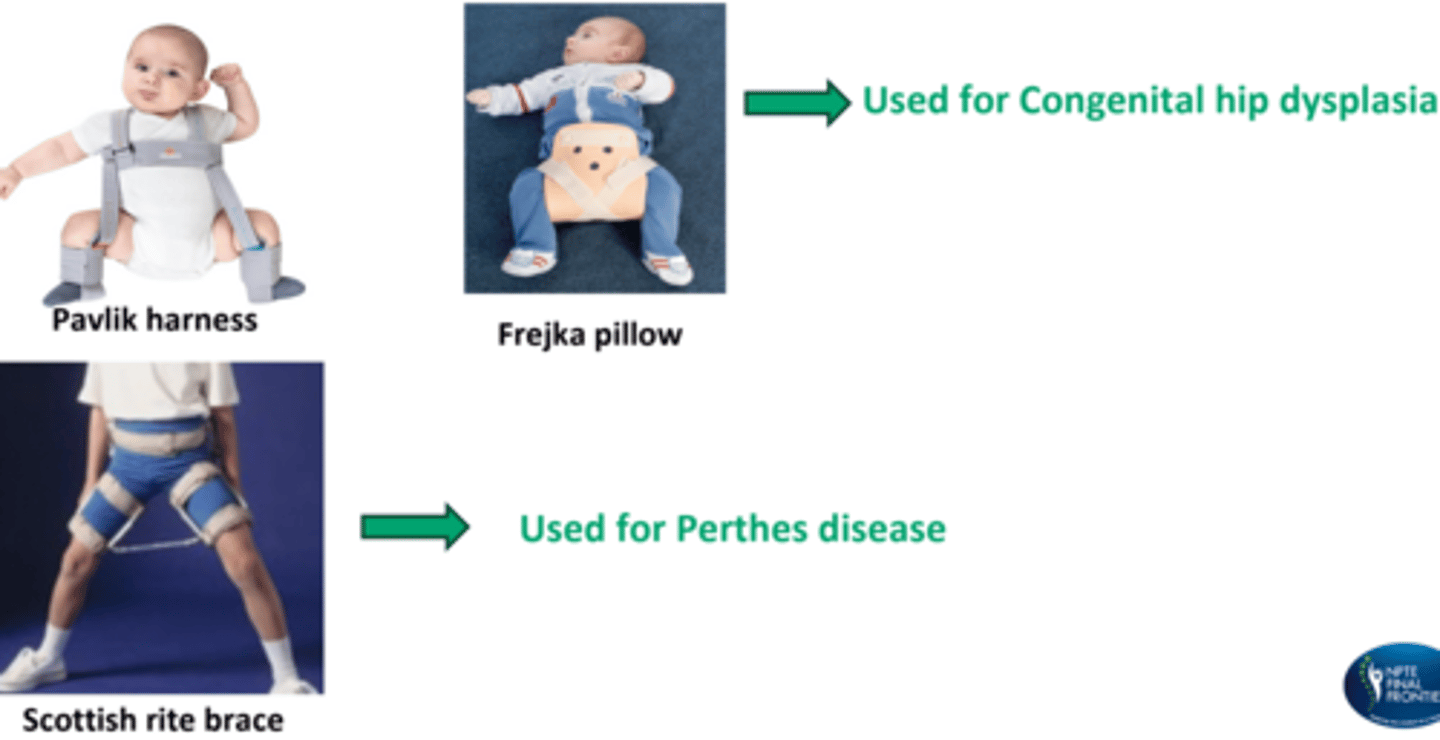
What is the most appropriate orthotic used in legg calve perthes disease?
scottish rite brace
A patient presents with pain and catching sensation in the right knee, which
started after twisting their knee while playing basketball. On examination,
there is tenderness over the joint line, pain with right knee hyperextension and
maximal right knee passive flexion. The patient MOST LIKELY has which of the
following diagnosis?
Meniscal tear
Meniscus injury key points
Popping, locking, catching sensation during movement,
joint line tenderness, swelling, pain with knee hyperextension and full flexion
Patellofemoral pain syndrome
Peripatellar pain, lateral patellar tracking, pain with squatting, prolonged sitting (movie theatre sign), commonly seen in young females
Osgood schlatter syndrome
Pain at tibial tuberosity, enlarged tibial tubercle, excessive activity in adolescents and poor flexibility
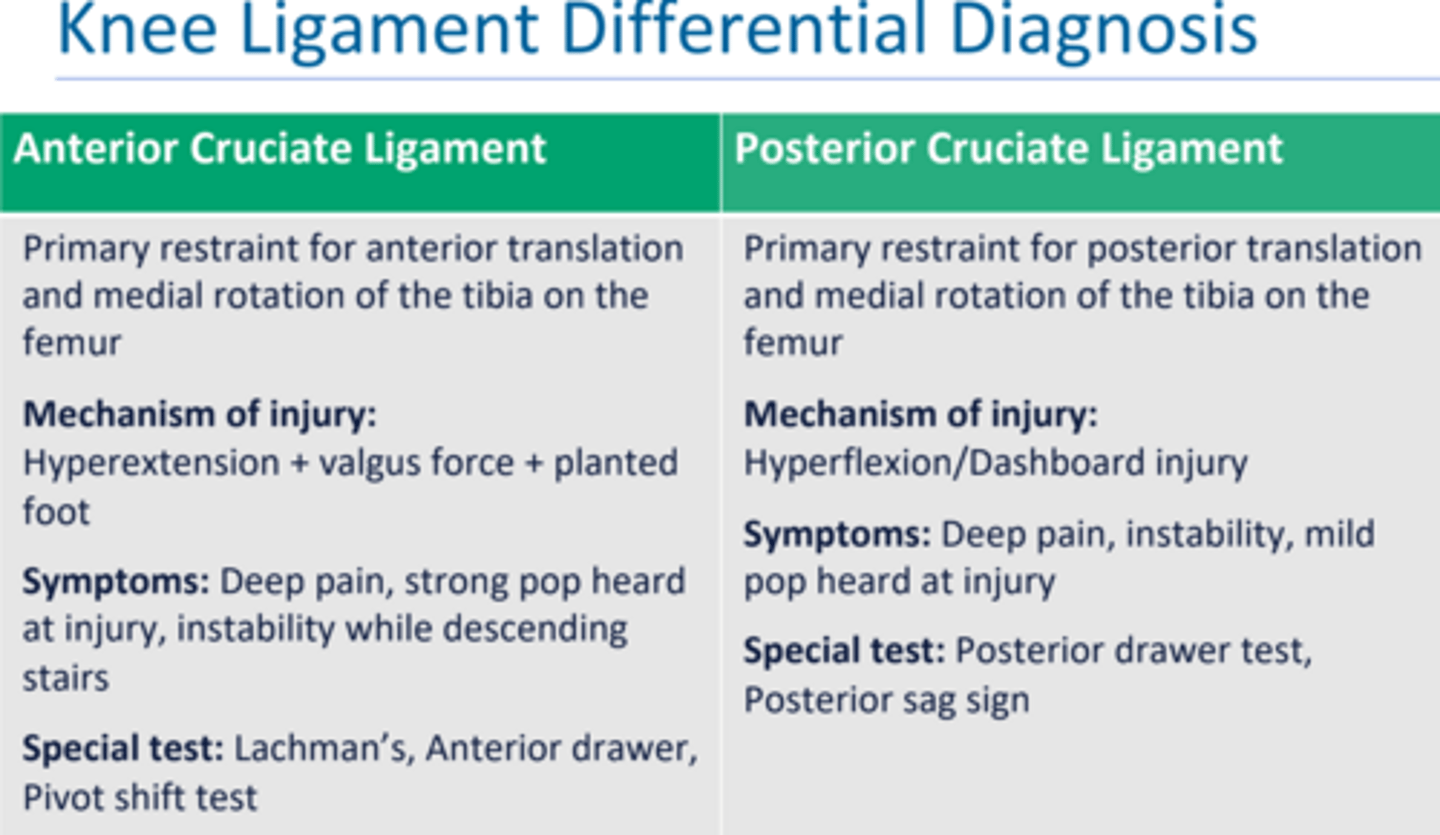
ACL vs PCL MOI, symptoms, special tests
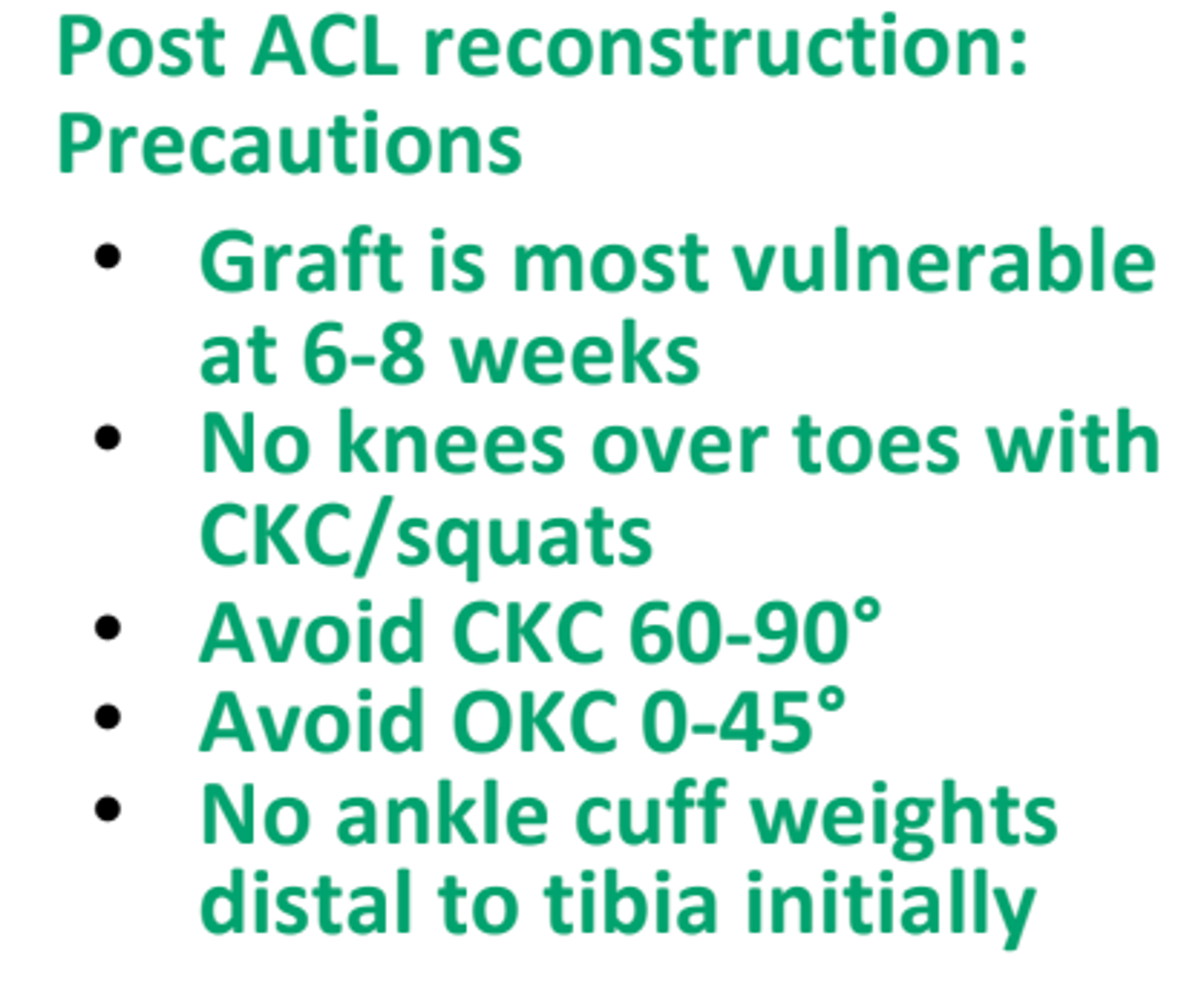
A soccer player is seen at a physical therapy clinic 3 weeks post ACL reconstruction surgery. Which of the following is MOST APPROPRIATE while exercising this patient?
Partial squats between 0°-45° of flexion
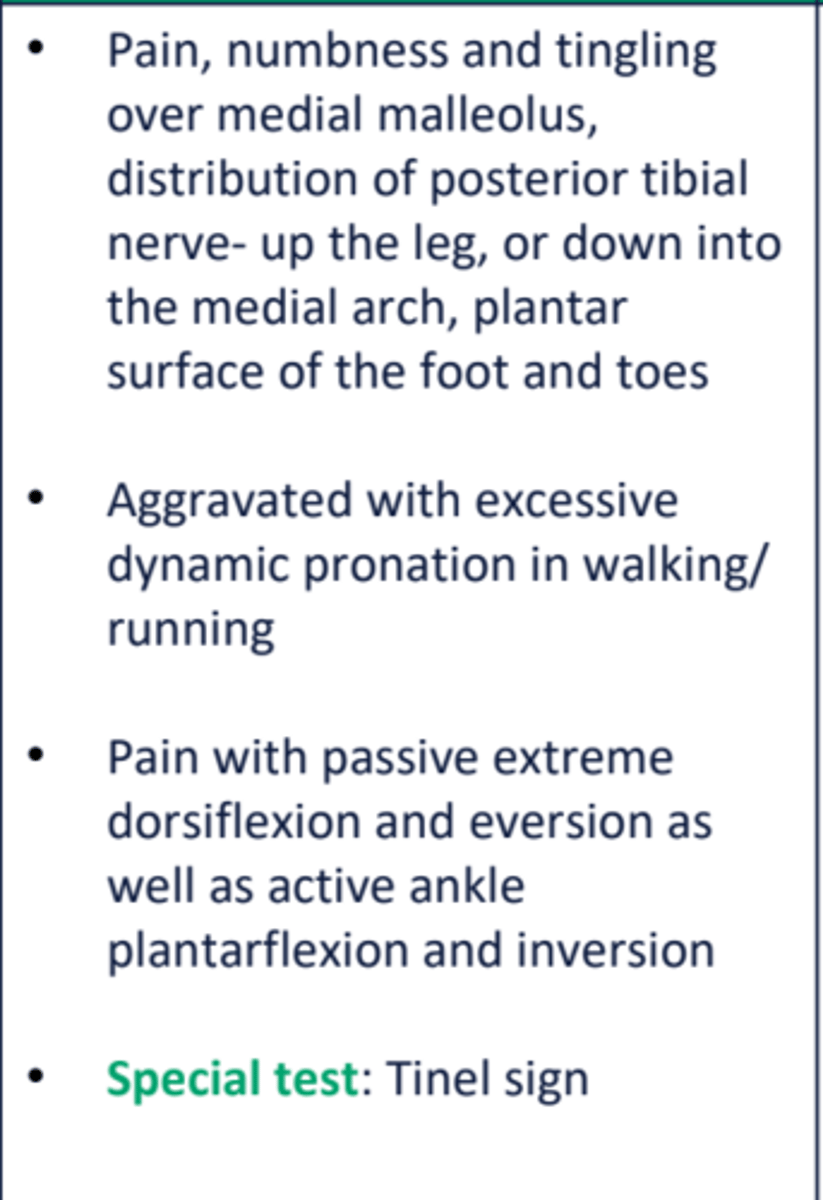
A patient presents with numbness, tingling, and burning pain along the
medial ankle, radiating into the plantar surface of the foot. The
symptoms worsen with prolonged standing and walking. Upon
examination, the physical therapist notes tenderness posterior to the
medial malleolus and a positive Tinel's sign. Passive ankle dorsiflexion
and eversion aggravate the symptoms. What is the MOST LIKELY
diagnosis?
tarsal tunnel syndrome
Tarsal tunnel syndrome
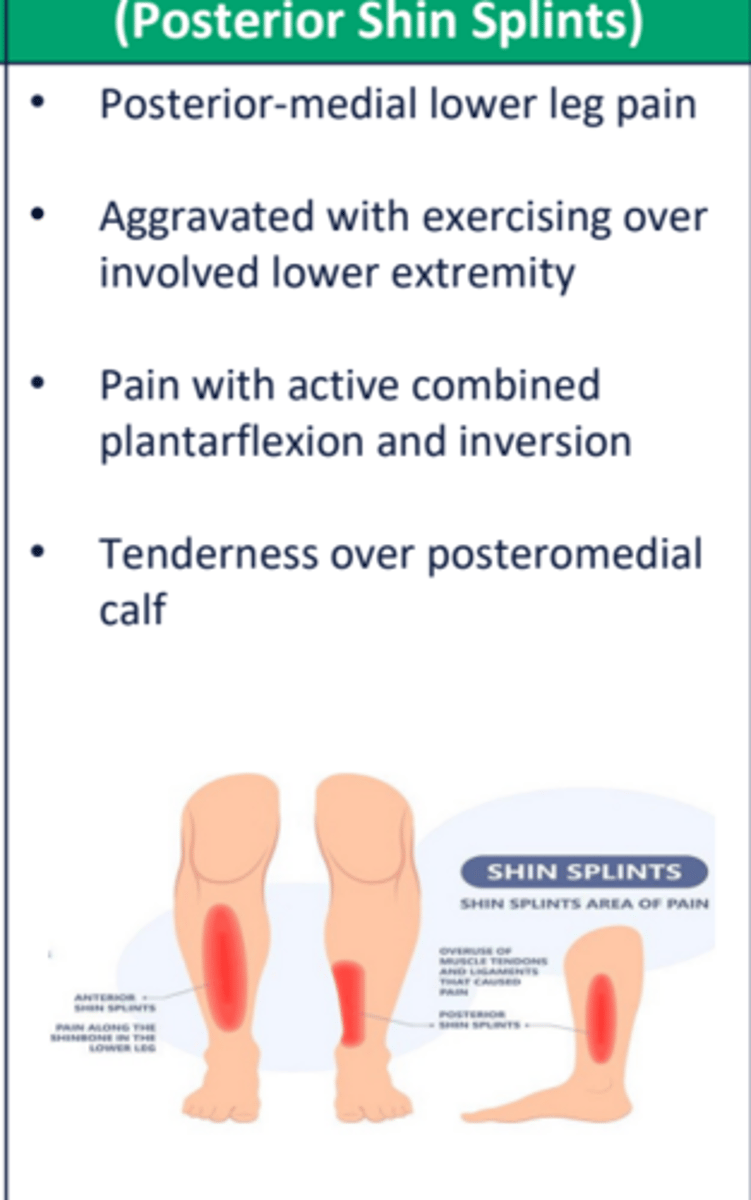
Medial tibial stress syndrome
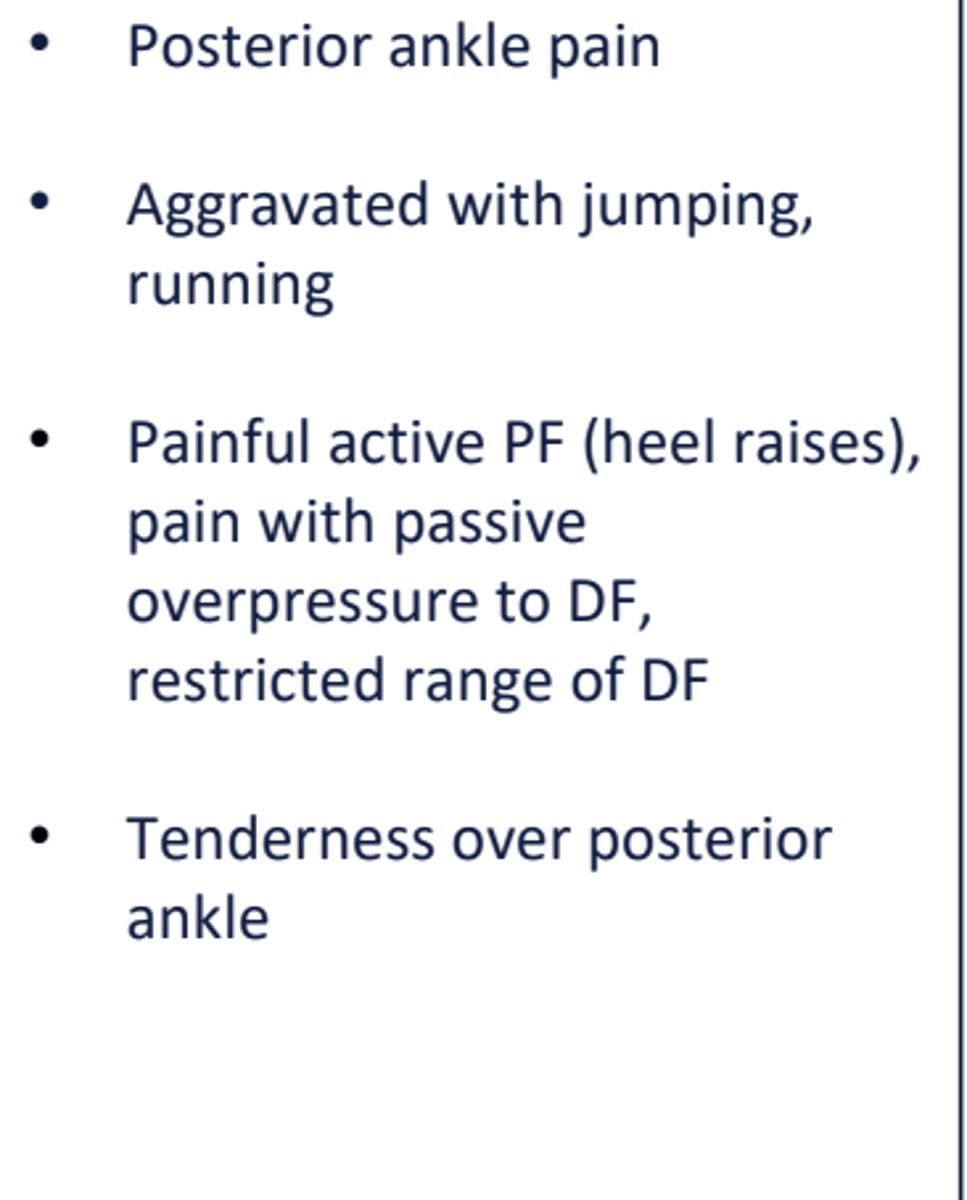
Achilles tendinitis
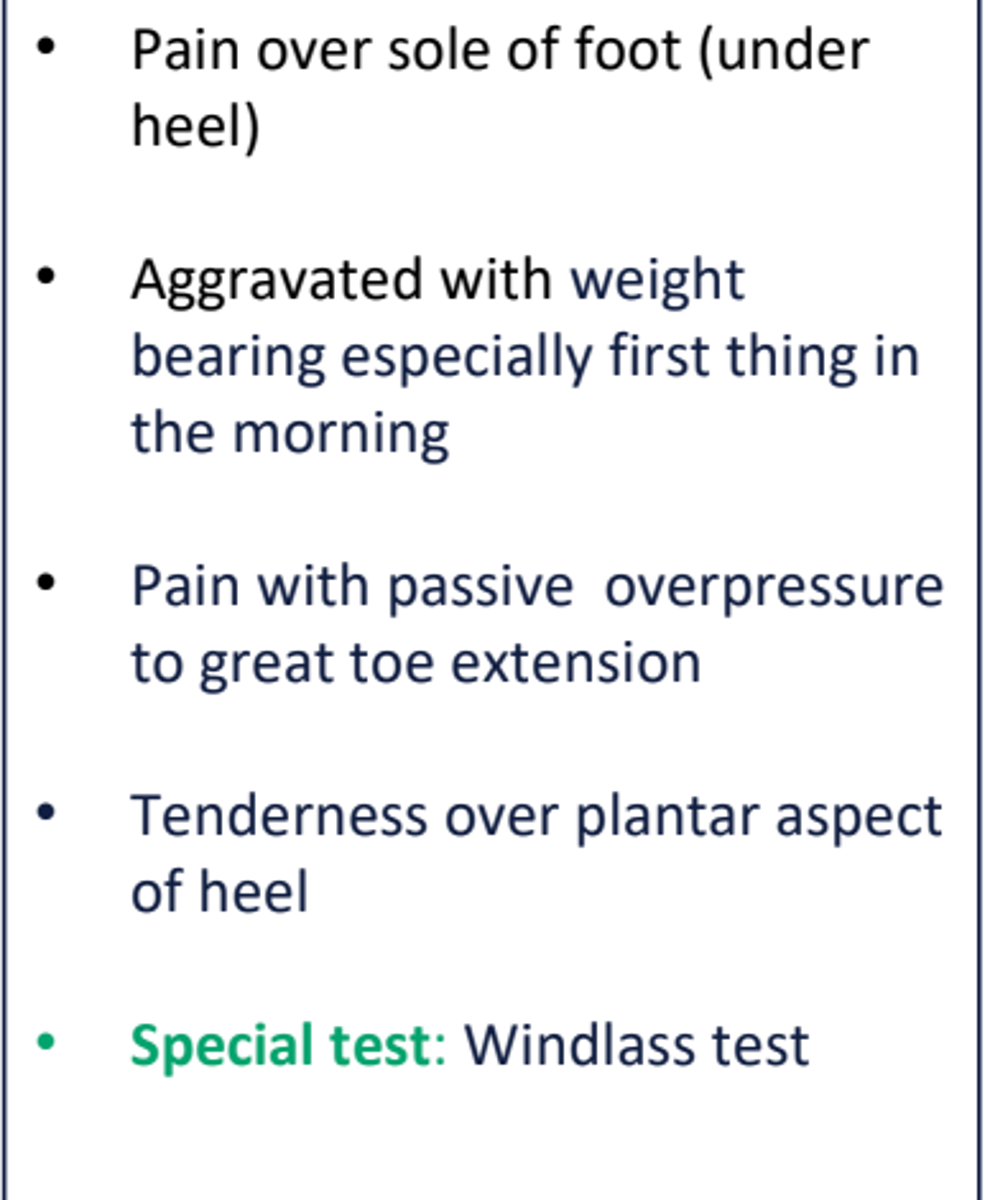
Plantar fascitis
A physical therapist is treating a patient who underwent Achilles tendon repair
surgery of the right lower extremity after experiencing a fall. The patient is currently at four and half week post-op status. Which of the following is most likely to be CONTRAINDICATED at this stage?
CAM orthosis that allows free dorsiflexion