crown and bridge
 Note
Note Call Kai
 Learn
Learn Practice Test
 Spaced Repetition
 Match
Match Flashcards
 Knowt Play
1/48

There's no tags or description
Looks like no tags are added yet.
Name | Mastery | Learn | Test | Matching | Spaced | Call with Kai | Chat |
|---|
No analytics yet
Send a link to your students to track their progress
49 Terms
Curve of Spree
Concave curve on mandible and convex on maxilla.
Curve of Wilson
Curved line from buccal to lingual, with lingual cusps shorter than buccal cusps.
Height of Contour
Positioned at 1/3 from the gingiva.
Extension of Height of Contour
Extends 0.5mm past the CEJ, except for lingual mandibular posterior which is 0.75 - 1.0 mm.
Inlay Wax
Exhibits thermal expansion, flow increases towards melting range, and strain release can lead to distortion.
Molding Wax
Features low shrinkage, hard non-elasticity, high surface tension, and good carving properties.
Cervical Wax
Shows low shrinkage, stability, good carving properties, residue-free burning, and hardness.
Matrix
Records tooth surfaces from all angles, typically made of silicon.
Mixing Matrix
Requires an equal amount of base and catalyst.
Laws of Casting
Consist of 17 laws to prevent issues like porosity, miscasts, short margins, tears, investment ring issues, nodules, voids, and distortion.
law 1
-attach sprue to the thickest part of wax
law 2
margins should face down and to the right
law 3
position pattern in cold zone
law 4
reservoir must have a sufficient molten alloy
law 5
dont use runner bar
law 6
eliminate turbulence
law 7
select proper casting rings
law 8
reduce surface tension by spraying picosilk
law 9
measure appropriate water powder ratio depending on metal
law 10
use vacuum mixer
law 11
allow investment to set benchset
law 12
select appropriate time and temperature depending on the metal and investment
law 13
melt alloy with heat
law 14
use reducing zone of the flame to melt alloy
law 15
make sure u r using enough force (winded properly)
law 16
cast towards the margins of the wax pattern
law 17
do not quench immediately after casting
Expansion Adjustment
Increase by adding special liquid, warm water, using softer wax, and extending spatula time; decrease by reducing special liquid, using cooler water, harder wax, and decreasing spatula time.
Porcelain Thickness over Metal
Typically 1.0 - 2.0 mm.
Minimum Wax before Casting
0.5 mm.
thinnest metal can be
0.3 mm.
Maximum Metal Thickness
No specific limit.
Base Alloy Burnout Temperature
1550 degrees Fahrenheit.
Final Burnout Time Determinant
Number of rings used.
Metal Calculation
Weight of pattern + sprue x specific gravity of metal = weight of metal needed.
what is the base alloy we used in school called
d.SIGN 30
what is the density of base alloy
7.8
whats the burn out range of base alloy
800-850C 1550F
whats the melting range of the base alloy
1145-1165C
whats the casting range of the base alloy
1240 - 1350C
true or false - do we sandblast our coping after framework
true
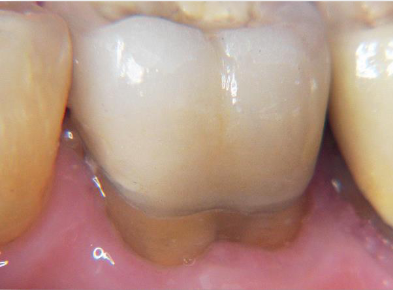
whats supragingival
above the gingiva
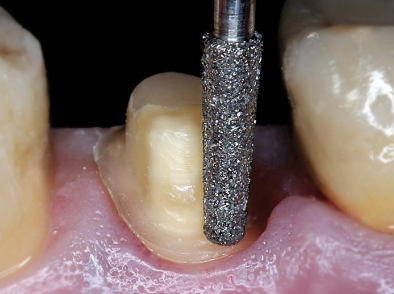
whats equigingival
at the gingival
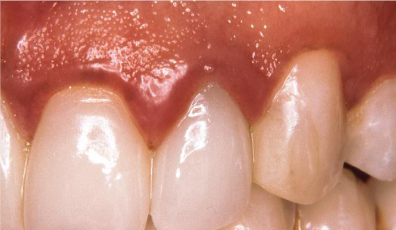
whats subgingival
underneath the gingiva
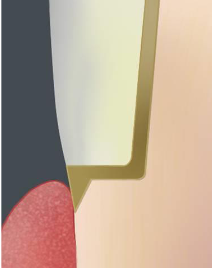
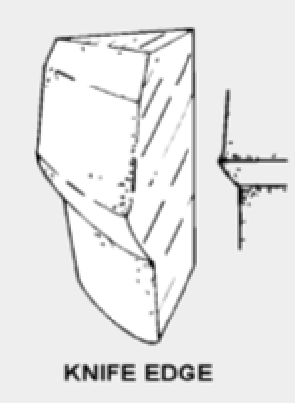
knife edge
used when not enough space for metal - porceline lays above the gingiva
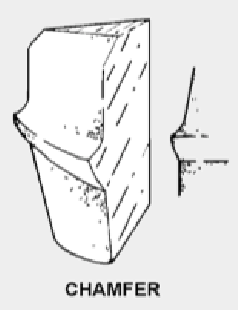
chamfer
curved shape - more space for metal and prceline is able to come down at the gingiva
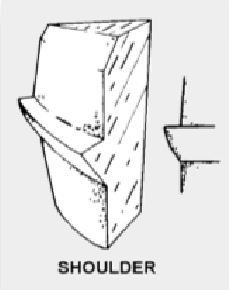
shoulder
sharp 90*angle
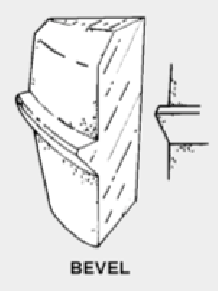
bevel
use to hide subgingival
shoulder with bevel
Thought to provide internal support of
shoulder margin