prokaryotic lab: lecture 17
 Call Kai
 Learn
Learn Practice Test
 Spaced Repetition
 Match
Match Flashcards
 Knowt Play
1/17

There's no tags or description
Looks like no tags are added yet.
Name | Mastery | Learn | Test | Matching | Spaced | Call with Kai | Chat |
|---|
No analytics yet
Send a link to your students to track their progress
18 Terms
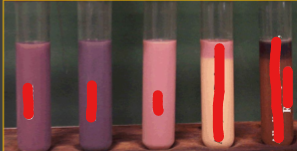
fill in the blank for these litmus test results
control/alkaline/acid/acid curd reduction/ alkaline peptonization reduction
Chronic Granulomatous disease(CGD)
-genetic disorder
-WBCs(phagocytes) are unable to kill certain types of bacteria and fungi. People with CGD often get life threatening bacterial/fungal infections
enrichment-culture technique
makes use of conditions designated to enable a particular type of microorganism to grow faster than all others in a sample
Van Delden’s
anaerobic conditions and sulfare, enrichment for sulfate-reducing bacteria(grrowth produces black precipiate)
Bristol’s broth
no carbon source, enrichment for algae and cyanobacteria
Chu’s broth
no nitrogen source, enrichment for cyanobacteria
antimicrobial agent
Any chemical or physical agent that inhibits the growth of a microorganism or kills it
Chemotherapeutic Drugs
Chemical compounds taken internally to ease the symptoms of a disease or speed a patient’s recovery
Antibiotic
-A chemotherapeutic drug
• A chemical substance produced by a microorganism stops the growth or kills other microorganism, is effective in small doses
known antibiotics and their sources
fungi→penicillum
bacillus→bacitracin and polymyxin
streptomyces→many antibiotics like streptomycin, erythromycin and tetracyline
ANTIBIOTICS (ARE/ARE NOT) TYPICALLY EFFECTIVE
AGAINST VIRUSES
ARE NOT
Kirby Bauer Method
• Broth culture has to have a standard turbidity, known as the 0.5 MacFarland Standard
• Antibiotic disks are of a standard concentration
• Only Mueller-Hinton agar is used
• Temperature affects diffusion of antibiotics. Plates are incubated at a specific temperature and stopped at 24 hours before inhibition zones are
measured
Mueller-Hinton agar is used in Kirby-Bauer test b/c
It has all purpose-media ingredients
• It is a looser agar, which allows the antibiotic to diffuse more easily across the media
• It has starch, which can bind to toxins produced by the bacteria as these toxins may interfere with
the antibiotic
chemical antimicrobial agents
referred to antiseptics, disinfectants & Antibiotic
Antiseptics
• Chemicals that are meant to be applied to
living tissue
• Alcohol
• Iodine
• Heavy metals
• Detergents
• Honey
Disinfectants
• Chemicals that are intended to be applied to the surfaces of nonliving
• Ammonia
• Bleach
• Strong oxidizing agents
TWO IMPORTANT RULES FOR DISINFECTANTS/ANTISEPTICS
1.)use most concentrated form that will cause the least damage when applied to surface
2)for long term use, either apply a combination of agents or change agent used often
Zone-of-inhibition method
It does not discriminate between bacteriostatic (inhibits bacterial growth) and bactericidal (kills the bacteria) chemicals