9 - IV Infusions , Parenteral Admixtures and TPN Preparations
 Call Kai
 Learn
Learn Practice Test
 Spaced Repetition
 Match
Match Flashcards
 Knowt Play
1/25

Earn XP
Description and Tags
Important terms only
Name | Mastery | Learn | Test | Matching | Spaced | Call with Kai | Chat |
|---|
No analytics yet
Send a link to your students to track their progress
26 Terms
b. IV Infusions
Sterile aqueous preparations administered intravenously in relatively large volumes.
a. Parenteral nutrition
b. IV Infusions
c. IV Push
d. Intramuscular injection
c. Both a and b
Extended blood volume
Provide electrolytes, nutrients and medications
[IV Infusions]
Use of IV infusions include ______
a. Extended blood volume
b. Provide electrolytes, nutrients and medications
c. Both a and b
d. None of the above
d. All of the above
Patients in critical care or infirm
Dehydrated and malnourished
Patient prior to, during and following surgery
[IV Infusions]
IV infusions is indicated for ______
a. Patients in critical care or infirm
b. Dehydrated and malnourished
c. Patient prior to, during and following surgery
d. All of the above
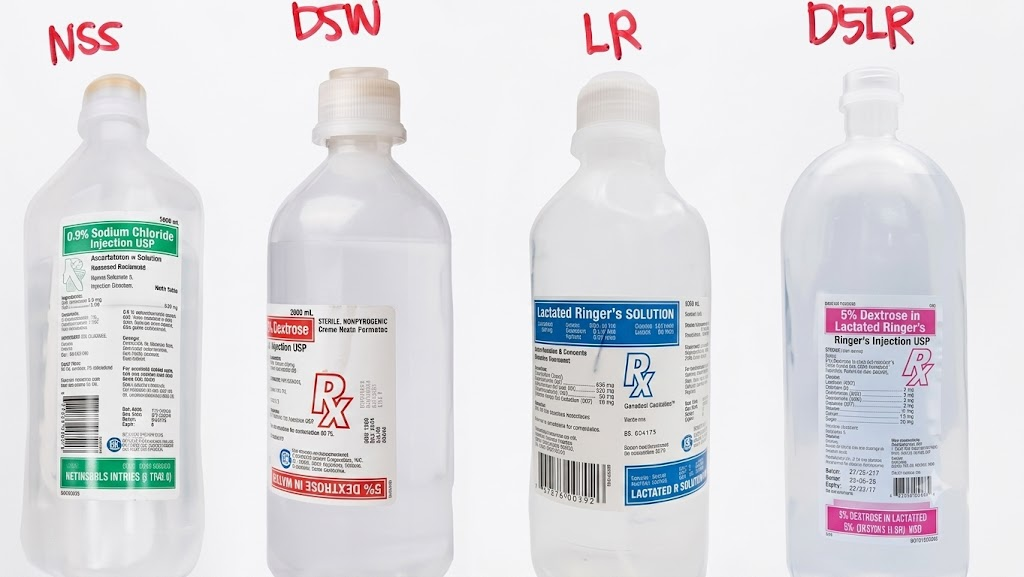
[IV Infusions]
Example of IV solutions for Infusion:
Glass / Plastic bottles
Collapsible plastic bags
Small volume parenteral (SVP)
Large volume parenteral (LVP)
[IV Infusions]
Forms of IV infusions include ______ [2]
a. Small volume parenteral (SVP)
[IV Infusions]
Less than 100 mL
a. Small volume parenteral (SVP)
b. Large volume parenteral (LVP)
c. 50 mL minibag or 100 mL IV piggyback (IVPB)
[IV Infusions]
Example of small volume parenteral (SVP).
a. 250 mL and 500 mL
b. 500 mL and 1000 mL
c. 50 mL minibag or 100 mL IVPB
d. 1000 mL and 2000 mL
b. Large volume parenteral (LVP)
[IV Infusions]
Greater than 100 mL
a. Small volume parenteral (SVP)
b. Large volume parenteral (LVP)
b. 250 mL, 500 mL or 1000 mL
[IV Infusions]
Example of large volume parenteral (LVP).
a. 50 mL and 100 mL
b. 250 mL, 500 mL or 1000 mL
c. 10 mL and 20 mL
d. 150 mL and 200 mL
c. 10-15 drops/mL
[Type of Administration Set]
Administered for standard (macrodrip) IV infusion.
a. 60 drops/mL
b. 20 drops/mL
c. 10-15 drops/mL
d. 30 drops/mL
d. 60 drops/mL
[Type of Administration Set]
Administration set used for pediatric (microdrip) IV infusion.
a. 10-15 drops/mL
b. 30 drops/mL
c. 45 drops/mL
d. 60 drops/mL
d. Microdrip - 60 drops/mL
[Type of Administration Set]
Used for pediatric patients.
a. Macrodrip - 10-15 drops/mL
b. Ultradrip - 90 drops/mL
c. Minidrip - 30 drops/mL
d. Microdrip - 60 drops/mL
c. Macrodrip - 10-15 drops/mL
[Type of Administration Set]
Used for standard adult IV infusion.
a. Microdrip - 60 drops/mL
b. Minidrip - 30 drops/mL
c. Macrodrip - 10-15 drops/mL
d. Ultradrip - 90 drops/mL
a. Microdrip
[Type of Administration Set]
60 drops/mL
a. Microdrip
b. Minidrip
c. Macrodrip
d. Ultradrip
c. Macrodrip
[Type of Administration Set]
10-15 drops/mL
a. Microdrip
b. Minidrip
c. Macrodrip
d. Ultradrip
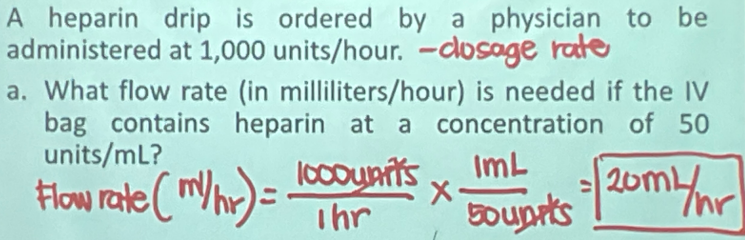
c. 20 mL/hr
[IV Infusions]
PRACTICE PROBLEM:
A heparin drip is ordered by a physician to be administered at 1,000 units/hour.
What flow rate (in milliliters/hour) is needed if the IV bag contains heparin at a concentration of 50 units/mL?
a. 10 mL/hr
b. 15 mL/hr
c. 20 mL/hr
d. 25 mL/hr
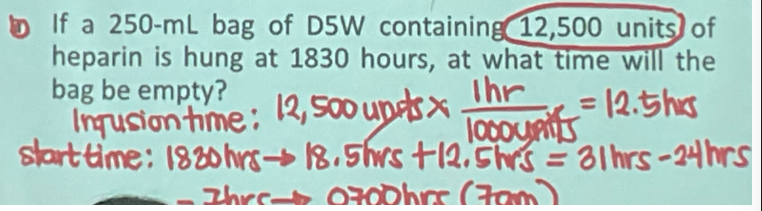
b. 0700 hours (7:00 AM)
[IV Infusions]
PRACTICE PROBLEM:
A heparin drip is ordered by a physician to be administered at 1,000 units/hour.
If a 250-mL bag of D5W containing 12,500 units of heparin is hung at 1830 hours, at what time will the bag be empty?
a. 0600 hours (6:00 AM)
b. 0700 hours (7:00 AM)
c. 0800 hours (8:00 AM)
d. 0900 hours (9:00 AM)
a. Specialized Nutritional Support
[Parenteral and Enteral Nutrition]
The delivery of nutrients using a feeding tube or intravenous infusions
a. Specialized Nutritional Support
b. Total Parenteral Nutrition
c. Enteral Nutrition
d. Parenteral Nutrition
Oral Nutrition
Enteral Nutrition
Parenteral Nutrition
[Parenteral and Enteral Nutrition]
Modes of Nutrition include _______ [3]
a. Oral Nutrition
[Parenteral and Enteral Nutrition]
The mode of nutrition involving food by mouth
a. Oral Nutrition
b. Enteral Nutrition
c. Parenteral Nutrition
d. Specialized Nutritional Support
b. Enteral Nutrition
[Parenteral and Enteral Nutrition]
The mode of nutrition involving nutritional support via tubes (NGT) to the stomach or small intestines
a. Oral Nutrition
b. Enteral Nutrition
c. Parenteral Nutrition
d. Specialized Nutritional Support
a. Intravenous Hyperalimentation
[Parenteral and Enteral Nutrition]
Parenteral Nutrition is also known as
a. Intravenous Hyperalimentation
b. Enteral Hyperalimentation
c. Oral Hyperalimentation
d. Specialized Hyperalimentation
c. Parenteral Nutrition (Intravenous Hyperalimentation)
[Parenteral and Enteral Nutrition]
The mode of nutrition involving nutrition via IV
a. Oral Nutrition
b. Enteral Nutrition
c. Parenteral Nutrition (Intravenous Hyperalimentation)
d. Specialized Nutritional Support
Partial Nutrition
Total Nutrition
[Parenteral and Enteral Nutrition]
Type of Parenteral Nutrition based on COMPLETENESS [2]
Peripheral Nutrition
Central Nutrition
[Parenteral and Enteral Nutrition]
Type of Parenteral Nutrition based on ACCESS [2]
[Parenteral and Enteral Nutrition]
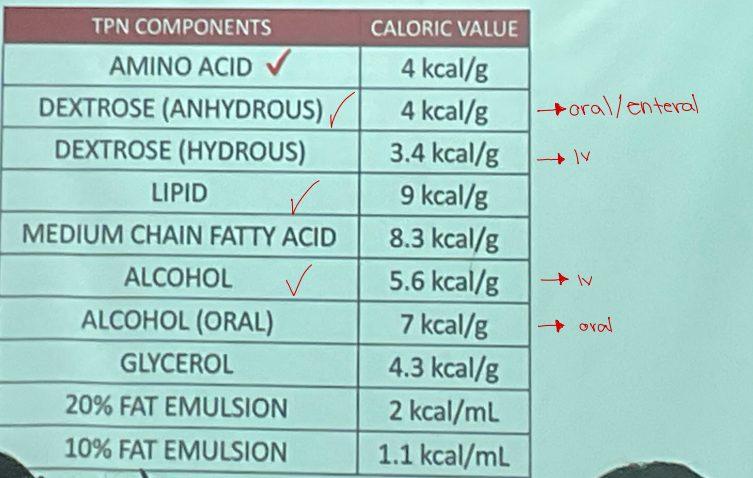
Total Parenteral Nutrition (TPN) components: