1.3.1 compression encryption and hashing
 Call Kai
 Learn
Learn Practice Test
 Spaced Repetition
 Match
Match Flashcards
 Knowt Play
1/13

There's no tags or description
Looks like no tags are added yet.
Name | Mastery | Learn | Test | Matching | Spaced | Call with Kai | Chat |
|---|
No analytics yet
Send a link to your students to track their progress
14 Terms
compression
process used to reduce storage space
meaning you can store more files with the same amount of storage space
The larger a file, the longer it takes to transfer and so compressing files increases the number of files that can be transferred in a given time.
lossy compression
reduces the size of a file while also removing some of its information
could result in a more pixelated image or less clear audio recording
original file cannot be recovered - as it reduces file size by completely disregarding information
lossless compression
reduces file size without losing any information
original file can be recovered from from the compressed version
run length encoding
method of lossless compression
e.g. AAAAAABBBBBCCC could be represented as A6B5C3
relies on consecutive pieces of data being the same if there’s little repetition, run length encoding doesn’t offer a great reduction in file size.
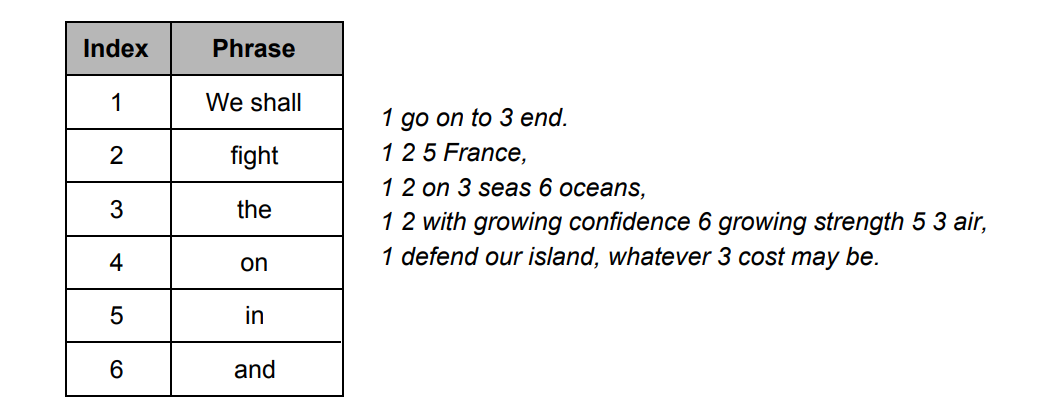
dictionary encoding
lossless compression
Frequently occurring pieces of data are replaced with an index and compressed data is stored alongside a dictionary which matches the frequently occurring data to an index. The original data can then be restored using the dictionary
data compressed using dictionary compression must be transferred alongside its dictionary. Without a dictionary, the data cannot be used.
encryption
used to keep data secure when its transmitted
symmetric/asymmetric encryption
symmetric encryption
both the sender and receiver share the same private key
they distribute to each other in a process called a key exchange
This key is used for both encrypting and decrypting data.
important that private key is kept secret
If key is intercepted during the key exchange then any communications sent can be intercepted/decrypted using the key.
Asymmetric encryption gets around this issue.
asymmetric encryption
public and private key used
public key published anywhere - private key is kept secret
together = key pair
Asymmetric vs Symmetric
Asymmetric = a single key cannot be used to both encrypt and decrypt communication
Instead, messages encrypted with the recipient’s public key can only be decrypted with the recipient’s private key, which should only be in the possession of the recipient.
symmetric
messages can be encrypted with the same key
hashing
process in which an input (called a key) is turned into a fixed size value (called a hash).
how is hashing used
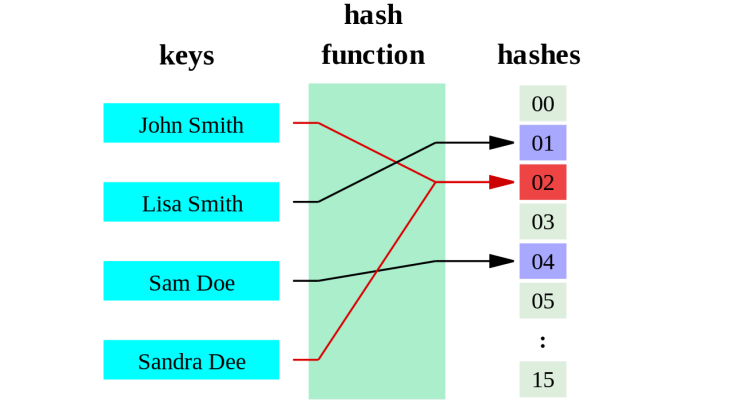
A hash table
data structure which holds key-value pairs. Formed from a bucket array and a hash function
used to lookup data in an array in constant time. When data needs to be inserted, used as the key for the hash function and stored in the bucket corresponding to the hash.
used extensively in situations where a lot of data needs to be stored with constant access times.
e.g. in caches and databases
hash collision
If two pieces of data (keys) produce the same hash, a collision is said to have occurred.
e.g. in the image above the keys John and Sandra both hash to 02.
to overcome collisions
storing items together in a list under the hash value,
or using a second hash function to generate a new hash.
diff between hashing and encryption
in hashing the output of a hash function can’t be reversed to form the key.
This quality makes hashing useful for storing passwords.
A password entered by a user can be hashed and checked against the key to see if it is correct,
successful hacker would only gain access to the keys, which can’t be reversed to gain the passwords.
what should a good hash function have
low chance of collision
should provide an output which is smaller than the input it provided - or searching for the hash could take longer than simply searching for the key.