Sleep Physiology
 Studied by 0 people
 Call Kai
 Learn
Learn Practice Test
 Spaced Repetition
 Match
Match Flashcards
 Knowt Play
1/7

There's no tags or description
Looks like no tags are added yet.
Name | Mastery | Learn | Test | Matching | Spaced | Call with Kai |
|---|
No study sessions yet.
8 Terms
What is the behavioral criteria for sleep
• Stereotyped sleep posture
• Reduced voluntary movement
• Decreased responsiveness to external stimuli
• Elevated arousal threshold (harder to wake)
• Rapid return to sleep if briefly awakened
• Reversibility, distinguishing sleep from coma or anesthesia
What is the physiological criteria for sleep
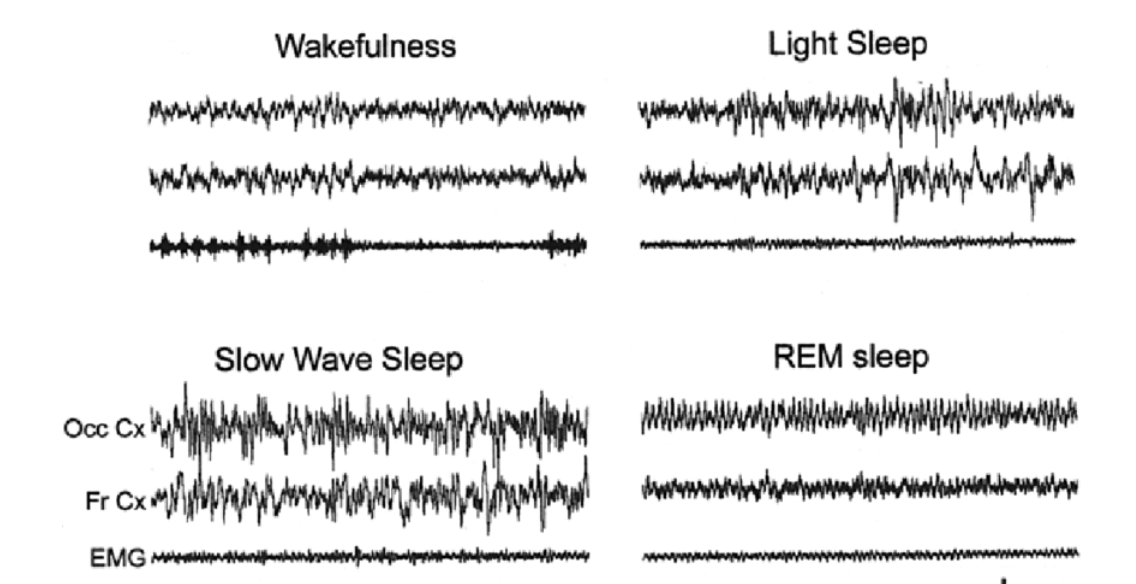
•Electroencephalogram (EEG) patterns
• Reduced muscle tone in most stages and near paralysis in REM (muscle atonia)
• Reduced metabolic activity in many brain regions
• Autonomic changes in heart rate, blood pressure, and breathing
What are the EEG patterns
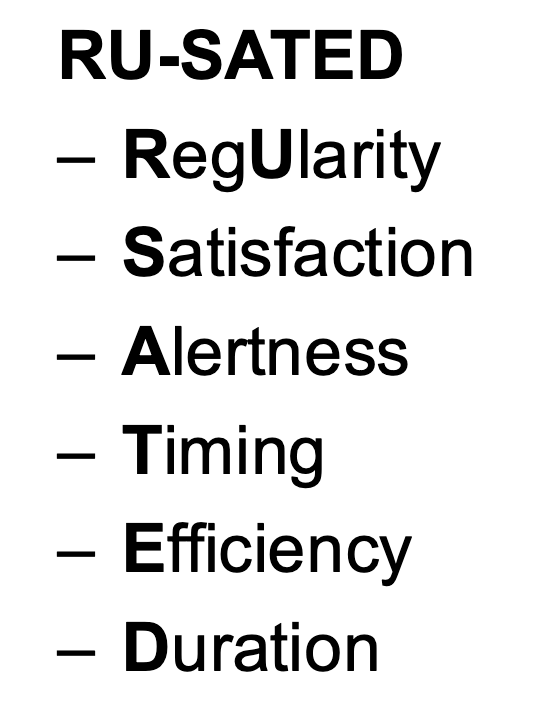
What are the components of healthy sleep
What are the consequences of insufficient sleep
• Impaired attention, working memory, and processing speed
• Higher emotional reactivity and reduced impulse control
• Reduced immune function and increased infection risk
• Metabolic dysregulation including altered insulin sensitivity
• Accumulated risk for cardiovascular and
psychiatric conditions
Analyze how social media behaviors influence sleep physiology through light and arousal
pathways. (1st lecture)
-emotional content activates the sympathetic pathway, delaying the sleep onset
-notifications fragment sleep
-screens emit blue light, which suppresses melatonin
-Late exposure increases time awake, early morning fatigue increases caffeine intake, which further delays sleep
What hurts your sleep hygiene
• High evening screen exposure
• Heavy meals, alcohol, or excessive fluid intake close. to bedtime
• Irregular schedules, late or long daytime naps, and using the bed for wake activities
What helps your sleep hygiene
• Create a wind-down period to reduce stress and anxiety
• Exercise regularly, but not immediately before bed
• Limit caffeine within six hours of bedtime
• Cool, quiet, and dark bedroom environment
• Get natural light exposure
• Regular sleep and wake times, even on weekends