1. Systemic Lupus Erythematosus (SLE)
 Call Kai
 Learn
Learn Practice Test
 Spaced Repetition
 Match
Match Flashcards
 Knowt Play
1/13

There's no tags or description
Looks like no tags are added yet.
Name | Mastery | Learn | Test | Matching | Spaced | Call with Kai | Chat |
|---|
No analytics yet
Send a link to your students to track their progress
14 Terms
Etiology
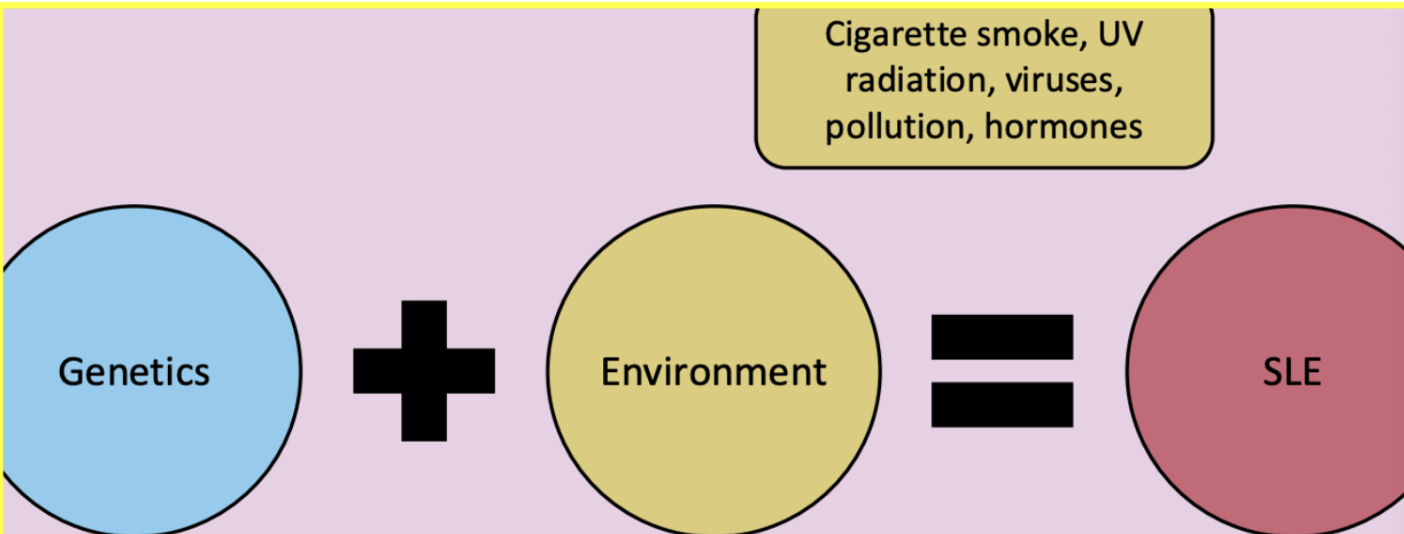
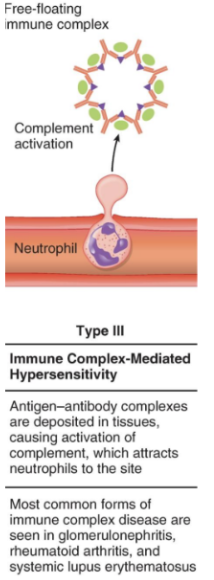
Pathophysiology

Constitutional Symptoms
Fatigue - common in 80%
Fever - rule out infection
Weight changes
Myalgia
Musculoskeletal Manifestations
Joint involvement is the most common manifestation in SLE
Arthritis a common feature typical not erosive nor deforming
Involves fingers, wrists, and knees
Arthralgia, myalgias
Cutaneous/Skin Manifestation
Up to 93% of patients with SLE have skin involvement
Discoid lupus: sores/lesions on face, ear, scalp that scar
Malar (butterfly) rash: photosensitive rash that develops over bridge of nose and cheeks
Renal manifestation and Lupus Nephritis
25-50% present with lupus nephritis at diagnosis
Characterized by proteinuria
Can lead to end stage renal disease and significant reductions in 10-year survival
Antiphospholipid Syndrome
Antiphospholipid syndrome is a completely separate autoimmune disease
SLE is a common cause of secondary antiphospholipid syndrome
Present clinically as thrombosis; will need anticoagulation
Warfarin used
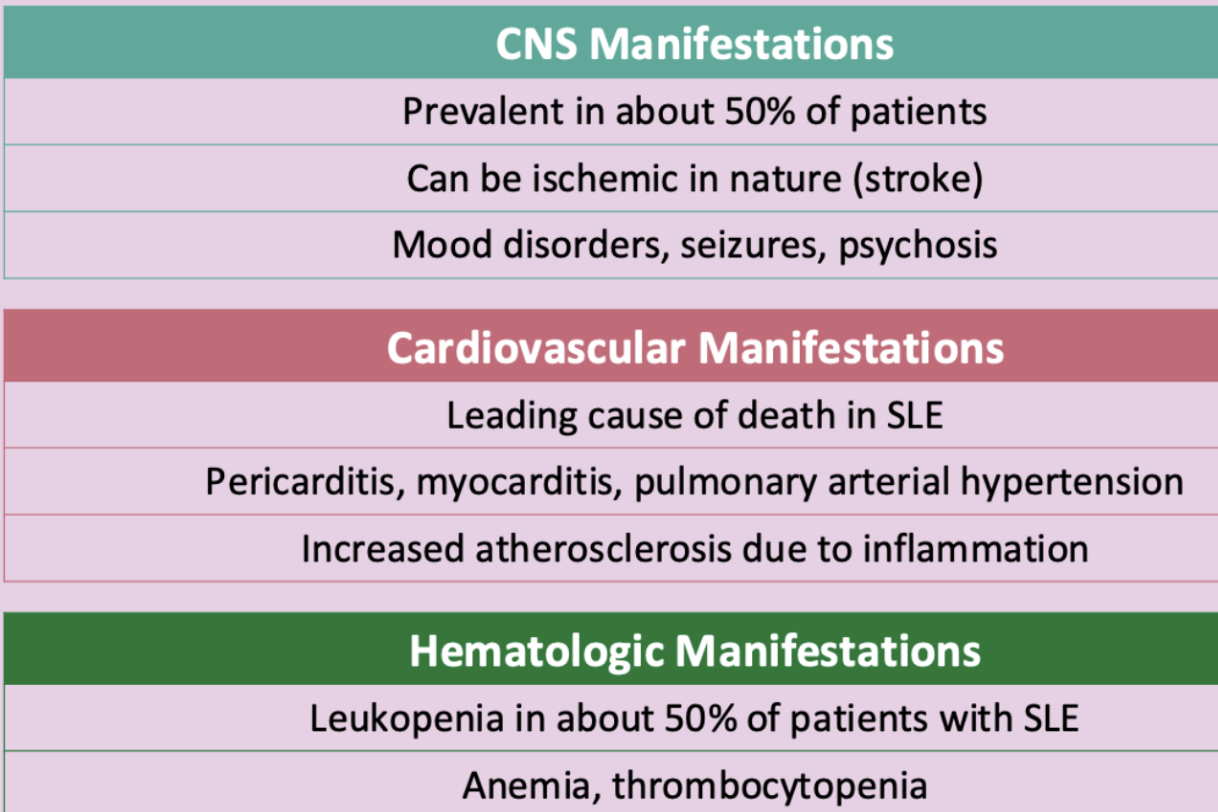
more manifestation
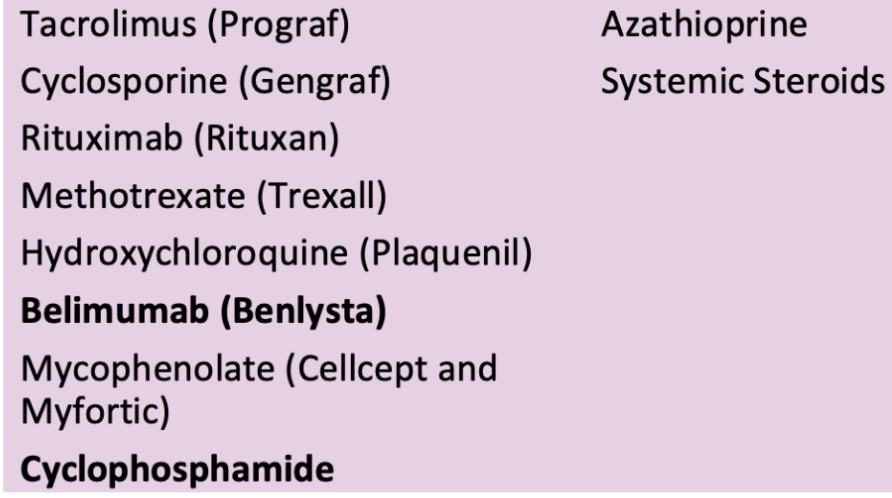
Agents
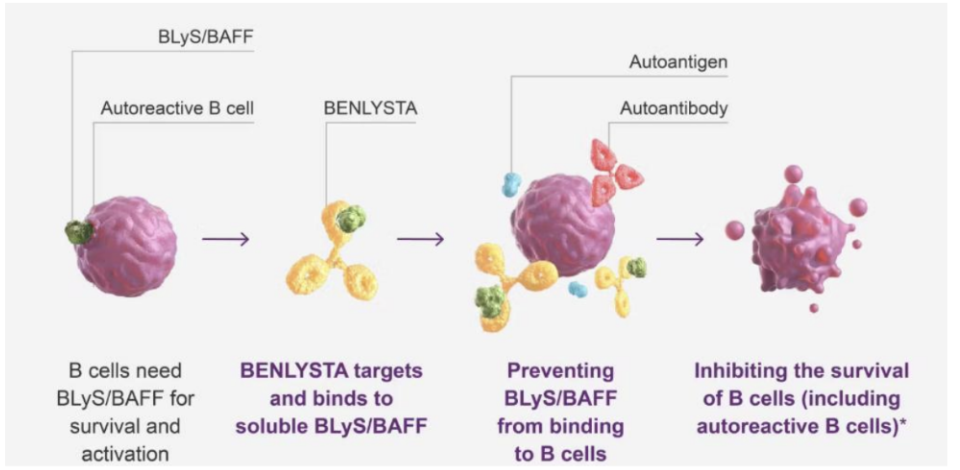
BLyS inhibitor
Belimumab (Benlysta)
Monoclonal antibody against BLyS (B lymphocyte stimulator protein; no BLyS bining to B cells → inhibition of autoreactive B cell survival)
BLyS appears to be overexpressed in SLE, and contributes to increased autoreactive B cells
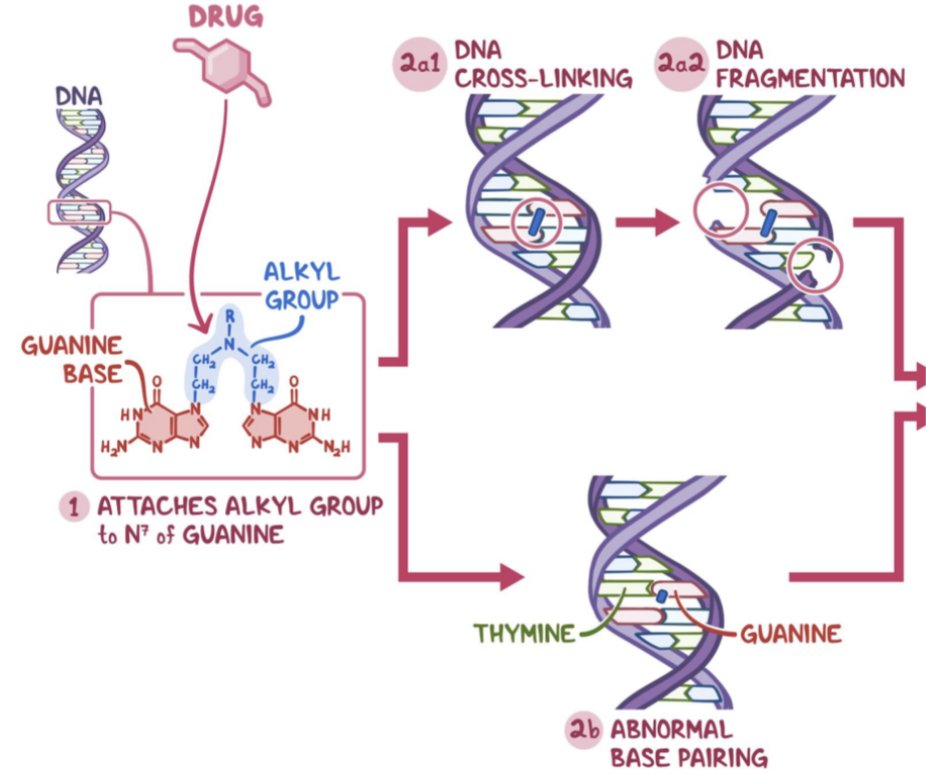
Cyclophosphamide
Immunosupressant and chemotherapeutic agents
Known as alkylating agent: binds to DNA making it impossible for cells to function → leads to cell death
Cyclophosphamide seems to have selectivity for T cells, which helps in its immunosuppression
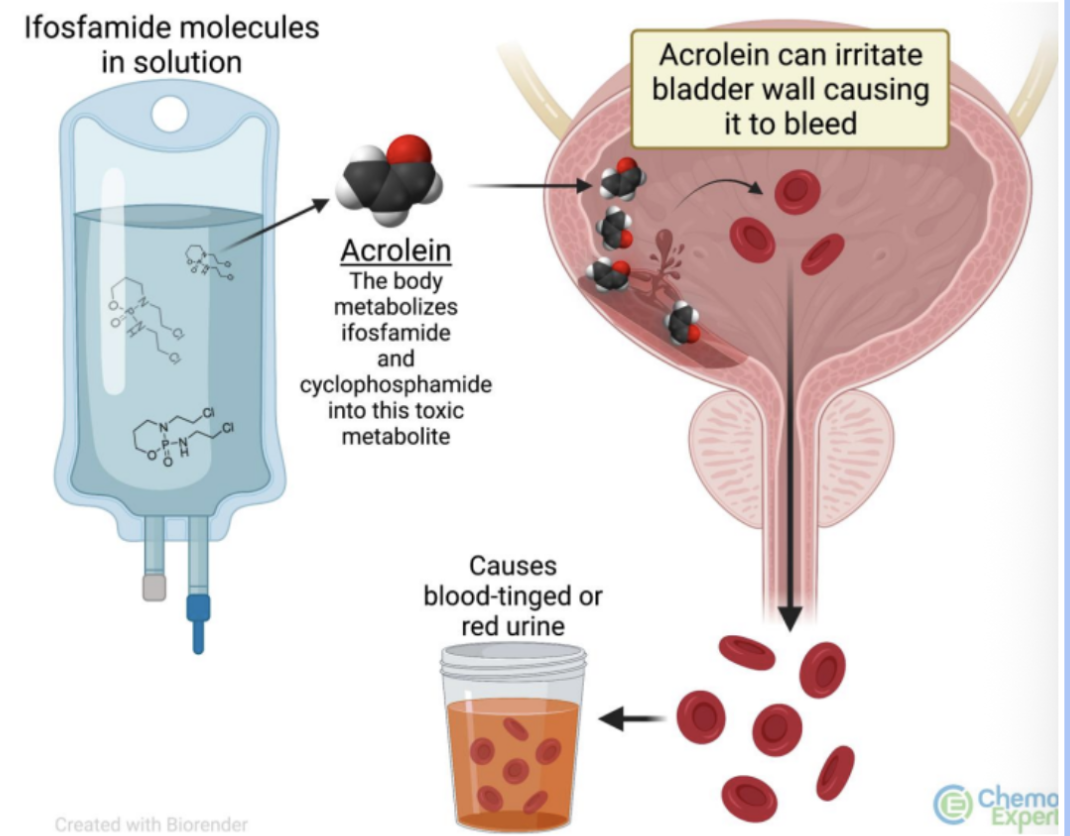
Cyclophoshamide ADE/warning
Cyclophosphamide can lead to hemorrhagic cystitis
Prevent by giving mesna, which detoxifies acrolein (the toxic metabolite), and with frequent hydration
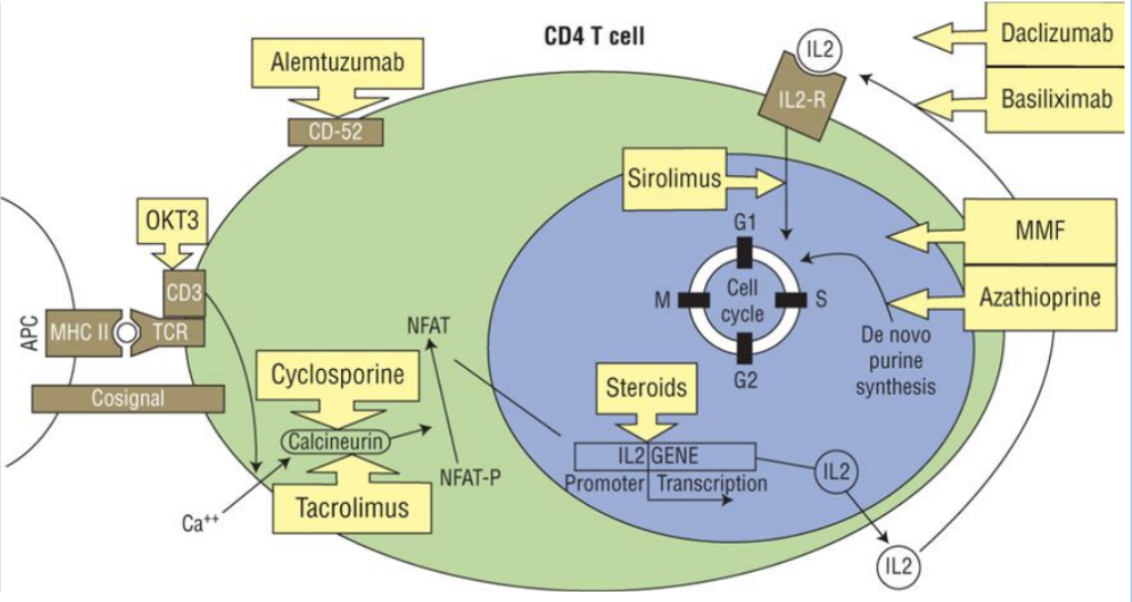
Calcineurin Inhibitors
Cyclosporine (Gengrad), Tacrolimus (Prograf), and Voclosporin (Lupkynis)
Blocks T-cell proliferation by inhibiting calcineurin leading to a decrease in the production of IL-2 and other cytokines
Like IL-2 inhibitors
Antimetabolite - mycophenolate
Mycophenolate mofetil (CellCept) and Mycophenolate sodium-enteric coated (Myfortic)
Reduces lymphocyte proliferation by binding to a key enzyme (inosine monophosphate dehydrogenase) responsible for nucleotide synthesis
Can inhibit synthesis of all cells, but is more sensitive for the version of the enzyme on T and B cells
Other antimetabolites: azathioprine and methotrexate