Seasonality, detecting and manipulating oestrus
 Call Kai
 Learn
Learn Practice Test
 Spaced Repetition
 Match
Match Flashcards
 Knowt Play
1/98

There's no tags or description
Looks like no tags are added yet.
Name | Mastery | Learn | Test | Matching | Spaced | Call with Kai | Chat |
|---|
No analytics yet
Send a link to your students to track their progress
99 Terms
what type of seasonality does a cow have
she doesn’t, she is polyoestrus all year round
what occurs in the mare after her period of anoestrus?
prolonged oestrus
how many cycles do we expect a mare to have each year?
9/10
how many cycles do we expect a ewe to have each year?
7
what occurs in a ewe after her period of anoestrus?
silent oestrus
what are 4 seasonality controlling factors
photoperiod
melatonin
temperature
nutrition
what does melatonin directly affect?
HPO axis
describe how a short day breeder returns to cyclicity after anoestrus
increasing melatonin
increased GnRH synthesis
increased FSH, then LH
describe what happens to long day breeders to return back to cyclicity after anoestrus
decreasing melatonin
increasing plane of nutrition
increased GnRH synthesis
describe what happens in the transition period in the mare
increasing GnRH
increasing FSH but NOT LH
initiation of antral folliculogenesis but not to a good enough standard
this casues irregular oestrus
gradually there’s an increase in steroidogenic competence
increased LH
ovulation
normal cycling
how long does the transition period take after oestrus in a mare
50-60 day
what do we call the follicles during the transition period?
transition follicles
what are 2 things we can do to counter the seasonality of horses
shuttle stallions b/w hemispheres (can do females but less effective)
artificial change to the photoperiod
what are 4 hormones we can use to manipulate seasonality?
melatonin
GnRH
ECG
progesterone + ECG
what is ECG
equine chorionic gonadotrophin
what does ECg affect?
FSH/LH activity
directly stimulates the ovary
if we have ewes in mid-august who we want to bring into sesason earlier, what hormones could we use for this?
progesterone + ECG
which species do we mainly use melatonin on?
sheep and goats
how would we describe the oestrus that occurs after the anoestrus period for a mare?
erratic and irregular
describe what takes place in metoestrus
uterus is prepared for pregnancy
oestrus behaviour is inhibited
LH surge (not tonic) is blocked
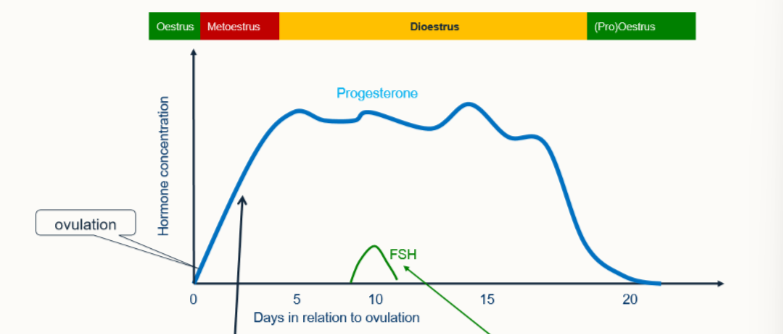
describe what the small peak of FSH causes
antral follicle development is stimulated, selection of a dominant follicle occurs
describes what happens after dioestrus if the animal isn’t pregnant
uterine PGF2a → luteolysis → reduced progesterone → increased oestradiol from ovulatory follicle inducing oestrus
when does the ovulation occur in a cow?
24 hours after LH surge - 12 hours after the end of oestrus
when should we mate a cow with an ideal oestrus cycle?
one day prior to ovulation
why should we mate cows, ideally one day before ovulation?
oocytes age if not fertilised and usually can’t be fertilised after 24hrs post ovulation
how long before ovulation should we perform AI
6-12 hours prior - the same day oestrus behaviour has been observed
what is challenging about timing mating/AI for cows
detecting oestrus as there’s only 5-18 hours when she is in this period
is detecting/timing oestrus an issue with ewes?
no as they’re mated throughout oestrus by a ram
what are 2 issues with mating ewes
ram:ewe ratio
identification of mated ewes
when do we perform AI in ewes?
12 hours
When do we perform mating/AI for sows?
day after onset of standing oestrus
how many inseminations do we typically use for sows?
two
what is the normal practice of mating a mare?
tease daily
breed throughout the period
monitor ovaries with ultrasound
what can we use to be more accurate with mating bitches?
vaginal cytology
plasma progesterone measurement
State 6 symtpoms of oestrus 2-24 hours before coming into oestrus in cows
reduced milk yield
brawling
restlesness
chin pressing
swelling of vulva
mucous discharge
state 4 clinical signs of standing heat in cows
stands to be mounted
mounts other cows
swelling of vulva
mucous discharge
state what clinical sign we see going out of heat in cows
bloody discharge - not menstruation!
what are 3 ways to detect oeestrus in cows
examine >4 x per day for >30 mins
classic detection aids
remote/electronic aids
what can we detect in plasma/milk to determine oestrus?
progesterone
what can we detect in ultrasonography to confirm oestrus in a cow
a large dominant follicle in absence of a CL
state 7 factors that might inhibit oestrus behaviour
hard slippery floor
high environmental temperature
high milk yield
overcrowding
recent mixing/stress
lameness
feeding
what medicine can we use to synchronise ovulation
ovsynch - GnRH and PGF2alpha
why use ovsynch
remove need to oestrus detection
reduce time from calving to re-conceiving
state 3 signs of oestrus in the ewe
restlessness
stands for the ram
vulva
what are 2 detection methods of oestrus in the ewe
vasectomised ram with raddle
synchronisation protocols
what is WOI?
weaning to oestrus interval
what are 5 typical signs of oestrus in the sow
stands to be mounted
vulval reddening, swelling + congestion before oestrus
seeks boar, pacing, searching, grunting
stands for boar
responds to pheromones
why is it key we know when to put the stallion in with the mare
if we time it wrong it can lead to damage of the stallion
what are 5 signs of oestrus in the mare?
oedematous vulva with mucoid discharge
elevated tail, leaning hindquarters towards stallion
spreading hindlegs
repeated exposure of clitoris - ‘‘winking’’
‘‘flehmen’’ response in stallion
what size of large follicle confirms oestrus in a mare?
>20mm
describe pro-oestrus in the bitch
very long
bitch is attractive but won’t allow mating
vulval swelling
serosanguinous discharge
describe signs of oestrus in the bitch
standing to be mated
deviation of the tail
discharge is paler
vulval oedema is reduced
state 2 clinical methods of detecting oestrus in the bitch
vaginal epithelial cells
plasma progesterone concentrations
what type of ovulator is a queen
induced
what does the queen require for oestrus?
continuous mating to trigger the surge centre for LH surge before oestrus
state 7 signs of oestrus in the queen
increased vocalisation
increased activity
seek the tom
slight mucoid vulval discharge
extending hindlegs, demonstrating lordosis
tail is erect and to one side
lowers front quarters for mating
describe 3 occasions where anoestrus occurs
during lactation/present offspring
seasonality
monoestrus breeders
what are 4 pathological occasions that anoestrus occurs?
metabolic stress
heat stress
cystic ovarian disorders
inactive ovarian activity
what is a silent oestrus
an oestrus with limited signs of oestrus
when does a silent oestrus typically occurs?
first oestrus after seasonal anoestrus/parturition
what 3 things occur (or don’t occur) for anoestrus to take place
no progesterone priming brain centres
no progesterone fall to trigger oestrogen receptor expression in the brain
no sudden oestradiol release
when does silent oestrus take place in dairy cows?
first ovulation post-partum typically
what state are dairy cows in which increases their chance of silent oestrus?
severe negative energy balance
what are 2 potential solutions to preventing silent oestrus in cows
ovsynch
profiling progesterone levels in milk
describe what takes place in the follicular pahse of a typical 21 day oestrus
increasing E2
this triggers GnRH relsease → LH surge → ovulation
describe what takes place in the luteal phase of a typical ‘21’ day oestrus cycle
Cl develops causing increasing progesterone levels until fully mature with elevated P4
what terminatees the luteal phase?
luteolysis
describe polyoestruc cyclicity
the cycle will repeat itself every number of days, beginning with ovulation (folliclar phase) and ending with luteolysis (end of luteal phase) triggering a new ovulation.
what doesn’t occur in animals, which occurs in humans?
menstruation
how does pregnancy affect cyclicity?
pregnancy expands the luteal phase and suppresses the return to oestrus, therefore having no cycles whilst gestating
describe the cyclicity of the bitch
non-seasonal
monoestrus
spontaneous ovulator
how long is the anoestrus period in a bitch?
around 7 months
describe the hormonal changes in the bitch during pro-oestrus + oestrus
oestradiol increasing dramatically
this will trigger an LH surge
ovulation occurs
describe the hormonal changes during monoestrus in the bitch
prolonged period of monoestrus with an extended decline in progesterone levels which leads into a period of anoestrus
how is the oocyte less mature in dogs than other species?
the dog oocyte arrests in meiosis I compared to meiosis II
what hormonal change is required for parturition?
a sudden decrease in progesterone levels
compare the progesterone levels of a pregnant vs non-pregnant bitch
progesterone is higher in the pregnant dog from day 21
rapid fall in progesterone at parturition which doesn’t occur in the bitch
what influence does prolactin have on progesterone in the cycle of a bitch when pregnant?
elevated prolactin secretion
maintains elevated progesterone concentrations by stimulating the CL
the placenta contributes
is there an increase in prolactin in the non-pregnant bitch?
yes, although less significant than in the pregnant bitch and not maintained as levels decrease
describe the role of prolactin in the bitch
prolactin acts as the main luteotrophic hormone after day 21, stimulated by an initial decline in progesterone
it helps to support the CL and maintain progesterone levels but they gradually decline
what surgical procedure will result in pregnancy loss
ovariectomy - as progesterone, which is only produced by the CL is required
describe how we can achieve termination of the luteal phase synthetically
repeated administration of prolactin inhibitor but ONLY after 21 days
why will a prolactin inhibitor only be affective at terminating the luteal phase in the bitch after 21 days?
prolactin must be the principle luteotrophic hormone
what does terminatino of the luteal phase lead to in the bitch?
anoestrus
state 2 roles of elevated progesterone in the non-pregnant bitch
mammary tissue enlargement
potential for milk secretion
describe 2 roles of elevated prolactin in the non-pregnant bitch
milk production
behavioural changes typical of pregnancy
due to the prolonged period of hig progesterone in the bitch, what symptom is common in these animals?
pseudopregnancy - considered a normal part of their cycle
describe the cyclicity of the queen
seasonal long day breeder
polyoestrus
induced ovulator
why does the time of puberty vary in queens?
as cats are seasonal long-day breeders, onset of puberty is influenced by the season
in which months do we see repeated oestrus signs in the queen?
march → october
what does an absence of ovulation ina queen cause?
regression of follicles
what does a queen require for ovulation to take place
stimulation aka mating - they’re induced ovulators
what is the average interval between oestrus in a queen
16-21 days
if a cat doesn’t ovulate, what part of her cycle does she therefore not experience?
luteal phase
why is multiple matings needed for the queen to become pregnant?
mating stimulates surge centre, but the stimulus must exceed the threshold for the LH surge to take place and therefore ovulation
when is the greatest response to mating in queens in her cycle?
mid-oestrus - magnitude of LH surge changes on day of cycle
what is meant by a pesudopregnancy in a cat, is this normal?
ovulation occurs but she doesn’t become pregnant
causes a long luteal phase = 45 days
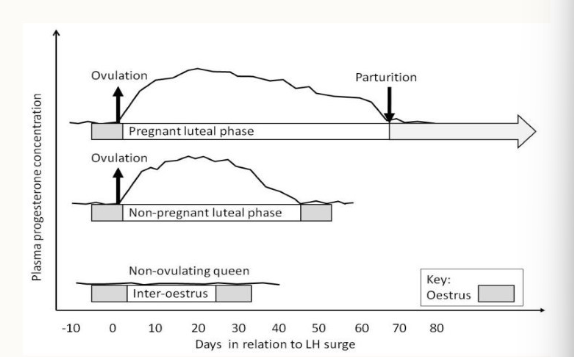
in which species is pseudopregnancy:
normal part of cyclicity
abnormal
bitch
queen
how long does ovulation + pregnancy take in a queen?
roughly 68 days