SLC Powerpoints
 Studied by 0 people
 Call Kai
 Learn
Learn Practice Test
 Spaced Repetition
 Match
Match Flashcards
 Knowt Play
1/28

Earn XP
Description and Tags
Lecture speed run on 12/3/2025, regular pace on 12/10/2025, 12/17/2025
Name | Mastery | Learn | Test | Matching | Spaced |
|---|
No study sessions yet.
29 Terms
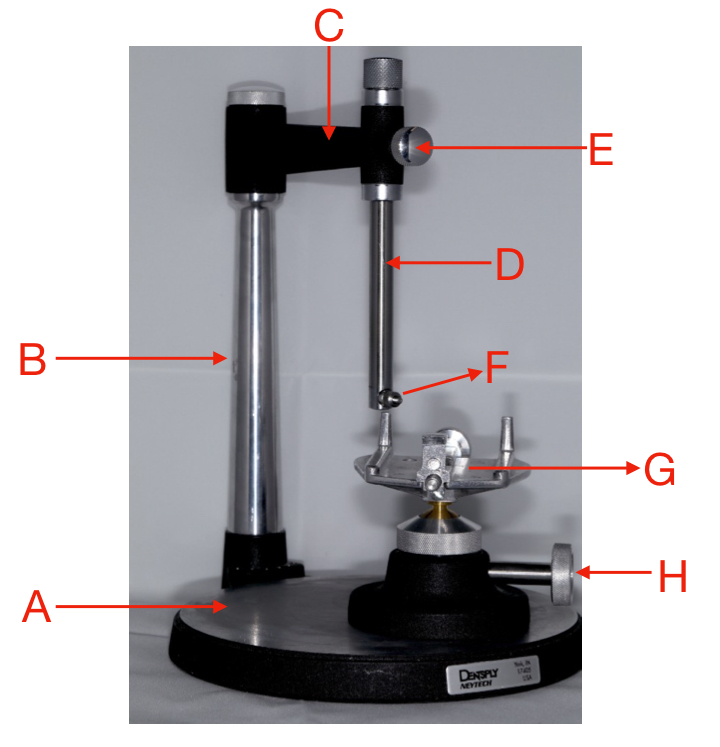
what is labeled A?
surveying plataform
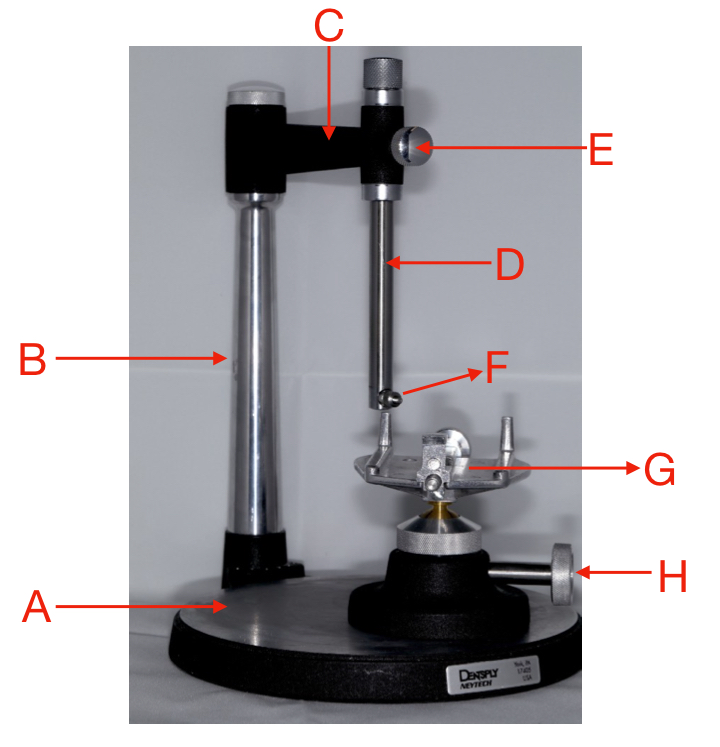
what is labeled B?
vertical column
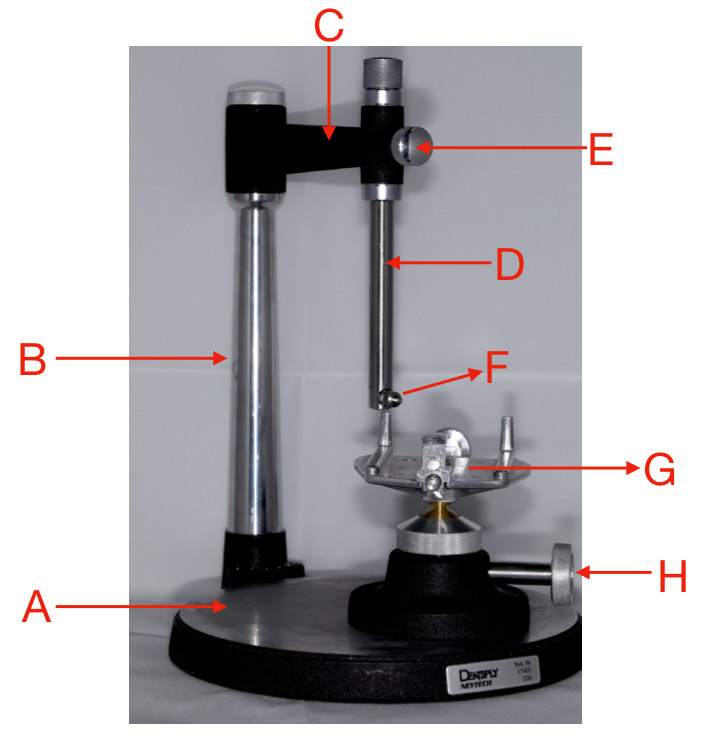
what is labeled C?
horizontal arm
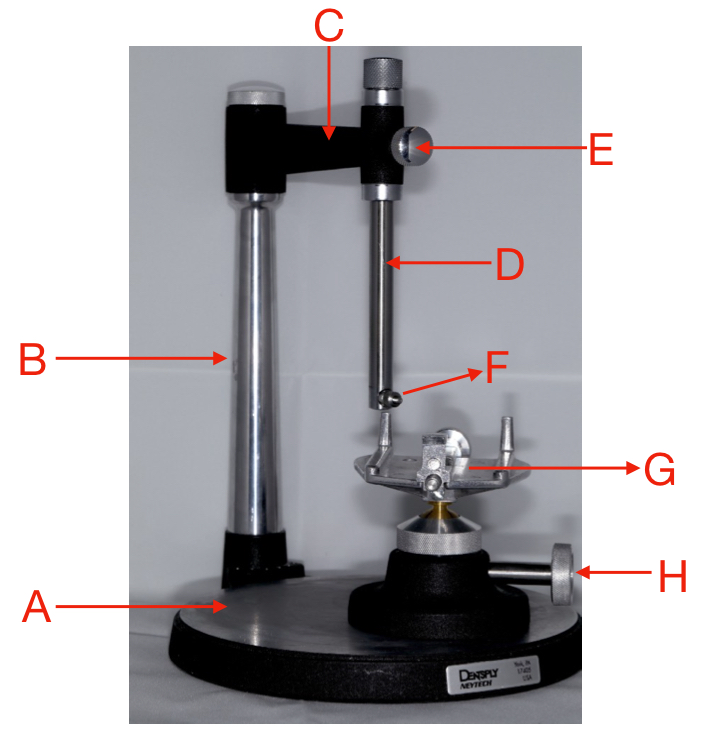
what is labeled D?
surveying arm
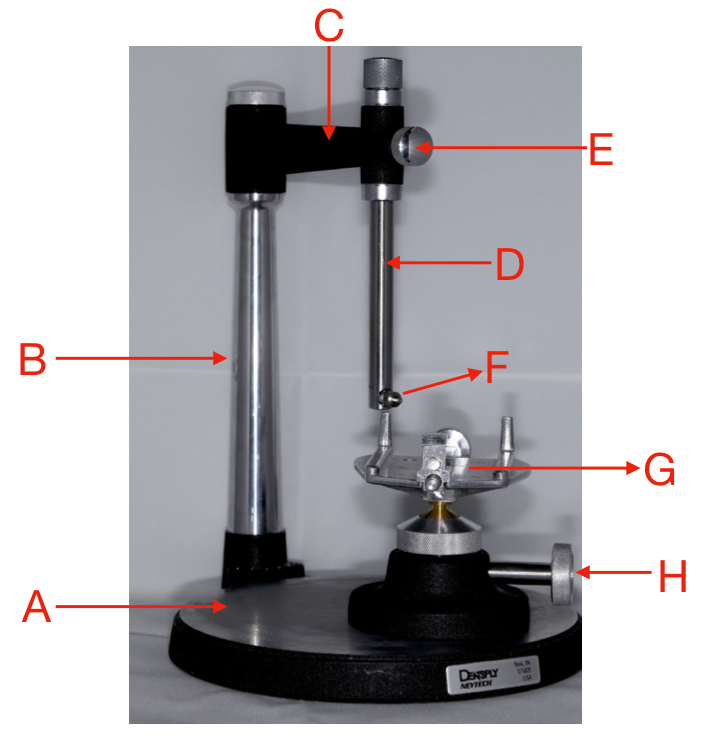
what is labeled E?
tightening screw
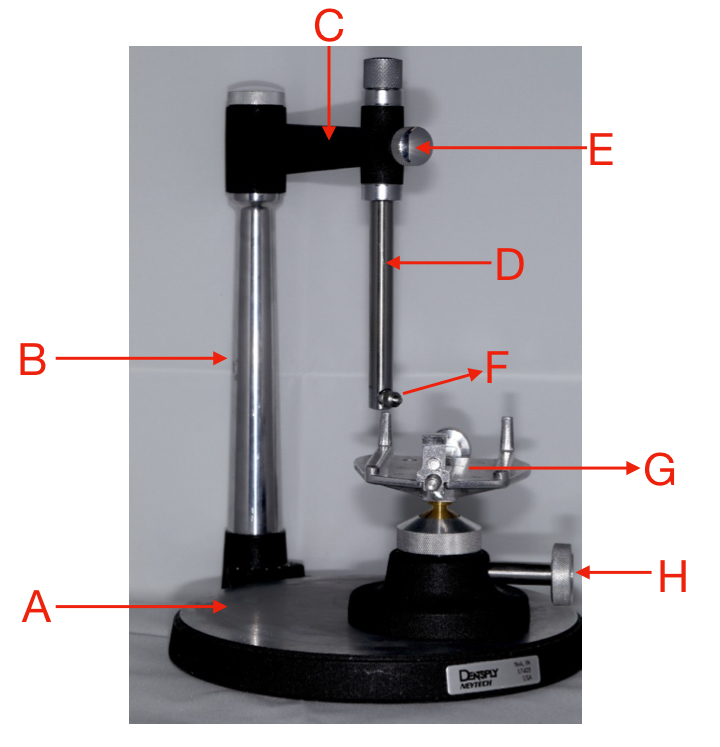
what is labeled F?
surveying tool holder
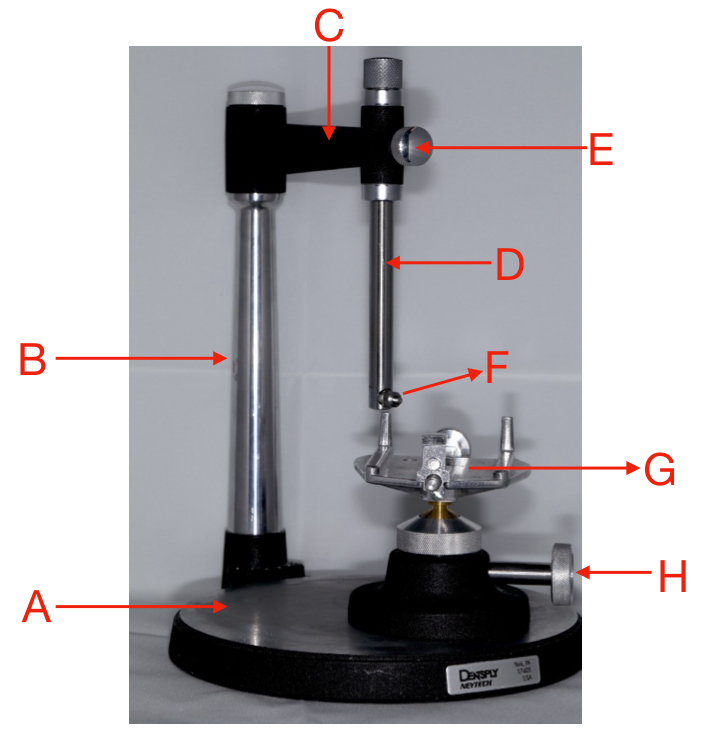
what is labeled G?
surveying table
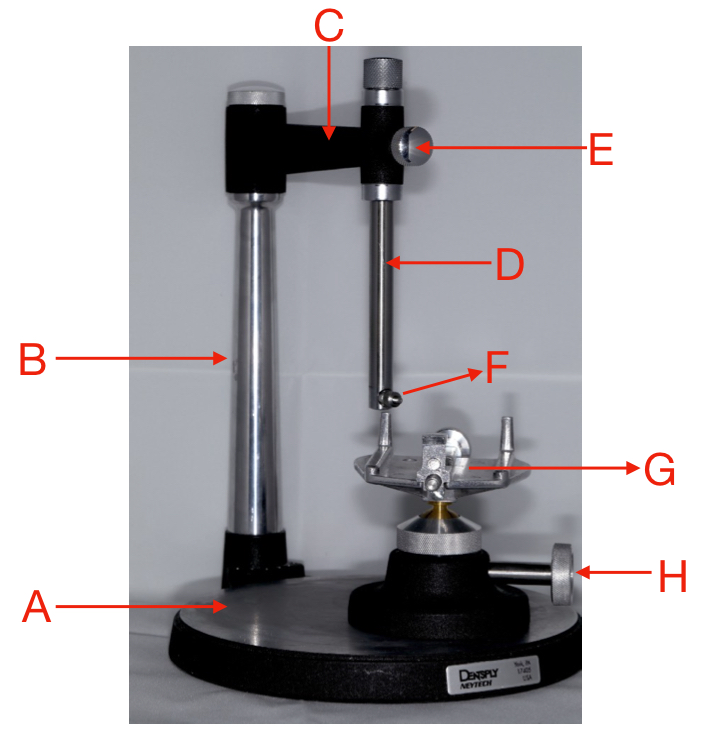
what is labeled H?
surveying table locking screw
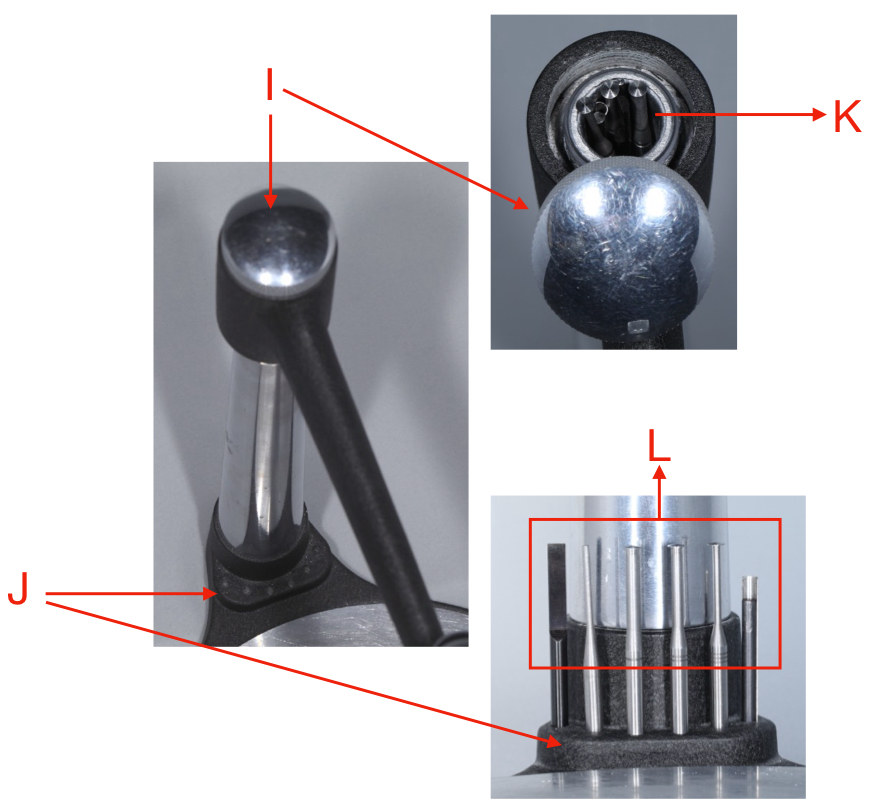
what is labeled I?
storage compartment cap
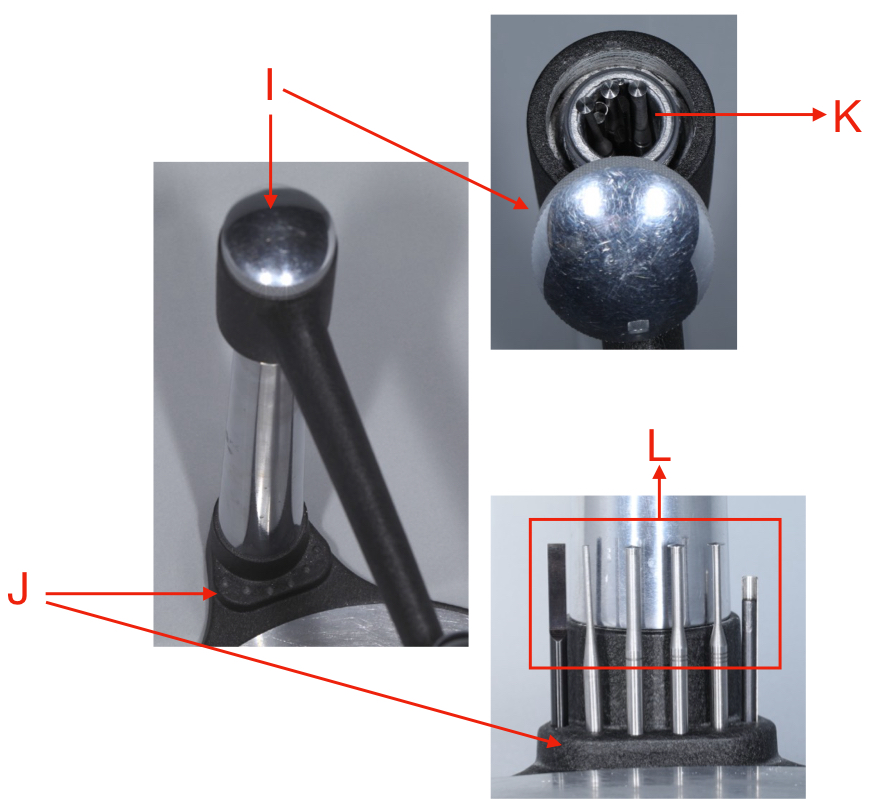
what is labeled J?
accessory rack
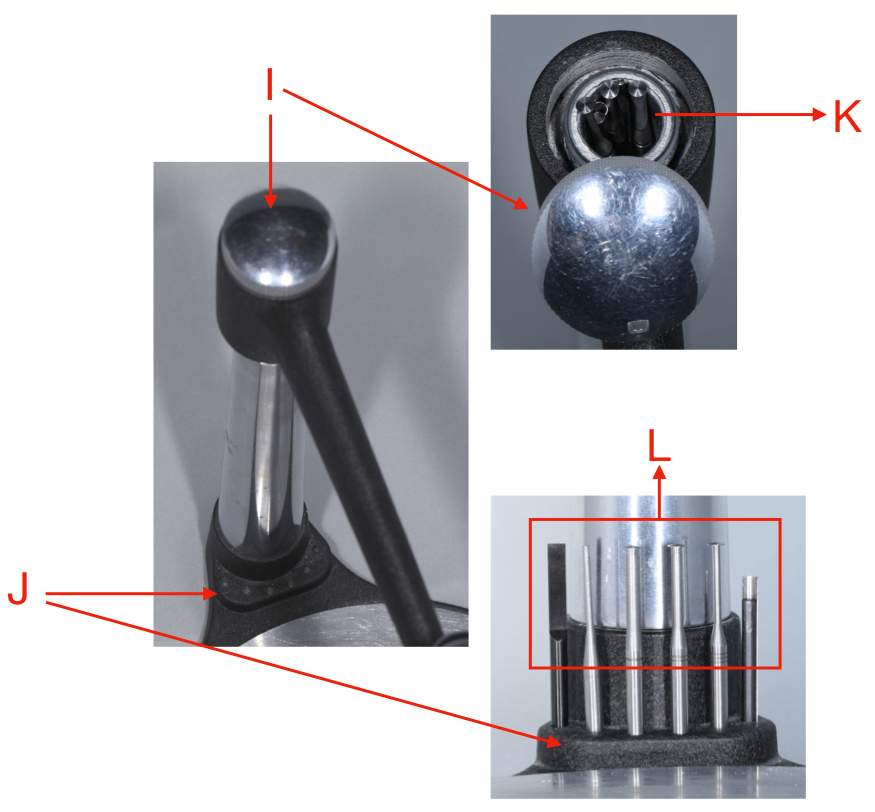
what is labeled K?
storage compartment
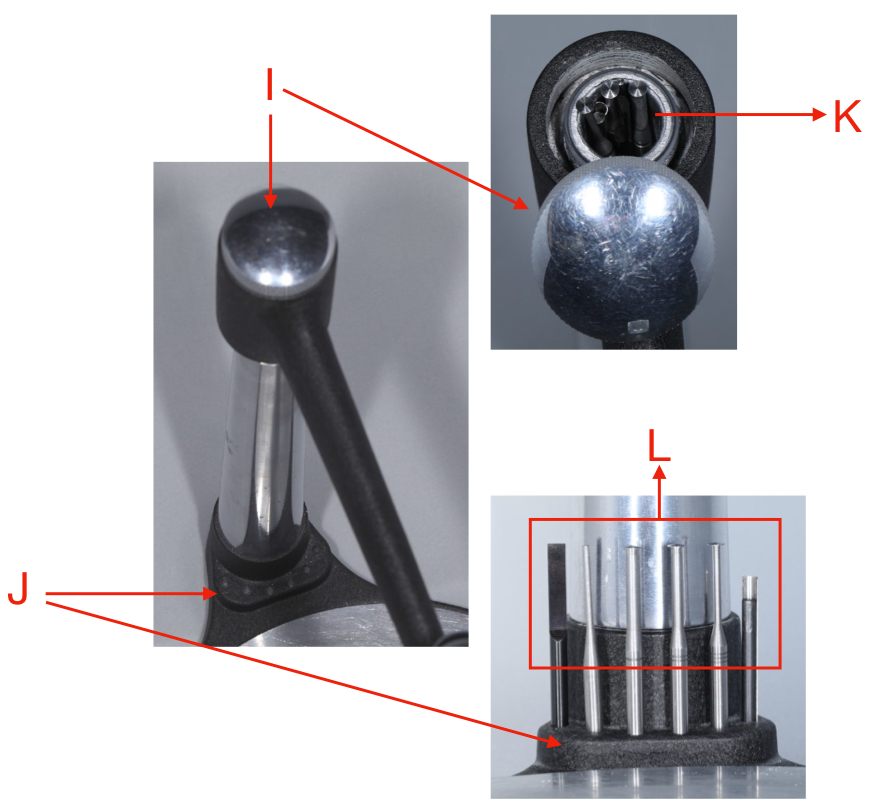
what is labeled L?
surveying tools
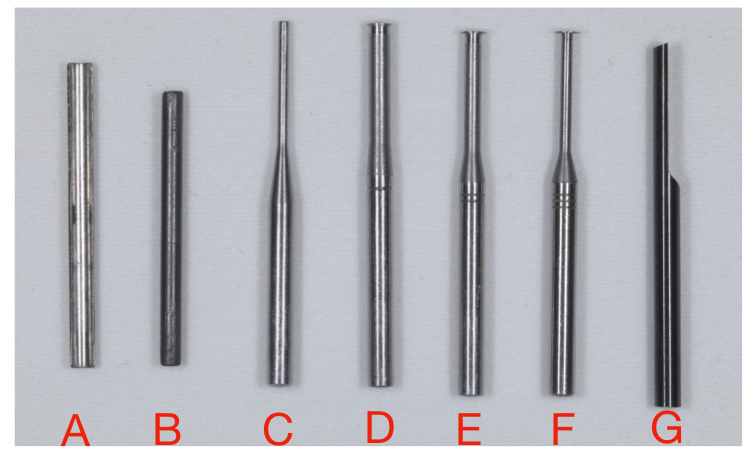
what is labeled A?
carbon sheath
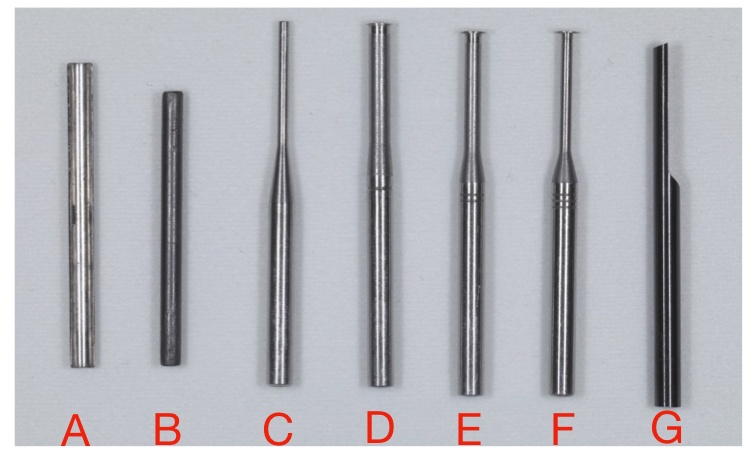
what is labeled B?
carbon marker
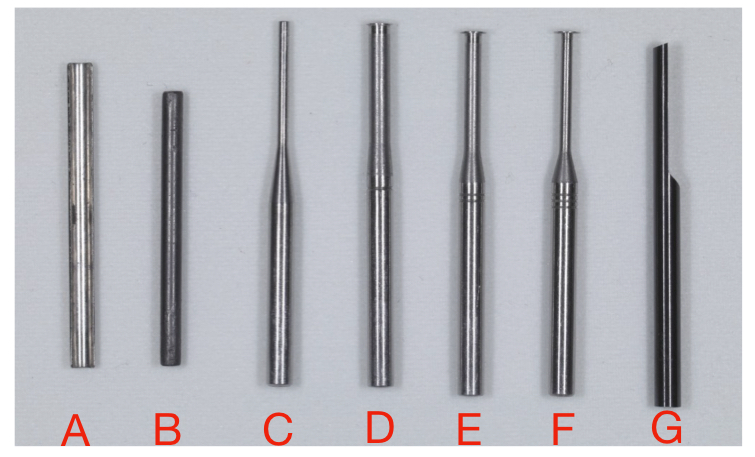
what is labeled C?
analyzing rod (no notch)
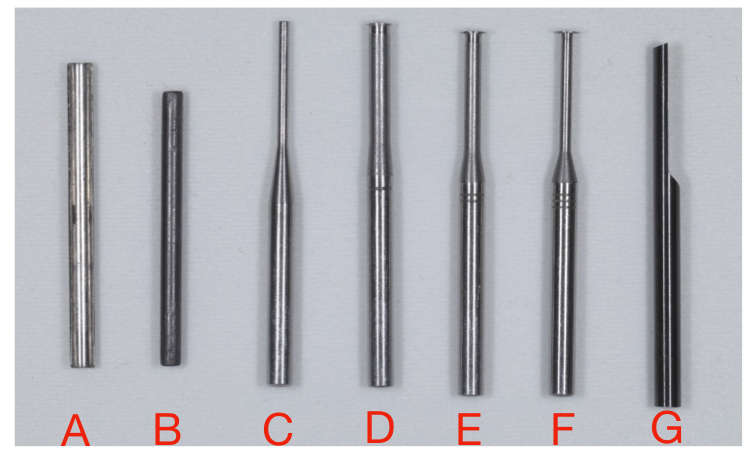
what is labeled D?
0.01" undercut gauge (1 notch)
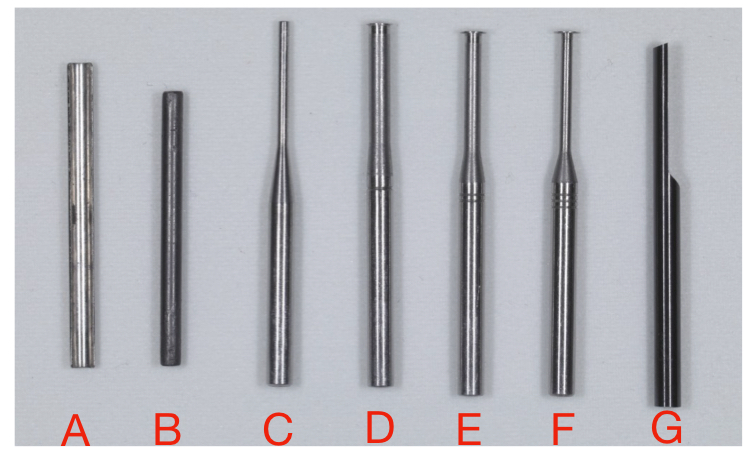
what is labeled E?
0.02” undercut gauge (2 notches)
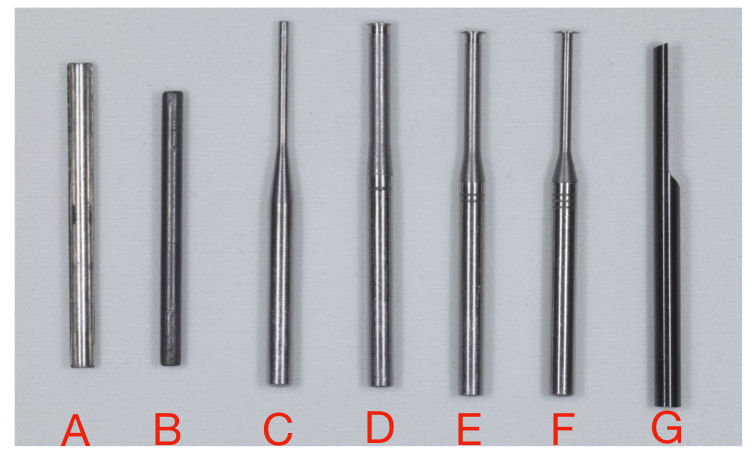
what is labeled F?
0.03” undercut gauge (3 notches)
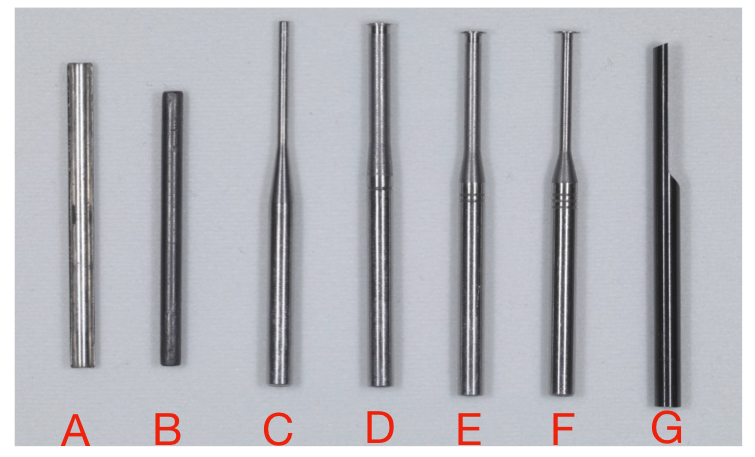
what is labeled G?
wax carver
what kind of joint is the surveying table on?
ball joint, so it has 360 degrees of movement
when looking for an undercut, the vertical and horizontal portions of the undercut gauge should be….
contacting the tooth surface and you should see a small triangle
how can you mark the survey line (height of contour) on a cast?
place the carbon sheath and carbon marker into the surveyor and gently run it around the tooth
when making a guide plane, how long should it be?
2 to 4mm
how can you change a survey line?
use a tapered diamond bur, lightly brush around the height of contour where you want to lower it
t/f when making a retentive dimple, it should be nice and sharply defined
false- should be smooth and flowing
sharp should be avoided since retentive clasps cannot fle into an out of them
how wide (B-L) should an occlusal rest be?
½ of the width of the tooth
how wide (M-D) should an occlusal rest be?
1/3 to 1/3 of the tooth
when you are beginning a survey session, what is the first thing you should do?
place and tighten cast on the table, have the cast with the occlusal plane parallel to the base of the platform in both lateral and anterior-posterior views (aka zero tilt position)
identify teeth next to you edentulous space(s) and the surfaces where guide plane(s) could (should) exist
identify the teeth where clasps could be placed
change the anterior-posterior tilt as needed until the proximal surfaces are in or near parallel relation to one another (or close enough that they can be made parallel by recontouring)
how do you tripod a cast?
determine the final path of placement (the combination between the anterior-posterior and lateral positions)
with the help of an analyzing rod, mark 3 vertical lines (on the left, right, and back of the cast)