Lecture 7. Pelvic Limb Osteology (Bones of the Pelvic Limb)
 Call Kai
 Learn
Learn Practice Test
 Spaced Repetition
 Match
Match Flashcards
 Knowt Play
1/137

There's no tags or description
Looks like no tags are added yet.
Name | Mastery | Learn | Test | Matching | Spaced | Call with Kai | Chat |
|---|
No analytics yet
Send a link to your students to track their progress
138 Terms
pelvic girdle (pelvis)- os coxae/coxal (hip bones)
what region and bones are indicated by the yellow area
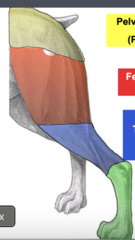
femoral region (thigh)- femur and sesamoids
what region and bones are indicated by the red area

crus/tibial/crural region (leg)- tibia, fibula, and sesamoids
what region and bones are indicated by the blue area
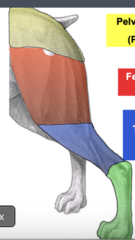
pes (foot)- tarsas, metatarsus, digits, and sesamoids
what region and bones are indicated by the green area

cluneal
1

ischiatic tuberosity
3
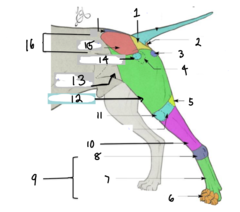
greater trocanter
4
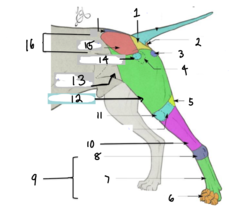
popliteal
5

digits
6
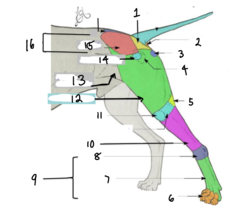
metatarsus
7

tarsus
8
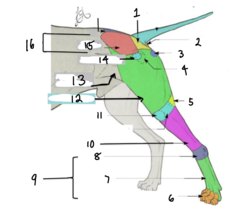
pes
9

tibial/leg
10
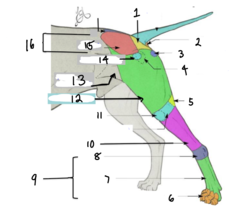
genual/stifle joint
17
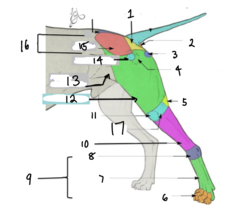
patella
11

femoral/thigh
12
lateral cutaneous fold
13
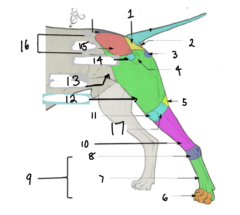
coxal/hip joint
14

gluteal
15

pelvic girdle
16
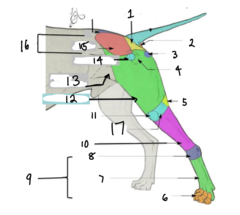
perineum: caudal to pelvis and between pelvic limbs to include urogenital tract and reproductive tract
what is the area shown here best described as

anal triangle
what area is indicated in orange

ischiatic tuberosity
what area is indicated in dark purple

urogenital triangle
what area is indicated in magenta

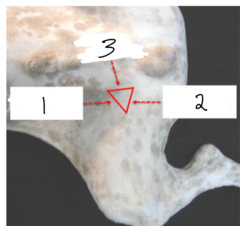
shows the femoral triangle which provides palpable access to the femoral artery and femoral vein
what is the significance of this image
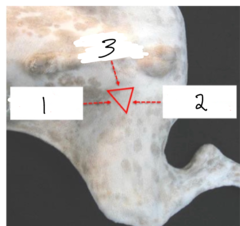
cranial sartorius m.
1

dorsal inguinal lig.
2
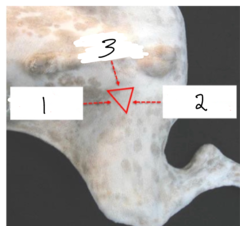
caudal pectineus m.
3
set of 3 (4 in dogs) bones that have seperate ossification centers and fuse together
significance of os coxae (pelvic bone)
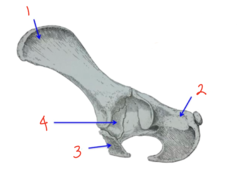
ilium
what area is 1
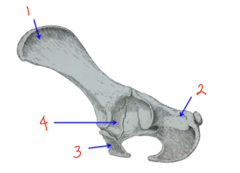
ischium
what area is 2
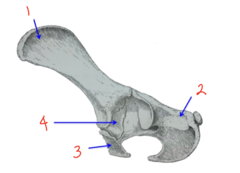
pubis
what area is 3
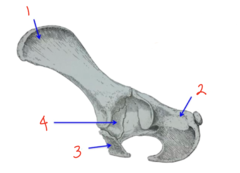
acetabulum
what area is 4
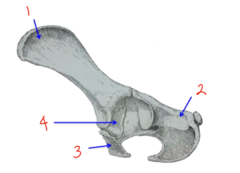
acetabulum
what part of the hip bone articulates with the femur head
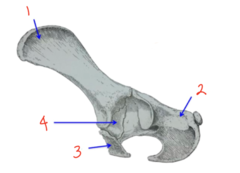
wing of ilium
1
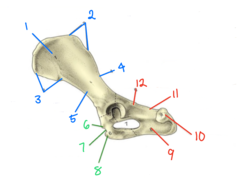
dorsal iliac spines (sacral tuberosity)
2
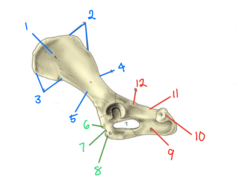
ventral iliac spins (coxal tuberosity)
3

greater sciatic notch
4
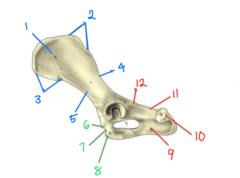
receives the sciatic nerve
what is the significance of the greater sciatic notch

body of ilium
5
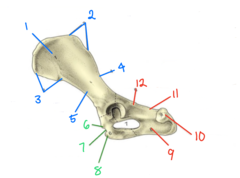
iliopubic eminence
6

pecten of pubic
7
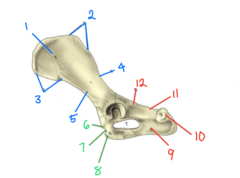
pecten of pubic
what aspect is used to create the femoral triangle
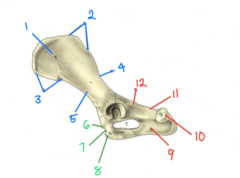
pubic tubercle
8

it articulated with the opposite pubic tubercle
what makes the pubic tubercle so important
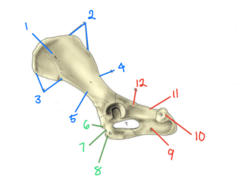
ischiatic table
9
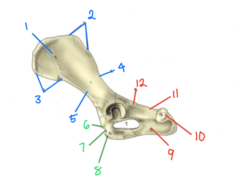
ischiatic tuberosity
10
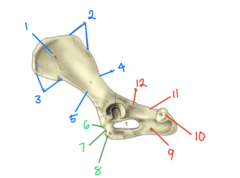
is used to palpate the hips easily and perform clinical examinations
what is the significance of the ischiatic tuberosity
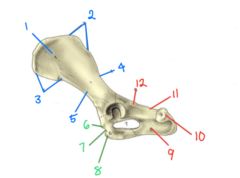
lesser sciatic notch
11
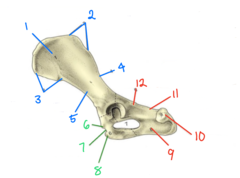
receives a tendon
what is the significance of the lesser ischiatic (siatic) notch

ischiatic spine
12

wing of ilium
1
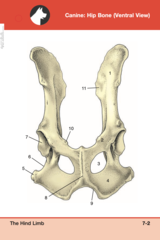
pubis
2
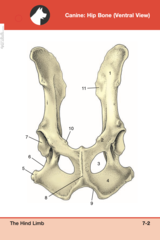
obturator foramen
3
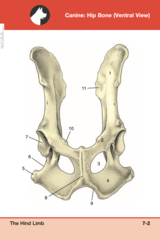
ischium
4

ischiatic tuberosity
5
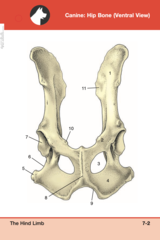
lesser siatic notch
6
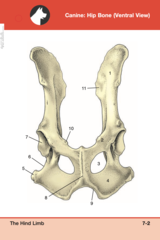
acetabulum
7
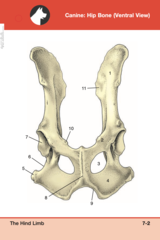
pubic symphysis
8
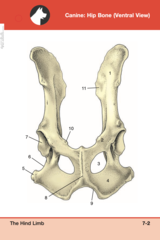
fibrocartilaginous joint
what kind of closure is the pelvic symphysis
ischiatic arch
9
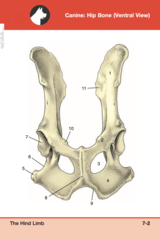
iliopubic eminence
10
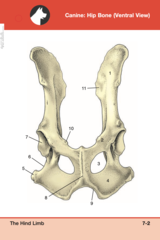
auricular articular surface
11

auricular articular surface
what surface of the hip bone articulates with the sacrum
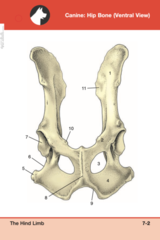
iliopubic eminence
1
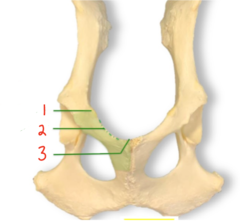
pecten of pubic
2

pubic tubercle
3

lunate surface
1

coated with hyaline articular cartilage to allow articulation with the femur and form the hip joint
what is significant about the lunate surface of the acetabulum

acetabular fossa
2

through the ligament in the acetabular fossa
how does the acetabulum actually connect with the femur

acetabular notch
3
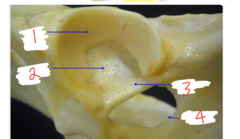
obturator foramen
4
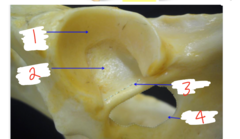
membranous tissue and obturator muscles
what closes the obturator foramen
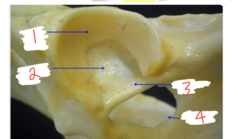
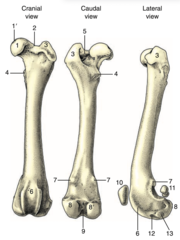
head of femur
1

the femur head will always be medial
how do we orient the femur
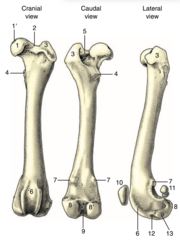
fovea
1'

neck
2

greater trochanter
3
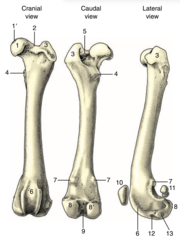
greater trochanter
what is the palpable aspect of the proximal femur bone
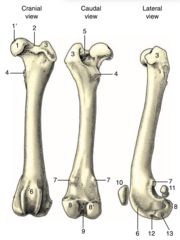
lesser trochanter
4
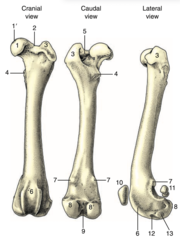
trochanteric fossa
5
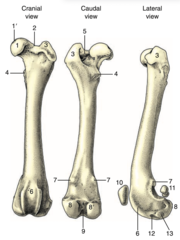
trochlea of femur
6

articular hyaline cartilage
in terms of the trochlea and patella, what must be present to help avoid friction

supracondylar tuberosities
7
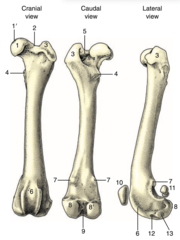
lateral condyle
8

medial condyle
8'
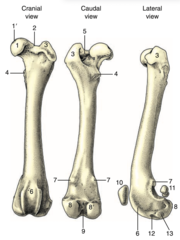
intercondylar fossa
9

intercondylar fossa
what structure of the femur do the cruciate lig. lie in

patella
10

sesamoid bones of gastrocnemius m./ (FABELLAS)
11

extensor fossa
12
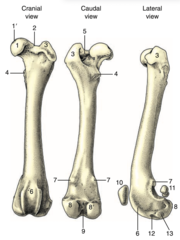
fossa for politeus tendon
13
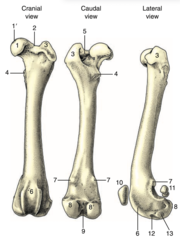
lateral condyle
both the extensor fossa and the fossa for popliteus tendon are on what feature of the femur
the tibia and fibula
what bones are shown here

tibia as it is what bears the weight
which bone shown here is most important
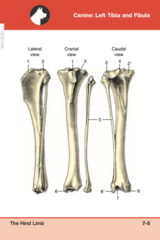
fibula will always be on the lateral side of the pair
how can you orient the tibia and fibula
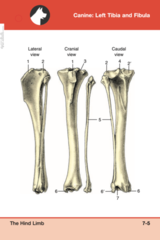
tibial tuberosity
1
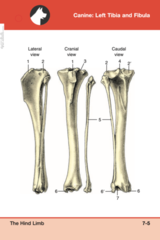
lateral condyle
2
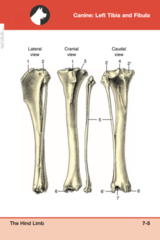
medial condyle
2'
