22/24: Schizophrenia
 Call Kai
 Learn
Learn Practice Test
 Spaced Repetition
 Match
Match Flashcards
 Knowt Play
1/16

There's no tags or description
Looks like no tags are added yet.
Name | Mastery | Learn | Test | Matching | Spaced | Call with Kai | Chat |
|---|
No analytics yet
Send a link to your students to track their progress
17 Terms
mental disorder susceptibility genes
→ gene varients associated in with an ↑ risk of psychiatric disorders
Often regulate brain development and neural plasticity
Do not cause significant damage alone; usually have effects as unfortunate but significant combinations
Do not directly cause illness;
Rather takes a collection of compromises to the evolved interactions (fixated genes), hindering proper, normal, and robust brain function
Variants’ variation:
Overall, patients with mental illnesses tend to have more brain peculiarities relative to an average person
Moreover, between other patients, brain peculiarities differ/aren’t consistent
schizophrenia susceptibility genes
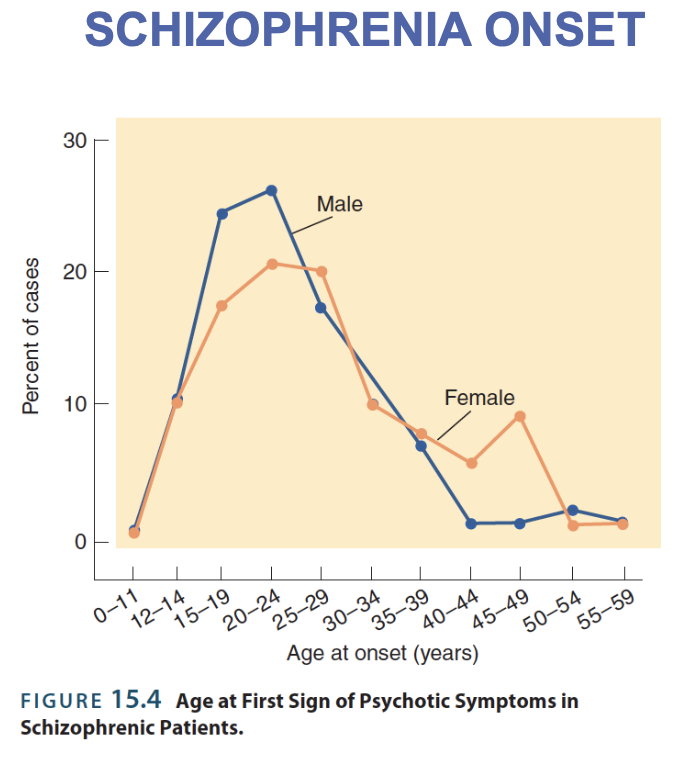
Genetic pre-disposition to schizophrenia:
< 1% in general population
↑ if a person has a collection of gene variants that ↑ likelihood
Identical twin concordance finding - if 1 twin has schizophrenia, there is a 50% chance the other twin will have it too
Environmental risk factors were found to be generally uninvolved
What has been driving schizophrenic genes’ survival in the human gene pool?
Theories suggest that there could be some advantage to reproductive success since the disorder could make people more intelligent???
No other offsetting benefits have been discovered
Schizophrenia’s genetic risk of comorbidity:
Common gene variants associated with developing schizophrenia are also associated with vulnerability to developing mood and anxiety disorders such as depression, bipolar disorder (BD), autism spectrum disorder, obsessive-compulsive disorder (OCD), attention deficit hyperactivity disorder (ADHD), anorexia nervosa (eating disorder)
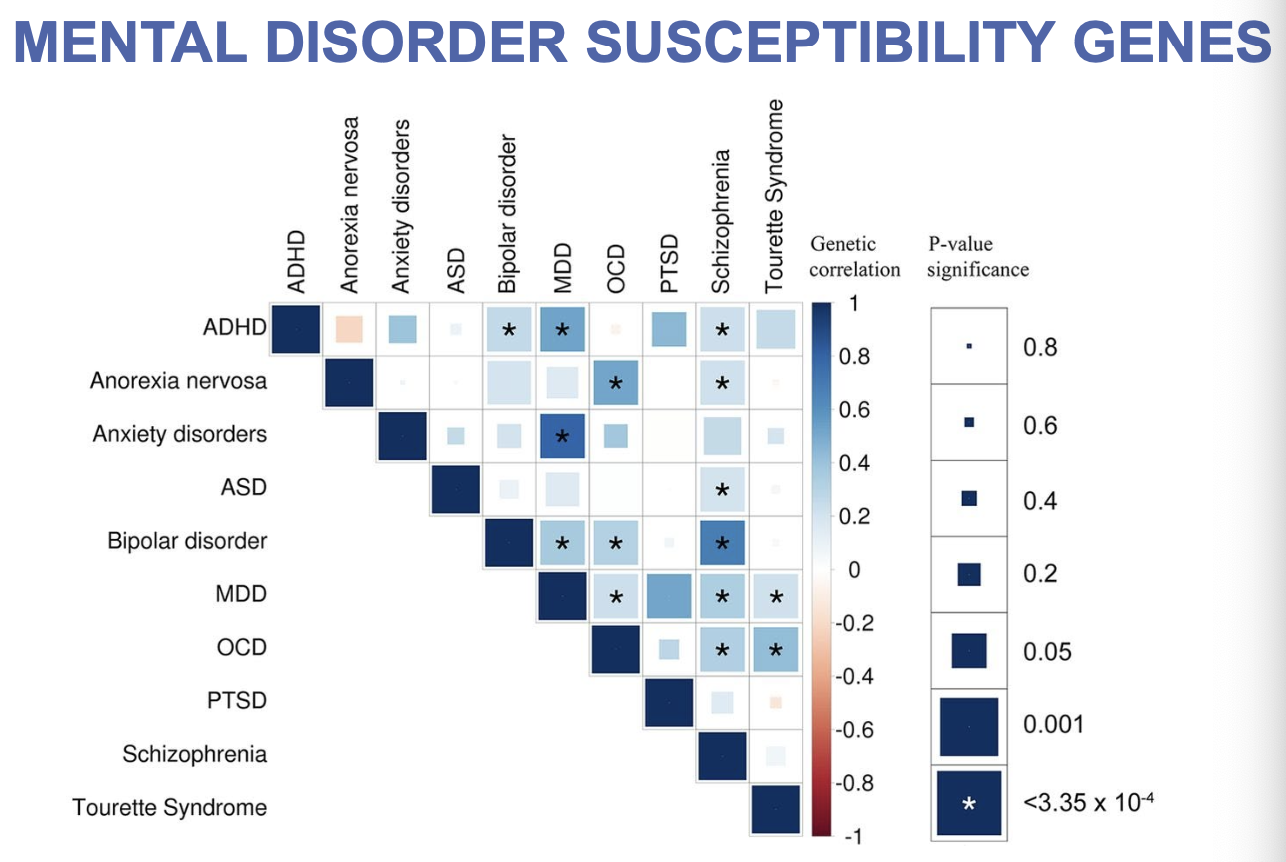
diagnostic categories
→ complexity proves that mental disorders aren’t discrete or unitary due to too much…
Heterogeneity (diseases' criteria overlaps) within-
Comorbidity (diseases’ prevalences overlap) across-
Continuity with normality
Were made out of good faith to describe clusters of symptoms, or researchers’ best attempts to reflect historical conventions while reflecting some now-known biological differences
Somewhat helpful for treatment decisions, but not solely relied on because it is increasingly clear that symptoms’ causes are near impossible to isolate
neurodevelopmental robustness
ex.Bilateral symmetry
Premise: The 2 sides of bilateral organisms develop independently from the same set of genomic instructions
Question: Could this be an indicator of developmental stability? How is it possible that symmetry can withstand environmental variation and molecular noise?
Findings:
Symmetrical bodies presumably reflect high-quality genetic instructions
Correlates with ↑ intelligence, physical attractiveness, and physical health
Conversely, asymmetry may suggest underlying obscurities in genetic instructions
mutation-selection balance
→ despite gene elimination caused by natural selection, new mutations arise with every generation
This may explain the prevalence of (mental) illnesses across the human genome
20,000 protein-encoding genes in the human genome — inevitably, some gene mutations can transend elimination processes across generations transcend
Half express in the brain at some point in life
Though recall that only significant combinations of gene mutations put a strain on brain development and function (not some genes alone)
do i need to get DNA tested?
nah.
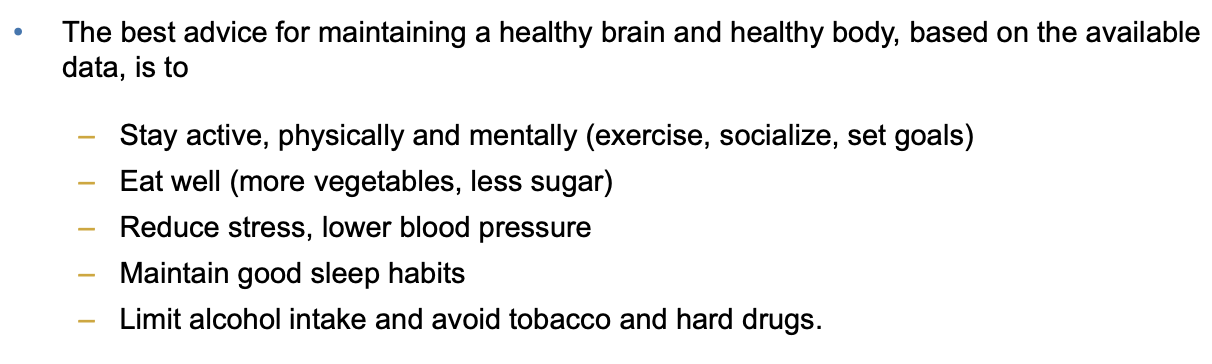
Identifying personal genome hasn’t been particularly helpful with regard to prevention or treatment (at least not yet)
The issue is that aren’t really preventative measures for psychiatric diseases (I mean trauma can only be avoided so much, and these things just happen as they do)
Generally speaking, take care of your body and brain and hopefully you’ll be fine
direction of psychiatric biomedical treatments
Gene-editing technologies
For living humans
To use part of in vitro fertilization
Pharmacological treatments
Producing drugs that directly target intracellular signaling cascades rather than ligand signalling
Deep brain stimulation
Closed-loop stimulation strategies involving penetrating brain regions with metal wire conductors to manipulate neural circuitry
schizophrenia
→ psychiatric disorder characterized by social withdrawal, disorganized thinking, abnormal speech, and an inability to understand reality
Prevalence: ~1% general population
Prognosis: Symptoms usually begin gradually in young adulthood and never resolve (although 20% is said to eventually, quite well)
30-50% of patients don’t believe they have an illness / nor do they comply with recommended treatment
Treatment: No cure
Mainly medication coupled with psychological and social support addresses the symptoms (especially the positive type)
schizophrenic symptomology
3 types:
Negative → characterized by an absence of behaviours
Social withdrawal, muteness, reduced emotionality and motivation, etc.
Accounts for most long-term disability and poor functional outcomes
Studies potentially attribute effects to abnormal prefrontal cortex activity
Cognitive → disorganized and irrational thinking
Deficits in learning and memory, poor problem-solving, etc.
Positive → characterized by the presence of delusions (beliefs in contradictions to reality) and hallucinations (perception of stimuli that aren’t present)
Related to the dopamine hypothesis
Some effects sought-after in recreational drugs
The 3 types of symptoms usually present gradually in the above sequence, over the years
Neurological symptoms may present throughout these symptoms’ phases as well
schizophrenic heritability
Baseline rate: Estimates say 80%
Measures the fraction of phenotype (expression) variability that can be attributed to genotypical (gene variant) variability
“What proportion of variation in a given trait observed within a population is NOT explained by random chance or environmental factors?“
5% attribute to rare gene copy number variations (trisomies, monosomies), which often result in comorbid risks
Concordance rates:
50% if both parents have it; 13% if 1 parent has it
8% if 1 sibling has it
50% if identical twin has it
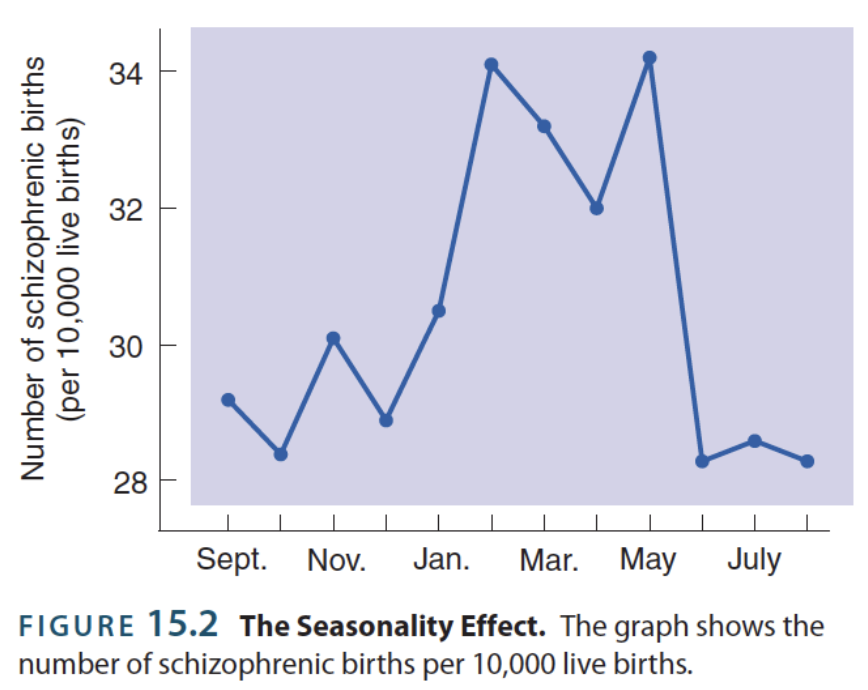
seasonality effect
→ disproportionately large number of schizophrenic patients are born within February to May — which demonstrates the effect of environmental factors on schizophrenic incidence
May be related to how infectious diseases spread easily in dense cities and cold weather (such that people tend to spend time indoors)
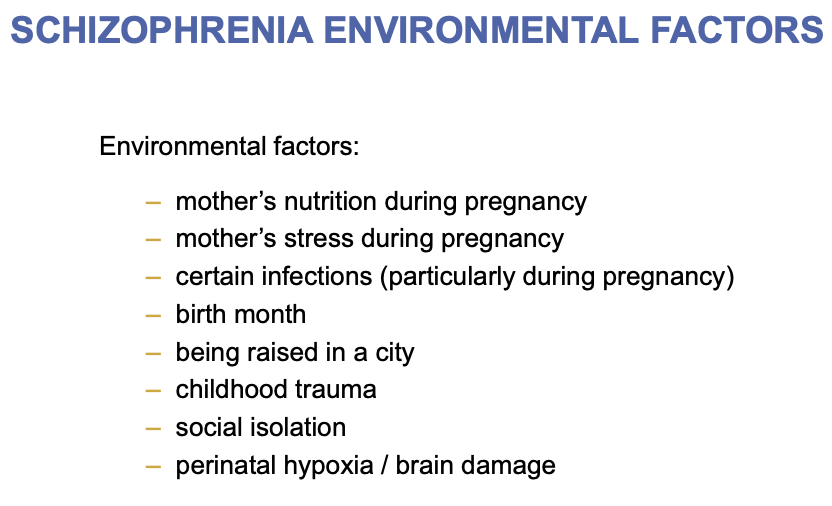
Summary of environmental factors that can affect development in utero:
Season (surrounding birth)
Viral epidemics
Population density
Parental substance abuse
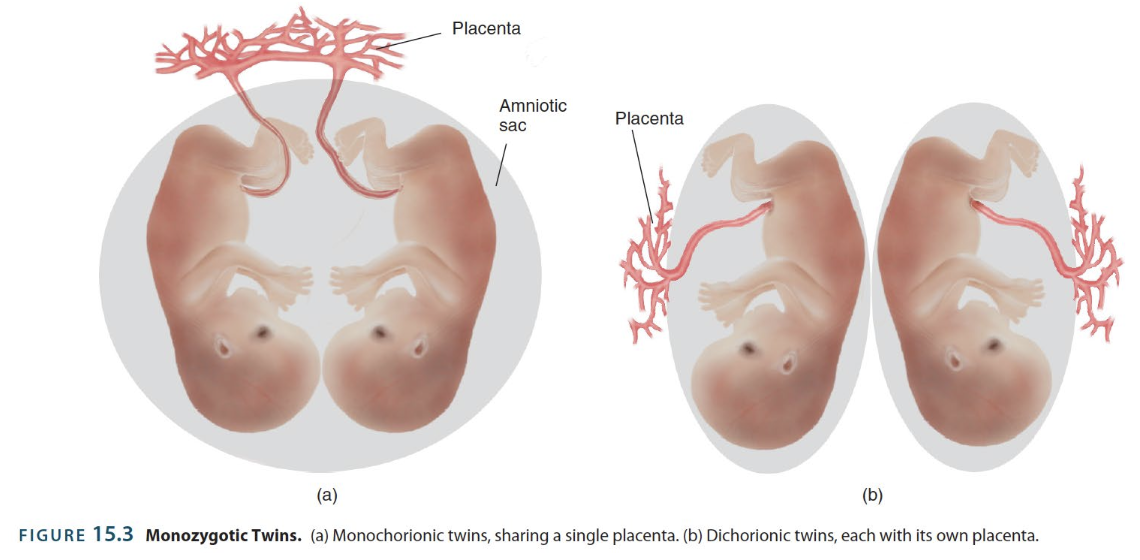
identical twin theory for schizophrenia
→ supports concordance finding + the importance of environmental factors (in this case, the prenatal environment)
Monochorionic (identical) twins share 1 placenta, unlike dichorionic (fraternal) twins who each have their own
evidence for abnormal brain development
Usually schizophrenic symptoms appear after childhood, but there is some evidence from patients’ childhoods relating it to abnormal prenatal development
Children who eventually develop schizophrenia…
Display less sociable behaviour and are deficient in psychomotor functioning as kids
Have minor anatomical abnormalities, like partial webbing of middle toes or a high-steepled palate
dopamine hypothesis
→ excessive dopamine D2 receptor activity, particularly in the nucleus accumbens (striatum), underlies positive symptoms (delusions, hallucinations) of schizophrenia
Relief:
Dopamine receptor antagonists → reduce positive symptoms, but not negative symptoms (withdrawn behaviours)
Antipsychotics & neuroleptics → treatments that block dopamine D2 receptors to relieve positive symptoms of schizophrenia
Recreation:
Dopamine receptor agonists → can elicit hedonic aspects of the positive symptoms of schizophrenia in non-patients
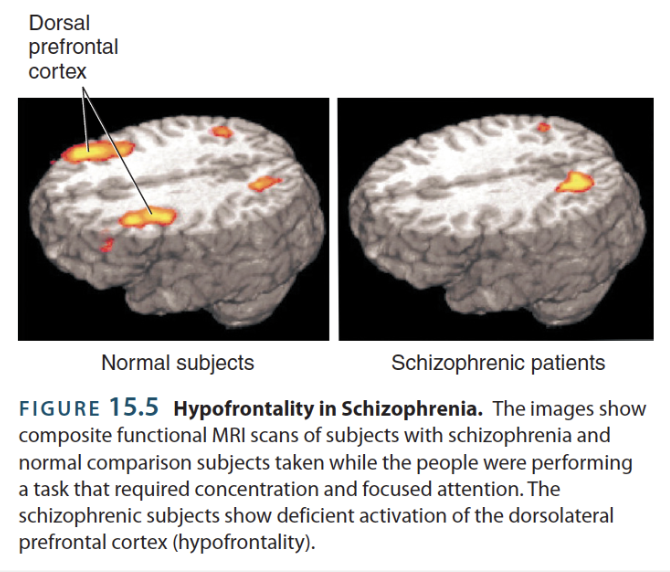
hypofrontality
→ decreased activity of the frontal lobes, particularly the dorsolateral prefrontal cortex, which may relate to the hypoactivity (↓) of local dopamine D1 receptors
Consequence of negative symptoms of schizophrenia
Summarized finding: Schizophrenia may be associated with too little dopamine in the prefrontal cortex and too much elsewhere
atypical antipsychotics
→ 2nd generation antipsychotics that aim to reduce both the positive AND negative symptoms of schizophrenia
Clozapine → antagonist to dopamine D2 and serotonin 2A receptors, simultaneously ↓ dopamine levels in the striatum while ↑ levels in the prefrontal cortex
Found in monkeys
Aripiprazole → partial agonist to dopamine D2/D3 and serotonin 1A receptors, also simultaneously ↓ dopamine levels in the striatum while ↑ levels in the prefrontal cortex
a.k.a Abilify, Aristada
partial agonist
→ drugs with a very high affinity for a receptor, but activates it less than the normal ligand does
Simultaneous balancing property:
↑ receptor activity in regions with ↓ [ ] of the ligand in question
↓ receptor activity in regions with ↑ [ ] of the ligand in question
![<p>→ drugs with a very high affinity for a receptor, but activates it less than the normal ligand does</p><p><u>Simultaneous balancing property</u>: </p><ul><li><p>↑ receptor activity in regions with ↓ [ ] of the ligand in question</p></li><li><p>↓ receptor activity in regions with ↑ [ ] of the ligand in question</p></li></ul><p></p>](https://knowt-user-attachments.s3.amazonaws.com/976af9cf-7a2d-437a-8a11-dd5b33843989.png)