AQA GCSE Music: Melody Year 10
 Call Kai
 Learn
Learn Practice Test
 Spaced Repetition
 Match
Match Flashcards
 Knowt Play
1/60

Earn XP
Description and Tags
Name | Mastery | Learn | Test | Matching | Spaced | Call with Kai | Chat |
|---|
No analytics yet
Send a link to your students to track their progress
61 Terms
Conjunct
Melodic movement by step
Disjunct
Refers to melodic movement by leap
Triadic
A type of melodic movement through the notes of a triad.
Broken chords
Spreading the notes of a chord.
Scalic
descending/ascending movement within a scale
Arpeggio
Playing the notes of a chord by spreading them out (usually from the bottom), a feature commonly used by piano, harp and guitar.
Passing notes
A melodic notes placed between two harmony notes which results in stepwise movement.
Diatonic
Melody using only the notes of the prevailing key (in a key, major or minor)
Chromatic
A melody that uses notes outside the prevailing. E.g. in C major, all the black notes as well (movement in semitones).
Pentatonic
Pentatonic music is based on a scale of five different pitches, such as CDEGA.
Whole tone
A scale which rises in whole tones.
Modal
Modal music is based on one of the scales of seven pitch classes commonly found in western music, but excluding the major and minor scales.
Augmentation
(Usually) doubling the duration of each notes of a rhythm or melody. 2. Extending the range of intervals upon repetition
Diminution
(Usually) halving the duration of notes in a melody or rhythm. 2. Reduction of the size of intervals upon repetition.
Sequence
where a passage of music is repeated at a higher or lower level of pitch.
Inversion
where a tune is turned ‘upside down’ so that the intervals between the notes which rise in the original version now fall, and vice versa.

Slide/glissando/portamento
To slide between notes.
Ornamentation
Decorating the written pitch
Ostinato
A rhythmic, harmonic or melodic pattern played many times in succession.
Riff
A short, catchy melodic figure, repeated like an ostinato and commonly found in rock, pop and jazz.
Phrasing
Dividing a melody into phrases or short units, e.g. question and answer.
Articulation
The addition of specific instruction for performance, such as accents, staccato and tenuto.
Improvisation
To make up or extemporise; in practice, improvisation is generally done ‘on’ a particular musical feature such as a melody, chord sequence or scale.
Defining Feature
a prominent or characteristic musical element, technique, or device that helps identify a specific genre, style, period, or composer's individual work.
Blues Notes
C,D,Eb,E,F,G,A,Bb,B and C
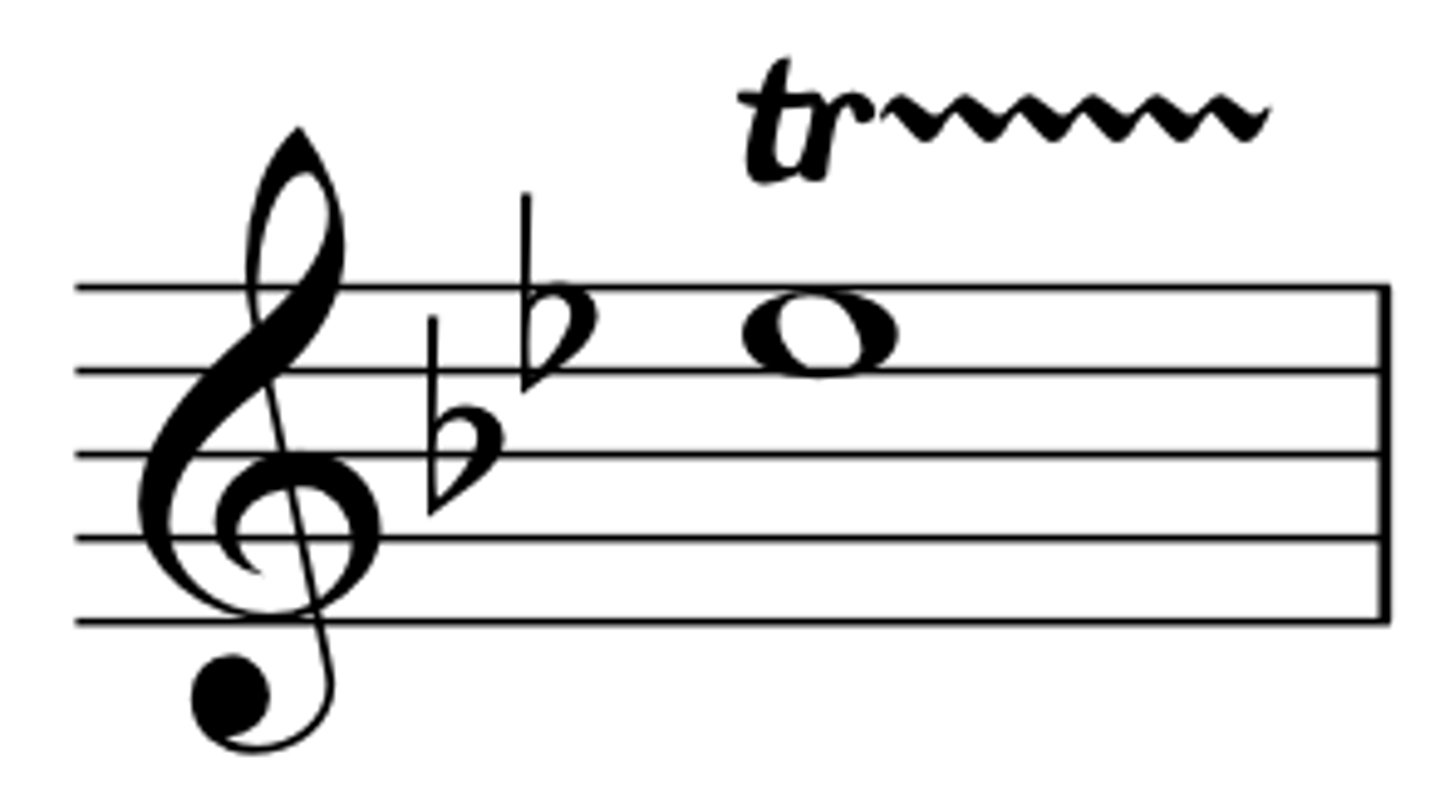
Trill
a rapid alternation between two notes
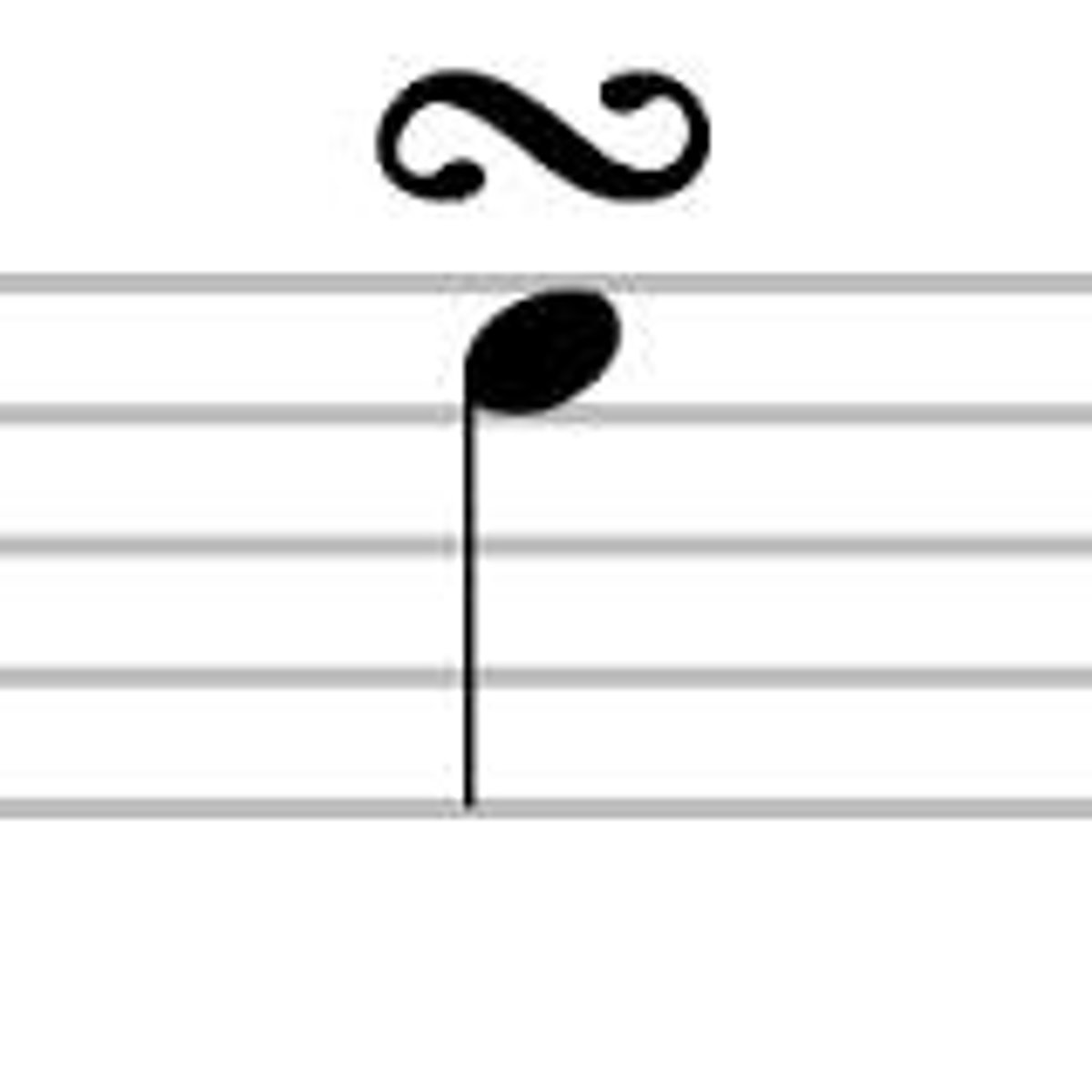
Turn
A short pattern that goes one note up then down around the decorated note
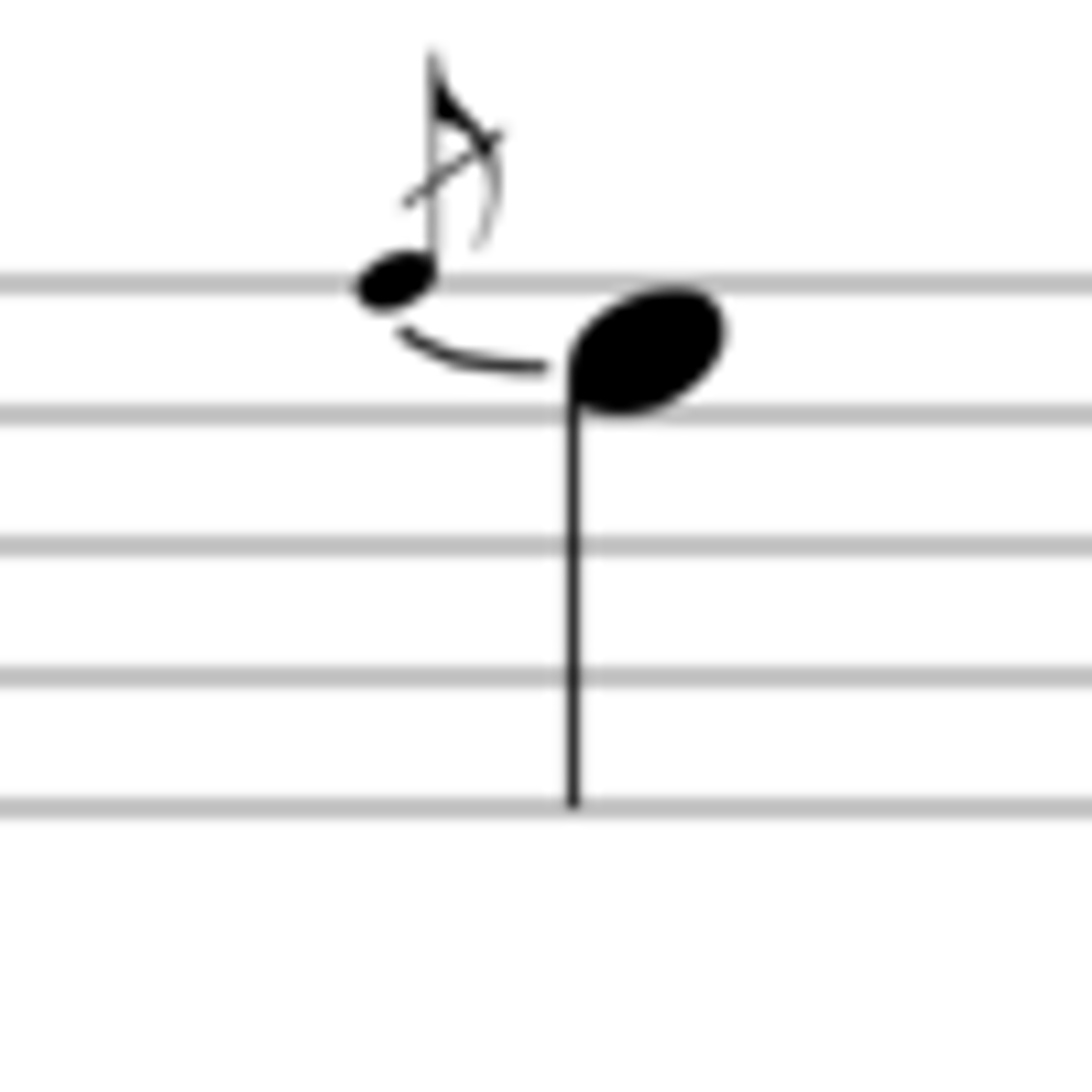
Acciaccatura
A very fast grace note, played as quickly as possible before a note of the main melody, “crushed grace note”
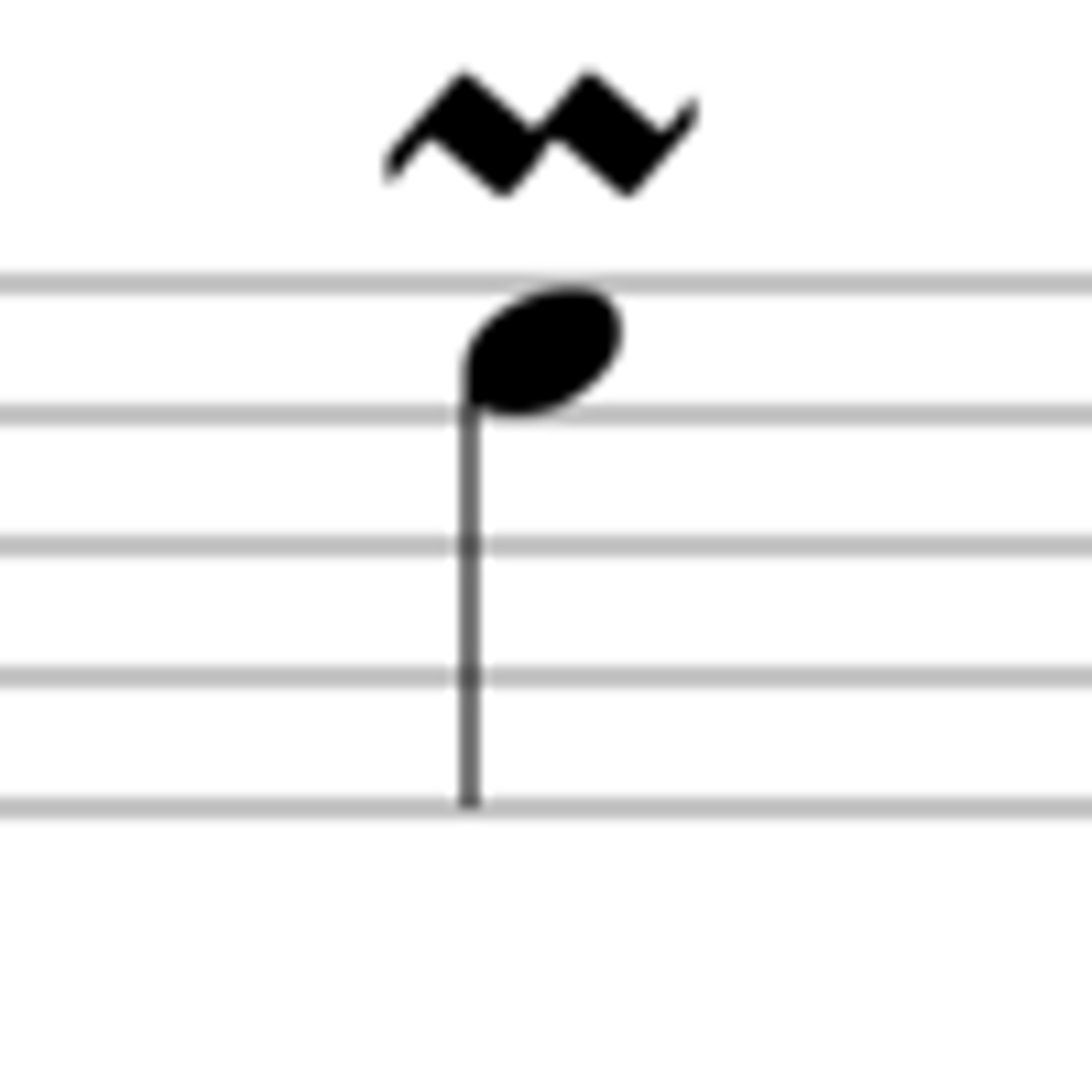
Mordent
A rapid ornament that has one upwards note then back to the original
Mordent (lower)
A rapid ornament that has one downwards note then back to the original
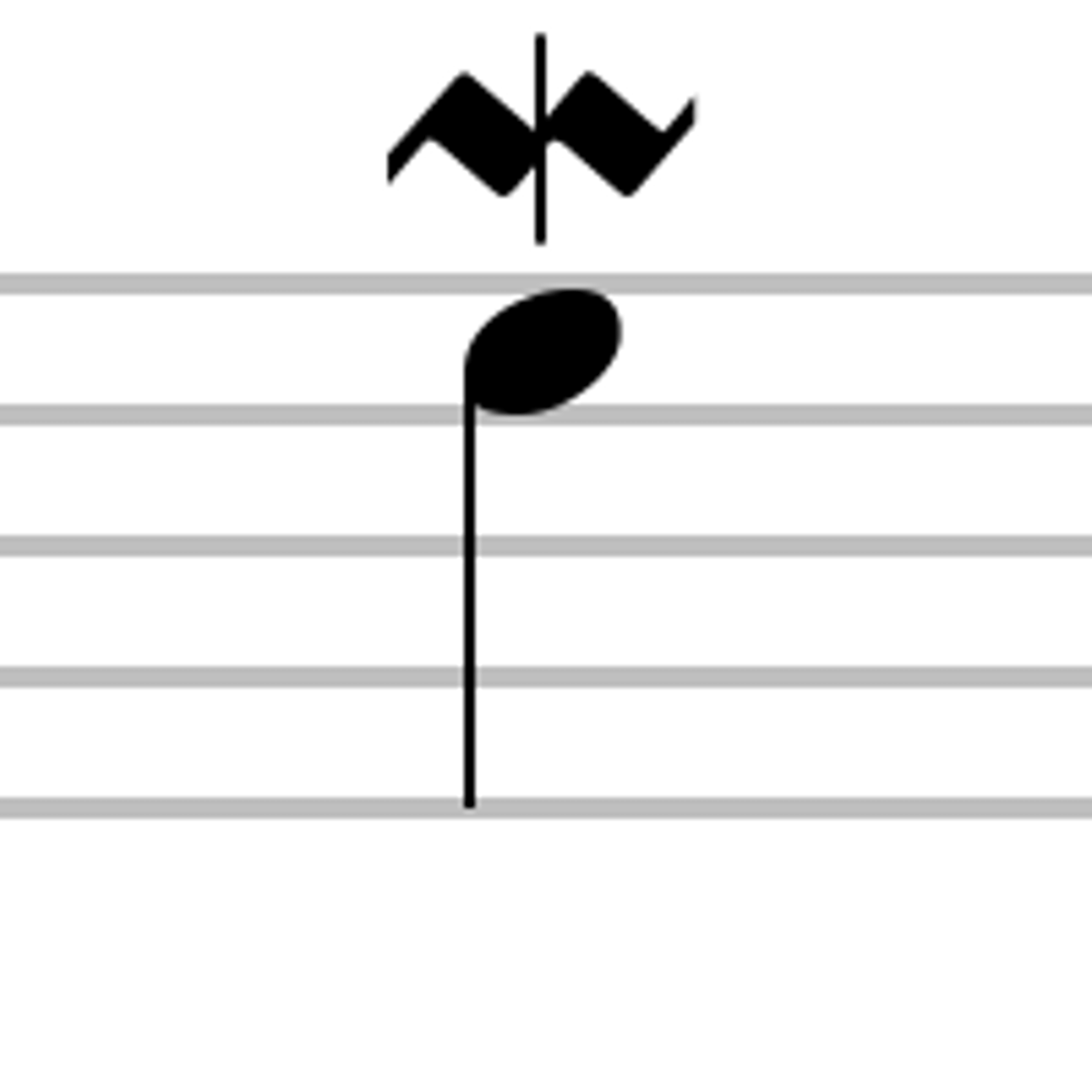
What does a trill sound like?
A fast wiggle between two adjacent notes
What does a mordent sound like?
One upwards wiggle between two notes
What does a lower mordent sound like?
One downwards wiggle between two notes
What is an ornament?
A short decoration of a note
A very fast note crushed into another
What does a grace note (acciacciatura) sound like?
Which period of music used a lot of ornaments?
Baroque
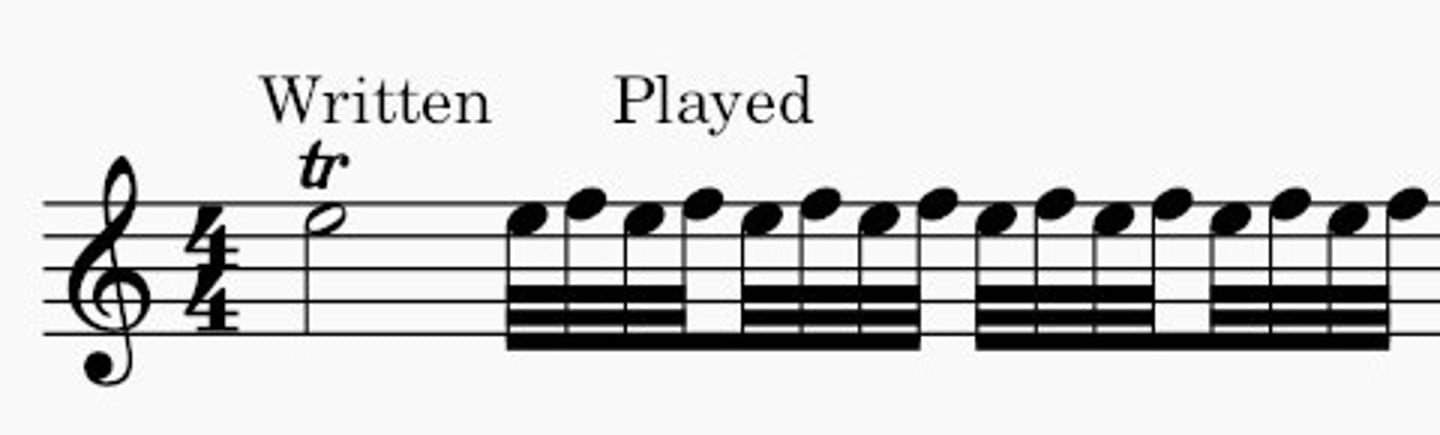
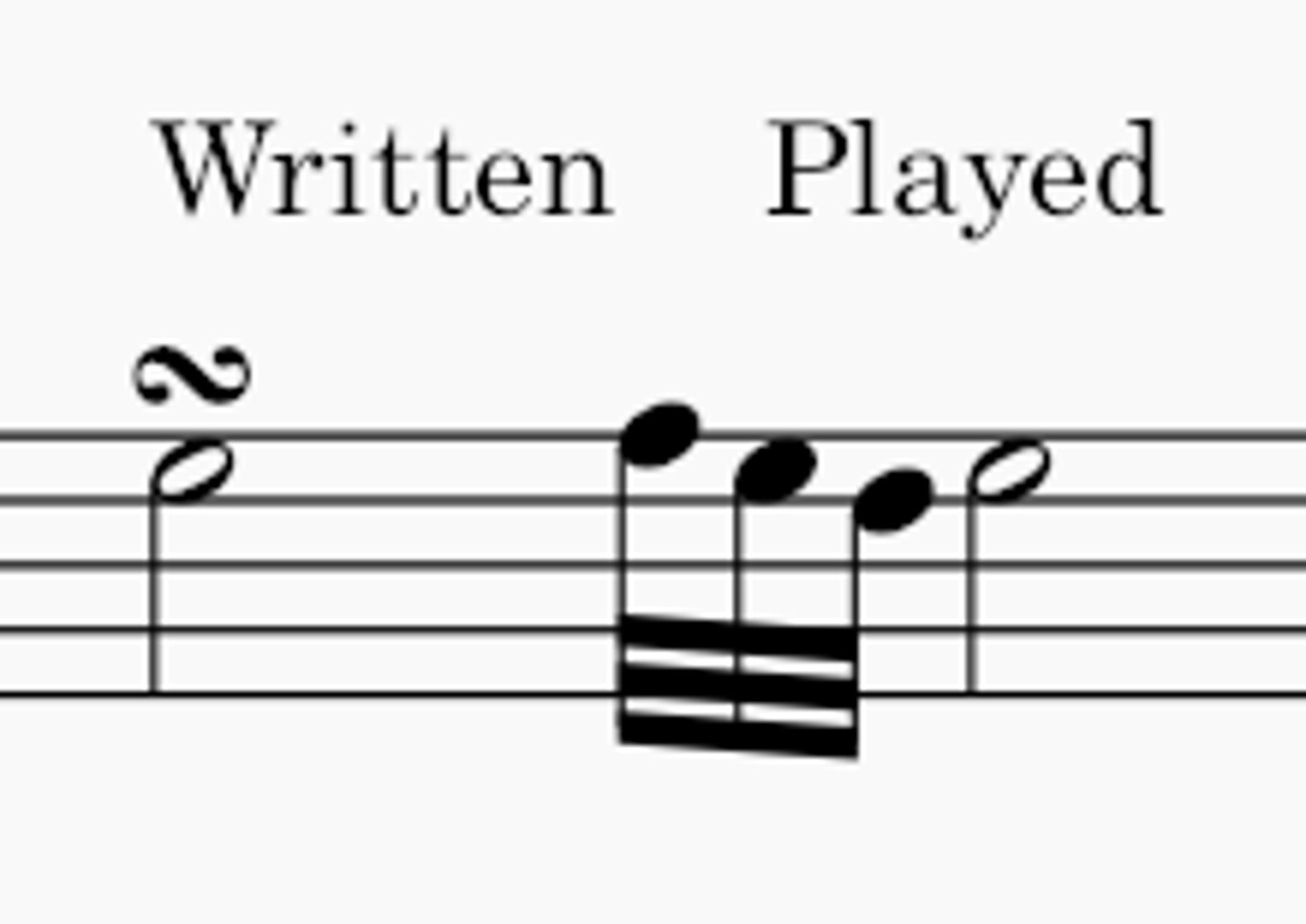
Trill (how it’s played)
Fast switching between the note and the next higher note (according to the key signature) within its duration.
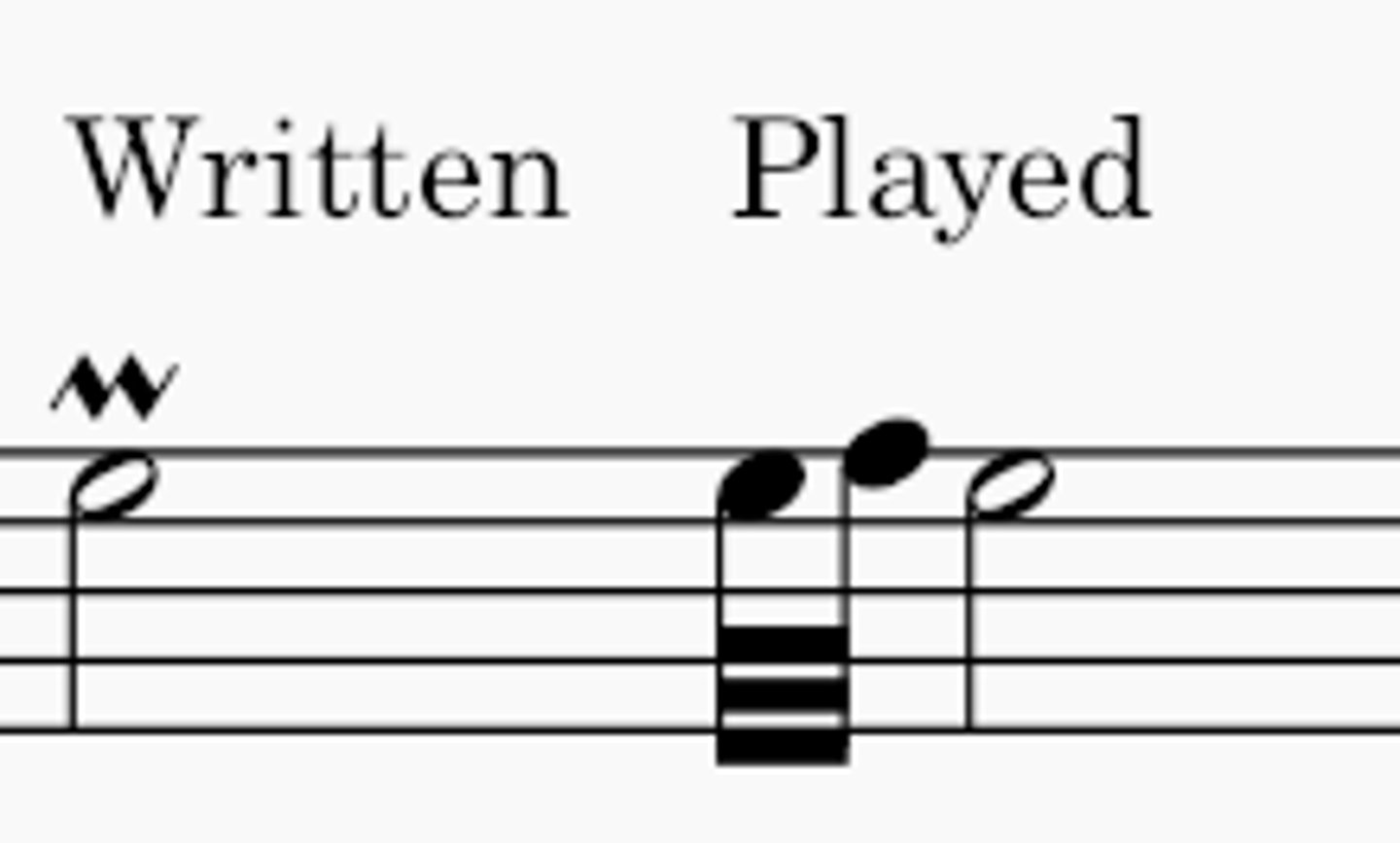
Mordent
Fast switching between the note and the next higher note only ONCE
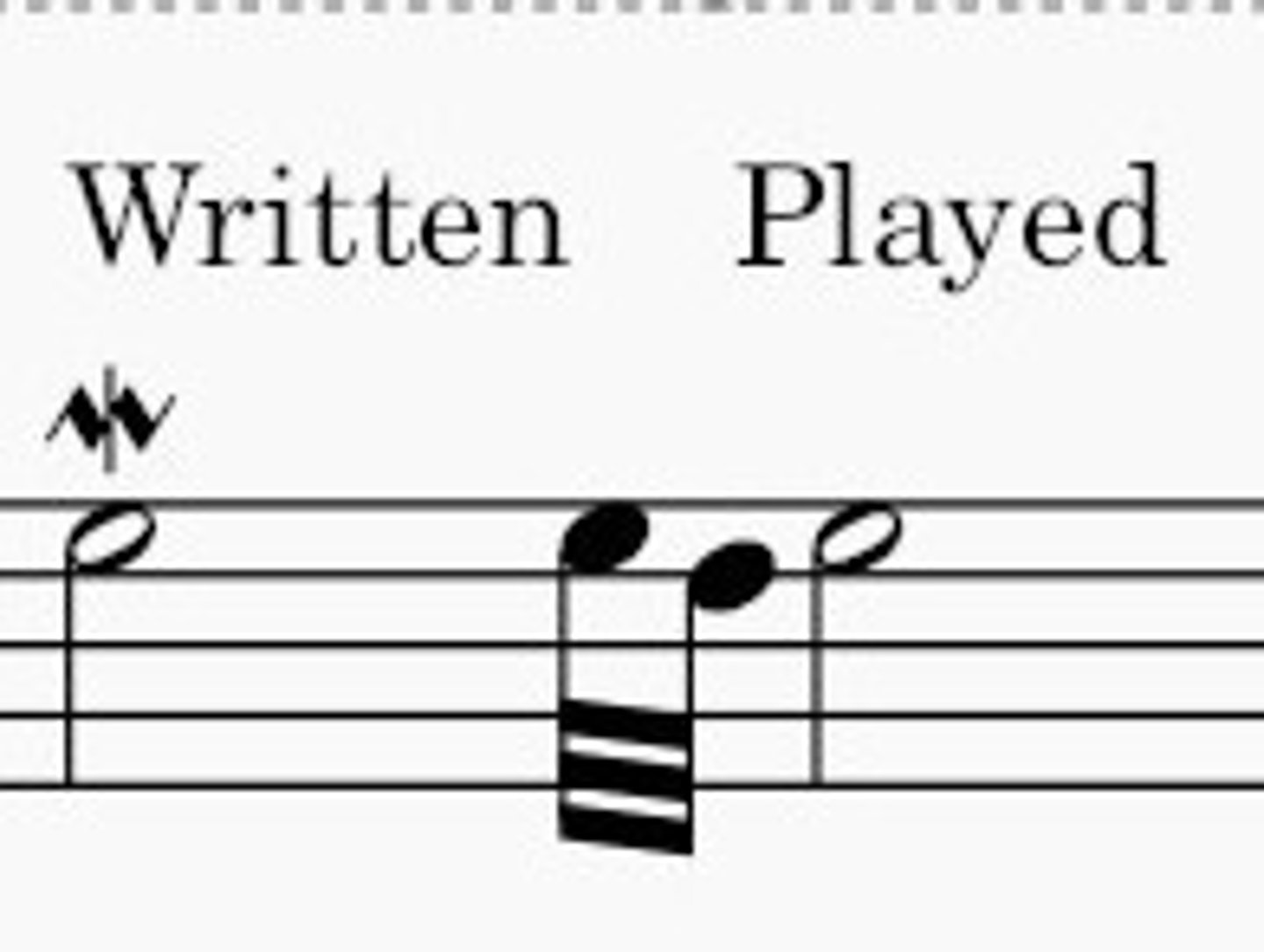
Inverted Mordent
Fast switching between the note and the next lower note only ONCE
Turn (how it’s played)
One note above (written), written note, one note below (written), then note written.
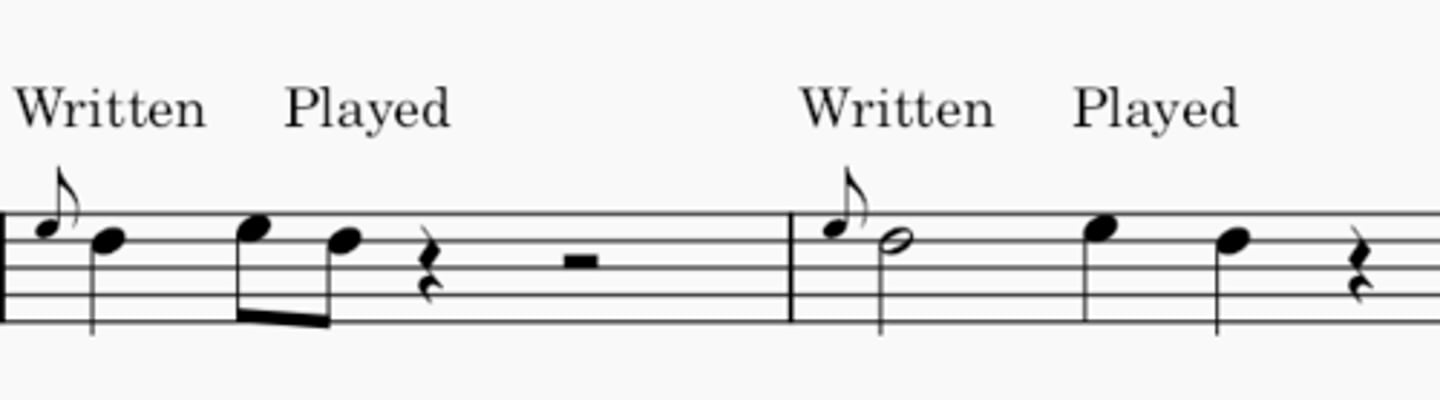
Appoggiatura
First half of the written note is the pitch of the grace note (the 1st note can be any note, higher, lower, or same as the written note).
Tonic
1st note of a scale
Supertonic
2nd note of a scale
Mediant
3rd note of a scale
Subdominant
4th note of a scale
Dominant
5th note of a scale
Submediant
6th note of a scale
Leading note
7th note of a scale
Octave
8th note of a scale
Interval of a 2nd
Distance between note 1 and note 2 of a scale
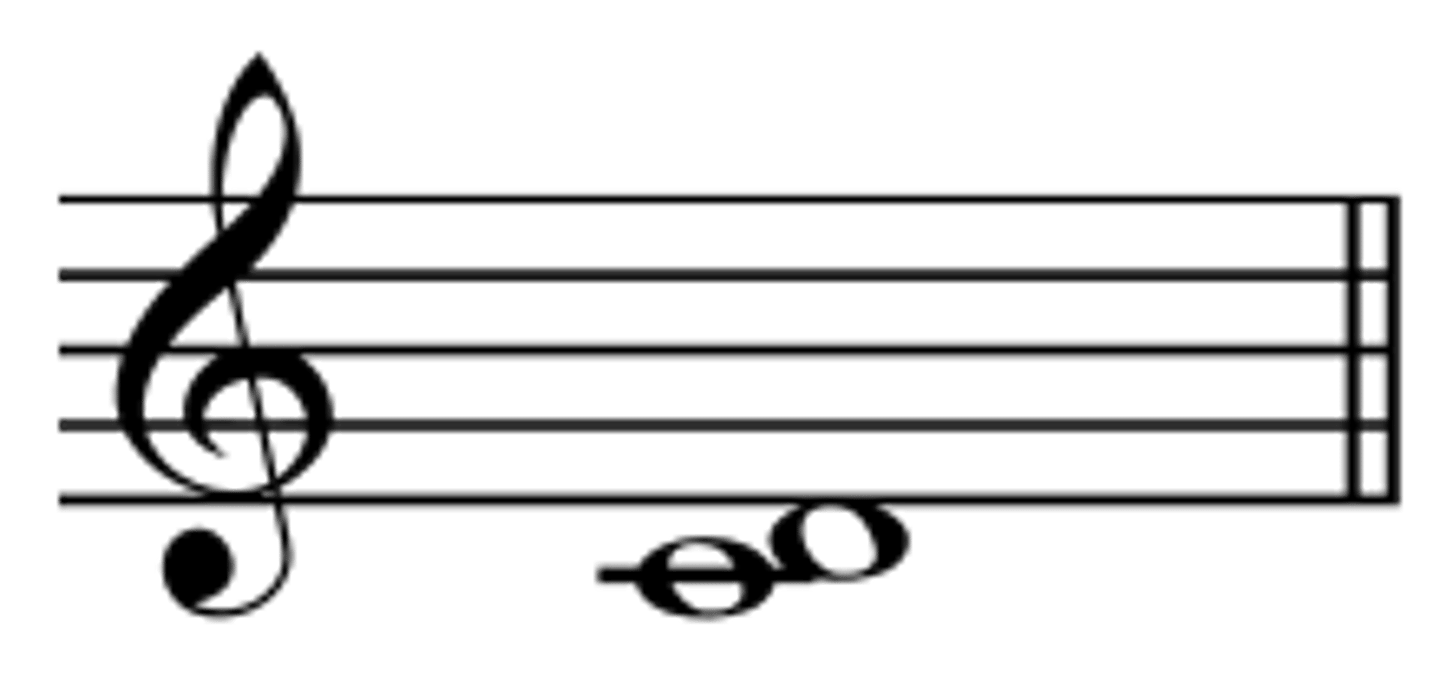
Interval of a 3rd
Distance between note 1 and note 3 of a scale
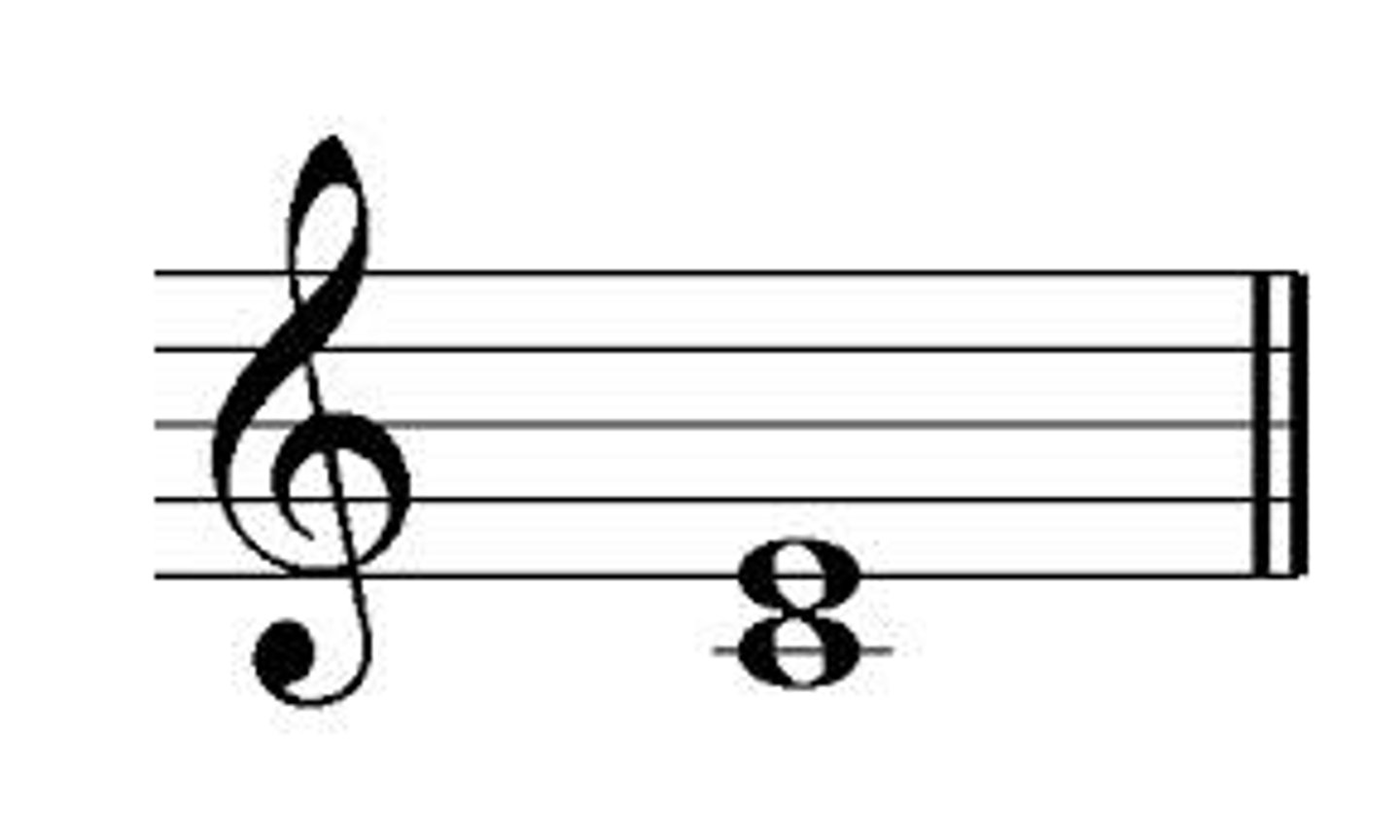
Interval of a 4th
Distance between note 1 and note 4 of a scale
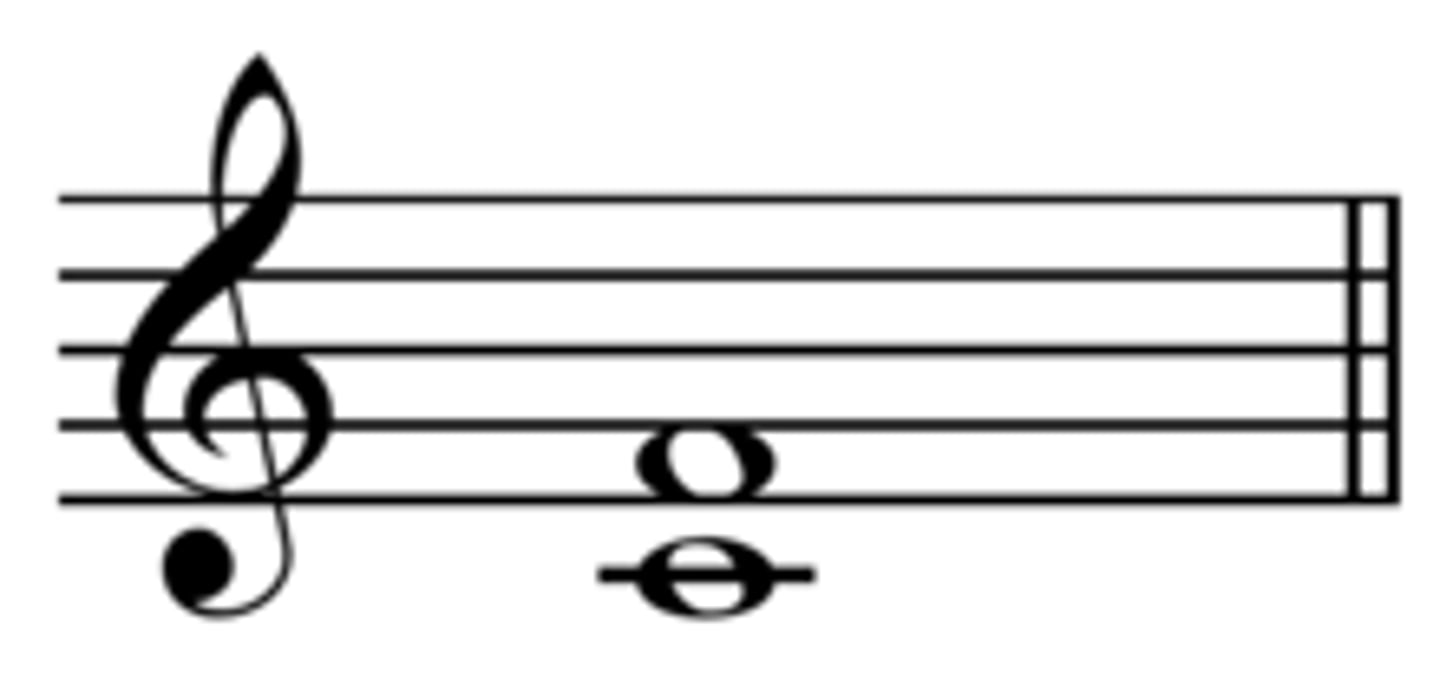
Interval of a 5th
Distance between note 1 and note 5 of a scale
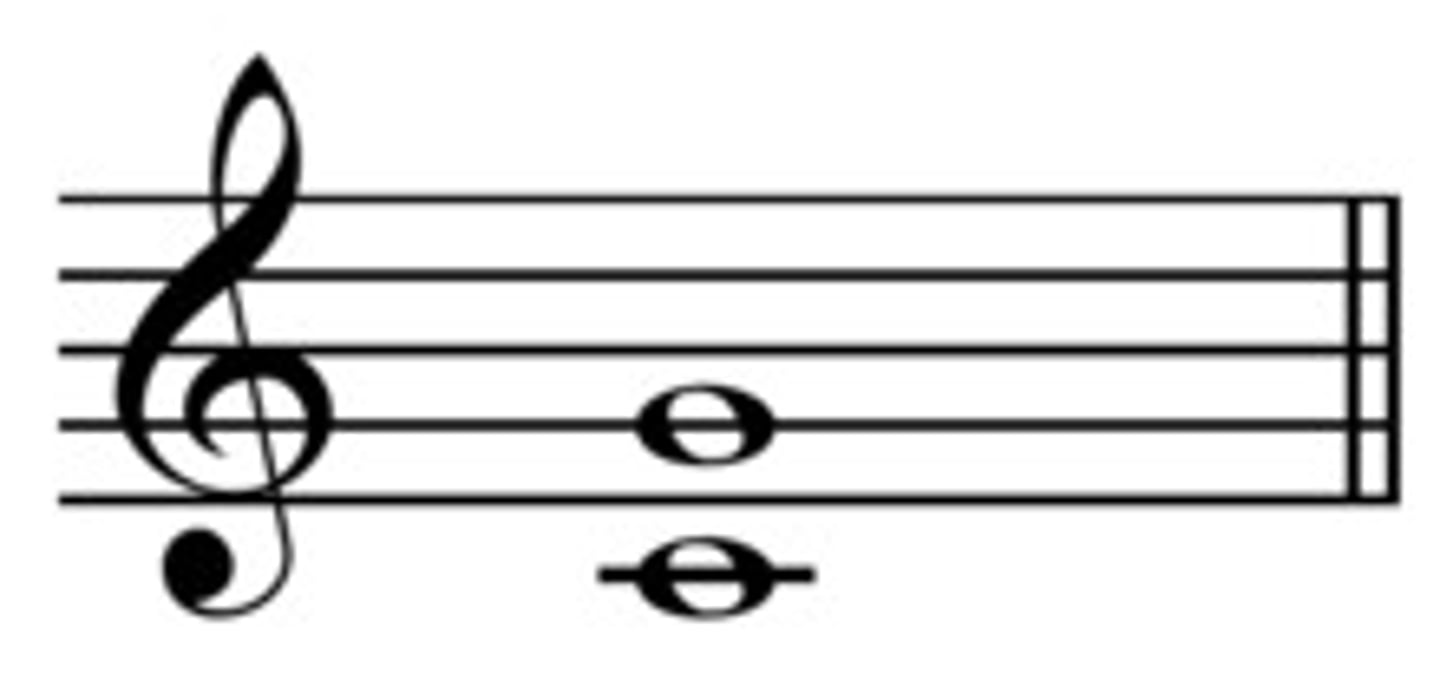
Interval of a 6th
Distance between note 1 and note 6 of a scale
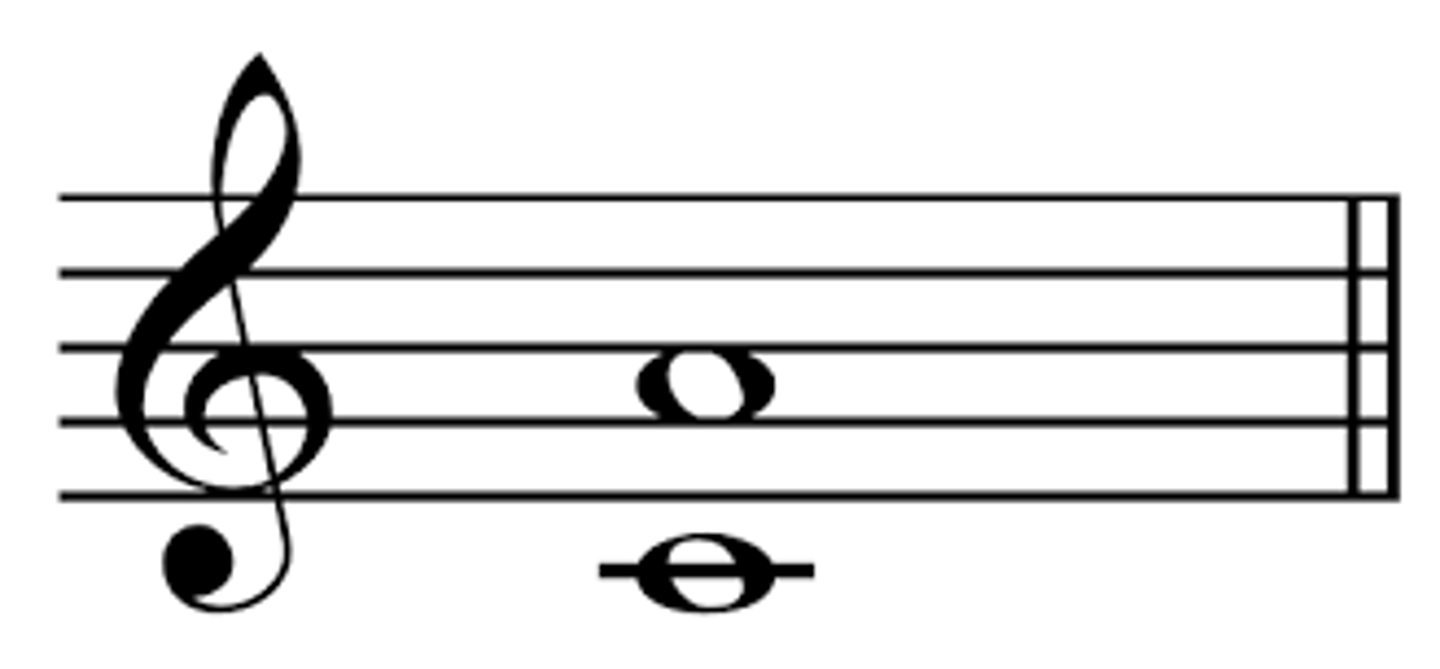
Interval of a 7th
Distance between note 1 and note 7 of a scale
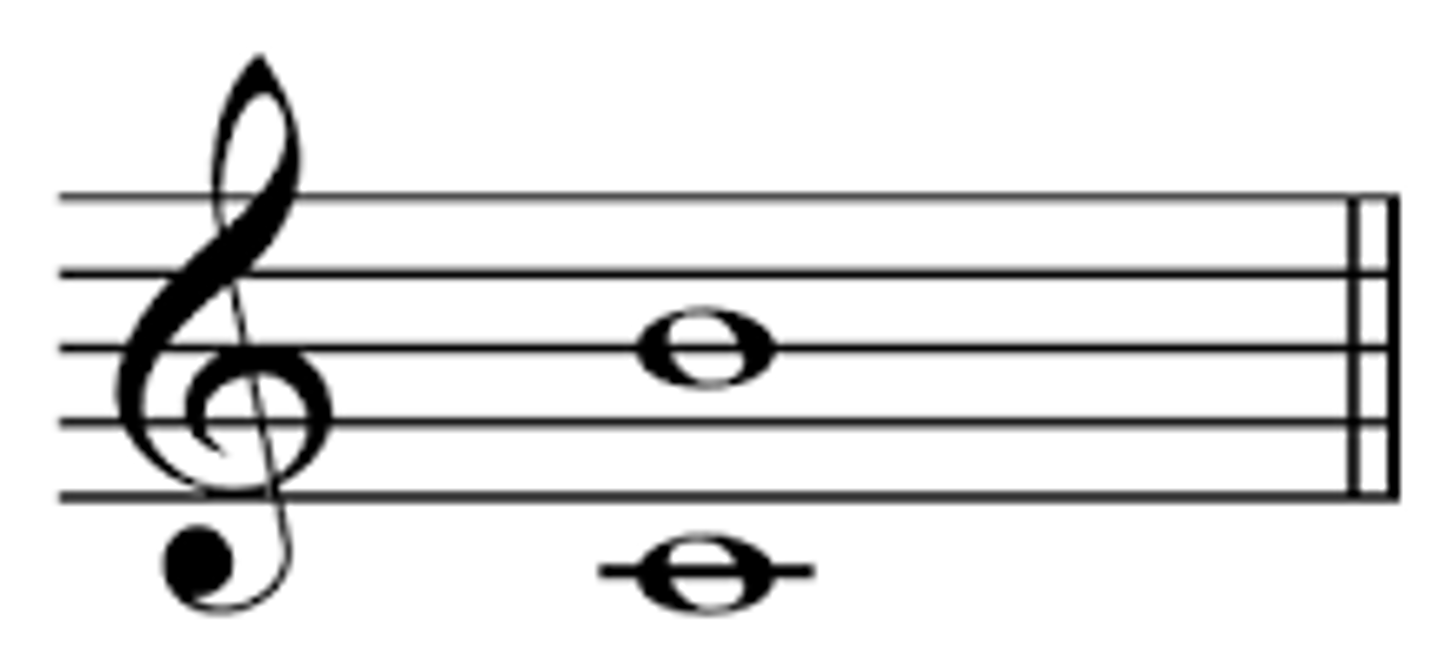
Interval of an octave
Distance between note 1 and note 8 of a scale
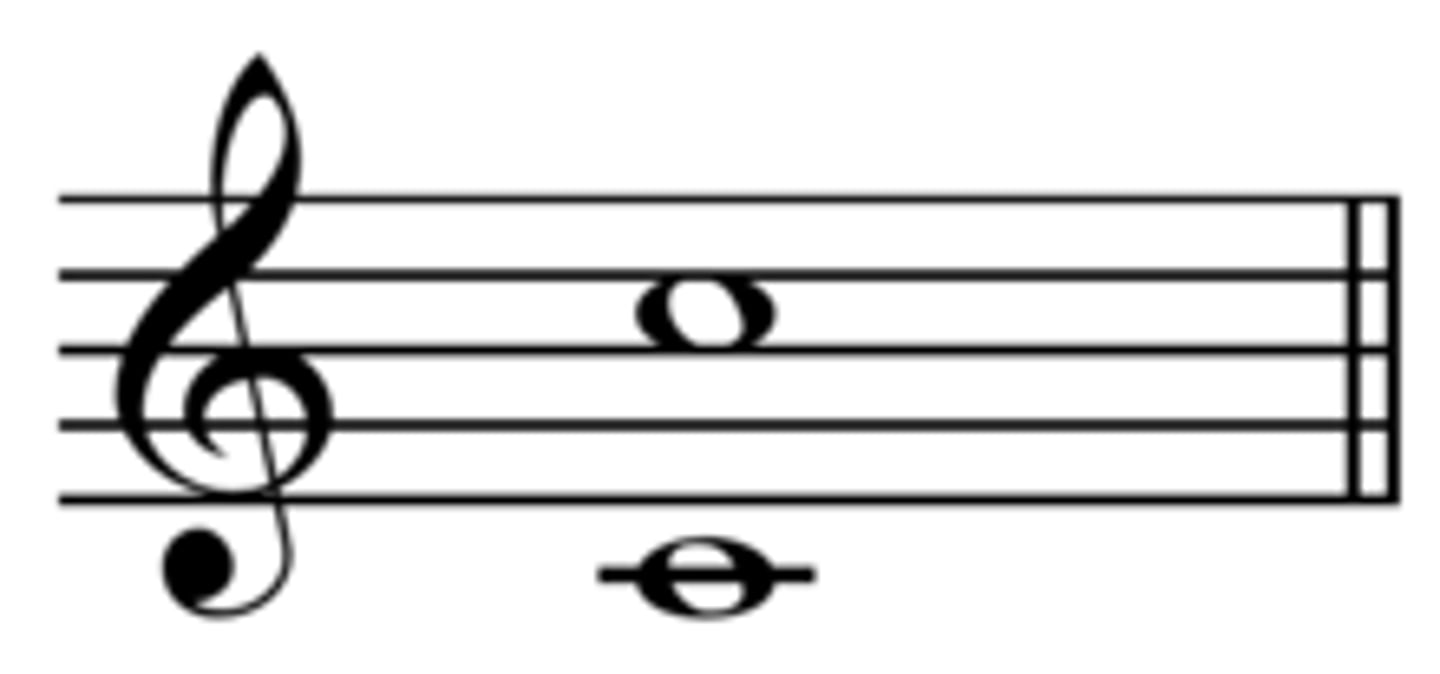
Motif
A short melodic or rhythmic fragment that recurs. It may be used in development and/or as a unifying device.
Pentatonic major
1st, 2nd, 3rd, 5th, and 6th degrees of the major scale.
Pentatonic minor
1st, flattened 3rd, 4th, 5th, and flattened 7th degrees of the natural minor scale
Scalic Melody
One made up of notes that follow the order of a particular scale