plasma membranes - alevel biology ocr a
 Call Kai
 Learn
Learn Practice Test
 Spaced Repetition
 Match
Match Flashcards
 Knowt Play
1/72

There's no tags or description
Looks like no tags are added yet.
Name | Mastery | Learn | Test | Matching | Spaced | Call with Kai | Chat |
|---|
No analytics yet
Send a link to your students to track their progress
73 Terms
function of the glycoprotein
acts as antigens for recognition of cells as ‘self’
for cell signalling
acts as a receptor for hormones and has a binding site
holds cells togather in a tissue
attaches to H2O molecules to stabalise membranes
function of membranes WITHIN cells
controls what enters and leaves the cell
seperates contents of organelles from cytoplasm
compartmentalisation
site of chemical reactions
provides attachment sites for enzyme
allows the formation of concentration gradient
what is cell signalling simple
it is the communication between cells. the molecule released by one cell attaches and causes a change into another cell.
cell signalling complex
the release of a hormone by exocytosis.
the glycoproteins which acts as receptors are specific and complimentary to the signal molecule.
the signal molecule causes a change inside cell
cell surface membrane allows entry of some signal molecules
how does high temp affect the cell membrane
phospholipids vibrate more so increase in kinetic energy
the increases the gaps in the membrane between phospholipids
this makes the bilayer fluid
the glycoproteins denature meaning the tertiary structure changes due to weak hydrogen bond
how vesicles are moved from organelle to another
vesicles move along the microfilament
microtubules are extended and broken down using ATP
how proteins ensure that a vesicle is transported to the correct target organelle
receptors are only found on a target organelle
providing a way of recognising the vesicle
proteins have a specific shape meaning it will be complimentary to the receptor
how are extracellular enzymes secreted from the cells
by exocytosis meaning the vesicles fuse with the plasma membrane releasing the enzyme
define active transport
the movement of substances against the concentration gradient using ATP and carrier proteins
examples of active transport
getting mineral ions from root hair cells
getting hydrogen ions from companion cells
explain why facillitated diffusion requires no metabolic energy.
particles have there own kinetic energy
moves down the concentration gradient
active process which require energy. what is the immediate source of energy in this energy in cell
ATP
why cant glucose pass through a cell membrane by simple diffusion
the phospholipid acts as a barrier
the glucose molecules are too large
what molecules contributes to the stability of the plasma membrane
the hydrophobic fatty acid tails helps to form the bilayer
cholesterol helps regulate membrane fluidity
role of the membrane in RER or any membrane bound organelles
compartmentalisation
maintain different conditions from cell cytoplasm
seperating proteins from cell cytoplasm
holding ribosomes/enzymes in place
AVP
galactose and glucose cant pass through the phospholipid bilayer by simple diffusion
too large
not fat soluble
why a low pH might cause the red pigment to leak out of the beetroot cell
low pH denatures and changes tertiary structure of membrane proteins
therefore membrane permeability to the pigment is increased
how to get an accurate value for pH at which red pigment of the beetroot cells leaks out
use a pH buffer range with a narrower intervals
e.g. test more values between pH 5 and pH 6
why can progesterone move across the membrane
hydrophobic fat soluble lipid molecule
so it diffuses through the phospholipid bilayer
and it would not be repelled by the hydrophobic tails of the bilayer
molecules that can pass through the plasma membrane
water
oxygen
carbon dioxide
glucose
alcohol
hormones
proteins
enzymes
state how the structure of the cell surface membrane allows the potassium ions to enter and leave the cell
channel proteins
carrier proteins
transport proteins
cotransport proteins
sodium potassium pump
how does the fluid mosaic model describe the structure of the plasma membrane
the phospholipid bilayer
shows the hydrophilic phosphate head facing outwards
the hydrophobic fatty acid tails were facing inwards
proteins/phospholipids are free to move around in the membrane - gives flexibility and fluid.
proteins are randomly arranged in the membrane e.g. between phospholipids giving it the mosaic pattern
explain how the structure of phospholipid molecules allow for the formation of plasma membranes
the phosphate head is hydrophilic and bonds with water
the fatty acid tails are hydrophobic
the head orientates towards water and the tail orientates towards other fatty acids away from water
structure of RER
the phospholipids form the bilayer
this forms the network of membranes /cisternae/flattened sacs
the RER is covered with ribosomes on the outside
the membranes continuous with nuclear envelope
factors that need to be controlled when investigating the effect of temp on the rate of glucose diffusion through the dialysis tube
type of dialysis tube
volume of solution
length of dialysis tube
glucose conc on both side of the membrane
role of glycolipid
intrinsic proteins (embedded on surface of membrane) attached to carbohydrate chains varying in length and shapes
cell adhesion - cells join togather to form tight junctions in certain tissues
cell signalling - receptors for chemical signals as it binds to the signal giving a direct or cascade of events inside cells.
e.g receptors for neurotransmitters at nerve cell synapses - binding of nt triggers/prevents an impulse in the next. receptor for peptide hormones like insulin and glucagon which affects the uptake and storage of glucose by cells
cell recognition
cholesterol
lipid with hydrophilic and hydrophobic end like phospholipid
positioned between phospholipids in the bilayer with hydrophobic end interacting with tails and the hydrophilic end with head
prevents the membrane becoming too solid by stopping phospholipid molecules grouping closely and crystallising
steriod molecule in some plasma membrane
connects phospholipids and reduces fluidity to make bilayer more stable
regulates stability and flexibility
function of extrinsic proteins in membranes
binding sites/ receptors e.g. for hormones and drugs
antigens
bind cells togather
involved in cell signalling
intrinsic proteins (integral proteins)
transmembrane proteins that are embedded through both layers of membrane. contains amino acids with hydrophobic r group on their external surface keeping the hydrophobic core of membrane in place
electron carrier (respiration)
channel proteins (facillitated diffusion)
carrier proteins (facillitated diffusion/active transport)
factors that affect membrane permeability
temp- high temp denatures membrane proteins/phospholipids molecules have more kinetic energy and moves further apart
pH - changes tertiary structure of membrane proteins
use of solvent - may dissolve membranes
what is water potential
pressure created by water molecules measured in KPa
water potential of pure water at 25 degrees and 100KPa is 0
more solute means that the water potential is more negative
osmosis INTO cells (water)
animals: lysis
plants: protoplasts swells so the cell becomes TURGID
osmosis OUT of cells
plant: protoplast shrinks = cells flaccid
animals: crenation
simple diffusion
a passive process that requires NO ENERGY from ATP hydrolysis
net movement of particles (small lipid soluble molecules) directly through the bilayer from a region of a higher concentration to a region of a lower concentration
DOWN THE CONCENTRATION GRADIENT
happens until there is a concentration equalibrium between 2 areas
facillitated diffusion
passive process
diffusion across a membrane through specific carrier or channel proteins with complimentary binding site transports large or polar molecules down the concentration gradient
uses both channel and carrier
exocytosis
active process
involved in bulk transport and transporting large molecules
endocytosis
bulk transport of material INTO cells
2 types of endocytosis - pinocytosis and phagocytosis
vesicles fuse with cell surface phospholipid membrane
glycolipid
contains a branched carbohydrate on the protein which acts as a recognition site for chemicals e.g. protein
called cell markers/antigens and can be recognised by cells immune system as self (of organisms) or non self (cells belonging to another organism)
function of intrinsic proteins
electron carrier (respiration)
channel proteins (facillitated diffusion)
carrier proteins (facillitated diffusion/active transport)
two types of intrinsic protein
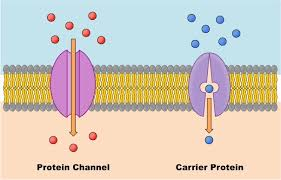
channel
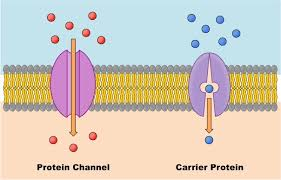
carrier
channel proteins
provides hydrophilic channel that allows movement of polar molecules down the concentration gradient through membranes
held in position by interactions between hydrophobic core of the membrane and the r groups of the proteins
carrier proteins
used in facilitated diffusion and active transport.
involes in the shape of the protein changing
extrinsic proteins (peripheral proteins)
present on one side of the bilayer.
have hydrophilic r group on outer surface and interacts with polar heads of phospholipids/intrinsic proteins
some move between bilayers
example of a particular position for chemical reactions to take place
electron carriers and enzyme ATP synthase have to be in correct position for within cristae(inner membrane) of mitochondria for the production of ATP in respiration.
enzyme for photosynthesis are found on the membrane stacks within chloroplast
define compartmentalisation
membranes form cells and seperate areas within cells isolating each area from its external surface
lipid soluble molecules in alcohol caffeine and nicotine have an instant and widespread effect on the body - why ??
lipid soluble molecules can pass through membranes by simple diffusion so it diffuses quickly throughout the whole body
membranes in mitochondria are highly folded. whats the advantage of this
the process occurs within membranes so it is enzyme controlled and the folding gives an increased surface area so more enzyme increases the rate of reaction and therefore increases ATP production
temp affecting membrane structure
increased kinetic energy so increase in movement.
makes membrane more fluid so membrane becomes to lose its structure
if temp continues to increase then the cell will eventually break down
loss of structure = increases permeability of the membrane making it easier for particles to cross through it
carrier and channel will be denatured at higher temp - involved in transport across the membrane so they denature
solvent affecting membrane structure
polar solvent = helps in the formation of bilayer. non polar tails away from the water forming hydrophobic core. charged phosphate head interacts with water so keeps bilayer intact.
organic solvents = less polar e.g. alcohol and benzene will dissolve membranes and disrupt membrane. so alcohol is used in antiseptic wipes. they dissolve membranes of bacteria in wounds killing them and reducing risk
strong/pure alcohols = toxic as they destroy cells in body. less concentrated alcohol = drinks, not dissolve membranes but cause damage. non polar alcohol can still enter bilayer between phospholipid and disrupt the membrane.
membrane disrupted = more fluid and more permeable. some cell membranes specific functions.
how can diffusion occur
happens in gases or liquids as these particles have their own kinetic energy.
so random movement and unequal distribution will eventually become equal distribution and there will be equalibrium.
diffusion rate
particles at high speed that are constantly colliding which slows down overall movement.
short distance means that diffusion rate is faster and longer distance means that rate of diffusion decreases so more collision needs to take place.
how does temp affect diffusion rate
higher temp means higher rate of diffusion so particles have more kinetic energy and move at higher speed
how does concentration difference affect the rate of diffusion rate
the greater in conc means faster rate of diffusion so overall movement from higher conc to lower conc will be lower
what particles can diffuse across the membrane
non polar molecules e.g. oxygen can pass through the permeable membrane at a very slow rate.
what does hydrophobic core of the membrane repel
positive or negative charged ions
how does surface area affect the rate at which molecules or ions diffuse across the membrane
the larger the area of an exchange surface the higher the rate of diffusion
how does thickness of membranes affect the rate at which molecules or ions diffuse across membrane
thinner the exchange surface the higher the rate of diffusion
process of active transport (outside to inside)
the molecule or ion to be transported binds to receptors in the channel of carrier proteins on the outside of cells
inside cells = ATP binds to carrier proteins and is hydrolysed to ADP and phosphate
phosphate binding to carrier protein causes it to change shape and open up the cell inside
the molecule or ion is released inside of the cell
phosphate is released from carrier protein and combines with adp to form atp
carrier protein returns to og shape
define bulk transport
active transport
large molecules e.g. enzymes and hormones and whole cells that are too large to move through channel and carrier protein are moved in and out by bulk
stages in endocytosis
cell surface membrane first invaginates (bends inwards) when in contact with material to be transported
the membrane enfolds the material until the membrane fuses forming a vesicle
the vesicle pinches off and moves into the cytoplasm to tranfer the material for further processing
e.g vesicles containing bacteria moved towards lysosomes where the bacteria are digested by enzyme
define phagocytosis
cell engulfing - used in solids
define pinocytosis
cell drinking - liquids
process of exocytosis
vesicles usually form by golgi apparatus and moves towards and fusees with the cell surface membrane
the contents of the vesicle are then released outside of cells.
why is energy important in both endo and exocytosis
required for movement of vesicles along the cytoskeleton
changing the shape of cells to engulf materials
fusion of cell membranes as vesciles form or when they meet cell surface membrane
why do all solutions have a negative water potential value
the solution is more concentrated
define osmosis
net movement of water from a solution with a higher water potential (less concentrated) to a solution with a lower water potential (more concentrated).
this will continue until the water potential is equal on both sides of the membrane (equilibrium)
define hydrostatic pressure (kPa)
diffusion of water into a solution leads to an increase in volume of solution. if the solution is in a closed system e.g. cell this results to an increase in pressure
osmosis on plant and animal cells
cell placed in a solution with a higher water potential than cytoplasm.
water moves into cell = increasing hydrostatic pressure
all cells = thin cell surface membrane cannot stretch much or be under so much pressure
cell breaks and burst = cytolysis
placed in a solution with a lower water potential than cytoplasm then it will lose water down the conc gradient
reduces the volume inside cell
this is called crenation
plasma controls the cell to be in isotonic state
define hypertonic
have a higher solute concentration so lower water potential than cytoplasm of the cell this causes animal cell to shrink
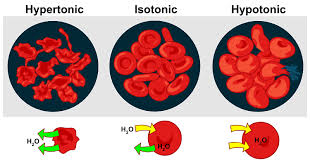
define hypotonic
hypotonic solutions have a lower solute concentration so higher water potential than cytosplasm this causes the cell to burst
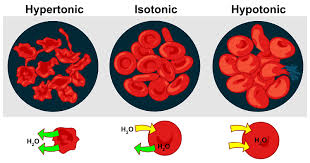
define isotonic
when the external enviroment is the same concentration as cell cytoplasm
plant cell in hypotonic solution
net movement of water is into the cell
vacuole swells
the vacuole and cytoplasm pushs against the cell wall
so cell becomes turgid (swollen)
plant cells in hypertonic solution
net movement of water is out of the cell.
the cell becomes flaccid (limp)
the cytoplasm and the membrane pull away from the cell wall
this is called plasmolysis