A&P - Chapter 12. - Nervous Tissue
 Call Kai
 Learn
Learn Practice Test
 Spaced Repetition
 Match
Match Flashcards
 Knowt Play
1/27

There's no tags or description
Looks like no tags are added yet.
Name | Mastery | Learn | Test | Matching | Spaced | Call with Kai |
|---|
No analytics yet
Send a link to your students to track their progress
28 Terms
three functional classes of neurons
Sensory neurons, motor neurons, and interneurons.
universal properties of neurons
excitability - response to stimuli
conductivity - ability to transmit signals to other cells
secretion - secretion of a neurotransmitter from an axon terminals to stimulate the next gap
sensory neurons
afferent (arriving to CNS)
specialized to detect stimuli such as light, heat, pressure chemicals to transmit information to the central nervous system (CNS) for processing.
interneurons
account for 90% of neurons
receive signals from many other neurons and carry out the integrative functions of the nervous system
connect the incoming sensory and the outgoing motor pathways
motor neurons
efferent (exiting the CNS)
sends signals predominantly to muscle and gland cells
cell body (soma)
control center of the neuron with centrally located nucleus with a large nucleolus
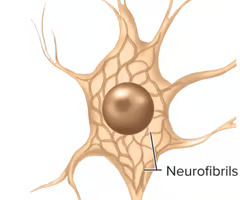
neurofibrils
apart of neuron’s cytoskeleton
bundles of actin filaments that help maintain the cell’s shape and extends to the axon and dendrites
axon hillock
area on the cell body where the axon originates
referred to as the “trigger zone” due to high concentration of voltage-gated sodium channels
“decision-making” point for whether an action potential will be generated
neurons
structural and functions units of nervous tissue (highly cellular, little extracellular space)
amitotic
excitability, conductivity, secretion
3d shape with a body called soma and two types of processes
axon (nerve fiber)
long, non-branching tail like extensions on neuron (one or none)
specialized for rapid conduction of nerve signals to points away from the cell body
CONDUCTIVITY
axon terminal
the end of an axon where neurotransmitters are released
synapse
the junction between neurons where information is transmitted from one neuron to the next
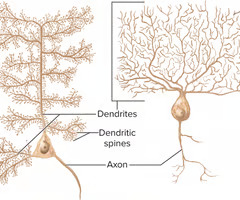
multipolar neurons
most common type
neurons with one axon and multiple dendrites
includes most neurons of the brain and spinal cord
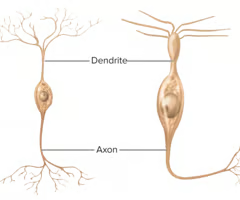
bipolar neurons
neurons with one neuron and one dendrite
ex. certain neurons of the retina
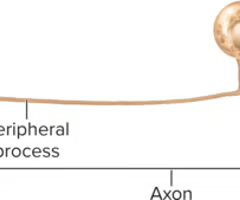
unipolar neurons
neuron with only a single process leading away from the cell body
found in the sensory ganglia of the spinal and cranial nerves
pseudounipolar
neuroglia
supporting cells that help neurons complete their function for communication
6 types of glial cells
what are the glial cells found in the CNS named?
oligodendrocyte
microglia
ependymal cell
astrocyte
what are the glial cells found in the PNS named?
schwann cells
satellite cells
oligodendrocytes
forms the myelin sheath in the CNS
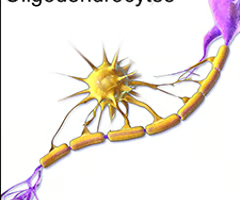
myelin sheath
insulating layer made up of protein and lipids that wraps around axons and speeds up signal conduction
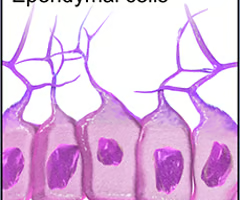
ependymal cells
produce, circulate, and protect cerebrospinal fluid
lines the cavities of the brain and spinal cord
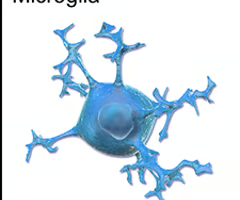
microglia
small macrophages that phagocytize dead tissue, microorganisms, and other foreign matter in the CNS
aid in synaptic remodeling (changing the connections between neurons)
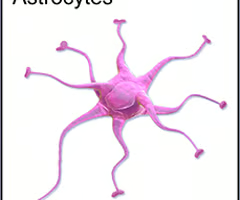
astrocytes
most abundant glial cells
cover brain surface and nonsynaptic region
forms supportive framework in the CNS
forms the blood-brain barrier
regulates blood flow in the brain tissue to meet changing needs of O2 and nutrients
promote formation of synapses
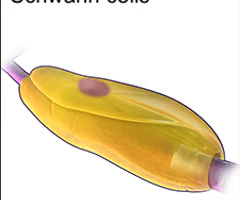
schwann cells
produces myelin sheath to envelopes axons of the PNS
assist in the regeneration of damaged axons
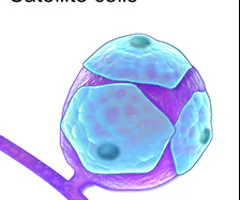
satellite cells
surround the nerve cell bodies in ganglia of the PNS
provide insulation around the body
regulate the chemical environment of the neurons
node of ranvier
gaps between segments of myelin sheath
internodal segments
myelin-covered segments of an axon
what factors make conduction of nerve signals faster?
large surface areas of axon
myelination