Part 2 A: The Evolutionary History of life (ch. 24-27)
 Call Kai
 Learn
Learn Practice Test
 Spaced Repetition
 Match
Match Flashcards
 Knowt Play
1/56

There's no tags or description
Looks like no tags are added yet.
Name | Mastery | Learn | Test | Matching | Spaced | Call with Kai |
|---|
No analytics yet
Send a link to your students to track their progress
57 Terms
Review question; define homology
Similarity due to shared ancestry
Review question; define analogous structures
Similarity in structures due to evolution to similar conditions
When did the first eukaryotic cells evolve from?
Phanerozoic era(s)
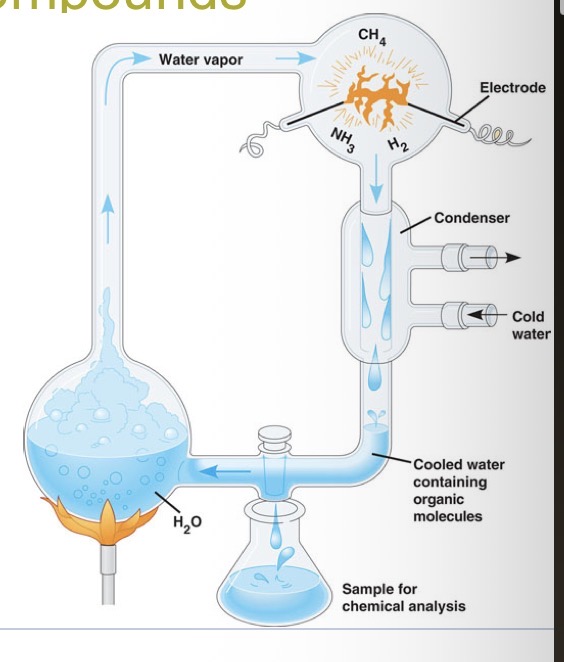
The replication of storms and lightning by Miller and Urey proved what?
The conditions which occurred to have recreated the first theorized organic molecules of the earth
Although the results of Urey’s and Millers organic molecules experiments could be recreated in other ways, where do people think organic molecules started?
Underneath volcanoes and deep sea vents
Organic molecules can spontaneously form what?
ex) dipping onto a substrate suck as sand or clay
Polymers may spontaneously form
Cells which come from abiotically produced organic molecules
Enclosed by a membrane are called?
Protocells
Liposomes are?
Membrane bound droplets which can form when lipids are added to water
Abiotic synthesis of organic molecules
Polymerization into macromolecules
Packaging into protocells (self replicating molecule which stores information)
Origin of self replicating molecules enabling inheritance
Are all credible hypothesis of what
The origin of life
The first traces of inheritable information before DNA was?
RNA
What advantages did early protocells with self replicating catalytic RNA have
More effective at using resources
Increased replication due to natural selection
What were the evolutionary advantages of double stranded DNA opposed to RNA
Larger genomes stored more information
More stable molecules ensured fewer copying errors
The following is a list of what
Spherical (cocci)
Rod shaped (bacilli)
Spiral
3 main shapes of prokaryotes
What are the two crucial features of nearly all prokaryotes
The cell wall
Peptidoglycan
The gram stain tests for
Peptidoglycan
A sample of bacteria with a peptidoglycan layer would test (positive or negative) on a gram stain test
Gram positive
Which gram stained bacteria are more likely to resist antibiotics
Gram-negative bacteria
What is the capsule of prokaryotes
A cell well which can be covered by a sticky layer of polysaccharide or protein
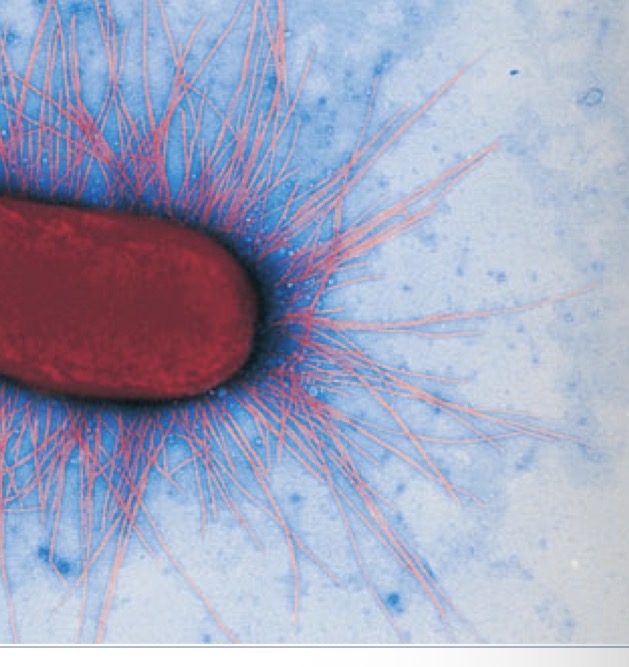
What is fimbriae and pili
Long thin areas attached to prokaryotes which help them stick to substrate or other individuals in a colony
The ability of taxis among bacteria means what
The ability to move toward or away from a stimulus
Plasmids
Smaller rings of DNA in some species of bacteria
Phototrophs
Obtain energy from light
Chemotrophs
Obtain energy from chemicals
Autotrophs
Use CO2 as a carbon source
Heterotrophs
Use organic nutrients to make organic compounds
Obligate aerobes
Require oxygen to live
Facultative anaerobes
Can survive without or without oxygen
Obligate anaerobes
Are poisoned by oxygen
Nitrogen fixation
The conversion of atmospheric nitrogen N2 into ammonia NH3 which is a useable form of nitrogen
Cooperation between prokaryotes
Allows to use environmental resources they could not use as individual cells
How do prokaryotes reproduce
Binary fission
Why would mutations occur in prokaryotes despite the very low chances
Rapid reproduction
Transformation
Picking up alleles from dead individuals of a related species
Transduction
The movement of genes between bacteria by bacteriophages
Conjugation
Genetic transfer between bacterial cells
Sex pili
Allows cells to connect and pull together for DNA transfer
F factor
A separate plasmid or as DNA within the bacterial chromosome and is required for the production of sex pili
Before the late 20th century how were prokaryotes organized in taxonomy and what were the flaws
Organized by phenotypic traits but there was a lot of similarity which was inaccurate to lump together
The majority of prokaryotes that people are aware of is?
Bacteria
What type of bacteria is closely related with eukaryotic hosts and is hypothesized to be the mitochondria in endosymbiosis
Alpha proteobacteria
What type of bacteria forms root nodules in legumes to fix nitrogen from the atmosphere
Rhizobium, alpha proteobacteria
What type of bacteria include sulfur bacteria and pathogens such as legionella, salmonella and vibro cholera inside many mammals intestines
Gamma proteobacteria
Which type of bacteria are parasites, cause syphilis and lyme disease
Spirochetes
What type of bacteria are autotrophes which generate O2 and have likely evolved to chloroplasts through endosymbiosis
Cyanobacteria
Archea share close relation to which clade
Eukarya
Archaea what what similarities with bacteria
Circular chromosome, absent nuclear envelope, membrane enclosed organelles
What similarities are there between archaea and eukarya
Absent peptidoglycan in cell wall (gram negative), several kinds of RNA
Extremophiles are
Archaea which live in extreme environments
Extreme thermophiles
Archaea which live in very hot environments
Extreme halophiles
Archaea which live in high salt environments
Methanogens
Archaea which live in swamps and marshes which produce methane as a waste product (stinky swamp smell)
Chemoheterotrophic prokaryotes function as?
Decomposers which break down corpses, dead vegetation, and waste products
true or false; many prokaryotes live in symbiotic relationships
True
Exotoxins
Proteins secreted by bacterial cells
which produce cholera, botulism
Do not try to kill their host but happen to produce toxins which make their host sick
Endotoxins
Components of membrane of gram negative bacteria which try to kill their host for reproduction
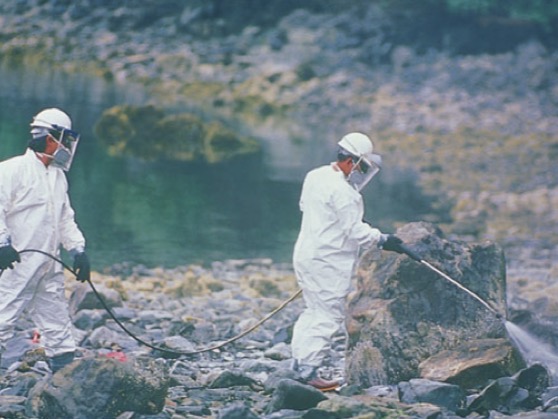
Bioremediation
The use of organisms to remove pollutants from the environments
Mining, synthesis of vitamins, production of antibiotics, hormones and ethanol are all potential benefits of
Prokaryotes benefits