Minor Oral disorder
 Call Kai
 Learn
Learn Practice Test
 Spaced Repetition
 Match
Match Flashcards
 Knowt Play
1/15

There's no tags or description
Looks like no tags are added yet.
Name | Mastery | Learn | Test | Matching | Spaced | Call with Kai |
|---|
No analytics yet
Send a link to your students to track their progress
16 Terms
Identify common causative factors and triggers of xerostomia
For xerostomia, identify common medications that may cause dry mouth.
What is it? | Risk Factor | Potential causes |
Dry Mouth; condition where salivary flow is limited or completely arrested, Presentation:
|
|
|
Medications examples:
Antihistamines
Decongestants
Antihypertensives
Antidepressants
Diuretics
Antipsychotics
Sedatives
Inhaled meds
Identify common causative factors and triggers of canker sores
Canker sores
Risk factors/causes
Local trauma
Smoking, biting inside lip.cheek, braces, toothbrush
Streptococci and varicella zoster virus
Autoimmune disease
Chemo
Nutritional conditions/deficiencies
Genetic
Stress
Hormonal changes
Identify common causative factors and triggers of cold sores
Transmission and activation
How does it spread? | Modes of transmission | Reactivation caused by | Other triggers |
Passed through direct contact with fluid from vesicles containing live virus |
|
|
|
Compare and contrast the presentation of canker sores versus cold sores.
Canker sores (recurrent aphthous stomatitis)
Age of onset: 10-19
Location: oral, nonkeratinised mucosa
Common sites: inside lips, cheeks, tongue, floor of mouth, soft palate
Characteristics:
round/oval
flat/crateriform
Gray or gray/yellow with halo of inflammation
Heals spontaneously in 7-14 days
Symptoms:
Pain, especially when eating, drinking, performing daily oral hygiene
Prodrome
Cold sores (herpes simplex labialis, fever blisters)
Patho: primarily herpes simplex virus type 1 (HSV-1), but sometimes HSV-2
May also be caused by other human herpes viruses such as EBV or CMV
Locations:
Lips or area around lips
Junction between lips and skin or skin and nasal mucosa
May also occur intraorally (hard palate)
Characteristics
Recurrent
Crusty
Red inflamed border
Lesions often coalesce to form larger lesion
Symptoms
Pain
Prodrone (burning, itching, tingling, numbness)
Other possible symptoms: fever, tiredness, swollen lymph nodes, localized bleeding
Nonpharm for Xerostomia
Reduce intake of alcohol, tobacco (all types), and caffeine
Avoid alcohol containing mothwashes
Chew sugar free gum
Increase water intake
Suck on ice chips or sugar free candy
Take meds associated with dry mouth 1 hr bf eating
Use a humidifier at night
Cavity prevention
Reduce intake of sugar, starch, spicy, and acidic foods
Use very-soft bristle toothbrush
Pharm of Xerostomia
Over the counter → Artificial saliva products
Active ingredients: carboxymethyl or hydroxyethylcellulose +/- fluoride
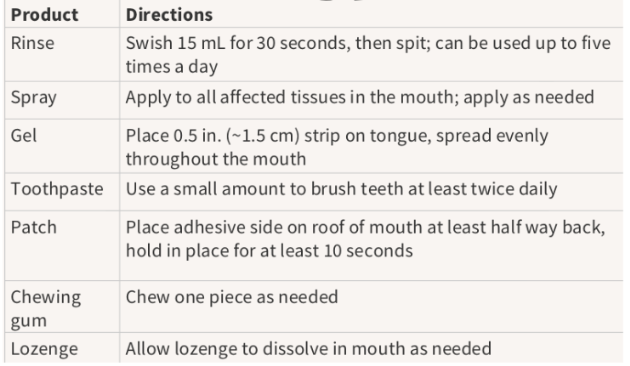
Available as different formulations: lozenges, gels, liquids, mouth sprays, gum, and toothpaste
Ex:
aCT dry mouth lozenge
Biotene dry mouth oral balance gel, moisturising spray, and gum
Use (at min) after all meals and before bed
Prescription meds →Pilocarpine and cevimeline
Class: cholinergic agonist
For treatment of xerostomia as result of radiation and sjogren’s syndrome
ADE: cholinergic associated effects, like sweating, indigestion, nausea, and rhinitis
Nonpharm of canker sores
Treat nutrient deficiencies
Avoid spicy/acidic foods
Avoid sharp foods
Apply ice directly to lesion and avoid heat
Wax on braces
Adhesive buccal patches
Oral saline rines
Avoid antiseptic rinses as this delays healing
Pharm of canker sores
First-line:
High potency topical steroid (Rx)
Dexamethasone elixir (rinse), clobestasol gel/cream, flucinonide cream
Risk of candidiasis
Other therapies
Antimicrobials
Topical tetracyclines (doxycycline)
Chlorhexidine rinse
Antiinflammatories
Amlexanox paste or patches (Rx)
Tissue denaturants
Debacterol prefilled swb (Rx)
Protectants
Sucralfate (Rx)
Oral debriding and wound cleansing agents
Hydrogen peroxide (1.5%)
Carbamide peroxide (10-15%)
Directions:
Apply drops directly or swish gently in mouth for 1 minute, then rinse
Avoid prolonged rinsing → tissue/enamel damage and bacterial overgrowth
Use after meals up to 4 times daily
Avoid eating for 30 minutes after application
Do not use longer than 7 days
Topical oral anesthetics
For age ≥ 2 years
Options: benzocaine 5-20%, benzyl alcohol 0.05-0.1%, dyclonine 0.05-0.1%, hexylresorcinol 0.05-0.1%, salicylic alcohol 1-6%
Brand names: Anbesol, Blistex, Orajel
Applied directly to lesion for temporary relief
Gels preferred, longer acting
Systemic analgesics
OTC options: acetaminophen, naproxen, ibuprofen,aspirin
Do not hold aspirin in mouth, may burn or cause tissue damage
Nonpharm of cold sores
Keep clean with mild soap and water
Wash hands often (and perform other infection control measures) to prevent spread of infection
Keep moisturized
Avoid excessive wind/sun exposure, local trauma (ex. Hard bristle toothbrush), and stress
Cool foods, cool wash clothes, or ice to affected area for pain management
Avoid spicy/acidic food
OTC pharm of cold sores
Lip protectant with SPF 15 or higher
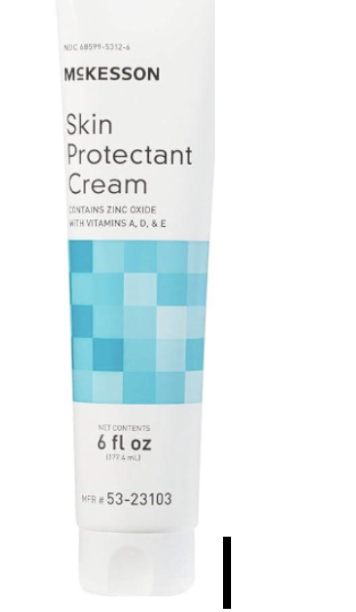
Topical skin protectants
Creams and ointments with dimethicone, pretolatum, and/or zinc oxide
Protection from infection and relieve dryness
Directions: use after meals 3-4x daily. Avoid eating/drinking for 30 minutes after use
Topical anesthetics or analgesics
Ex: benzocaine 5-20%, dibucaine 0.25-1%, dyclonine hcl 0.5-1%, benzyl alcohol10-33%, camphor <3%, menthol <1%
OTC systemic analgesics - if needed for pain
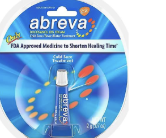
Docosanol 10% (Brand name: AbrevaCream)
Only FDA approved, non-prescription products that can reduce duration and severity of symptoms
MOA: Prevents viral replication by blocking fusion of HSV to and the human cell plasma membrane
Start applying at first sign of cold sore and apply 5 times daily until lesion is healed
Max: 10 days
Cold sores prescription
Examples: Acyclovir (not preferred), vanacyclovir, and famiciclovir
Roles:
Primary infection presenting within 72 hours, recurrent infection
Typically preferred over OTC products due to increased efficacy
MOA: inhibits DNA synthesis and viral replication by competing for DNA polymerases of the virus and being incorporated into HSV DNA
ADE:
tiredness, nausea/vomiting, rash, hematologic abnormalities, increased SCr andBUN (risk for AKI), CNS symptoms- agitation, confusion, dysarthria,hallucination, and impaired consciousness (risk of neurotoxicity), risk of rare blood disorders (thrombotic thrombocytopenic purpura (TTP) and hemolytic-uremic syndrome (HUS))
Natural
Tea tree oil
Lysine (for prevention)
Zinc-base creams
Aloe vera gels
Supplementation with zinc, vitamin c, and vitamin d
Recognize exclusions for self-treatment xerostomia and oral lesions (canker sores and cold sores).
Xerostomia
Tooth erosion, decalcification, and decay
Signs of or diagnoses infection: candidiasis, gingivitis, and periodontitis
Reduce denture wearing time or mouth soreness associated with poor fitting dentures
Fever
Swelling
Loose teeth
Broken or knocked out teeth
Bleeding gums
Severe tooth pain
Trauma to the mouth
Sjogren’s syndrome
Salivary gland stones
Canker
Lesions associated with underlying pathology
Lesion presentation for > 14 d
Symptoms of systemic illness
Frequent recurrence
Failure to prior appropriate self-treatment
Cold Sores
Lesions present >14 days
Increase frequency of outbreaks
Compromised immunity
Symptoms of infection (fever, swollen, lymph nodes, rash)
No previous diagnosis of cold sore
Recurrence
Counsel a patient on strategies for treating and preventing xerostomia
Nonpharm
Follow-up
Time frame: 5-7 days
Worsening symptoms and/or complications: refer
Improved symptoms: continue using products
Counsel a patient on strategies for treating and preventing canker sores
Non-pharm
Follow-up
Seek medical care if:
Lesion does not heal in 14 days
Symptoms continue after 7 days of treatment with debriding/cleansing agents
Symptoms worsen
There are signs of infection (fever, rash, swelling)
Counsel a patient on strategies for treating and preventing cold sores
Avoid steroid containing products as cold sores will not respond
Take steps to avoid transmission of infection: Do not share cups or utensils. Wash hands frequently and after touching/applying medication.
Follow-up
Should resolve within 10-14 days
Seek additional care if :
Lesions do not heal within 14 days
Lesions reoccur despite self-care measures
No relief of discomfort with self-care measures
Signs of systemic infection (fever, malaise,rash, swollen lymph nodes)
Symptoms change or worsen