Phys Module 2 - Details of ceullar organization and function
 Call Kai
 Learn
Learn Practice Test
 Spaced Repetition
 Match
Match Flashcards
 Knowt Play
1/40

There's no tags or description
Looks like no tags are added yet.
Name | Mastery | Learn | Test | Matching | Spaced | Call with Kai |
|---|
No analytics yet
Send a link to your students to track their progress
41 Terms
Functions of the Cell Membrane
aka plasma membrane
crucial structure that surrounds the cell, providing protection and support
Physical barrier preserving homeostasis inside the cell
Controls the entry and exit of ions, wastes, nutrients into and out of the cell
Sensitive to the outside environment
Has receptors to detect changes on the outside of the cell
Has receptors where binding may occur to alter cellular activities
Provides structure when necessary (connections between plasma membranes or attachment to other tissues for structure)
Proteins of the Plasma Membrane
Anchoring proteins
Recognition Proteins (antigens)
Enzymes
Receptor Proteins
Transport Proteins
Cell Adhesion Proteins
Anchoring Proteins
Attach the cytoskeleton within the cell to the plasma membrane to support the internal structure of the cell.
Recognition Proteins (antigens)
The presence or absence of these proteins helps the immune system to recognize ‘self cells’ as opposed to ‘foreign cells’.
Enzymes
Catalyze (accelerate) reactions inside or outside of the cell.
Receptor Proteins
Sensitive to ligands (extracellular molecules) binding them to these proteins, triggering a response; all cells will have different receptor proteins depending on cell type.
Transport Proteins
Includes carrier proteins that bind solutes and transport them across the plasma membrane, which may or may not require energy, and also channel proteins with a pore that allows water and other solutes to enter an otherwise water-insoluble membrane (channels are specific and passage is limited).
Cell Adhesion Proteins
Proteins for cell-to-cell attachment.
Permeability
Permeability is the characteristic of a membrane that determines what substances can pass through.
Impermeable: Nothing can pass through
Freely permeable: Anything can pass through
Selectively permeable: Allows and restricts passage
Diffusion
The passive movement of molecules from an area of higher concentration to an area of lower concentration, driven by the concentration gradient
Fundamental process for the exchange of gases like oxygen and carbon dioxide in the body
Essential for maintaining cellular homeostasis
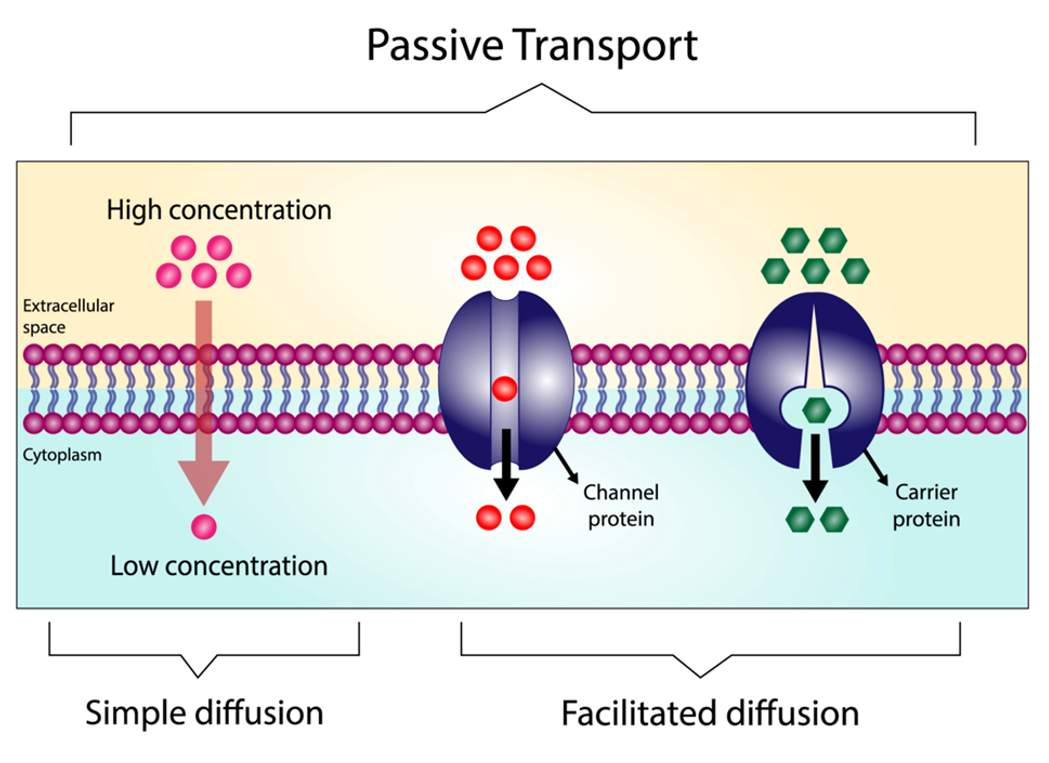
Simple diffusion
Channel-mediated diffusion
Facilitated diffusion
Simple diffusion
Materials that can pass through the phospholipid bilayer without aid
Channel-mediated diffusion
Channel proteins or “leak channels” are passive channels that water or ions can enter through freely. Ions will have limited passage based on size, charge, or interactions with the protein channel.
Facilitated diffusion
The diffusion process used for those substances that cannot cross the lipid bilayer due to their size, charge, and/or polarity. It NEEDS a carrier protein so polar molecules, ions, and water-soluble molecules can move through lipid tails.
Osmosis
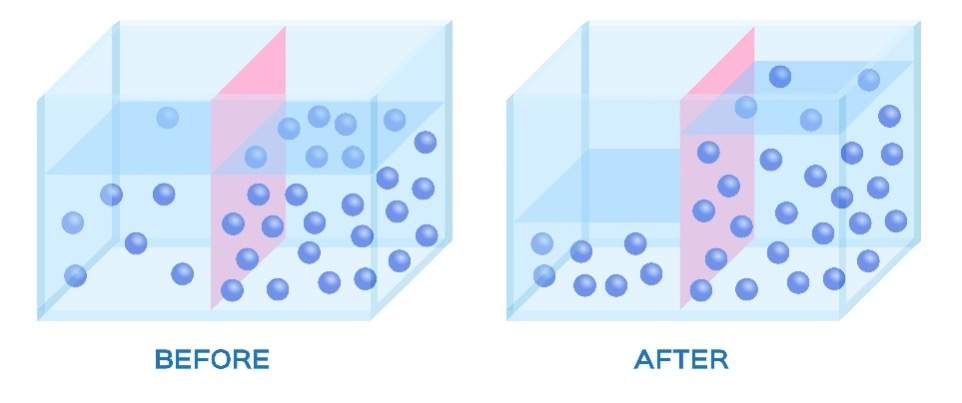
The movement of water across a selectively permeable membrane from an area of lower solute concentration to an area of higher solute concentration.
Occurs: when there is a difference of solute concentration on the two sides of the membrane
Goal: To have the same solution concentration on both sides of the membrane but using water instead of solutes to accomplish it
Osmolarity
Measures the total concentration of solute particles in a solution
(Measures solute concentration)
Tonicity
Refers to how the concentration of solutes in a solution affects the movement of water into or out of a cell
(Describes the effect on the cell's volume and shape)
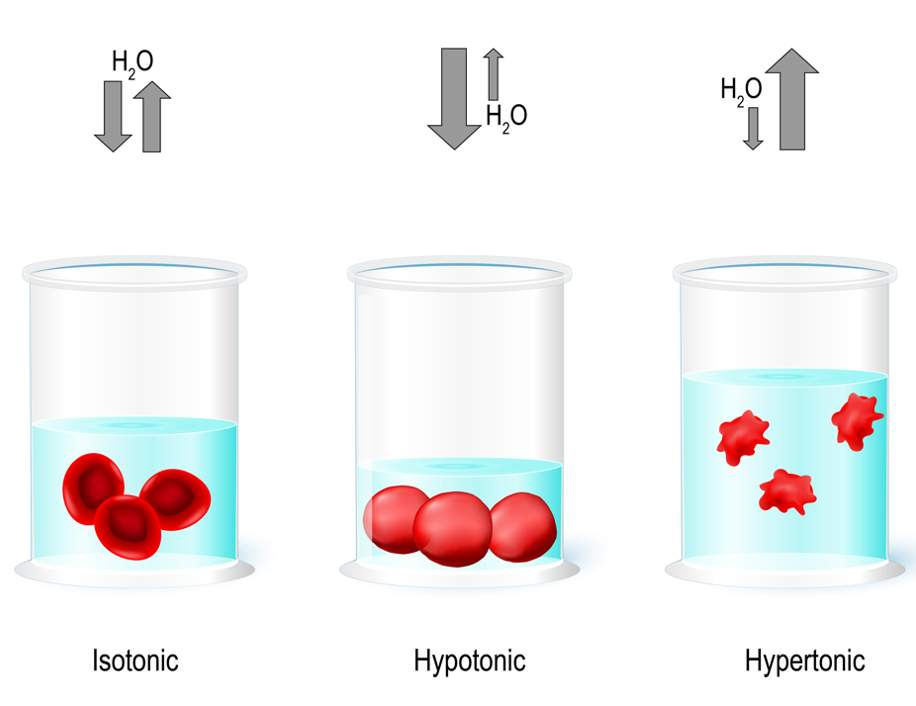
Osmolarity: Isotonic
Equal solute
Equal water
No net movement
Cell size is normal
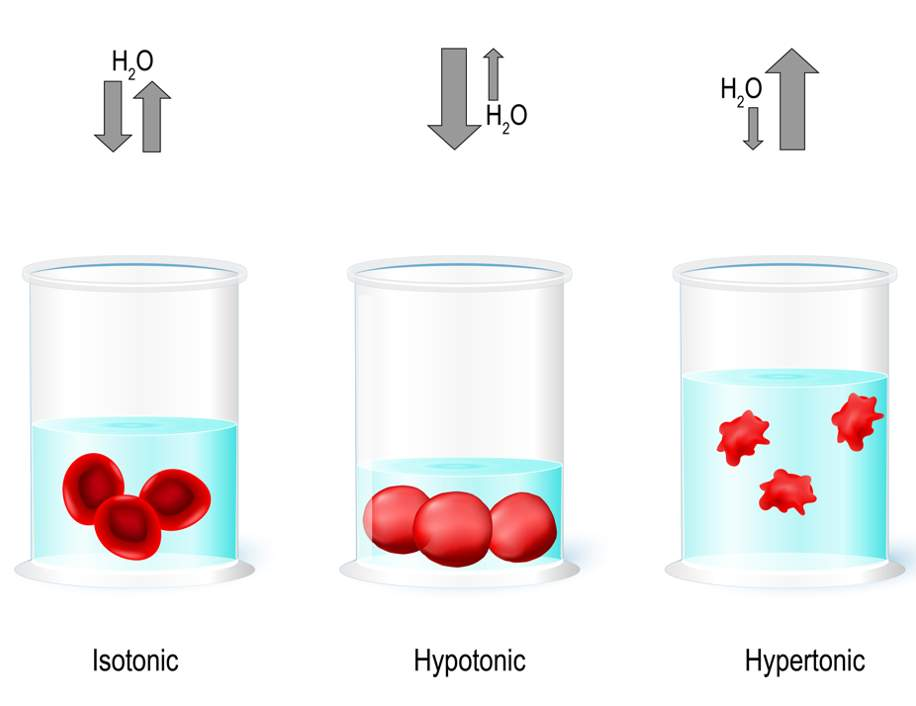
Osmolarity: Hypotonic Solution
Higher solute inside
Higher water outside
Water moves in
Cell SWELLS
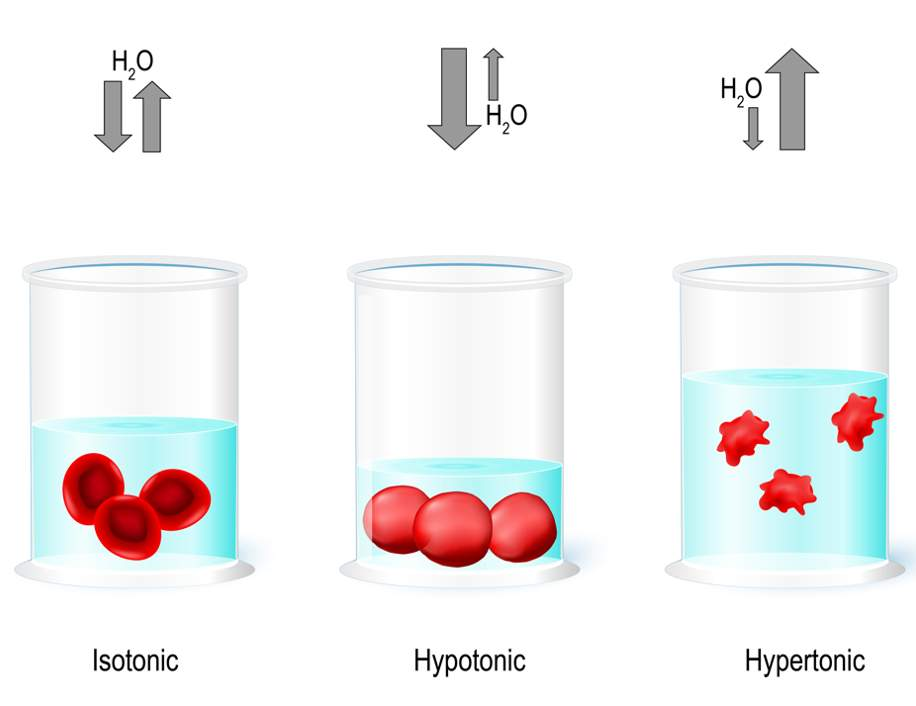
Osmolarity: Hypertonic solution
Higher solute outside
Higher water inside
Water moves out
Cell SHRINKS
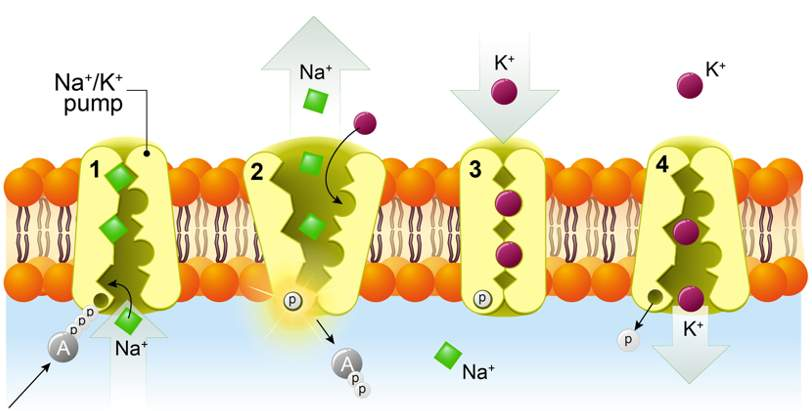
Active transport
The process by which molecules are moved from an area of lower concentration to an area of higher concentration against a concentration gradient.
This movement requires energy in the form of ATP because it goes against the natural direction of diffusion
Ex: Sodium-potassium exchange pump
Vesicular transport
(requires energy), the process of moving materials within or between cells using vesicles, which are small, membrane-bound sacs.
Endocytosis
Phagocytosis
Exocytosis
Vesicular transport: Endocytosis
Materials packaged in vesicles and transported into the cell.
Vesicular transport: Phagocytosis
Occurs only in specialized cells like a macrophage; the cell engulfs a foreign/damaged substance, fuses with a lysosome, breaks down the foreign/damaged material, and either reabsorbs or rids of the product through exocytosis.
Vesicular transport: Exocytosis
The process of a cell exporting material using vesicular transport
Nucleus
Contains genetic material (DNA) and controls cellular activities.
Mitochondria
Produce energy (ATP) through cellular respiration.
Endoplasmic Reticulum (ER)
Synthesizes proteins (rough ER) and lipids (smooth ER).
Golgi Apparatus
Modifies, sorts, and packages proteins and lipids for secretion or internal use.
Lysosomes
Contains enzymes for the digestion of cellular waste and pathogens.
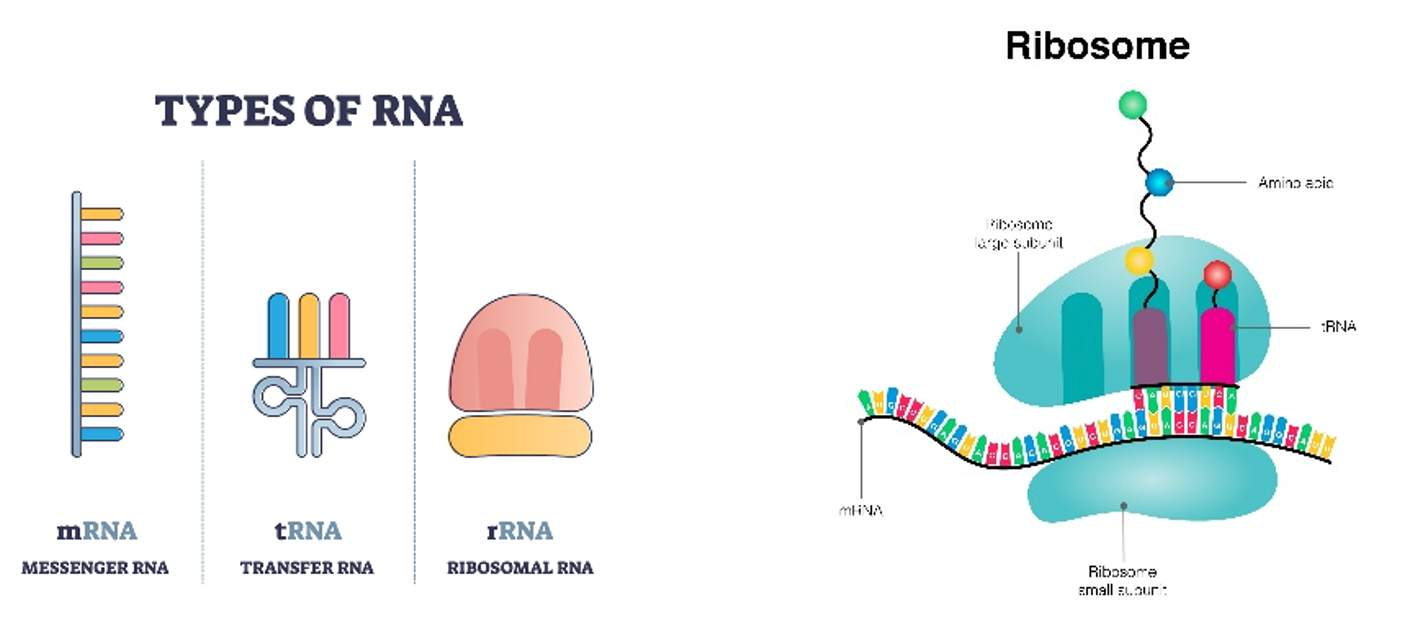
Ribosomes
Synthesize proteins from amino acids. Ribosomes may be found floating in the cytoplasm (free) or attached to the endoplasmic reticulum (bound).
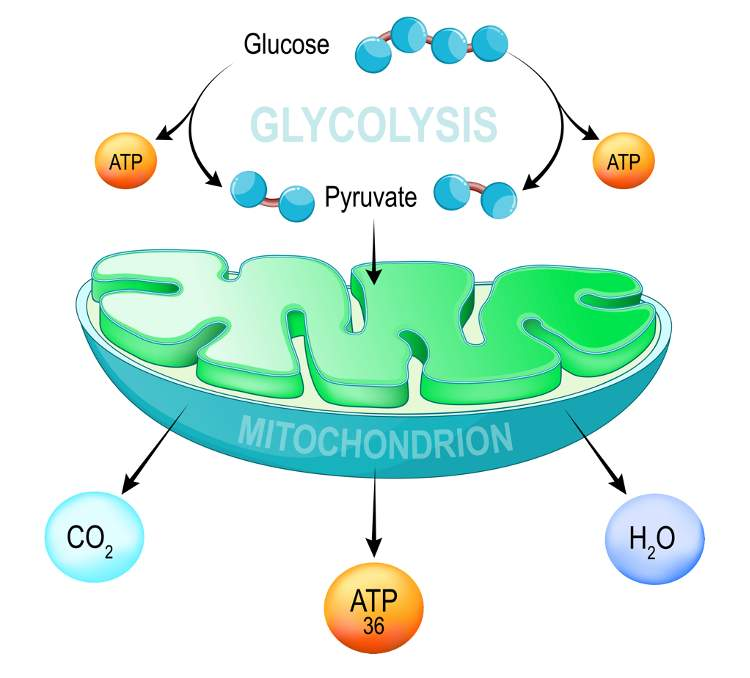
Mitochondrial Energy Production
Process of glycolysis in the cytoplasm → energy is generated through anaerobic and aerobic respiration
Notes: ??
Mitochondrial energy production begins with glycolysis, a process occurring in the cytoplasm where glucose is broken down into two molecules of pyruvate, yielding a small amount of ATP and NADH.
In the absence of oxygen, anaerobic respiration occurs, where pyruvate is converted into lactic acid, generating only a small amount of ATP (about 5% of cellular energy). If oxygen becomes available, lactic acid can be converted back to pyruvate and will follow the next step.
If oxygen is present, pyruvate enters the mitochondria for aerobic respiration, undergoing the Krebs cycle and oxidative phosphorylation to produce a substantial amount of ATP (about 95% of cellular energy).
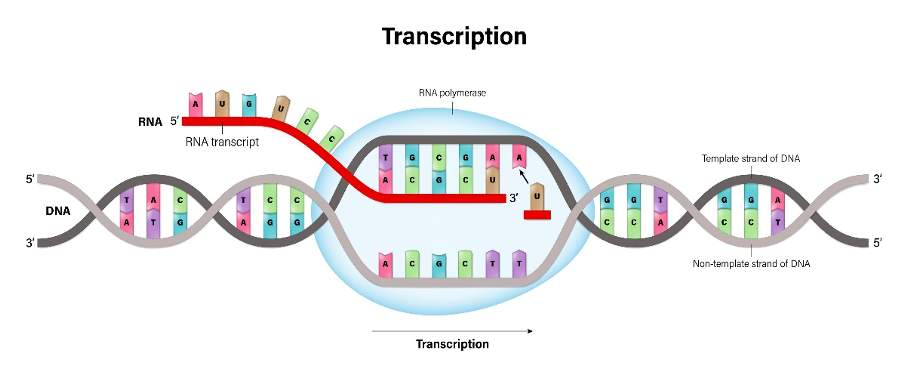
Transcription
Short definition: Making a copy of the instructions found in DNA (inside the nucleus). Copy is carried by mRNA
Long definition: The process of copying a segment of DNA into RNA. This is the first step in gene expression, where the DNA sequence of a gene is transcribed to produce an mRNA molecule. The mRNA is like a transcript, or copy of the gene's DNA code.
Translation
Simple definition: Reading the message from the mRNA and making a protein. This occurs in the ribosome. As the ribosome reads the message, it has tRNA bring in amino acids. These are then bound together via carbon to form a linear protein.
Long definition: The process by which ribosomes synthesize proteins using the mRNA transcript produced during transcription. This involves decoding the mRNA sequence to build a specific protein.
Three types of RNA are involved in Translation:
mRNA (messenger RNA, a product of Transcription)
tRNA (transfer RNA, which transfers 1 amino acid for every 3 nucleic acids),
rRNA (ribosomal RNA, which acts as a pair of hands forcing mRNA and tRNA to work together).
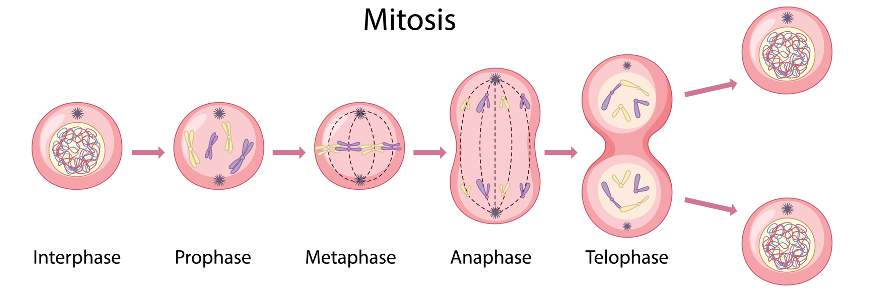
Mitosis
The process of cell division that results in two genetically identical daughter cells. Mitosis is essential for growth, development, and tissue repair.
Concentration Gradient
The difference in concentration of a substance across a space
Movement of particles from an area of higher concentration to an area of lower concentration (diffusion) down/with
Particles moving up/against is the movement of particles of lower concentration to an area of higher concentration (requires ATP)
Water soluble and impact on ability to move into the cell
Water soluble = will mix with water
In the body, water soluble things (ions, polar molecules) travel easily in the blood BUT cannot cross the cell membrane due to lipid tails (they are not fat soluable)
Fat/lipid soluable and impact on ability to move into the cell
These are non-polar molecules because fats are non-polar. In the body these need a protein carrier to travel in the blood BUT they cross the cell membrane without any help.
How cells make proteins
Transcription
Translation
Protein moves to golgi
Golgi packages it into a vesicle
Can be moved to a location inside the cell OR expelled via exocytosis
3 stages to transcription
Initiation - A promoter (a particular sequence of nucleotides) triggers the start of transcription
Elongation - RNA polymerase unwinds the DNA segment. RNA polymerase is an enzyme that adds new nucleotides to a growing strand of RNA
Termination - causes the RNA to separate from the gene and from RNA polymerase, ending transcription.
The process of protein synthesis
DNA in nucleus as template
mRNA is processed and released into cytoplasm
mRNA binds to ribosomes
tRNA carries amino acid to mRNA
Anticodon-codon complementary base paring occurs
Peptide chain is transferred from resident tRNA to incoming tRNA
tRNA departs
Protein modification after translation
Base pairing DNA vs RNA
DNA: adenine, thymine, cytosine, guanine
DNA base pairs: A-T , C-G
RNA: adenine, uracil, cytonside, guanine
RNA base pairs: A-U, C-G