female reproduction system
 Call Kai
 Learn
Learn Practice Test
 Spaced Repetition
 Match
Match Flashcards
 Knowt Play
1/67

There's no tags or description
Looks like no tags are added yet.
Name | Mastery | Learn | Test | Matching | Spaced | Call with Kai |
|---|
No analytics yet
Send a link to your students to track their progress
68 Terms
What causes/effects congenital adrenal hyperplasia (CAH)
Excess adrenal androgen production during fetal development.
-Masculinization of external genitalia.
What causes androgen insensitivity syndrome (AIS)?
Dysfunctional androgen receptors that prevent normal response to testosterone.
-Female-appearing external genitalia despite XY chromosomes.
What are the main functions of the ovaries?
A: They produce oocytes and secrete female sex hormones (estrogens and progesterone).
What are the three types of estrogens and which is most important
A: Estradiol, estrone, and estriol; estradiol is the most important.
What are the accessory ducts of the female reproductive system?
A: Uterine tubes, uterus, and vagina.
What arteries supply blood to the ovaries?
A: The ovarian artery and the ovarian branch of the uterine artery.
What is found in the ovarian cortex?
A: Ovarian follicles at different stages of development.
follicles=One oocyte (egg cell)and Surrounding granulosa cells (support and nourish the oocyte)
What happens during ovulation?
A mature follicle ruptures and releases an oocyte about once per month.
Why don’t uterine tubes directly connect to the ovary?
A: The oocyte is released into the peritoneal cavity and then captured by fimbriae.
What is the function of the infundibulum and fimbriae?
to catch and guide the oocyte into the uterine tube.
Where does fertilization usually occur in the uterine tube?
In the ampulla.
What is the function of the isthmus?
A: It transports the oocyte (or fertilized egg) into the uterus.
What happens to the oocyte after it is ovulated?
A: It enters the peritoneal cavity and is then swept into the uterine tube by the fimbriae.
How does the oocyte move through the uterine tube?
By peristalsis and ciliary movement.
What is the function of secretory cells in the uterine tube?
A: They produce fluid that nourishes and keeps the oocyte and sperm moist.
What is an ectopic pregnancy?
A: Implantation of an embryo outside the uterus, most commonly in the uterine tube.
What is the main function of the uterus?
A: To receive, nourish, and support the developing embryo and fetus.
: What are the main parts of the uterus?
A: Fundus, body, isthmus,cervix.
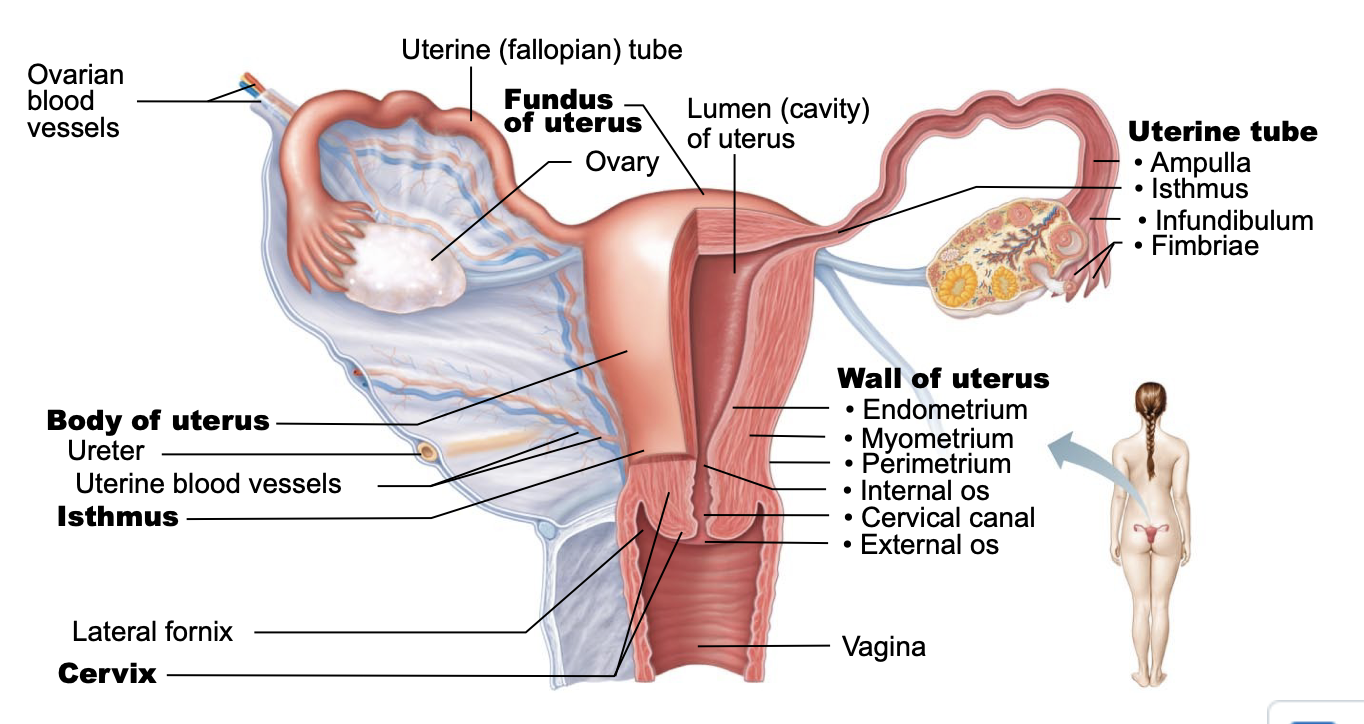
What is the function of cervical mucus?
A: It protects the uterus and helps regulate sperm entry.
What are the three layers of the uterine wall?
A: Perimetrium (outermost layer, protection), myometrium, and endometrium.
What is the function of the myometrium?
A: It is smooth muscle that contracts during childbirth and grows during pregnancy.
-middle layer
What happens to the functional layer of the endometrium during menstruation?
A: It is shed when spiral arteries constrict. (period)
-inner most layer
What is the function of the vagina?
A: It serves as the organ of copulation and the birth canal.
What type of epithelium lines the vagina?
A: Stratified squamous epithelium.
What is the vulva?
A: The external genitalia of the female reproductive system.
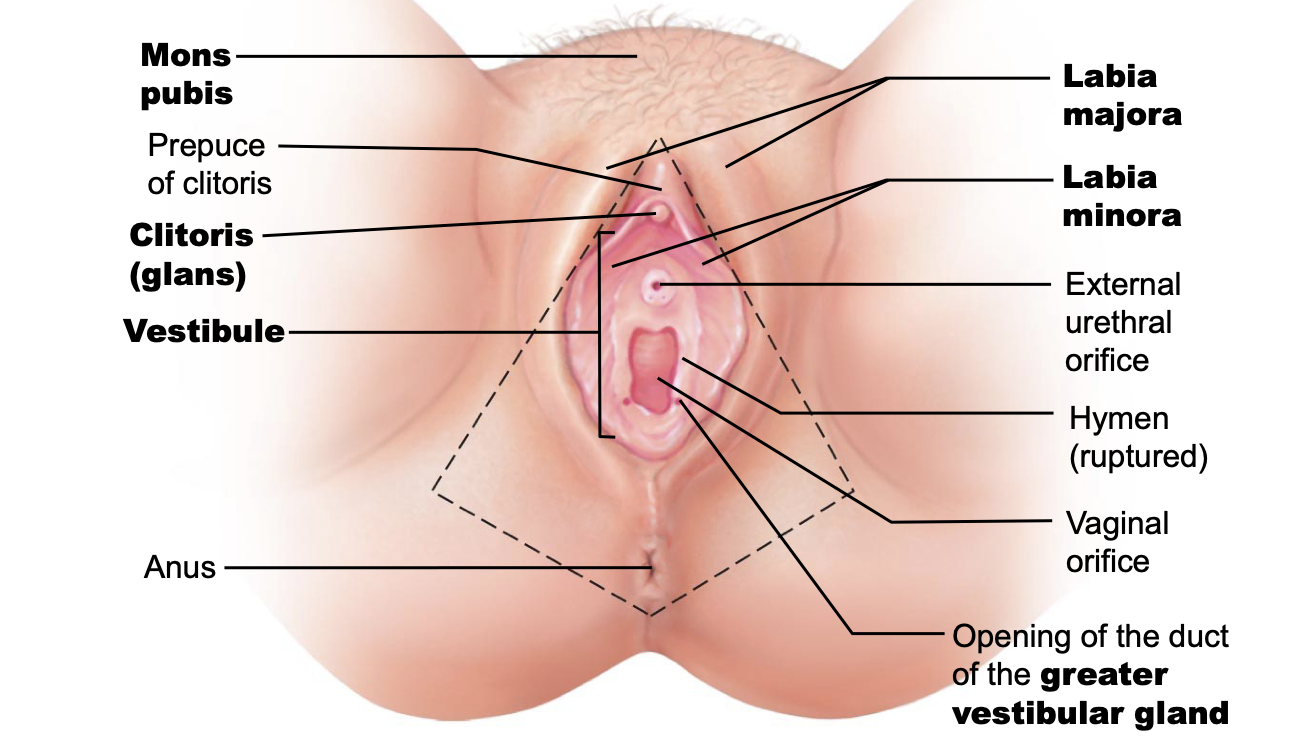
What are the labia majora and labia minora?.
Labia majora are outer hair-covered folds; labia minora are inner hairless folds.
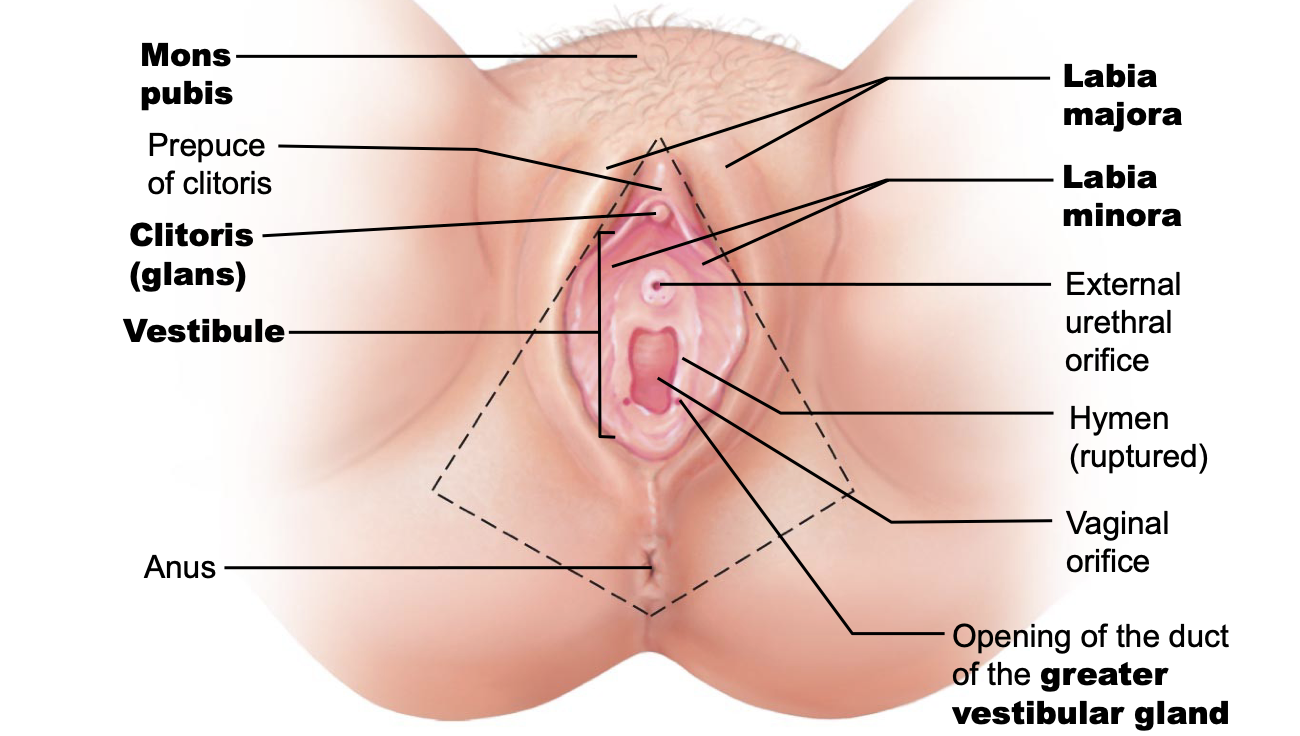
What is found in the vestibule?
A: The urethral opening, vaginal opening, and ducts of the greater vestibular glands.
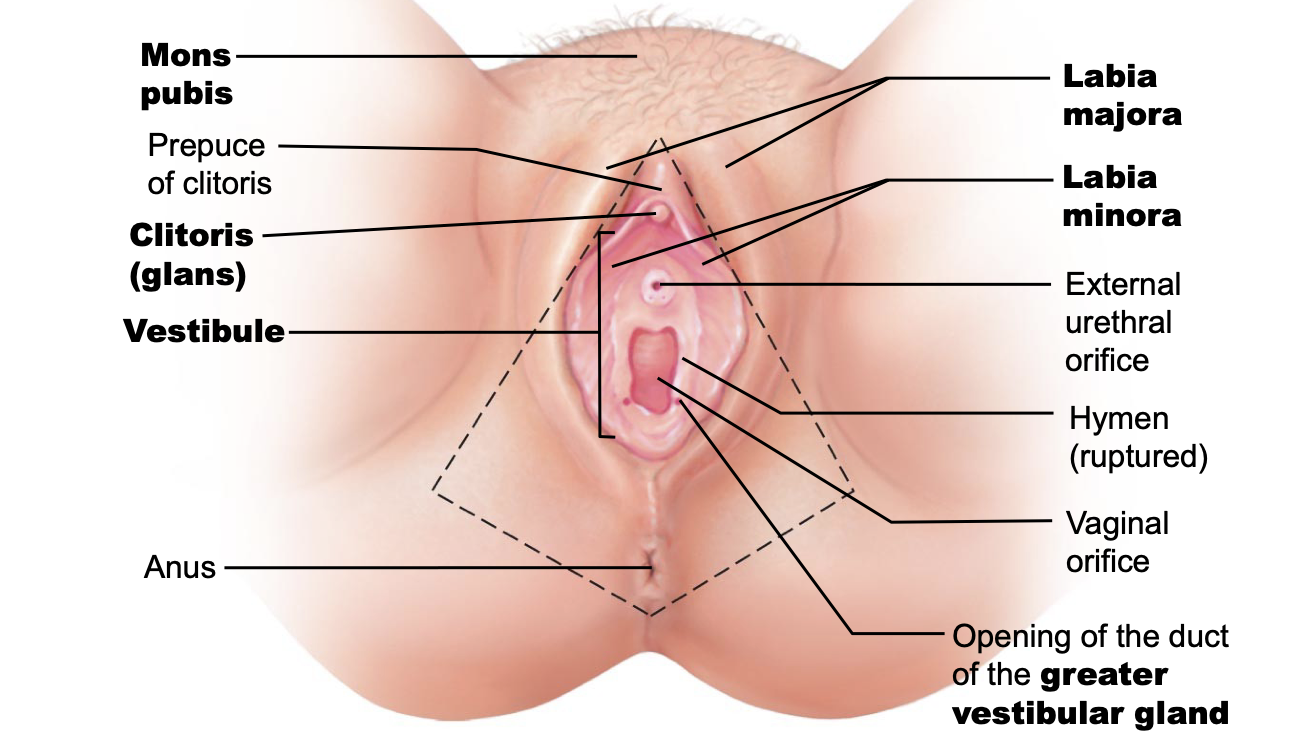
What is the function of the clitoris?
A: It is an erectile organ that contributes to sexual arousal and pleasure.
Where is the clitoris located?
A: Just anterior to the vestibule.
What is the shape and location of the perineum?
It is a diamond-shaped area between the pubic symphysis, coccyx, and ischial tuberosities.
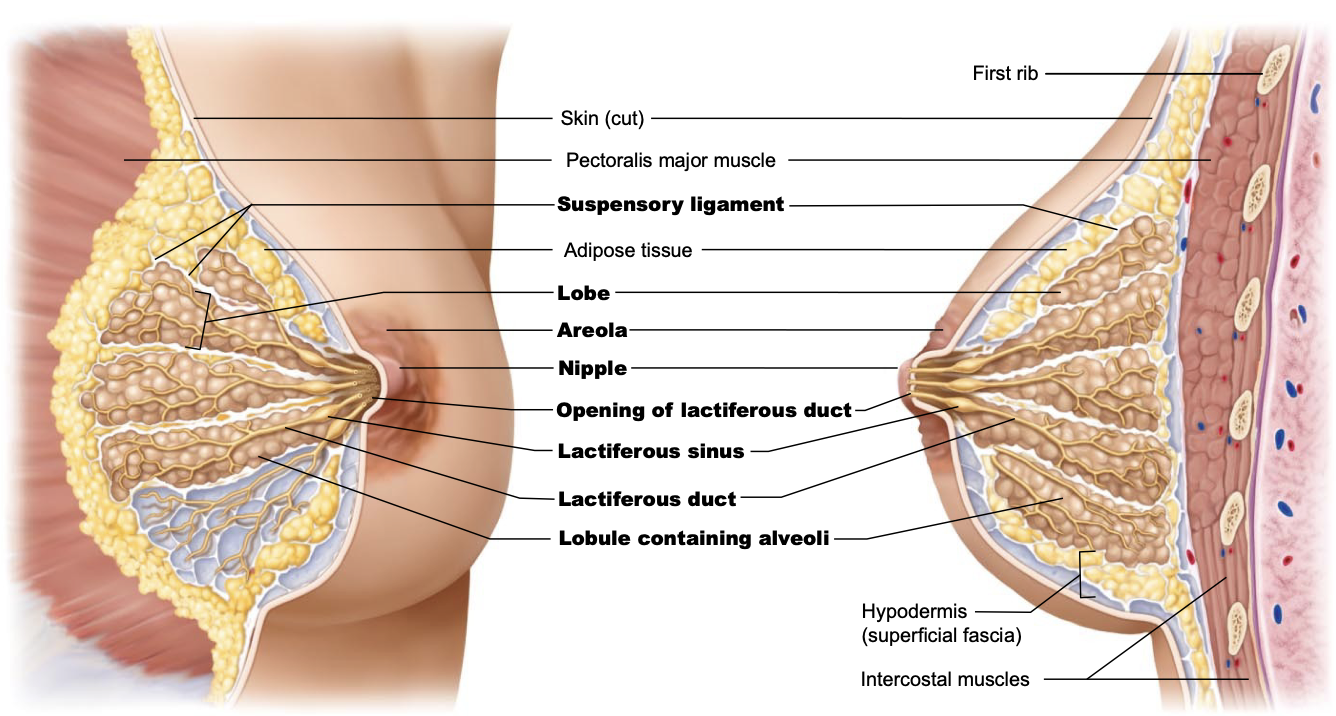
What is the function of mammary glands?
A: To produce milk in response to hormonal stimulation.
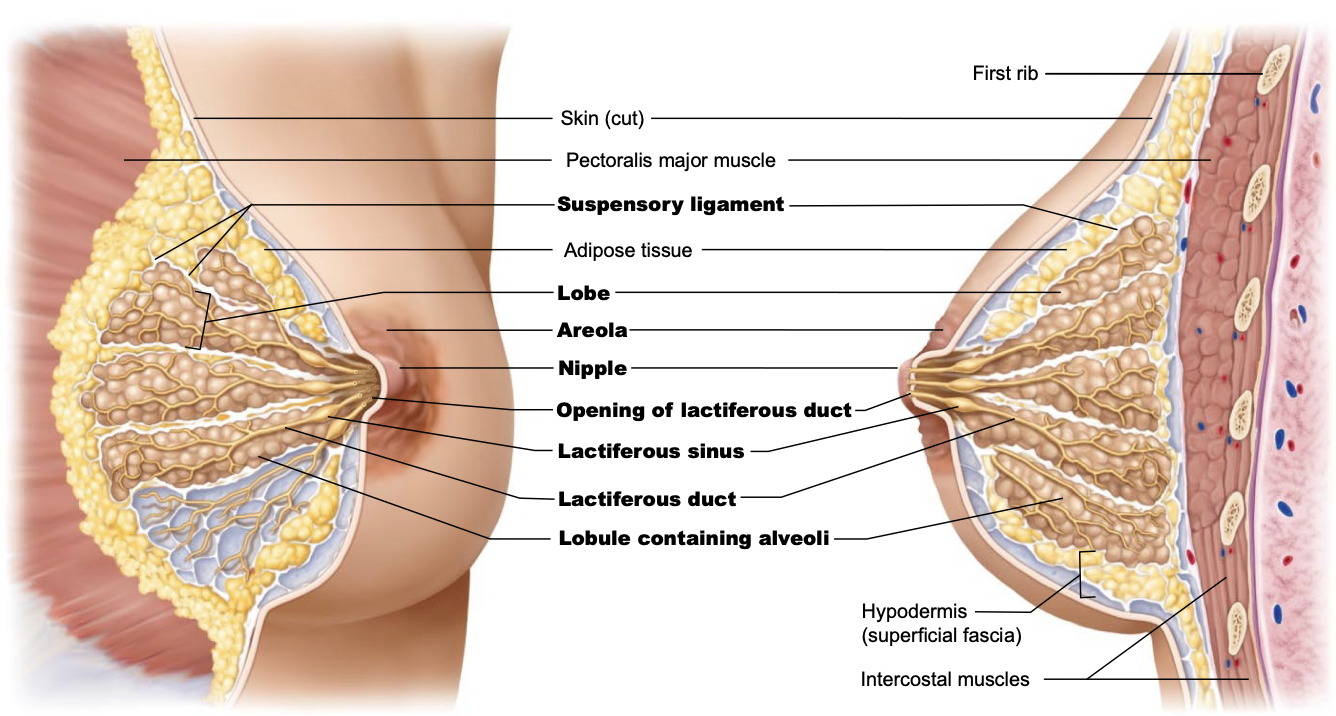
What are alveoli in the mammary glands?
A: Milk-producing structures located within lobules.
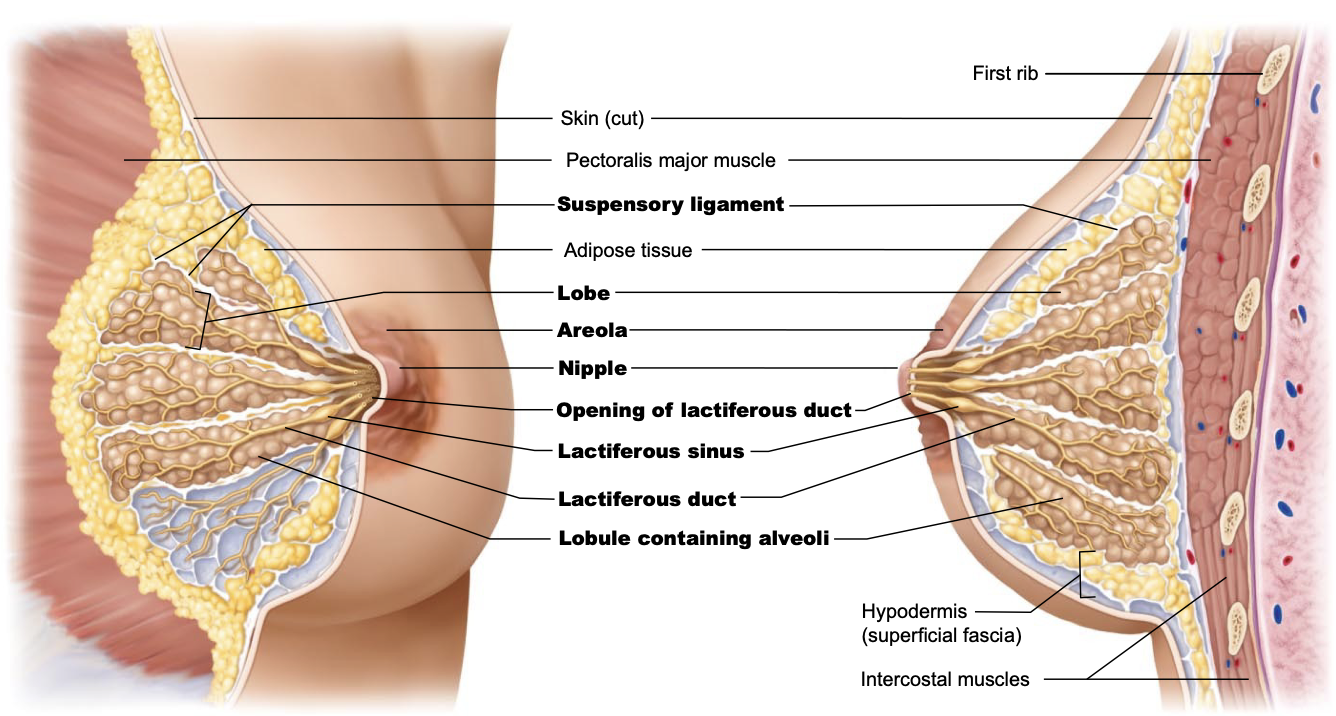
What is the pathway of milk flow in the mammary glands?
A: Alveoli → lactiferous ducts → nipple.
When are primary oocytes produced in oogenesis?
A: During fetal development before birth.
At what stage is meiosis arrested (paused) in primary oocytes?
A: Prophase I.
At what stage is meiosis arrested in secondary oocytes?
A: Metaphase II.
Why does oogenesis produce only one functional oocyte?
Because cytoplasm is divided unevenly, leaving one large cell and smaller polar bodies.
What are polar bodies?
A: Small cells produced during oogenesis that contain extra nuclei and usually degenerate.
What is the function of ovarian follicles?
A: They are the functional units of the ovary where oocytes develop.
What is found in a primordial follicle?
A: A primary oocyte surrounded by a single layer of squamous cells.
What is the key feature of a vesicular (antral) follicle?
A: It contains a fluid-filled antrum and is the stage just before ovulation.
What happens to follicles each menstrual cycle?
A: Hormones stimulate a group, but usually only one becomes dominant and matures.
What is the corpus luteum?
A: The structure formed from a ruptured follicle after ovulation that secretes hormones.
What is atresia?
A: The programmed cell death of ovarian follicles.
What is GnRH?
A: A hormone from the hypothalamus that stimulates the pituitary to release FSH and LH, activating reproductive function.
master switch that turns on the reproductive hormone system
What is the HPG axis?
A: The hypothalamic–pituitary–gonadal axis that regulates reproductive function.
What triggers the start of puberty?
A: Reduced hypothalamic sensitivity to estrogen, leading to increased GnRH release.
What is the role of leptin in puberty?
A: Low leptin levels inhibit the HPG axis and delay puberty
What is the corpus luteum?
A: A structure formed from the ruptured follicle after ovulation that secretes progesterone to support the uterine lining.
What happens during the follicular phase?
A: Multiple follicles develop and one becomes the dominant follicle.
What occurs during ovulation?
A: The dominant follicle ruptures and releases a secondary oocyte
What is formed during the luteal phase?
A: The corpus luteum, which secretes hormones to support pregnancy.
What happens to the corpus luteum if pregnancy does not occur?
A: It degenerates into corpus albicans (scar tissue) and stops producing hormones.
What happens to the corpus luteum during early pregnancy?
It continues to secrete hormones to support the uterine lining.
When does the placenta take over hormone production?
A: After about 3 months of pregnancy.
What happens during the menstrual phase?
A: The endometrial lining is shed, resulting in menstruation.
Which hormone promotes the proliferative phase?
A: Estrogen.
What is the purpose of the secretory phase?
A: To prepare the endometrium for implantation of an embryo.
Which hormone dominates the secretory phase?
A: Progesterone.
What is the function of FSH?
A: It stimulates follicle development and estrogen production
What is the function of LH?
A: It triggers ovulation and formation of the corpus luteum.
What triggers ovulation?
A: A surge in LH around day 14.
What does estrogen do during the cycle?
A: It rebuilds the endometrial lining.
What is the role of FSH in the ovarian cycle?
A: It stimulates maturation of ovarian follicles.
What effect do estrogen and progesterone have on the endometrium?
A: They make it thicker, more vascular, and glandular.
How do estrogen and progesterone affect FSH and LH?
A: They inhibit their release from the anterior pituitary.
What causes menstruation to occur?
A: A drop in estrogen and progesterone when the corpus luteum degenerates.
Why does the reproductive cycle restart after menstruation?
A: Because low hormone levels remove inhibition on FSH and LH, allowing the cycle to begin again.
what does the libido (sex drive) driven by
estrogens and dehydroepiandrosterone (DHEA)