Demention and Alzheimer's
 Call Kai
 Learn
Learn Practice Test
 Spaced Repetition
 Match
Match Flashcards
 Knowt Play
1/18

There's no tags or description
Looks like no tags are added yet.
Name | Mastery | Learn | Test | Matching | Spaced | Call with Kai |
|---|
No analytics yet
Send a link to your students to track their progress
19 Terms
Dementia
Umbrella term describing a set of symptoms associated with cognitive impairment severe enough to affect social or occupational functioning. Loss of intellectual abilities, including;
Judgement
Orientation
Function at work, home, community
Attention
Memory
Language
Motor and spatial skills
Alzheimer’s
Cause: Not known exactly, but believed to be due to buildup of amyloid plaques in brain, disrupting cell communication and causing neurodegenerative factors
Most common subset of dementia in people aged over 65
Vascular Dementia
Cause: Reduced blood flow to brain due to stroke, high BP, diabetes and other vascular conditions - reduces O2 supplies and causes neuronal damage
Symptoms: Cognitive impairment, motor and physical symptoms, mood and behaviour changes, etc. Can vary depending on location and severity of brain damage.
Step-wise decline. Can occur alongside other types of dementia e.g. Alzheimers - early diagnosis and treatment important for progression and improvement of QoLF.
Lewy Body Dementia (LBD)
Cause: Buildup of abnormal proteins (Lewy Bodies), specifically α-synuclein, in the brain, particularly in nerve cells
Symptoms: Fluctuation of cognitive function, visual hallucinations, problems with attention and planning, memory problems, mood changes
Lewy Bodies can also be associated with Parkinson’s disease
Frontotemporal Dementia (FTD)
Cause: Damage to frontal and temporal lobes
Symptoms: Behavioural changes, language difficulties, physical symptoms
Typically affects people between 45 and 65
Categories of Dementia
Neurodegenerative (originally called irreversible)
Non-neurodegenerative (potentially reversible)
Pts w dementia can and often do have multiple diseases which can be neurodegenerative (e.g. dementia w Lewy Bodies) or non-neurodegenerative (e.g. cerebrovascular disease) and contribute to impairment tgt
Most dementia in elderly pts caused by neurodegeneration
Diagnosing Dementia
Initial evaluation and diagnosis should include one of the four through GP review:
thorough clinical history; memory deficit test might include asking when it came on, if anything precipitated it (death of pets might cause it bc loss of communication and companionship that couldve helped slowed progression of dementia)
neurological exam, w an emphasis on mental status assessment - does the pt have capacity?
selective labs to screen for metabolic/physiological abnormalities (basic chemistries, thyroid, B12, Vit D - deficiencies can cause forgetfulness)
structural brain screen, MRI more than CT whenever possible bc better to look at structure as it highlights soft tissue, except in vascular dementia bc it can detect acute vascular changes. In some, serological studies e.g. antibodies, RBC, sedimentation rate, HIV-ab and heavy metal screen are warranted
Early Stage Dementia
Problems are mild and almost noticeable, often mistaken for aging.
BvFTD: Behavioural variant FTD. Commonly associated w personality changes, apathy and progressive decline in socially appropriate behaviour, judgement, self-control and empathy
PNFA: Progressive non-fluent aphasia, decline in language
Middle Stage Dementia
Changes in people are now obvious to people around them
Daily life and relationships can be affected
Mostly unable to do everyday tasks
Frustration, anger, mood swings, conflicts
Suspicion or uncooperativeness
Late Stage Dementia
Extensive damage to the brain
Affects almost all aspects of life
Physical changes severe
Dependant on someone else for all activities as mobility decreases
Ability to talk or willingness reduces
Health worsens on multiple fronts
Seven Clinical Stages of Alzheimer’s (Global Deterioration Scale)
Appears cognitively normal, but pathological changes are happening in brain
Prodromal stage: mild memory loss, but can be mistaken for forgetfulness
Progression into mild cognitive impairment (MCI). Individuals may get lost or finding correct wording
Moderate dementia: poor short-term memory, individuals might forget some of their personal history
Cognition continues to decline and pt needs help in daily lives, can be confused and forget many personal details
Severe dementia, requires constant supervision and care. Patients cannot recognise friends, family + changes in personality
Individuals are nearing death - motor symptoms, communicating difficulties, incontinent, require assistance in feeding
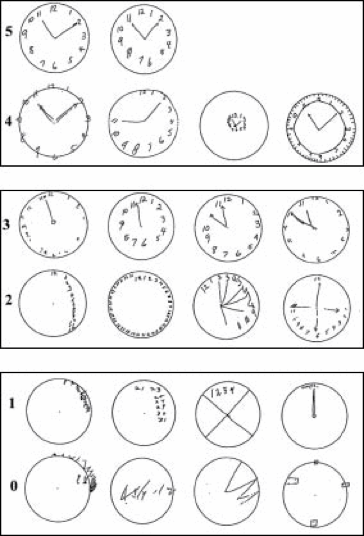
Clock Drawing Test
Screening test
Mini-ACE (Mini-Addenbrooke’s Cognitive Examination)
Screening test socred out of 30. Cut-off scores are 25 and 21, with lower scores suggesting dementia. Questions testing memory, attention, fluency, etc.
Barriers to Dementia Diagnosis
Misidentification of early stages as normal ages
Social skills often maintained early in disease
Denial by pt or family - they may feel scared
Social stigma around diagnosis
Lack of definitive screening and diagnostic testing
Dementia vs Alzheimer’s
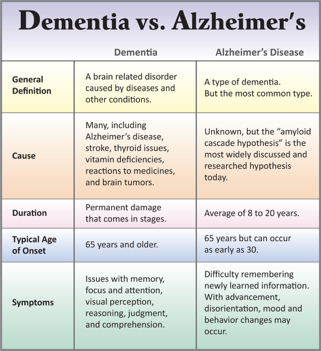
Alzheimer’s Overview
Most common cause of dementia in adult life, associated w selective damage of brain regions & neural circuits for memory cognition
Pathogenesis is complex, involves molecular, cellular and physiological pathologies
Neurons in neocortex, hippocampus (fear), amygdala, basal forebrain cholinergic system most affected
Amyloid Plaque Formation
Alzheimer’s pts show plaques composed of amyloid-beta (A-beta) peptides
A-beta peptides come from Beta Amyloid Precursor Proteins (APPs)
APP is a glycoprotein that is normally a cell-surface signalling molecules
APP is cleaved in the endosomal compartment of the endoplasmic reticulum or golgi complex by beta, α and γ secretases (endoproteolytic cleavage)
Presenilins
PS1 and PS2
Proteins with eight transmembrane domains
Cleave APP, if mutated it can lead to the production
Neurofibrillary pathology
Abnormal changes seen in the brain that are often associated with diseases like Alzheimer's. In simple terms, it's about the build-up of tiny protein filaments (called neurofibrillary tangles) inside brain cells. These tangles can disrupt the brain's ability to communicate properly and are linked to memory problems and other cognitive issues.