N5 Biology transport systems in animals
 Call Kai
 Learn
Learn Practice Test
 Spaced Repetition
 Match
Match Flashcards
 Knowt Play
1/23

There's no tags or description
Looks like no tags are added yet.
Name | Mastery | Learn | Test | Matching | Spaced | Call with Kai |
|---|
No analytics yet
Send a link to your students to track their progress
24 Terms
Describe the pathway of deoxygenated blood through the heart
Deoxygenated blood enters the right side of the heart through the vena cava and enters the right atrium. It is pumped into the right ventricle and is pumped out of the heart through the pulmonary artery to the lungs.
Describe the pathway of oxygenated blood through the heart.
Oxygenated blood returns from the lungs to the left side of the heart, it enters through the pulmonary vein into the left atrium. It is pumped out of the left atrium into the left ventricle and out of the left side of the heart to the rest of the body through the aorta.
What is the function of the Atria?
pump blood into the ventricles
What is the function of the ventricles?
pump blood out of the heart
What is the function of the vena cava?
brings deoxygenated blood from the body into the right atria
What is the function of the pulmonary vein?
carries oxygenated blood to the left atria from the lungs
What is the function of the pulmonary artery?
carries deoxygenated blood from the right ventricle to the lungs
What is the function of the Aorta?
carries oxygenated blood from the left ventricle to the rest of the body (except the lungs)
What is the function of the valves?
prevents the backflow of blood into the heart
What is the function of the coronary arteries?
provide the heart muscle with oxygen, glucose and amino acids
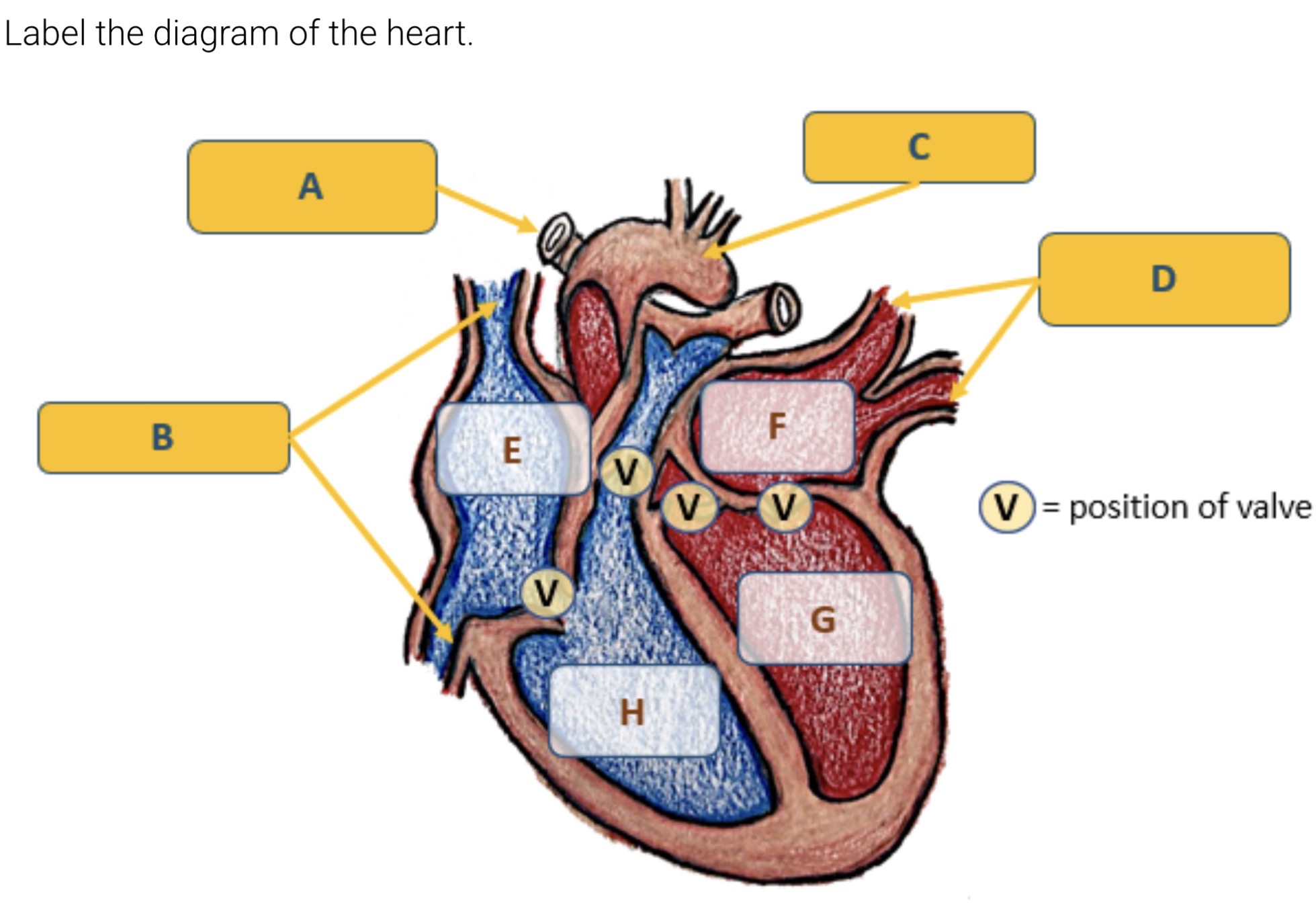
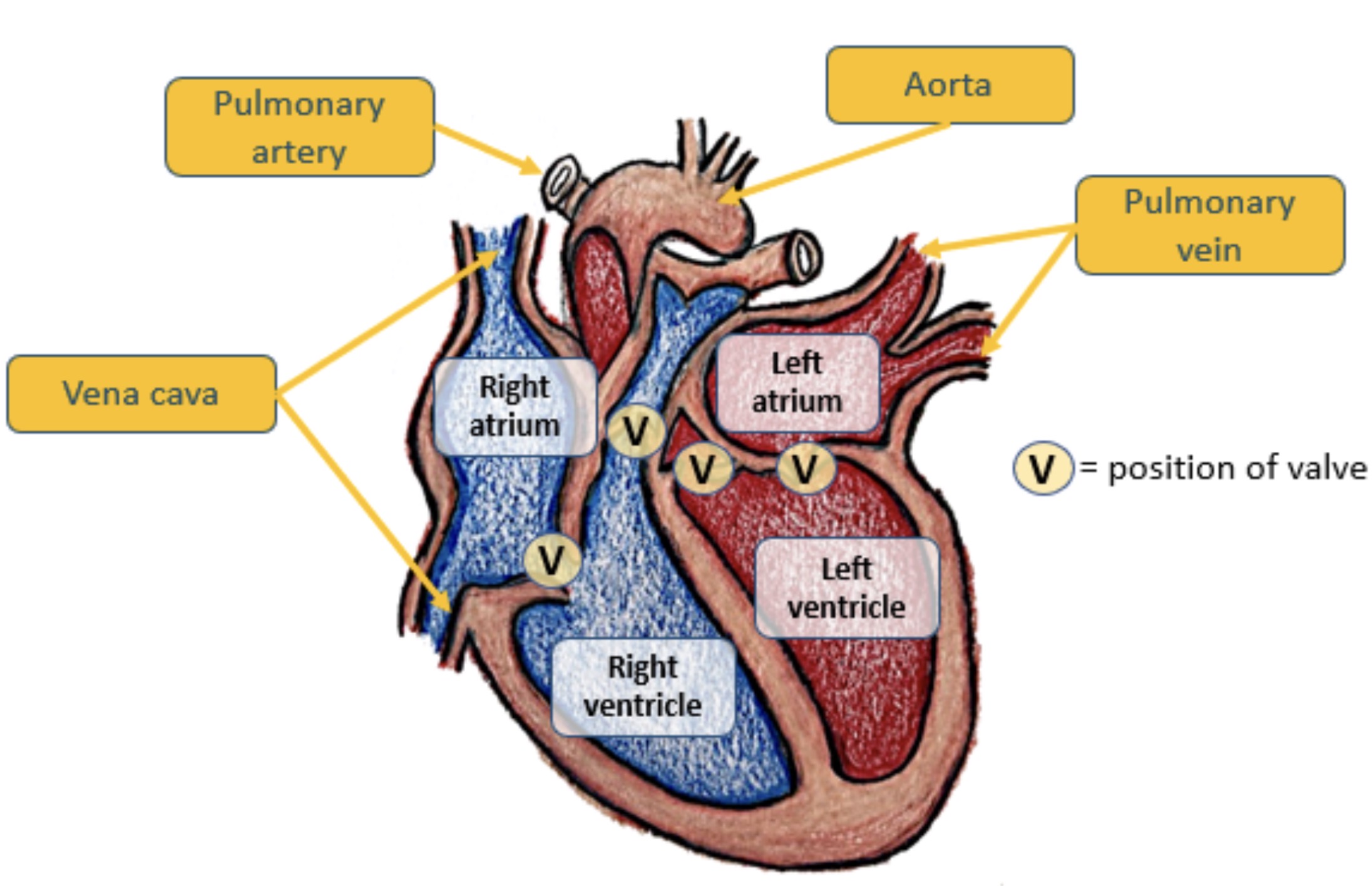
Label the main structures of the heart
A- Pulmonary artery
B- Vena cava
C- Aorta
D- Pulmonary vein
E- Right atrium
F- Left atrium
G- Left ventricle
H- Right ventricle
Describe how red blood cells are specialised to transport oxygen
Red blood cells are specialised cells, so they efficiently transport oxygen.
Red blood cells contain no nucleus
Red blood cells are BICONCAVE in shape
Red blood cells contain the protein haemoglobin
Describe one way in which a red blood cell is specialised to carry out its function and explain the advantage of this specialisation
Biconcave
Transport more oxygen
Biconcave
To fit through capillaries to deliver oxygen to cells
Contain no nucleus
More space to transport more oxygen
Describe the structure of arteries
The Lumen of an artery is smaller than that of a vein and it has a thicker layer of smooth muscle to withstand the high pressure of blood. Arteries carry oxygenated blood from the heart to the body (1 exception).
Describe the structure of veins
Veins have a larger lumen, a smaller layer of smooth muscle and carries deoxygenated blood (1 exception) under lower pressure. Veins also contain valve.
Where are valves found?
Veins
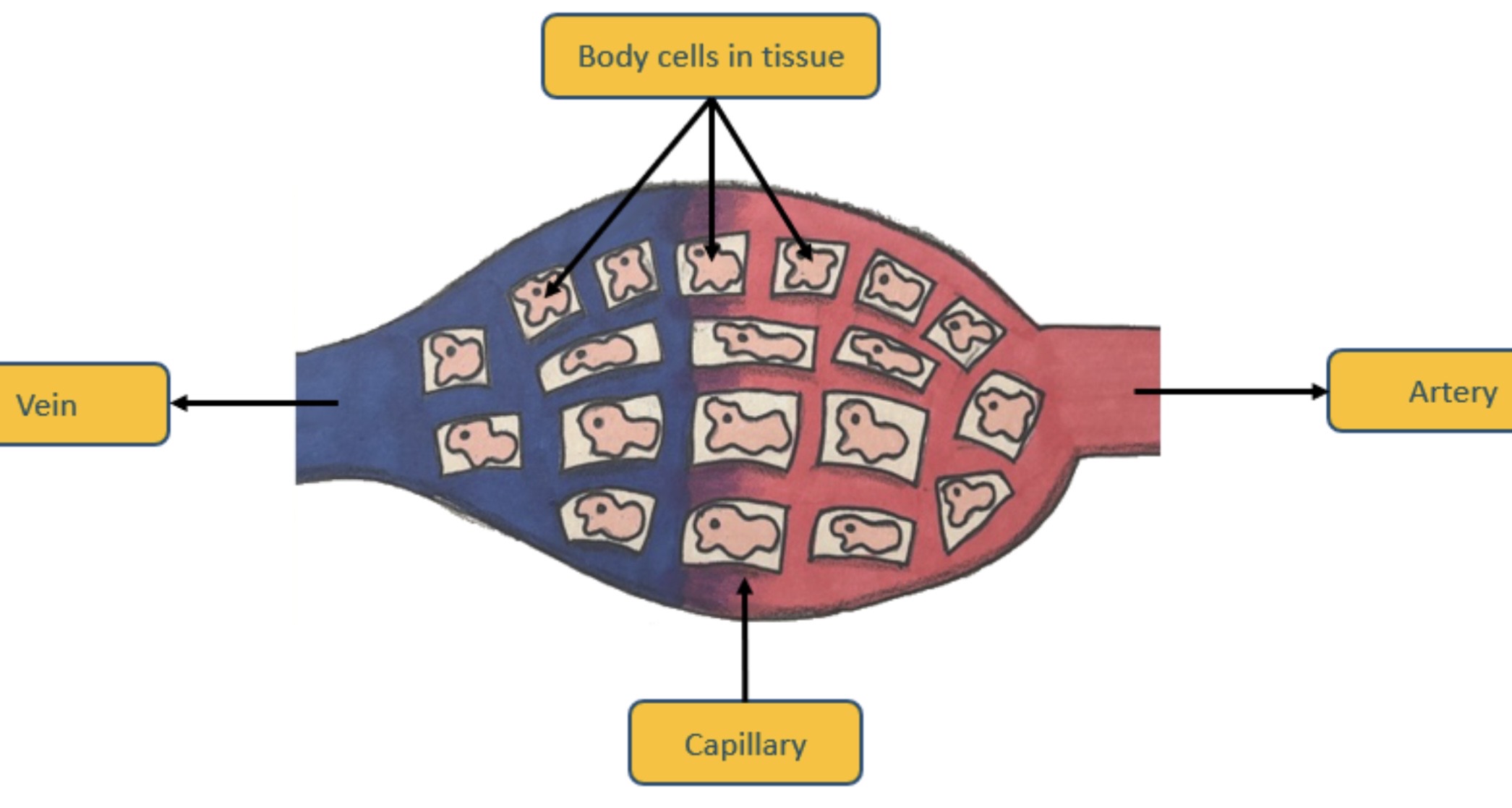
Describe the structure of capillaries
Capillaries have a large surface area and form a dense capillary network. They are only 1 cell thick to allow fast exchange of substances between the blood and body tissues.
Describe the relationship between altitude and red blood cell count. (1)
As altitude increases, the
(red blood) cell count also increases
State the meaning of the term ‘pathogen’.
Disease-causing micro-organism/bacteria/virus
In what form is oxygen transported via red blood cells
Oxyhaemoglobin
Name the blood vessel which supplies the heart muscle with blood
Coronary arteries
Describe the process of phagocytosis
The phagocyte surrounds the pathogen
Phagocyte engulfs the pathogen and encloses it in the vacuole
Digestive enzymes within lysosomes in phagocytes digests the pathogen
How do lymphocytes destroy pathogens
Lymphocytes release antibodies
Name a type of protein produced by the immune system in response to pathogens
Antibodies