Proust et les signs, Part I, ch 4
 Call Kai
 Learn
Learn Practice Test
 Spaced Repetition
 Match
Match Flashcards
 Knowt Play
1/9

There's no tags or description
Looks like no tags are added yet.
Name | Mastery | Learn | Test | Matching | Spaced | Call with Kai |
|---|
No analytics yet
Send a link to your students to track their progress
10 Terms
le grain de la peau
the smoothness of the skin (51)
réfracter
to refract: a key metaphor: just as a prism breaks white light into its component colours, the performer’s body/voice becomes a transparent medium that breaks up and makes visible something deeper, the pure essence or Idea. Any essence (e.g., pain) is expressed so intensely thru Berma that it refracts through her, making the Idea itself appear.
« L’art est une véritable transmutation de la matière. La matière y est spiritualisée, les milieux physiques y sont dématérialisés, pour réfracter l’essence, c’est-à-dire la qualité d’un monde originel. »
“Art is a true transmutation of matter. Matter is spiritualized there, physical milieux are dematerialized, to refract the essence...” It’s the moment when art stops representing the world and starts creating a new one.
Les clochers de Martinville, dans l’ordre des signes sensibles, forment déjà un exemple moins « matériel » parce qu’ils font appel au désir et à l’imagination, non pas à la mémoire.
“The Martinville steeples, in the realm of sensible signs, already provide a less “material” example, since they call upon desire and imagination rather than memory.” (PS 27)
Toutefois l’impression des clocher s’explique par l’image de trois jeune filles ; pour être les filles de notre imagination, celles-ci àa leur tour n’en sont pas moins matériellement autres que les clochers.
“Yet the impression produced by the steeples is accounted for by the image of three young girls; even though these girls are the creations of our imagination, they are no less materially distinct from the steeples themselves” (PS 27). The steeples are a transitional, still somewhat material sign. They are still somewhat material and tied to imagination and desire.
l’image de trois jeune filles
Proust places in a category of signs (impressions that trigger thought) as less purely material because: 1) they appeal to desire and imagination rather than mere memory; 2) the narrator’s intense impression of the steeples is not explained by the physical objects themselves, but by an image they evoke in his mind of three young girls; 3) even though these girls are purely imaginary, they are still materially different from the steeples — they belong to a higher, more spiritual order of signs. In short: the steeples act as a metaphor that awakens the narrator’s imagination and points toward deeper, artistic truths.
L’Art nous donne la véritable unité : unité d’un signe immatérial ed d’un sens tout spirituel. L’essence is précisément cette unité du signe et du sens, telle qu’elle est révélée dans l’oeuvre d’art.
“Art gives us the true unity: the unity of an immaterial sign and of a wholly spiritual meaning. The Essence is precisely this unity of the sign and of sense, as it is revealed in the work of art.” (53)
« L’essence is précisément cette unité du signe et du sens, »
This is Deleuze’s key definition of Essence in Proust. Unlike all other signs (worldly, social, amorous), or even sensory signs like the Martinville steeples (still somewhat material and tied to imagination/desire), artistic signs are fully immaterial (not embedded in matter) and their meaning is entirely spiritual. Art therefore achieves a perfect unity that other domains only approach imperfectly. An Essence is this very unity of sign and sense,in perfect fusion, made visible in the work of art. Through style in literature (as well as painting, music), the artist ‘refracts’ an essence, spiritualizing matter so that the sign and its meaning become one. This is why art is superior and reveals the ultimate truth of Proust’s universe.
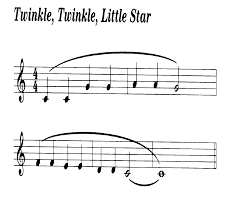
La « petite phrase » de Vinteuil
The recurring musical motif in Vinteuil’s sonata (septet) is not just a pleasant tune that “reminds” Swann or the narrator of love or joy. In the work of art, the phrase itself embodies an essence — a pure quality of joy, tenderness, or the birth of a world. The sound (the sign) and the spiritual reality it expresses (the sense) are indivisible. You don’t decode the phrase to get to a meaning behind it; the phrase is that meaning made audible.
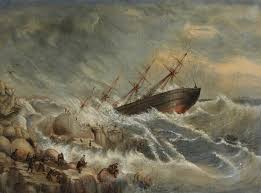
Les peintures d’Elstir: les marines de Balbec
The visible sign (the painting itself) and its spiritual meaning (this unique essence of metamorphosis, this original difference in how the world can appear) have become one and the same. There is no longer a material “thing” on one side and an interpretation on the other. The style is the essence. As Deleuze puts it, this is metaphor as metamorphosis: art spiritualizes matter so that sign and sense coincide perfectly.