Infectious Disease Antibiotics Ch. 22 Naplex 2026
 Call Kai
 Learn
Learn Practice Test
 Spaced Repetition
 Match
Match Flashcards
 Knowt Play
1/165

There's no tags or description
Looks like no tags are added yet.
Name | Mastery | Learn | Test | Matching | Spaced | Call with Kai |
|---|
No analytics yet
Send a link to your students to track their progress
166 Terms
How to select an empiric abx
1) Based on inf site and likely organisms
2) Inf severity: community vs hospital-acquired
3) Spectrum of activity, local antibiogram
4) Ability to penetrate site of inf
5) Side effects
6) Pt age, weight, allergies, renal or hepatic fxn, comorbidities, recent abx use, colonization
7) Guidelines: IDSA and CDC
What is an antibiogram
a list of bacteria and the antibiotic sensitivities at a specific hospital
Thick cell wall
Gram stain: Stains dark purple or blue from the crystal violet stain
A) gram-pos organism
B) gram-neg organism
C) atypical organism
A) gram-pos organism
Thin cell wall
Gram stain: Takes up safranin counterstain, resulting in pink color
A) gram-pos organism
B) gram-neg organism
C) atypical organism
B) gram-neg organism
Has no cell wall
Does not stain well in a gram stain
A) gram-pos organism
B) gram-neg organism
C) atypical organism
C) atypical organism
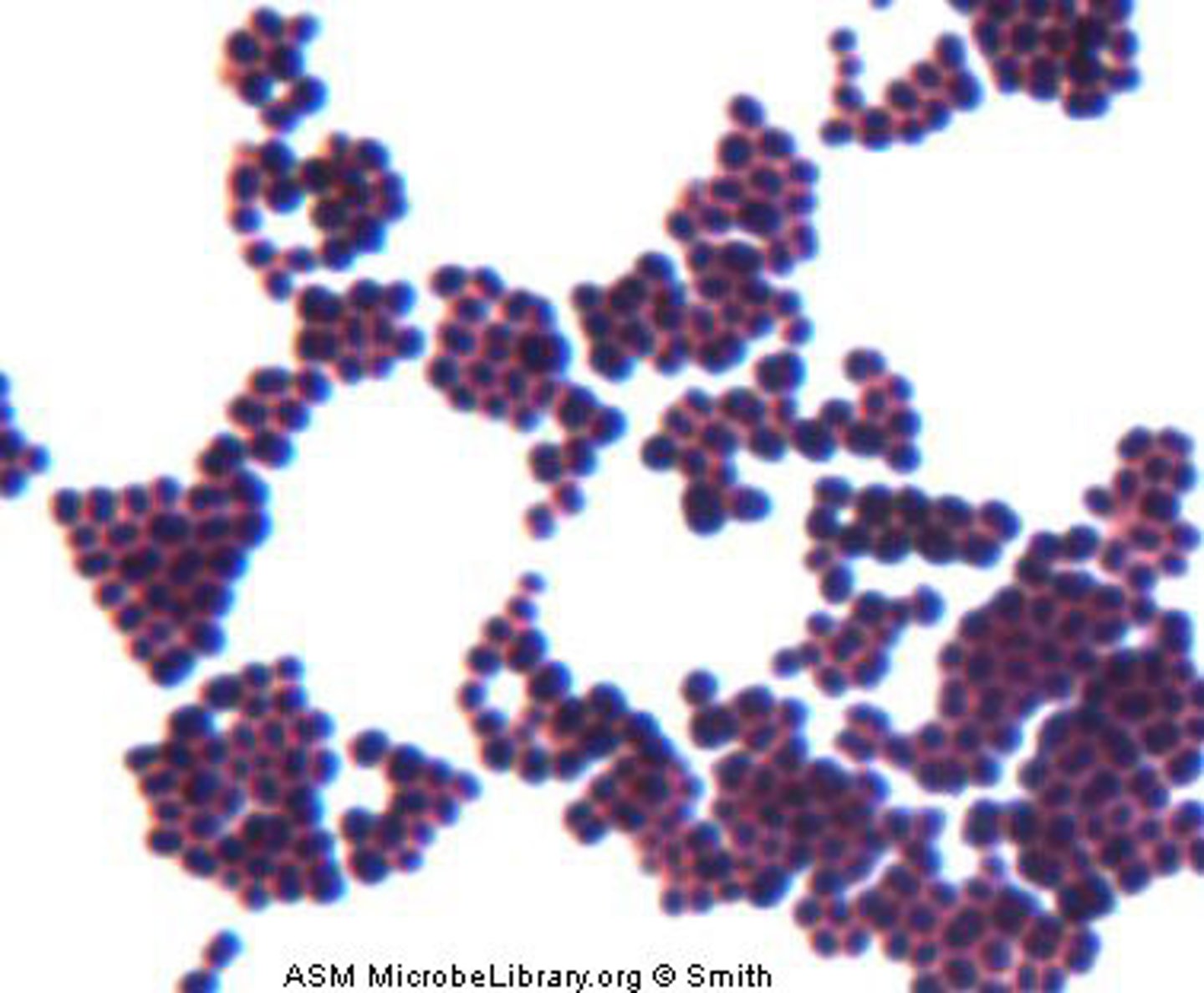
What microbes stain gram-positive (purple) as cocci clusters?
Staphylococcus spp. such as MSSA and MRSA
Staphylococcus epidermidis
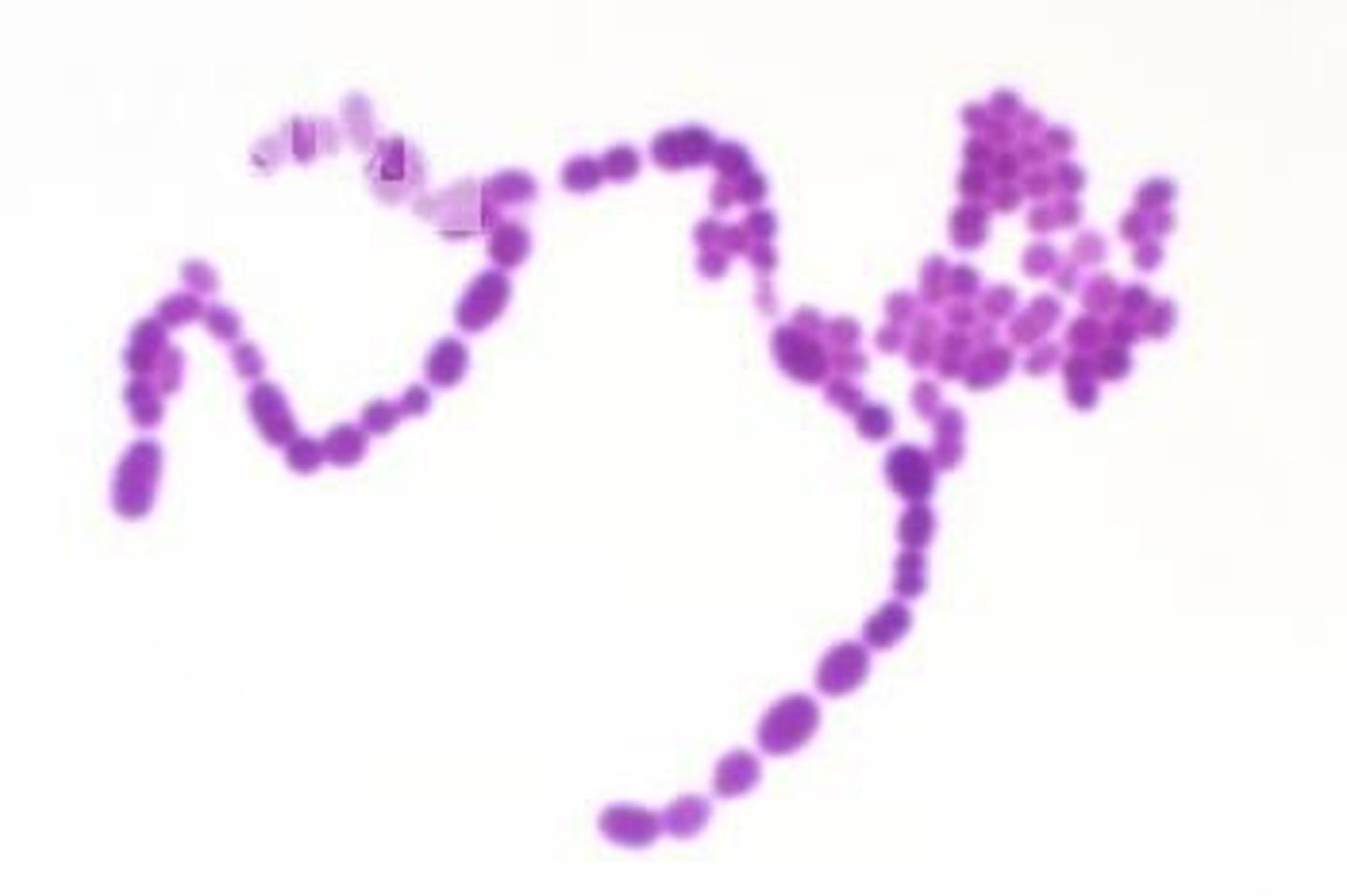
What microbes stain gram-positive (purple) as cocci pairs and chains?
Streptococcus pneumoniae (diplococci)
Streptococcus spp such as Streptococcus pyogenes
Enterococcus species including VRE (Vancomycin resistant enterococcus)
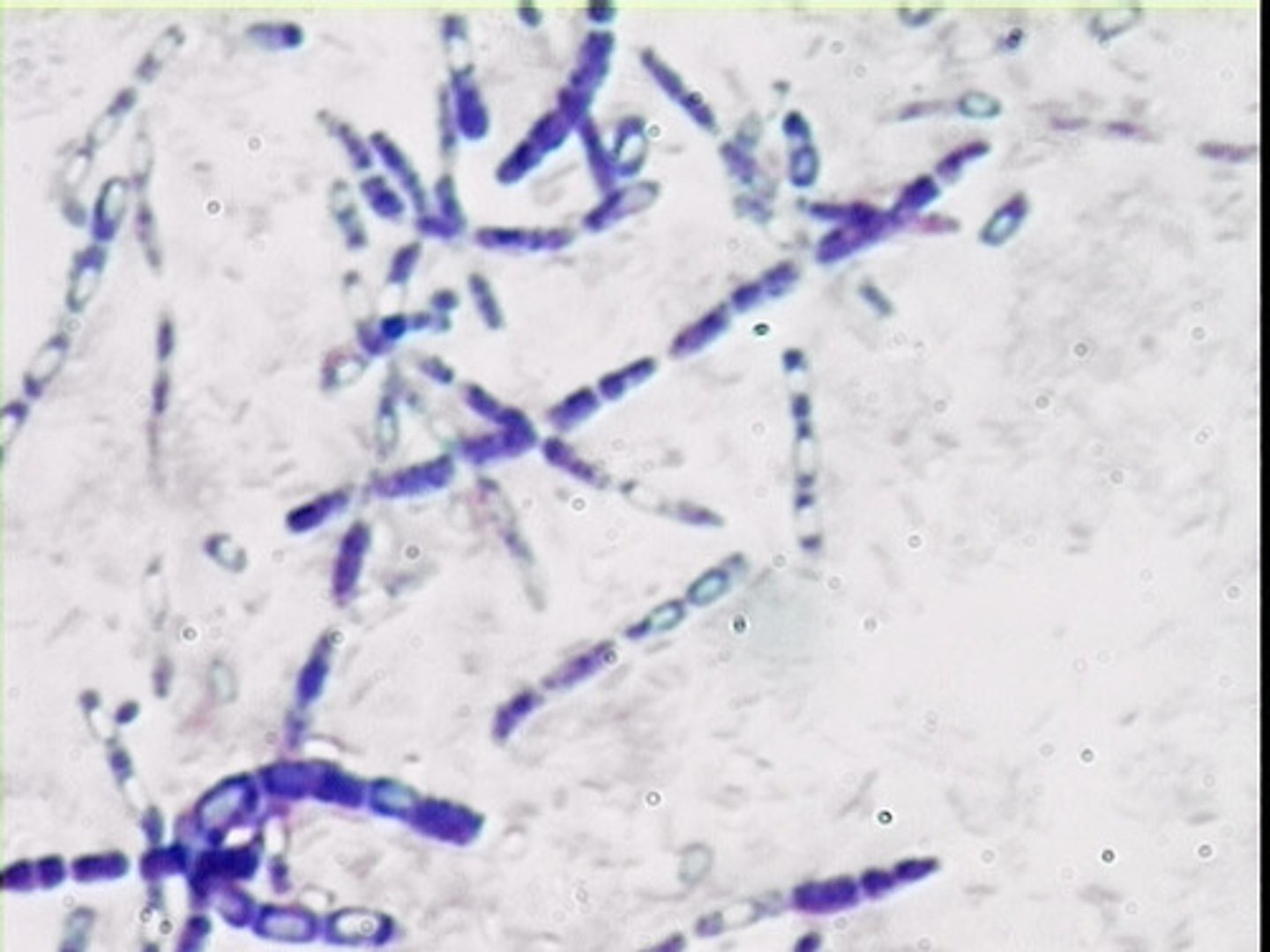
What microbes stain gram-positive (purple) as rods/bacilli?
Listeria monocytogenes
Corynebacterium spp
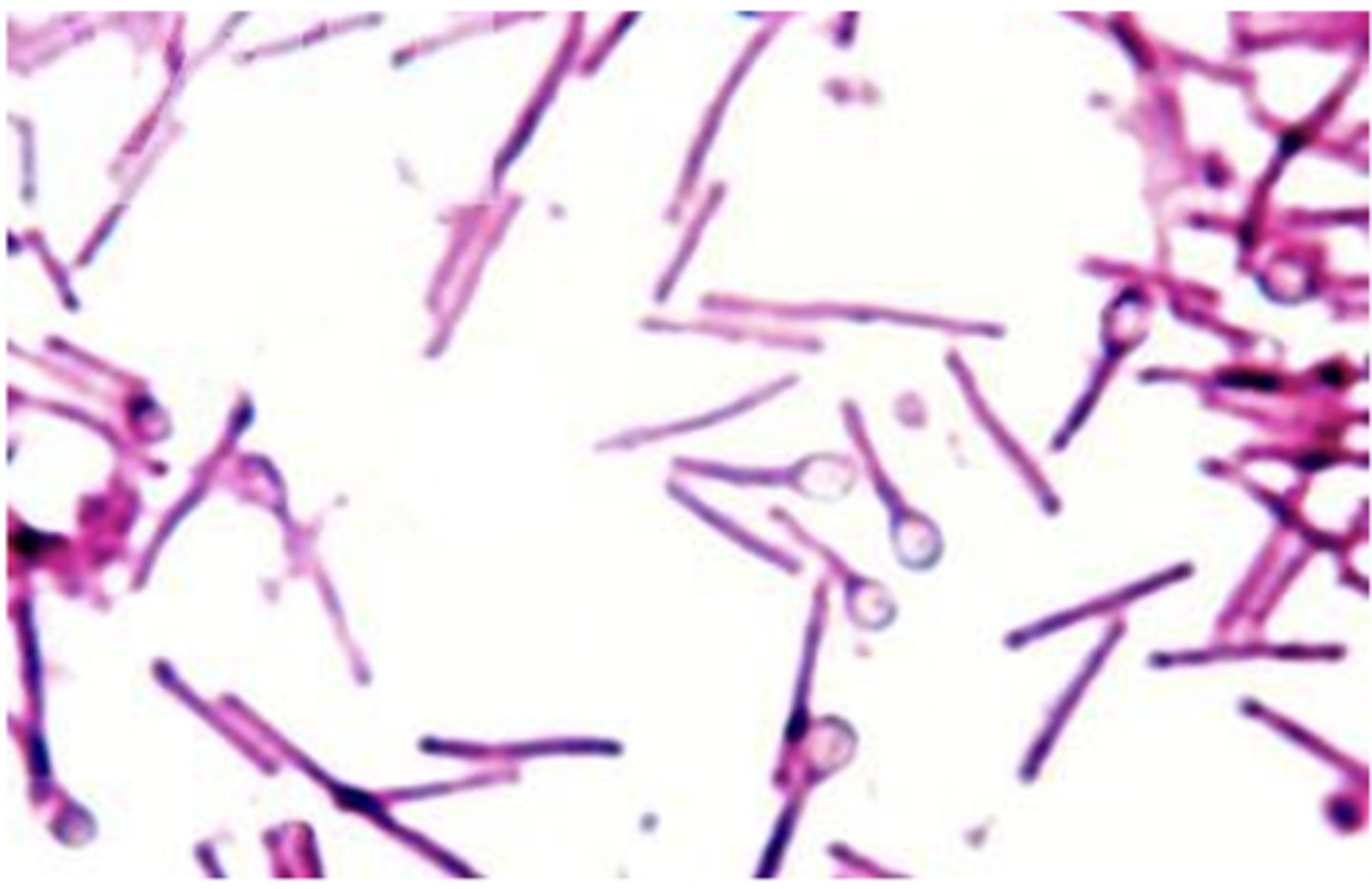
What microbes stain gram-positive (purple) as spores?
Peptrostreptococcus
Propionibacterium acnes
Clostridiodes difficile
Clostridium spp
What microbes don't gram stain well?
Mycobacterium tuberculosis
Atypicals:
Chlamydophila
Legionella
Mycoplasma
What microbes stain gram-negative (red) as cocci?
Neisseria spp
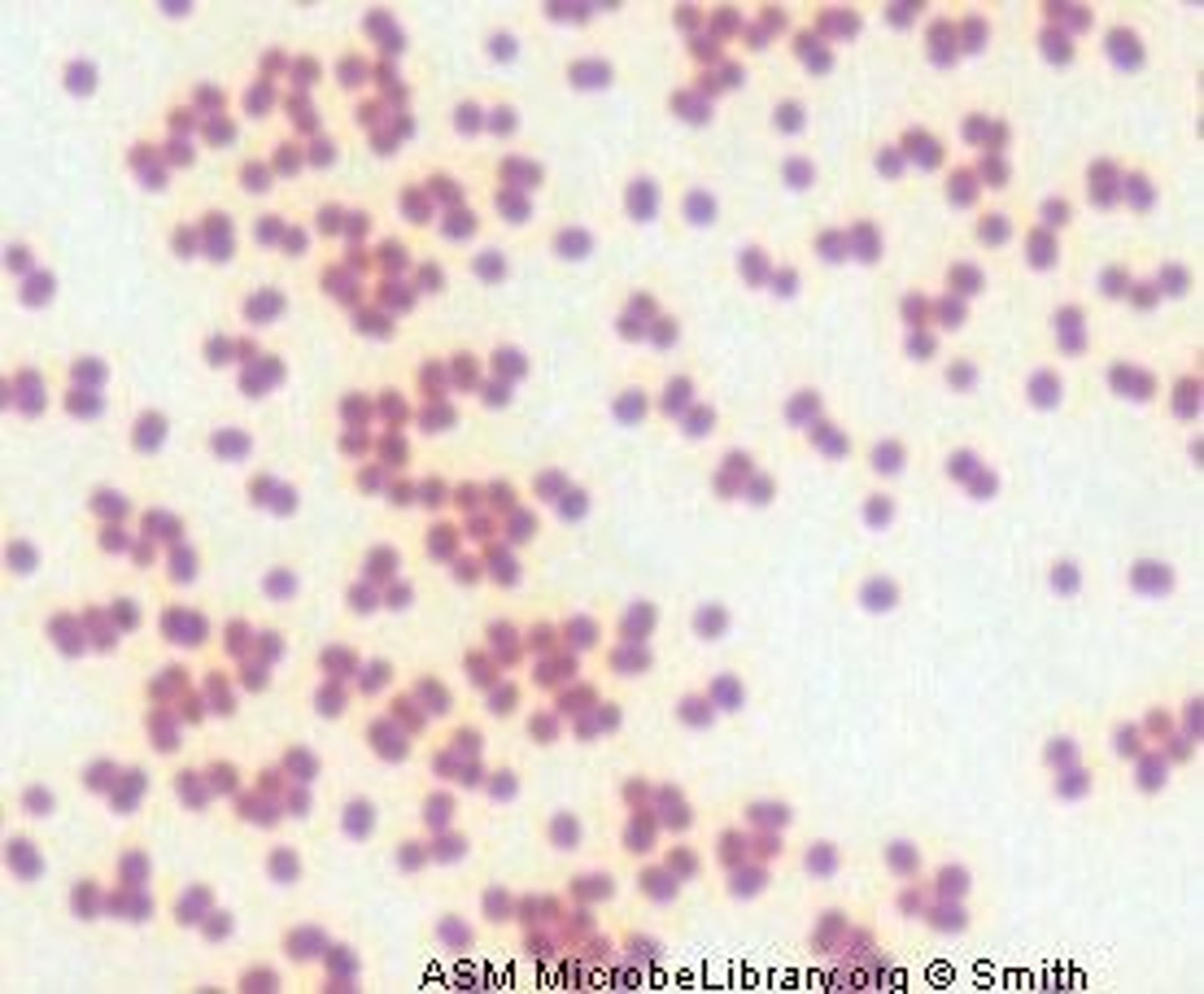
What microbes stain gram-negative (red) as coccobacilli?
Acinetobacter baumannii
Bordatella pertussis
Moraxella catarrhalis
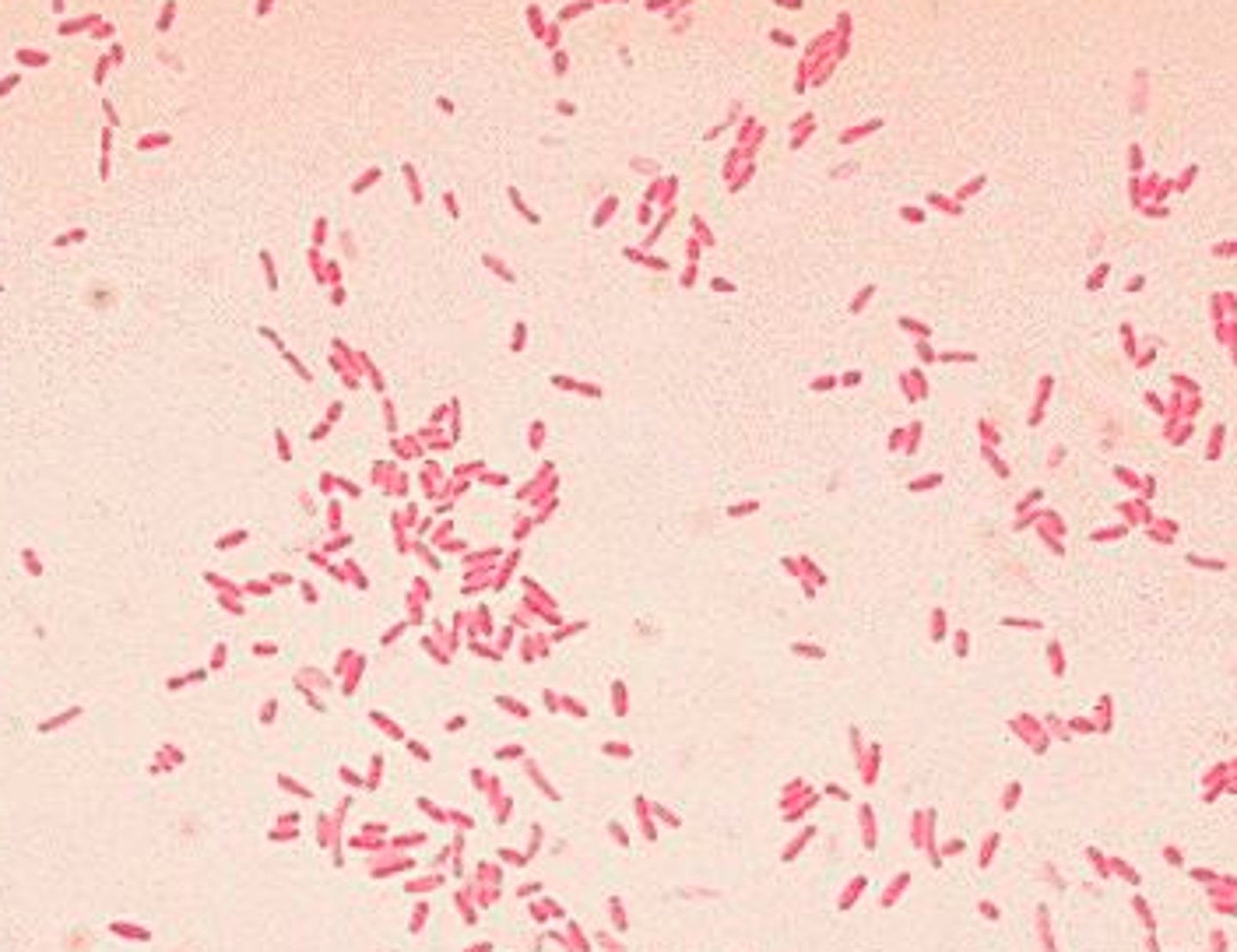
What microbes stain gram-negative (red) as rods?
And they colonize the gut , "enteric"?
Proteus mirabilis
Escherichia coli
Klebsiella spp
Serratia spp
Enterobacter cloacae
Citrobacter spp
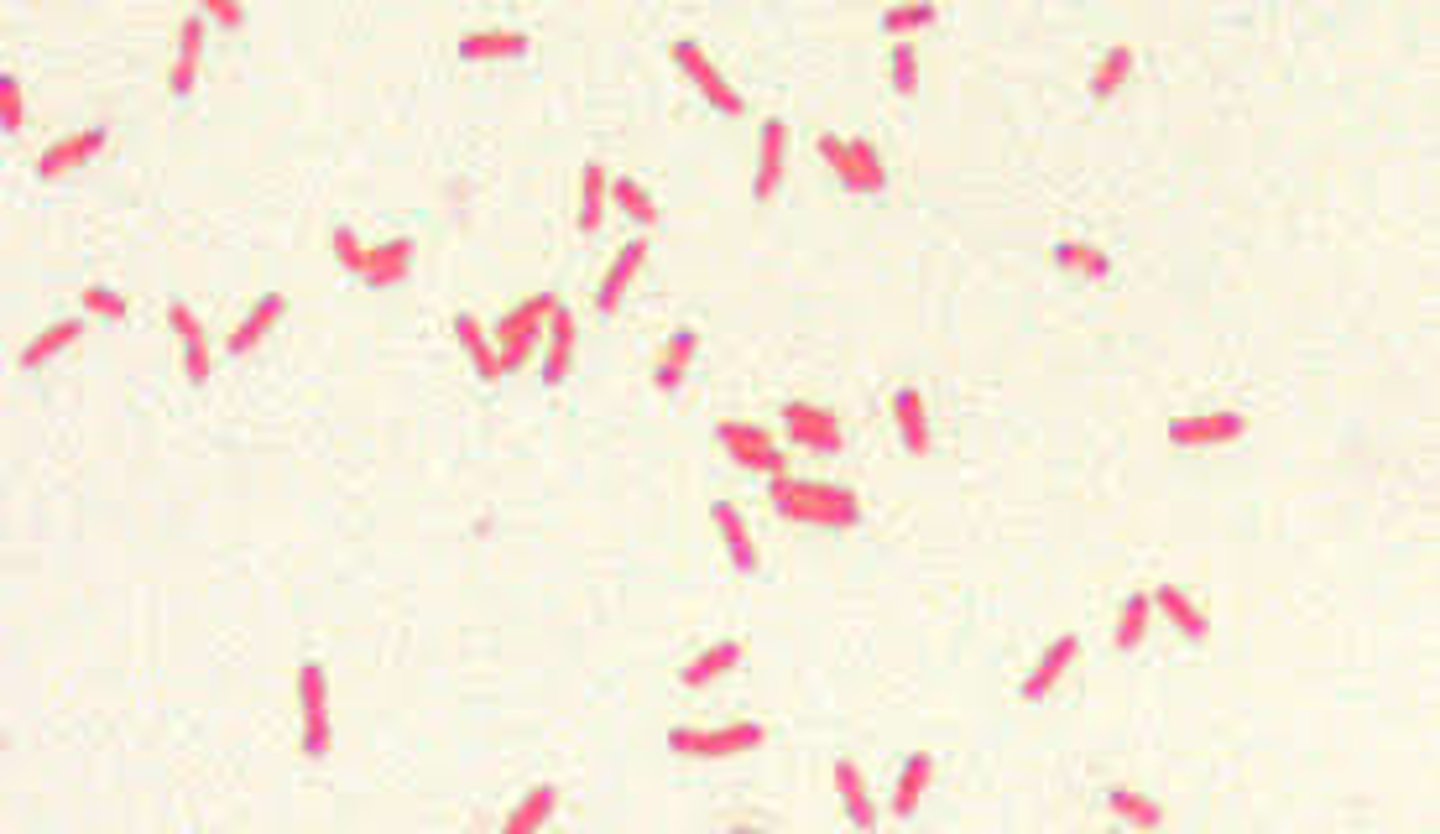
What microbes stain gram-negative (red) as rods?
And they do not colonize the gut?
Pseudomonas aeruginosa
Haemophilus influenzae
Providencia spp.
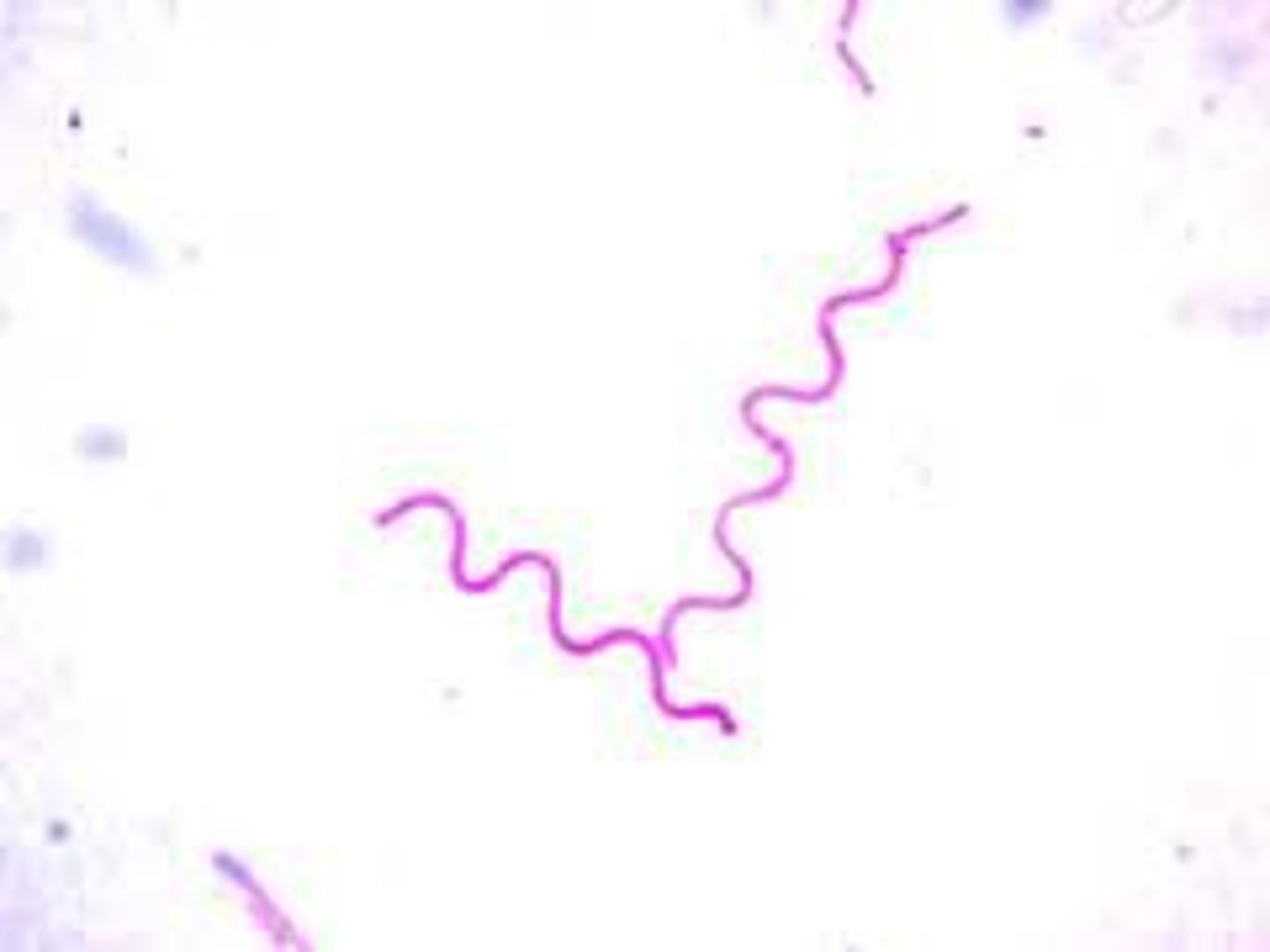
What microbes stain gram-negative (red) as curved or spiral-shaped rods (spirochete)?
Helicobacter pylori (H. pylori)
Campylobacter spp
Treponema spp
Borrelia spp
Leptospira spp
What microbes stain gram-negative (red) and are anaerobes?
Bacteroides fragilis
Prevotella spp
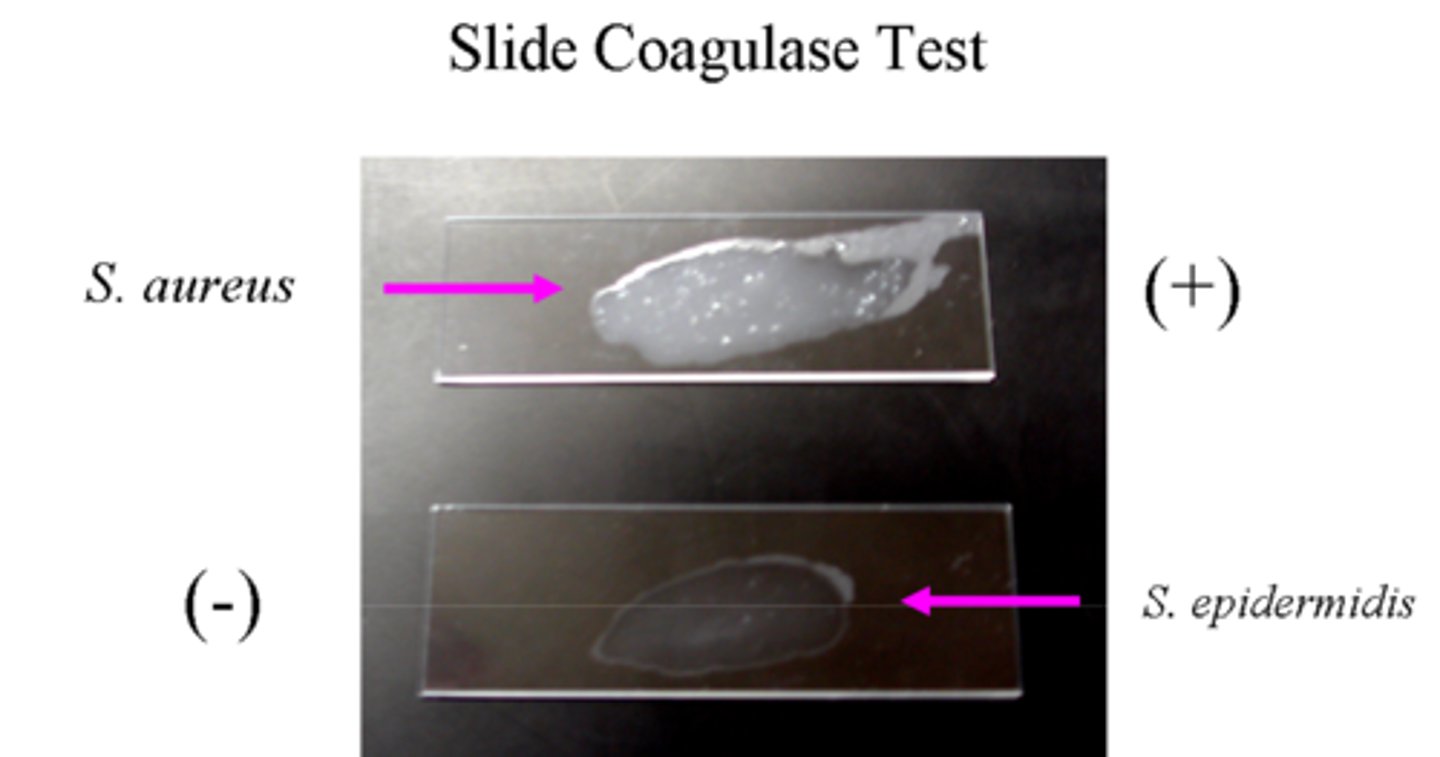
What is a coagulase test?
What organisms are coagulase positive?
A test to differentiate between the Staphylococcus species
Coagulase-positive: Staph aureus (MSSA or MRSA)
What is the minimum inhibitory concentration (MIC)?
The min conc of each abx that inhibits bacterial growth
Provides an interpretation of susceptible/resistant/intermediate for a susceptibility report
What is "intrinsic" antibiotic resistance?
Microbial resistance to the drug is natural
eg) E. coli is resistant to vancomycin bc this antibiotic is too large to penetrate the cell wall of E. coli
What is "selection pressure" antibiotic resistance?
Resistance that occurs when abx kill susceptible bacteria, leaving behind more resistant strains to multiply
eg) Vancomycin used in a patient then created VRE in the gut
What is "acquired" antibiotic resistance?
Bacterial DNA containing resistant genes can be transferred b/w species and/or picked up from dead bacterial fragments in the environment
Name some examples of antibiotic degradation thru bacterial enzymes
1) Beta-lactamases
2) Extended-spectrum beta-lactamases (ESBL)
3) Carbapenem-resistant Enterobacterales (CRE)
List the common resistant pathogens?
Use the mneumonic
Kill Each And Every Strong Pathogen
K = Klebsiella pneumoniae (ESBL, CRE)
E = Escherichia coli (ESBL, CRE)
A = Acinetobacter baumannii
E = Enterococcus faecalis, Enterococcus faecium (VRE)
S = Staphylococcus aureus (MRSA)
P = Pseudomonas aeruginosa
When an antibiotic kills GI flora, it can result in an overgrowth of (what microbe) which can lead to an infection?
Clostridoides difficile
Leading to C. diff infection
All antibiotics have a risk for ____ infection but the highest risk is with clindamycin, which has a boxed warning.
C. diff infection
All antibiotics have a risk for C diff. infection but the highest risk is with ____, which has a boxed warning.
clindamycin
Antimicrobial stewardship program interventions include.... (5)
1) Pharmacokinetic monitoring
2) Clinical decision support
3) Restricted use of select abx such as w/ prior auth
4) Prospective audit
5) Timely transitions from IV to PO
Name the hydrophilic abx (5)
1) Beta-lactams
2) Aminoglycosides
3) Vancomycin
4) Daptomycin
5) Polymyxins
Name the lipophilic abx (5)
1) Quinolones
2) Macrolides
3) Rifampin
4) Linezolid
5) Tetracyclines
Name 4 characteristics of hydrophilic abx:
1) ___ volume of distribution => ___ tissue penetration
2) Mostly ___ eliminated
3) ___ intracellular conc => not active against ___ pathogens
4) ___ bioavailability => IV:PO ratio is ___
1) Small volume of distribution => less tissue penetration
2) Mostly renally eliminated
3) Low intracellular conc => not active against atypical pathogens
4) Poor bioavailability => IV:PO ratio is NOT 1:1
Name 4 characteristics of lipophilic abx:
1) ___ volume of distribution => ___ tissue penetration
2) Mostly ___ metabolized
3) ___ intracellular conc => active against ___ pathogens
4) ___ bioavailability => IV:PO ratio is ___
1) Large volume of distribution => better tissue penetration
2) Mostly hepatically metabolized
3) High intracellular conc => active against atypical pathogens
4) Excellent bioavailability => IV:PO ratio is often 1:1
Drugs with ____ killing can be dosed less frequently and in higher doses.
Select all.
a) concentration-dependent
b) exposure-dependent
c) time-dependent
d) Cmax:MIC
e) AUC:MIC
f) Time > MIC
a) concentration-dependent
d) Cmax:MIC
Drugs with ____ killing can be dosed more frequently or each dose administered for a longer duration.
Select all.
a) concentration-dependent
b) exposure-dependent
c) time-dependent
d) Cmax:MIC
e) AUC:MIC
f) Time > MIC
c) time-dependent
f) Time > MIC
Cmax:MIC is aka
Concentration-dependent
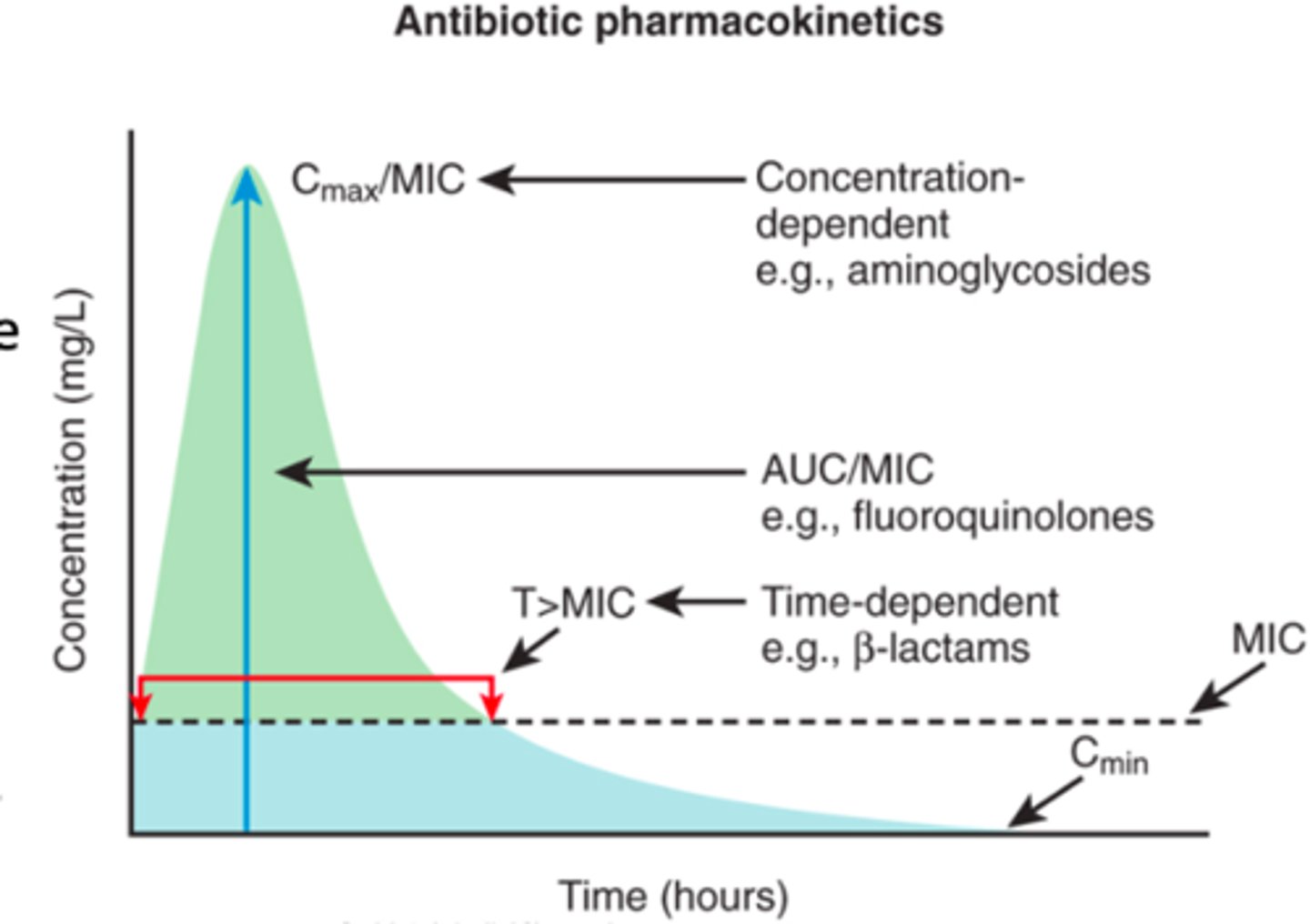
AUC:MIC is aka
Exposure-dependent
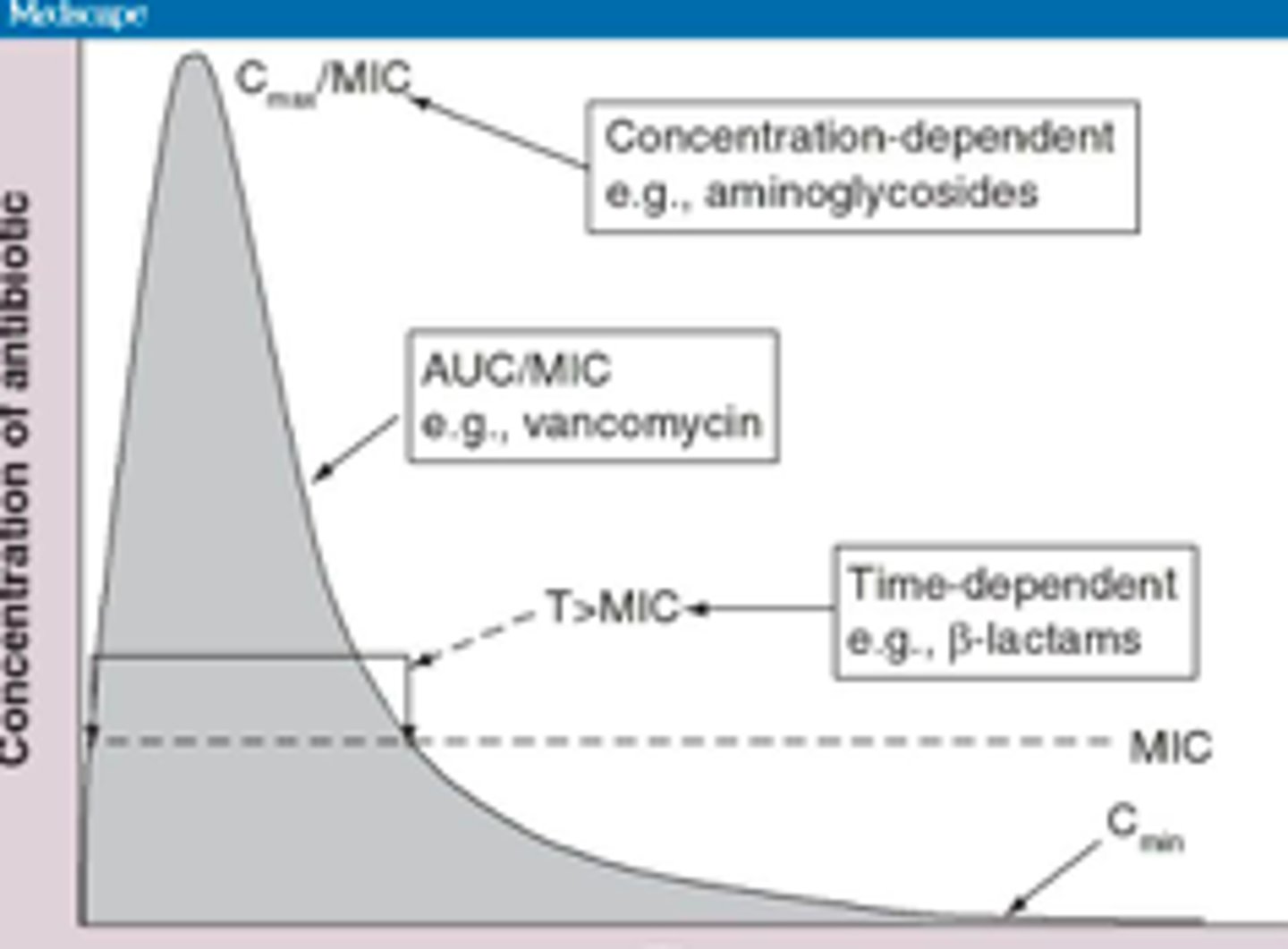
Time > AUC is aka
Time-dependent
What abx exhibit concentration-dependent killing? (Cmax:MIC)
1) Aminoglycosides
2) Quinolones
3) Daptomycin
What abx exhibit exposure-dependent killing? (AUC:MIC)
1) Vancomycin
2) Macrolides
3) Tetracyclines
4) Polymyxins
What abx exhibit time-dependent killing? (time > MIC)
Beta-lactams (penicillins, cephalosporins, carbapenems)
Name the 3 drug classes under beta-lactams
1) Penicllins
2) Cephalosporins
3) Carbapenems
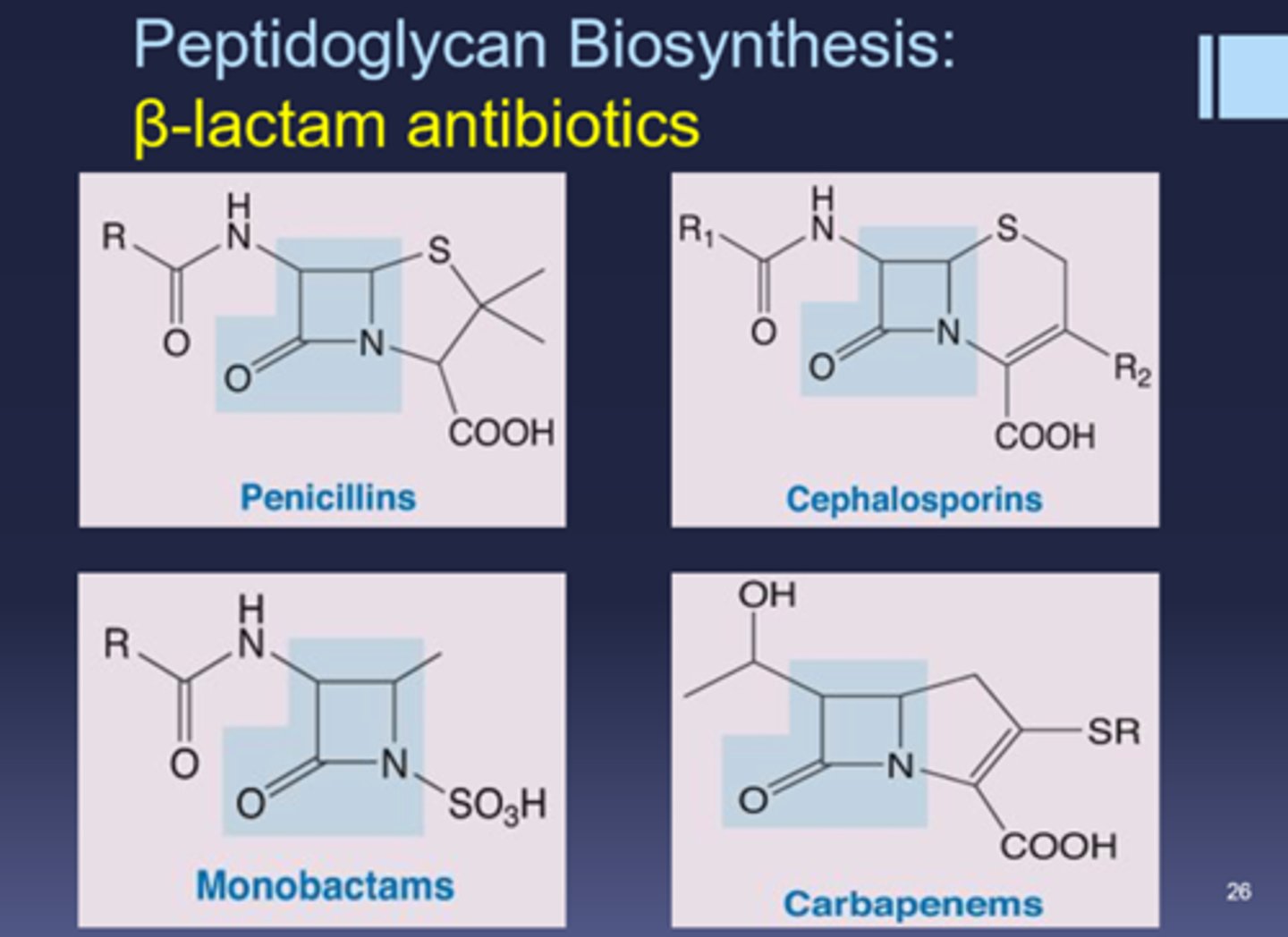
Draw a beta-lactam ring
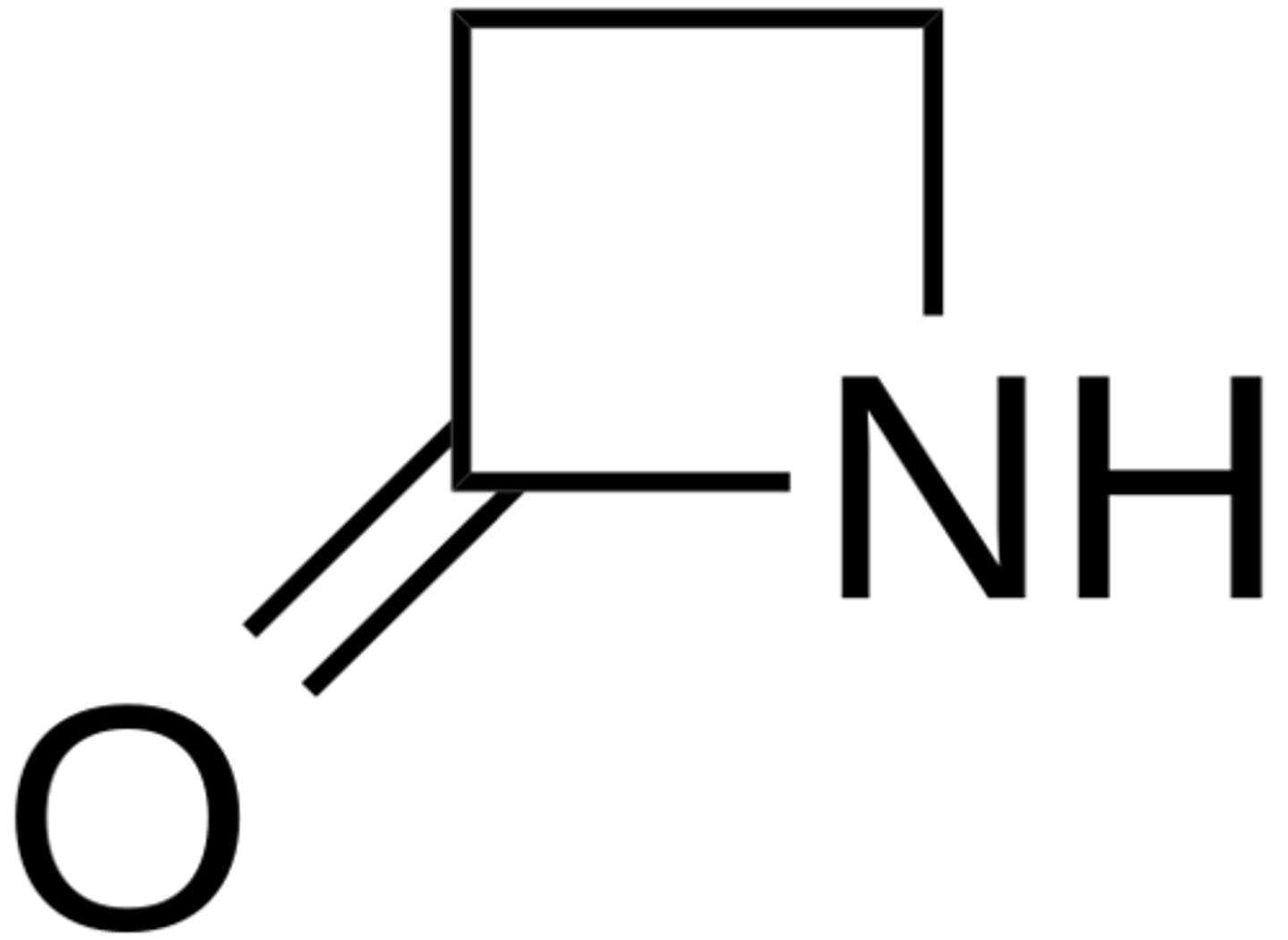
What is the MOA of penicillins, cephalosporins and carbapenems?
Inhibit bacterial cell wall synthesis by binding to penicillin-binding proteins to prevent the final step of peptidoglycan synthesis
What microbes are beta-lactams not active against?
1) MRSA
2) Atypical organisms: Chlamydophila, Legionella, Mycoplasma
Natural penicillins are active against (3)
They are not active against (2)
Active:
1) Streptococci spp
2) Enterococci spp
3) Gram-positive anaerobes aka mouth flora
Not active against:
1) Staphylococci spp
2) Gram-negatives
Name the natural penicillins (3)
1) Penicillin V Potassium (Penicillin VK)
2) Penicillin G Aqueous
3) Penicillin G Benzathine (Bicillin L-A)
What are these drugs active against:
1) Penicillin V Potassium (Penicillin VK)
2) Penicillin G Aqueous
3) Penicillin G Benzathine (Bicillin L-A)
(3 gram pos)
1) Streptococci spp
2) Enterococci spp
3) Gram-positive anaerobes aka mouth flora
Antistaphylococcal penicillins are active against (2)
They are not active against (3)
Active:
1) MSSA
2) Streptococci spp
Not active against:
1) Enterococci spp
2) Gram-negatives
3) Anaerobes
What are these drugs active against:
1) Dicloxacillin
2) Nafcillin
3) Oxacillin
(2 gram pos)
Active:
1) MSSA
2) Streptococci spp
Name the 3 antistaphylococcal penicillins
1) Dicloxacillin
2) Nafcillin
3) Oxacillin
Name the 2 aminopenicillins
1) Amoxicillin
2) Ampicillin
What are these drugs active against:
1) Amoxicillin
2) Ampicillin
(3 gram pos and 4 gram neg)
1) Streptococci spp
2) Enterococci spp
3) Gram-pos anaerobes aka mouth flora
Gram-neg
4) Haemophilus
5) Neisseria
6) Proteus
7) E. coli
Ampicillin is also active against Listeria
Aminopenicillins are active against (7)
___ is also active against Listeria
(3 gram pos and 4 gram neg)
1) Streptococci spp
2) Enterococci spp
3) Gram-pos anaerobes aka mouth flora
Gram-neg
4) Haemophilus
5) Neisseria
6) Proteus
7) E. coli
Ampicillin is also active against Listeria
Name the two aminopenicillin/beta-lactamase drugs
Amoxicillin/clavulanate (Augmentin, Augmentin ES-600)
Ampicillin/sulbactam (Unasyn)
What are these drugs active against:
Amoxicillin/clavulanate (Augmentin, Augmentin ES-600)
Ampicillin/sulbactam (Unasyn)
(4 gram pos and 8 gram neg)
1) Streptococci spp
2) Enterococci spp
3) Gram-pos anaerobes aka mouth flora
4) MSSA
Gram-neg:
5) Haemophilus
6) Neisseria
7) Proteus
8) E. coli
9) Haemophilus
10) Neisseria
11) Klebsiella
12) Gram-neg anaerobes like B. fragilis
Ampicillin is also active against Listeria
Aminopenicillins/beta-lactamase drugs are active against (12)
___ is also active against Listeria
(4 gram pos and 8 gram neg)
1) Streptococci spp
2) Enterococci spp
3) Gram-pos anaerobes aka mouth flora
4) MSSA
Gram-neg:
5) Haemophilus
6) Neisseria
7) Proteus
8) E. coli
9) Haemophilus
10) Neisseria
11) Klebsiella
12) Gram-neg anaerobes like B. fragilis
Ampicillin is also active against Listeria
Name an extended-spectrum penicillin
Piperacillin/Tazobactam (Zosyn)
Piperacillin/Tazobactam (Zosyn) is active against (3 gram pos and 14 gram neg)
1) Streptococci spp
2) Enterococci spp
3) Gram-pos anaerobes aka mouth flora
4) MSSA
Gram-neg:
5) Haemophilus
6) Neisseria
7) Proteus
8) E. coli
9) Haemophilus
10) Neisseria
11) Klebsiella
12) Gram-neg anaerobes like B. fragilis
13) Citrobacter
14) Acinetobacter
15) Providencia
16) Enterobacter
17) Serratia
18) Pseudomonas !!!
Do any penicillins cover MRSA?
No
Drug formulation for Penicillin V Potassium
PO
Drug formulation for Penicillin G Aqueous
IV
Drug formulation for Penicillin G Benzathine (Bicillin-LA)
IM
Penicillin G Benzathine (Bicillin-LA)
Black box warning? (1)
1) Not for IV use
(only for IM)
What penicillins does not require renal dose adjustments?
antistaphylococcal penicillins:
Dicloxacillin, Nafcillin, Oxacillin
What cephalosporin does not require renal dose adjustment?
Ceftriaxone
Drug formulation for Nafcillin and Oxacillin
IV
Drug formulation for Dicloxacillin
PO
Drug formulation for Amoxicillin and Augmentin
PO
Drug formulation for Ampicillin and Ampicillin/sulbactam (Unasyn)?
They are preferably diluted in what?
IV
Diluted in NS (0.9%)
Drug formulation for Zosyn
IV
Special Augmentin dosing for CrCl < ____
CrCl < 30
Do not use the 875 mg strength or the extended-release
If improperly dosed and there is an accumulation of penicillins/cephalosporins/carbapenems in the body, what ADE are we worried for?
Seizures
ADE with properly dosed Penicillins and Cephalosporins (5)
1) GI upset
2) Diarrhea
3) Rash (including SJS/TEN)
4) Allergic rxns/anaphylaxis
5) Hemolytic anemia => w/ a pos Coombs test
What lab monitoring is done with IV penicillins, cephalosporins and carbapenems?
Renal fxn
What penicillins are preferred for MSSA tx?
Antistaphylococcal penicillins:
1) Dicloxacillin
2) Nafcillin
3) Oxacillin
The PO formulation of Ampicillin is rarely used due to ___
poor bioavailability
A pt is ready to go from IV ampicillin to PO. What drug do you choose and why?
Choose amoxicillin PO
Ampicillin PO has poor bioavailability
Augmentin ES-600 has a lower concentration of ___ causing a lower risk of ___
Clavulanate; diarrhea
What drug can increase the lvls of beta-lactams by interfering with renal excretion?
It's sometimes used intentionally in severe inf to increase beta-lactam lvls.
Probenecid
Penicillins and methotrexate
Penicillins can increase the lvl of methotrexate
Beta-lactams (except for ___ and ___ ) can enhance the anticoagulant effect of ____
Beta-lactams (except for nafcillin and dicloxacillin) can enhance the anticoagulant effect of warfarin
What 2 beta-lactams inhibits the anticoagulant effect of warfarin?
Nafcillin
Dicloxacillin
All penicillins should be avoided in patients with what allergy?
What are the two exceptions?
Beta-lactam allergy
1) Tx of syphilis in pregnancy
2) Pts w/ poor adherence/follow-up
=> desensitize and tx w/ penicillin G benzathine
Pts that have a beta-lactam allergy but still require tx with a pencillin, what is the DOC after pts are desensitized?
Penicillin G benzathine
What penicillin is a first-line tx for pharyngitis (strep throat)?
Penicillin V Potassium (Penicillin VK)
What penicillin is used in H. pylori regimens?
Amoxicillin
What is the first-line tx for acute otitis media (AOM)? (2)
What is the pediatric dose in mg/kg/day?
1) Amoxicillin 80-90 mg/kg/day
2) Augmentin 90 mg/kg/day
What penicillin can be used to tx bacterial sinusitis?
Augmentin
What is the DOC for infective endocarditis prophylaxis before dental procedures?
Amoxicillin
What is the only penicillin active against pseudomonas?
Zosyn
How can Zosyn dosing be optimized using time-dependent killling?
Extended infusions (4 hrs) can be used to maximize time > MIC
Cephalosporins are not active against what two bacterial groups?
1) Enterococcus spp
2) Atypical organisms
Name some 1st gen cephalosporins (2)
1) Cefazolin (Ancef)
2) Cephalexin (Keflex)
What are these drugs active against: (4 gram pos and 3 gram neg)
1) Cefazolin (Ancef)
2) Cephalexin (Keflex)
1) Streptococci spp
2) Staphylococci spp
3) MSSA
4) Gram-positive anaerobes aka mouth flora
5) Proteus
6) E. coli
7) Klebsiella
What bacteria do 1st gen cephalosporins cover? (4 gram pos and 3 gram neg)
1) Streptococci spp
2) Staphylococci spp
3) MSSA
4) Gram-positive anaerobes aka mouth flora
5) Proteus
6) E. coli
7) Klebsiella
Name some 2nd gen cephalosporins (3)
1) Cefuroxime
2) Cefotetan
3) Cefoxitin
What are these drugs active against: (2 gram pos and 5 gram neg)
1) Cefuroxime
2) Cefotetan
3) Cefoxitin
1) Staphylococci spp
2) Streptococcus pneumoniae
3) Haemophilus
4) Neisseria
5) Proteus
6) E. coli
7) Klebsiella
Cefotetan and cefoxitin have added activity against gram-neg anaerobes like Bacteroides fragilis, as well as gram-pos mouth flora
What bacteria do 2nd gen cephalosporins cover? (2 gram pos and 5 gram neg)
What do Cefotetan and cefoxitin have added activity against?
1) Staphylococci spp
2) Streptococcus pneumoniae
3) Haemophilus
4) Neisseria
5) Proteus
6) E. coli
7) Klebsiella
Cefotetan and cefoxitin have added activity against gram-neg anaerobes like Bacteroides fragilis, as well as gram-pos mouth flora
Name some 3rd gen group 1 cephalosporins (2)
1) Cefdinir
2) Ceftriaxone
What are these drugs active against: (5 gram-pos and 5 gram neg)
1) Cefdinir
2) Ceftriaxone
1) Streptococcus pneumoniae
2) viridans group streptococci
3) Staphylococci
4) MSSA
5) Gram-pos anaerobes (mouth flora)
1) Haemophilus
2) Neisseria
3) Proteus
4) E. coli
5) Klebsiella
What bacteria do 3rd gen group 1 cephalosporins? (5 gram-pos and 5 gram neg)
1) Streptococcus pneumoniae
2) viridans group streptococci
3) Staphylococci
4) MSSA
5) Gram-pos anaerobes (mouth flora)
1) Haemophilus
2) Neisseria
3) Proteus
4) E. coli
5) Klebsiella