Aquatic Ecology Final study guide
 Call Kai
 Learn
Learn Practice Test
 Spaced Repetition
 Match
Match Flashcards
 Knowt Play
1/351

There's no tags or description
Looks like no tags are added yet.
Name | Mastery | Learn | Test | Matching | Spaced | Call with Kai |
|---|
No analytics yet
Send a link to your students to track their progress
352 Terms
Five major elements of lake structure
Geomorphometry, Physical, Chemical, Chemical, Biological, and pollution
Geomorphometry
The study of the shape, size, depth, and formation of lakes and water bodies
bathymytry
The measure and mapping of water depth and underwater topography
lentic systen
Still or slow-moving water (lakes, ponds, reservoirs)
lotic system
Flowing water (rivers streams creaks)
watershed
An area of land where all precipitation drains into a common body of water
difference between freshwater, saltwater, and brackish water
Freshwater: Low salinity (lakes and rivers).Saltwater: High salinity (oceans).Brackish: Mixture of fresh and saltwater (estuaries).
groundwater
Water stored underground in aquifers.
Boiling and freezing points of water
Boiling: 100°C; Freezing: 0°C at standard atmospheric pressure.
When is water most dense
4°C; Ice is less dense than water allowing it to float on top
Cohesion
Attraction between molecules of the same substance
Adhesion
Attraction between molecules of different substances
Capillary action
Movement of water through narrow spaces due to cohesion and adhesion
What is pH and why is it important in aquatic systems?
pH measures acidity or alkalinity; most aquatic organisms thrive at pH 6.6-6.8.
What is dissolved oxygen (DO)?
The amount of oxygen dissolved in water, essential for aquatic life.
Main stages of the hydrologic cycle
Evaporation, condensation, precipitation, infiltration, runoff, and groundwater flow.
specialty waters
Hard water: Contains high levels of calcium and magnesium.Mineral water: Naturally rich in dissolved minerals.
Amphoteric
Water can act both as an acid and a base
Why is water called the universal solvent?
Because its polarity allows it to dissolve many ionic and polar substances.
What factors are necessary for the survival of aquatic organisms?
What factors are necessary for the survival of aquatic organisms?
What are the major human uses of water?
Aquaculture, irrigation, drinking water supply, recreation, and hydropower.
What are major sources of water pollution?
Global warming, industrial waste, agricultural runoff, oil spills, and marine dumping.
point source pollution
Pollution that comes from a single identifiable source (factory pipe)
Nonpoint solution source
Pollution comes from diffuse sources (agricultural runoff)
Clean Water Act of 1972
A U.S. law that regulates pollution in surface and navigable waters and sets water quality standards. It has become more restrictive over time.
Superfund site
A contaminated area designated for cleanup under federal environmental programs. (Ciba-Geigy)
Lake districts
Regions where lakes occur in clusters due to widespread geological processes such as glaciation (For example Great Lakes region).
Primary origins of lakes
Regions where lakes occur in clusters due to widespread geological processes such as glaciation (For example Great Lakes region).
During which geologic period were most glacial lakes formed?
The Pleistocene glaciations.
What is the most common type of lake in the Northern Hemisphere?
Glacial lakes, which make up approximately three-quarters of all lakes.
Cirque (tarn/corrie) lake
A small lake formed in a bowl-shaped depression carved by a glacier at the head of a valley
Arêtes
pyramidal ridges formed by repeated freezing and thawing (freeze-thaw weathering).
How are moraine lakes formed?
They form when glacial meltwater is dammed by moraines, which are accumulations of glacial debris
till
Unsorted, unstratified sediment deposited directly by glaciers. It is created as glaciers advance or melt, often forming landforms like moraines
terminal moraine
a ridge-like accumulation of unsorted glacial sediment (till) deposited at the farthest point of a glacier's advance, marking its maximum extent
Fjord lake
A lake occupying a glacially scoured, U-shaped valley that often extends to the ocean and may contain saltwater.
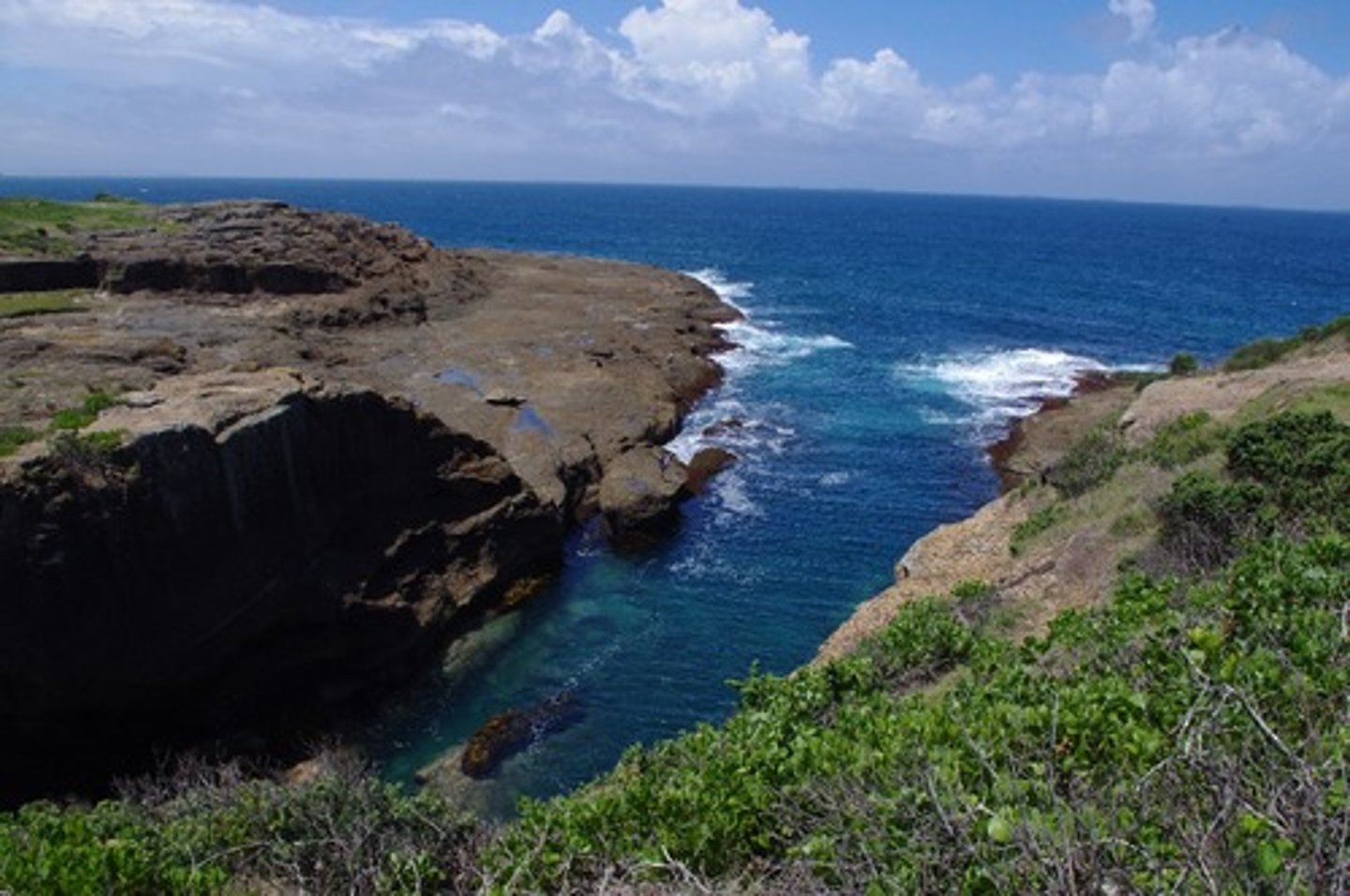
How are kettle lakes formed?
By the melting of isolated blocks of glacial ice left behind in sediment, creating small depressions that fill with water. They are usually small (around 100 meters across) and shallow (1-2 meters deep) with a circular shape.
Continental scour lakes
Lakes formed by extensive glacial erosion over large areas, resulting in irregular basins shaped by variations in the resistance of the underlying bedrock.
How are tectonic lakes formed?
They form from movements of the Earth's crust, such as faulting or rifting, which create large depressions that fill with water. They are often the largest, deepest, and oldest lakes in the world.
Graben lake
A lake formed in a rift valley, where a block of land sinks between two faults. (graben is german for ditch)
Subsidence
The sinking of the ground with little horizontal movement, often due to tectonic activity or removal of underground material.
How are volcanic lakes formed?
They form in volcanic craters or depressions created by eruptions or volcanic activity.
Caldera lake
A lake formed when the surface collapses after a volcanic eruption, creating a large circular basin with steep sides and a flat floor, often with little drainage.
Lahar lake
A lahar is a volcanic mudflow that can dam rivers or valleys, forming lakes. Lahars are extremely destructive and caused tens of thousands of deaths in the 20th century.
Maar lake
A small, deep, circular lake formed by a steam explosion when magma comes into contact with groundwater.
How do landslides create lakes?
Landslides can block river valleys, forming natural dams that allow water to accumulate behind them.
Solution lake
A lake formed by the dissolution of soluble rocks, such as limestone, creating depressions that fill with water.
Karst topography
A lake formed by the dissolution of soluble rocks, such as limestone, creating depressions that fill with water.
Which U.S. state is well known for karst topography?
Florida
hich U.S. state is well known for karst topography?
Fluviatile lakes
Lakes formed by river processes, including erosion, sediment deposition, or channel changes.
A lake formed at the base of a waterfall, where the force of falling water erodes the riverbed and creates a deep basin.
How are Oxbow lakes (billabong) formed
When a meandering river cuts off one of its bends, isolating the former channel from the main river.
What causes a stream to meander?
Water velocity and sediment erosion
How can biological activity lead to lake formation?
Organisms such as beavers build dams that block streams, creating ponds or small lakes.
How do humans create biological or artificial lakes?
Through activities such as constructing reservoirs, excavating quarries, and causing subsidence from resource extraction.
reservoir
Artificial lakes formed by damming rivers to store water for human use
Roman aqueducts
Ancient engineering structures designed to transport water from distant sources to cities using gravity.
Qanat system
An ancient underground channel system developed in the Middle East to transport groundwater to arid regions for irrigation and drinking.
Noria wheel
A water-powered wheel used to lift water from rivers for irrigation and distribution.
FallKIRK wheel
A modern rotating boat lift in Scotland that connects two canals at different elevations
Impact lakes
Lakes formed when a meteorite strikes Earth, creating a crater that later fills with water. They are rare
ballast water
Seawater pumped into ship tanks to maintain stability, improve maneuverability, and improve buoyancy
Native vs exotic vs invasive species
Native: Species that naturally live in a specific region and evolved there over a long period of time.exotic: a species that lives in an area where it did not originally evolve. It was brought their intentionally or accidentally.Invasive: are a type of exotic species that causes harm. They spread rapidly, outcompete native species, and disrupt ecosystems.
aquaculture
The farming of aquatic organisms such as fish, shellfish, and plants in controlled environments.
Great Lakes
a group of five freshwater lakes of central North America between the United States and Canada. Huron, Ontario, Michigan, Erie, and Superior
St. Lawrence Seaway
Connects the Great Lakes to the Atlantic Ocean by way of the St. Lawrence River
Erie Canal
A canal between the New York cities of Albany and Buffalo, completed in 1825. Allowed goods to travel by water from the Midwest all the way to the East Coast
Welland Canal
It connects Lake Ontario to Lake Erie, allowing ships to bypass Niagara Falls; part of the St. Lawrence Seaway
sea lamprey
originally found only in the atlantic ocean, entered Great Lakes through the Erie Canal and decimated the lake trout fishery. An eel-like, jawless fish with a round, suction-cup mouth lined with sharp teeth.
Alewife
Small silvery fish native to the Atlantic Ocean. Populations exploded after predator populations declined. Altered food webs and caused huge die-offs with massive amounts of dead fish washing up on beaches creating foul odors
Lake trout
Once a dominant native predator in the Great Lakes and played a crucial role in keeping the food web balanced by feeding on smaller fish. Extremely valuable and supported a major fishing industry, being considered one of the most important native fish species in the lake. Population declined due to overfishing, habitat disruption, and sea lampreys
Coho Salmon
Was introduced in the 1960s as an experiment to solve the alewife population. The experiment was a success and the coho salmon fed heavily on alewives, controlling the population.
Zebra mussels
Native to Eastern Europe and western Asia. Introduced to the Great Lakes in the late 1980s via ballast water discharged from ocean-going ships. They reproduce quickly and attach themselves to almost any hard surface. They are filter feeders and remove plankton from the water in massive quantities. Disrupted the food web
quagga mussels
Similar to zebra mussels, also invasive. Could survive in deeper, colder water and attach to softer lake bottoms.
Lake Nyos
In Cameroon, where CO2 cloud was released in a limnic eruption (lake overturn) and suffocated about 1700-1800 people in 1986
Physical water parameters
Characteristics such as suspended and dissolved solids, turbidity, color, light, temperature, salinity, layering, and density.
Chemical water parameters
Factors including ion concentrations, pollutants, heavy metals, nutrient cycling (especially nitrogen), pH, and chemical stratification.
Biological water parameters
The presence and abundance of organisms such as plankton, macroinvertebrates, fish, aquatic plants, and levels of primary production and zonation.
Total Suspended Solids (TSS)
The concentration of solid particles suspended in water, measured in mg/L by filtering and weighing the separated material.
Total Dissolved Solids
The amount of dissolved substances (such as salts and minerals) in water, measured in mg/L, typically determined through evaporation of a water sample.
Turbidity
The degree to which water loses its transparency due to the presence of suspended particles.
How is turbidity related to TSS?
Turbidity provides an estimation of Total Suspended Solids (TSS), as higher suspended particles increase cloudiness.
common causes of turbidity
Phytoplankton and algae growth
Sediments from erosion
Resuspended bottom sediments (e.g., by carp)
Waste discharge
Urban runoff
What units are used to measure turbidity?
NTU (Nephelometric Turbidity Units), sometimes referred to as FTU (Forel Turbidity Units).
NTU (Nephelometric Turbidity Units), sometimes referred to as FTU (Forel Turbidity Units).
1-5 NTU,; 0 NTU indicates no suspended solids.
1-5 NTU,; 0 NTU indicates no suspended solids.
Greater than 10 NTU
At what turbidity level is water not recommended for recreational use?
Greater than 5 NTU.
What instruments are used to measure turbidity?
Nephelometer, turbidimeter, and colorimeter, which measure the intensity of light scattered at a 90-degree angle through a water sample.
Secchi disk
A circular disk lowered into water to measure water transparency based on the depth at which it is no longer visible.
A circular disk lowered into water to measure water transparency based on the depth at which it is no longer visible.
A device that determines the height of a water column needed to obscure a beam of light, providing a simple turbidity estimate.
Anemometer
Instrument used to measure wind speed and velocity
Refractometer
Used to measure salinity
photic zone
The upper layer of water where sufficient sunlight penetrates to support photosynthesis.
aphotic (profundal) zone
The deeper region of a lake where light penetration is insufficient for photosynthesis.
Pelagic zone
The open water area of a lake, away from the shoreline and bottom.
littoral zone
The shallow nearshore area where sunlight reaches the bottom, allowing rooted plants to grow.
sublittoral zone
The deepest area where aquatic plants can still grow, marking the transition from the littoral to deeper zones.
epilimnion
The warm, well-mixed surface layer of a stratified lake.
hypolimnion
The cold, dense bottom layer of a stratified lake.
metalimnion
The transition layer between the epilimnion and hypolimnion where temperature changes rapidly.