4.4 regulation of body temperature in animals
 Call Kai
 Learn
Learn Practice Test
 Spaced Repetition
 Match
Match Flashcards
 Knowt Play
1/13

There's no tags or description
Looks like no tags are added yet.
Name | Mastery | Learn | Test | Matching | Spaced | Call with Kai |
|---|
No analytics yet
Send a link to your students to track their progress
14 Terms
ectothermic?
•If an organism generates their own body heat through metabolic processes and tend to maintain an internal body temperature that is above that of the environment – then it is considered endothermic.
Endothermic
•If an organism instead relies on external environmental factors to regulate its body temperature, then it is considered ectothermic.
Core body temperature
•Core body temperature, vital for body function, must stay within a narrow range despite external changes.
•Core body temperature of the human body and most mammals at rest is about 37 °C, with a typical narrow range of 36–39 °C.
•Regulating core body temperature is crucial:
•high temperatures can denature proteins and cause cell death
•low temperatures slow or halt cellular processes, ultimately threatening survival
Thermoregulation
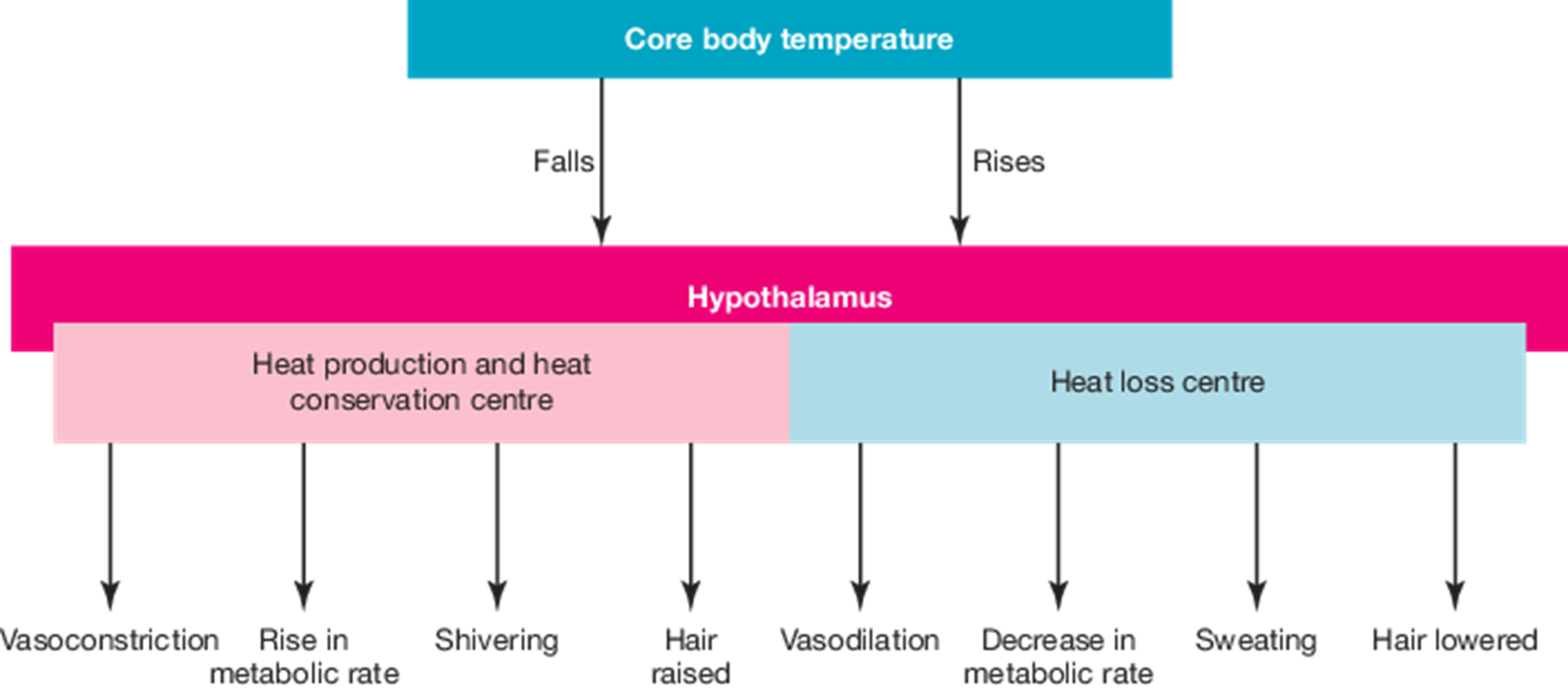
•Thermoregulation is the regulation of body temperature.
• It occurs through homeostatic mechanisms, allowing for a response to either increase or decrease the core body temperature. Many of these responses are physiological.
•Physiological processes are not under a person’s conscious control; instead, they occur automatically — you do not have to think about starting them.
•These processes are initiated by centres in the hypothalamus of the brain.
•
core body temp
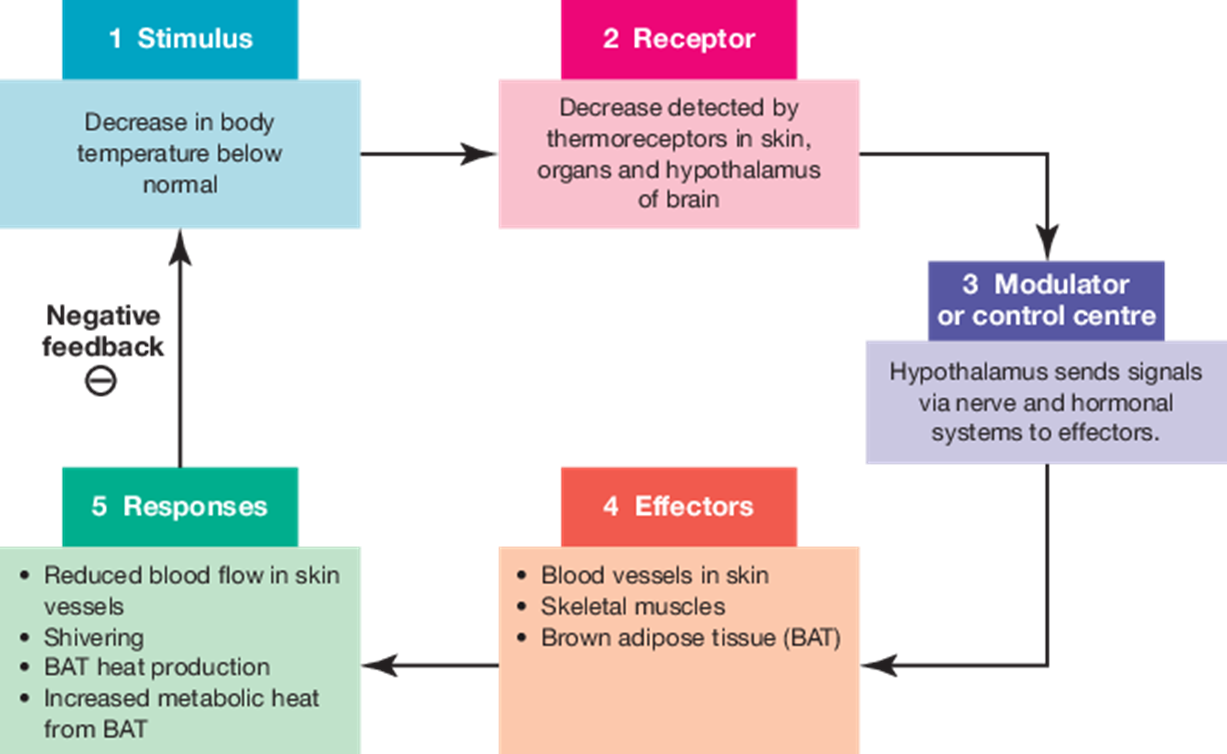
The stimulus–response model
-when body temperature decreases
Keeping warm: Mechanisms of heat gain
(and reduction in heat loss)
•Shivering
•Metabolic heat
•Vasoconstriction (white skin)
•Piloerection
•Feathers and fur
•Fat around organs
•Antifreeze
•Blubber
•Countercurrent
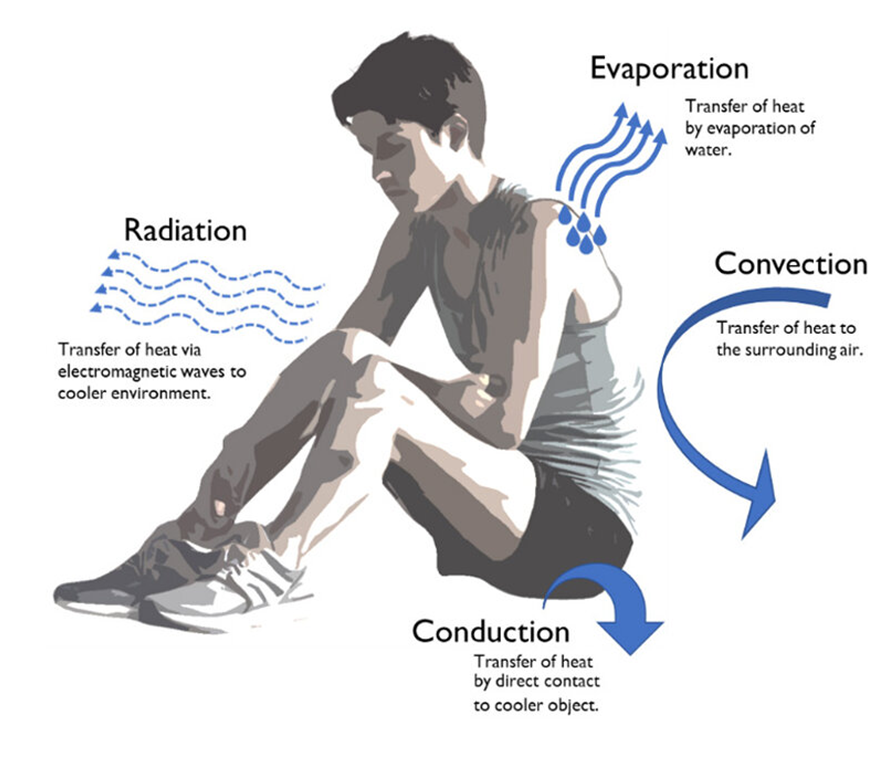
Loosing heat from our body
•Convection: cold air/water moving past the body increases heat loss.
•Conduction: direct contact with cooler substances draws heat away, faster in water.
•Radiation: heat radiates from the body as infra-red energy without contact.
•Evaporation: sweat or moisture evaporates, using body heat for energy.
Behavioural changes
•Voluntary actions – conscious thought.
•Examples include:
•Vigorous exercise
•Adding layers of clothing/blankets
•Soaking in a hot bath
•Hot drinks
•Rubbing hands together
•Wearing hats and gloves
•Standing in front of a heater
The stimulus–response model
-when body temperature increases
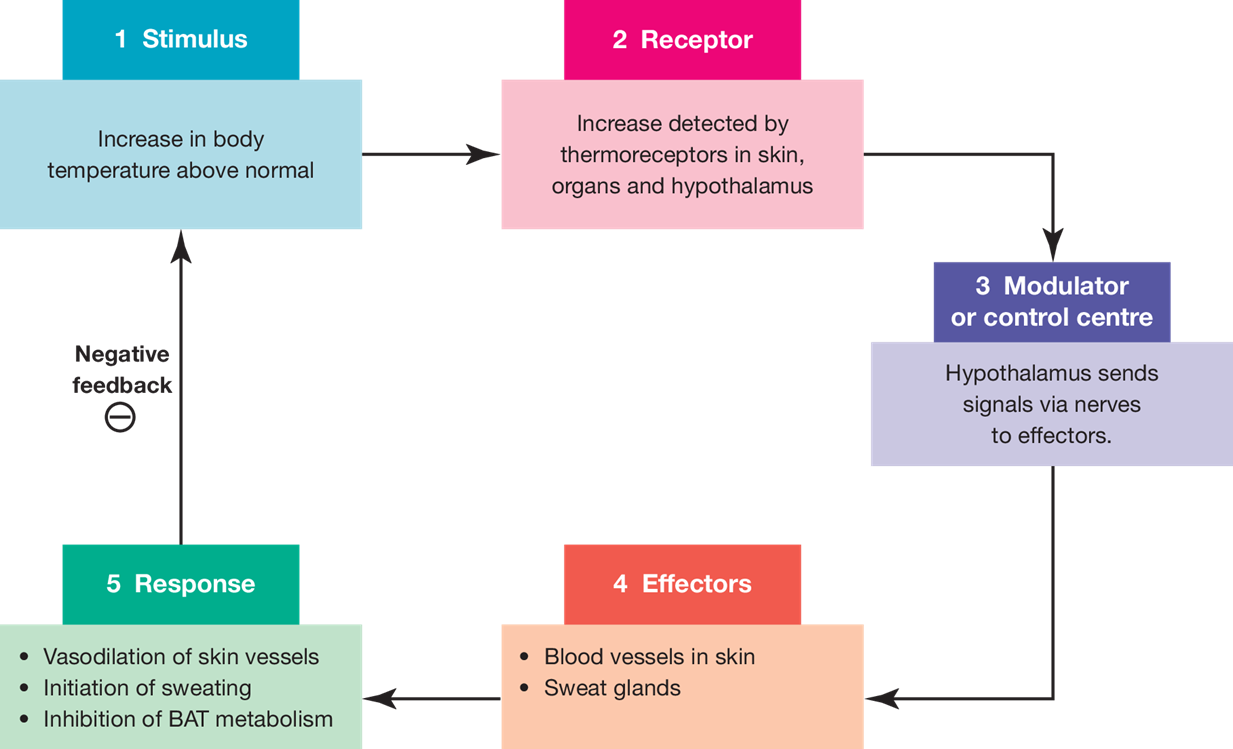
Keeping cool: Mechanisms of heat loss
•Radiation
•Conduction (air and contact)
•Convection
•Evaporation (sweat and panting)
•Vasodilation (red skin)
•Increase surface area
•Behavioural changes
•Moulting
Behavioural changes
•Voluntary actions – conscious thought.
•Examples include:
•Removing layers of clothing
•Having a cold shower
•Cold drink/food
•Resting in the shade
•Sitting in front of a fan
Multicellular organisms display different kinds of adaptations with respect to temperature regulation:
Example: | Description: | |
Structural | Fur, feathers, fat | Provide a layer of insulation, reducing heat loss |
Behavioural | Retreating to burrows in hot conditions | Reduces exposure to excessive heat, reducing heat gain |
Huddling | Reduces surface area of group that is exposed to environment, thereby reducing heat loss by individuals | |
Physiological | Sweating | Evaporative cooling – heat energy from the body is lost as water is evaporated from body surfaces |
Dilation of peripheral blood vessels in hot conditions | Increases surface area across which heat can be lost to the environment | |
Constriction of peripheral blood vessels in cold conditions | Reduces surface area across which heat can be lost to the environment |
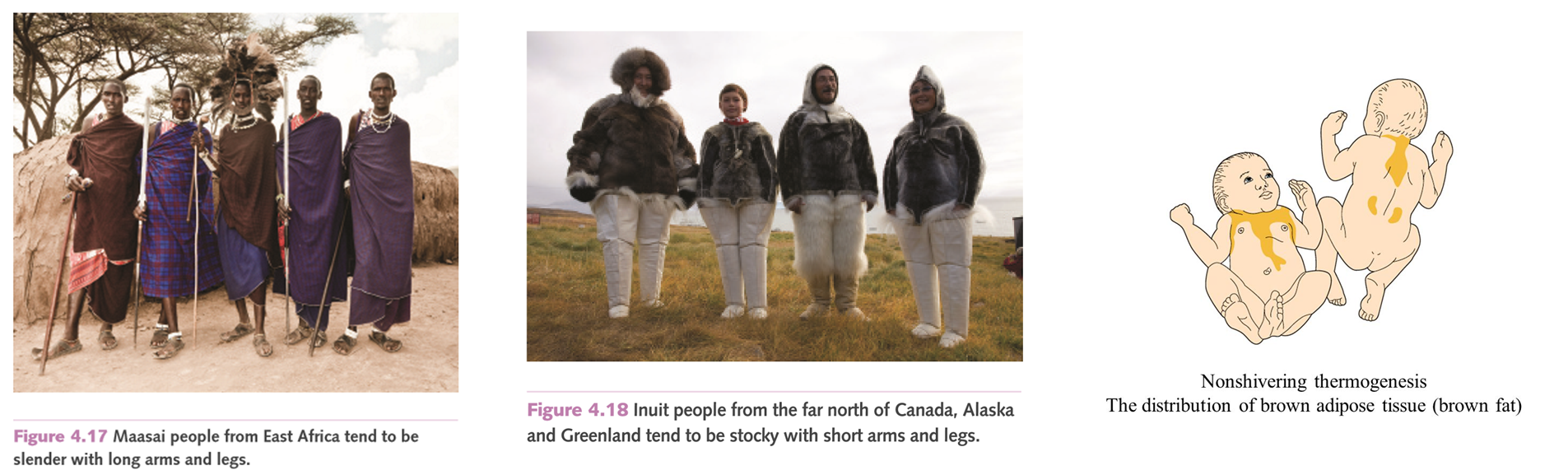
Human thermoregulatory structural adaptations