Thermochemistry: Energy, Enthalpy, and Calorimetry in Chemistry
 Call Kai
 Learn
Learn Practice Test
 Spaced Repetition
 Match
Match Flashcards
 Knowt Play
1/40

There's no tags or description
Looks like no tags are added yet.
Name | Mastery | Learn | Test | Matching | Spaced | Call with Kai |
|---|
No analytics yet
Send a link to your students to track their progress
41 Terms
What is thermochemistry?
The study of chemical reactions and the energy changes that involve heat.
What is the most important form of potential energy in molecules?
Electrostatic potential energy (Eel).
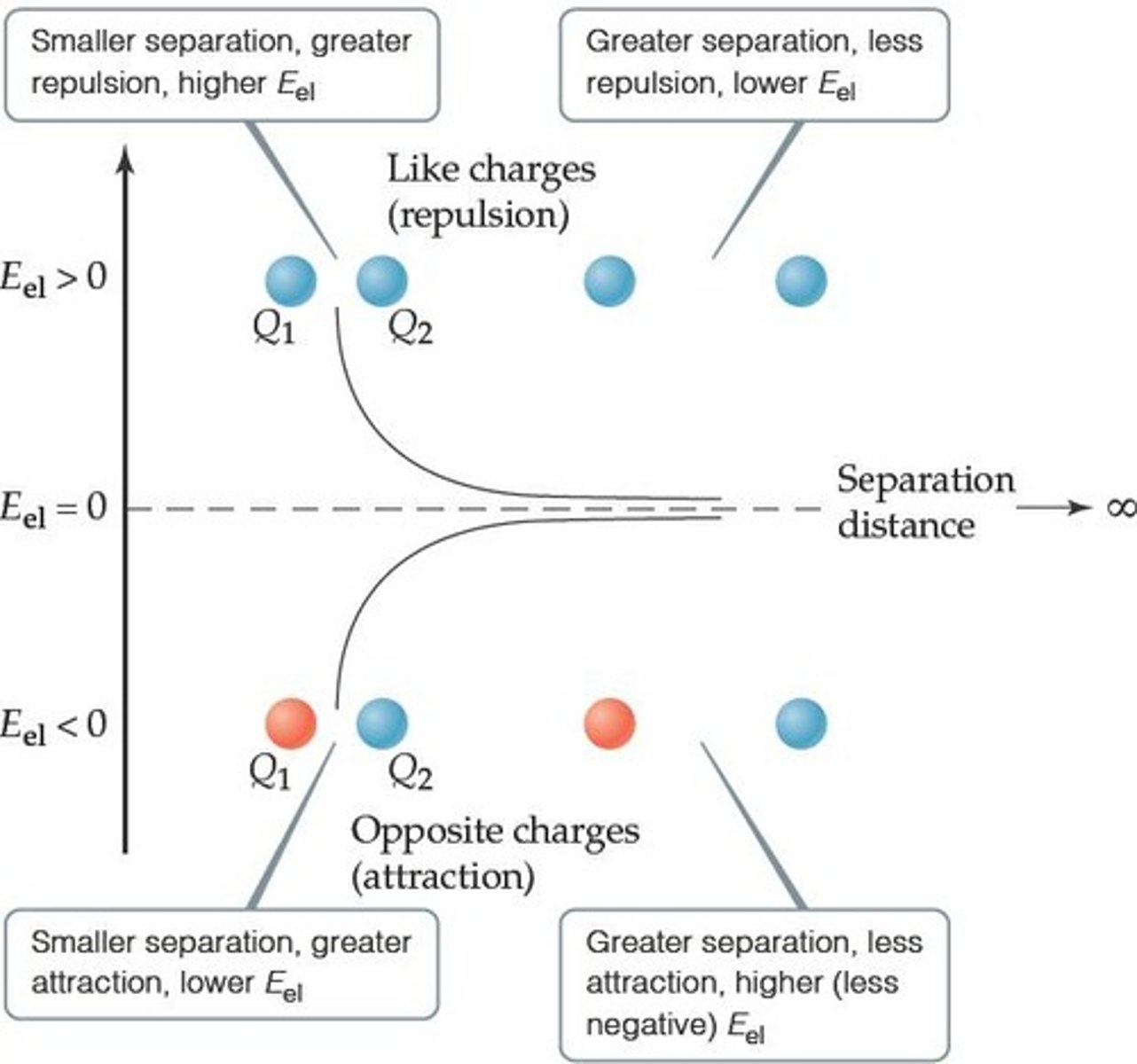
What happens to energy when chemical bonds are formed?
Energy is released.
What happens to energy when chemical bonds are broken?
Energy is consumed.
What does the First Law of Thermodynamics state?
Energy can be converted from one form to another, but it is neither created nor destroyed.
Define 'system' in thermodynamics.
The portion of the universe that we single out to study.
Define 'surroundings' in thermodynamics.
Everything else outside the system.
What is an open system?
A system that can exchange heat and mass with its surroundings.
What is a closed system?
A system that can only exchange heat with its surroundings, not mass.
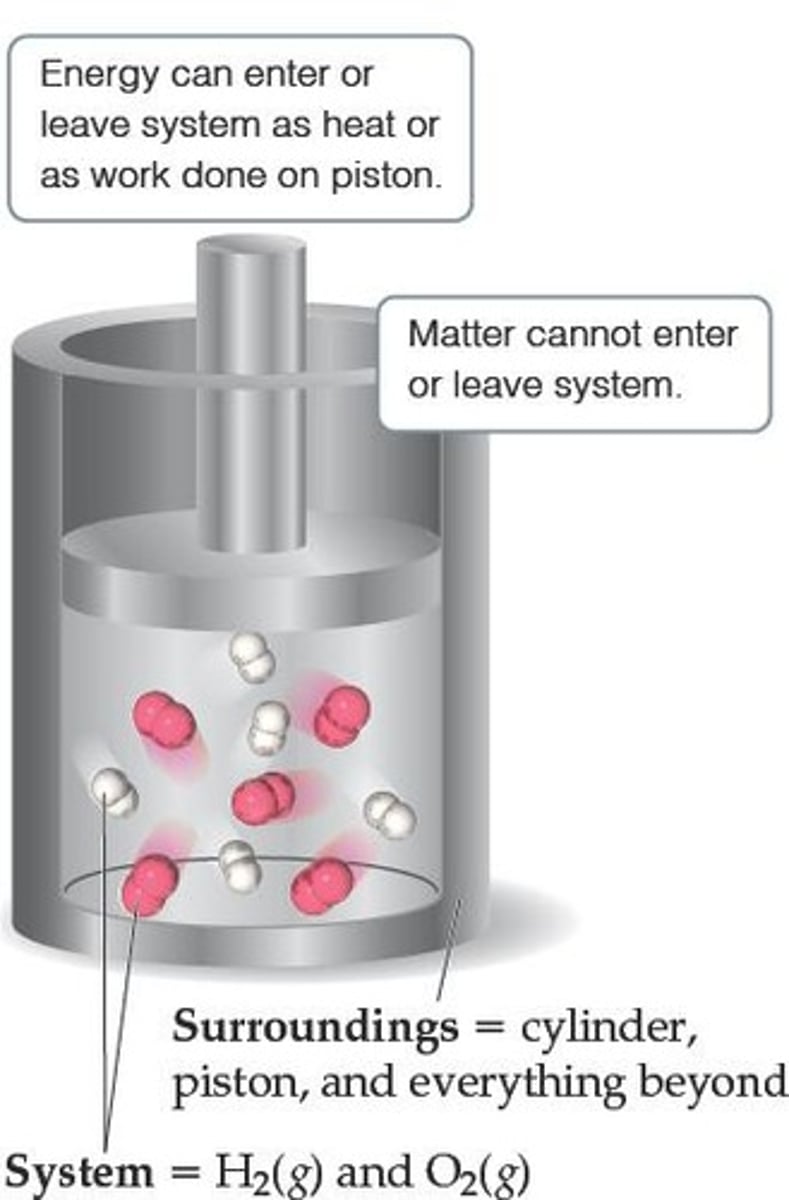
What is an isolated system?
A system that cannot exchange heat or mass with its surroundings.
What is internal energy?
The sum of all kinetic and potential energies of all components of the system.
How is the change in internal energy represented?
ΔE = E_final - E_initial.
What does a positive change in internal energy indicate?
The system gains energy from the surroundings.
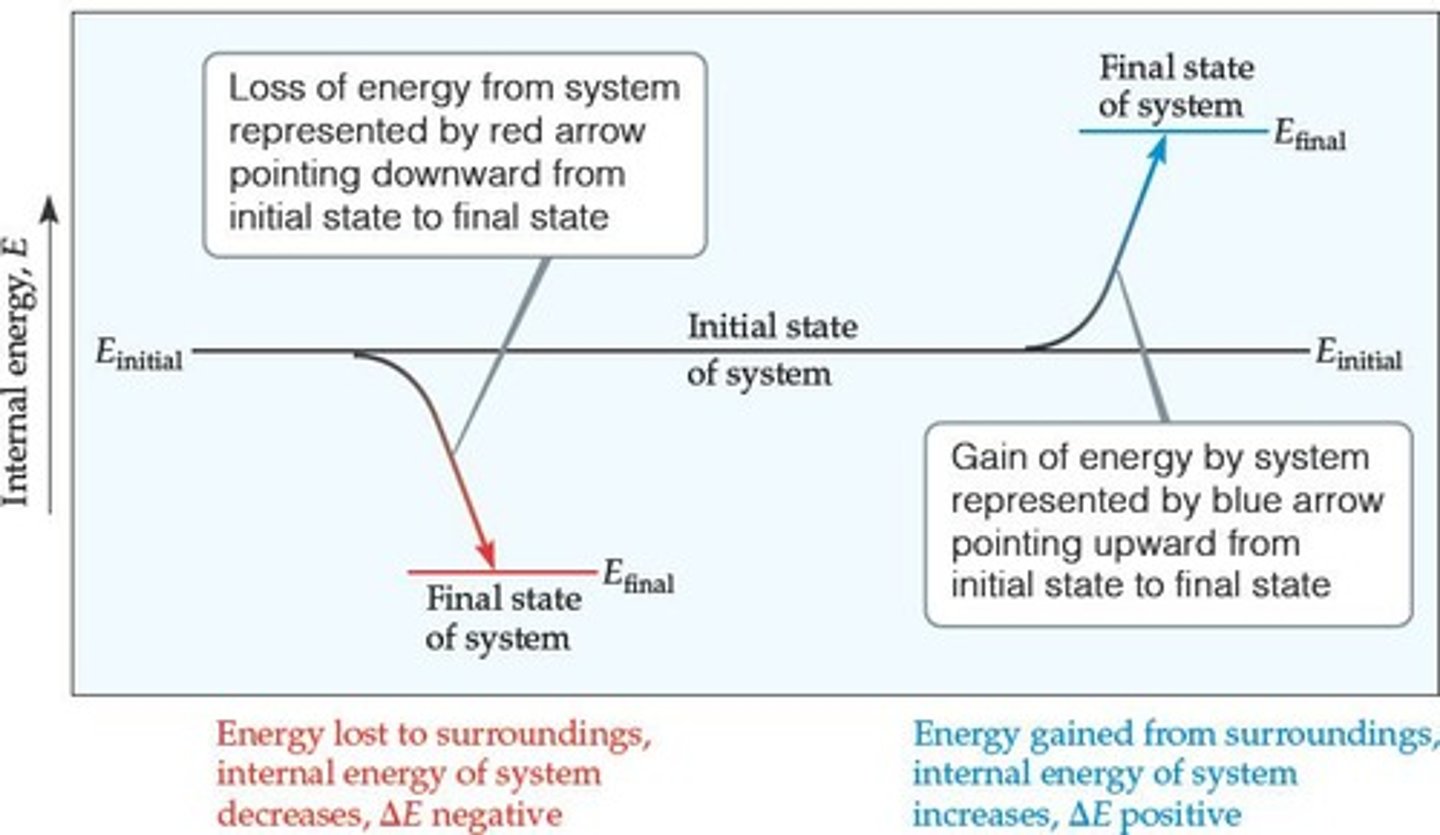
What does a negative change in internal energy indicate?
The system loses energy to the surroundings.
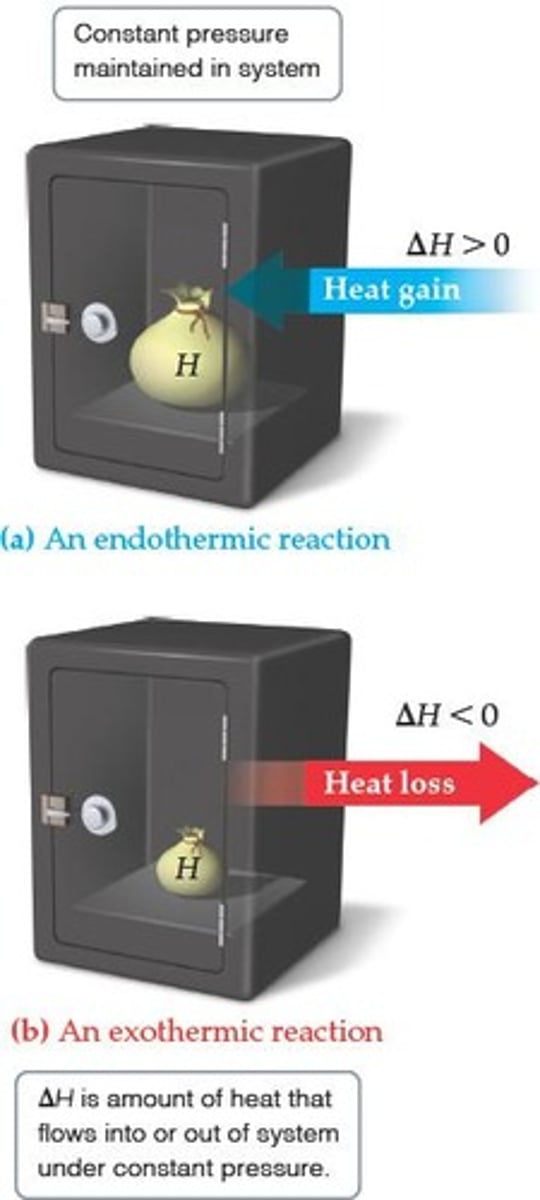
What is the difference between endothermic and exothermic processes?
Endothermic processes absorb heat; exothermic processes release heat.
What are state functions?
Properties that depend only on the current state of the system, not on how it got there.
Are q and w state functions?
No, q (heat) and w (work) are not state functions.
What type of work is typically done by chemical or physical changes?
Mechanical work associated with a change in volume of gas.
What is enthalpy?
The internal energy plus the product of pressure and volume (H = E + PV).
What does the change in enthalpy represent at constant pressure?
The heat gained or lost during the process.
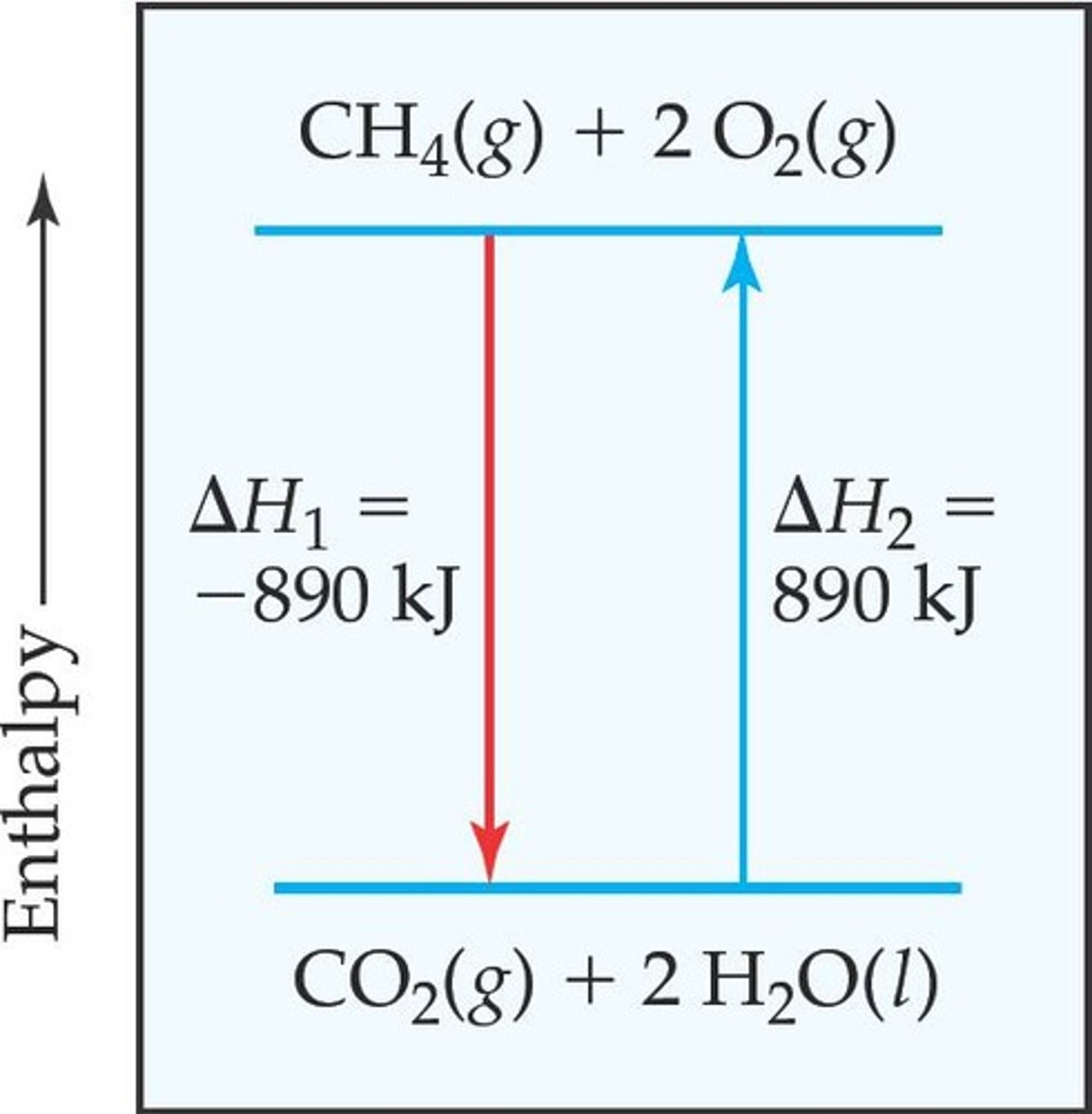
What is an endothermic process?
A process that absorbs heat from its surroundings.
What is an exothermic process?
A process that releases heat to its surroundings.
How is the change in enthalpy (ΔH) calculated?
ΔH is the enthalpy of the products minus the enthalpy of the reactants.
What is the enthalpy of reaction?
The change in enthalpy for a reaction, also known as the heat of reaction.
What does calorimetry measure?
Calorimetry measures heat flow during a chemical reaction.
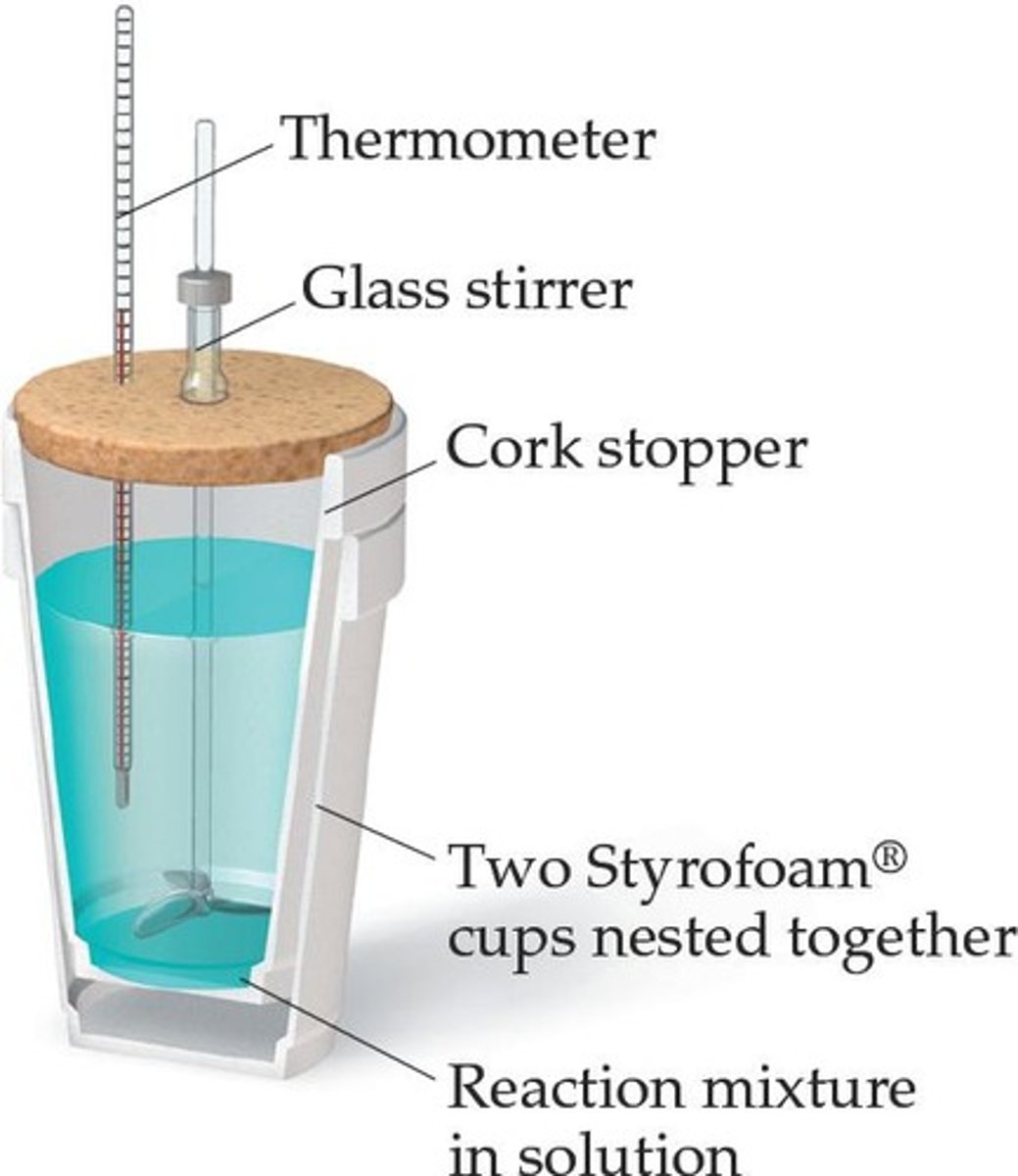
What is a calorimeter?
An instrument used to measure heat flow.
What is heat capacity?
The amount of energy required to raise the temperature of a substance by 1 K (1 degree Celsius).
What is specific heat?
The heat capacity of one gram of a substance.
What is molar heat capacity?
The heat capacity of one mole of a substance.
What is the specific heat of water?
4.184 J/g∙K.
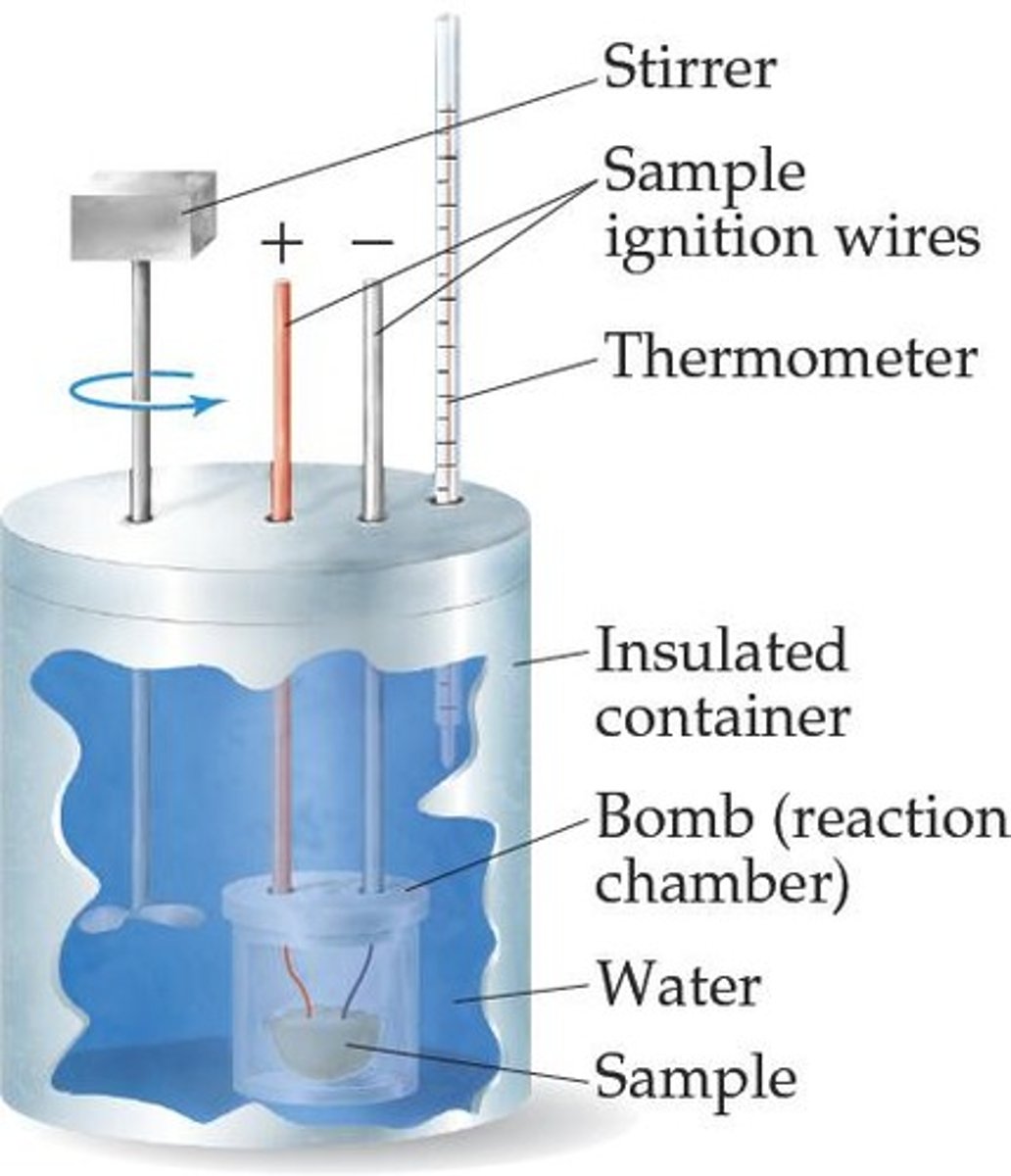
What is bomb calorimetry used for?
To measure the heat absorbed or released by a reaction in a sealed container.
What does Hess's Law state?
The total enthalpy change for a reaction is the sum of the enthalpy changes for the individual steps.
What is the enthalpy of formation (ΔHf)?
The enthalpy change for forming a compound from its constituent elements in their elemental forms.
What are standard enthalpies of formation (ΔHf°)?
Enthalpies measured under standard conditions (25 °C and 1.00 atm pressure).
What is bond enthalpy?
The enthalpy associated with breaking one mole of a particular bond in a gaseous substance.
Why is bond enthalpy always positive?
Because energy is required to break chemical bonds.
How can bond energies predict reaction types?
By adding bond energies for bonds made and subtracting those for bonds broken to estimate ΔH.
What is the fuel value of food?
The energy released when one gram of food is combusted.
What are the main sources of energy in foods?
Carbohydrates, fats, and proteins.
What percentage of U.S. energy needs is met by nuclear fission?
8.6%.
What are some renewable energy sources?
Solar, wind, geothermal, hydroelectric, and biomass sources.