Rec and Care: Final Exam Review
0.0(0)
Studied by 1 person Call Kai
 Learn
Learn Practice Test
 Spaced Repetition
 Match
Match Flashcards
 Knowt Play
Card Sorting
1/74

Earn XP
Description and Tags
Last updated 2:20 PM on 12/9/22
Name | Mastery | Learn | Test | Matching | Spaced | Call with Kai | Chat |
|---|
No analytics yet
Send a link to your students to track their progress
75 Terms
1
New cards
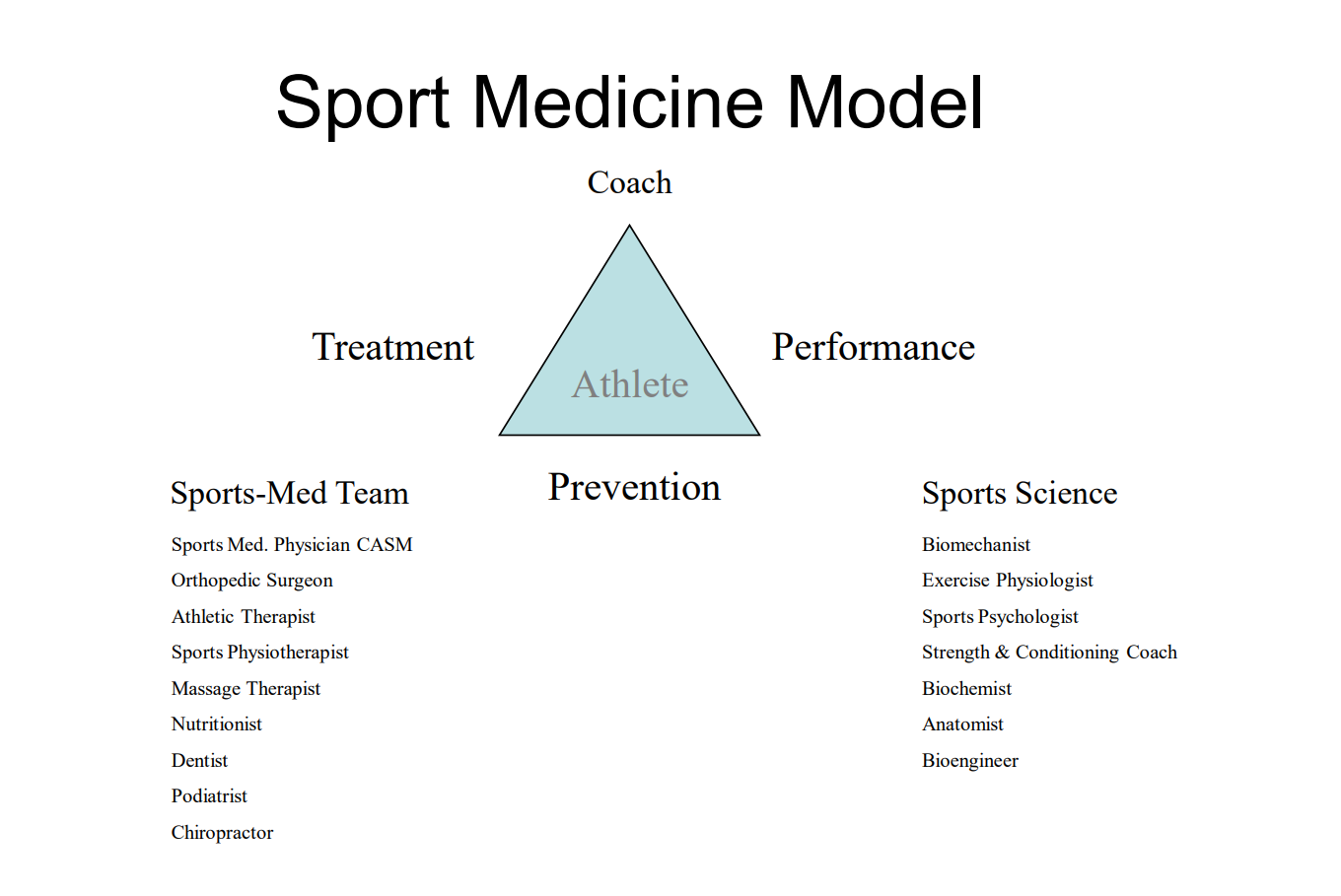
Sports medicine model
Athlete centered model, where the coach, performance, treatment and prevention are surrounding the athlete. Model highlights importance of injury prevention, enhances athletic performance and increases injury prevention during play.
2
New cards
Sports medicine model : coach
responsible for;
- injury prevention
- provide/direct appropriate health care to the injured athlete
- thorough understanding of the skills, techniques, and environmental factors they may adversely affect the athlete
- work closely with medical staff
- injury prevention
- provide/direct appropriate health care to the injured athlete
- thorough understanding of the skills, techniques, and environmental factors they may adversely affect the athlete
- work closely with medical staff
3
New cards
Sports medicine model : treatment
know the roles and responsibilities of each medical professional - stay in your lane
- knowledge, competency, effective and evidence-based treatments
- clinical examination and diagnosis
-acute injury and illness
- therapeutic interventions ; what should we do, where and when
- psychosocial strategies and referral
- healthcare administration
- professional development and responsibility
- knowledge, competency, effective and evidence-based treatments
- clinical examination and diagnosis
-acute injury and illness
- therapeutic interventions ; what should we do, where and when
- psychosocial strategies and referral
- healthcare administration
- professional development and responsibility
4
New cards
Sports medicine model : sports med team
Sports Med Physician : CASM
orthopedic surgeon
athletic therapist
sports physiotherapist
massage therapist
nutritionist
dentist
podiatrist
chiropractor
orthopedic surgeon
athletic therapist
sports physiotherapist
massage therapist
nutritionist
dentist
podiatrist
chiropractor
5
New cards
Sports medicine model :Sports science
biomechanist
exercise physiologist
sports psychologist
strength and conditioning coach
biochemist
anatomist
bioengineer
exercise physiologist
sports psychologist
strength and conditioning coach
biochemist
anatomist
bioengineer
6
New cards
Legal Liability: Legal action is tried under
tort law
7
New cards
Legal Liability: tort law
civil wrong done to an individual
8
New cards
Legal Liability: act of omission
an individual fails to perform their legal duty
9
New cards
Legal Liability: act of comission
an individual commits an act that is not legally theirs to perform
10
New cards
Legal Liability: standard of care
measured by what another minimally competent individual educated and practicing in that profession would have done in the same or similar circumstance to protect an individual from harm or further harm
11
New cards
Legal Liability: negligence
failure to provide a duty of care can result in liability or negligence
12
New cards
Legal Liability: negligent torts may occur as a result of
malfeasance
misfeasance
nonfeasance
malpractice
gross negligence
misfeasance
nonfeasance
malpractice
gross negligence
13
New cards
Legal Liability: malfeasance
committing an act that is not one's responsibility to perform
14
New cards
Legal Liability: misfeasance
committing an act that is one's responsibility to perform but used the wrong procedure , or does the correct procedure in an improper manner
15
New cards
Legal Liability: nonfeasance
fails to perform the legal duty of care
16
New cards
Legal Liability: malpractice
occurs when an individual commits a negligent act while providing care
17
New cards
Legal Liability: gross negligence
occurs when an individual has total disregard for the safety of others
18
New cards
Legal Liability: to find an individual liable , you must prove ALL 4
1. there was a duty of care
2. there was a breach of duty
3. there was harm
4. the resulting harm was a direct cause from that breach of duty
2. there was a breach of duty
3. there was harm
4. the resulting harm was a direct cause from that breach of duty
19
New cards
Legal Liability: doping
international term that refers to the use of performance-enhancing substances or methods
20
New cards
Legal Liability: what constitutes doping ?
2/3 have to apply
1. scientific evidence that the substances or methods have potential to enhance sport performance
2. scientific evidence that the use of the substances or methods represents a potential health risk to the athlete
3. use of the substance or method violates the spirit of the sport
1. scientific evidence that the substances or methods have potential to enhance sport performance
2. scientific evidence that the use of the substances or methods represents a potential health risk to the athlete
3. use of the substance or method violates the spirit of the sport
21
New cards
Legal Liability: doping violations, strict liability
you are responsible for what you consume and what is found in your blood and urine
22
New cards
Legal Liability: anabolic steroids
Top 3
1. testosterone
2. nandrolone
3. stanozolol
1. testosterone
2. nandrolone
3. stanozolol
23
New cards
Legal Liability: anabolic steroids : THG
"The clear"
- designer steroids, designed to keep the T:E ratio low
- designer steroids, designed to keep the T:E ratio low
24
New cards
Legal Liability: purpose of anabolic steroid for performance enhancement
25
New cards
Legal Liability: HGH
anabolic hormone that affects all body systems and is important in muscle growth
- one of the most highly sought after drugs among athletes
- one of the most highly sought after drugs among athletes
26
New cards
Legal Liability: hGH performance enhancement
anabolic properties and difficult to detect
cases hyperplasia and hypertrophy with AAS
affects last after cessation of use vs AAS
cases hyperplasia and hypertrophy with AAS
affects last after cessation of use vs AAS
27
New cards
Legal Liability: ergogenic aids
stimulants
- used to increase alertness, reduce fatigue or increase competitiveness and hostility
sympathomimetic drugs
- work on adrenergic receptors
- cause mental stimulation and increased blood flow, but can cause elevated blood pressure, headache, increased and irregular heartbeat, anxiety, and tremors
- used to increase alertness, reduce fatigue or increase competitiveness and hostility
sympathomimetic drugs
- work on adrenergic receptors
- cause mental stimulation and increased blood flow, but can cause elevated blood pressure, headache, increased and irregular heartbeat, anxiety, and tremors
28
New cards
Legal Liability: legal concerns
administering drugs vs dispensing
record keeping
record keeping
29
New cards
Legal Liability: legal concerns - administering drugs
defined as a single dose of medication to be used by a patient
30
New cards
Legal Liability: legal concerns - dispensing drugs
constitutes providing a sufficient quantity to be used for multiple doses
31
New cards
Legal Liability:
32
New cards
Medical terminology : ?
33
New cards
Mechanisms of sport injury: mechanical injury
occur when a force is applied to any part of the body resulting in a harmful disturbance in function and or to the structure in
34
New cards
Mechanisms of sport injury: cause of injuries
external forces directed on the body or can occur internally
35
New cards
Mechanisms of sport injury: stress strain curve
toe - accounts for 1.5%-4% of total fiber lengthening that is possible
elastic range
necking - point at which tissue strength noticeably decreases so that less strain is needed to cause a change in the tissues length - prior to rupture
permanent deformation - plastic range
failure - rupture
elastic range
necking - point at which tissue strength noticeably decreases so that less strain is needed to cause a change in the tissues length - prior to rupture
permanent deformation - plastic range
failure - rupture
36
New cards
Mechanisms of sport injury: stress
internal reaction or resistance to an external load
37
New cards
Mechanisms of sport injury: strain
extent of deformation of tissue under loading
38
New cards
Mechanisms of sport injury: tissue stresses leading to sports injuries
tension
stretching
compression
shearing
bending
stretching
compression
shearing
bending
39
New cards
Mechanisms of sport injury: acute injuries
contusions
myositis ossificans
muscle strains
ligament sprains
dislocation
subluxation
myositis ossificans
muscle strains
ligament sprains
dislocation
subluxation
40
New cards
Mechanisms of sport injury: ligament sprains - grade 1
minor stretching/tearing of fibers, pain, localized swelling and minimal instability
41
New cards
Mechanisms of sport injury: ligament sprains - grade 2
more tearing of the fibers, increased pain, swelling, more instability
42
New cards
Mechanisms of sport injury: ligament sprains - grade 3
complete rupture of the fibers, little/no pain, gross swelling, joint stiffness, and complete instability
43
New cards
Mechanisms of sport injury: chronic injuries
tendinitis
tenosynovitis
bursitis
osteoathritis
stress fractures
tenosynovitis
bursitis
osteoathritis
stress fractures
44
New cards
tissue repair: three phases of healing
1. Inflammatory phase
2. Fibroblastic repair
3.Maturation - remodeling phase
2. Fibroblastic repair
3.Maturation - remodeling phase
45
New cards
tissue repair: goal
to create an environment that is conducive to the healing process
46
New cards
tissue repair: inflammatory phase
begins immediately after a tissue is injured
results in the release of materials needed
typically lasts 2-4 days
results in the release of materials needed
typically lasts 2-4 days
47
New cards
tissue repair: purpose of inflammation
protect, localize, and rid body of some injurious agent in preparation of healing
- associated with vascular, cellular and chemical responses
- associated with vascular, cellular and chemical responses
48
New cards
tissue repair: symptoms
SHARP
S- swelling
H- heat
A- altered function
R- redness
P- pain
S- swelling
H- heat
A- altered function
R- redness
P- pain
49
New cards
tissue repair: what two events occur in the inflammatory response phase
vascular reaction
formation of a clot
formation of a clot
50
New cards
tissue repair: vascular reaction
vascular spasm, formation of a platelet plug, blood coagulation and growth of fibrous tissue
- causes vasoconstriction of the vascular walls to reduce blood flow, followed by vasodilation
- chemical mediators are released
- causes vasoconstriction of the vascular walls to reduce blood flow, followed by vasodilation
- chemical mediators are released
51
New cards
tissue repair: formation of a clot
damage to the blood vessels exposes the endothelium and collagen fibers
- platelets and leukocytes adhere to the exposed fibers , eventually forming a plug
- helps to localize the injury process
- platelets and leukocytes adhere to the exposed fibers , eventually forming a plug
- helps to localize the injury process
52
New cards
tissue repair: fibroblastic repair phase
period of scar formation is referred to as fibroplasia
begins within first few hours and can last as long as 4-6 weeks
new capillaries bud into the wound, delivering oxygen, increasing blood flow and nutrients to the site
-= granulation tissue produced - fills the gaps
begins within first few hours and can last as long as 4-6 weeks
new capillaries bud into the wound, delivering oxygen, increasing blood flow and nutrients to the site
-= granulation tissue produced - fills the gaps
53
New cards
tissue repair: signs and symptoms of phase 2
associated with phase one may decreased, but may be tender to touch and painful with certain movements
54
New cards
tissue repair: phase 2 , continued healing
fibroblasts accumulate at the wound site and synthesize new "extracellular matrix" which contains collagen, elastin, ground substance and additional proteins
55
New cards
tissue repair: phase 2: week 6-7
fibroblasts begin producing collagen fibers which are deposited in a random fashion, forming a scar
tensile strength increases in proportion to the rate of collagen synthesis
increase in tensile strength = decreased fibroblast production
tensile strength increases in proportion to the rate of collagen synthesis
increase in tensile strength = decreased fibroblast production
56
New cards
tissue repair: maturation remodeling phase
long term; may take up to several years to complete
realignment and remodeling of collagen fibers that make up the scar tissue
- ongoing breakdown and synthesis of collagen
increases stress and strain causes the collagen fibers to realign along the lines of tension
tissue gradually assumes normal appearance and function
by the end of three weeks, a firm, strong, contracted, non-vascular scar forms
realignment and remodeling of collagen fibers that make up the scar tissue
- ongoing breakdown and synthesis of collagen
increases stress and strain causes the collagen fibers to realign along the lines of tension
tissue gradually assumes normal appearance and function
by the end of three weeks, a firm, strong, contracted, non-vascular scar forms
57
New cards
tissue repair: healing capabilities - cartilage
dependent on whether the damage is to the cartilage or subchondral bone. if damage to bone-healing will progress normally
58
New cards
tissue repair: healing capabilities - ligament
variable
- scar tissue is insufficient
- ligament is not reattached to the proper location
may take up to 12 months to complete
- scar tissue is insufficient
- ligament is not reattached to the proper location
may take up to 12 months to complete
59
New cards
tissue repair: healing capabilities - skeletal
initially - hemorrhage, edema, phagocytosis to clear debris
phase 2 - scar formation, myoblastic activity occurs to regenerate myofibrils
phase 3 - collagen fibers arrange themselves
ACTIVE MUSCLE CONTRACTION IS NECESSARY TO REGAIN NORMAL TENSILE STRENGTH
- lengthy rehab time regardless of degree
phase 2 - scar formation, myoblastic activity occurs to regenerate myofibrils
phase 3 - collagen fibers arrange themselves
ACTIVE MUSCLE CONTRACTION IS NECESSARY TO REGAIN NORMAL TENSILE STRENGTH
- lengthy rehab time regardless of degree
60
New cards
tissue repair: healing capabilites -
do not regenerate after they have died
- regeneration can take place in the fiber ; if the cell is NOT affected
slow process
- 3-4mm per day
- regeneration can take place in the fiber ; if the cell is NOT affected
slow process
- 3-4mm per day
61
New cards
tissue repair: healing capabilites - bone
callus formation needs to occur at the fracture site
- remodelling
osteoblasts lay down new bone and osteoclasts remove bone according to the forces placed on the healing bone
- remodelling
osteoblasts lay down new bone and osteoclasts remove bone according to the forces placed on the healing bone
62
New cards
tissue repair: management
PIER
P- pressure
I-ice
E- elevation
R- rest
P- pressure
I-ice
E- elevation
R- rest
63
New cards
cryotherapy :
64
New cards
The Knee: type of joint
synovial, modified hinge joint
65
New cards
The Knee: movements
flexion, extension, internal rotation, external rotation
66
New cards
The Knee: formed by the
femur
tibia-plateau
patella
tibia-plateau
patella
67
New cards
The Knee: fibula
not involved and is not weight bearing
provides site for muscle/ligament attachment
forms the superior tibiofibular joint
provides site for muscle/ligament attachment
forms the superior tibiofibular joint
68
New cards
The Knee: what structures attach to the head of the fibula
69
New cards
The Knee: type of injury involvement
posterolateral knee injuries
70
New cards
The Knee: articulations : tibiofemoral
tibia and femur
allows for flexion, extension, internal and external rotation
allows for flexion, extension, internal and external rotation
71
New cards
The Knee: articulations : patellofemoral
patella and femur
patella; largest sesamoid bone in the body, lined by hyaline cartilage
- allows stronger muscle pull of the quadriceps due to changing the angle of the patellar tendon
patella; largest sesamoid bone in the body, lined by hyaline cartilage
- allows stronger muscle pull of the quadriceps due to changing the angle of the patellar tendon
72
New cards
The Knee: menisci
fibrocartilaginous discs in knee
function : improve joint congruency, aid in joint nutrition, transmit force, decrease contact load
function : improve joint congruency, aid in joint nutrition, transmit force, decrease contact load
73
New cards
The Knee: meniscus - medial
c shaped fibrocartilage
less mobile
higher incidence rate
less mobile
higher incidence rate
74
New cards
The Knee: meniscus - lateral
o-shaped
a larger degree of movement
a larger degree of movement
75
New cards
The Knee: meniscus - blood supply
blood supply on to the outer 1/3 of the meniscus
no blood or nerves to inner 2/3 therefore poor healing capacity
no blood or nerves to inner 2/3 therefore poor healing capacity