Bone structure, classification and remodeling
 Call Kai
 Learn
Learn Practice Test
 Spaced Repetition
 Match
Match Flashcards
 Knowt Play
1/36

There's no tags or description
Looks like no tags are added yet.
Name | Mastery | Learn | Test | Matching | Spaced | Call with Kai |
|---|
No analytics yet
Send a link to your students to track their progress
37 Terms
primary functions of skeletal system
Support
Storage of Minerals (calcium), growth factors, and Fat/Lipids (in yellow marrow)
Blood Cell Formation in red marrow (Hematopoiesis)
Protection
Movement (force of motion)
Inorganic salt storage (Calcium & Phosphorus)
sesamoid bones
small and flat; develop inside tendons near joints of knees, hands, and feet Ex. patella
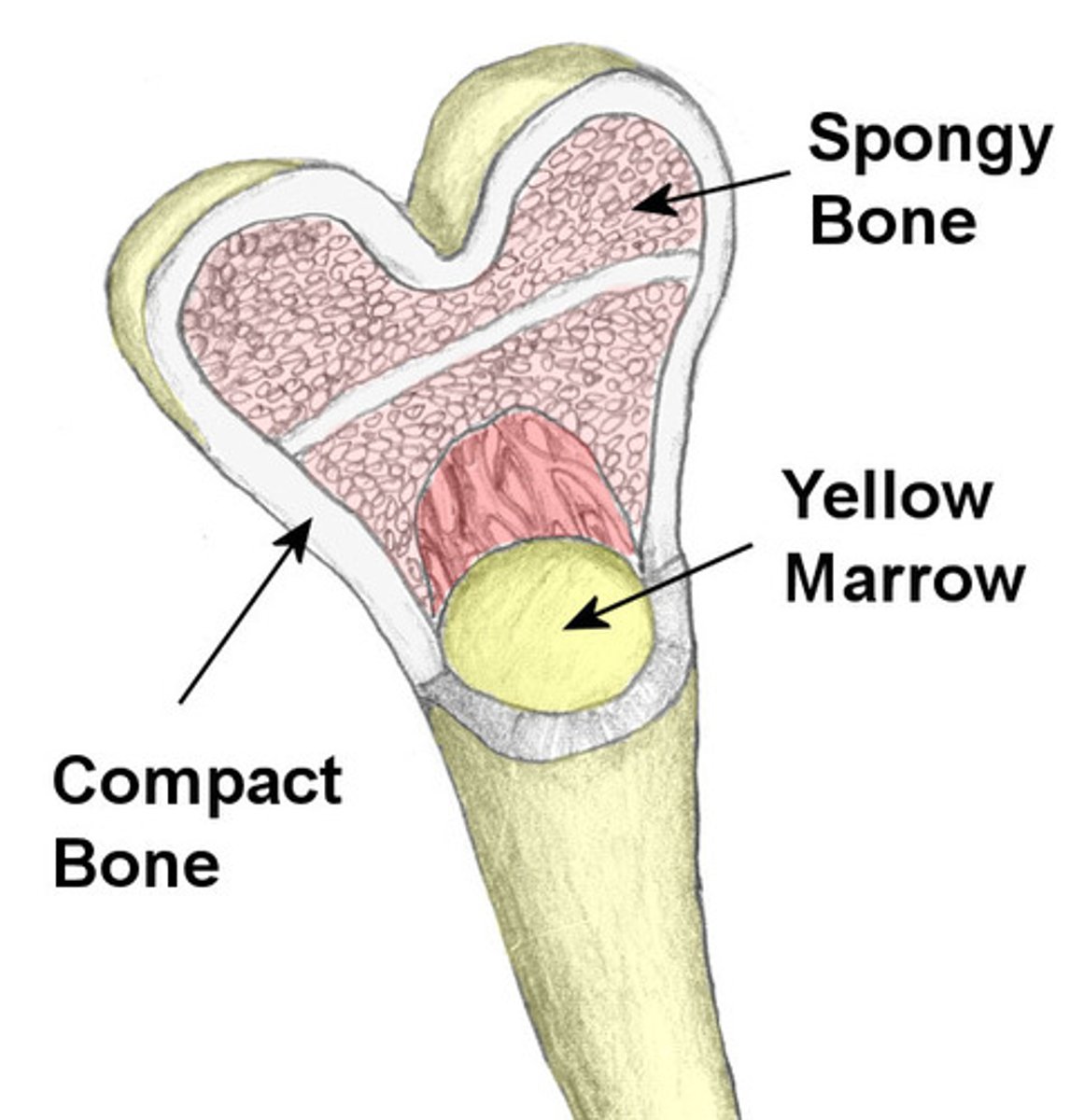
compact bone
Hard and dense, but not solid, bone tissue that is beneath the outer membrane of a bone. made of osteons
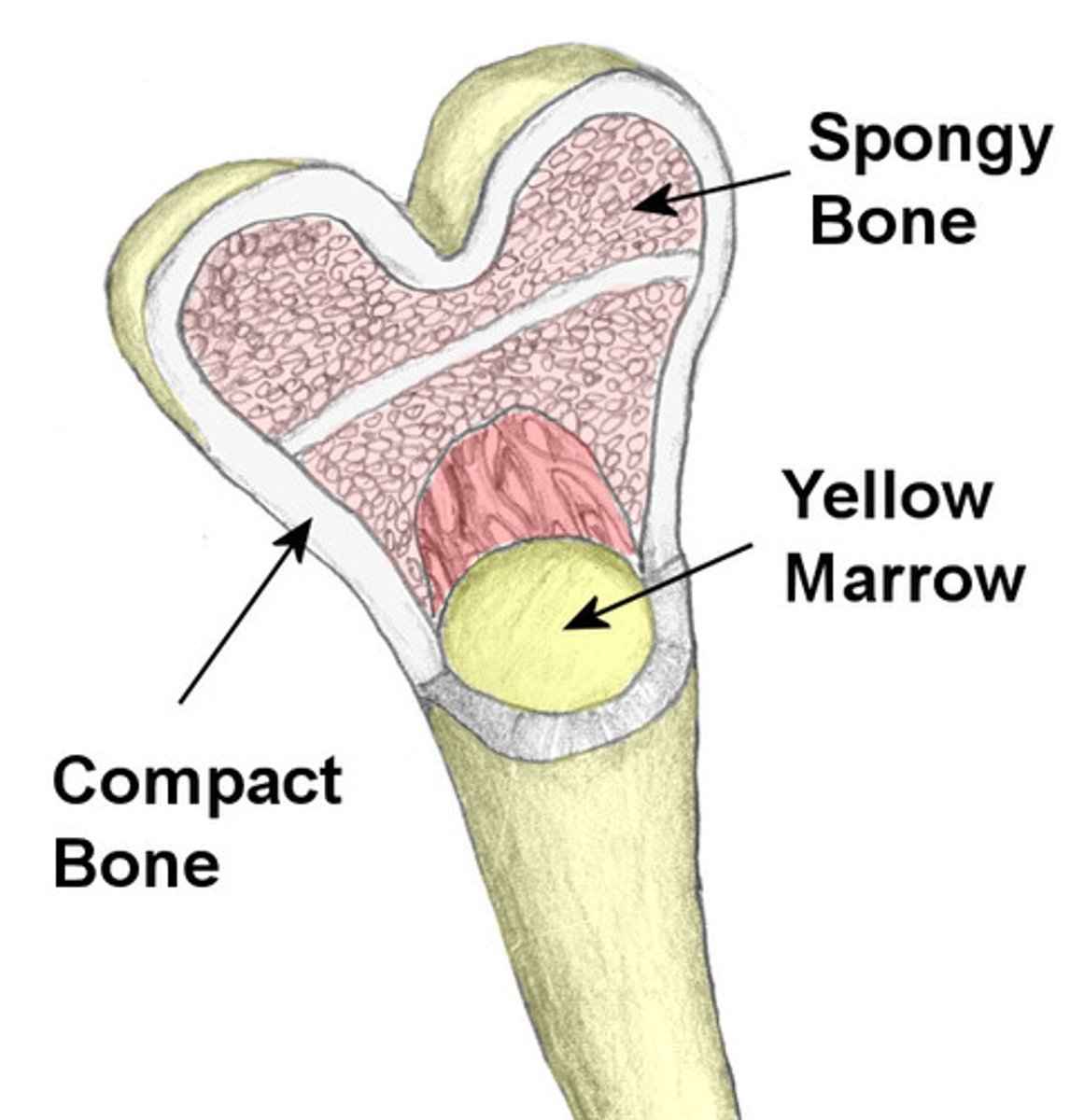
spongy bone
Layer of bone tissue having many small spaces and found just inside the layer of compact bone. made of trabeculae filled with yellow bone marrow
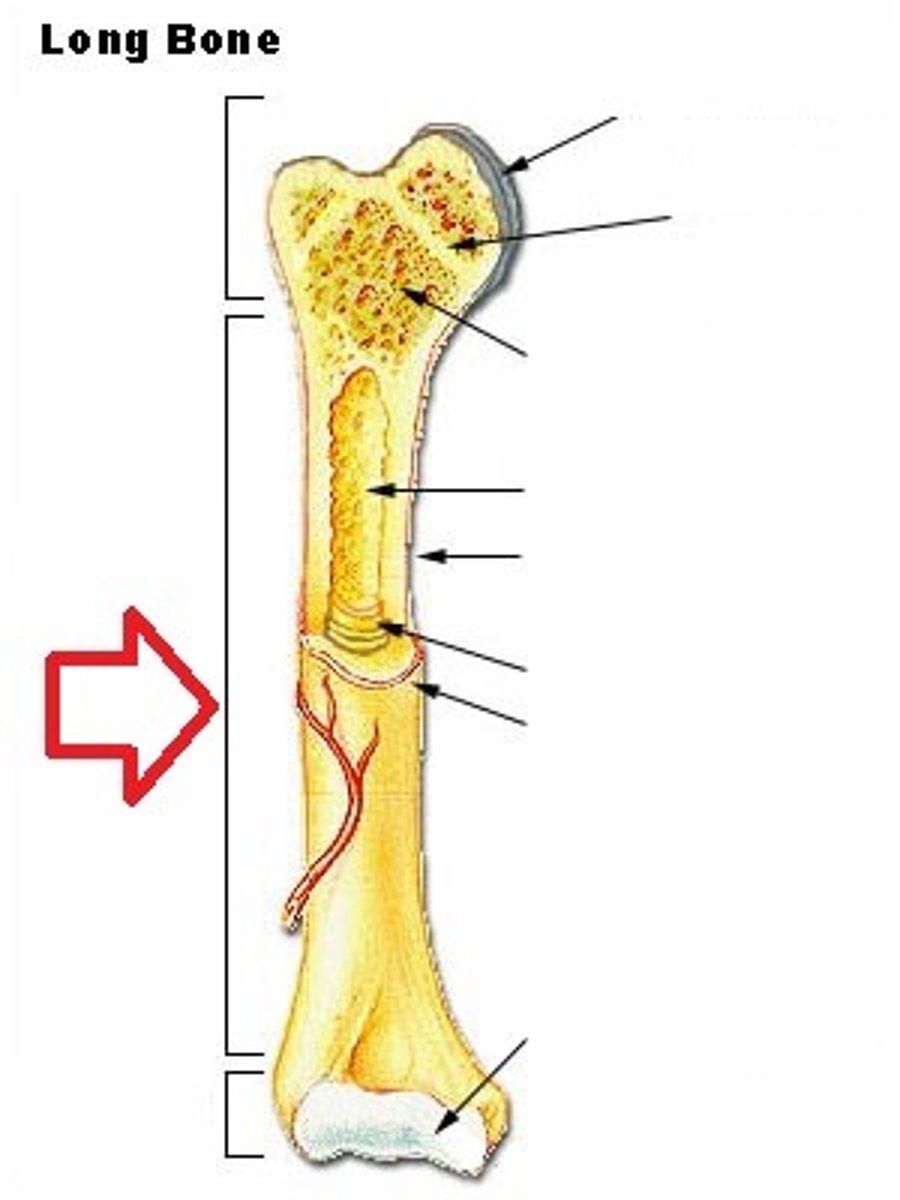
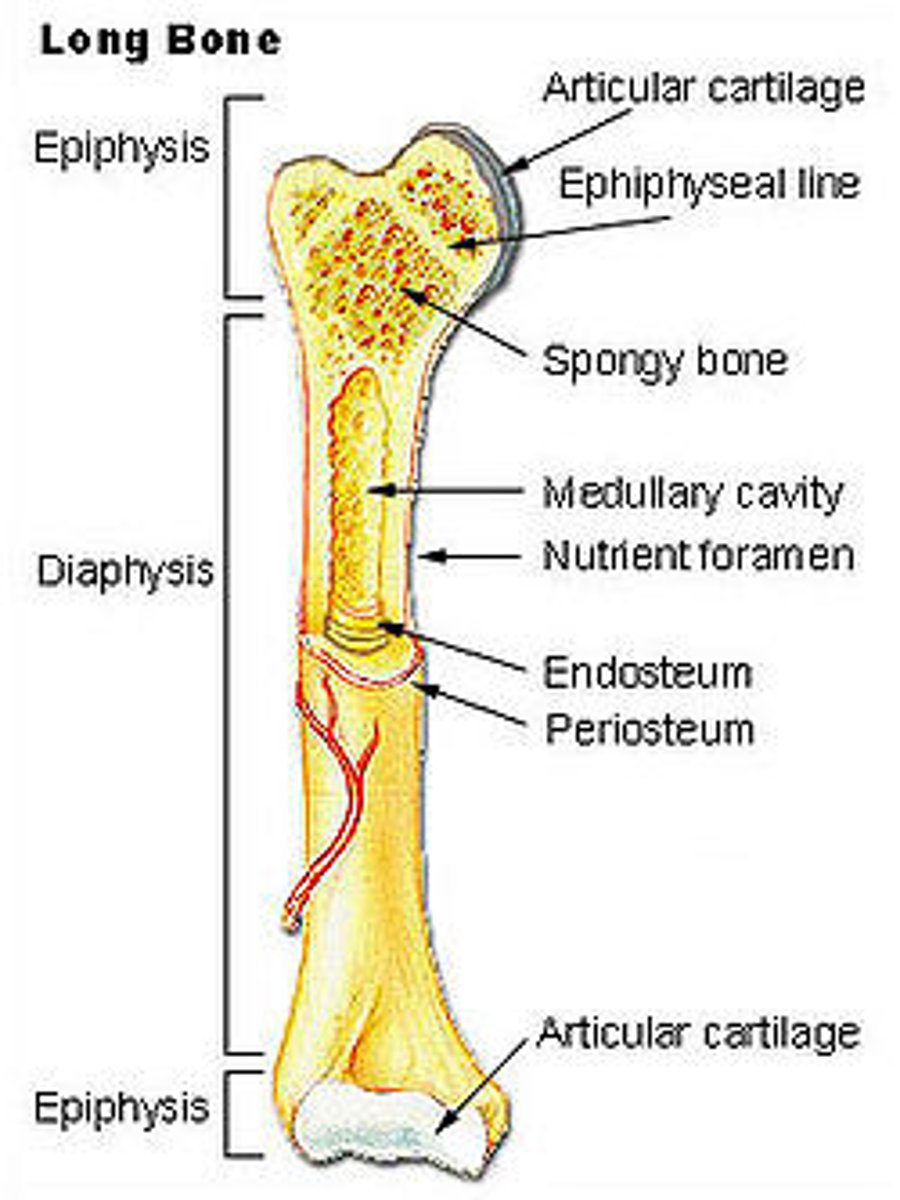
diaphysis
shaft of a long bone; covered in compact bone
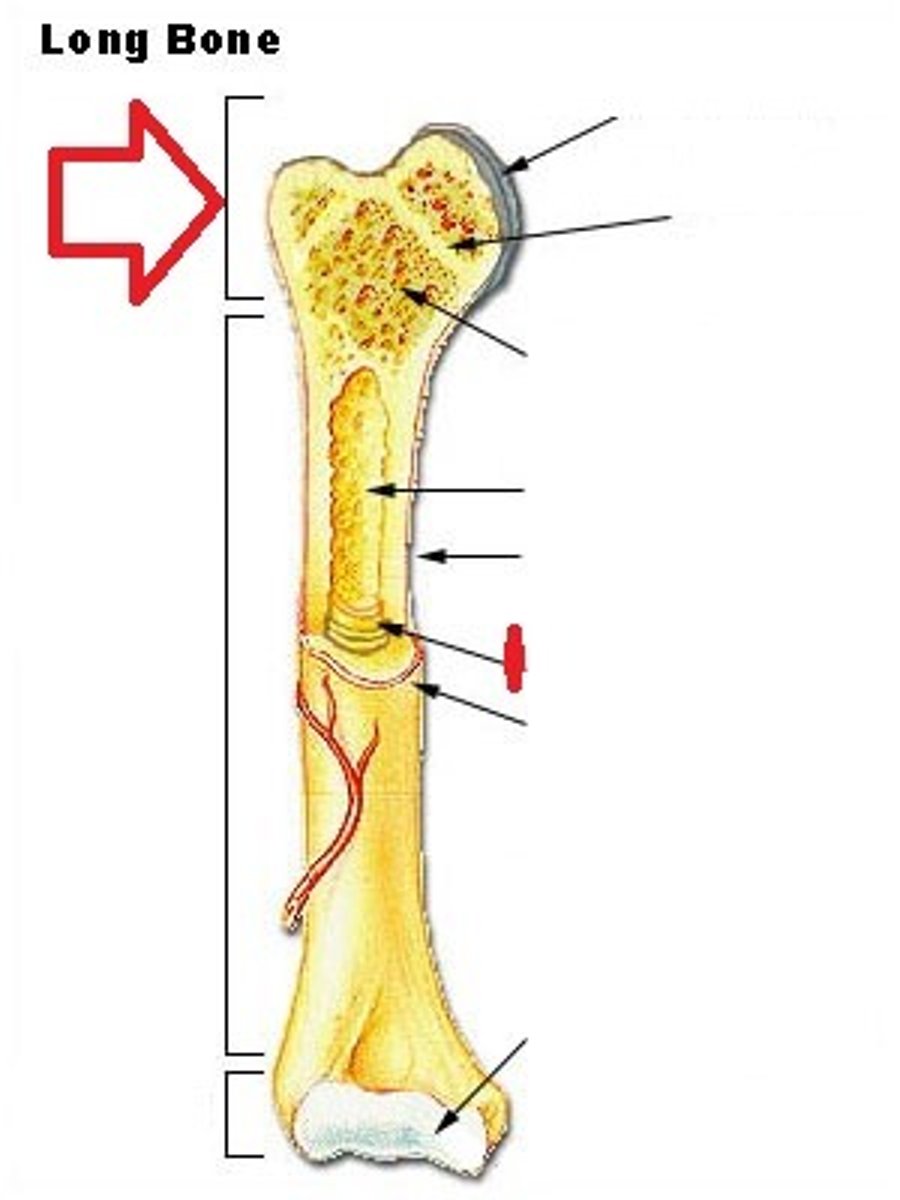
epiphysis
ends of the ling bone; contains spongy bone
medullary cavity
cavity within the shaft of the long bones filled with bone marrow
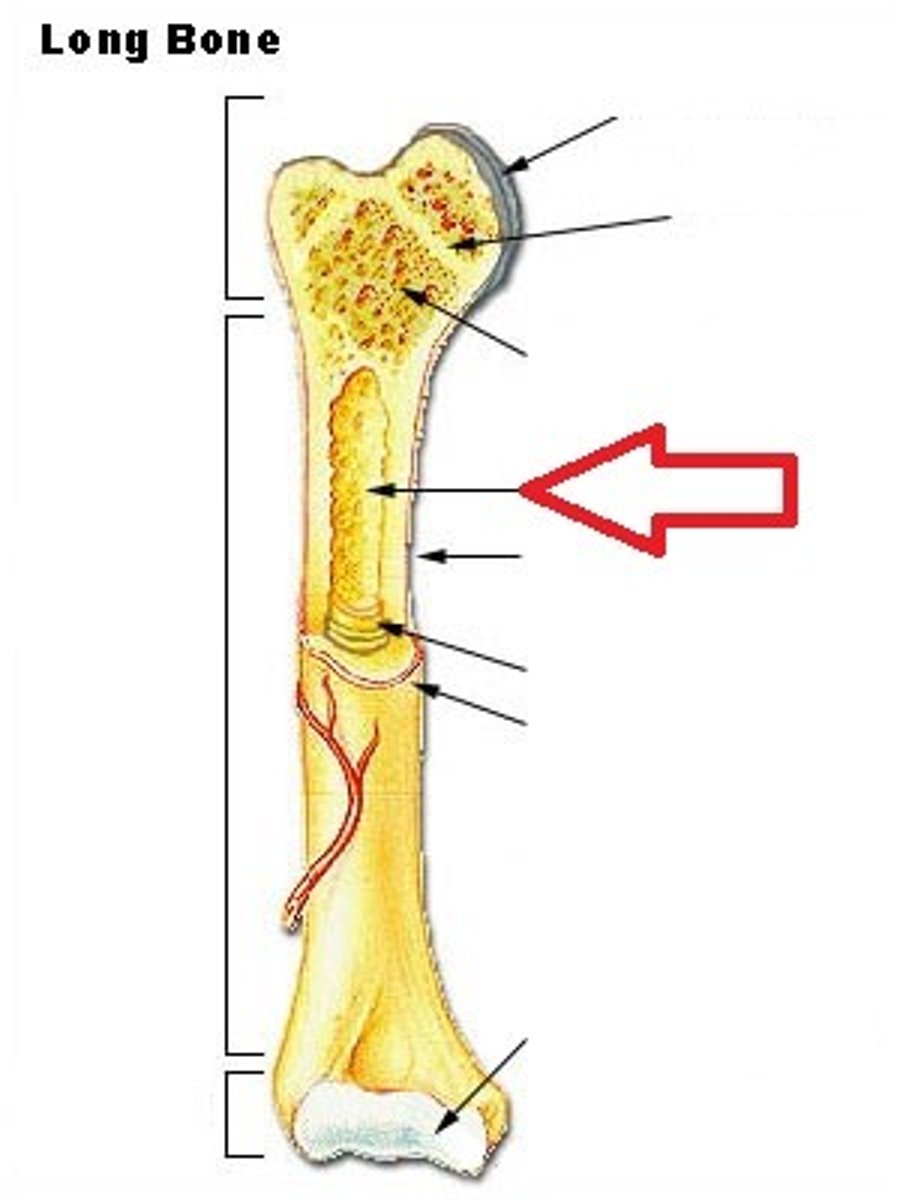
epiphyseal line
separates diaphysis and epiphysis
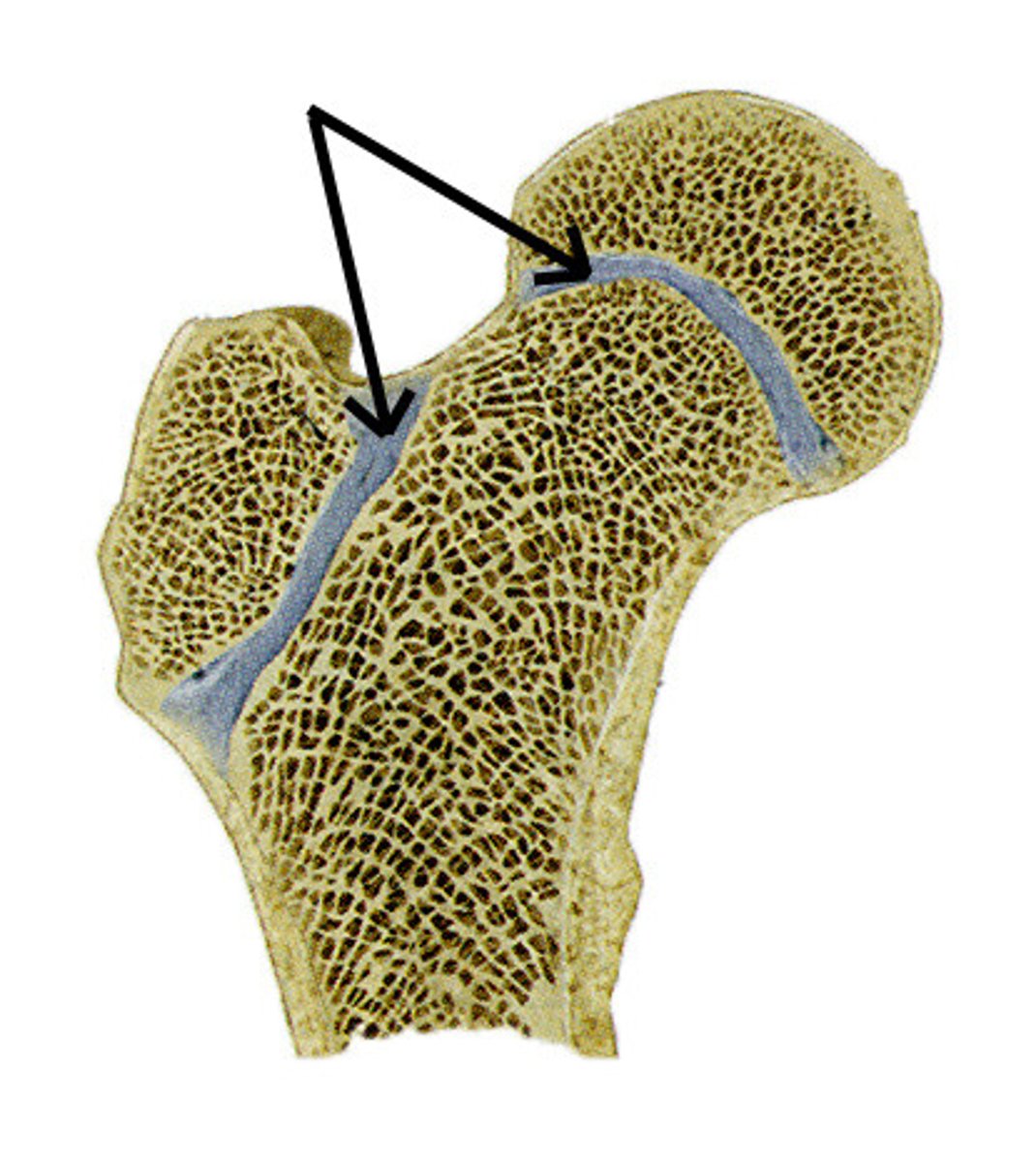
periosteum
membrane that covers outer surface of bone
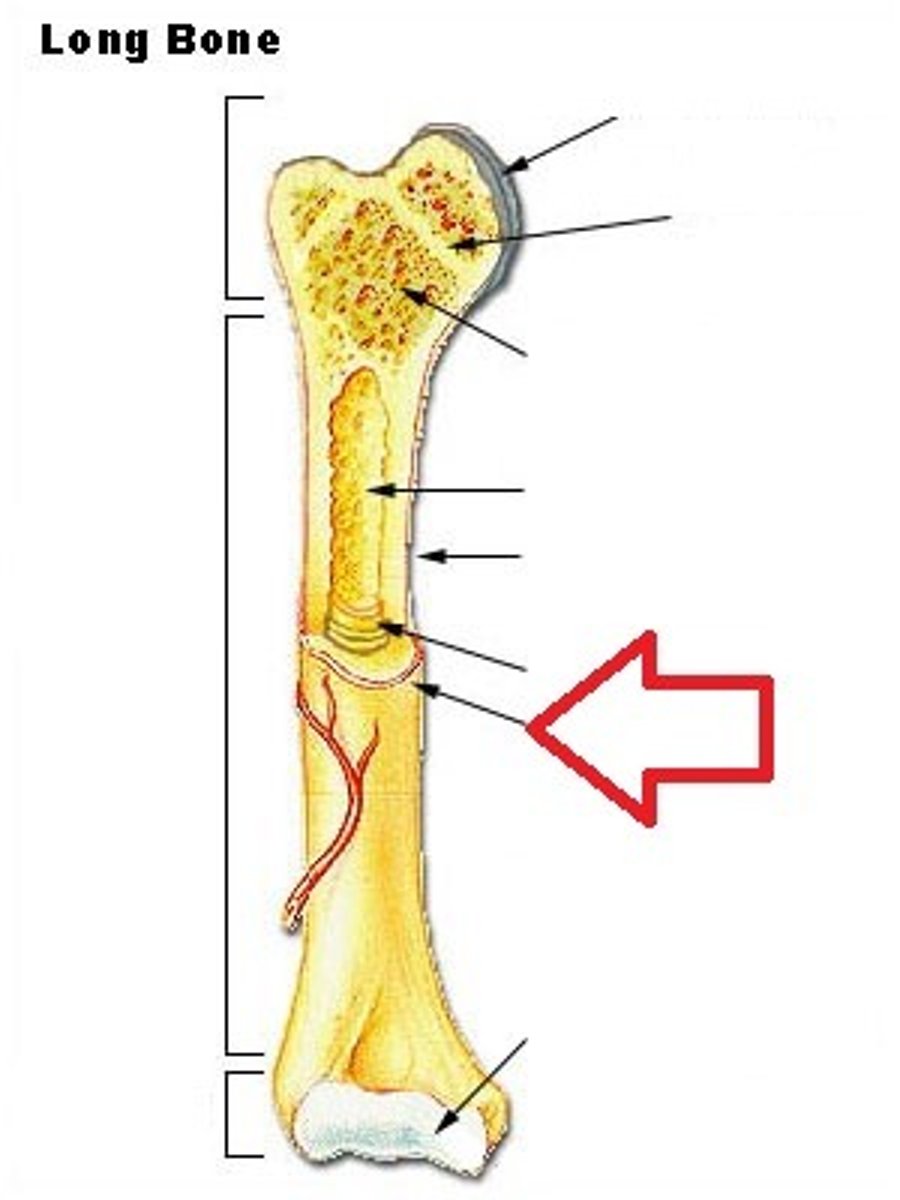
components of bone matrix
calcium phosphate (inorganic) and collagen fibers (organic)
calcium phosphate
makes bone hard and able to withstand compression; inorganic
collagen fibers
makes bone flexible, tough and able to twist and bend; organic
canaliculi
Small pathways "canals" for blood vessels; exchange nutrients and waste
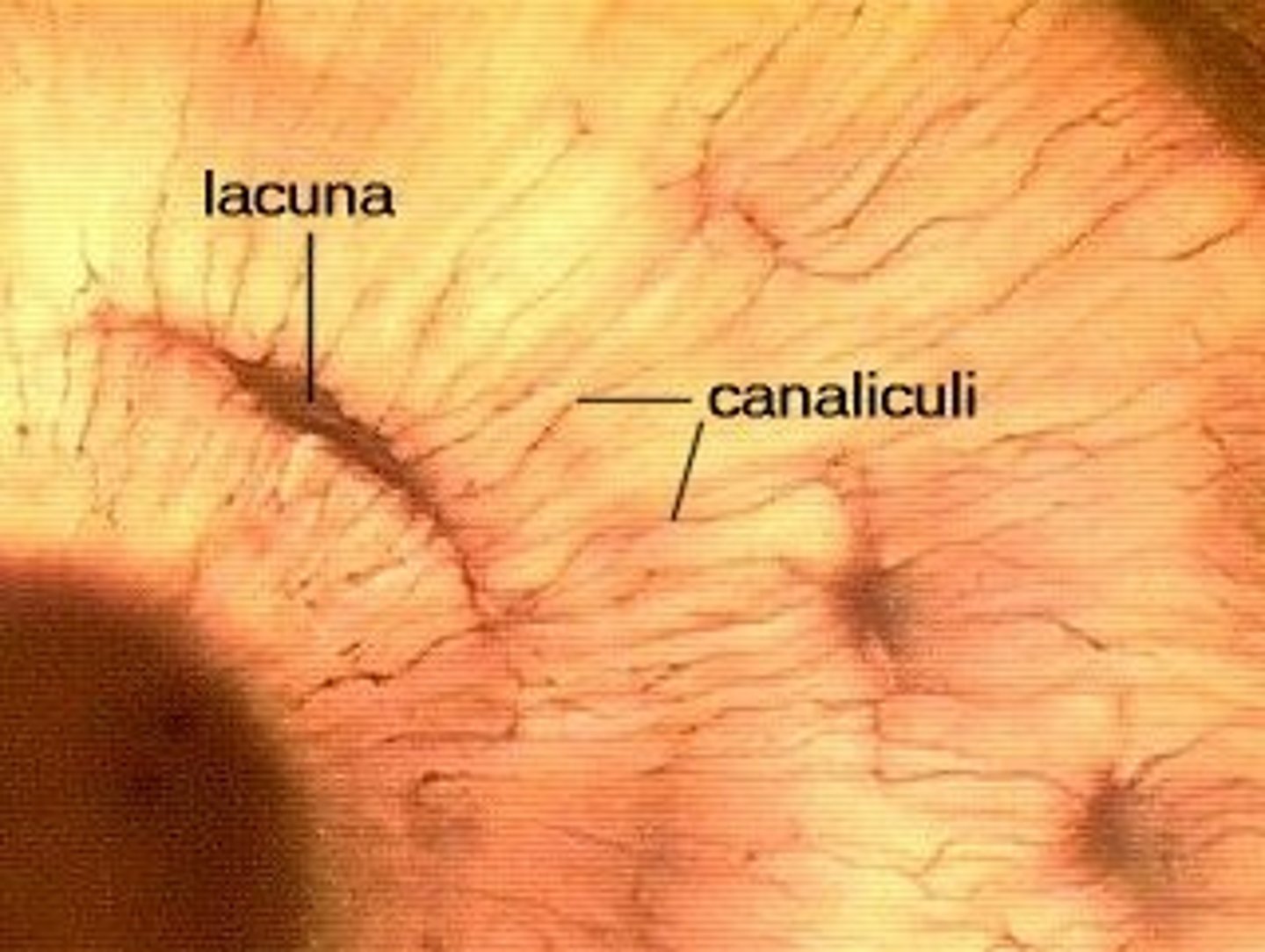
osteocytes
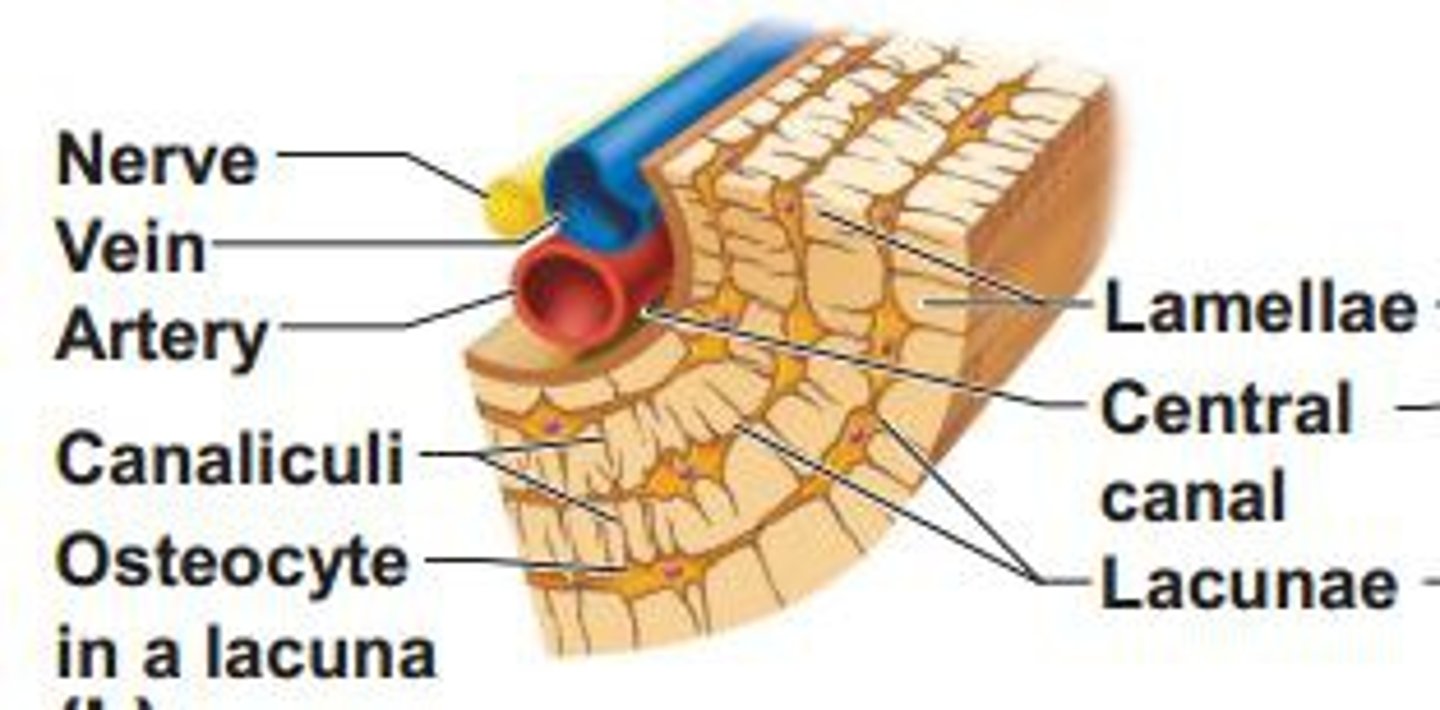
Mature bone cells; in lacunae which is in layers of the lamellae and connected by canaliculi; maintain bone matrix
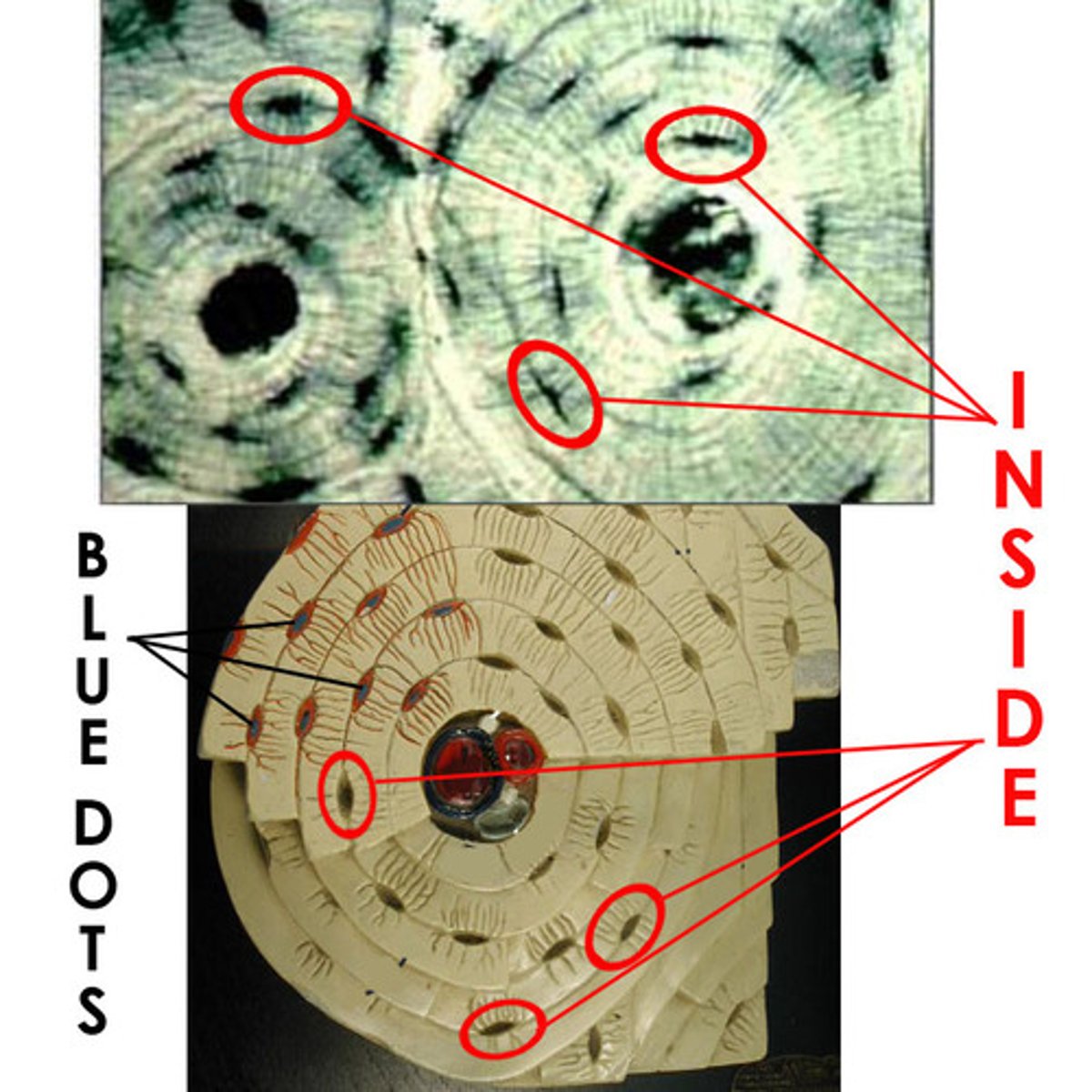
osteoblasts
bone makers; "build"; secrete osteoid to turn into osteocytes
osteoclasts
bone dissolvers; "break"; located in lacunae
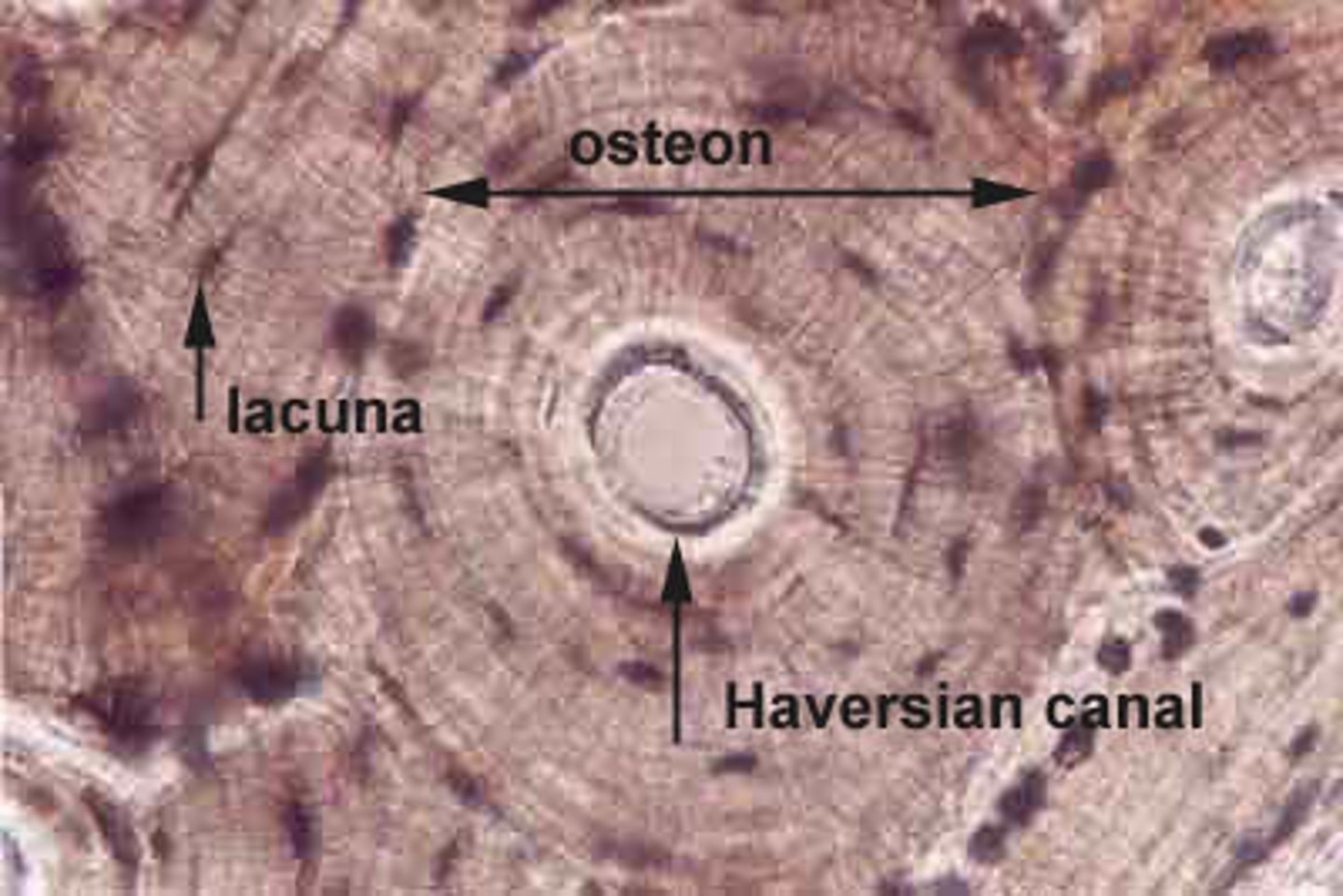
osteon (Haversian system)
basic unit of compact bone; arranged in concentric lamellae
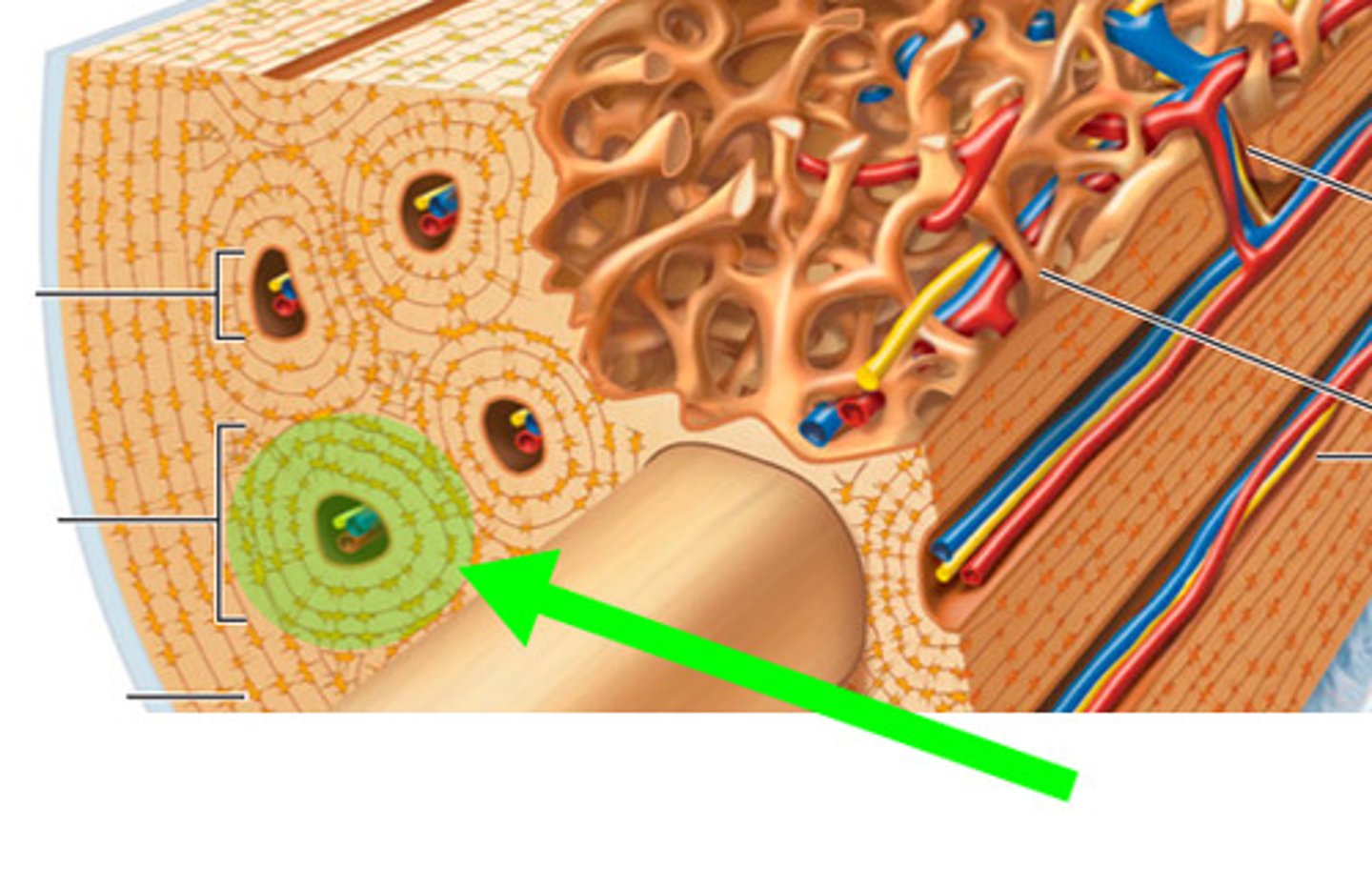
Central Canal (Haversian canal)
one of a network of tubes running through compact bone that contains blood vessels and nerves; runs lengthwise in a long bone
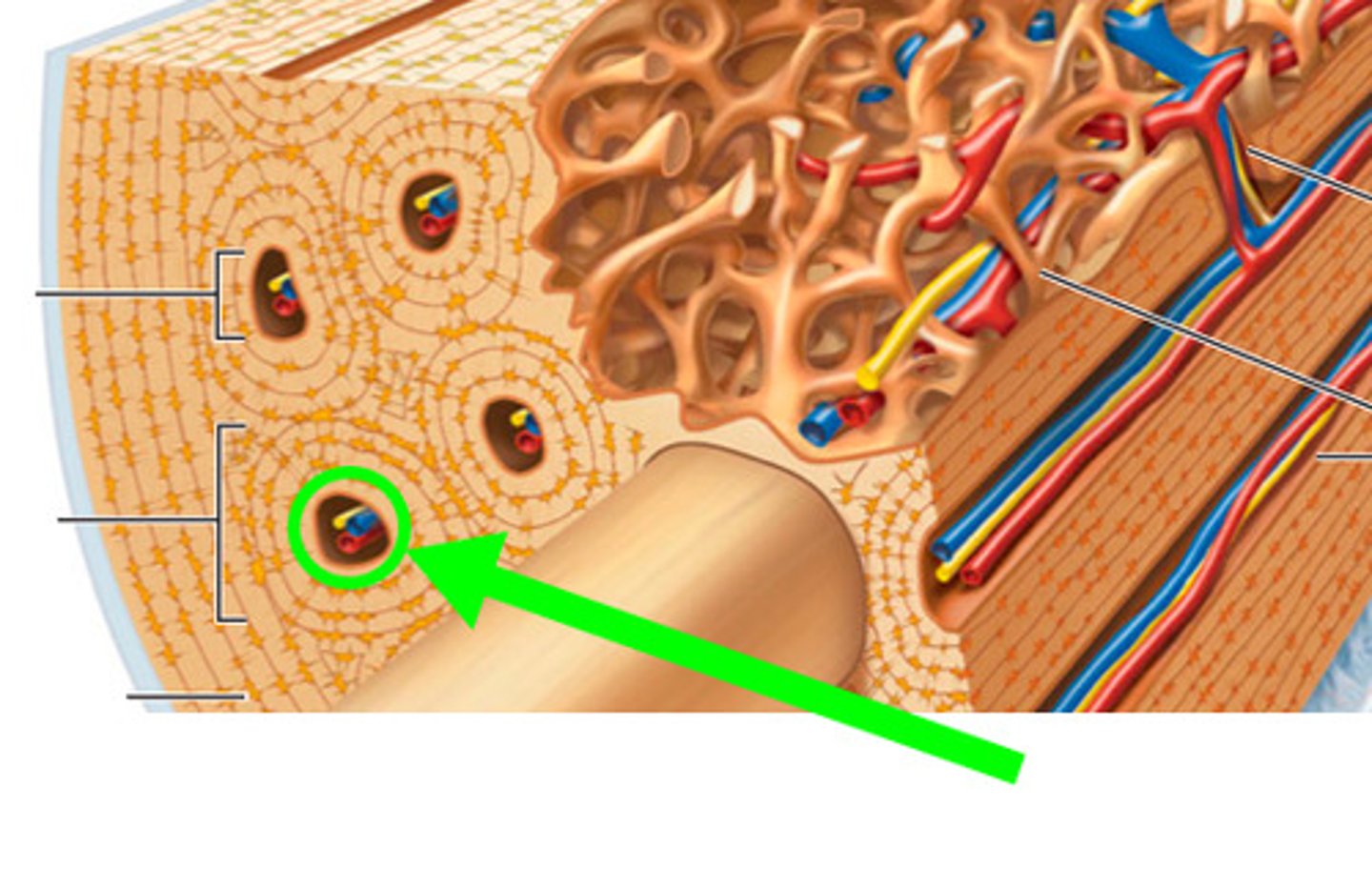
perforating canals
run perpendicular to central canals, connect osteons to each other to share nutrients; run widthwise in a long bone
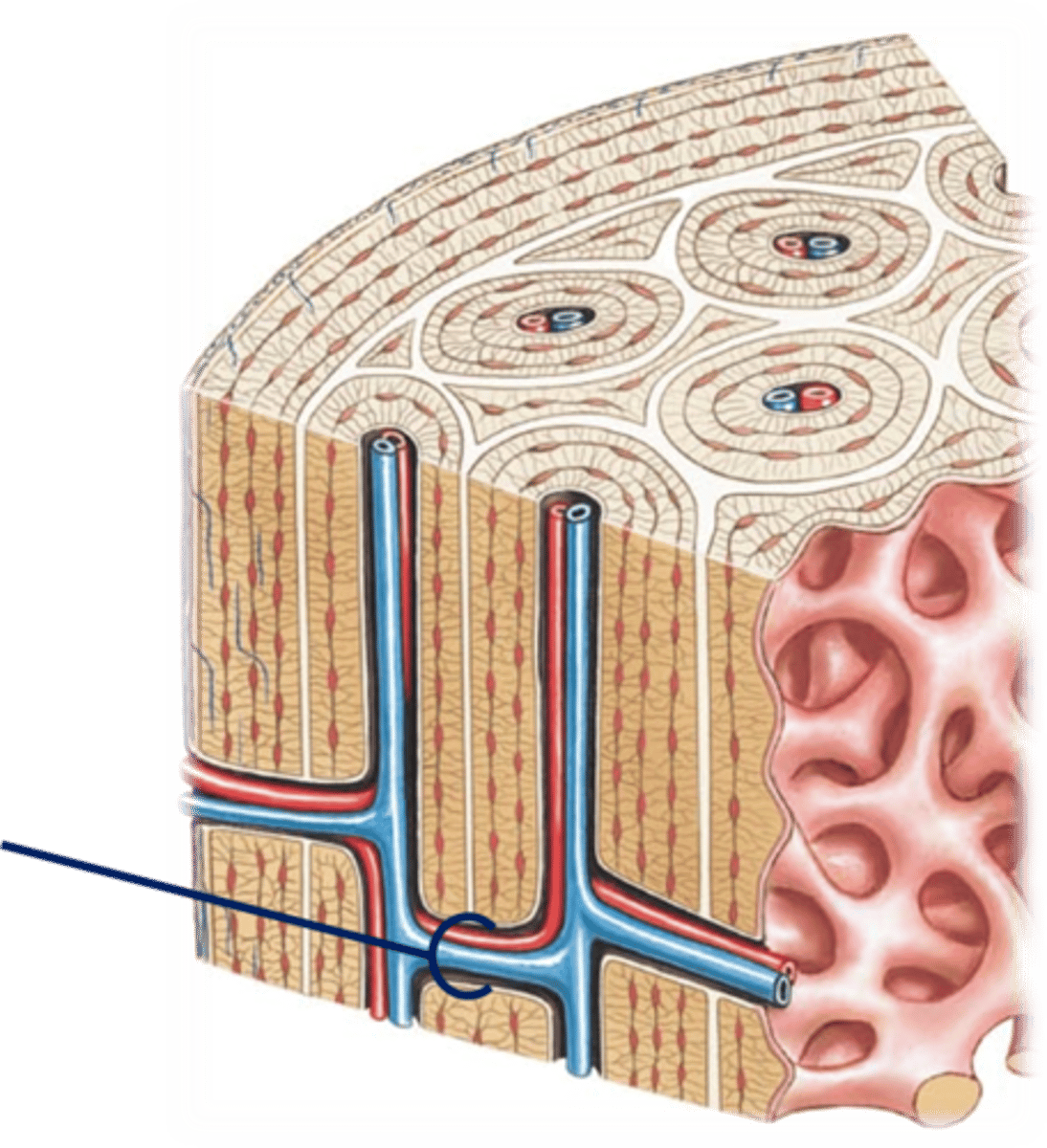
lamellae
Concentric rings made up of groups of hollow tubes of bone matrix
Sharpey's fibers
connects periosteum to the rest of the bone at circumferential lamellae
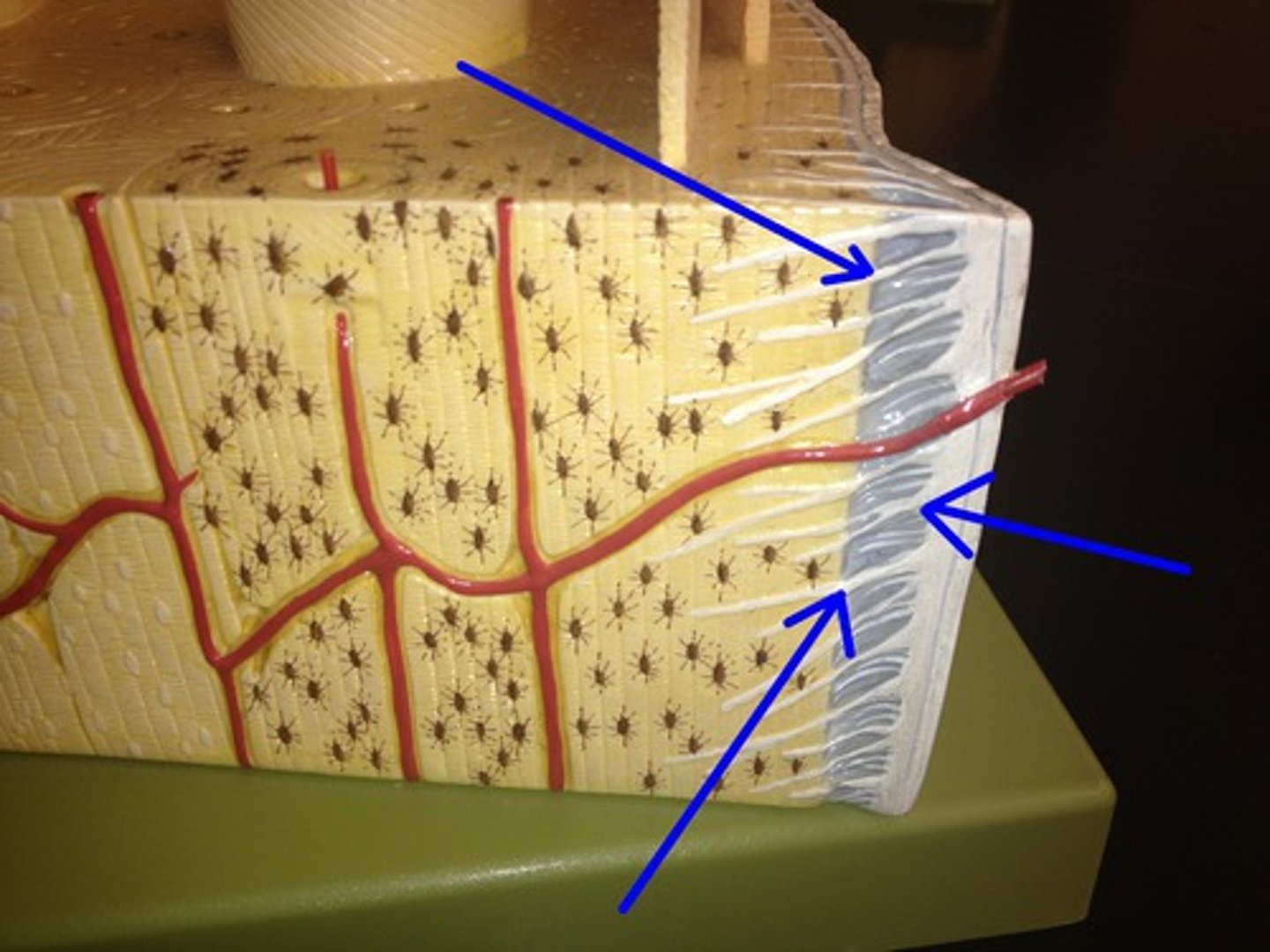
endosteum
inner membrane that lines the medullary cavity of long bones
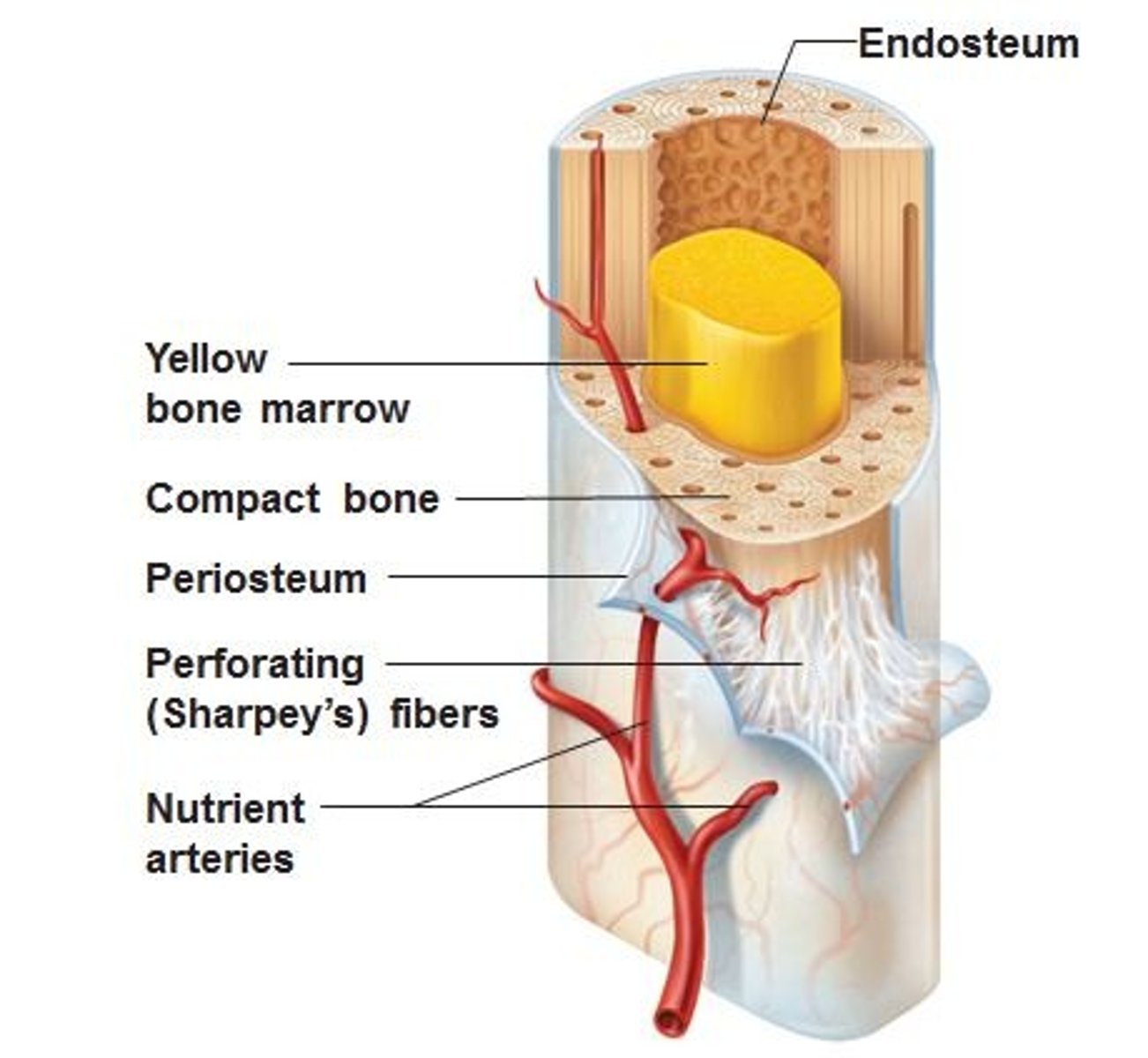
trabeculae
spiky, irregular latticework of thin bony plates in spongy bone tissue (letter C in the picture)
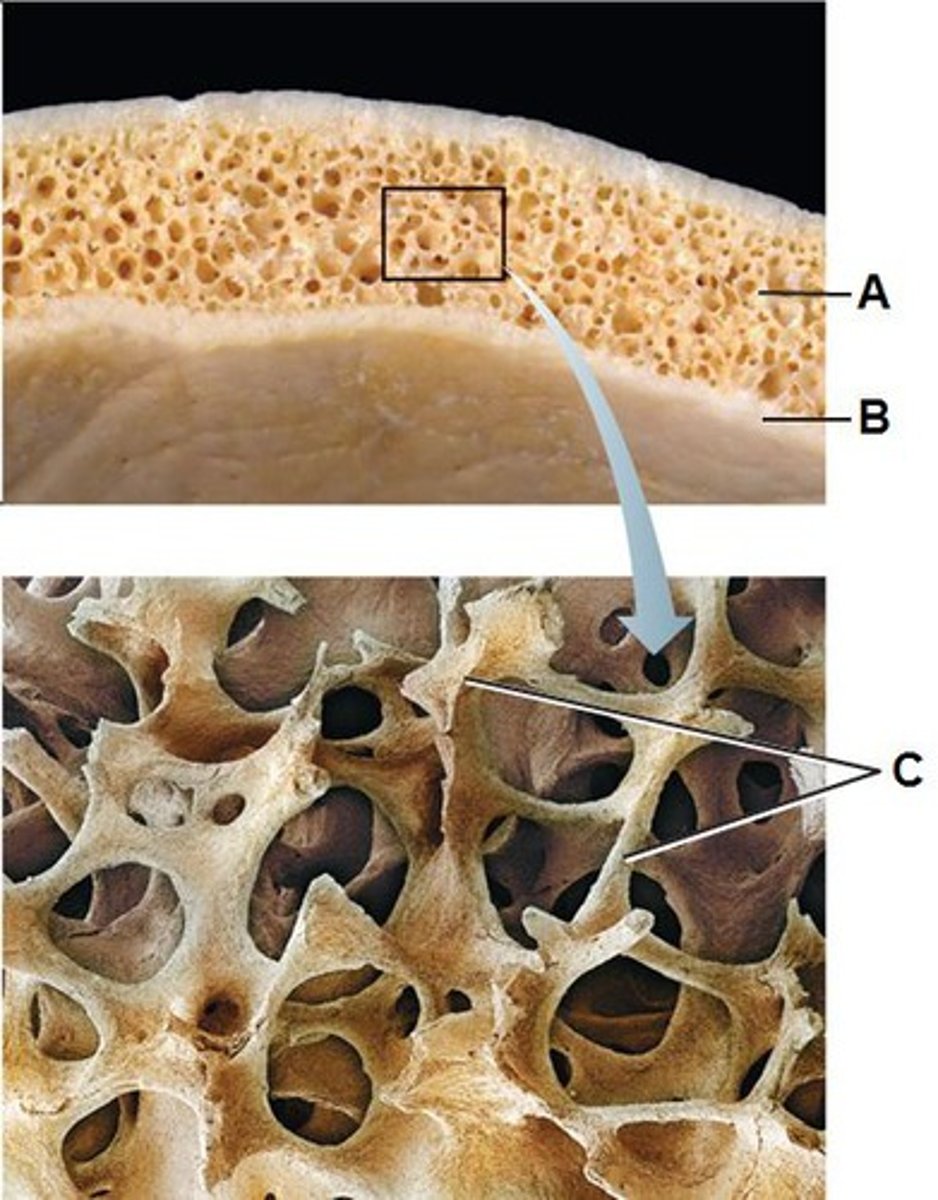
2 parts of the skeleton
axial skeleton and appendicular skeleton
Type of cartilage found at the joints
hyaline cartilage
osteogenic cells
bone stem cells
purpose of epiphyseal plate in long bone
"growth plate:; where bone growth occurs; becomes epiphyseal line when ossification is complete
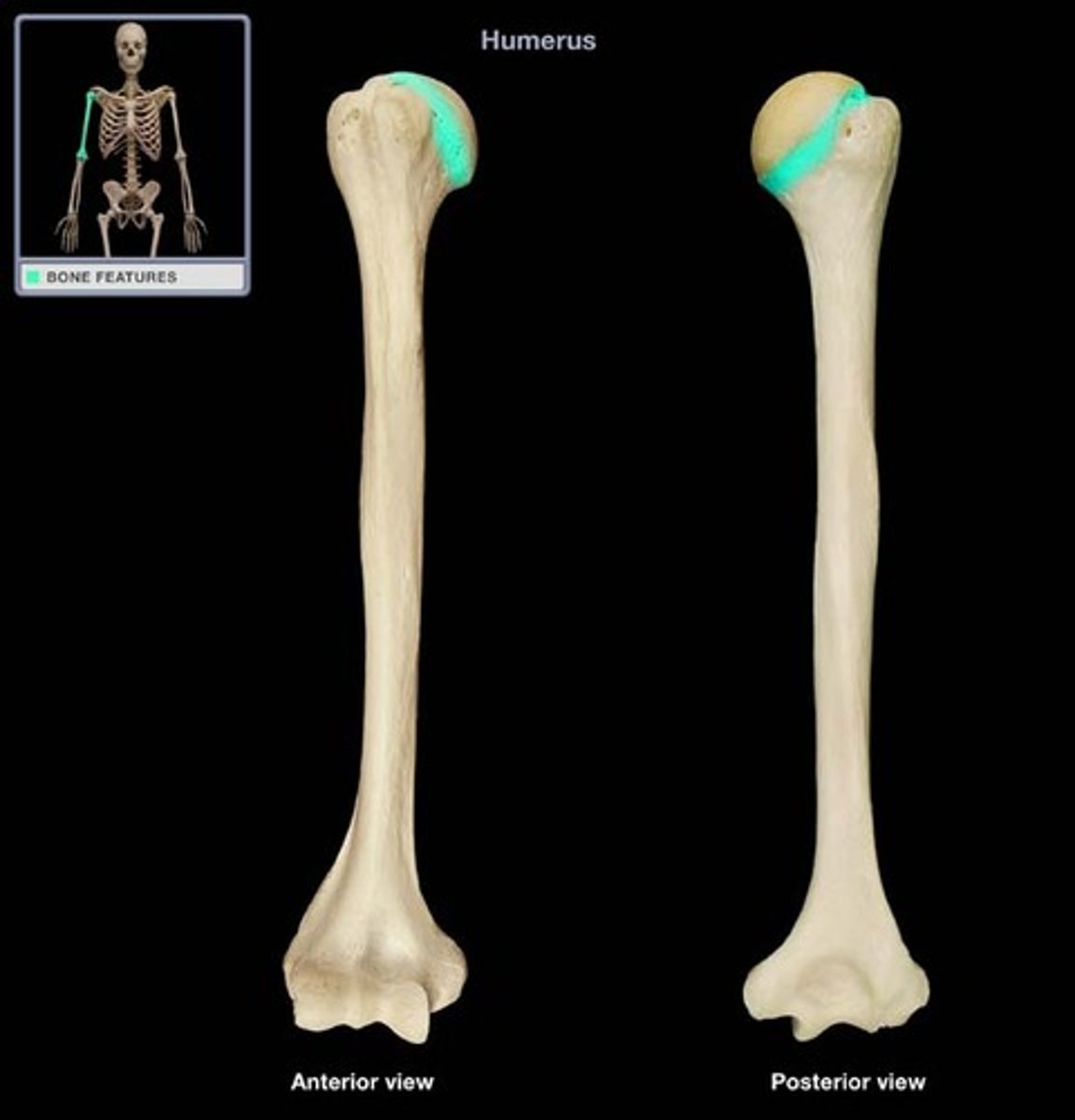
Basic types of bone in the skeletal system
long bones, short bones, flat bones, irregular bones, sesamoid bones
long bones
longer than they are wide (ex: femur, humerus)
short bones
cube shaped bones of the wrist and ankle
flat bones
thin, flat, and curved; ex. the ribs, breastbone, and skull.
irregular bones
complicated shapes; ex. bones of the vertebrae and face
long bone labeled
Make sure you know the basic parts of the long bone.
osteon labeled
Make sure you know the basic parts of the osteon.
Osteon
structural unit of compact bone
Red bone marrow
active site of hematopoiesis, where new blood cells are produced, including red blood cells, white blood cells, and platelets. Found in flat bones
Yellow bone marrow
serves as a fat storage area, It contains adipocytes (fat cells). Found in long bones