Etruscan Art and Architecture
 Call Kai
 Learn
Learn Practice Test
 Spaced Repetition
 Match
Match Flashcards
 Knowt Play
1/19

There's no tags or description
Looks like no tags are added yet.
Name | Mastery | Learn | Test | Matching | Spaced | Call with Kai |
|---|
No analytics yet
Send a link to your students to track their progress
20 Terms
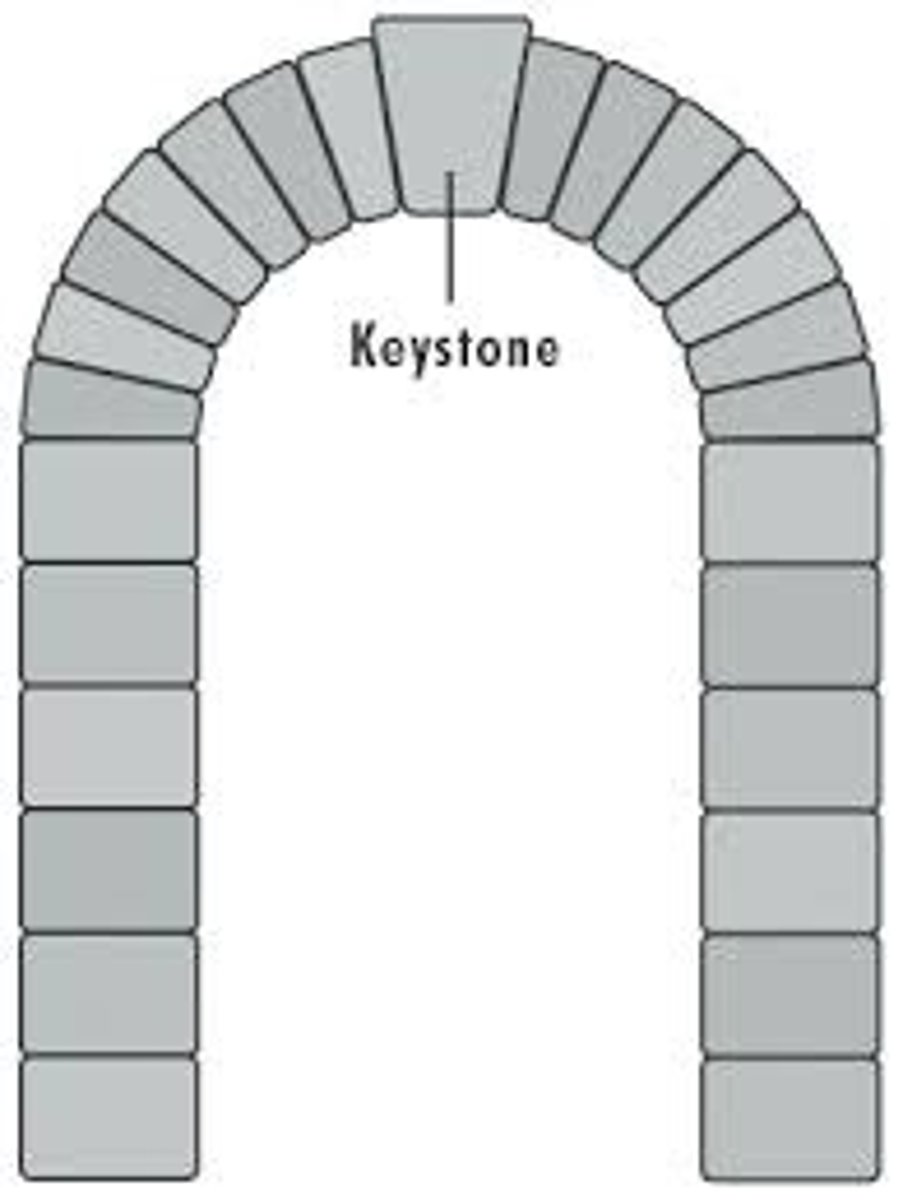
Arch
Improvement on the post and lintel system, stronger, more efficient, and more aesthetically pleasing
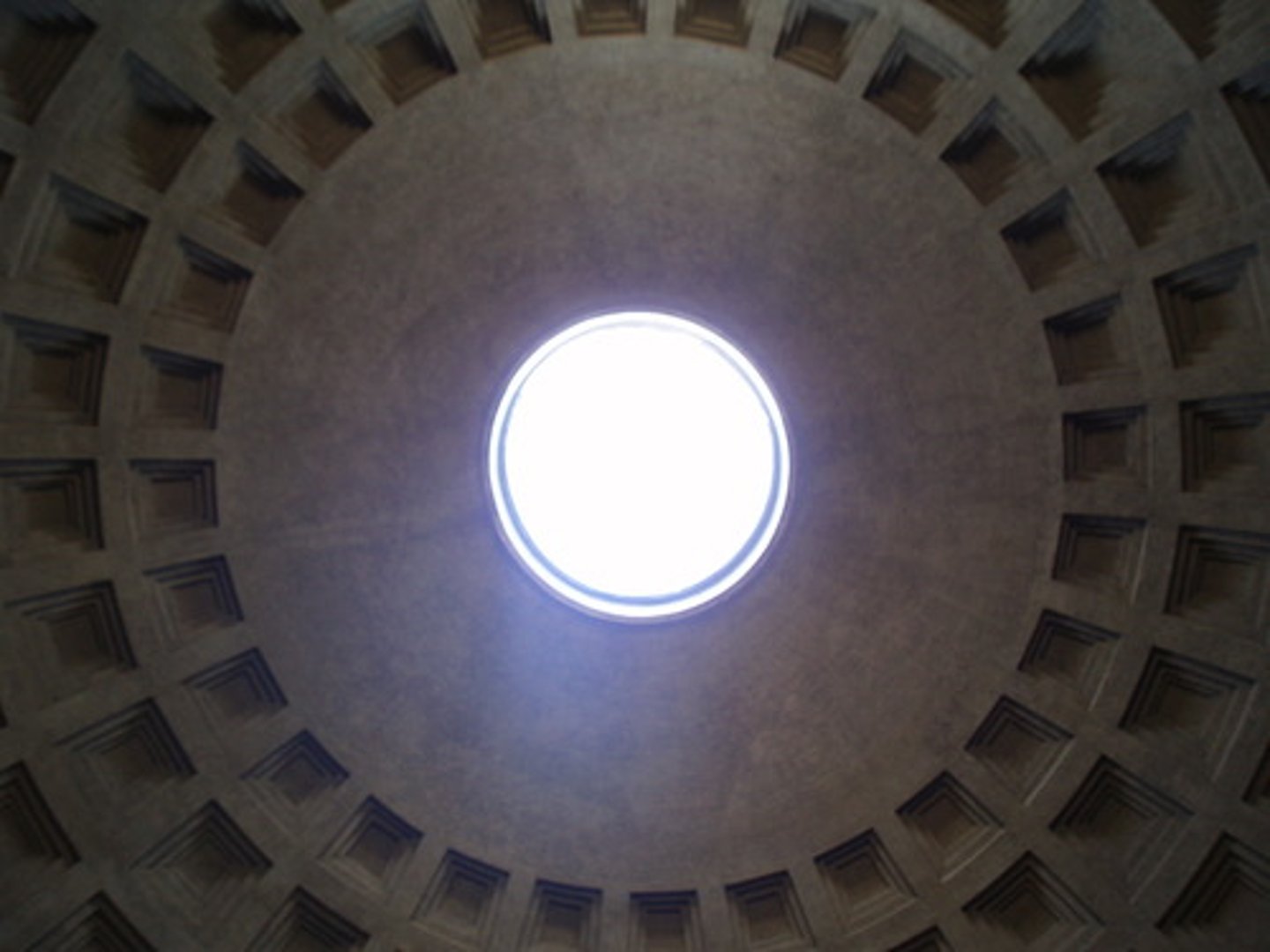
Coffer
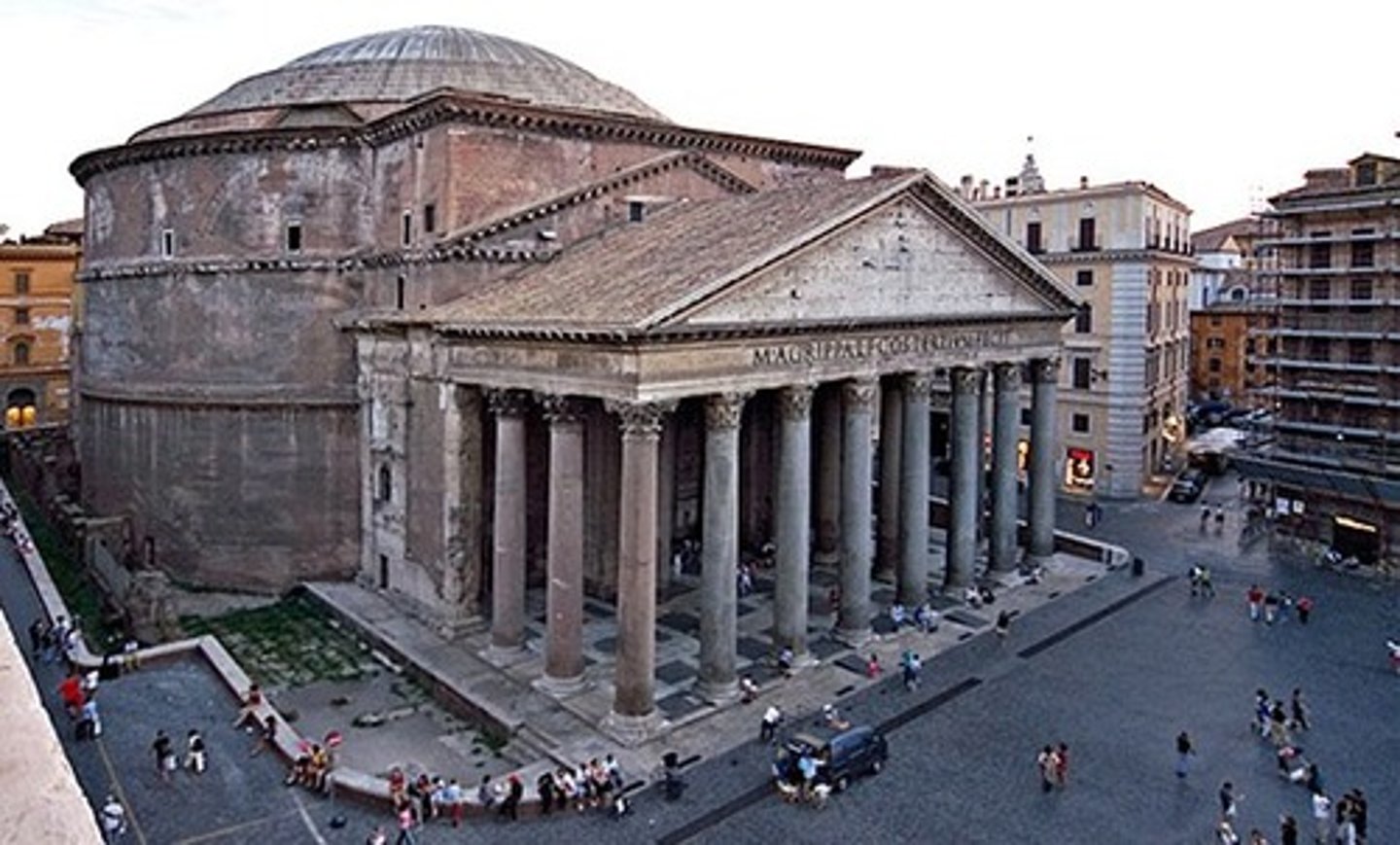
Square recesses in the dome of the Pantheon used to decoratively relieve weight.
Concrete
Accessible, quick, shapeable, lighter, durable
Necropolis
"City of the dead" a large, complex, ancient cemetery. Etruscans believed they needed to resemble cities for the living.
Oculus
a round opening at the center of a dome. Served as a light source and a connection to the gods.
Sarcophagus
Etruscan sarcophagi would contain the cremated remains of the dead
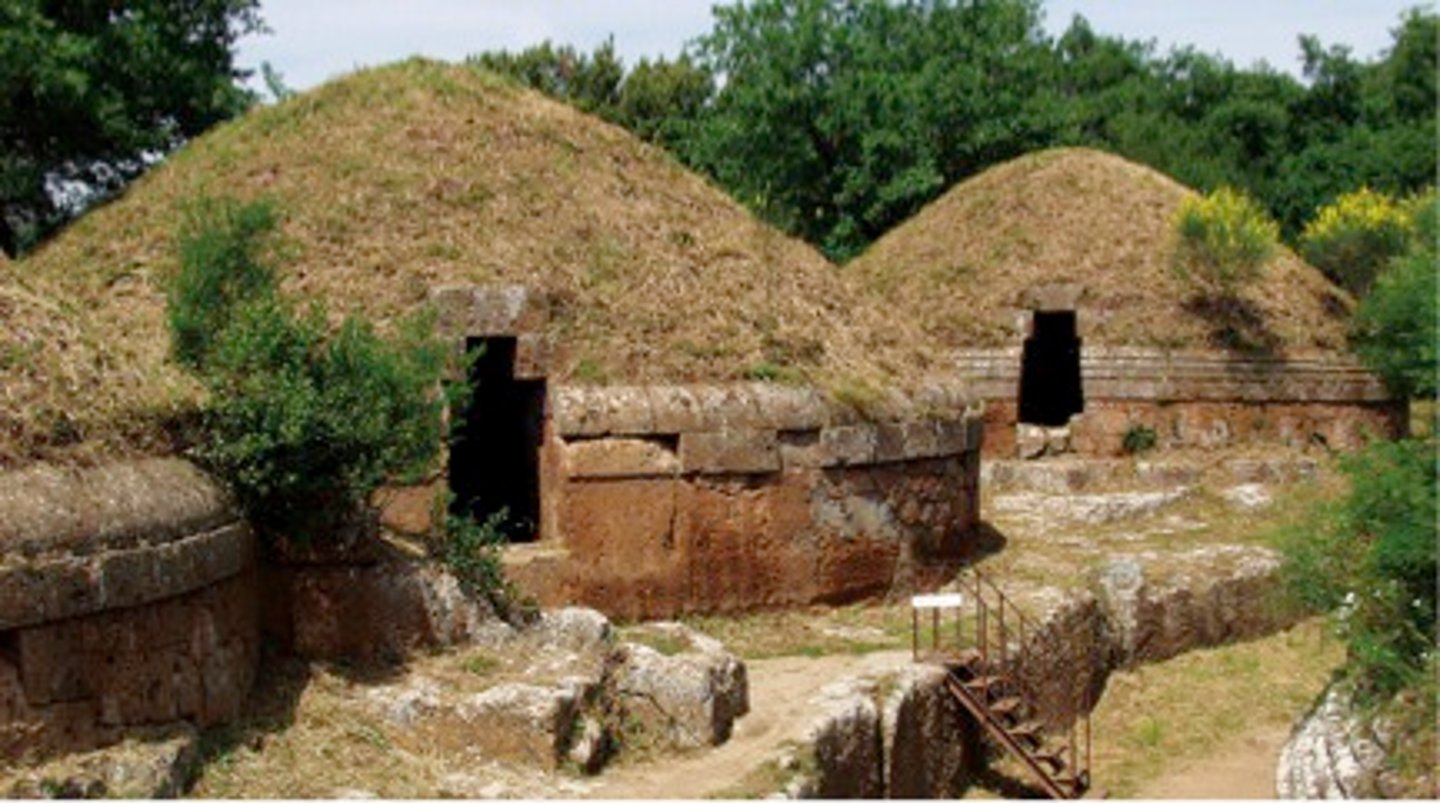
Tumulus
An artificial mound of earth and stones placed over a grave
Keystone
a central stone at the summit of an arch, locking the whole together.
Porphyry
A rare red/purple igneous rock. Very valuable in ancient Rome.
Romulus and Remus
Traditional story of how Rome began. Twins abandoned and rescued by a wolf, raised by a shepherd . Grew to build Rome. Romulus later killed Remus to name Rome after himself.
Tumulus, Banditaccia Necropolis
(6th Century BCE, Cerveteri, Italy) Small city for the dead, meant to reflect living cities.
Dice Tombs, Banditaccia Necropolis
(6th century BCE, Cerveteri, Italy) Simple, cube shaped tombs that are organized into connective structures and city blocks.
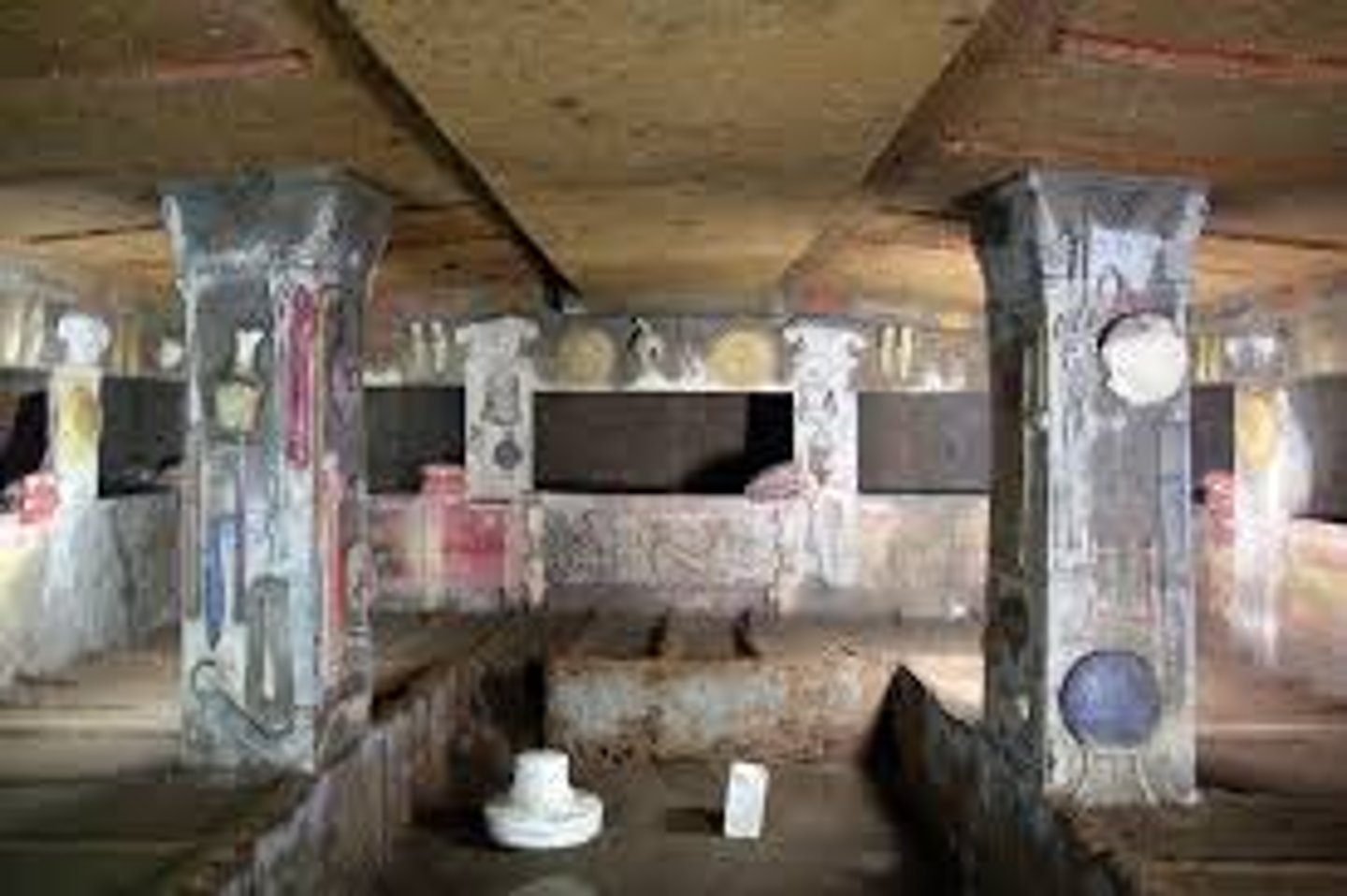
Interior of the Tomb of the Reliefs
(Late 4th century BCE, Banditaccia Necropolis, Cerveteri, Italy) Family unit, belonged to the aristocratic Mantuna family. Reflects the layout of etruscan homes. Items replicated share information on the family's history
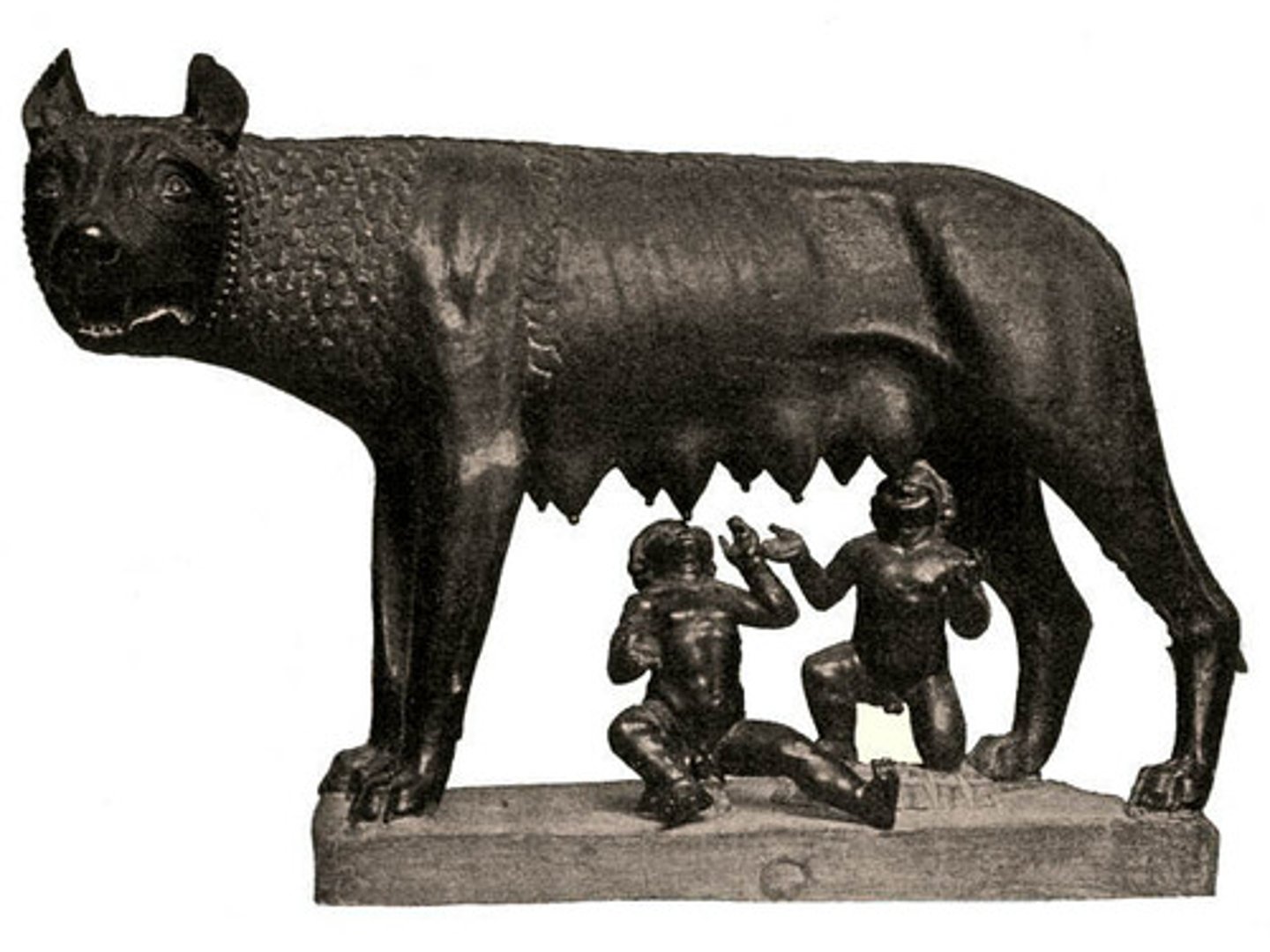
Capitoline Wolf
(Ca 500-480 BCE) Roughly life-sized bronze Satue depicting Lupe the She-Wolf nursing Romulus and Remus. The original children in the piece were lost and melted down and replaced in the renaissance. Note just how stylized the wolf is.
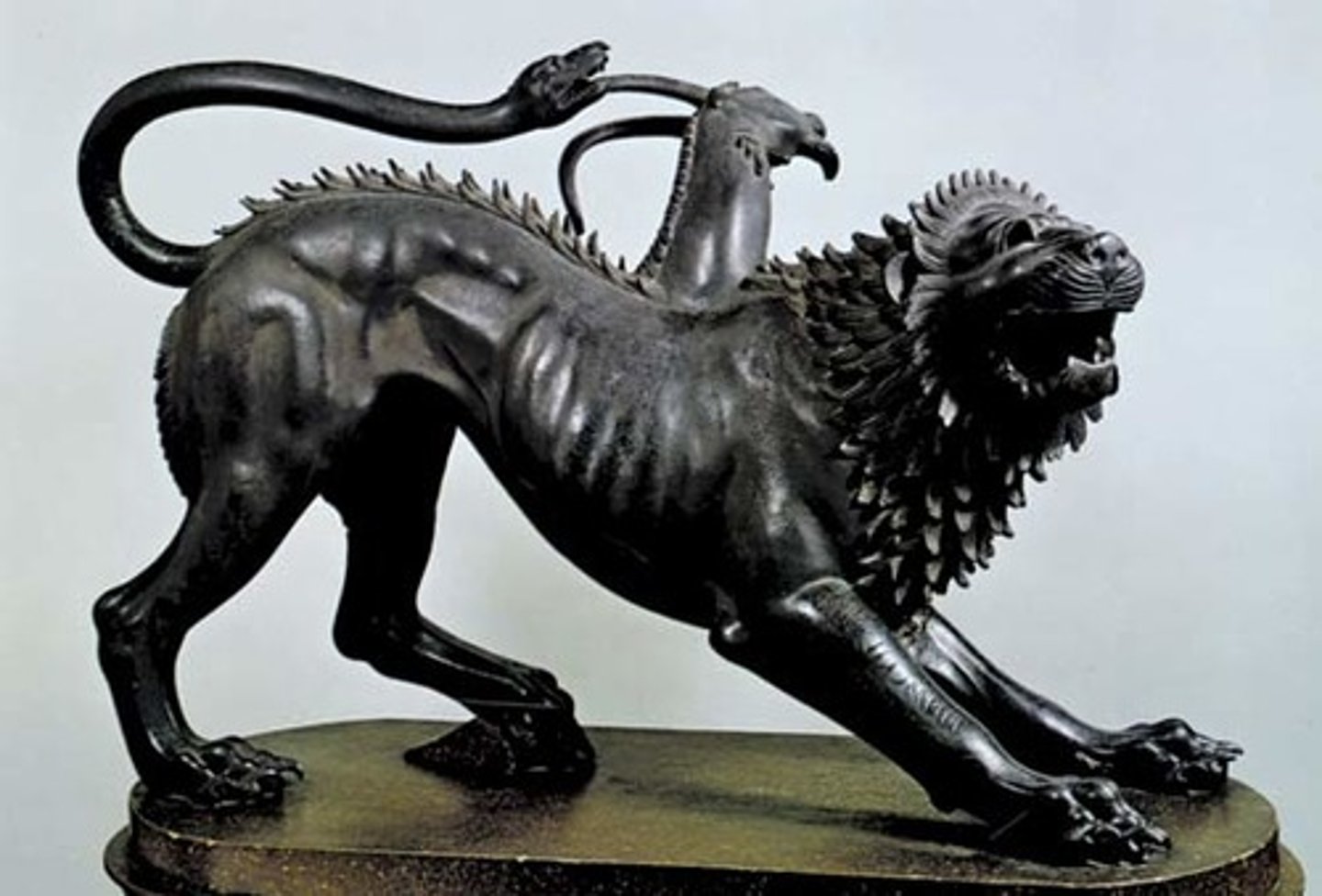
Chimera of Arezzo
(Ca 400 BCE) Another rare, surviving bronze original. Marble was often used to create copies of bronze originals. Very stylized, but more anatomically accurate than other, contemporary works. The piece shows an interest in emotion and expression.
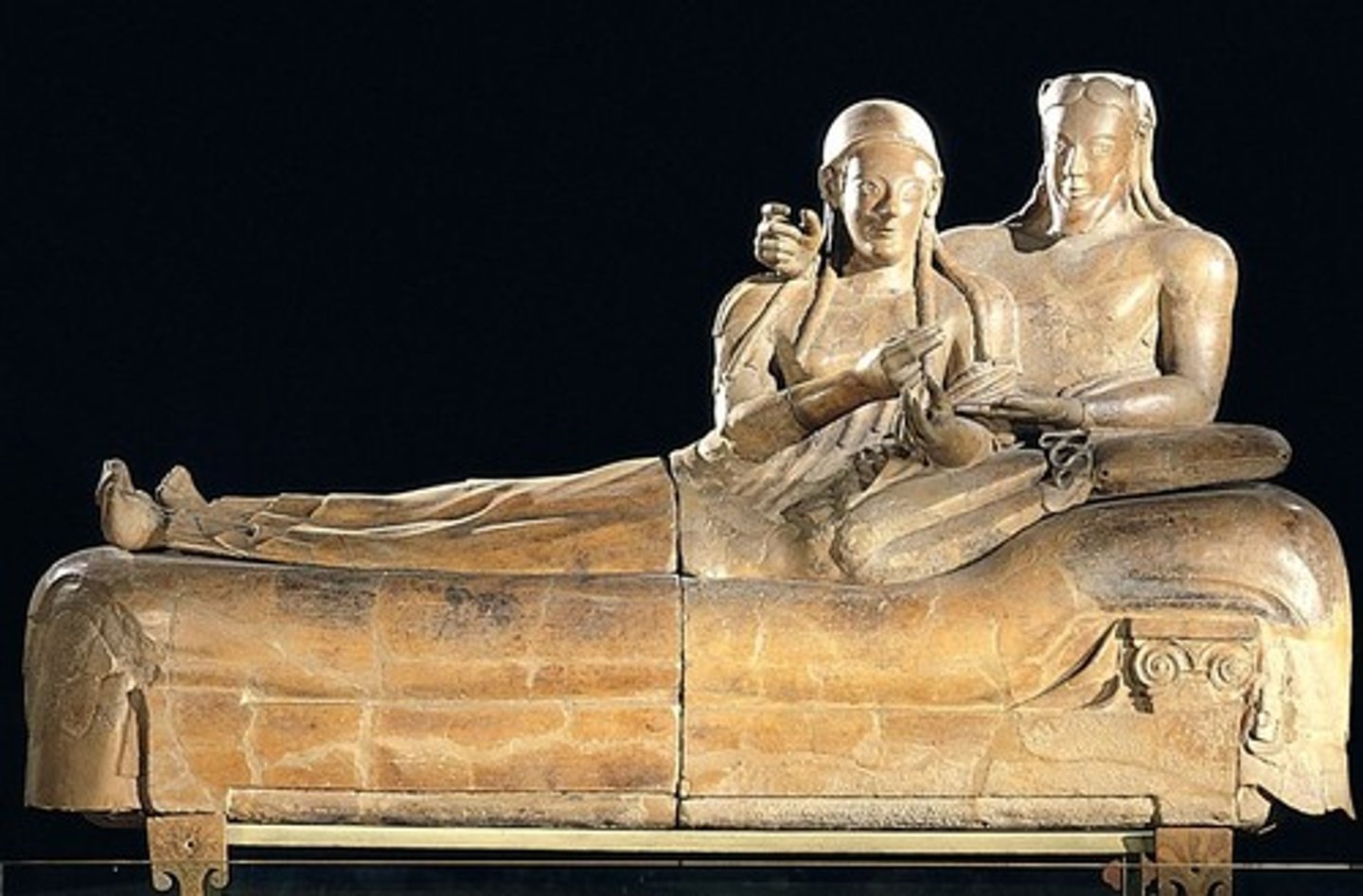
Sarcophagus with Reclining Couple
(Ca 520 BCE) Painted terracotta, heavily reconstructed. Depicts the couple as young and happy in the middle of a banquet. Note the stylization in the faces and lower body especially.
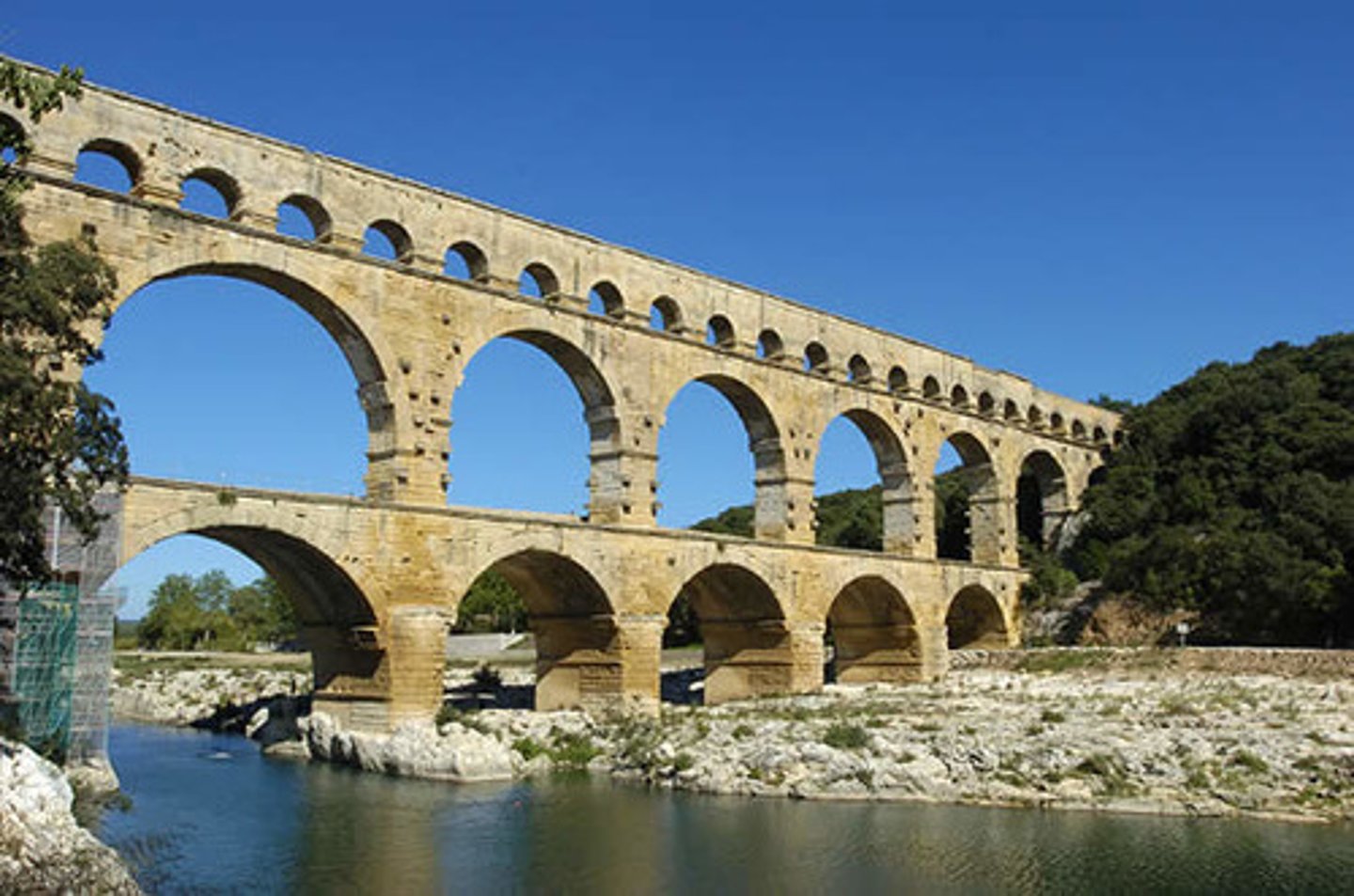
Pont du Gard
(Ca 30 BCE, Nîmes, France) Aqueduct. Transported 40 million gallons of water over 35 miles. Uses concrete at the bases, as it gets stronger in water.
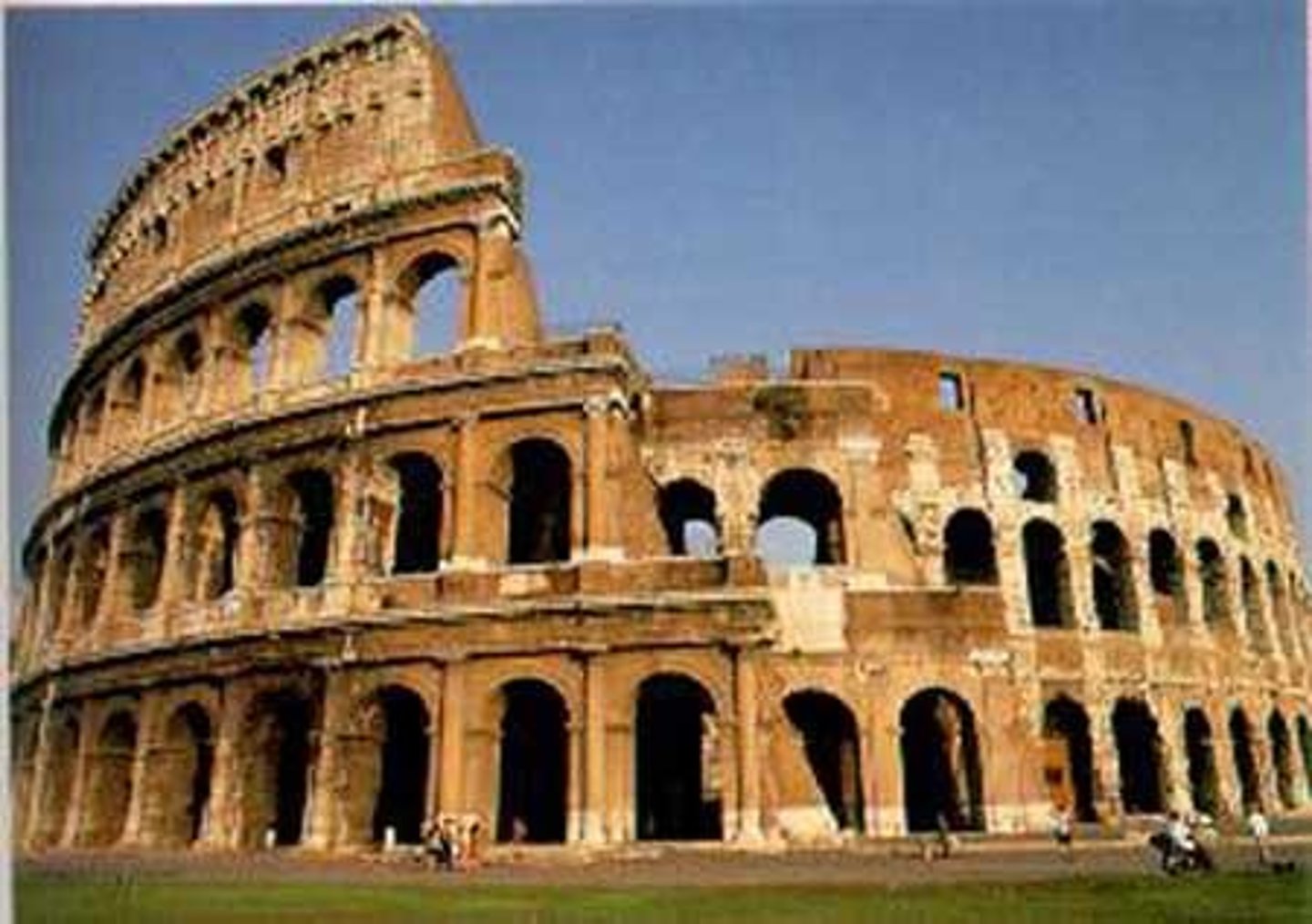
Flavian Amphitheater (the Colosseum)
(Ca 72-80 CE, Rome, Italy) Commissioned by Emperor Vespasian and completed by his son, Emperor Titus. Nicknamed after the "colossus" statue of emperor Nero originally in the center. Skeleton is entirely concrete.
Pantheon
(118-25 CE) Likely commissioned and designed by Emperor Hadrian. A Temple made for worship of all Roman Deities. The only temple to not contain a cult statue. Exterior is entirely concrete. Interior is decorated without paint, but with marble imported from throughout the empire.
Still learning (19)
You've started learning these terms. Keep it up!