Infectious Diseases of Skin and Eyes: Microbiology, Pathogenesis, and Prevention
 Call Kai
 Learn
Learn Practice Test
 Spaced Repetition
 Match
Match Flashcards
 Knowt Play
1/142

There's no tags or description
Looks like no tags are added yet.
Name | Mastery | Learn | Test | Matching | Spaced | Call with Kai |
|---|
No analytics yet
Send a link to your students to track their progress
143 Terms
What forms the boundary between the human body and the environment?
The integument, which includes skin, hair, nails, and glands.
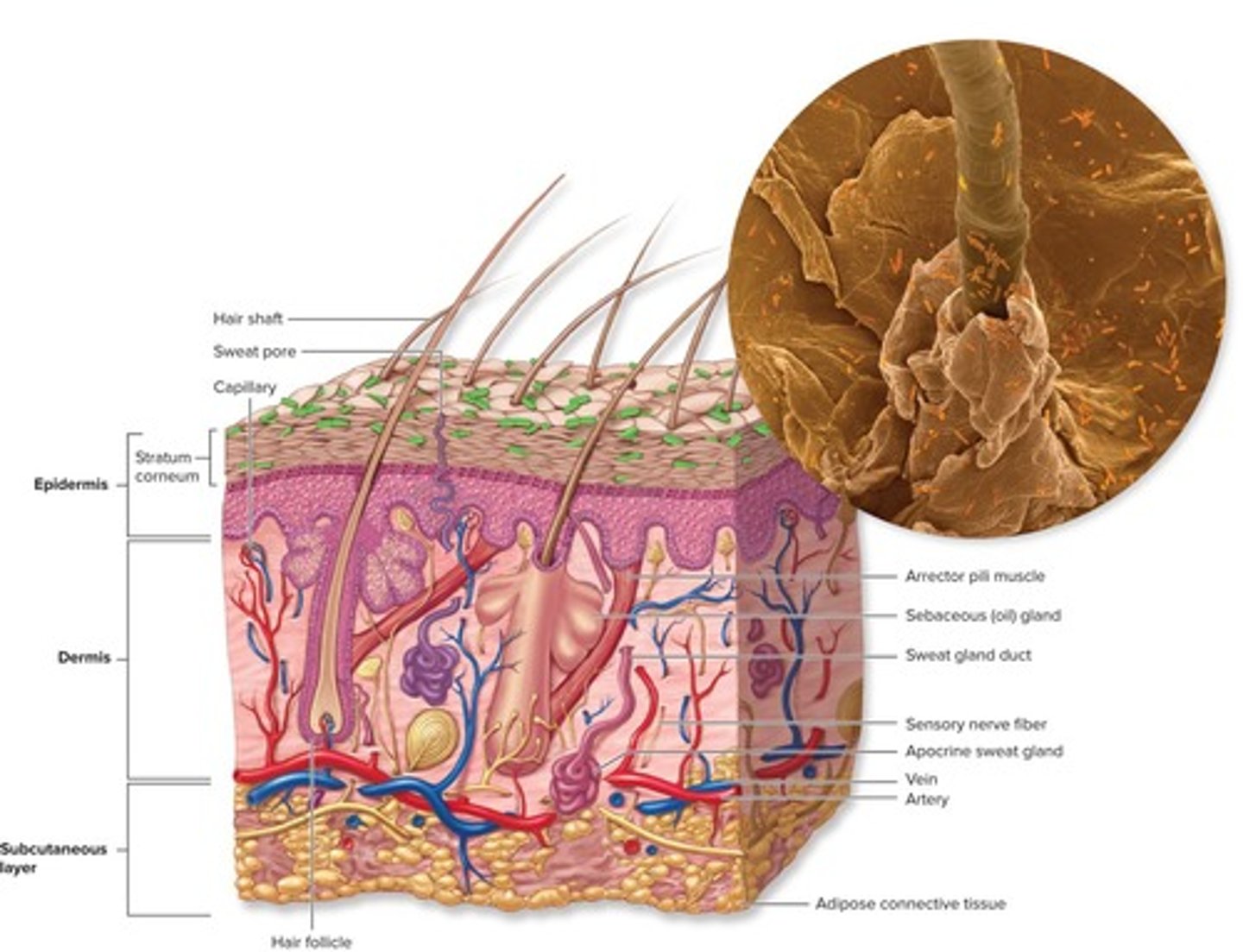
What is the total surface area of the skin?
1.5 to 2 square meters.
What is the thickness range of human skin?
From 1.5 mm at the eyelids to 4 mm on the soles of the feet.
What is the stratum corneum?
The outermost layer of the epidermis, composed of dead cells that slough off daily.
How often is the entire epidermis replaced?
Every 25 to 45 days.
What role does keratin play in the skin?
It gives cells the ability to withstand damage, abrasion, and water penetration.
What is the dermis composed of?
Connective tissue, including fibroblast cells, collagen, macrophages, and mast cells.
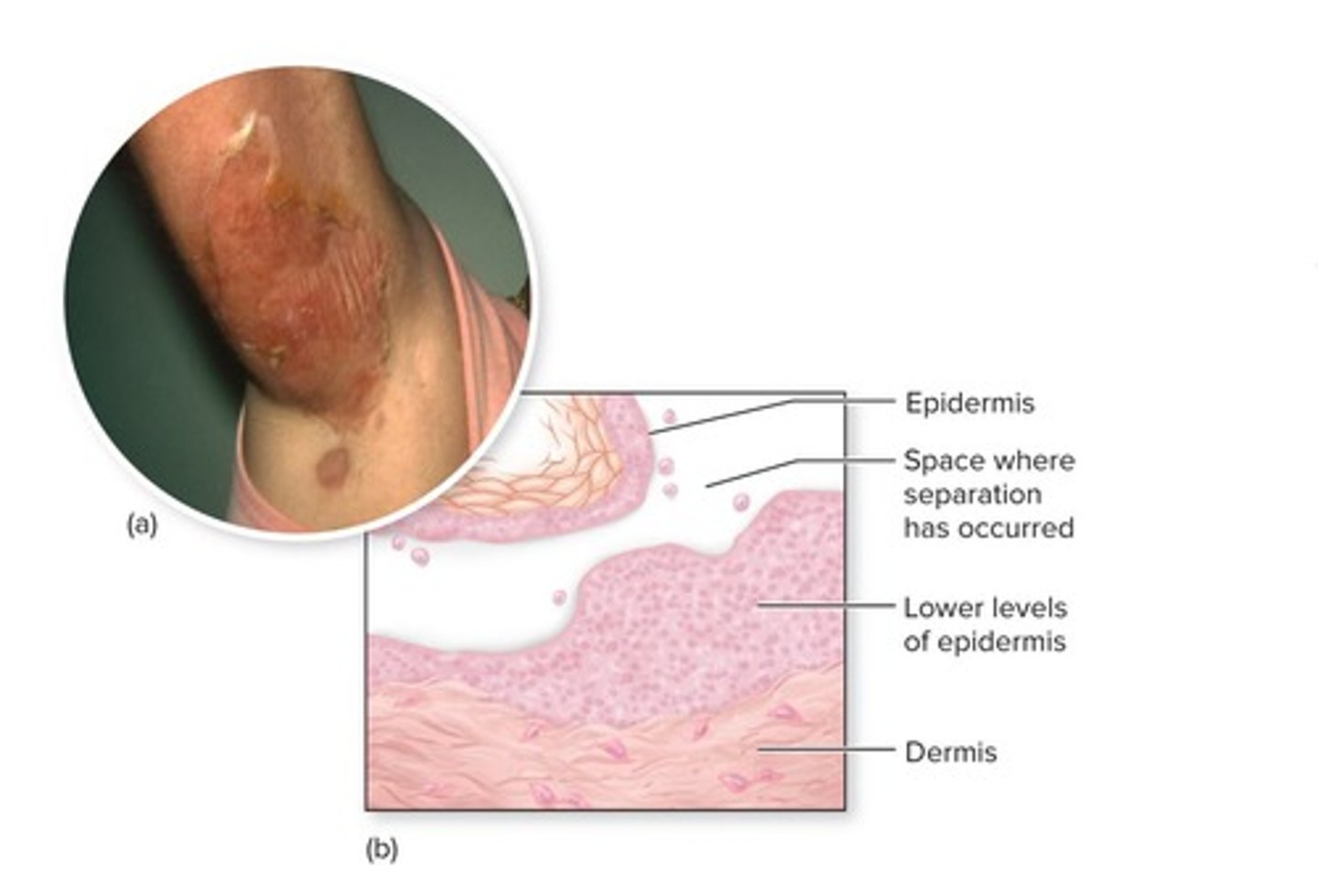
What causes blister formation in the skin?
Separation of the epidermis and dermis due to friction, trauma, or burns.
What are sebaceous glands responsible for?
Secreting sebum, which helps to keep the skin moist and inhibits microbial growth.
What is the function of antimicrobial peptides in the skin?
They disrupt bacterial membranes and help maintain low microbial counts on the skin.
What is the role of sebum in skin defense?
Its low pH makes the skin inhospitable to microorganisms.
What is lysozyme and where is it found?
An enzyme that breaks down peptidoglycan in bacterial cell walls, found in sweat, tears, and saliva.
What is the normal microbiota of the skin capable of?
Living in dry and salty conditions.
Where do normal biota grow in dense populations on the body?
In moist areas and skin folds such as the underarm and groin.
What is MRSA?
Methicillin-resistant Staphylococcus aureus, a common cause of skin lesions resistant to multiple antibiotics.
What are the signs and symptoms of a MRSA infection?
Raised, red, tender lesions that may contain pus and feel hot to the touch.
What is a common transmission route for MRSA?
Contaminated surfaces such as gym equipment and electronic devices.
What diagnostic tests are used for MRSA?
PCR, blood agar culture, and coagulase test.
What is the recommended treatment for MRSA infections?
Incision and drainage of lesions, along with antimicrobial treatment using multiple antibiotics.
What are maculopapular rash diseases?
Skin eruptions caused by various microbes, characterized by flat to slightly raised colored bumps.
What is the significance of measles in public health?
It causes about 367 child deaths per day, despite the availability of an effective vaccine since 1963.
What was the impact of the measles epidemic in 2019?
A sharp increase in cases in the U.S. and a massive epidemic in Samoa.
What are the characteristics of Staphylococcus aureus?
Gram-positive coccus that grows in clusters, can be highly virulent, and is part of normal skin biota in 1/3 of the population.
What is the role of good hygiene in preventing MRSA?
It is crucial for preventing the spread of MRSA infections.
What are the virulence factors produced by MRSA?
Coagulase, hyaluronidase, staphylokinase, DNase, and lipase.
What is the function of sweat in skin defense?
It has a low pH and high salt concentration that inhibit microorganisms.
What are the common signs and symptoms of measles?
Sore throat, dry cough, headache, conjunctivitis, lymphadenitis, fever, Koplik's spots, and a red maculopapular rash.
What are some complications associated with measles?
Laryngitis, bronchopneumonia, secondary bacterial infections, pneumonia, and encephalitis.
What is subacute sclerosing panencephalitis?
A progressive neurological degeneration that occurs in 1 in less than 1,000 children who get measles before vaccination, leading to profound impairment and death.
How does the measles virus spread in the body?
It implants on respiratory mucosa, infects tracheal and bronchial cells, travels to the lymphatic system, enters the bloodstream, and causes syncytia formation.
What is the prevention method for measles?
The MMR vaccine, which contains live, attenuated measles virus, is recommended for children aged 12 to 15 months.
What is rubella also known as?
German measles.
What are the characteristics of postnatal rubella?
It presents with a rash of pink macules and papules that appears on the face and progresses down the trunk, resolving in about 3 days.
What are the potential effects of congenital rubella on a fetus?
Can cause miscarriage or defects such as deafness, cardiac abnormalities, and mental retardation.
What is the causative agent of rubella?
Rubivirus from the family Togaviridae.
How is rubella transmitted?
Through contact with respiratory secretions and occasionally urine.
What is Fifth Disease also known as?
Erythema infectiosum.
What are the signs and symptoms of Fifth Disease?
A 'slapped cheek' appearance rash that spreads to the body, most prominent on arms, legs, and trunk.
What is the causative agent of Fifth Disease?
Parvovirus B19.
What are the symptoms of Roseola?
High fever lasting up to 3 days, followed by a maculopapular rash.
What is the causative agent of Roseola?
Human herpesvirus 6 (HHV-6).
What is impetigo?
A superficial bacterial infection that causes the skin to flake or peel, often caused by Staphylococcus aureus or Streptococcus pyogenes.
What are the common treatments for measles?
Reducing fever, suppressing cough, replacing lost fluids, and providing vitamin A supplements.
What are the complications of measles that can lead to permanent damage?
Encephalitis can result in permanent brain damage or epilepsy.
What is the typical age for MMR vaccination?
Recommended for healthy children aged 12 to 15 months, with a booster before school.
What is the incubation period for rubella?
The virus is contagious during the prodromal phase and up to a week after the rash appears.
What are common sequelae of congenital rubella?
Deafness, cardiac defects, and other severe developmental issues.
What is the typical duration of the rash in Fifth Disease?
The rash may reoccur for several weeks and is most prominent on the body.
What is the treatment for postnatal rubella?
Usually benign and requires only symptomatic treatment.
What is the significance of the MMR vaccine?
It provides protection against measles, mumps, and rubella for up to 20 years.
What is the typical age of infection for roseola?
It is common in young children and babies.
What is the main characteristic of the rash associated with roseola?
It appears after the fever subsides, starting on the chest and trunk.
What is the transmission mode for Fifth Disease?
It is very contagious, especially among children.
What are the common signs and symptoms of impetigo?
Peeling skin, crusty and flaky scabs, or honey-colored crusts, primarily around the mouth, face, and extremities.
What bacterium causes impetigo characterized by exfoliative toxins?
Staphylococcus aureus.
What is the Gram stain result for Streptococcus pyogenes?
Gram-positive coccus, beta-hemolytic on blood agar.
What serious conditions can Streptococcus pyogenes cause?
Streptococcal pharyngitis, scarlet fever, pneumonia, puerperal fever, necrotizing fasciitis, serious bloodstream infections, and poststreptococcal conditions.
What is a potential complication of impetigo caused by S. pyogenes?
Acute poststreptococcal glomerulonephritis.
Which strain is more often the cause of impetigo in newborns?
Streptococcus pyogenes.
What are the signs and symptoms of cellulitis?
Pain, tenderness, swelling, warmth, fever, and swelling of lymph nodes in the area.
What causes lymphangitis in cellulitis?
Microbes and inflammatory products carried by the lymphatic system, visible as red lines leading away from the area.
What are the common causative agents of cellulitis in healthy individuals?
Streptococcus pyogenes and occasionally Staphylococcus aureus.
What is the recommended treatment for mild cellulitis?
Oral antibiotics effective against S. aureus and S. pyogenes.
What is Staphylococcal Scalded Skin Syndrome (SSSS)?
A dermolytic condition caused by S. aureus, primarily affecting newborns and babies.
What are the initial signs of SSSS in neonates?
Bullous lesions around the umbilical area or in the diaper or axilla area.
How is SSSS transmitted?
Caregivers can carry the bacterium from one baby to another, and adults can directly transfer S. aureus.
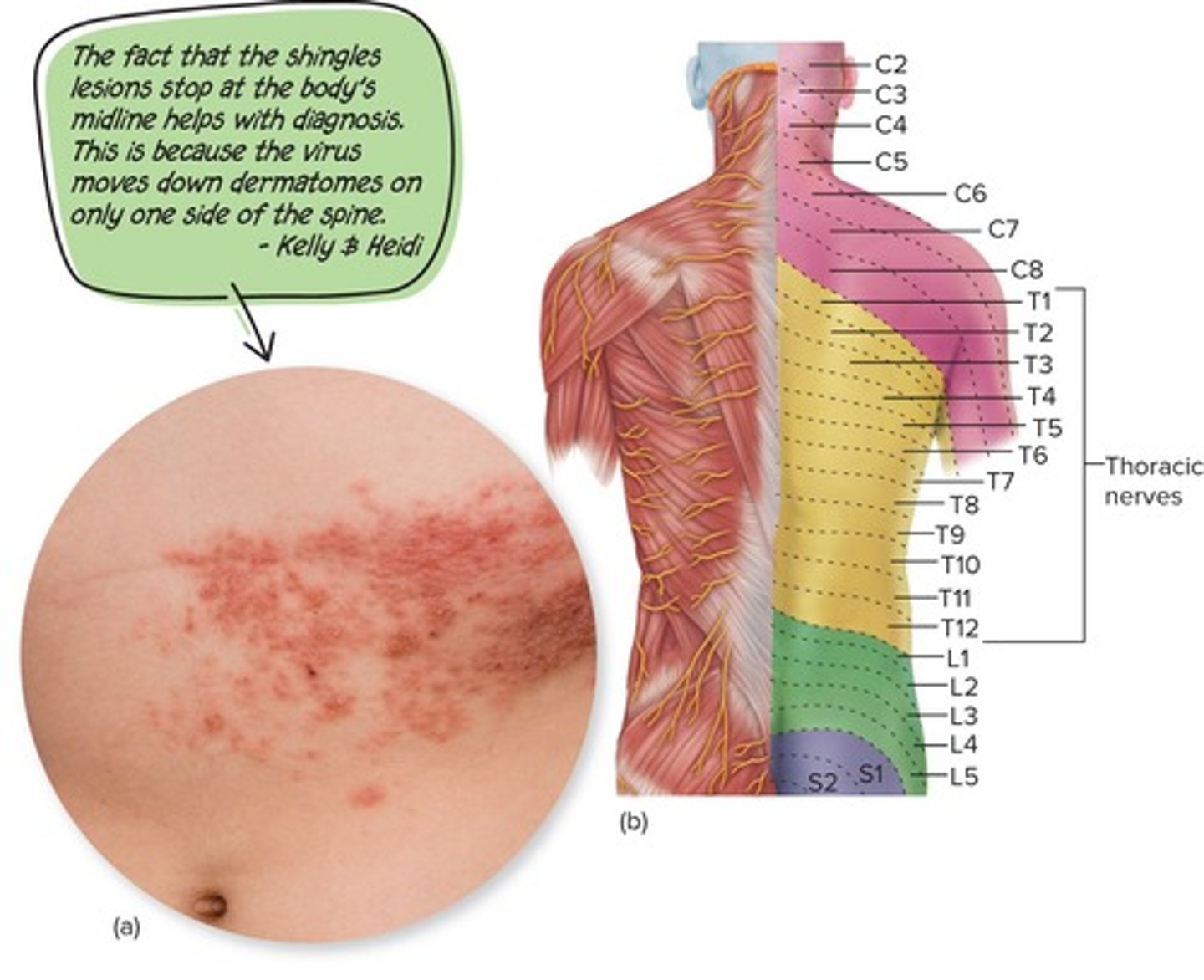
What are the common signs and symptoms of chickenpox?
Fever and an abundant rash that begins on the scalp, face, and trunk, progressing to itchy vesicles.
What is the incubation period for chickenpox?
10 to 20 days.
What is the characteristic distribution of chickenpox lesions?
Centripetal, with more lesions in the center of the body than in the extremities.
What is shingles also known as?
Herpes Zoster.
What triggers the reactivation of the varicella-zoster virus in shingles?
Psychological stress, immunosuppressive therapy, surgery, or developing malignancy.
What is postherpetic neuralgia?
Inflammation of the ganglia and nerve pathways causing pain and tenderness that can last for several months.
What is the causative agent of chickenpox and shingles?
Human herpesvirus 3 (HHV-3), also known as varicella.
How does HHV-3 enter the body?
It enters through the respiratory tract, attaches to respiratory mucosa, and invades the bloodstream.
What is a key virulence factor of HHV-3?
Its ability to remain latent in nerve ganglia.
How is chickenpox transmitted?
Through respiratory droplets and fluid from active lesions.
When are infected individuals contagious for chickenpox?
A day or two prior to the development of the rash.
What vaccine was licensed to prevent chickenpox?
Live attenuated vaccine licensed in 1995.
What is Zostavax?
A vaccine approved by the FDA in 2006 to prevent shingles.
What is the treatment for uncomplicated varicella?
It is self-limiting and requires no therapy aside from alleviation of discomfort.
What should not be administered to patients with chickenpox?
Aspirin, as it may lead to Reye's syndrome.
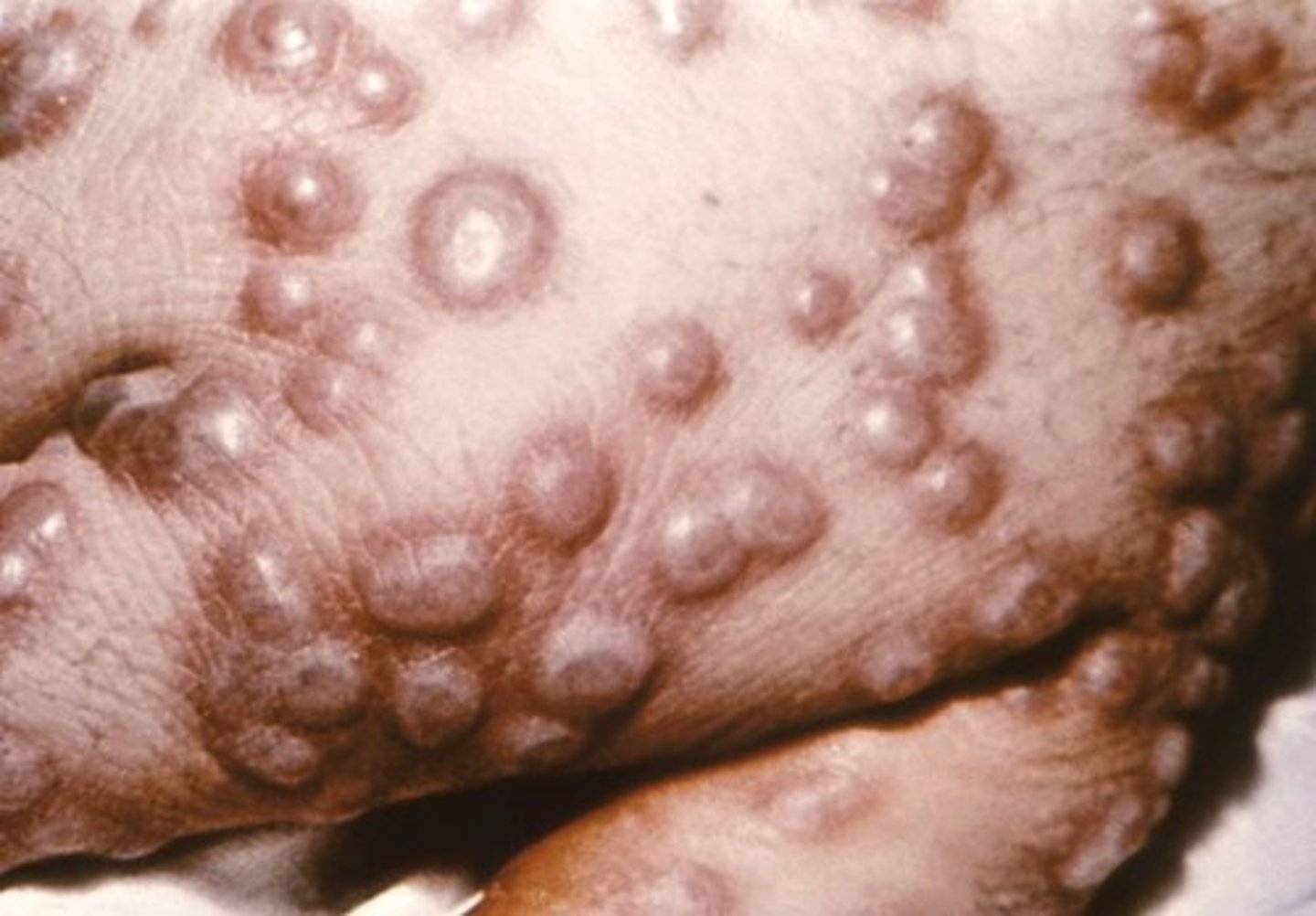
What are the signs and symptoms of smallpox?
Fever, malaise, and a rash that begins in the pharynx and spreads to the face and extremities.
What are the stages of the smallpox rash?
Macular, papular, vesicular, pustular, and crusting over.
What is the highly virulent form of smallpox called?
Variola major.
What is the causative agent of smallpox?
Variola virus, an enveloped DNA virus.
How is smallpox primarily transmitted?
Through respiratory droplets and fomites like contaminated bedding and clothing.
What was the outcome of the global vaccination effort against smallpox?
The disease was eradicated, with the last case reported in Somalia in 1977.
What are the treatment options for smallpox?
Tecovirimat and cidofovir have been approved by the FDA.
What is cutaneous leishmaniasis?
A localized infection of the capillaries of the skin.
What are the causative agents of cutaneous and mucocutaneous leishmaniasis?
Cutaneous leishmaniasis is caused by L. tropica, and mucocutaneous leishmaniasis is caused by L. brasiliensis.
How is leishmaniasis transmitted?
Through zoonosis transmitted by female sand flies.
What is the causative agent of cutaneous anthrax?
Bacillus anthracis.
What is the characteristic symptom of cutaneous anthrax?
A papule that becomes necrotic and later ruptures to form a painless, black eschar.
What is the treatment for cutaneous anthrax?
Culture on blood agar, serology, and PCR; untreated cases have a 20% fatality rate.
What are dermatophytes?
A group of fungi that cause infections confined to nonliving epidermal tissues.
What is the treatment for ringworm?
Topical antifungal ointment applied for several weeks.
What is tinea versicolor caused by?
The yeast Malassezia.
What type of infections do superficial mycoses cause?
Innocuous infections with cosmetic rather than disease-causing effects.
What are the causative agents of ringworm?
Trichophyton, Microsporum, and Epidermophyton
How do dermatophytes affect the skin?
They digest keratin but do not invade deeper epidermal layers.