L4. Pin Retained Restorations
 Call Kai
 Learn
Learn Practice Test
 Spaced Repetition
 Match
Match Flashcards
 Knowt Play
1/59

There's no tags or description
Looks like no tags are added yet.
Name | Mastery | Learn | Test | Matching | Spaced | Call with Kai |
|---|
No analytics yet
Send a link to your students to track their progress
60 Terms
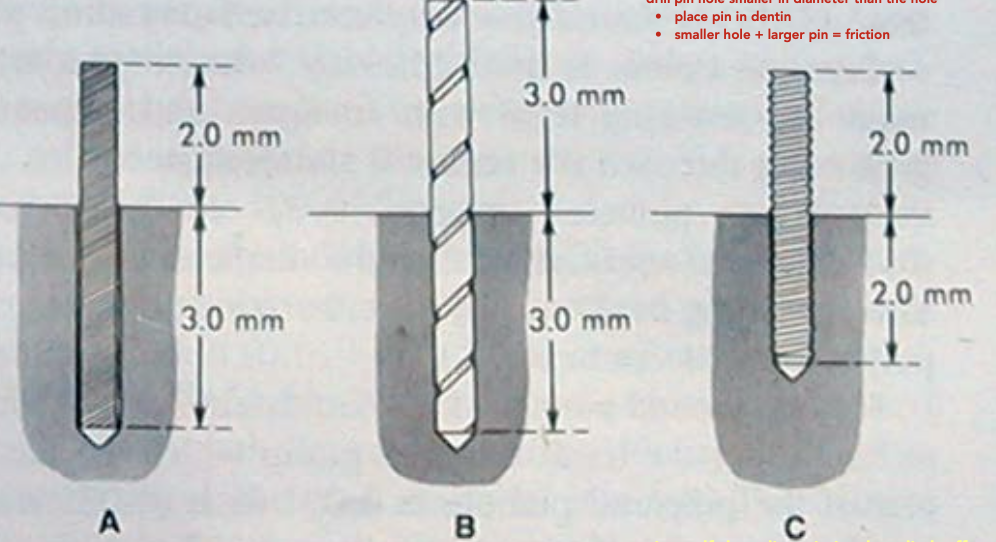
what are the (3) types of pins used?
cemented
friction lock
self-threading
what is the downside of using pins?
may loose tooth if the pin is place wrong — it may cause internal or external perforation
the (3) types of pins differ in:
hole diameter
length of pin in tooth
retention
why should you drill a hole smaller than the pin when using self-threading pins?
smaller hole + larger pin = friction
which type of pin is the most retentive?
self-threading
self-threading pins require resiliency of ____ for retention
dentin
self-threading pins can cause dentin _____
crazing
self-threading pins are also
self-shearing
self-threading pins are placed with (2):
hand wrench
latch type contra-angled slow speed
self-threading pins should be place __mm into the tooth and __mm outside of the tooth
2mm
2mm
(2 × 2 rule)
(T/F)
Pins make the tooth weaker.
True
Pins ___ resistance
worsen
Pins ___ retention
improve
Self-threading pins have a slight ___ on the pin head for retention
undercut
When should you use a hand wrench for pin placement?
limited inter-arch space
should you use low or high speed when placing pins?
low speed
what kind of handpiece head do you use for pin placement?
contra-angled latch type
you should place (1) pin per
missing cusp
can pins be placed at different levels?
YES — just has to be on a flat surface
what is the acceptable interpin distance?
3-5 mm
what is an important factor to consider when placing pins?
tooth size
pins should always be placed in
dentin
pins should be no closer than 1 mm to the
DEJ
pins should be no closer than 1.5 mm to the
external tooth if below the CEJ
what can you also place when using pins for secondary retention?
slots
pins are a ____ of defense
last line
do pins improve resistance or retention?
RETENTION — worsens resistance
why is adequate clearance around the pin necessary for amalgam restoratiosn?
need room for proper amalgam condensation
what is the name of the small, rounded, slot-like retention feature placed around pins?
axial cove
you need around __ mm of clearance around the pin
1mm
pins should NOT be placed ___ occlusal contacts
below
why should you use current radiographs when assessing pin placement?
must compensate for:
drifting
tilting
rotation
(of tooth in question)
what are (2) factors affecting pin locatino?
pulp
external tooth morphology
you should avoid placing pins on the mesial of the _______ premolar
maxillary first premolar — has mesial furcation
As a general rule, in the cervical third of molars and premolars, pin holes are located near
line angles
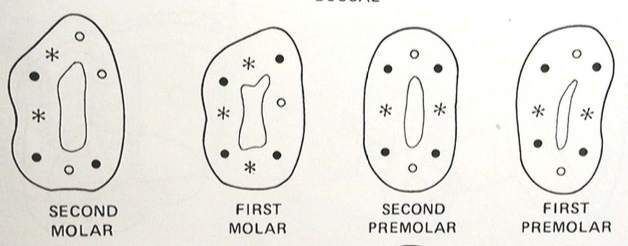
pin placement for maxillary teeth
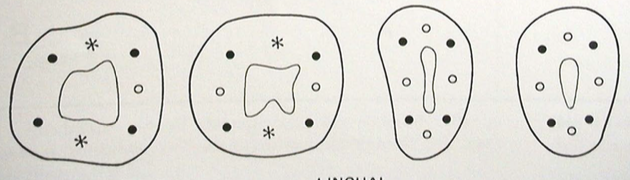
pin placement for mandibular teeth
what are (2) locations to avoid when placing pins?
furcations
root indentations
which tooth has a mesial furcation?
mesial of maxillary 1st premolar
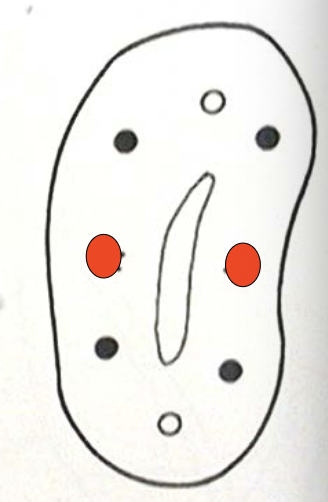
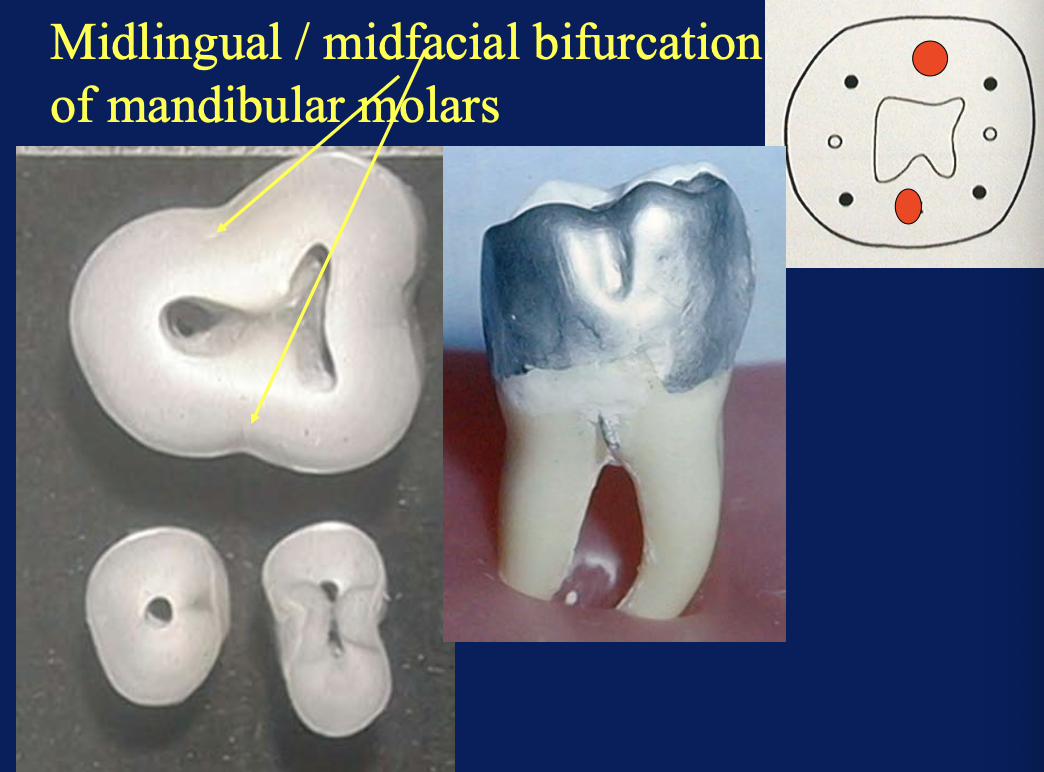
what must you consider when placing pins on mandibular molars?
mid-lingual bifurcation
mid-facial bifurcation
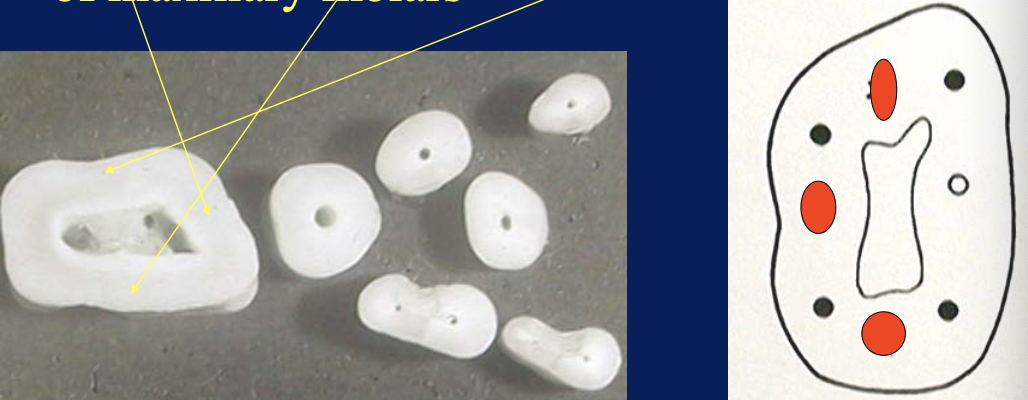
what must you consider when placing pins on maxillary molars?
mid-facial furcation
mid-mesial furcation
mid-distal furcation
what are (2) areas to avoid at the risk of perforating the pulp?
Mesiofacial corner of maxillary 1st molar
Mesiofacial corner of mandibular molar
why shouldn’t you place pins in the distal of mandibular 2nd molars?
tooth angulation
why shouldn’t you place pins in the lingual of maxillary molars?
root angulation
are younger patients more or less likely to have pulp perforations when placing pins?
MORE — higher pulp horns
why are older patients at less risk of pulpal perforations when placing pins?
have lower pulp horns — pulp horns recede with continued trauma
pilot holes are prepared with a ___ burn
½ round bur
why should you use a ½ round bur to prepare a pilot hole?
prevent drill crawling
why is it important that pins do NOT contact the bottom of the pin hole?
if it makes contact with the bottom of the pin hole, it will create stress on the tooth and cause it to fracture
the pin channel is prepared using the _____ attachment
contra-angle latch
you should also use _____ attachment and ____ setting
torque reduction attachment
forward setting
why must you create a recessed shoulder when preparing a pin hole?
to prevent stress upon pin placement — creates a small space between the pin and the bottom of the pinhole
describe the process of creating a pin hole
drill and then stop before placing a shoulder
wait 15 seconds to see if there is blood
add shoulder
why should you drill pin holes quickly?
the longer you place the bur inside, the wider the diameter of the pinhole becomes
correct channel drilling and pin placement does what (3) things?
creates an occlusal shoulder for adequate seating
prevents the pin tip from reaching the bottom of the pin channel
minimizes stress in the pin channel
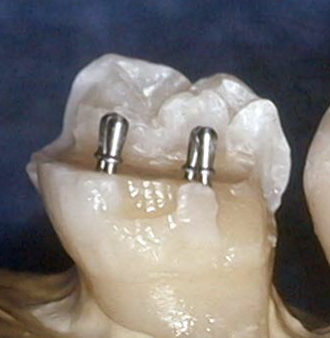
Identify (3) errors with this pin placement
No occlusal shoulder
Inadequate seating
Pulp exposure
(will probably fracture tooth due to high stress or cause a pulpal perforation
why is it difficult to assess pin placement with radiographs?
hard to correctly identify pulpal perforations
“pulpal perforations” may actually be the result of superimposition of pin onto the pulp chamber
which type of perforation is slightly easier to identify radiographically?
external
are external perforations from pins repairable?
Possibly — if the pin doesn’t go into the bone or pulp chamber
Create gingival flap
Drill off excess pin
Fill with amalgam or composite
what issue can external pin perforations cause?
perio defect