Acute Leukemias
 Call Kai
 Learn
Learn Practice Test
 Spaced Repetition
 Match
Match Flashcards
 Knowt Play
1/13

There's no tags or description
Looks like no tags are added yet.
Name | Mastery | Learn | Test | Matching | Spaced | Call with Kai |
|---|
No analytics yet
Send a link to your students to track their progress
14 Terms
a mutation of stem cells in the bone marrow
causes impaired production of normal RBCs, WBCs, and platelets
In general, what is leukemia?
leukemias of the myeloid line
granulocytes, monocytes, megakaryocytes, and erythrocytes
leukemias of the lymphoid line
lymphocytes only
What are the 2 lines of leukemia?
acute leukemia
PBS consists of mostly immature cells (blasts)
quick onset
may occur at any age
chronic leukemia
PBS consists of mature cells (just higher in number)
slow onset
usually seen in adults
Cell maturity is used to determine the type of leukemia. What are the 2 types?
chromosome abnormalities
causes uncontrolled cell proliferation
genetics
toxic exposure
What 3 things can cause acute myeloid leukemia (AML)?
clinical features
dysfunctional cells can lead to anemia and infection (fatigue and weakness)
thrombocytopenia causes easy bruising and mucosal bleeding
lab findings
CBC
blood cell counts can vary
pancytopenia possible
thrombocytopenia
PBS
blasts, auer rods, nRBCs, pseudo and hypersegmentation
What are the clinical features and lab findings in AML?
diagnosis
200 WBCs must be counted in the PBS
the blast % is calculated by a 500 cell diff in the bone marrow
cytochemical stains
done on peripheral or bone marrow smears
specific dyes are used to identify specific lineages of blast cells
chromosome analysis, genetic studies, flow cytometry, and electron microscopy
prognosis
older patients have a worse prognosis
disease related factors can predict resistance to chemo
splenomegaly, extramedullary disease, or a secondary leukemia
How is AML diagnosed and what is the prognosis?
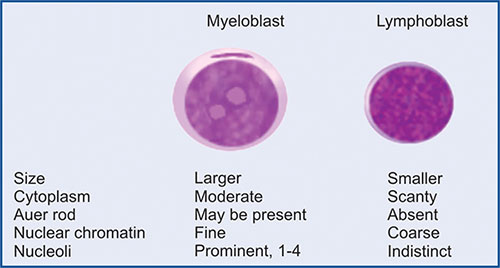
myeloblasts have auer rods, lymphoblasts do not
myeloblasts have a moderate amount of cytoplasm and looks basophilic, lymphoblasts do not have a lot of cytoplasm
cytochemical stains can also determine the cell lineage
When looking at a slide of a patient with AML, how can you tell you’re looking at myeloblasts and not lymphoblasts?
a malignancy caused by mutations in lymphoid precursor cells in the bone marrow
predominant in kids, adolescents, and young adults
unknown causes
may be environmental factors such as ionizing radiation
or genetics
What is acute lymphoblastic leukemia (ALL)?
clinical features
fever, pallor, fatigue, bleeding, bone and joint pain, hepatosplenomegaly
lab findings
variable WBC
anemia and thrombocytopenia
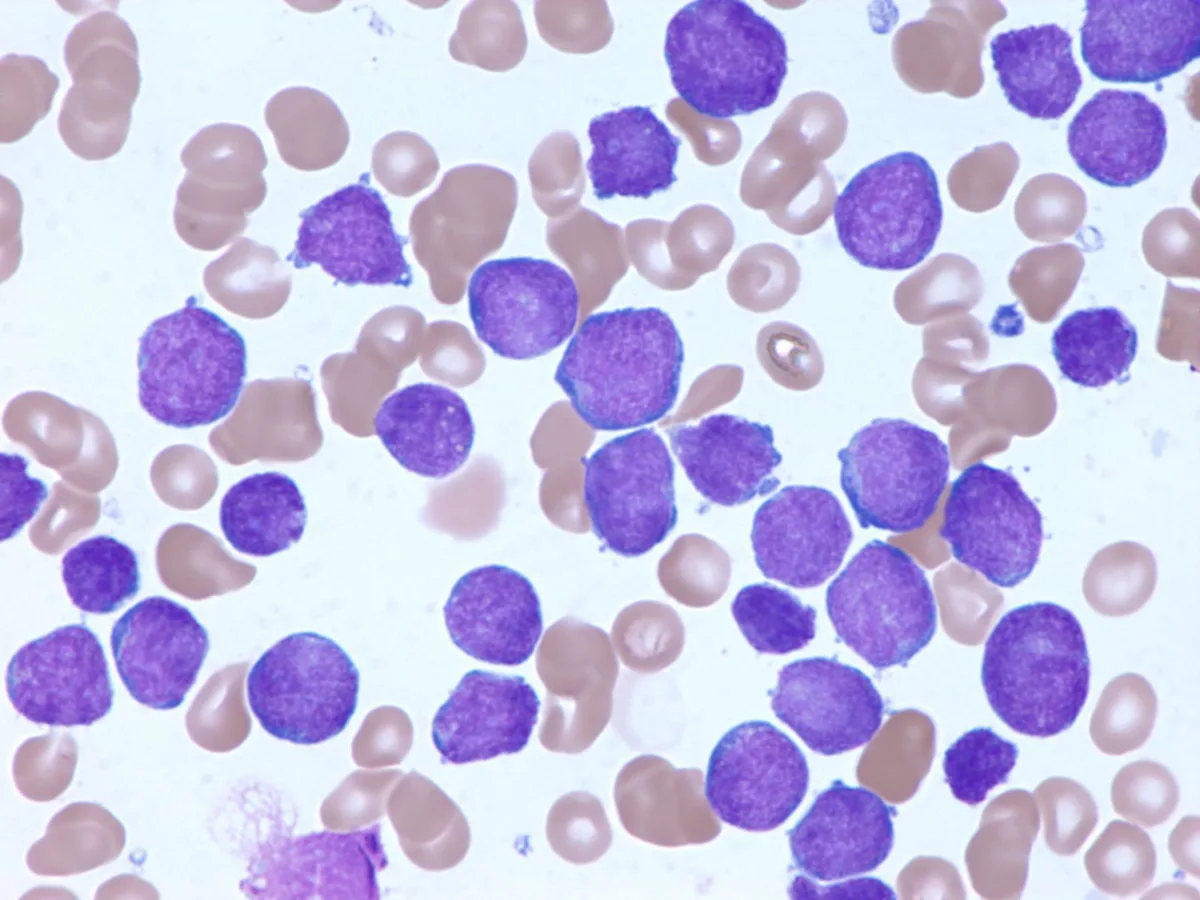
blood and bone marrow show lymphoblasts twice the size of normal small lymphocytes (may or may not have vacuoles)
picture shows B lymphoblastic leukemia (B-ALL)
What are the clinical features and lab findings in ALL?
T-ALL prognosis is poorer in children, B-ALL prognosis is better
opposite for adults: T-ALL is better than B-ALL, overall survival rate is 60%-70%
children with favorable prognoses can be treated with less toxic regimines
treatment: chemotherapy, immunotherapies, molecular testing
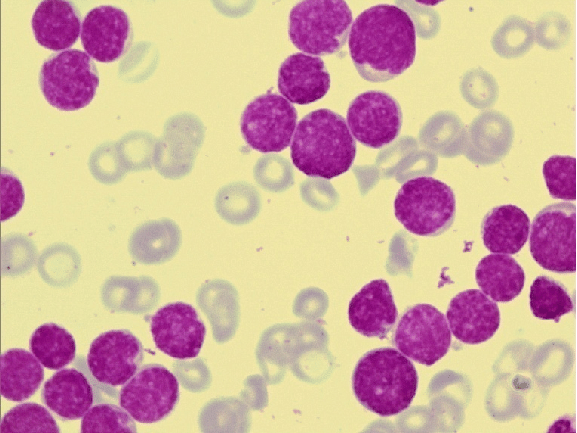
picture shows B-ALL
What is the prognosis and treatment of ALL?
the replacement of normal marrow precursors by leukemic cells
What is responsible for producing signs and symptoms in leukemia?
B-ALL/lymphoma, not otherwise specified
B-ALL/lymphoma with recurrent genetic abnormalities
T-ALL/lymphoma
about 75% of all adult ALL cases are B-ALL
In 2008, the WHO classified 3 major categories of ALL, what are they?
AML with recurrent genetic abnormalities
AML with myelodysplasia-related changes
therapy-related neoplasms
AML not otherwise specified
What are the 4 categories of AML classified by the WHO?
uses monoclonal antibodies that are directed against CD markers on blasts to identify the type of blast present
can detect the lineage and stage of maturation of the blast cells
distinguishes between AML and ALL, and B-ALL and T-ALL
How is immunophenotyping used to diagnose acute leukemias?