ARCHSOC Lectures 11-17
 Call Kai
 Learn
Learn Practice Test
 Spaced Repetition
 Match
Match Flashcards
 Knowt Play
1/30

There's no tags or description
Looks like no tags are added yet.
Name | Mastery | Learn | Test | Matching | Spaced | Call with Kai |
|---|
No analytics yet
Send a link to your students to track their progress
31 Terms
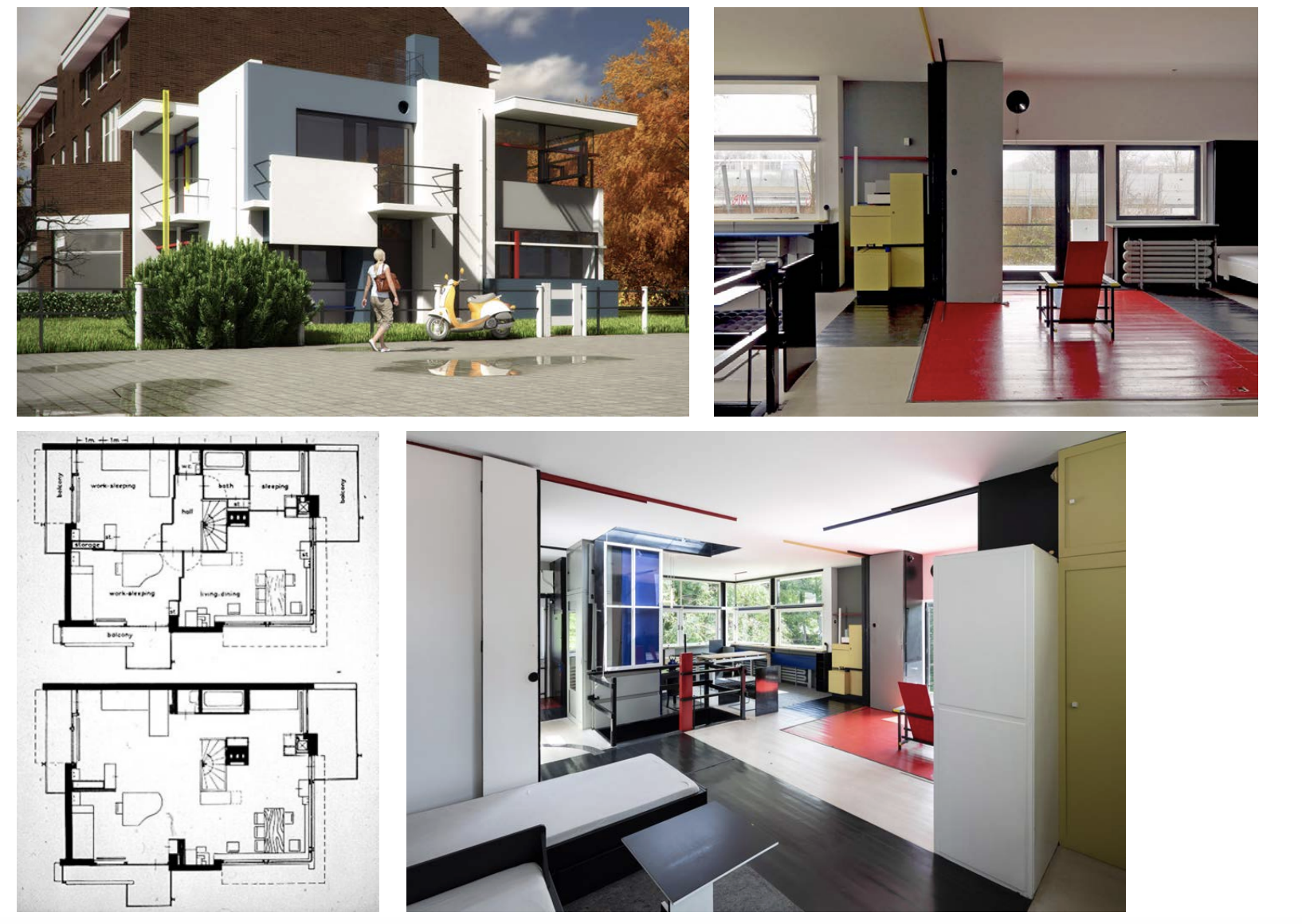
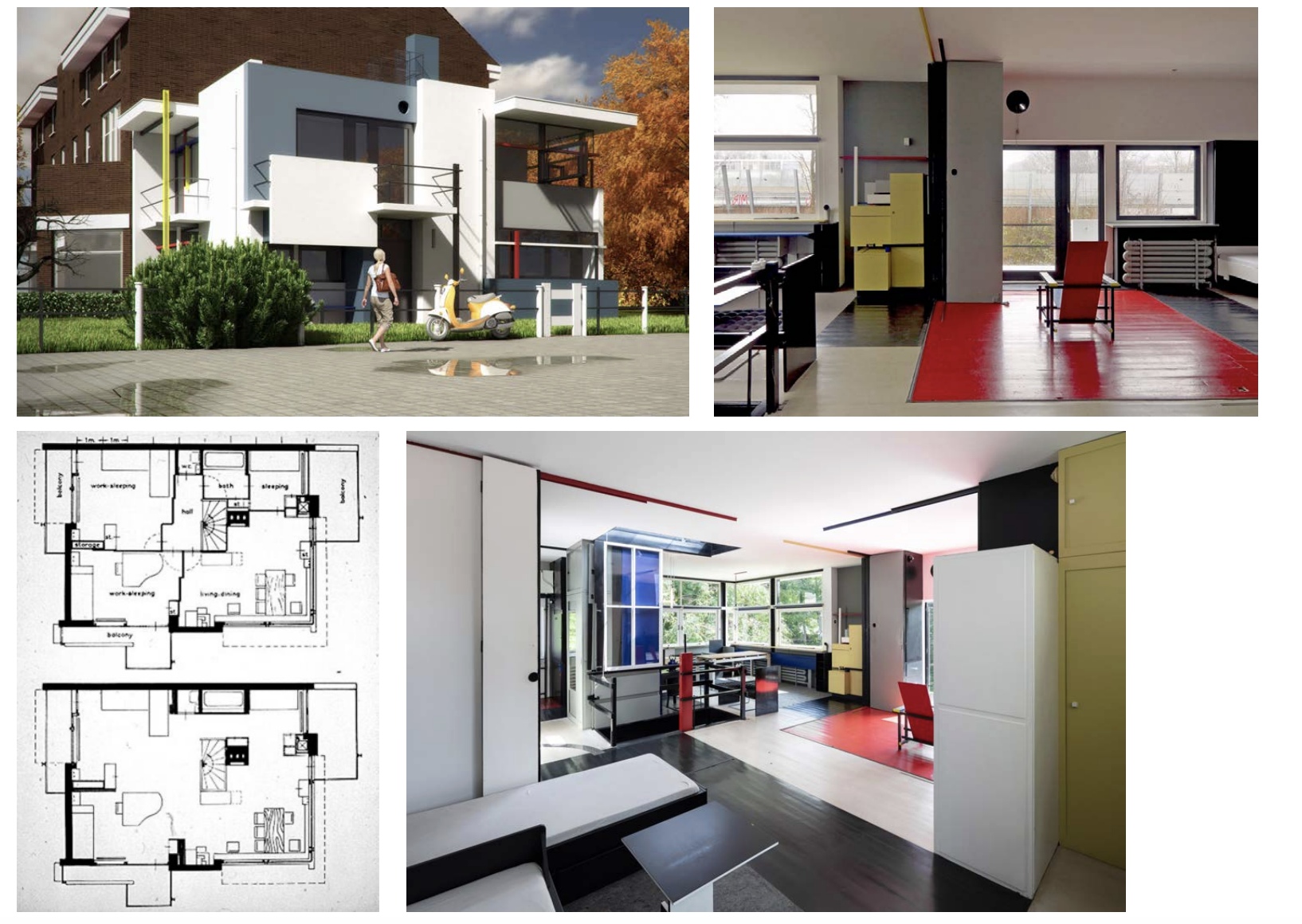
11) Gerrit Rietveld, Schröder House, Utrecht, Netherlands, 1924
trained carpenter/woodworker, paints the wood. creating something without precedent, capturing movement, dynamism, transformational capacities. Built on an end of boring houses. Brick, timber, concrete for balconies and foundation. Exterior elevations appear to include floating masses, planes and lines interacting. End to divisions between art and life, all people become artistically involved or involved in a creative action. Dynamic interior, retractable walls. No set functionality in each place/program because you can do all kinds of things. interior painted with primary colors, wood furniture. Devoid of individual touches (ex. relative photos, personalization etc) House is driven by the purity of its proportions and relationships between the surfaces and building elements.
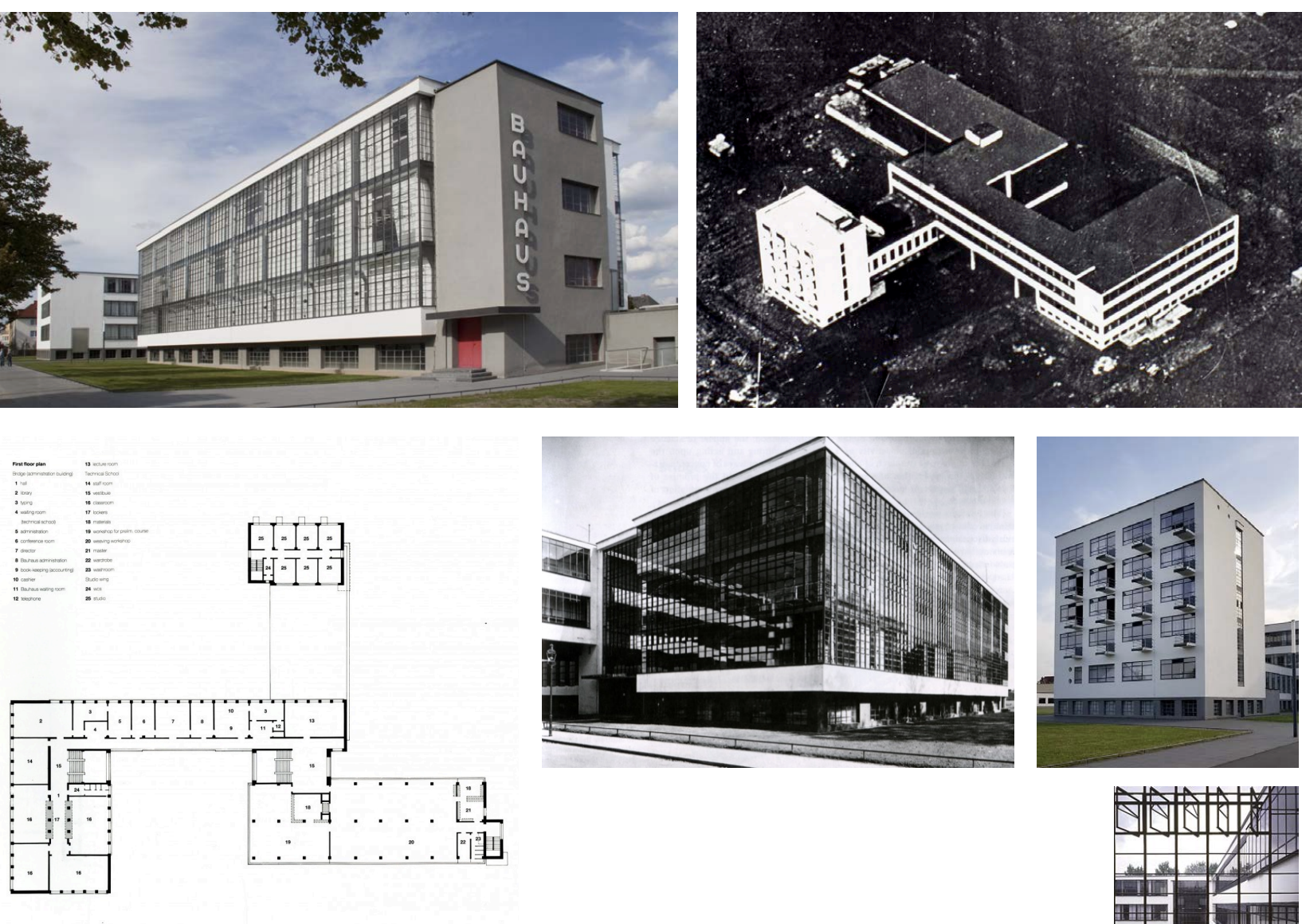
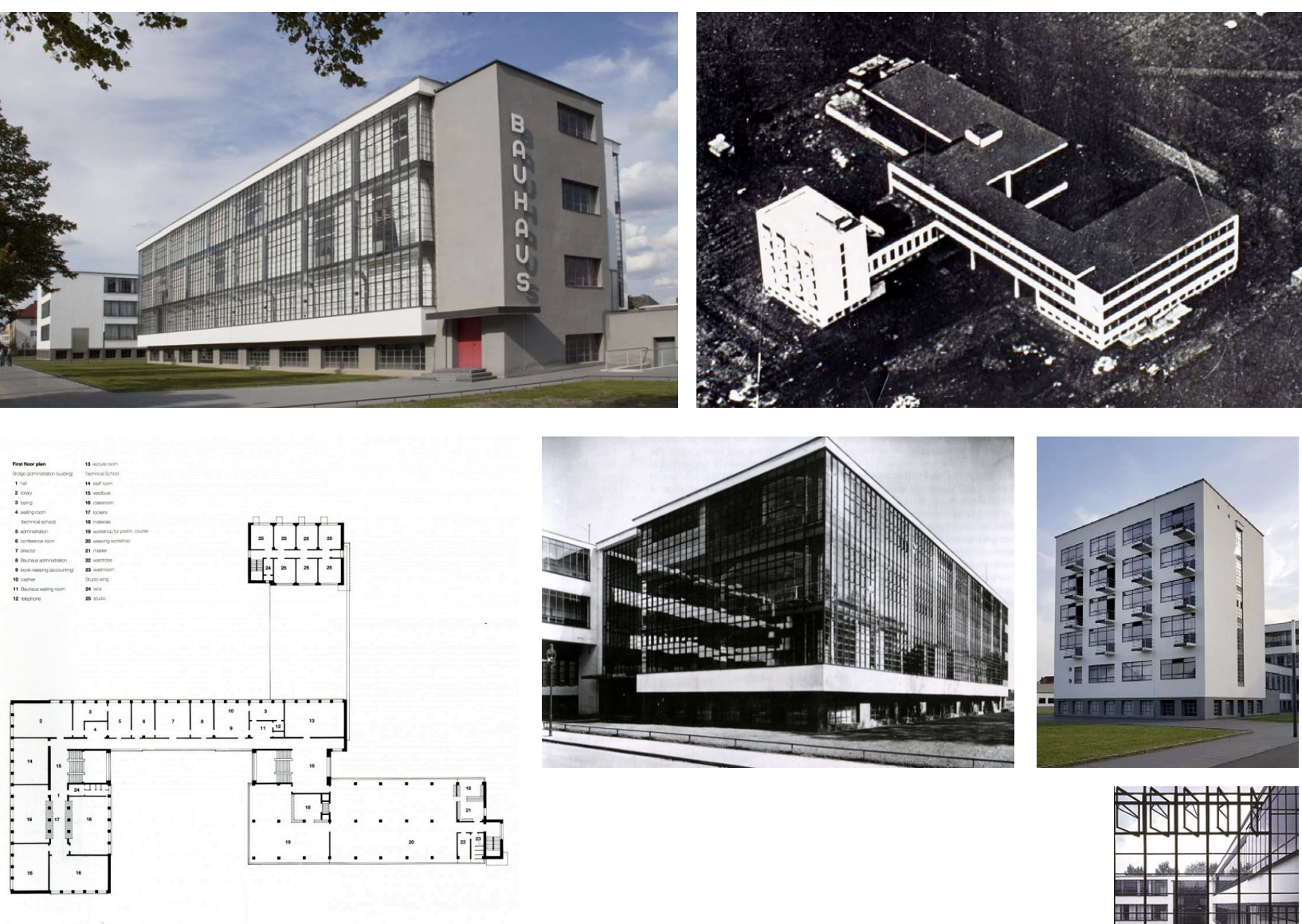
11) Walter Gropius, The Bauhaus, Dessau, Germany, 1926
Looks industrial but timeless and consistent aesthetic, which was their goal of modernism. Includes dorms, studio spaces, everything for a functional university. Different types of glass to maximize light into the studio space. Can see right through the building at certain points. Concrete, factory wrapped in glass as a school, consistent with the Bauhaus idea where you embrace the elements that make a space feel human. In the dorms, the furniture is simple and very human.
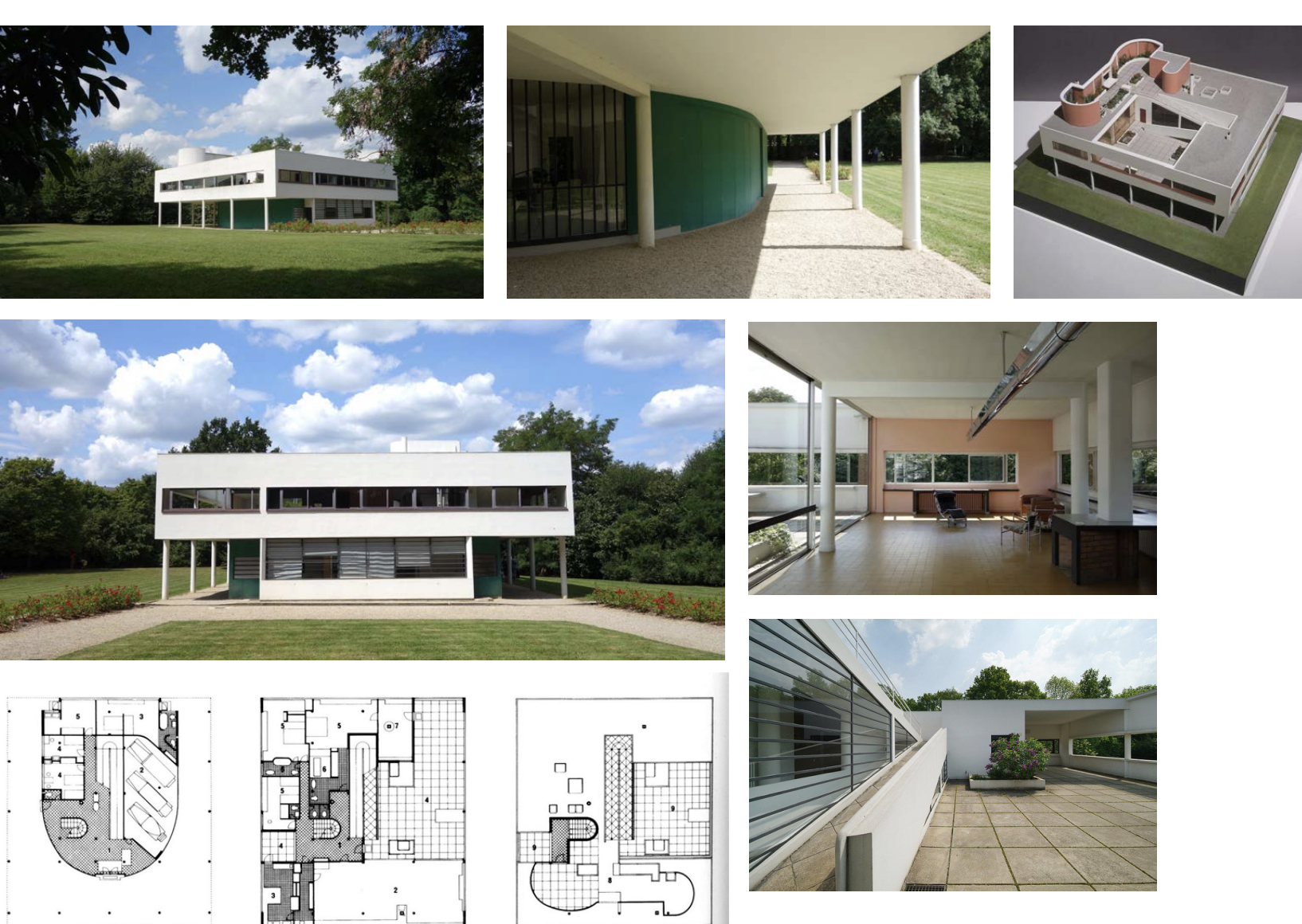
11) Le Corbusier, Villa Savoye, Poissy, France, 1928–31
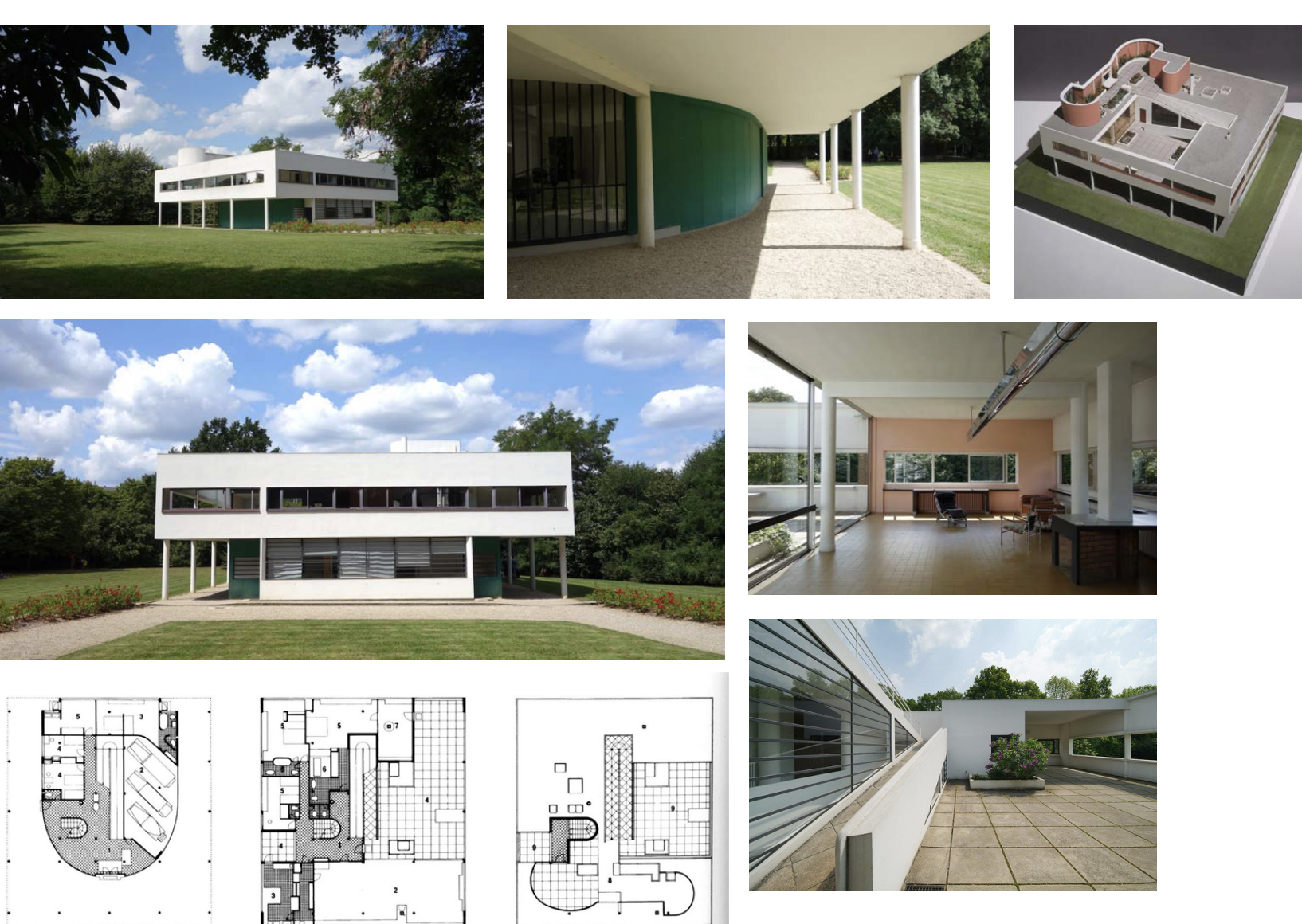
Built in the countryside for the Savoye family, simple home they can spend their weekends. Designed based on five points. Pilotis, free facade, roof top garden, open plan. look to made completely modern and made out of a unified material. Concrete blocks plastered together. Width of the turning radius of the car determines placement of road. Promenade way of moving through each elevation. Sliding glass doors. Eventually had a lot of problems with weather and family moved out, became barn, asked govt to fund the restoration and to call it a landmark
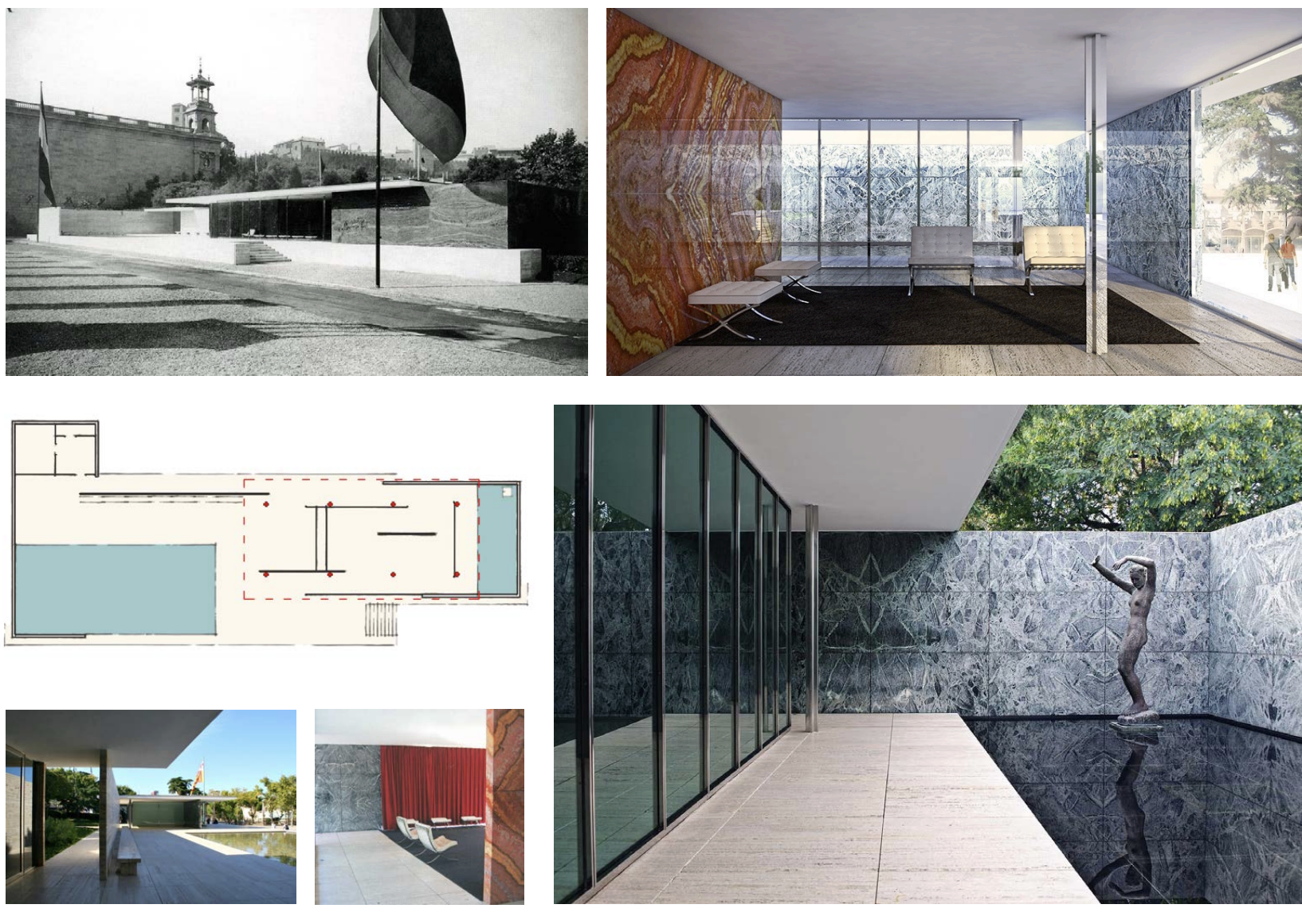
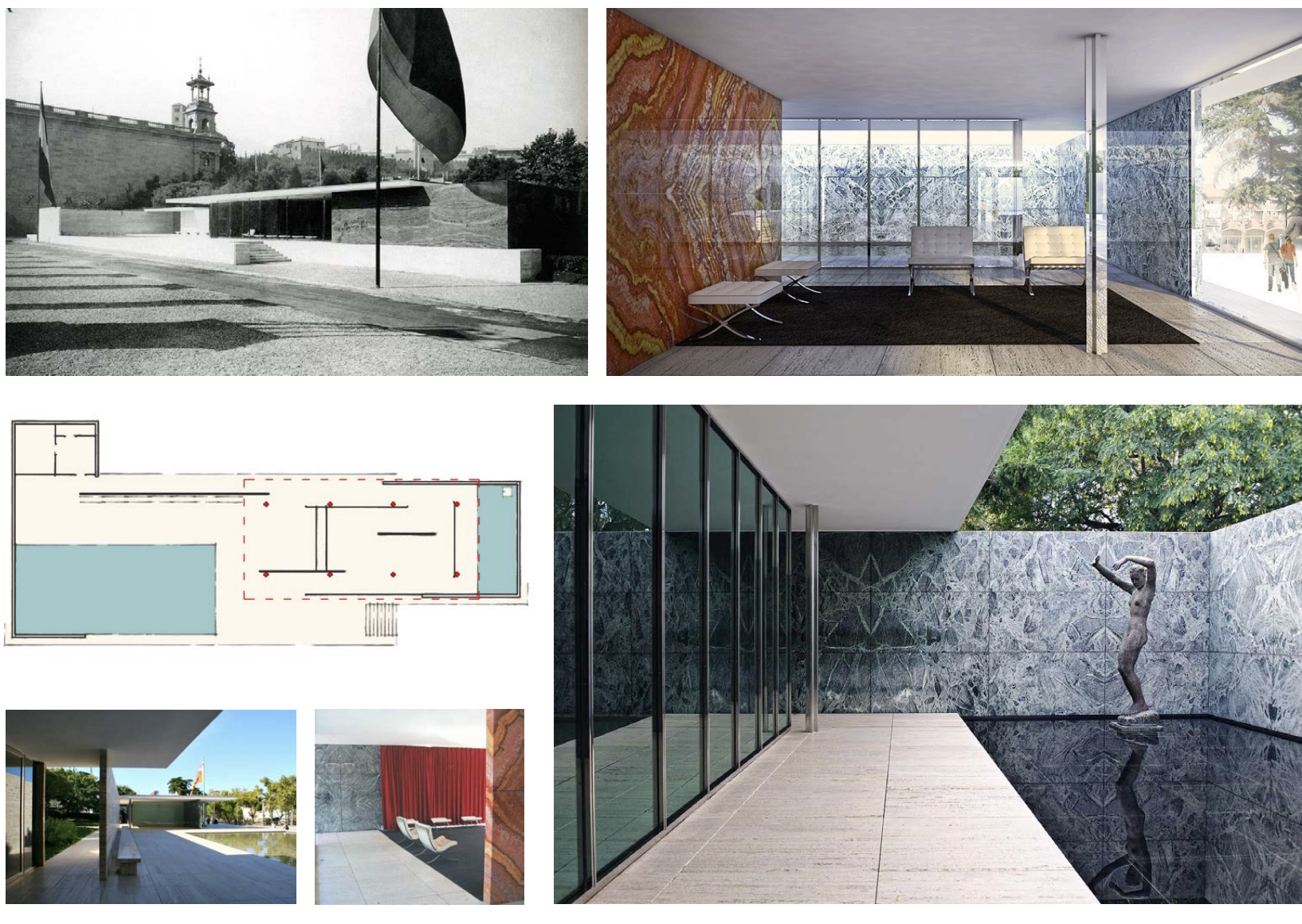
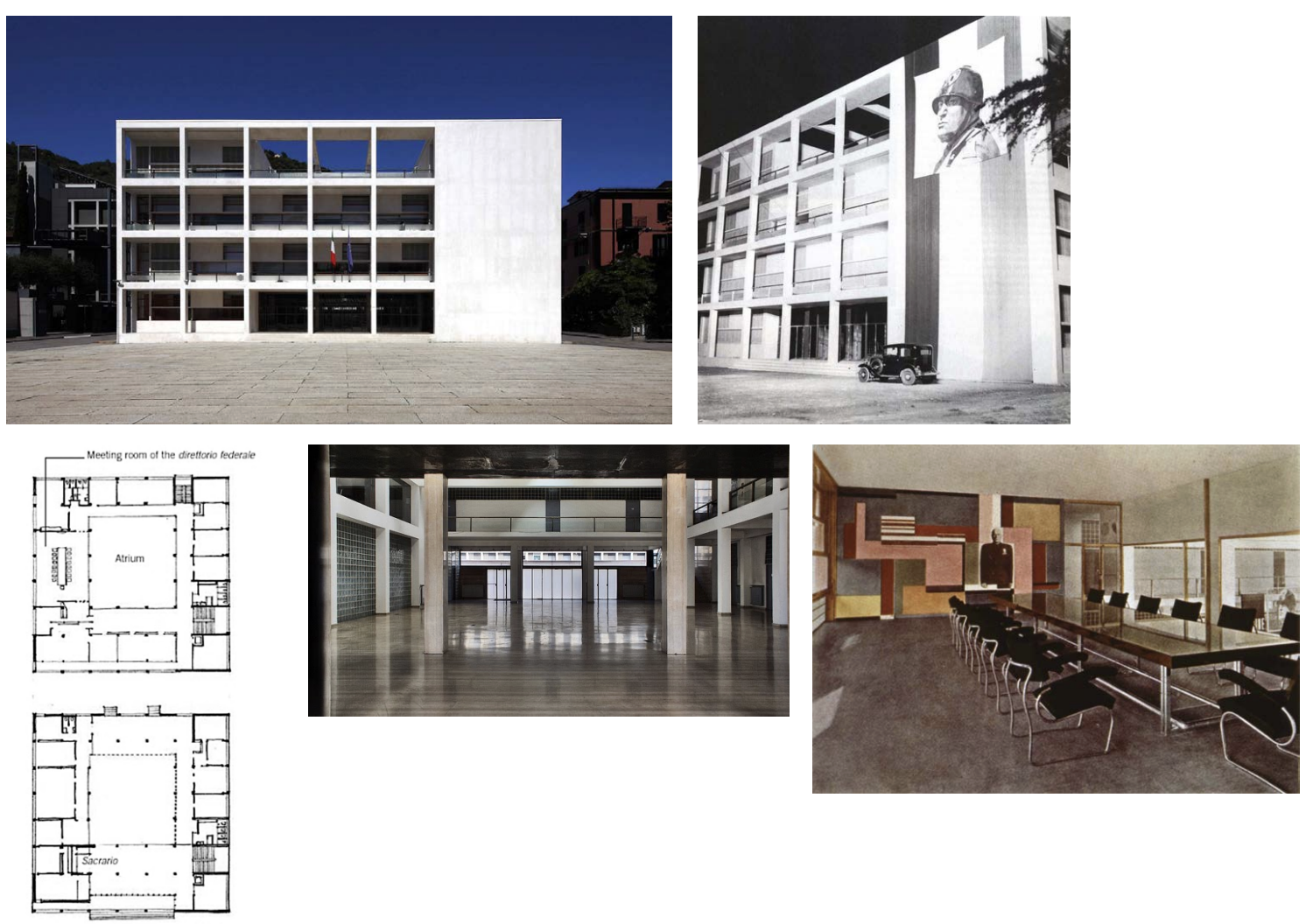
11) Ludwig Mies van der Rohe, German Pavilion, Barcelona, Spain, 1929
Undecorated open floor plan, pavilion that represents germany between WWI and II. Weimar comissions Van Der Rohe to depict ideal German future: modernity, liberalism, internationalism, clarity, simplicity, honesty. Demolished after the fair. Reflecting pools, smooth antiquity without being roman by the material. Slabs of colorful stone with barcelona chairs for the king and queen. Kolbe’s sculpture Dawn (person doing gestural pose) is placed in the reflecting pool, counterpoint of modernity. Reflecting pools and slab roof, reminiscent of Le Corbusier.
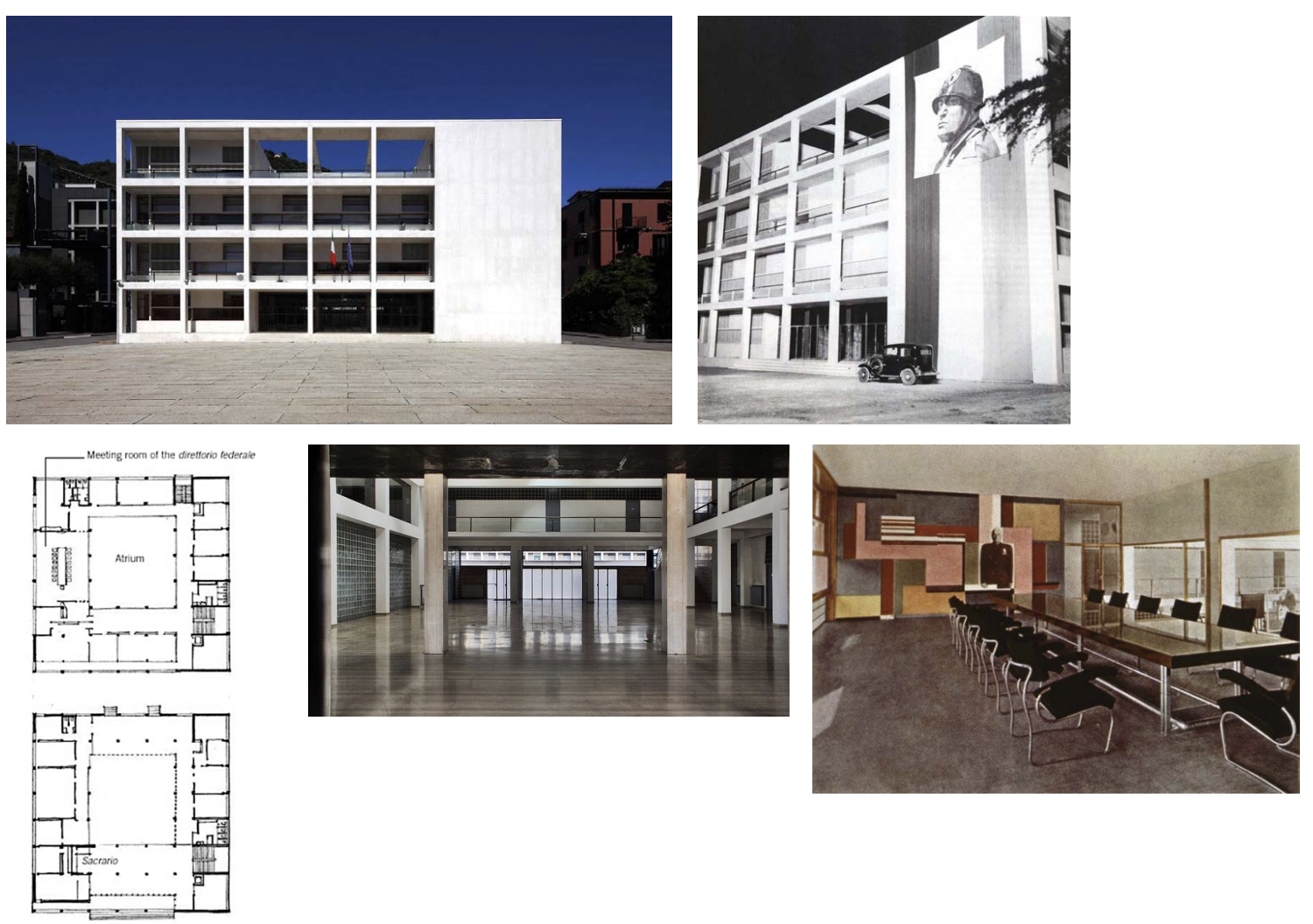
12) Giuseppe Terragni, Casa del Fascio, Como, Italy, 1932–36
Clad in travertine: creamy white limestone, grid type of windows/apertures, flat surface used for propaganda displays, seeing inside the government, open transparent facade for the people to look into (despite the truth). Courtyard and space, rooms and offices surrounding edges. Has a monument for Italian fascist soldiers. Not a clear break from the past, Mussolinian concept where “fascism is a glass people can look into.” Town operates under surveillance of Mussolini: life-sized mural of Mussolini overlooking a conference room. Respected as architecture despite its negative context, reflects the time period and rationalist approach to fascism. Every town/village would have their own casa del fascio, now they are usually police headquarters.
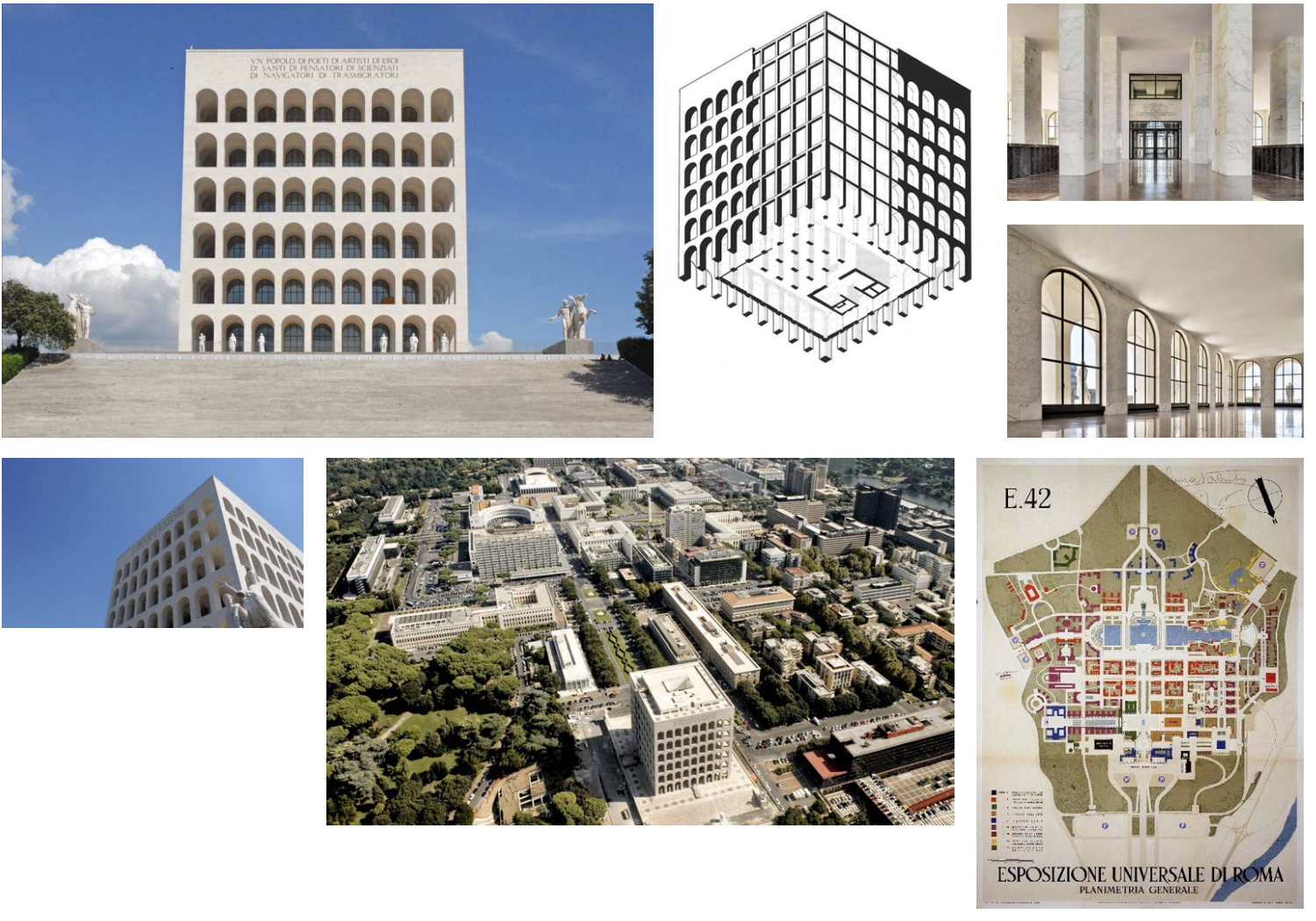
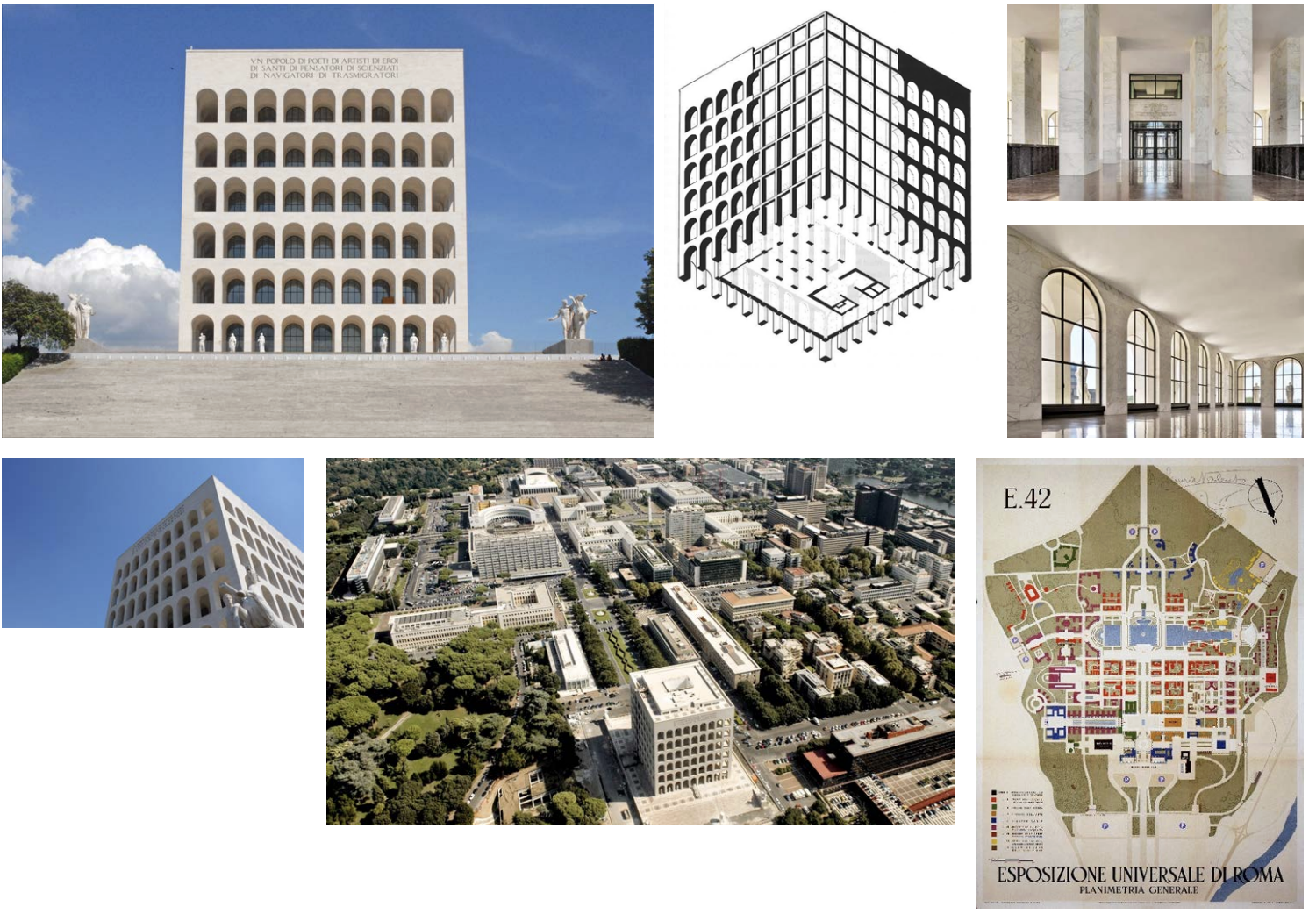
12) G. Guerrini, et al. (La Padula, M. Romano), Palazzo della Civilità Romana, EUR, Rome, Italy, 1942
Referred to as the square colosseum, galleries that show the many talents of the Italian people: arts, sciences, etc. Heroic sculpture done in travertine. Courtyard goes all the way to the roof for light and air for vast open halls. 216 arches. Concrete frame clad in travertine arches, exterior is just decoration. Controversial building, claimed by Fendi, Italian fashion designers in an Italian fascist building.
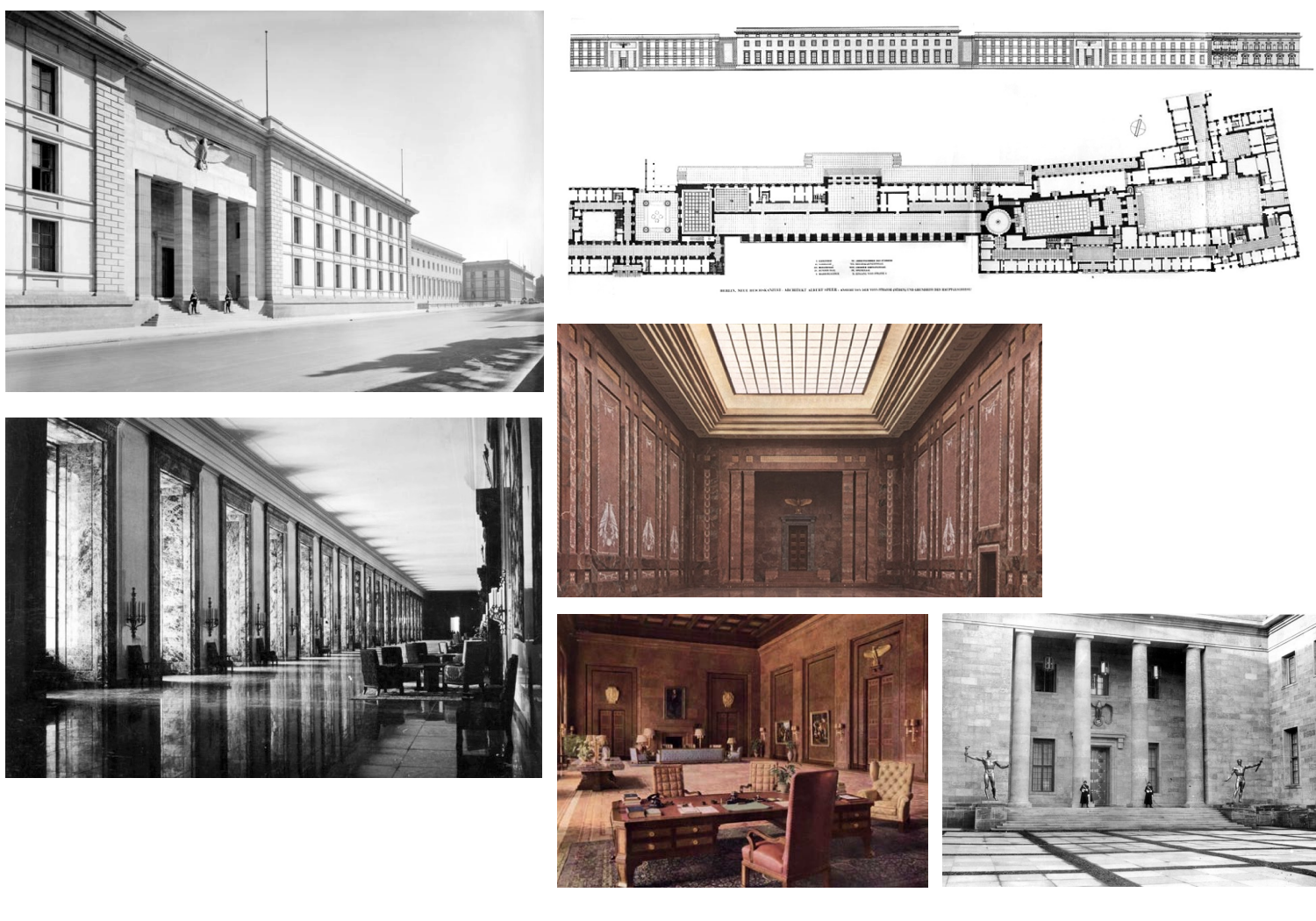
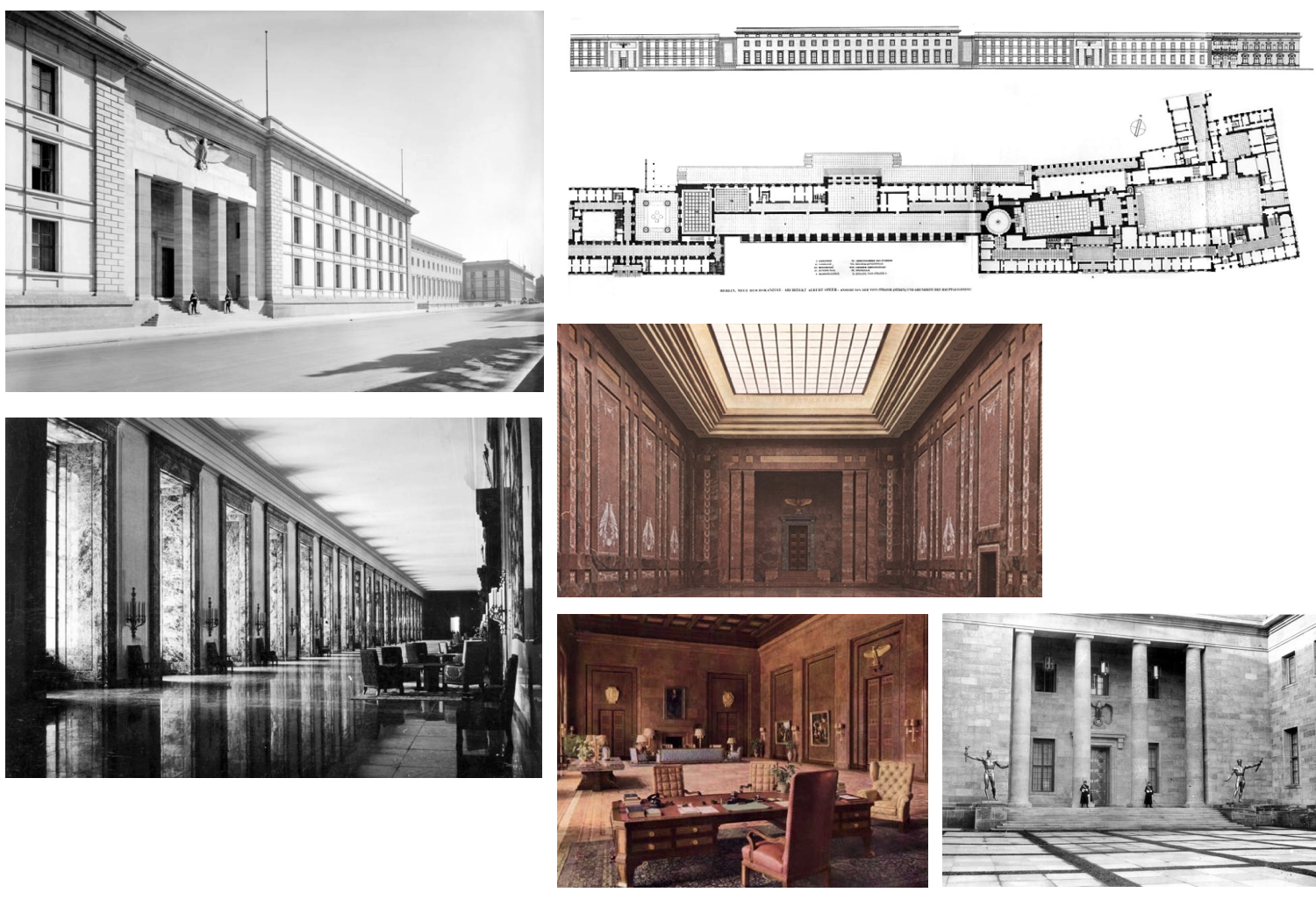
12) Albert Speer, New Reich Chancellery, Berlin, Germany, 1938
Hitler decides the chancellery traditional rule of Germany is inefficient and commissions Speer to create spaces that represent government power. Constructed during the war. Very long walk in a hallway that leads to Hitler’s office, echoey space that makes you feel very small, evoking grandeur and feeling insignificant once you approach Hitler. Ancient roman imagery. Pharaonic scale to establish power imbalance between a common person and Hitler
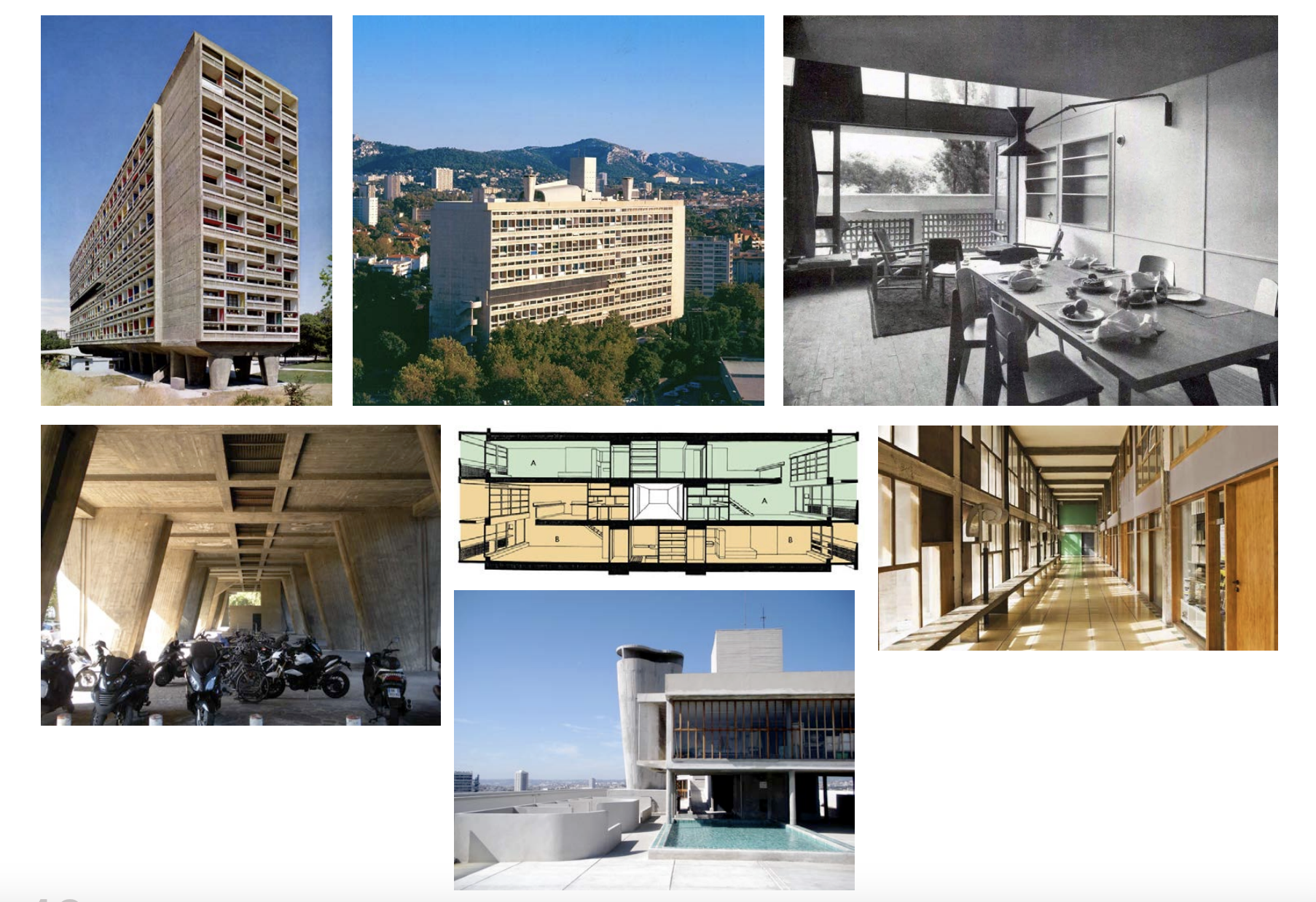
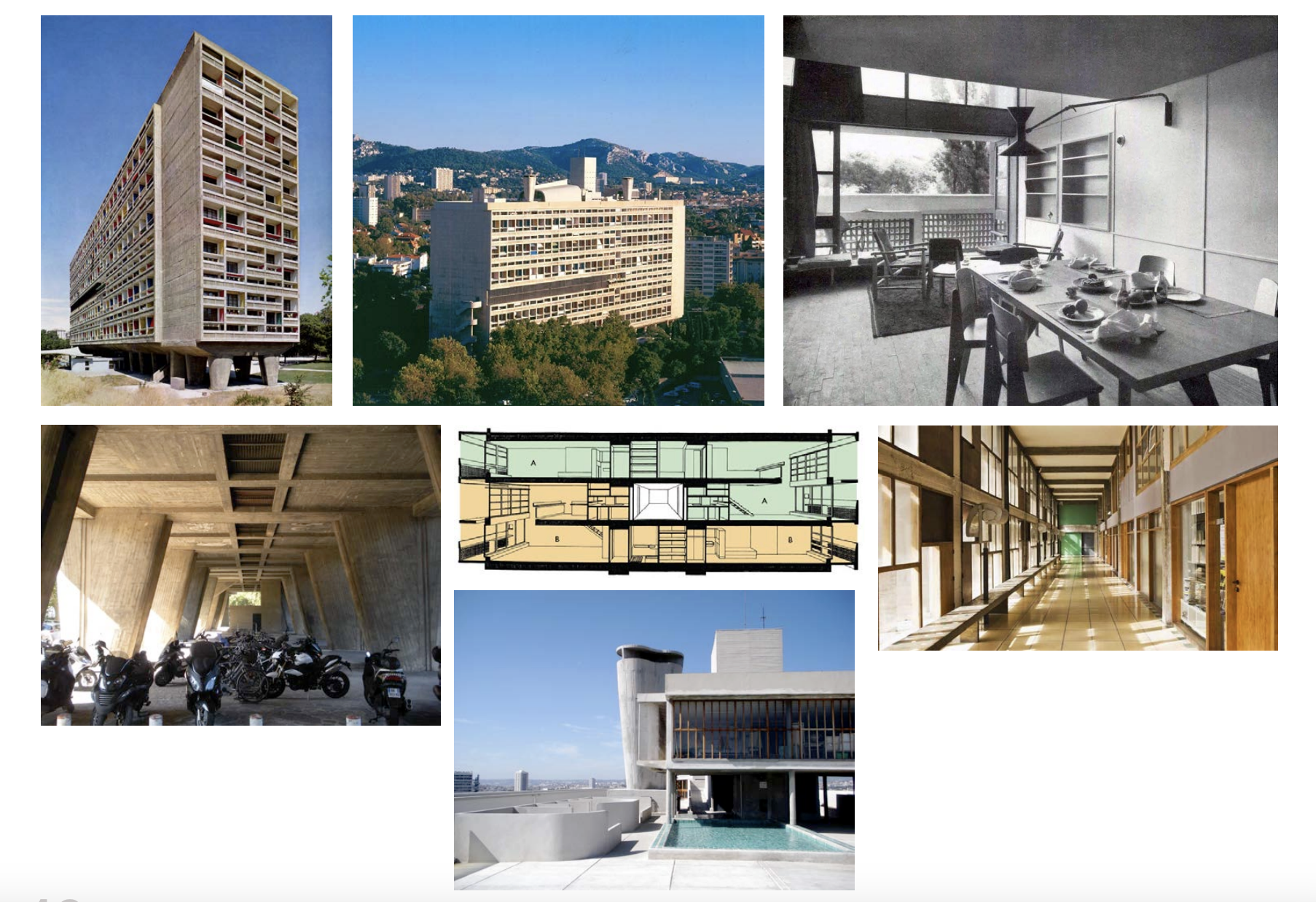
13) Le Corbusier, Unité d’Habitation, Marseilles, France, 1946–52
Functionally, materialistically, and scale-wise very different from other buildings within the international style, using his five points in some way or another, though the buildings are very different from others
Apartment building that functions as a central part of life (learn, eat, play), unified environment for life, proposed solution for housing at a dense urban scale
Access to light, open space, greenery at a universal level, Corbusier wants it to be built everywhere
Brutalistic, concrete poured into wooden forms to create shapes, can build wooden forms to put different printings and patterns in the concrete
Criticized for it being massive scale, but entire building is actually designed to be human scale, includes engravings of Corbusier’s Modulor figure on the sides of the entrance
23 apartment types slotted into a structural grid, have likened the interior to a ship, balconies and windows on both sides, allows for mezzanines, light and air flow through the entire building
Includes a public shared space that would have shops, post offices, etc. and is meant to look like a street inside the building, bringing the outside in and making it accessible to all of its inhabitants, gym, cafe, and playground on the roof as well
Sculptural rooftop (not necessarily a rooftop garden, but close), forms blend in with the mountainous terrain surrounding the building
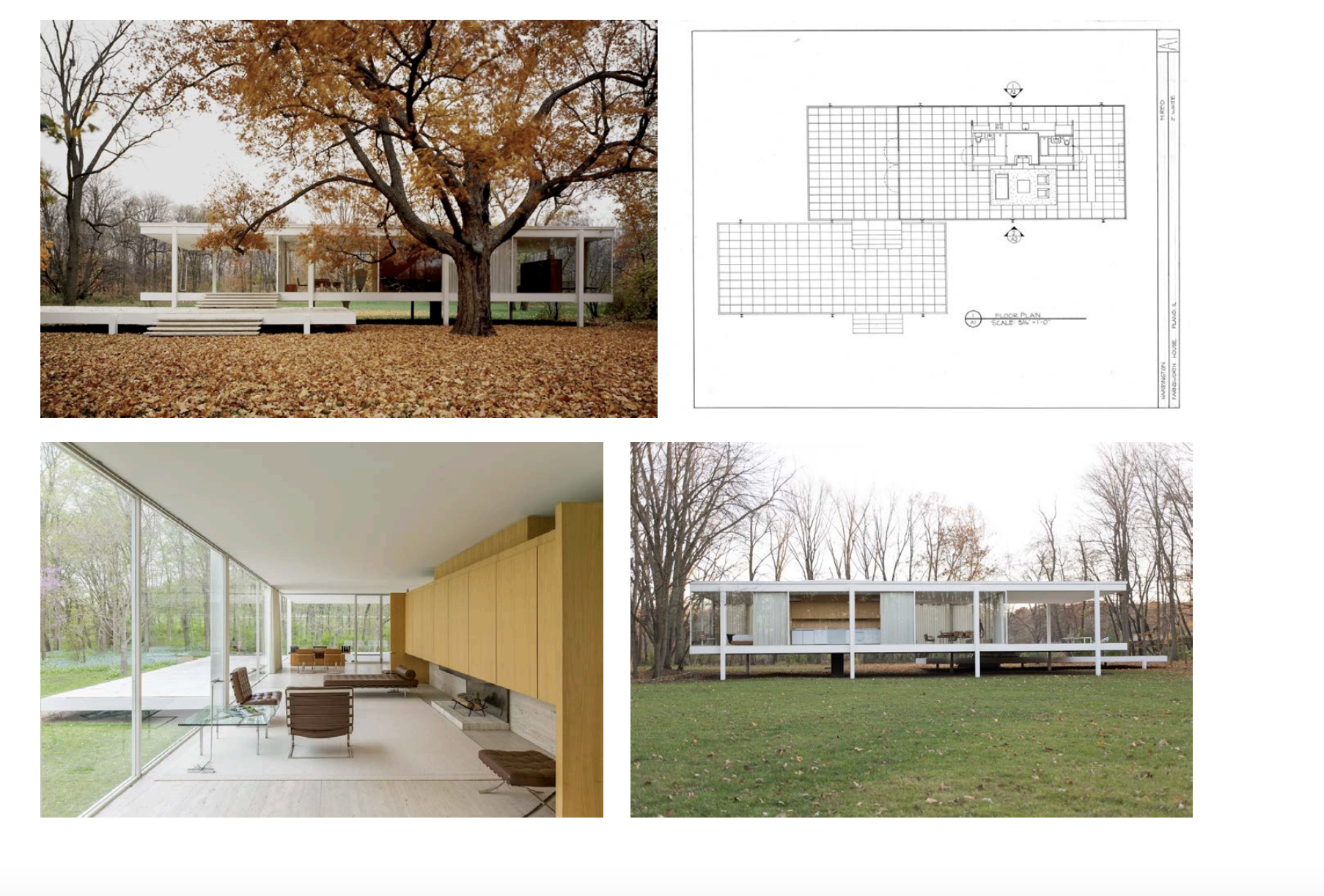
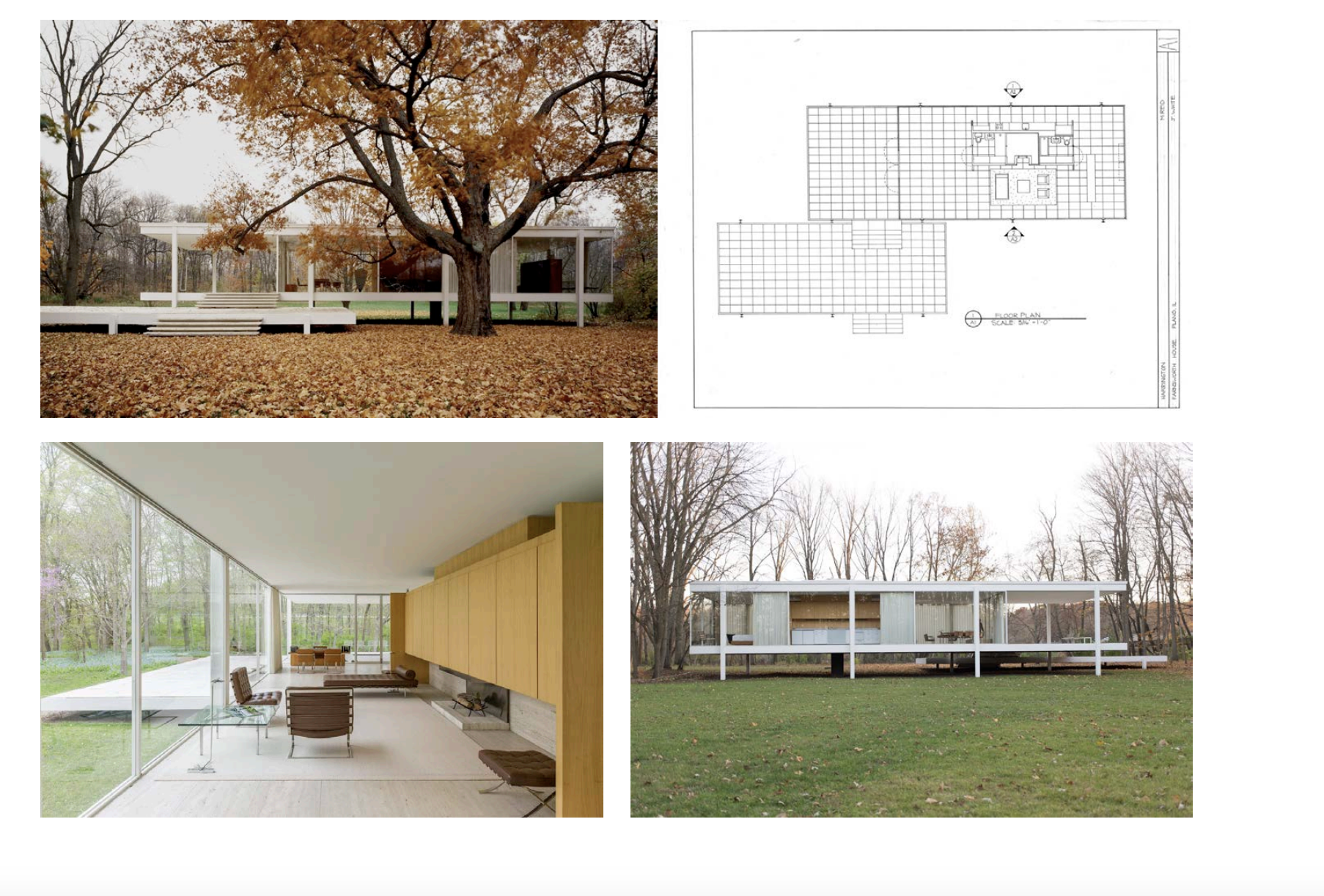
13) Mies van der Rohe, Farnsworth House, Plano (IL), USA, 1946–51
Huge plot of land, open glass facade, built with tree in mind, stream/creek with a lot of water that floods a lot so house is elevated
Not physical heaviness, but psychologically
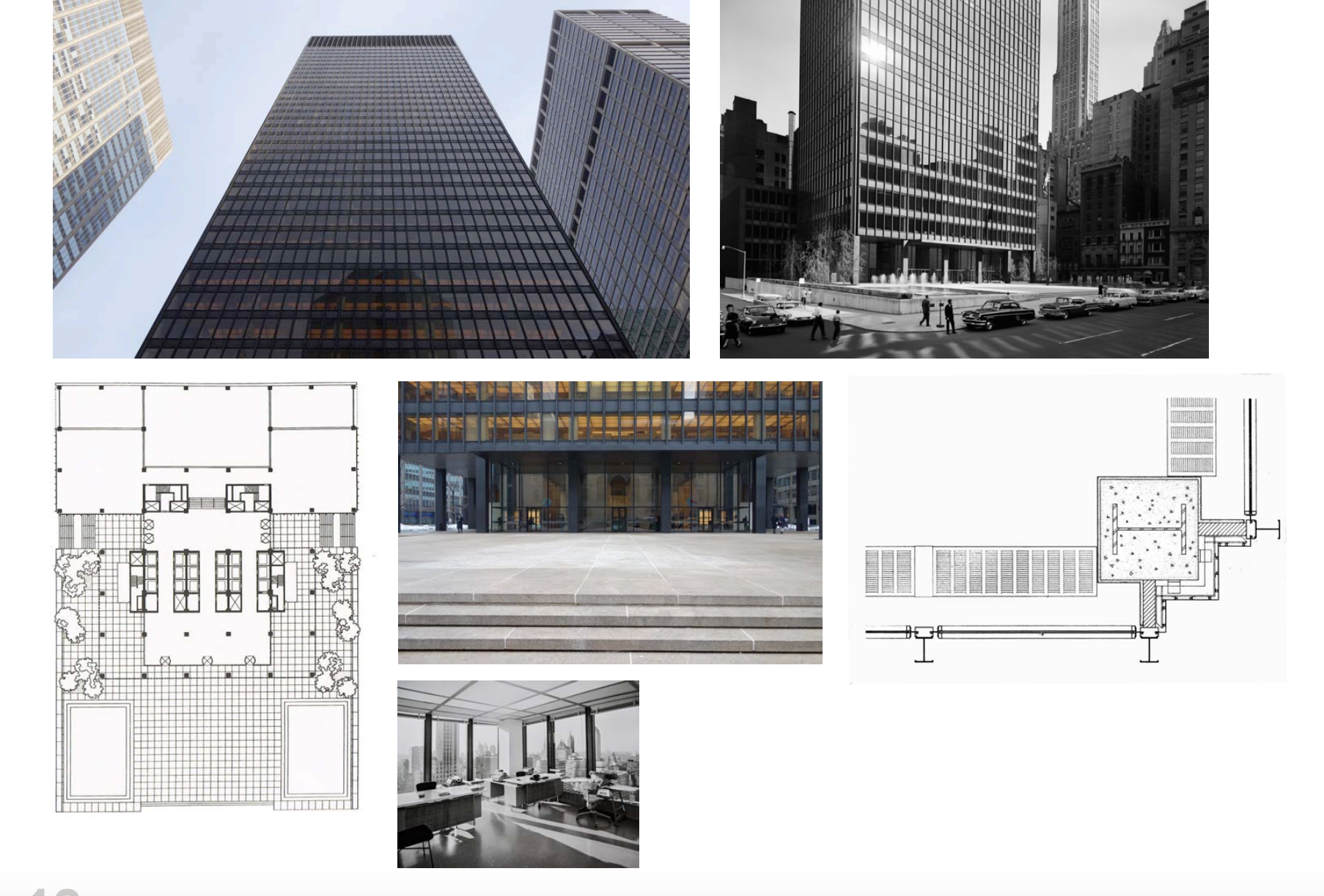
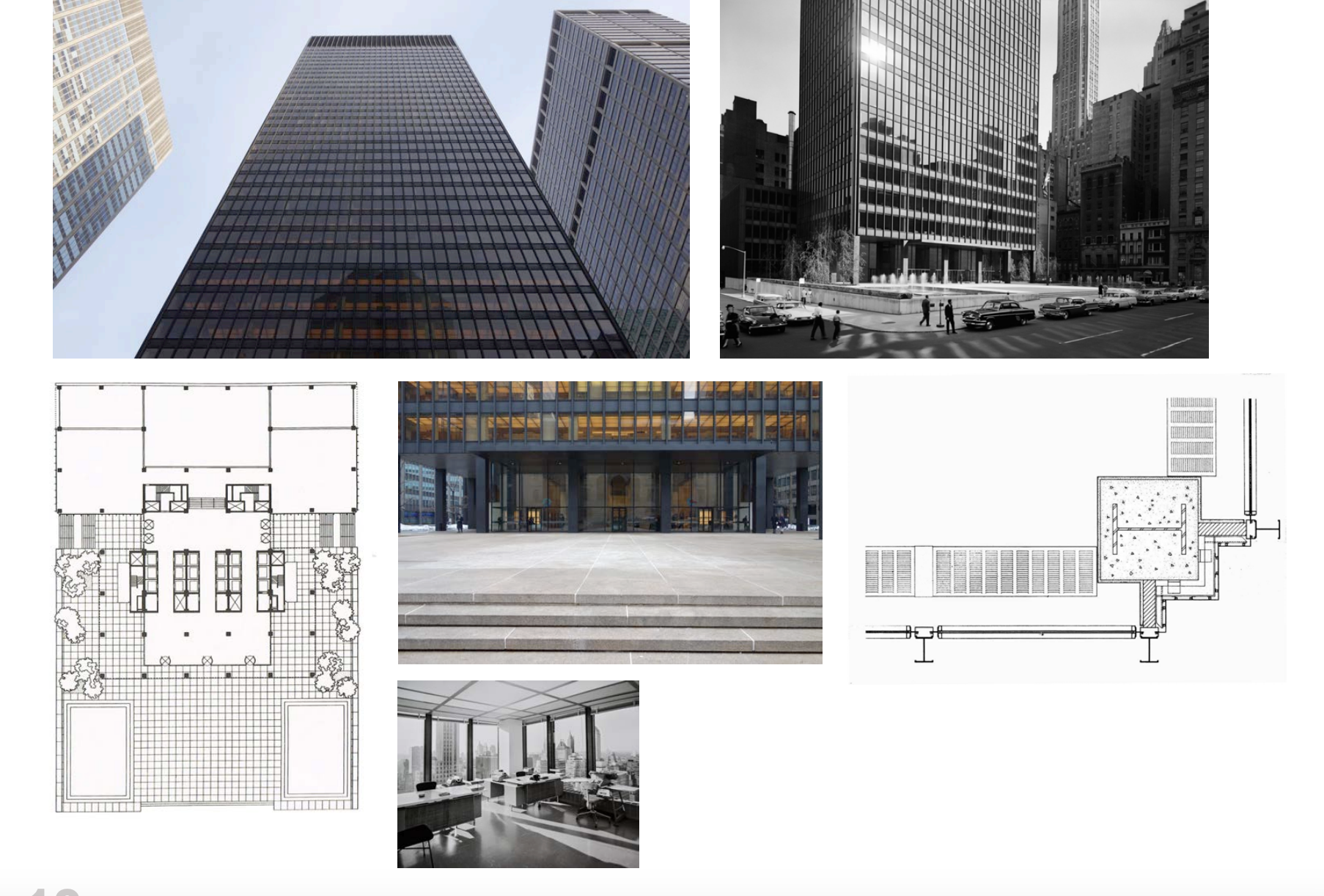
13) Mies van der Rohe and Philip Johnson, Seagram Building, New York (NY), USA, 1956–68
Crown hall idea, stack several on top of each other to create a skyscraper
Lofty, pushed back from the street to create a public space in front of the building, rather than building with a setback and building with the full lot, you could set the entire building back within the lot, it could be as tall as you want
Travertine inside (Roman materials), bronze, steel beams, giant I-beams, sticks decorative I-beams on the side of the building to show people the internal structures
Dialogue between portico looking across the street to the Roman revival building across the street
Every office has maximum light, creating a pleasant, comfortable environment
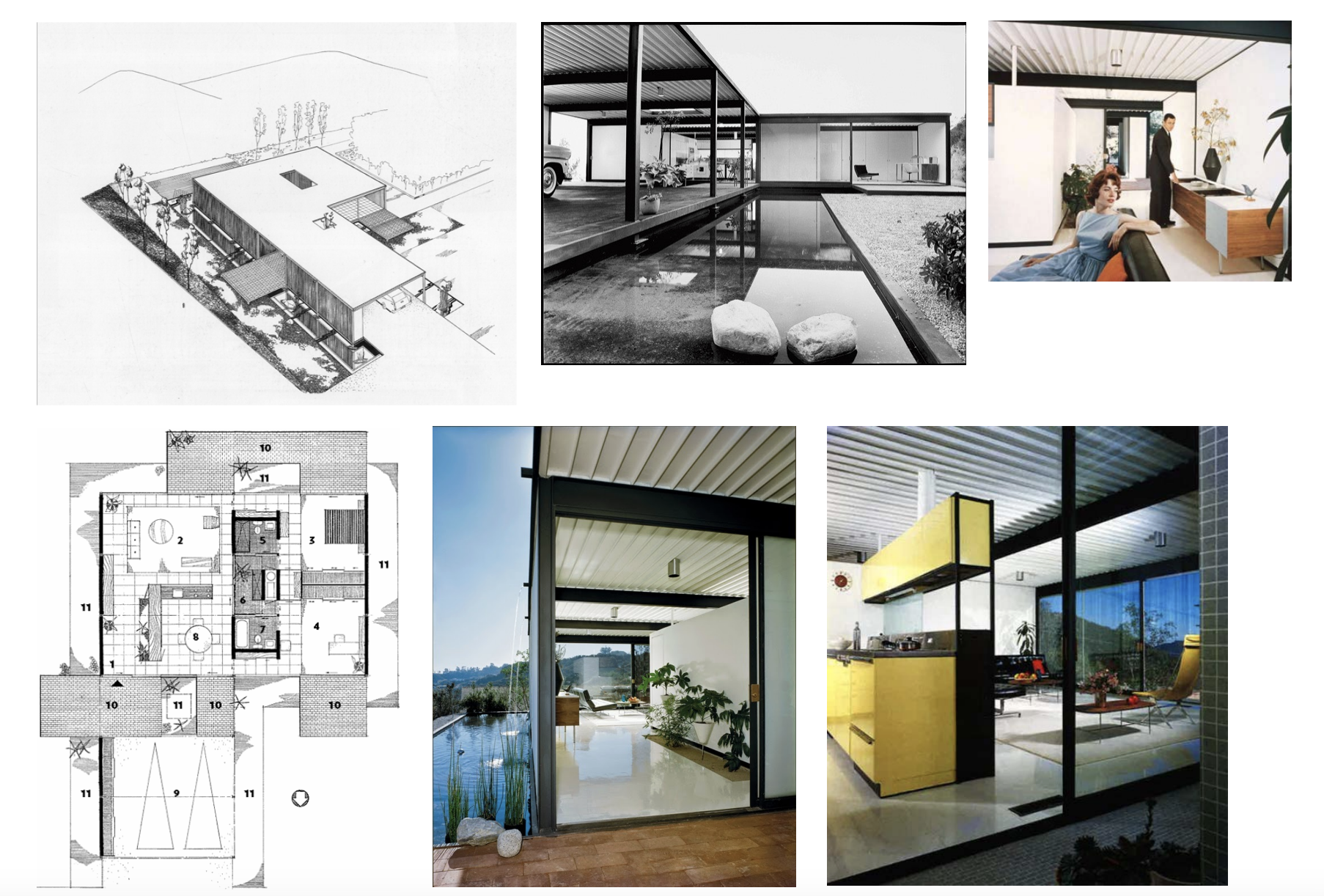
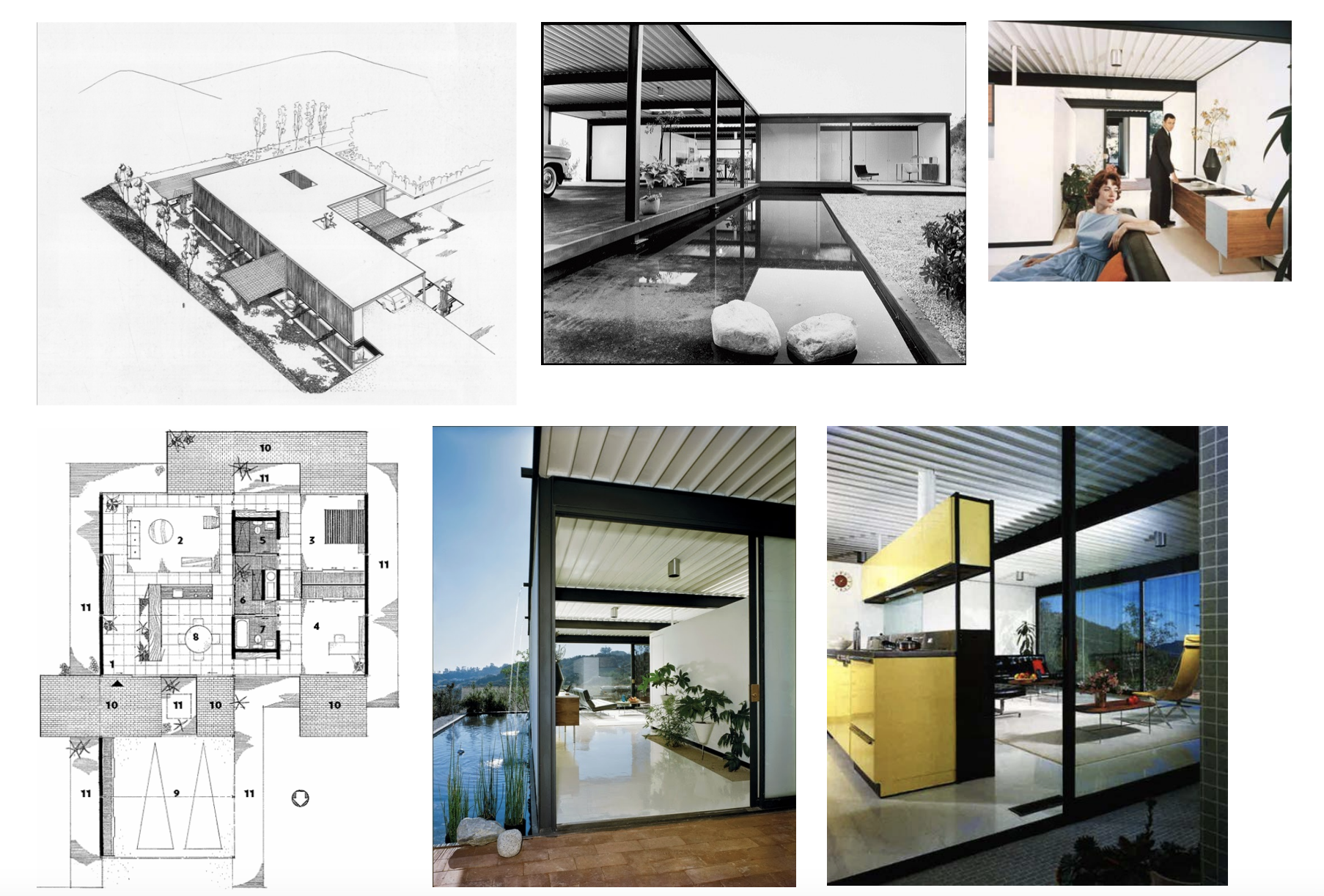
13) Pierre Koenig, “Bailey House” (Case Study House 21), Los Angeles (CA), USA, 1958
Case study house 21
Cleanest, most immaculate concepts made accessible for everyone
Uses standard steel components, building modules based on standard dimensions of the steel components
Surrounded by large reflecting pool, built-in garage with corrugated steel roof, atria cutouts to allow for light to flow into the center of the building
Transparency is main idea, car-centric architecture with car port right outside of the dining room
One material for roof, minimum house with maximum space
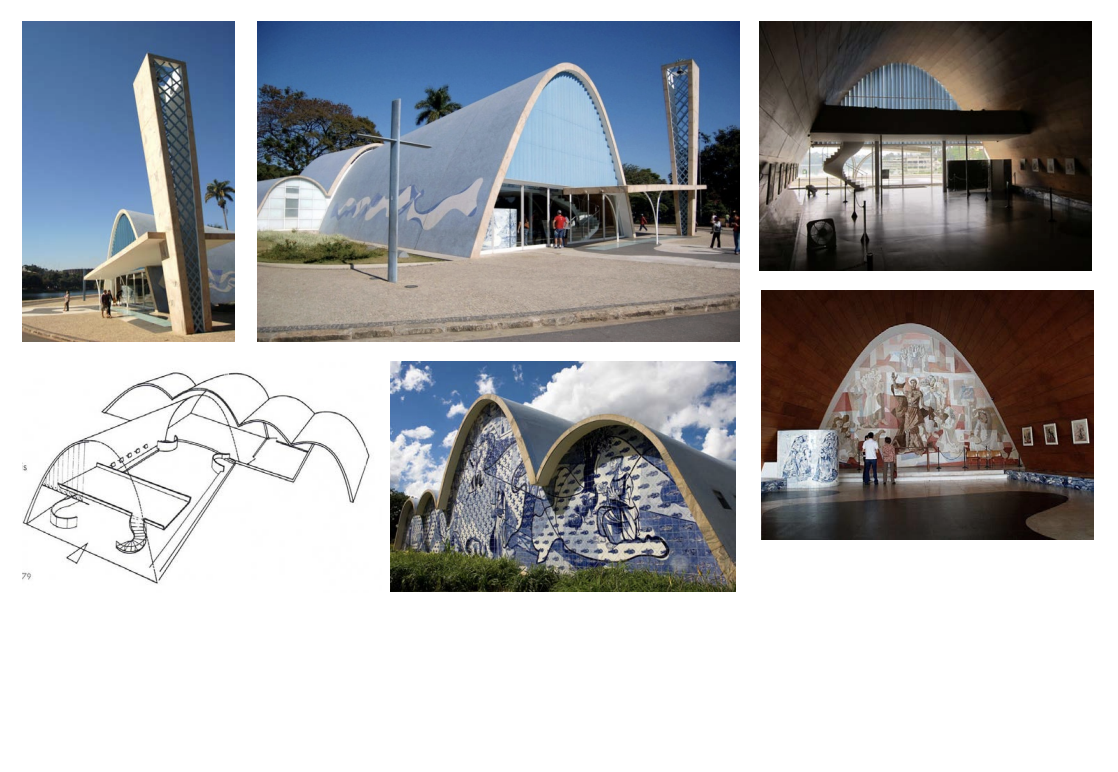
14) Oscar Niemeyer, Church of St. Francis, Belo Horizonte, Brazil, 1943
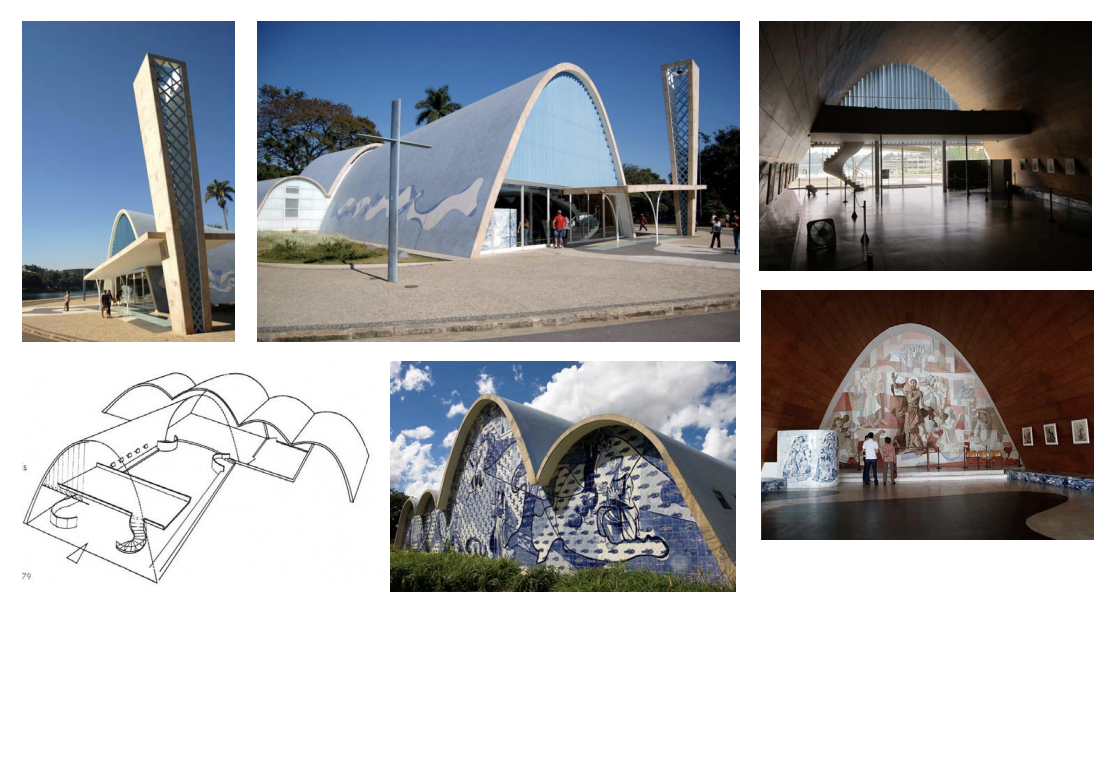
Resort area that surrounds man-made lake, catered to wealthy people. Not a lot of applied decoration, smooth flat surfaces. Use of blue color and curves, created in the cultural context and identity of Brazil. Parabolic arch nave. Wavy ornamentation on exterior, reflecting the waves of the water. Embracing natural curves over straight lines because straight lines are “man-made.” whitewashed modernism/international style vs. regional modernism. The back of the facade has traditional Portuguese modernist tiling. Interior lined in wood as a softer contrast to the exterior concrete, the end chapel has modernist painting on the wall
14) Luis Barragán, Barragán House and Studio, Mexico City, Mexico, 1947
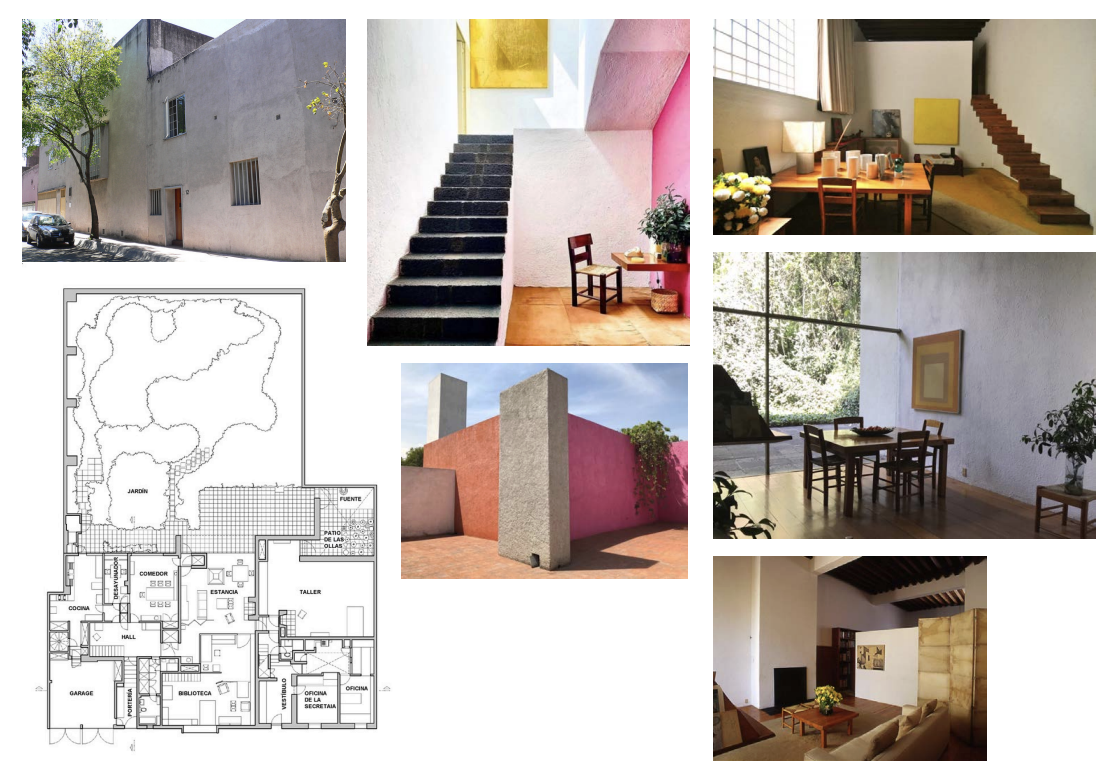
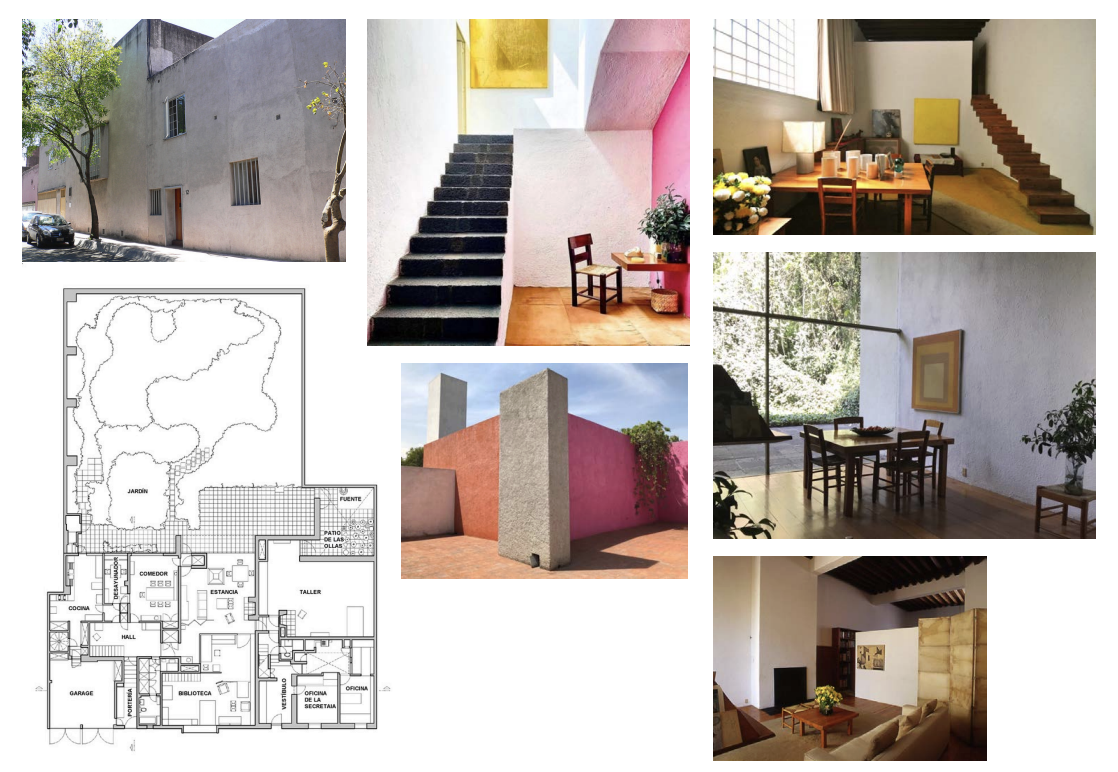
First Latin American architect to receive the Pritzker prize, devout Catholic, influences his monastic interiors meant for contemplation and solitude. Studied in France, learns about modernism in France. Exterior is bare and not too showy, blends in with surrounding facades. Includes an enclosed garden, transition from small hallway entry from the street into large/tall central hall. Use of natural light from skylight, indirect lighting, use of local volcanic rock in the staircase, white plaster interiors, vibrant pink used in many Mexican buildings. Pink wall reflects onto white walls with natural light; without it, it would just be white. Spanish colonial hacienda style interior of the living room. Minimal, glass wall by dining table. Illusion of thick wall between the street and the contemplative interiors. Rooftop painted in pink plaster with plants growing on it.
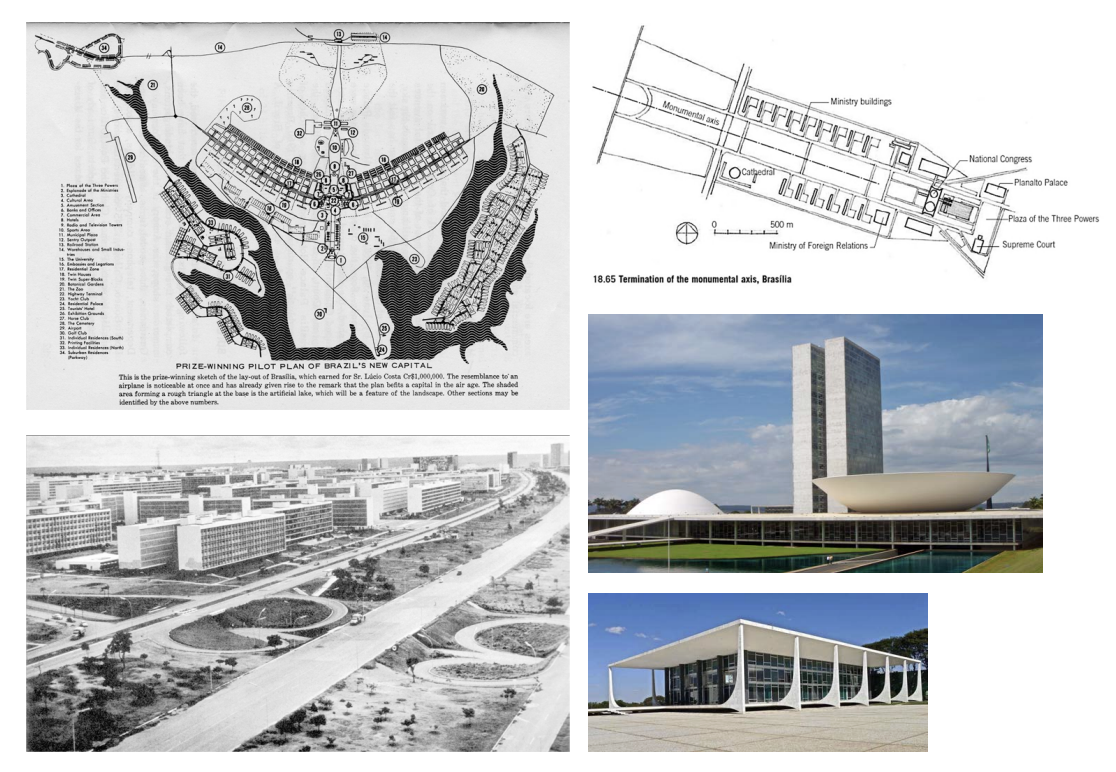
14) Lúcio Costa, Brasília master plan, Brasília Brazil, 1957
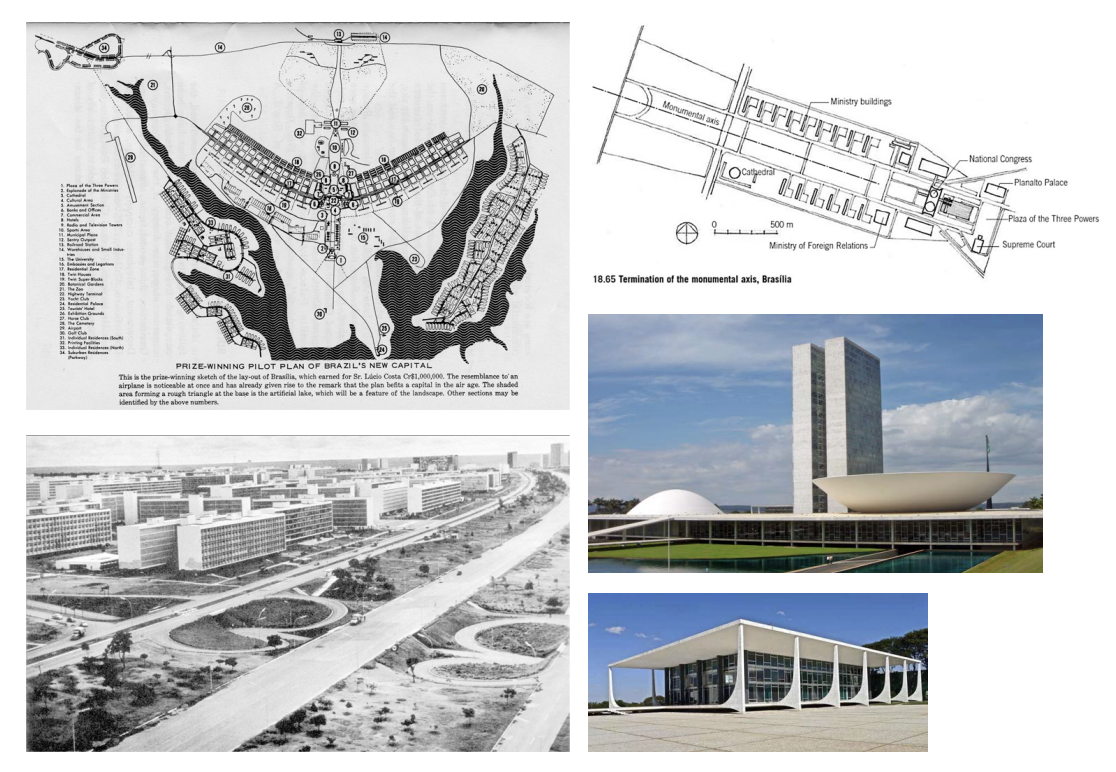
Decision made after WWII to create Brasilia in the Amazon, accessible by plane. Planning looks like a bird, reflects modernist optimism. Flat buildings and rooftops consistent with international style. Government located there, placement of buildings reflects judicial, executive, and legislative branches of government.
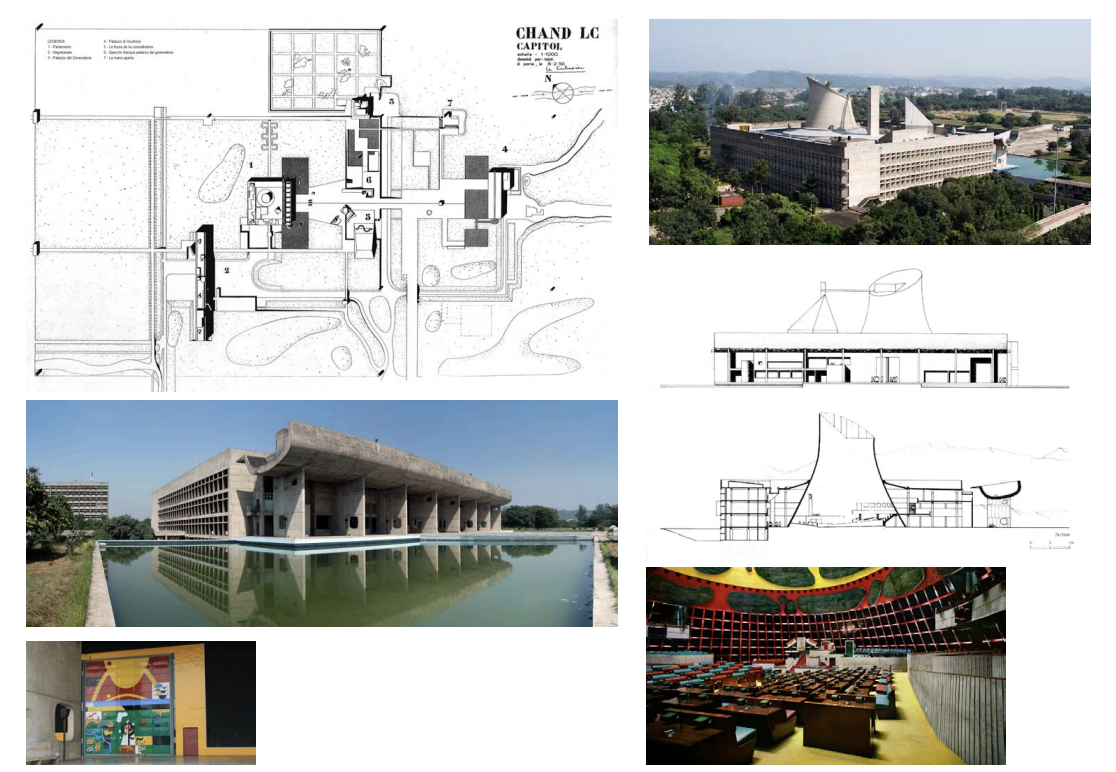
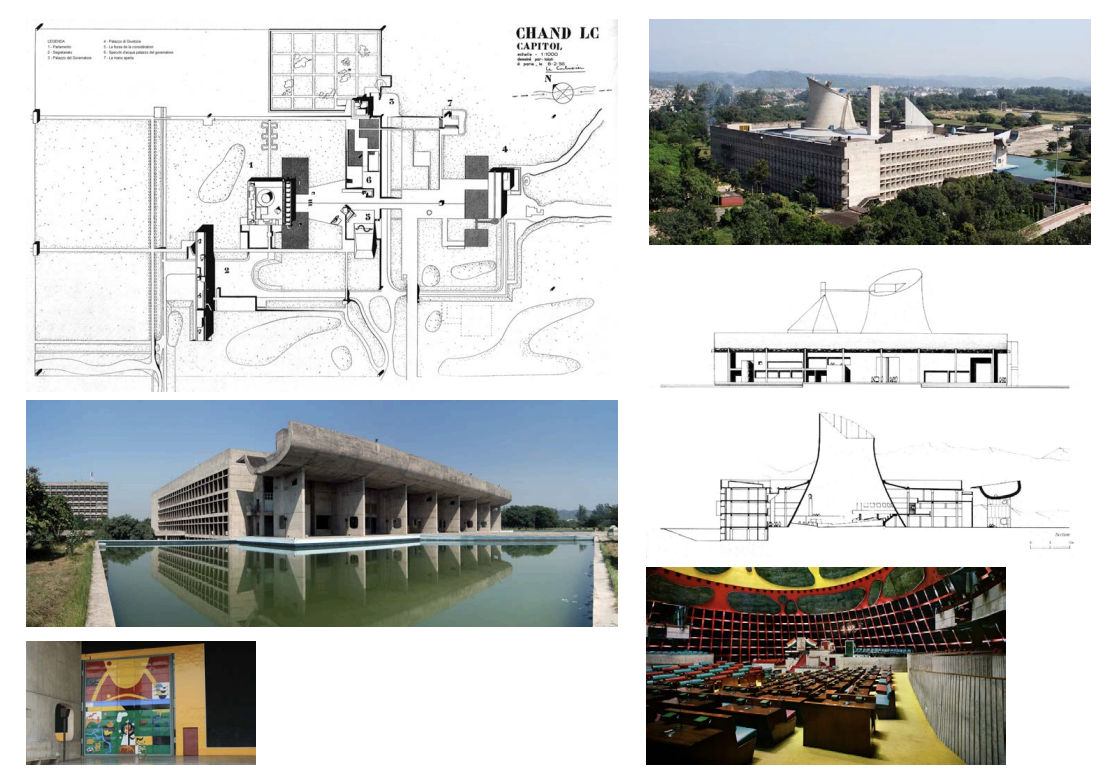
14) Le Corbusier, Legislature Building, Capitol Complex, Chandigarh, India, 1951–63
Series of separate buildings arranged around vast open concrete plaza: includes court building, secretary building, governor’s house, the Legislature Building etc. City is built and inaugurated in the 50s. Legislature building has thick concrete, brises soleil to cast shadows, parasol on front facade as a shading element, curved in a way that reflects cow horns, surrounded by reflecting pool. Brutalist architecture. piloti grid that uolds up interior space. Colorful courtroom
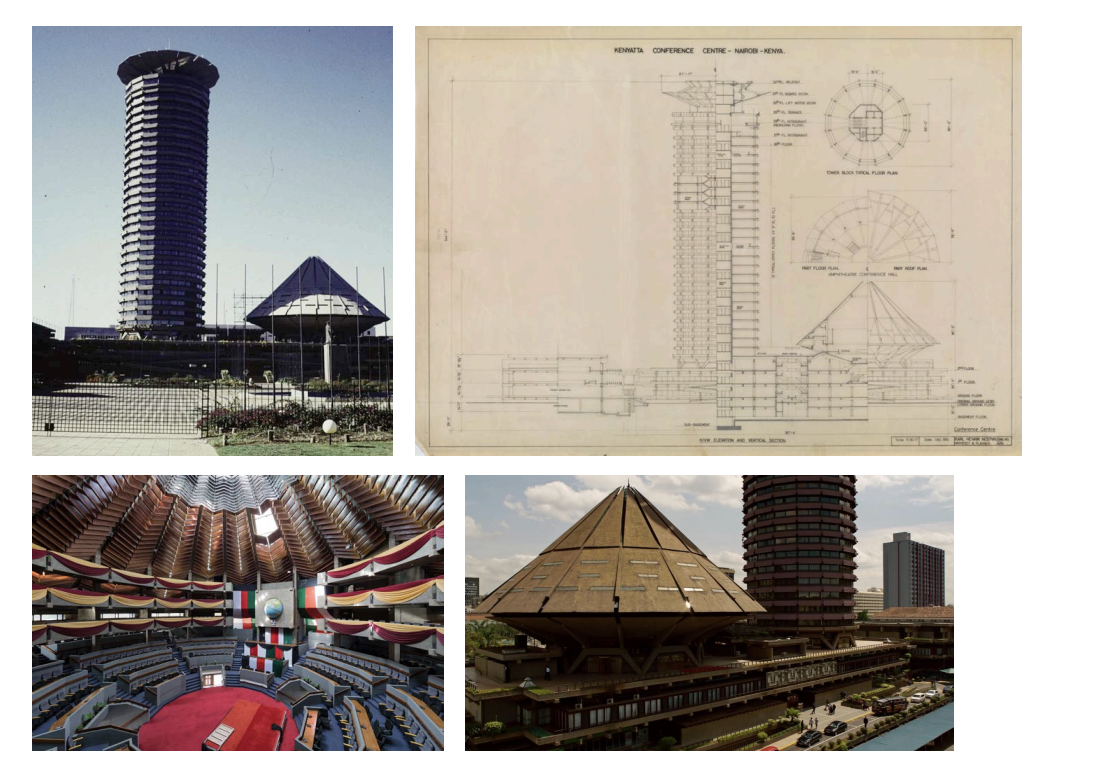
14) Karl Henrik Nostvik, Kenyatta International Conference Centre, Nairobi, Kenya, 1967–73
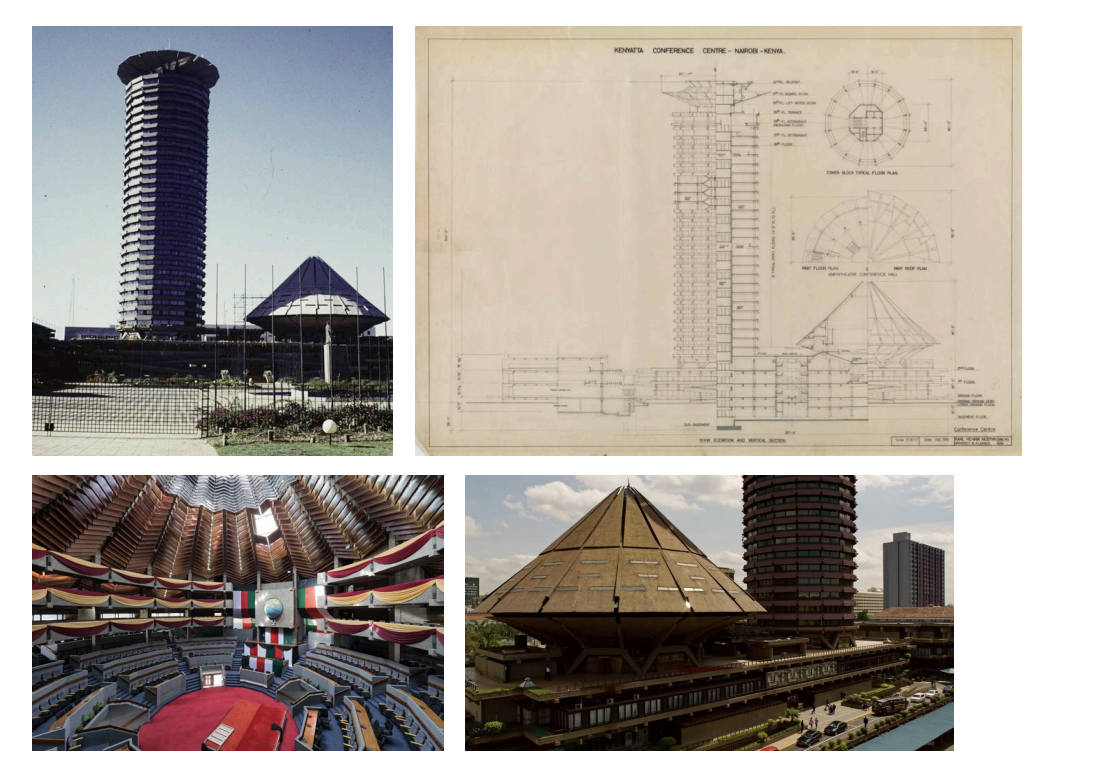
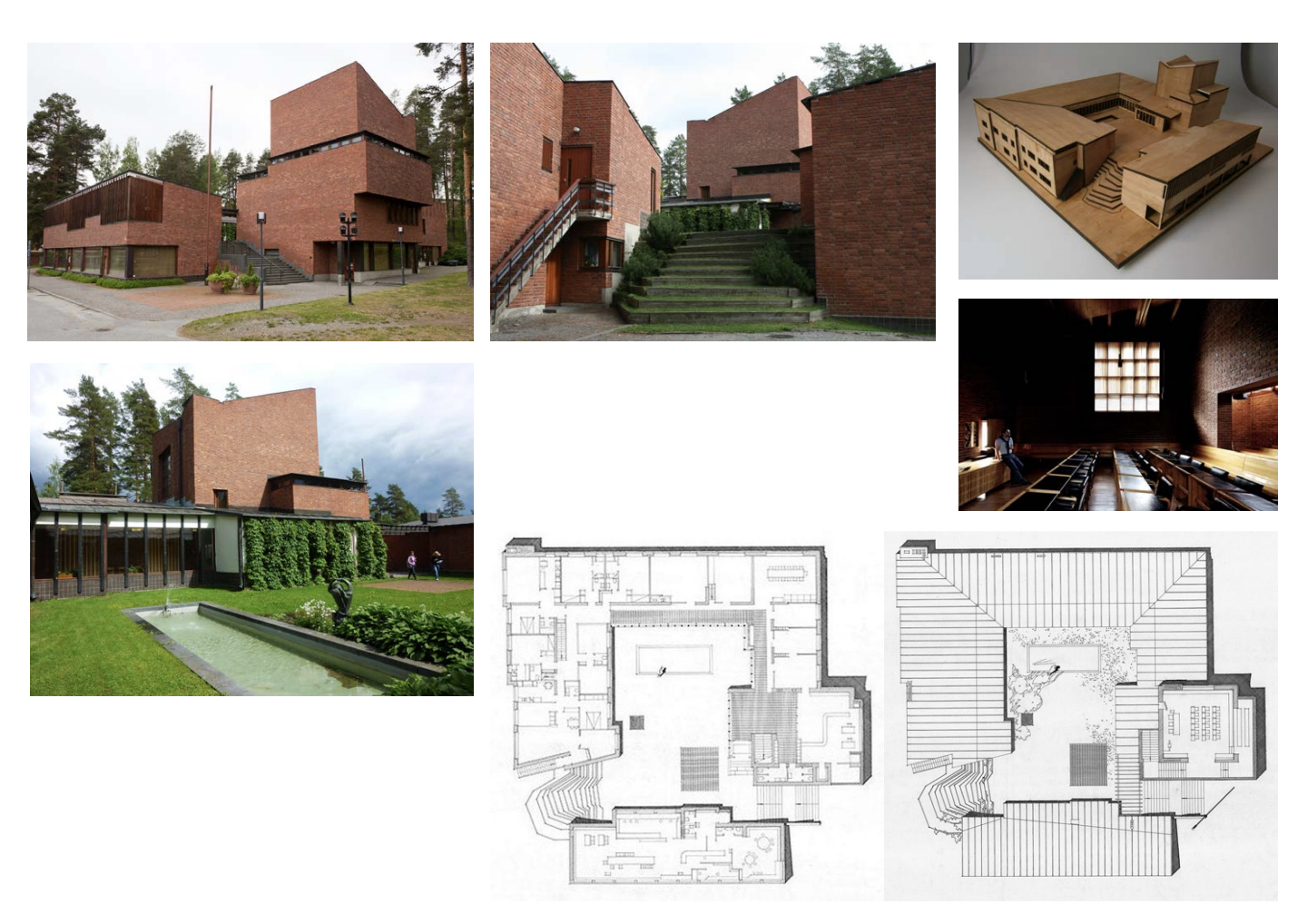
Newly independent government of Kenya, architecture that reflects their independence and participation as a member of the world’s nations. Conference center and government offices, designed through public works offices (government architecture offices that builds infrastructure). Nostvik is Norwegian, coming from a country that wasn’t one of the colonial powers (Scandinavian countries), seen as a politically neutral choice to make. Tall office tower and cone/flower blossom shaped conference building, local masons and workmen worked on the facade of the building by chipping it, giving the facade a rough texture. Wooden beam panels at the clerestory of the conference building, allows shadows. Tower appears on Kenyan currency.
15) Alvar Aalto, Civic Center, Säynätsalo, Finland, 1952
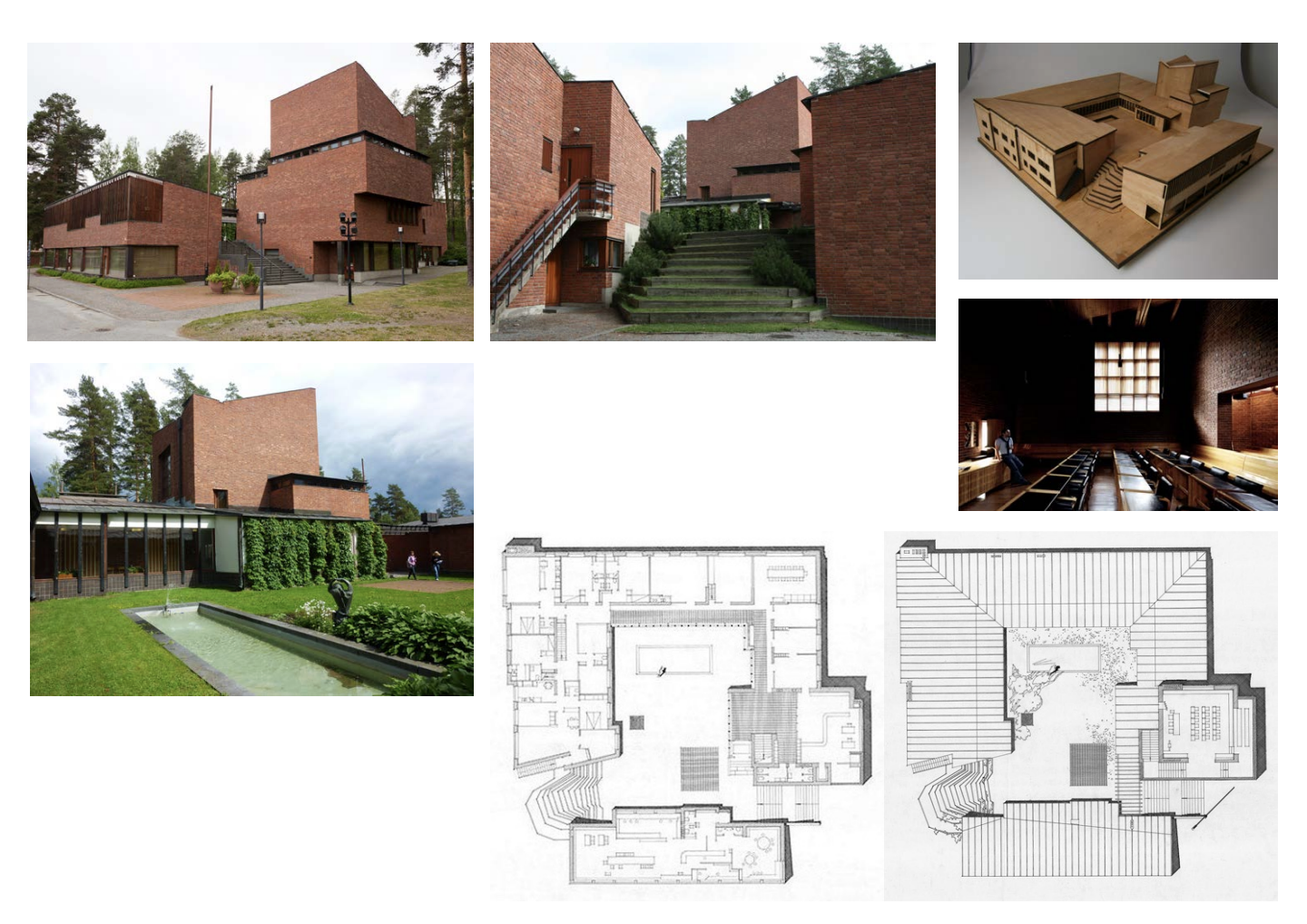
Located on a rural island in Finland, by its massing it feels monumental relative to the low density of people. Venue for gathering and socializing, civic social monument, council chamber for town council, library, post office, shops, apartments, guest rooms. All is arranged as a social harbor, all the programs come together represents the place itself. Public space wrapped by low lying buildings and taller buildings. Monumental public symmetrical staircase and a casual, inforal local grass terrace stair, landscaping that dissolves into surrounding forest, represents a back door, establishes a hierarchy between the monumental front and casual back. Courtyard has water fountain and greenery. Interior made of humble brick materials, civic without being overtly monumental. natural light from the roofing. Government room has wood materials, simple.
15) Jørn Utzon, Opera House, Sydney, Australia, 1957–72
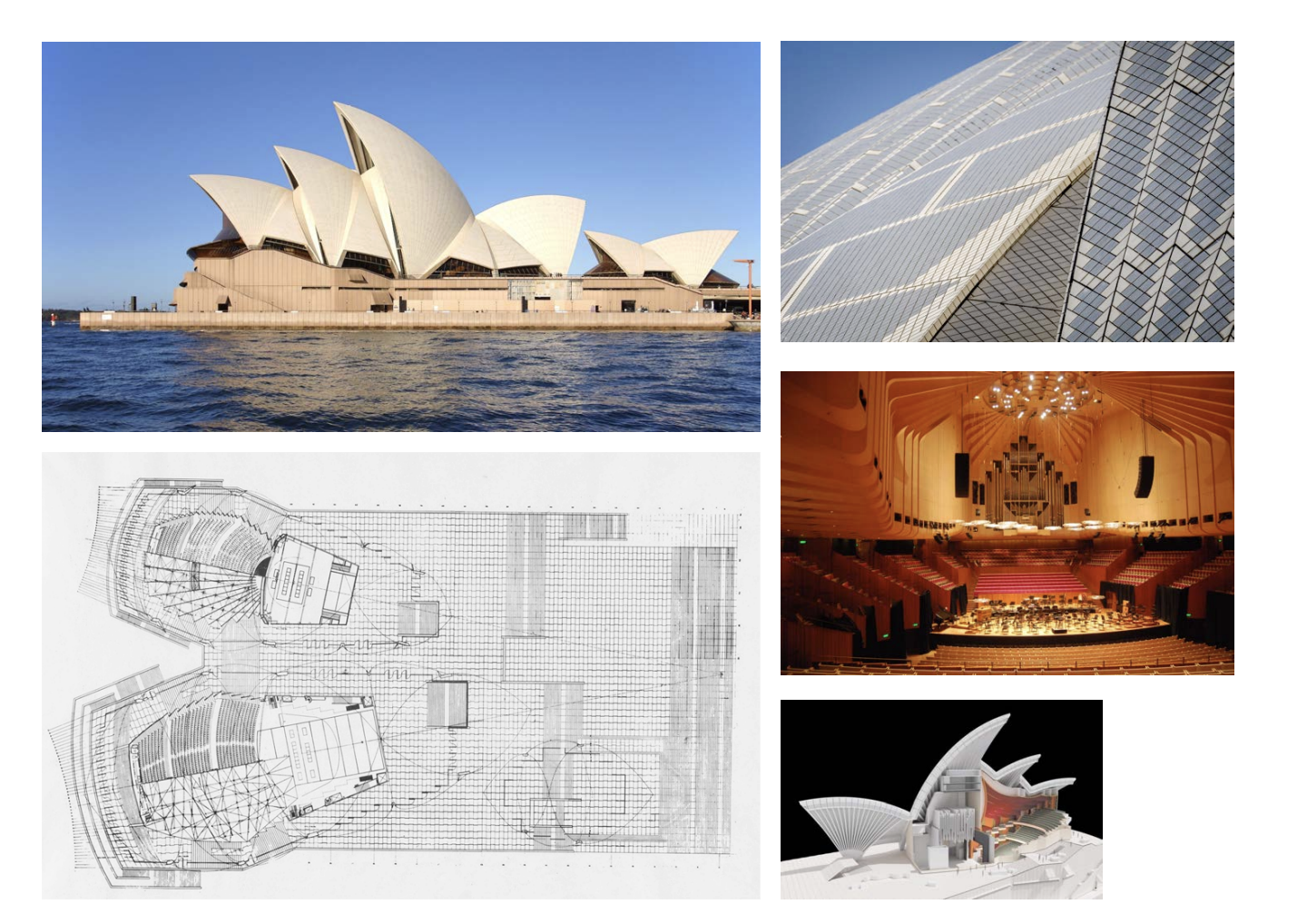
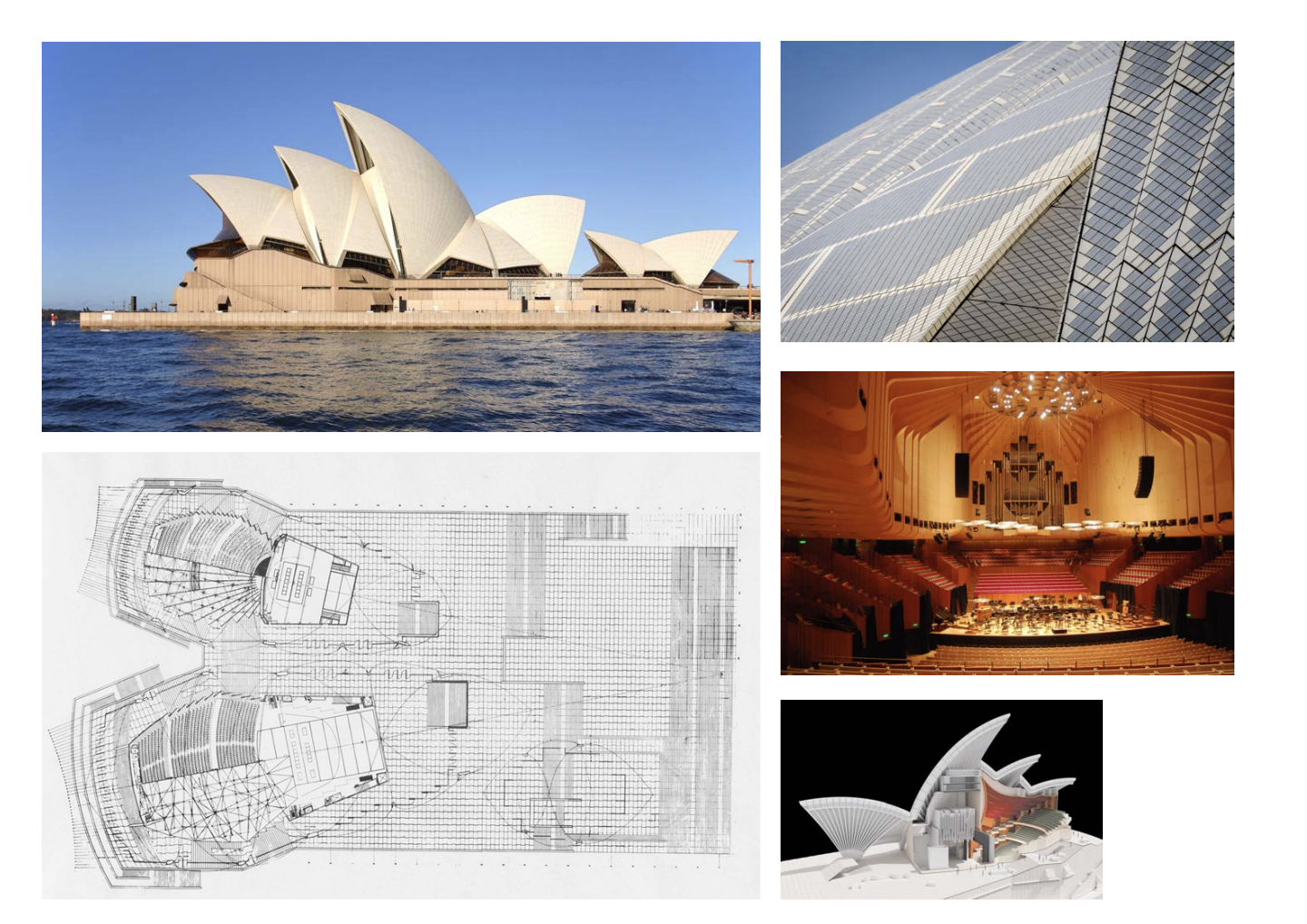
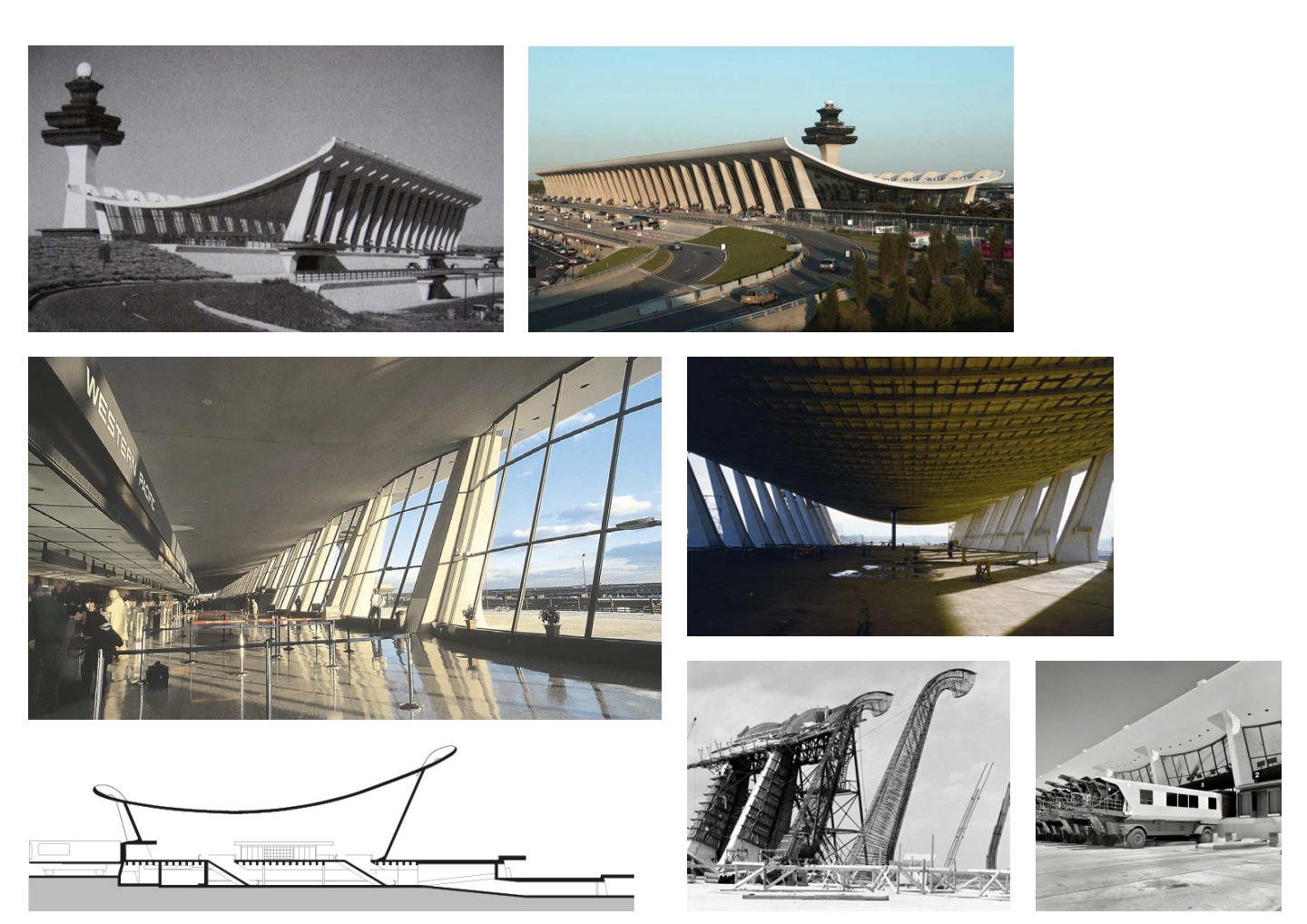
Two major music halls sunken into a platform, layered arc segments of spheres for the roof’s facade, pre-cast concrete ribs during construction, beige and grey tile for the facade. Utzon speaks to the building like a gothic church: playing with light and creating a dynamic experience. Lowest portion clad of granite panels, upper portions clad in special glossy matte beige tiles. Rib-like structure expressed on the side in the interiors. Doesn’t follow form follows function: excessive form. Louis Khan compliments it when saying “the sun realizes its beauty through the opera house’s reflection.”
15) Eero Saarinen, Dulles International Airport, Main Terminal, Chantilly (VA), USA, 1961
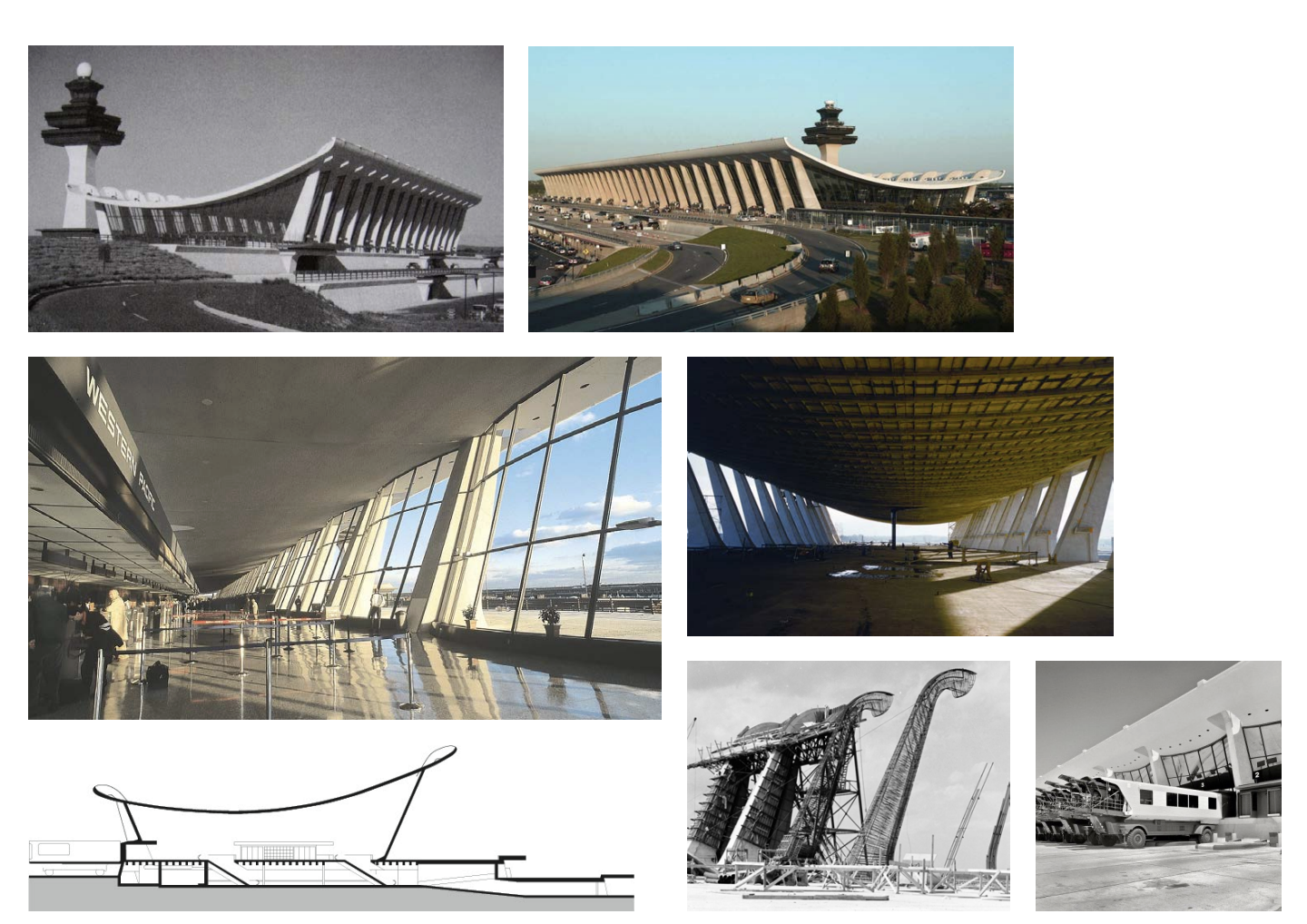
Modern airport concept build for new jets: needing longer runways and space. Airport terminal becomes boxed in glass. Catenary arch roofing. “Huge suspended hammock.” Ticket booths and programs are low relative to the tall open interiors under the roof. Reminiscent of a Greek Temple, located nearby the Lincoln Memorial/DC. First thing they see when they land to go to the DC area, appears representative of the monumental and civic architecture of DC. Usage of mobile lounges to bring passengers onto the plane. Length was extended.
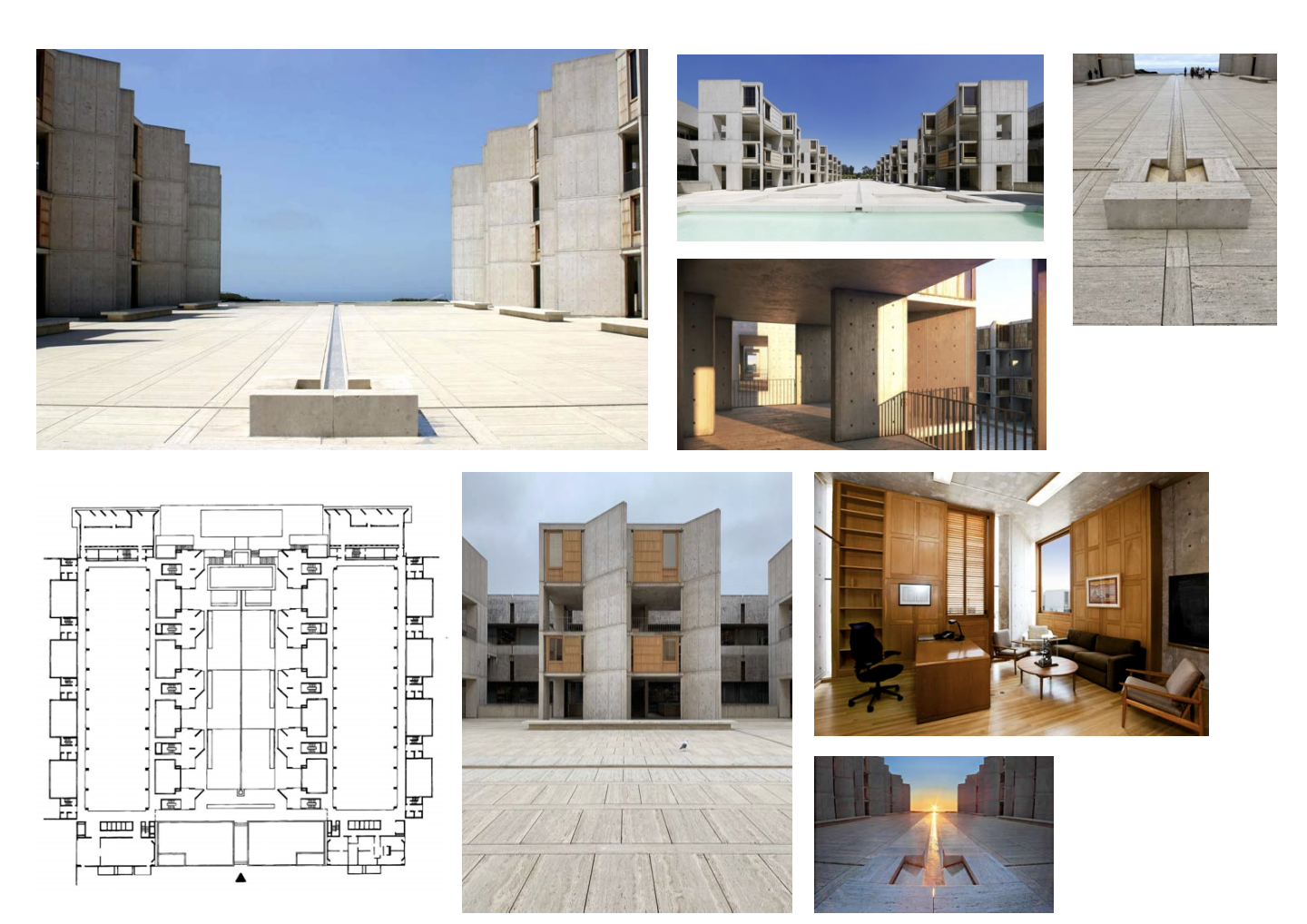
15) Louis I. Kahn, Jonas Salk Institute, La Jolla (CA), USA, 1959–65
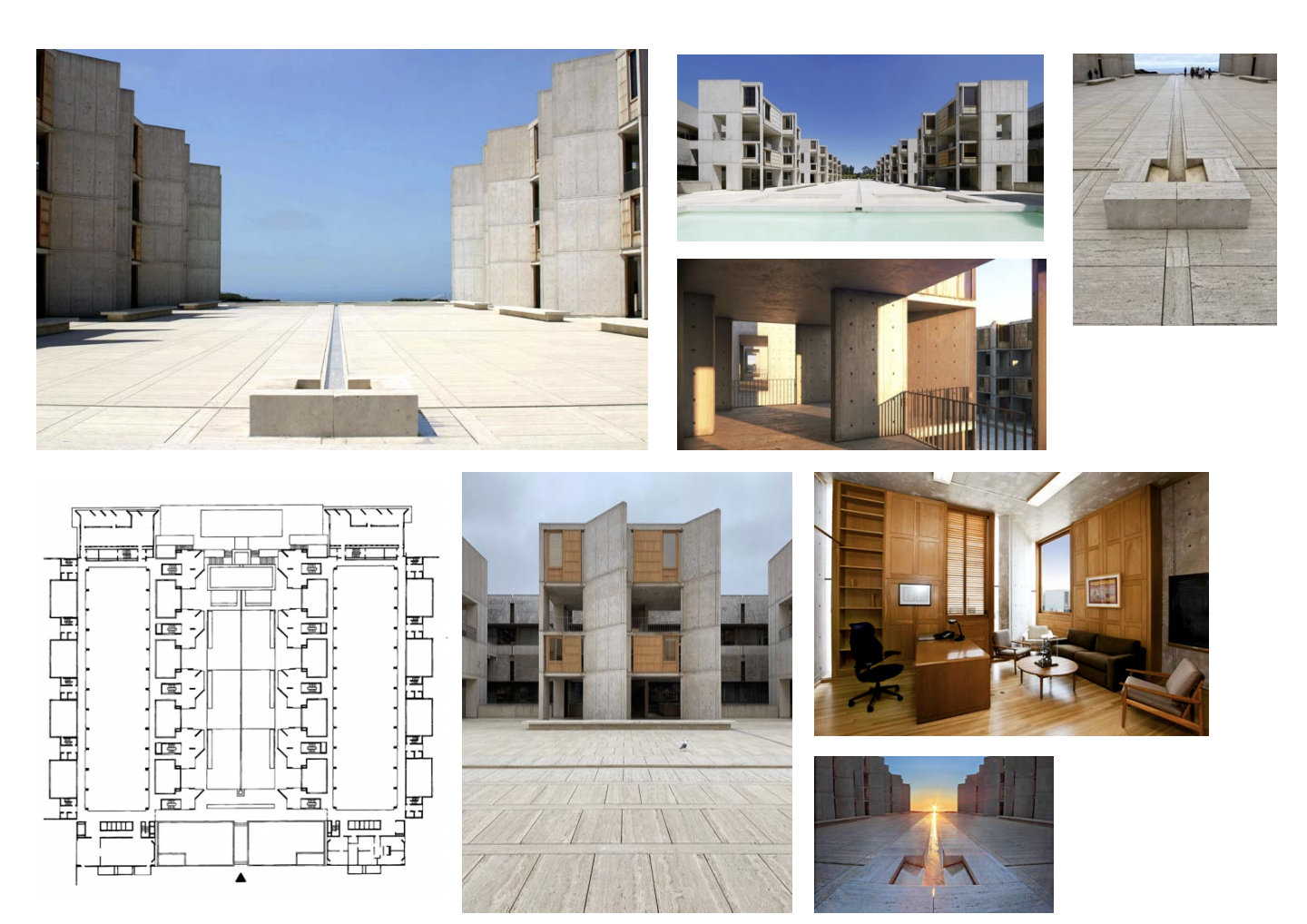
Develops his own idea of monumentality. Use of concrete. His design process is based on the abstraction the function. Research science institute arranged linearly around a courtyard with a trough of water that ends in the pacific ocean. Travertine reflects the repurpose of ancient culture in a modern context. Arrangement of offices, church-like contemplative atmosphere. Teakwood on exterior and interior to soften harshness of concrete.
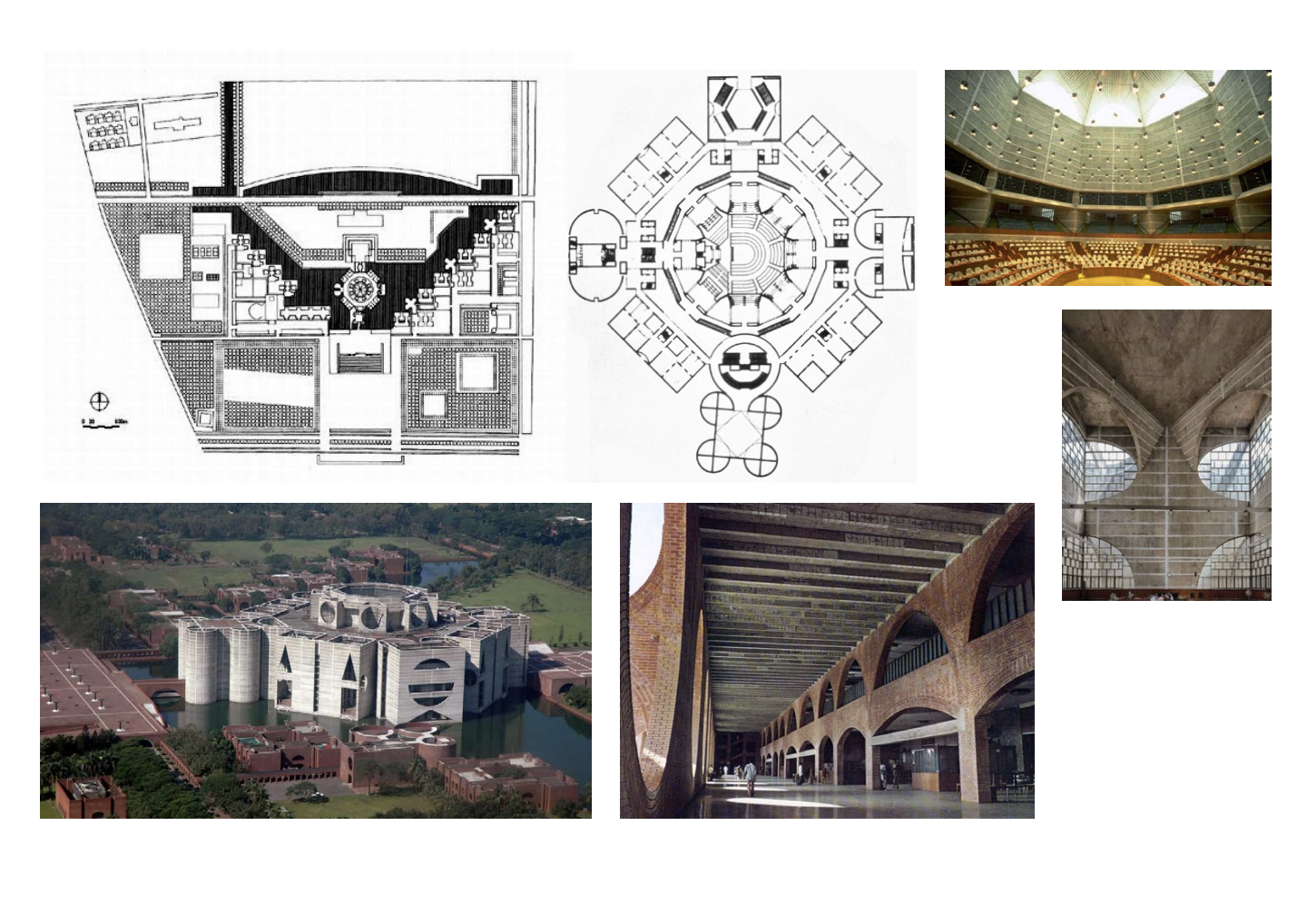
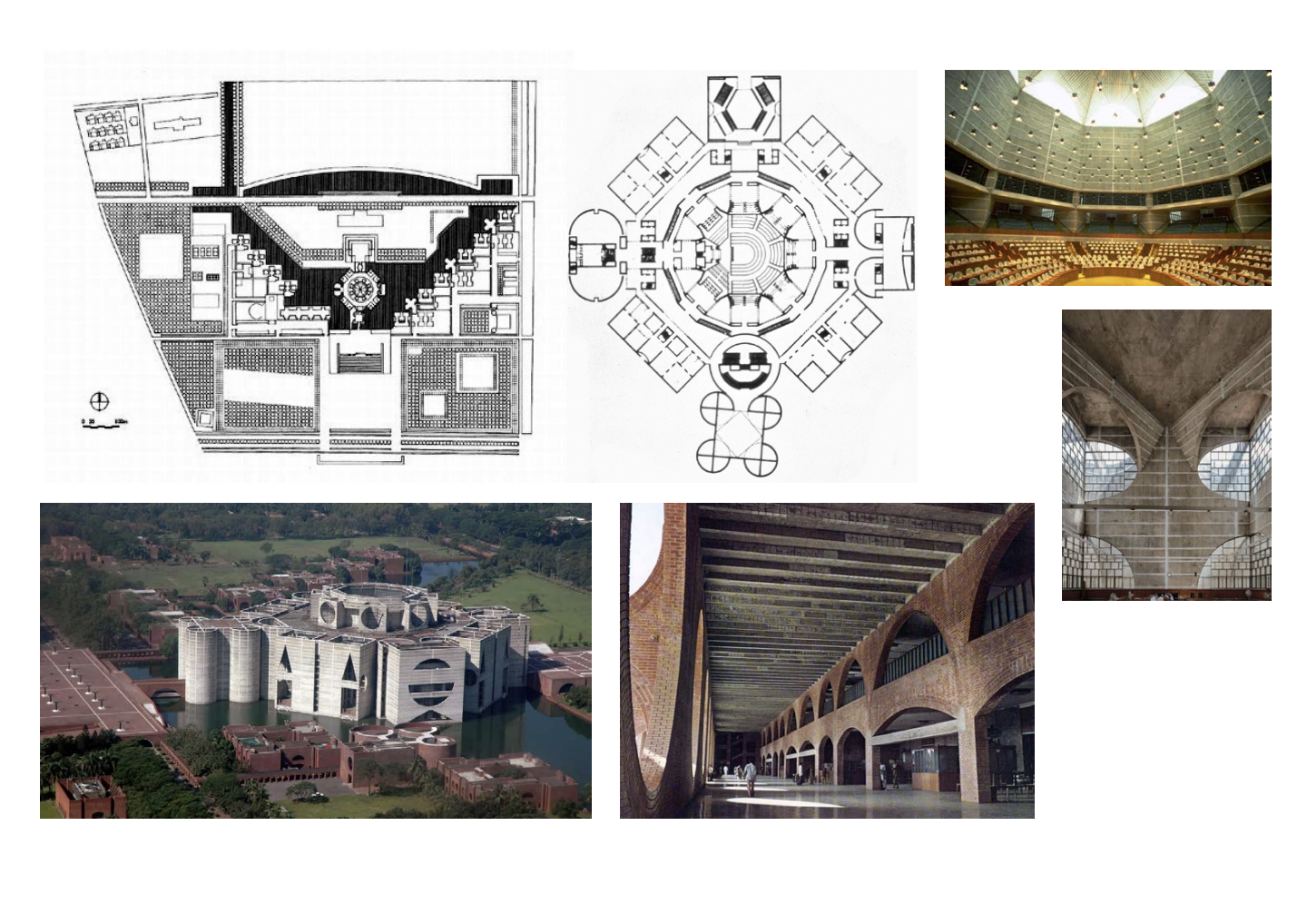
15) Louis I. Kahn, National Assembly complex, Dacca, Bangladesh, 1962–83
1947, India is partitioned (Bangladesh=East Pakistan), Bangladesh needs a capital, Khan is comissioned. Centrally aligned around a “chamber”, man-made water moat. Wall complex surrounding it like a fortified city, includes meeting rooms, offices and mosque. Main purpose is the legislature, and everything around it serves it: “servant and served spaces.” Building facades made of brick, have circular aperture motifs. A lot of shading in the indoor outdoor walkway, allowing circulation to control the heat and keep the interiors dry. Made of concrete. Central vaulting is an entire story higher to get natural light that’s reflected down into the central meeting chamber. people describe haunting presence and magnificence.
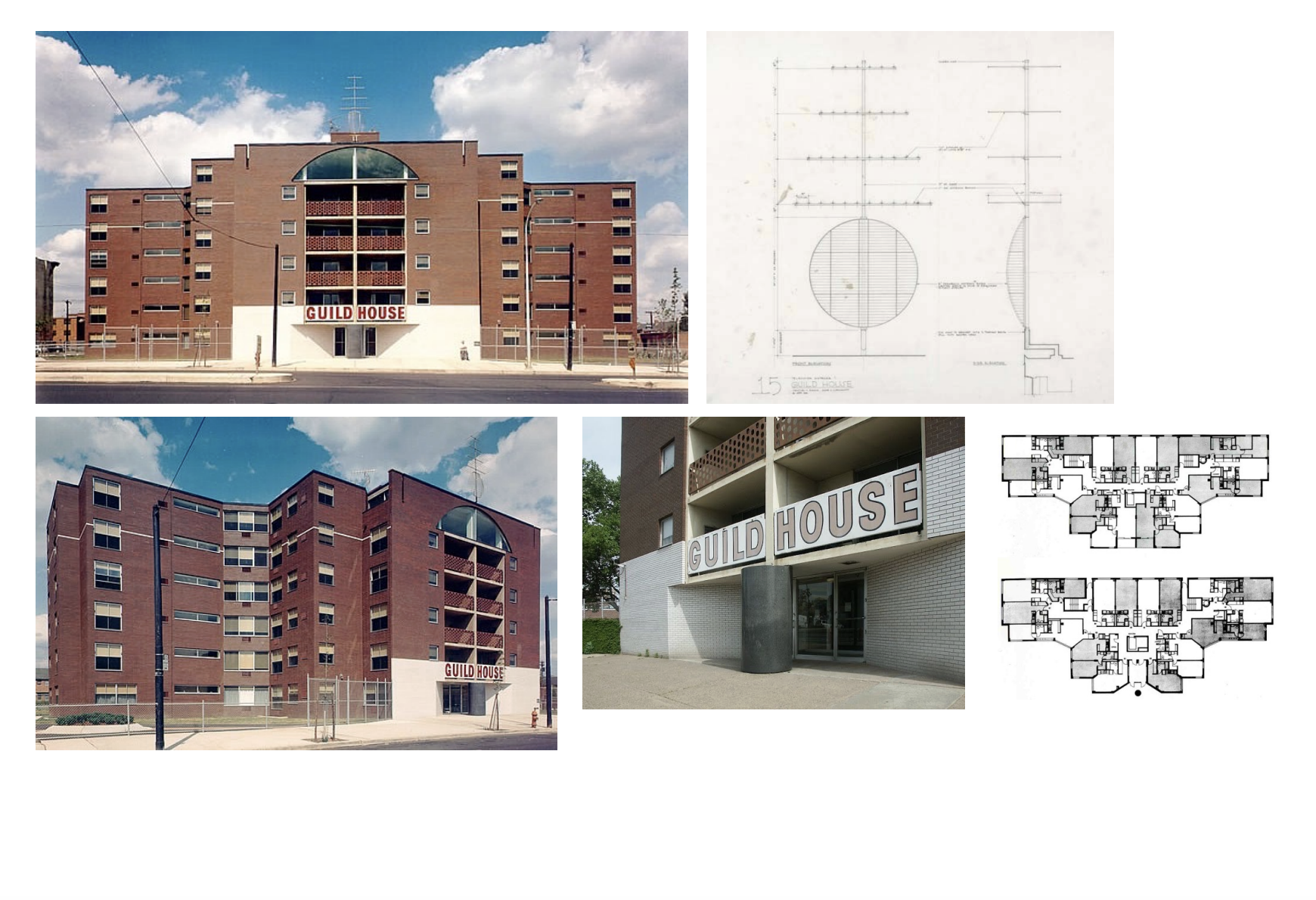
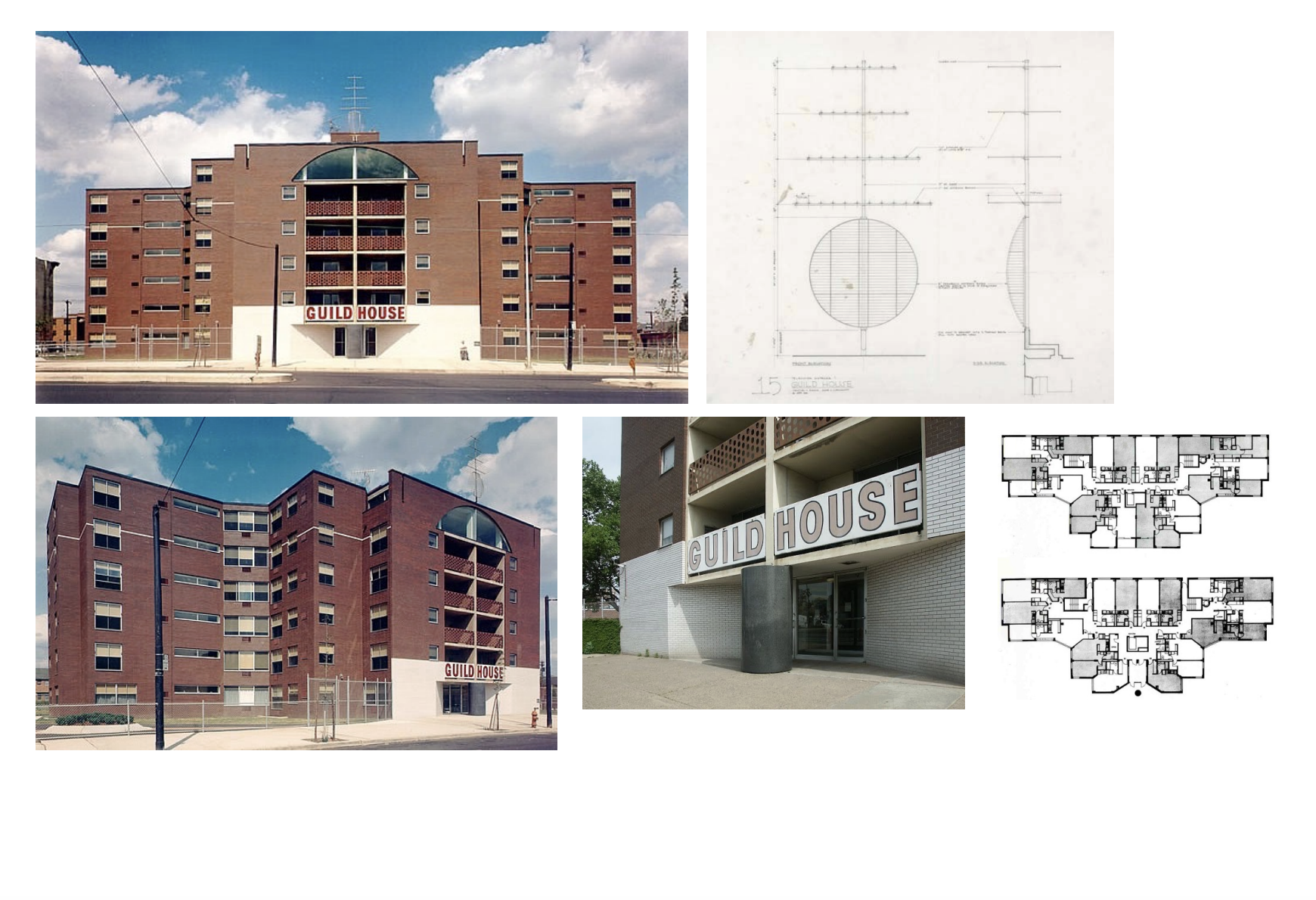
16) Robert Venturi and John K. Rauch, Guild House, Philadelphia (PA), USA, 1960–63
Associated with the quakers: conveying simplicity, humility, and honesty in its materiality (bricks). Architecture built for the ordinary person rather than building something heroic, traditionally monumental, and sterile for the common person.
Intentionally darkened brick to fit in the industrial neighborhood, large signage that can also be helpful for people hard of sight/older people and provides a sense of monumentality, chain-linked fencing to denote safety
Meant to read as domestic architecture that is safe, domestic, and humble
Gold-painted aluminum faux TV antenna on the top center, a symbol for the elderly who like to watch TV
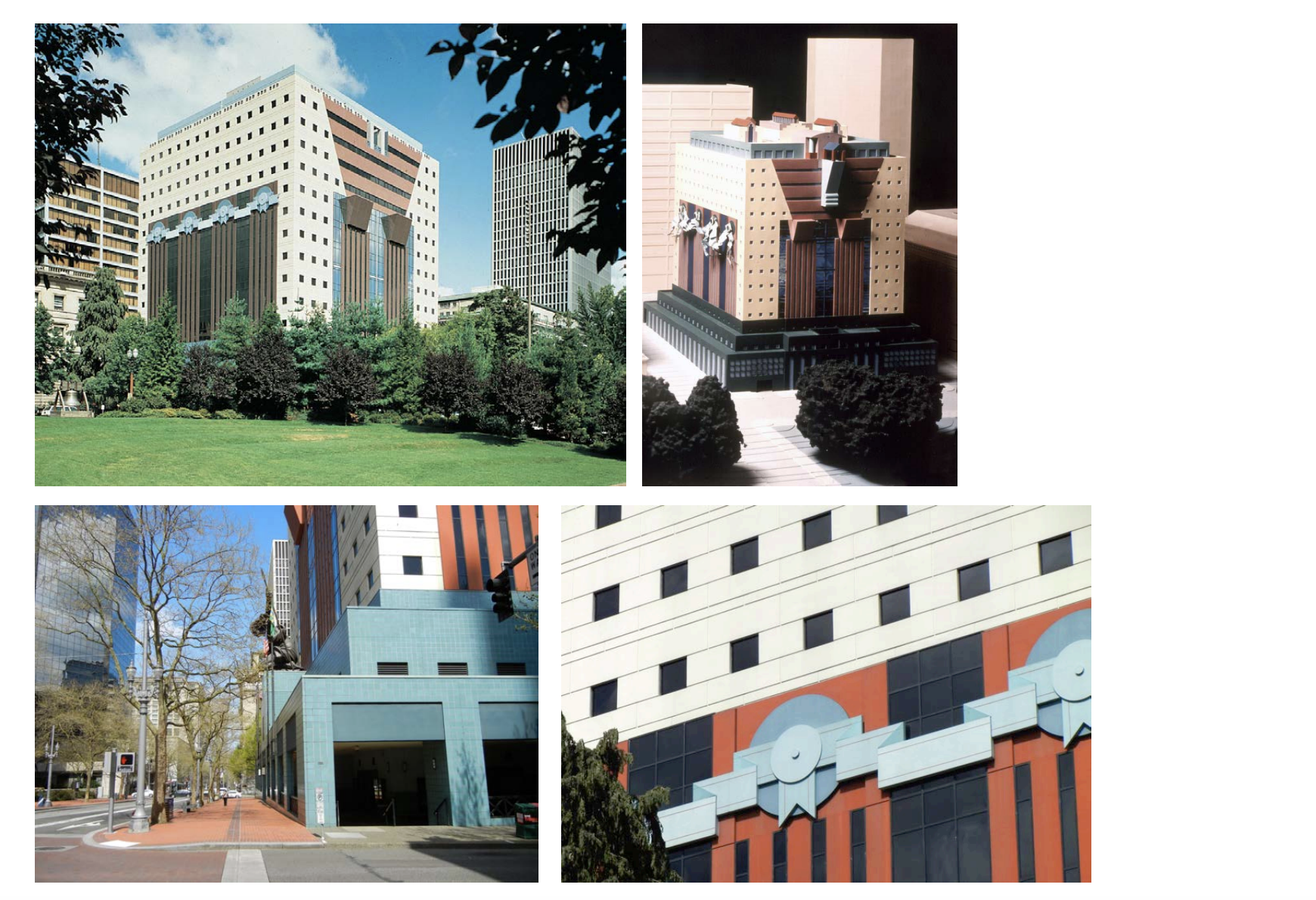
16) Michael Graves, Portland Building, Portland (OR), USA, 1980
Wanted a design that depicts Portland as a city of excellence, not form follows function
Tuscan colors on stucco exterior, iron beams, decorative elements, covered teal colonnade around the bottom
Located by beaux arts building/city hall
Roman-style grills around bottom facade
Large statue of greek god (poseidon?) on front facade
Office spaces, people found it depressing to work in
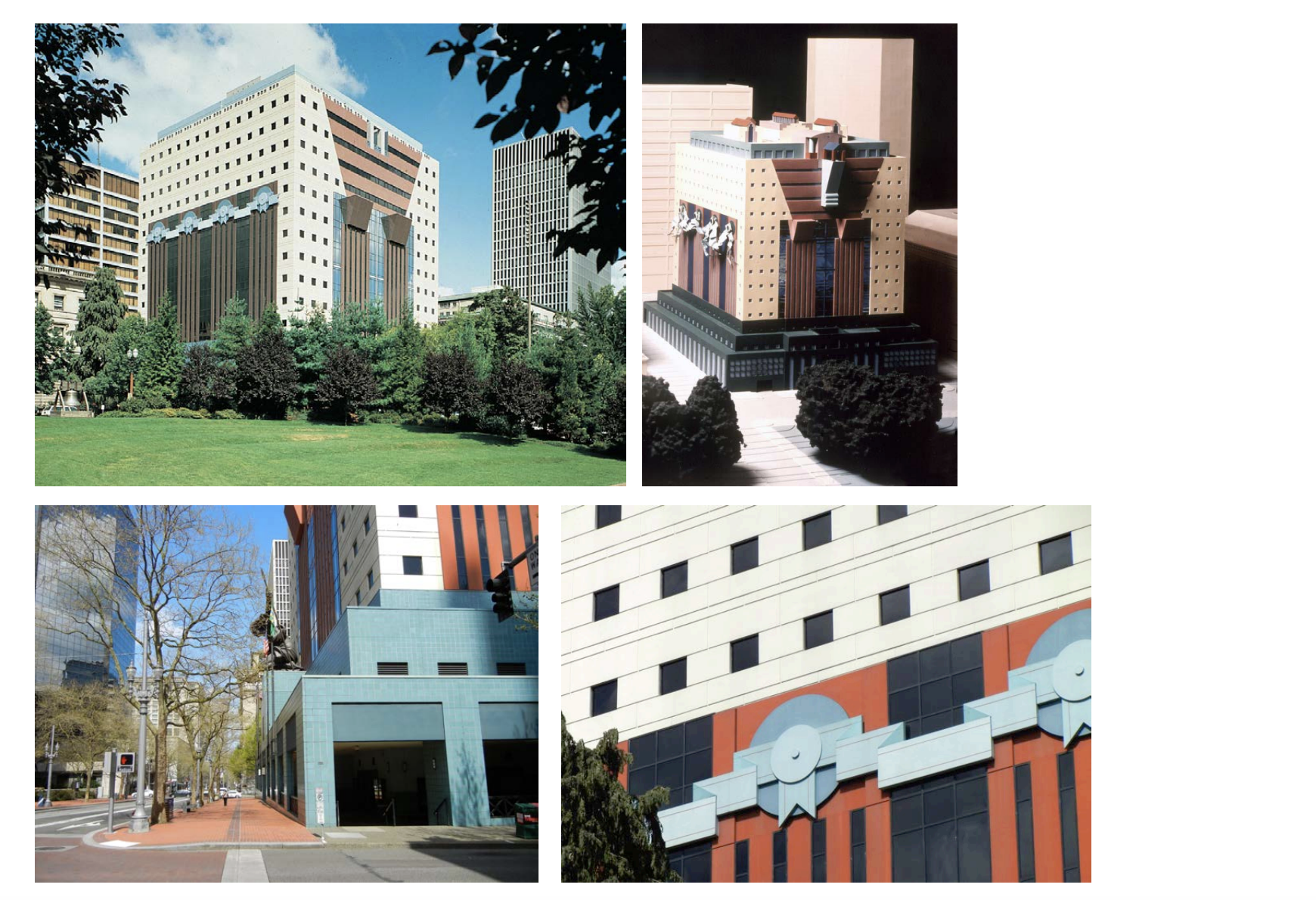
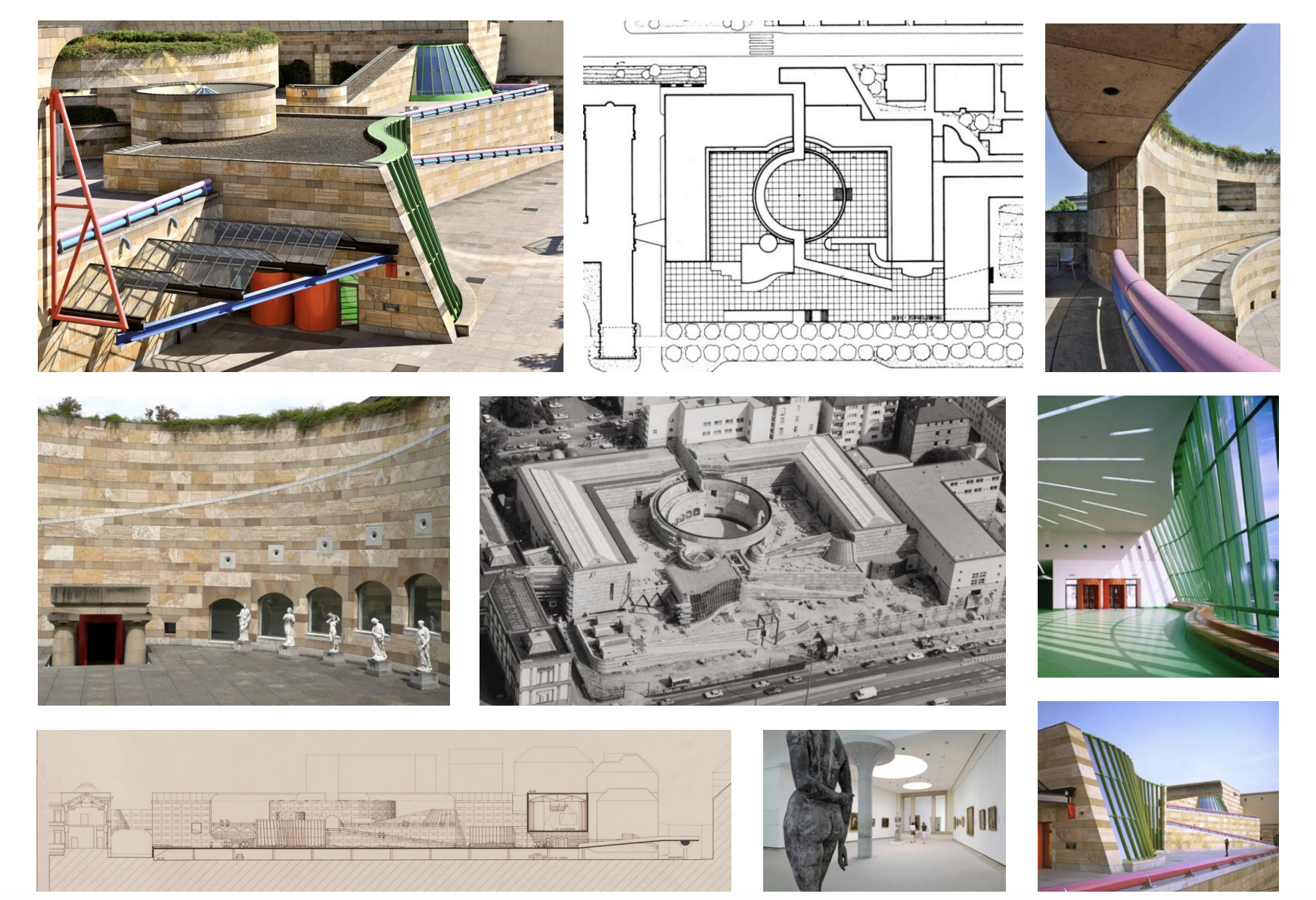
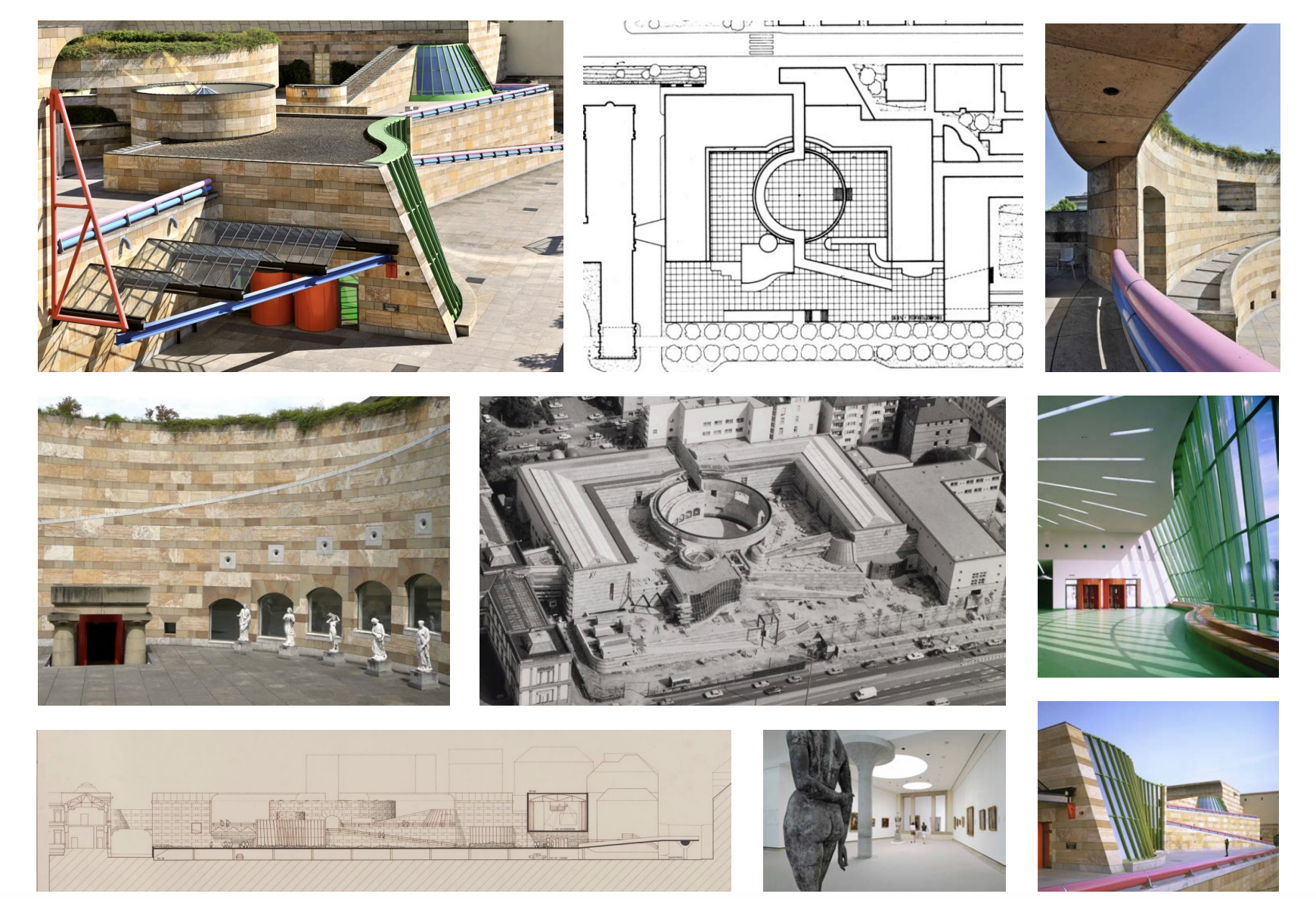
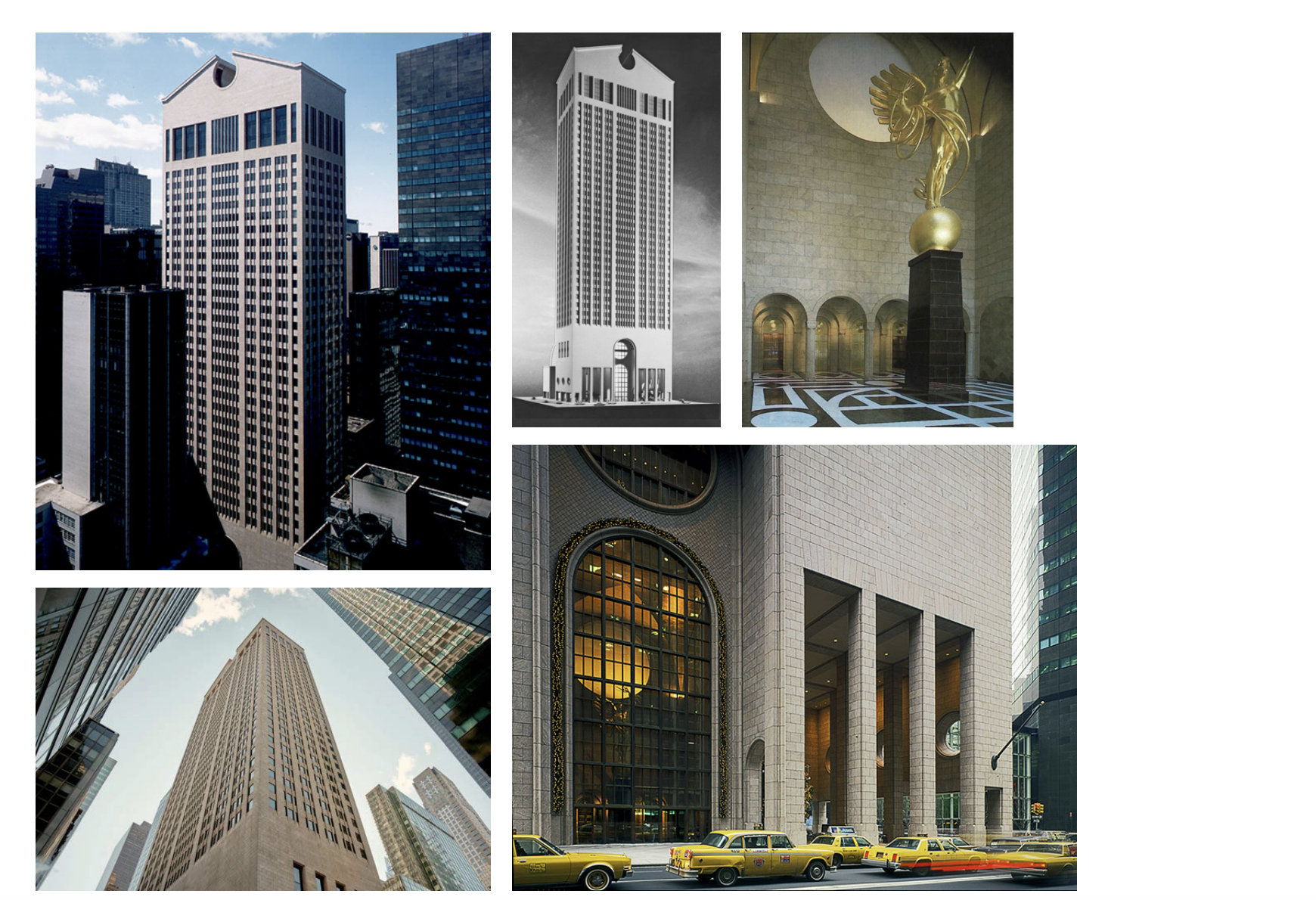
16) James Stirling and Michael Wilford, Neue Staatsgalerie, Stuttgart, Germany, 1977–83
Art museum, references to iconic buildings, neoclassical references responding to buildings that surround it
“Representational and abstract, informal and high tech” - sterling, a lot of contradictions
Heavy masonry walls contrasted with walls of transparent glass
Hidden dome inside the rectangular box - like the altes museum. And to contrast the dome, there is a sunken hole with no dome
16) Philip Johnson, American Telephone and Telegraph (AT&T) Building, New York (NY), USA, 1978–84
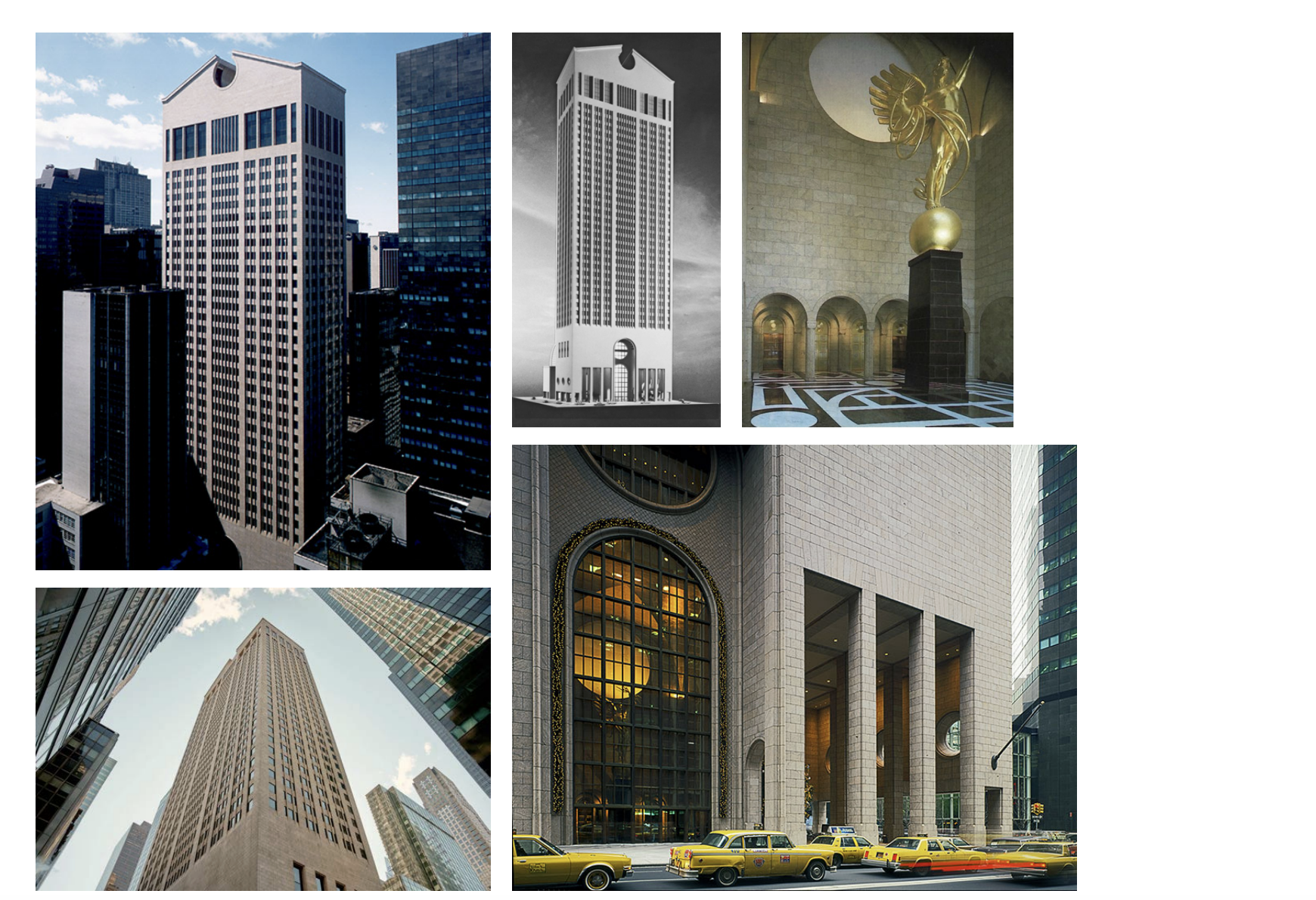
Curtain wall building raised with iron beams and concrete slabs, rather than wrapped in glass, it was wrapped in stone
Chippendale profile (top of facade) to make it recognizable as the AT&T building
Palladian window with central curve window, square colonnade across the bottom, very large scale
Vaulted interior, entry hall has the statue of the spirit of communication
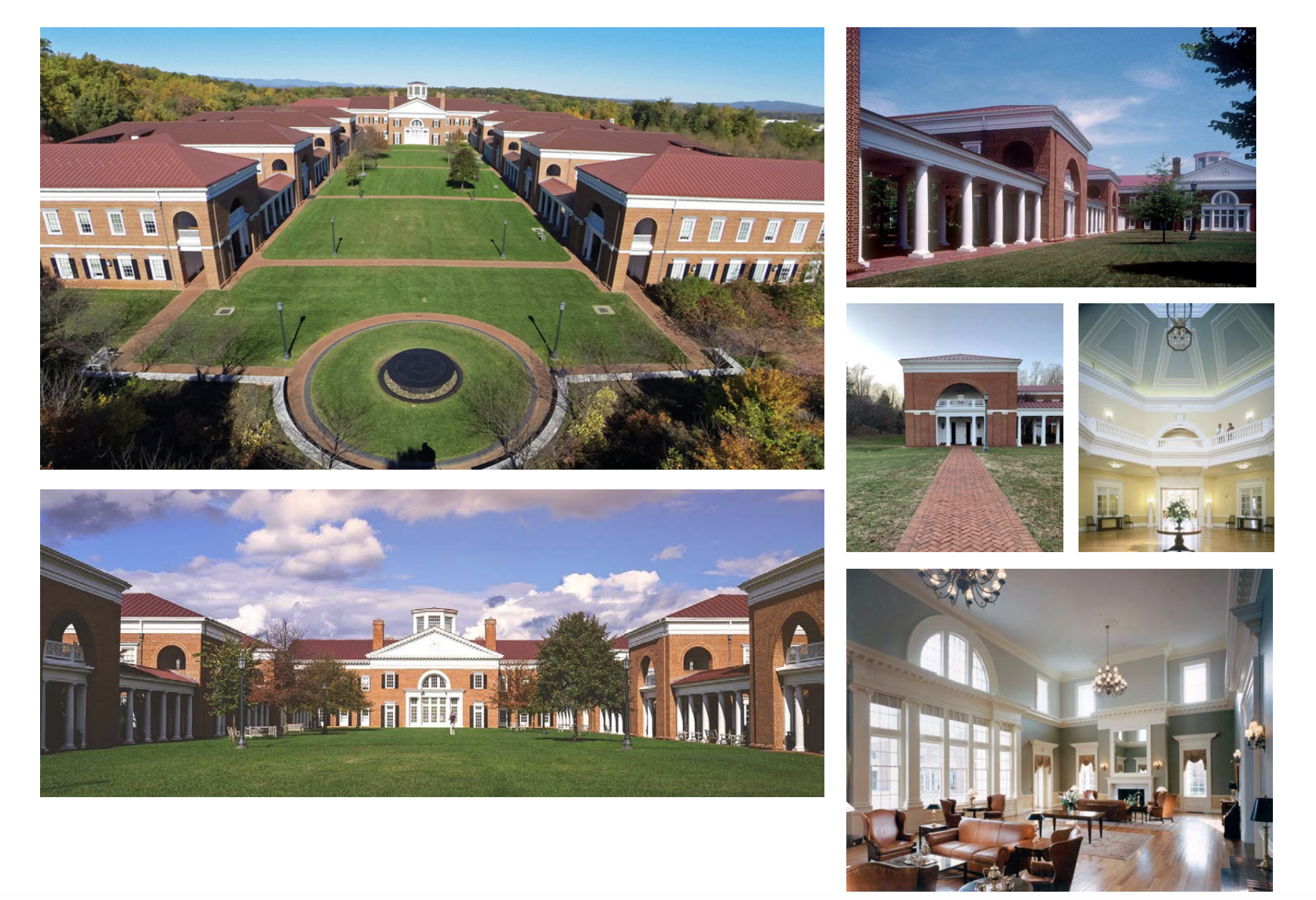
16) Robert A. M. Stern, University of Virginia Darden School of Business, Charlottesville (VA), USA, 1996
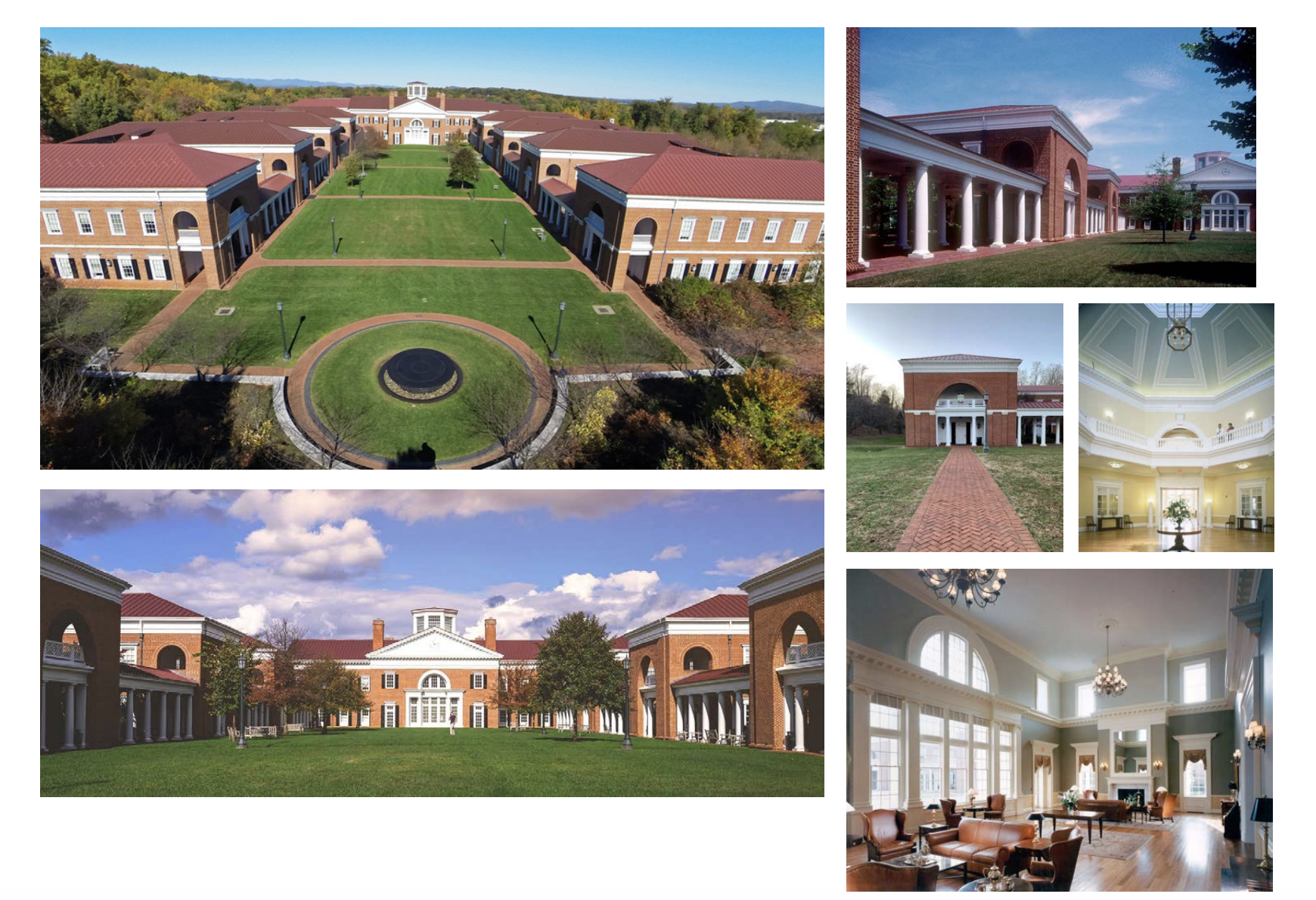
Smaller to redirect attention to other parts of campus
Flat, colonnade, space that’s reflective of the campus across town but not overpowering it
Columns and coffered domes, includes the ornamentation of the parking garage
Neo-traditional style
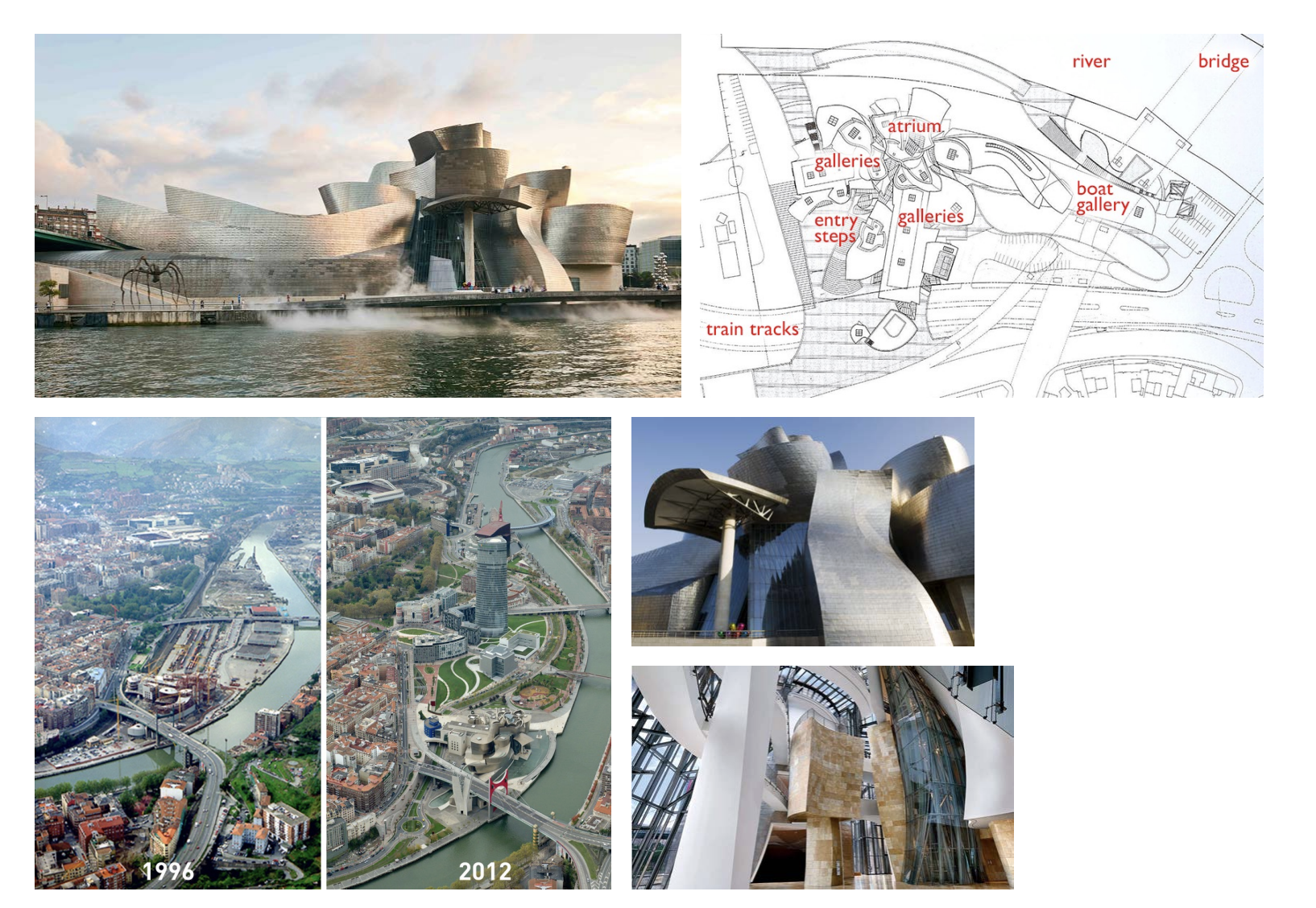
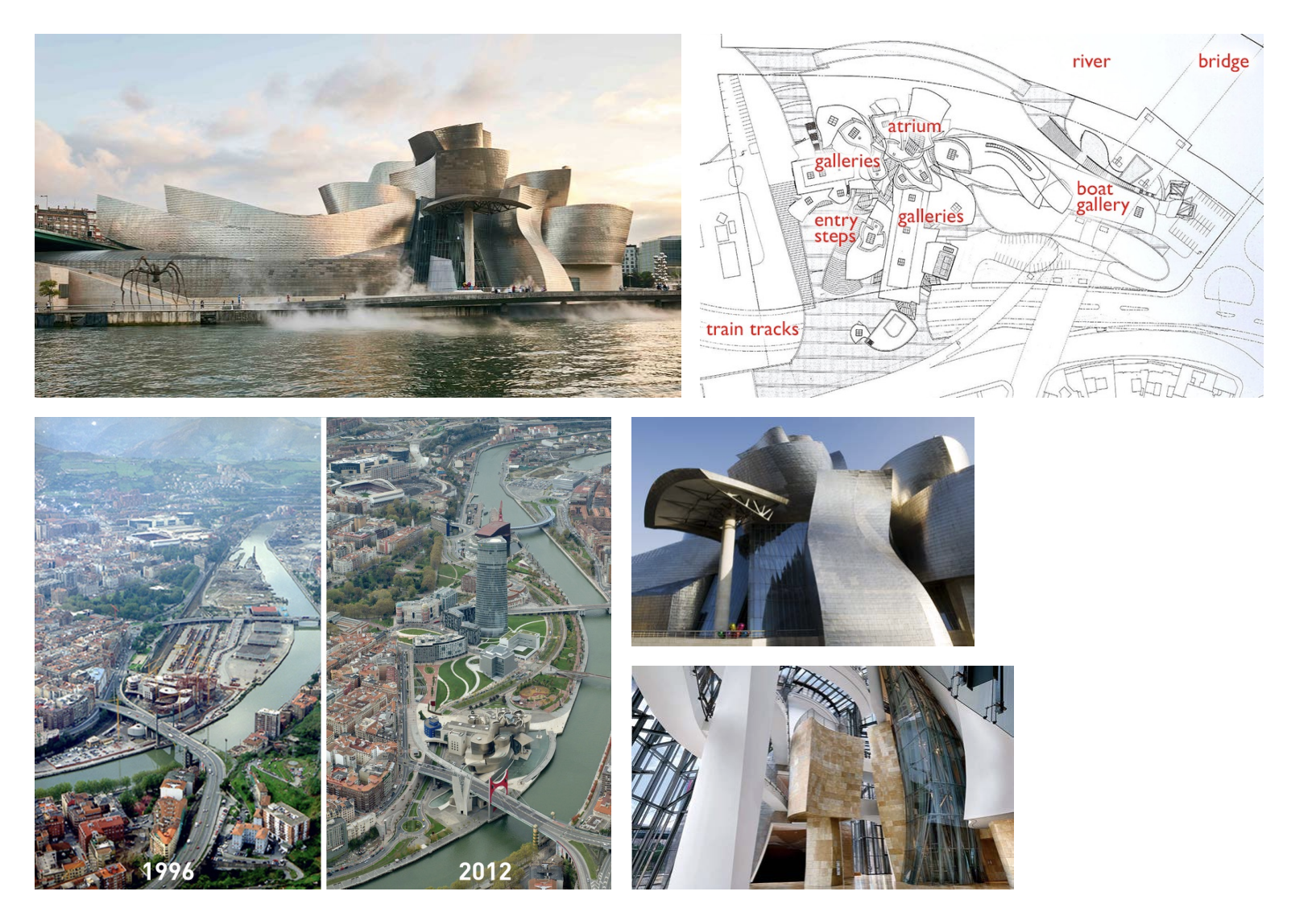
17) Frank Gehry, Guggenheim Museum, Bilbao, Spain, 1997
Influential to museum architecture, designed with airplane software
Inspired by post-industrial site by the river and abandoned buildings, shiny metal and massing
Building itself becomes its own art/experience
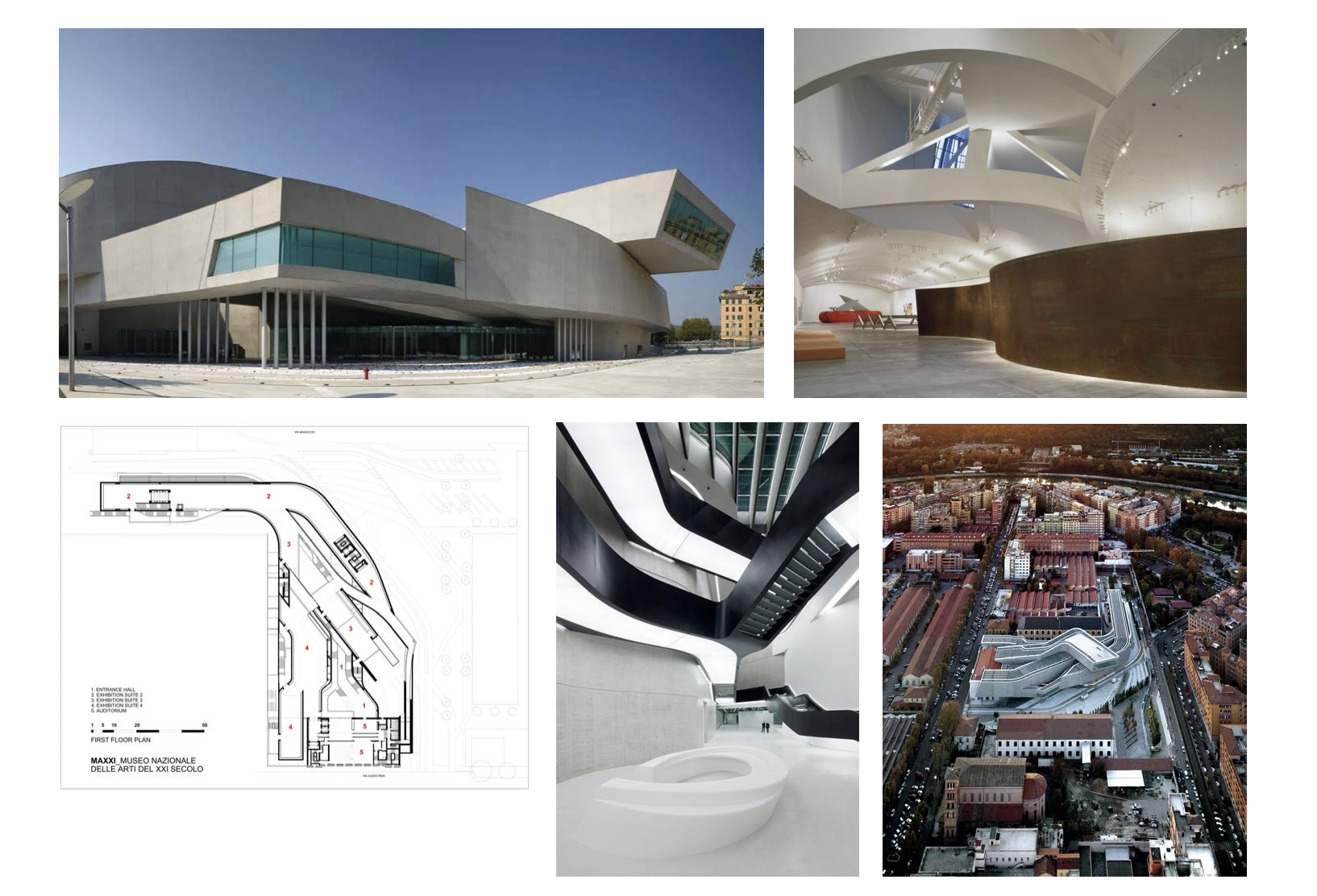
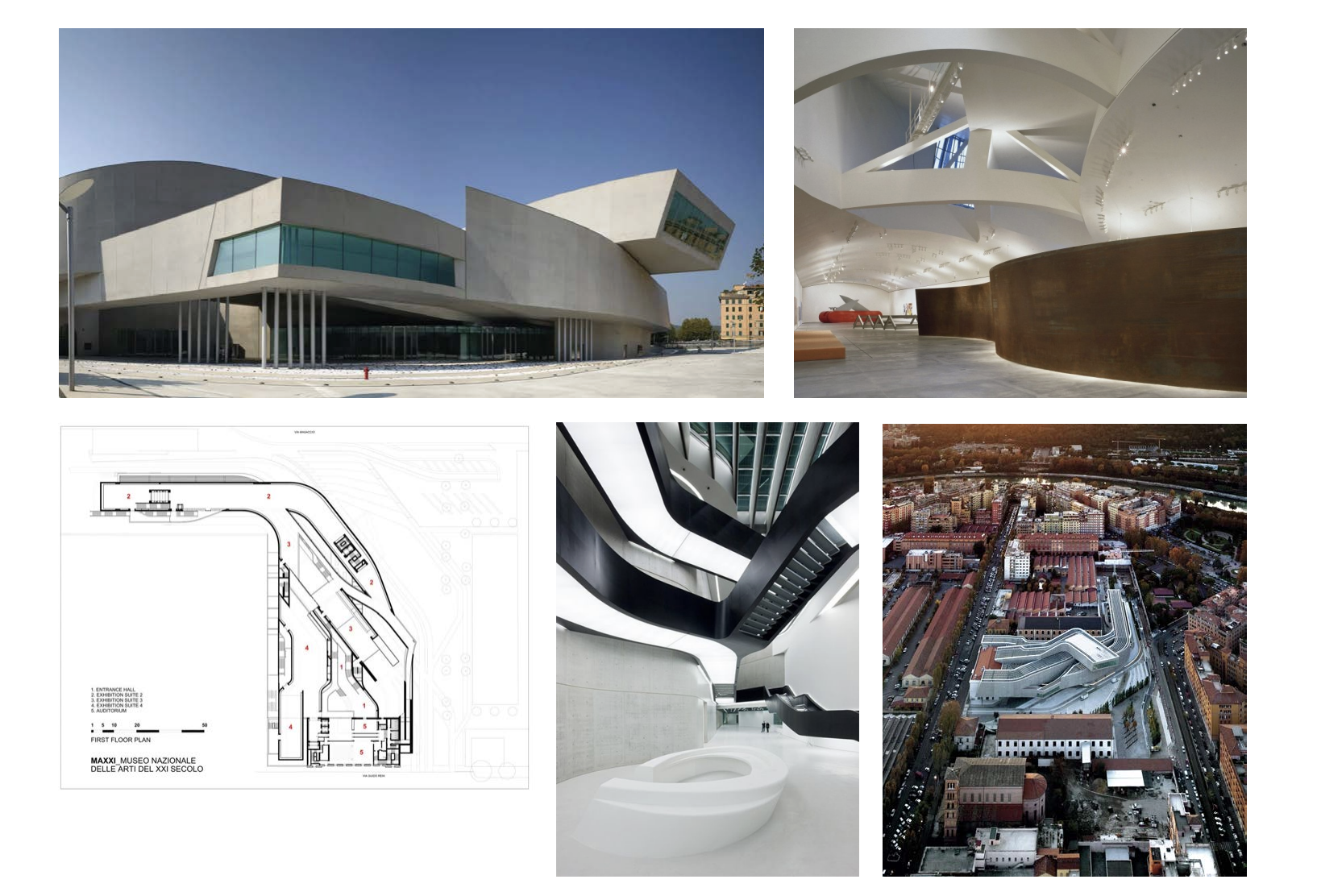
17) Zaha Hadid, MAXXI National Museum of the XXI Century Arts, Rome, Italy, 1998–2010
MAXXI: Museum of Art of the 21st Century
Woven building, surrounded by industrial/residential (?) area
Designed to be experienced along with the art (ex. Richard Sera’s sculptural art)
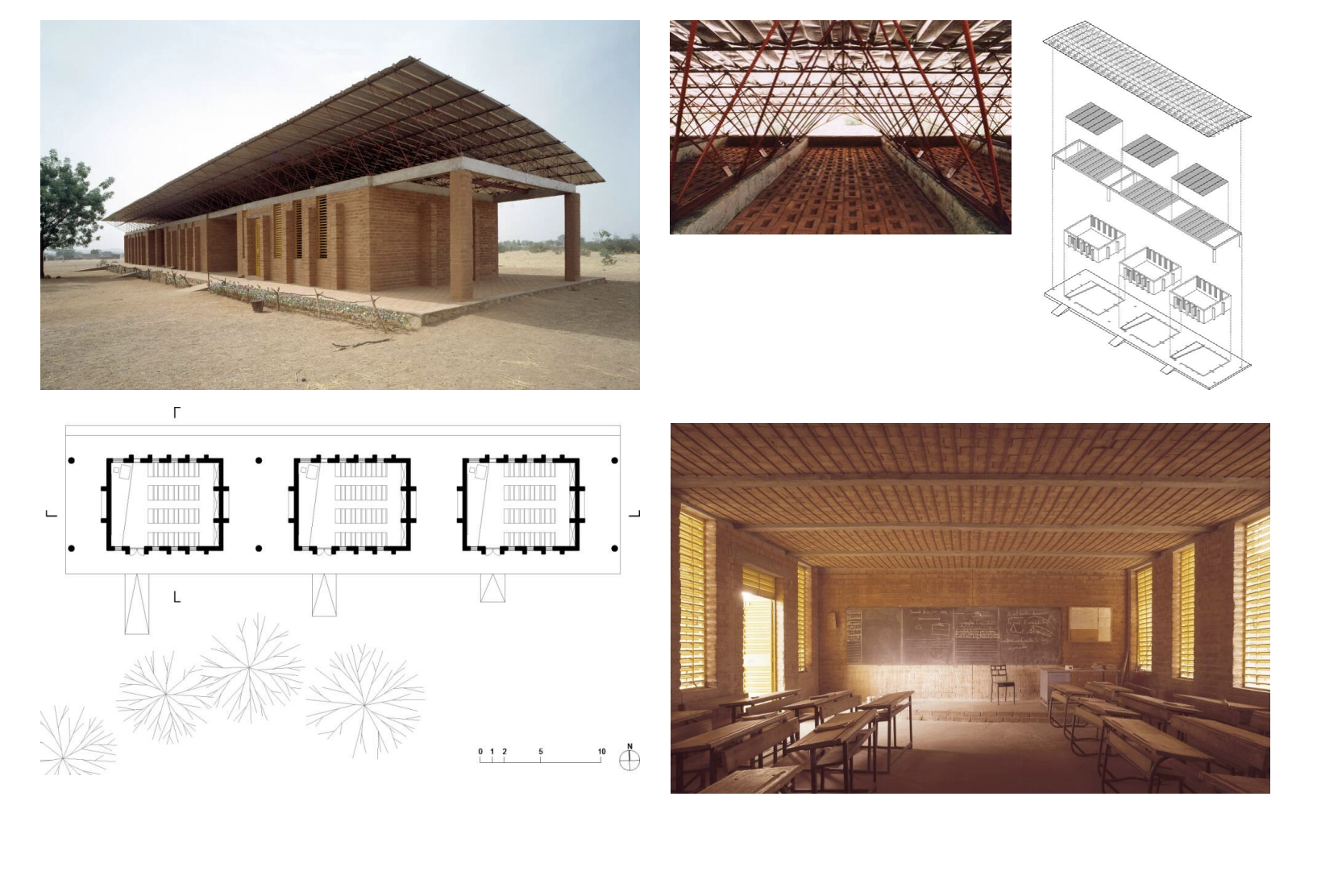
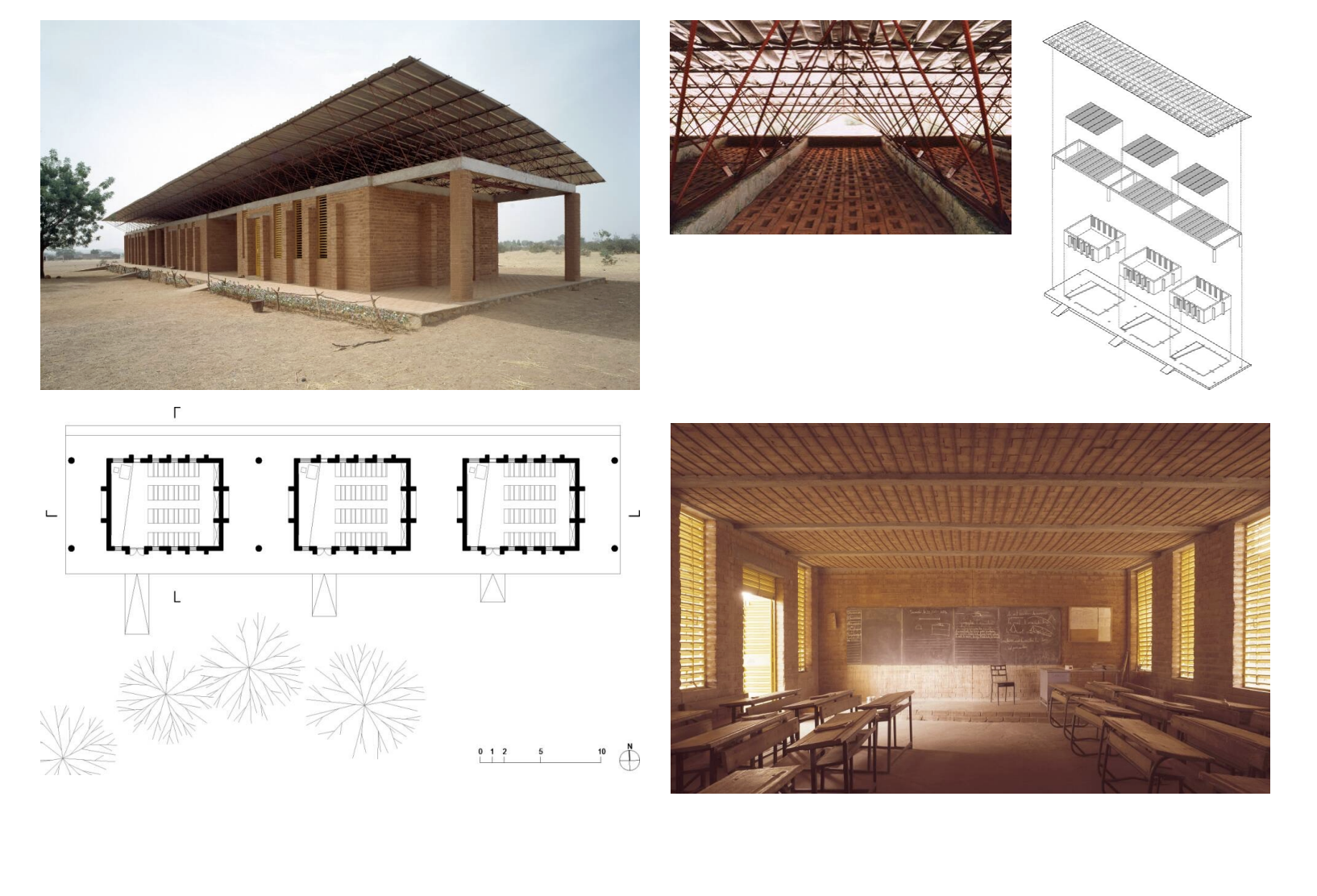
17) Diébédo Francis Kéré, Primary School, Gando, Burkina Faso, 2001
Complex systems aren’t necessary for sustainability: found/local materials
3 Elementary classrooms, first African architect to win Pritzker prize
Earth and mud brick put together with local materials
Every material is local and easily accessible
Metal roofing keeps the building dry during the rainy seasons, otherwise it would affect the brick
Windows with blinds for heat regulation
Shows/teaches the local people how to build the building, now it’s all over the area
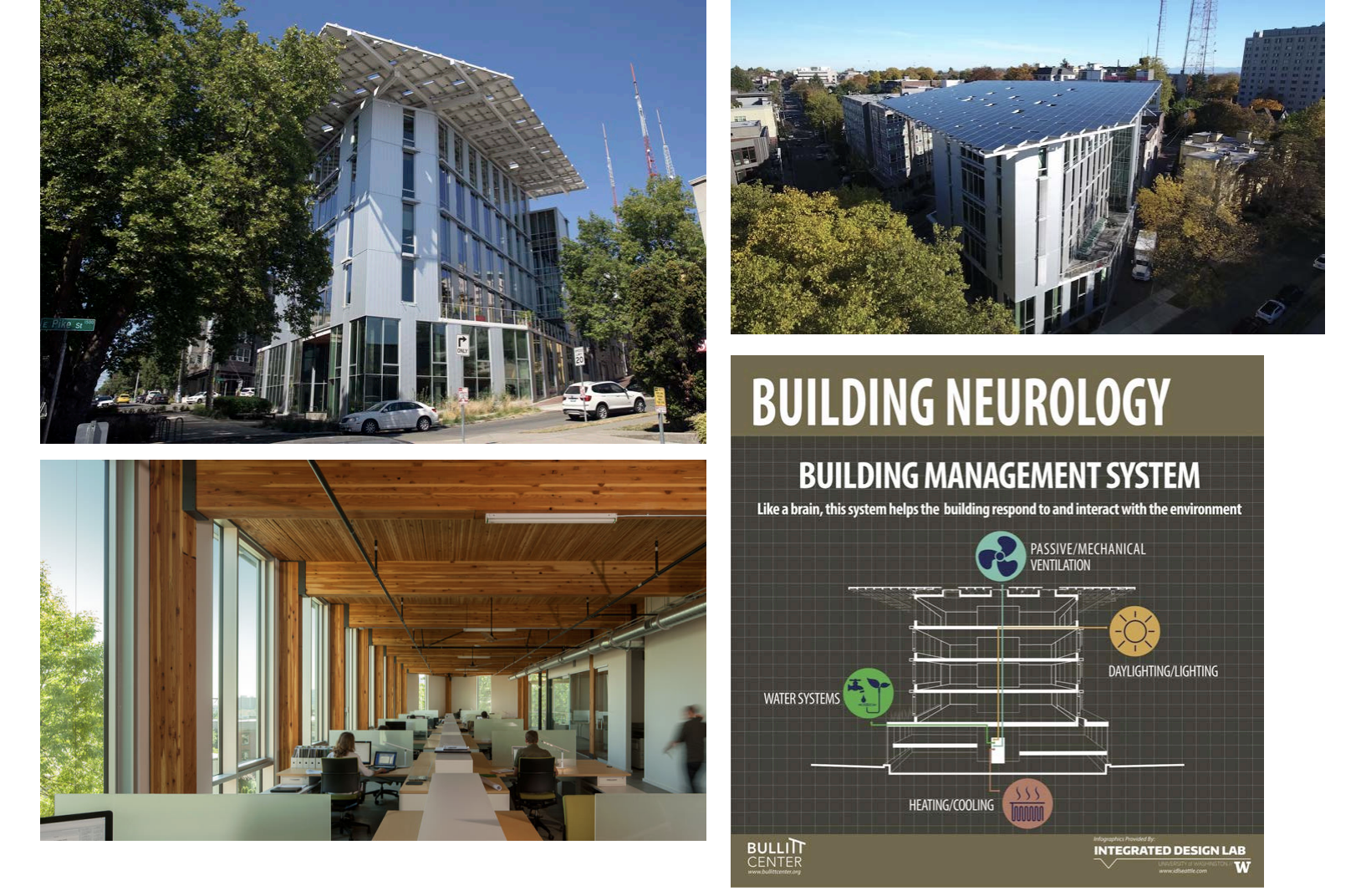
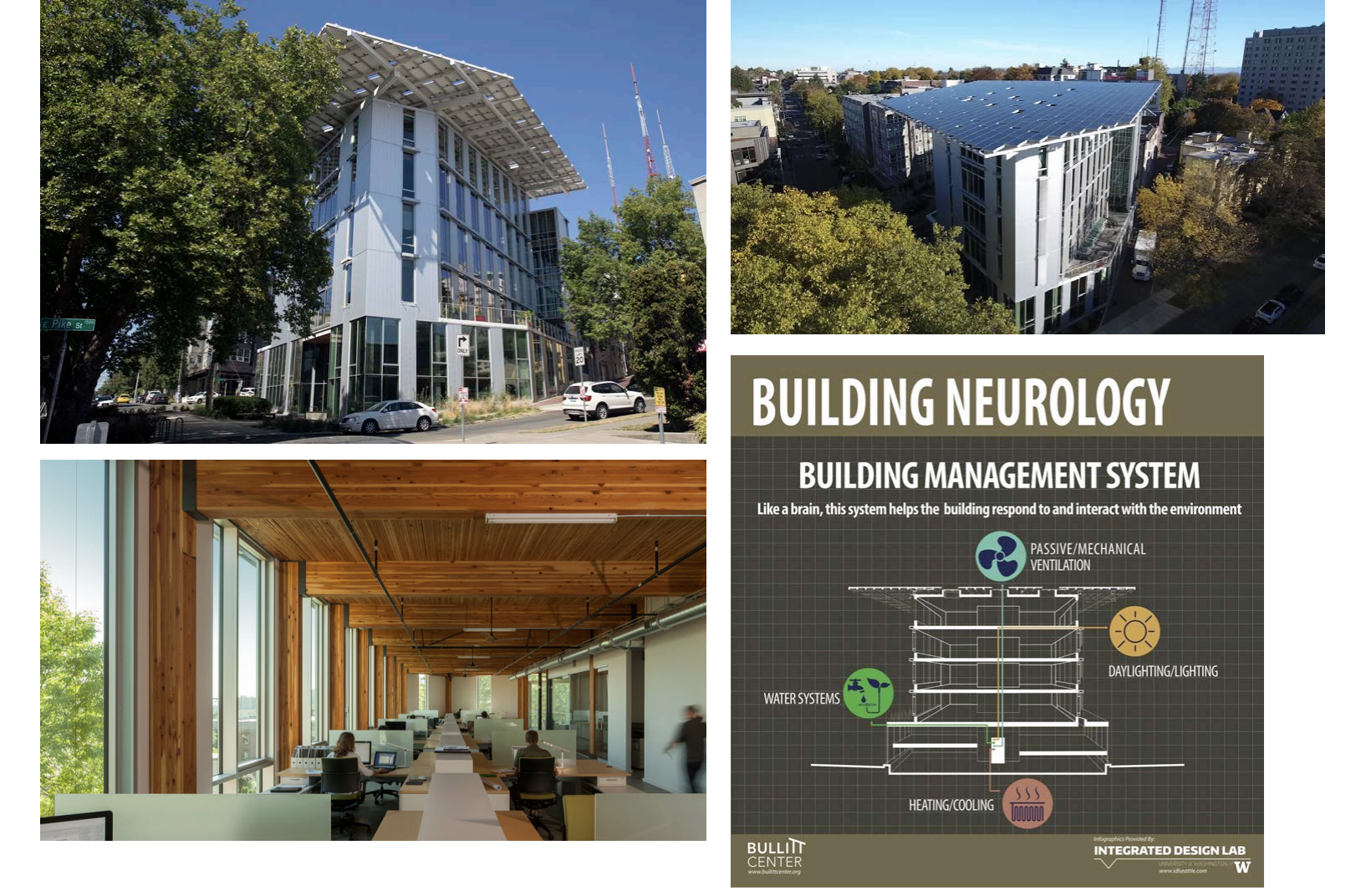
17) Miller Hull, Bullitt Center, Seattle (WA), USA, 2013
World’s most sustainable building, built to last 250 years in a residential neighborhood, 100 walkability score
Giant solar panel
produce d 16% more electricity than it needed
Built with mass timber: compressed wood, built to last
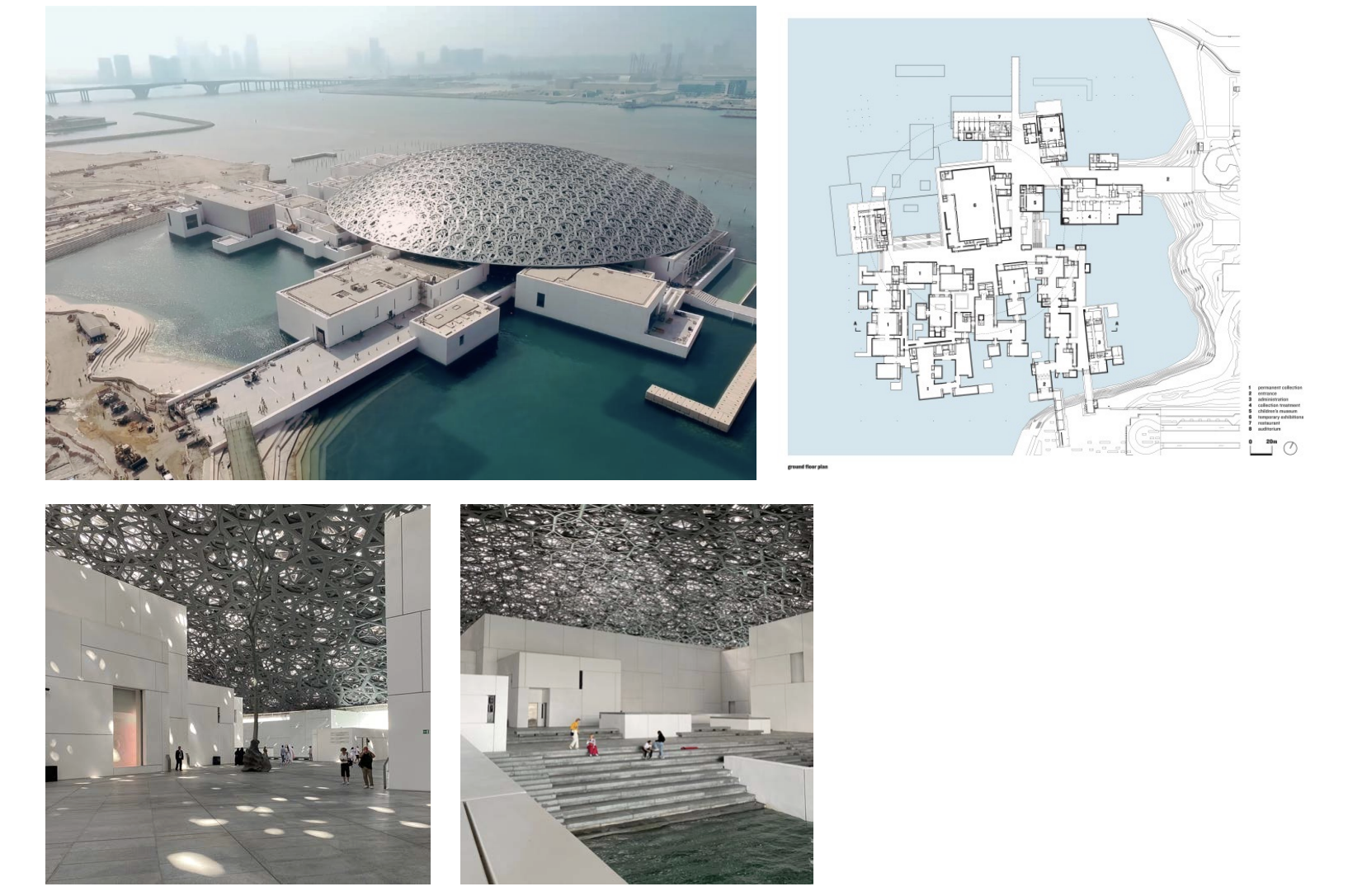
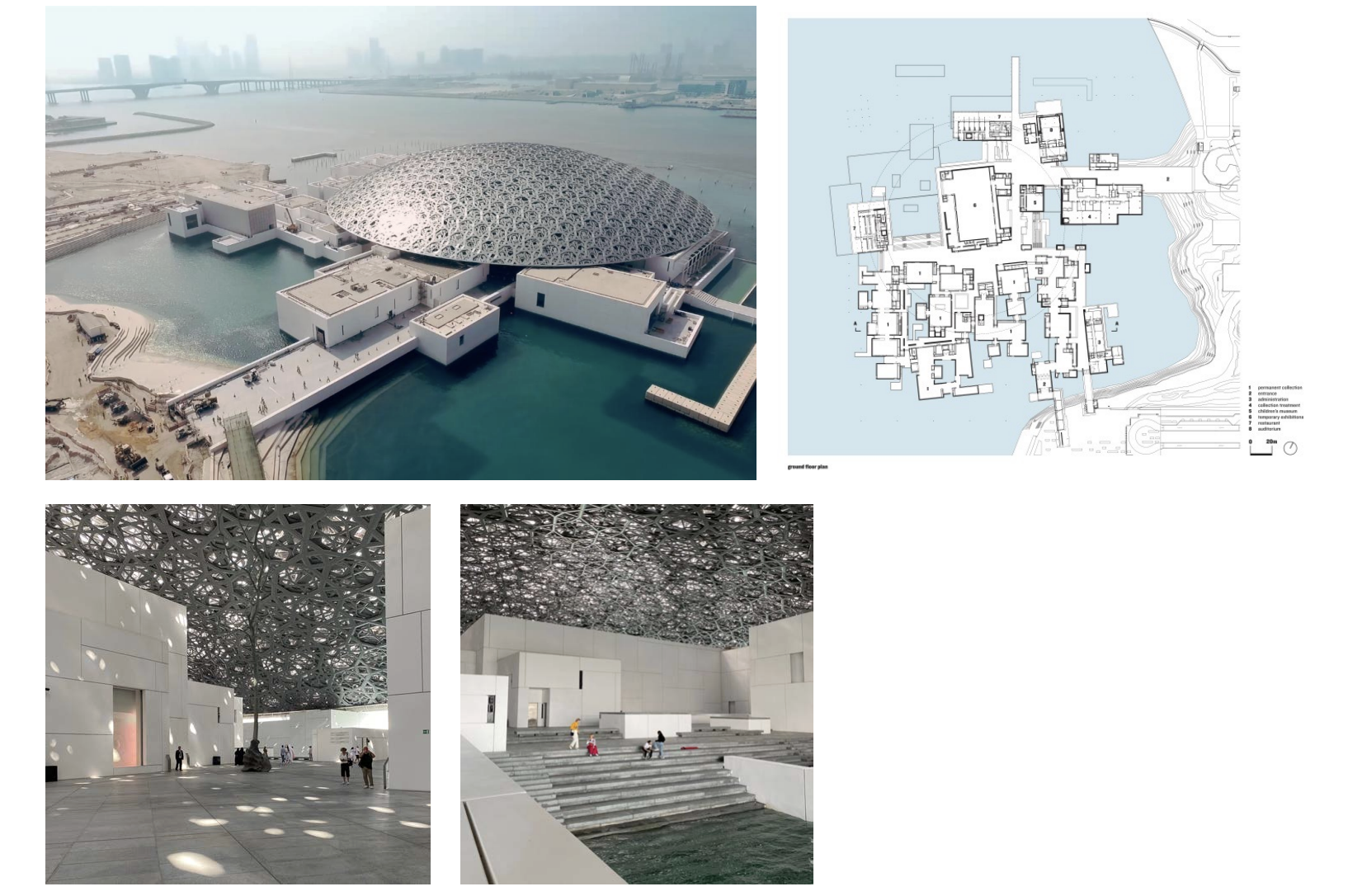
17) Jean Nouvel, Louvre Abu Dhabi, Abu Dhabi, United Arab Emirates, 2017
Synthesizing modern culture in Paris, embracing Muslim people who immigrated to france
Extra louvre art goes to the UAE
Post colonial complexity: French colonization stole art from West asia/Islamic cultures and returned them to be displayed in a museum they built
Gallery spaces tucked into boxes under giant metal dome, reminiscent of souk (marketplaces) found around west asia/North africa
Cools down the space