Unit 5: Genetics
 Call Kai
 Learn
Learn Practice Test
 Spaced Repetition
 Match
Match Flashcards
 Knowt Play
1/43

There's no tags or description
Looks like no tags are added yet.
Name | Mastery | Learn | Test | Matching | Spaced | Call with Kai |
|---|
No analytics yet
Send a link to your students to track their progress
44 Terms
Structure of a DNA is based on a ________ composed of a sugar, a phosphate group, and a nitrogen base.
A single DNA molecule can be thousands of base pairs in length
nucleotide
Double helix structure of DNA was discovered by James ______ and Francis ______. However, Rosalind Franklin did a lot for this discovery.
watson, crick
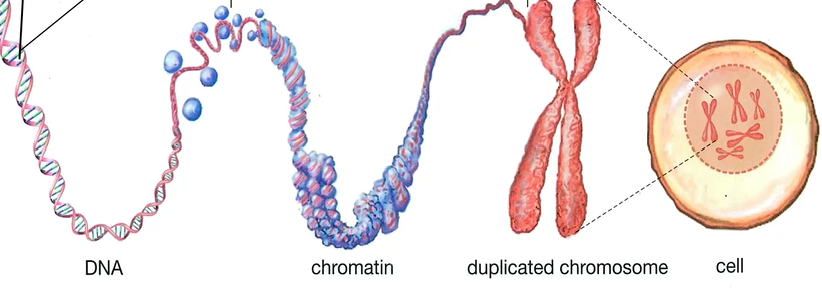
DNA wraps around protein to make ______
These fold up to make ________
These are then duplicated
The number of these per cell varies by species
Chromatin, chromosomes
Most of the time, DNA exists as _____. Chromosomes condense and form only during cell division (______) process.
chromatin, mitosis
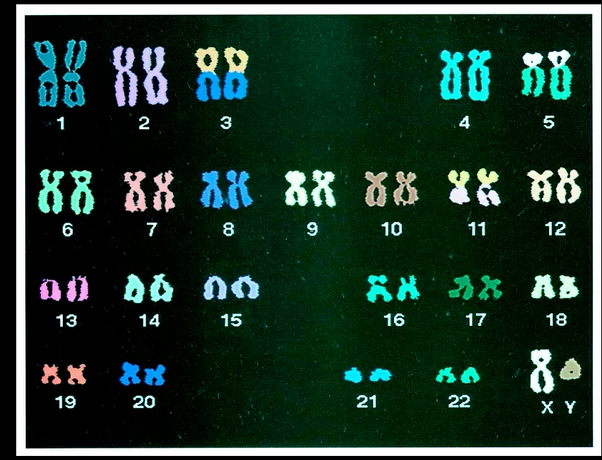
A pictorial depiction of an organisms chromosome complement is called a ______. It involves photographing chromosomes during mitosis then lining them up for examination.
Karyotype
On the 23rd pair of chromosomes, sex is defined. Males: ____, Females: ____
XY, XX
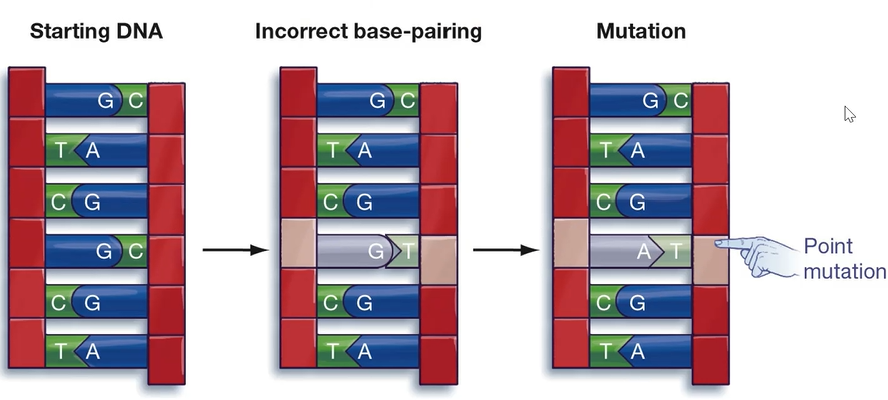
UV ______ can penetrate living cells and alter the structure of a DNA molecule. The resulting structural alteration is called a _____ ________.
radiation, point mutation
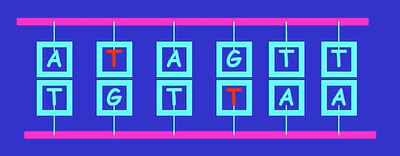
The _____ and ______ of nitrogen bases are important to the integrity of the DNA molecule and any resulting proteins. Sometimes alterations in structure can cause abnormal base pairings (A with G or C with T).
number, sequence
______ can:
Alter DNA structure
Be passed to new cells
disrupt the ______ process of protein synthesis
mutations, transcription
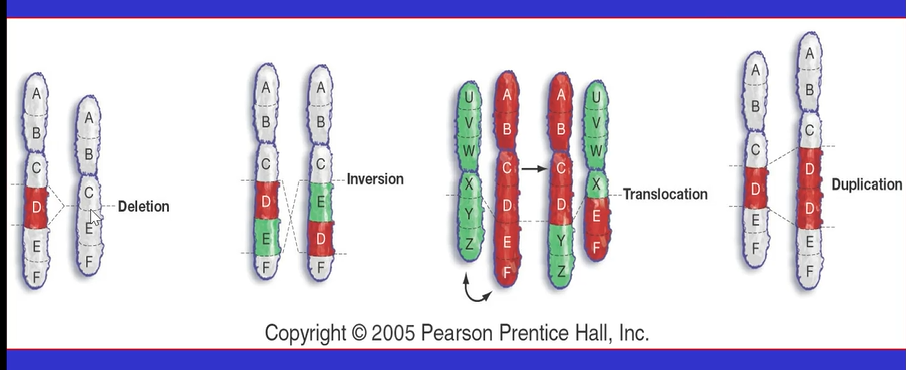
_________ on a chromosomal level can cause sections of the chromosome (genes) to be
Deleted
Inverted
Duplicated
Can cause _____ _____
Translocated
Issues in chromosome number (3 copies of chromosome #21 instead of 2) can result in ____ _______
mutations, Huntington disease, down syndrome
Disorders related to the sex chromosomes (specifically x) include:
______: Can’t produce blood-clotting proteins
Red-green _____ _____: Can’t differentiate between the two colors
____ are more vulnerable because there’s only one x chromosome
hemophilia, color blindness, males
_______ is the type of cell division by
which gametes (eggs and sperm) are
produced.
Meiosis
Offspring that result from sexual
reproduction are _______ (having one set of genes from
the father and one set from the mother).
At fertilization, an egg cell and sperm cell, each
carrying a set of genes (chromosomes) are united.
If two diploid cells united, then the result would be a _______ cell.
diploid, quadroploid
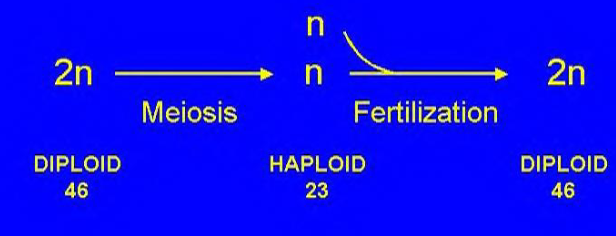
One of the important features of meiosis is that it
reduces the number of chromosomes by ____.
_____ cells become _____ cells, since meiosis involves two rounds of division, it actually produces four daughter cells.
When the haploid cells join at _______ (egg cell and sperm cell), the
diploid condition is restored
half, diploid, haploid, fertilization
Two phases of ______:
Prophase I, Metaphase I, Anaphase, Telophase I
Prophase II, Metaphase II, Anaphase II, Telophase II
meiosis
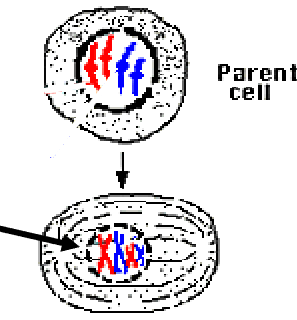
______ I:
Each chromosome duplicates and remains linked (two sister chromatids).
Crossing over can occur during this stage.
________ chromosomes come together, forming ______.
Crossing over or ________ can occur at this stage.
This is an important source of genetic _____ in sexually reproducing organisms
Prophase, homologous, tetrads, recombination, variation
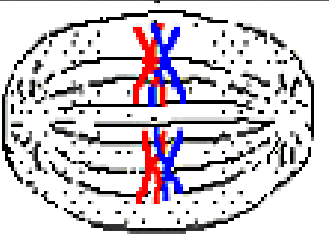
______ I:
_______ chromosomes align at the ________ plate. This alignment is completely random and is known as ________ assortment. This is another source of genetic ______.
metaphase, homologous, equatorial, independent, variation
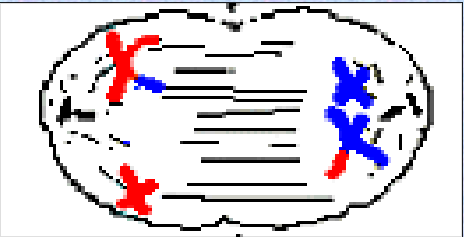
_____ I
________ pairs separate with sister chromatids remaining together. Another source of genetic variation.
Anaphase, homologous
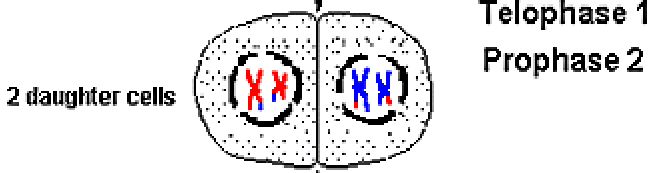
_________I:
____ daughter cells are formed with each daughter containing only ____
chromosome of the _______ pair.
_____ __, if distinguished at all,
proceeds immediately. DNA does not replicate a second time.
telophase, two, one, homologous, prophase II
Second division of ______:
_____(sex cell) formation
The second round of meiotic division is essentially
like mitosis, except the cells are ______(n)
instead of diploid (2n).
meiosis, gamete, haploid
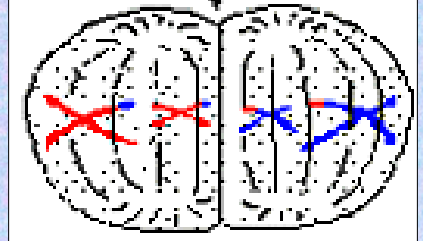
_______ II:
Chromosomes (sister chromatids) align at the
equatorial plate.
metaphase
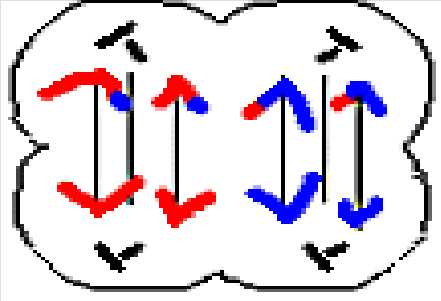
______ II
Chromosomes (sister chromatids) migrate
separately to each pole.
anaphase
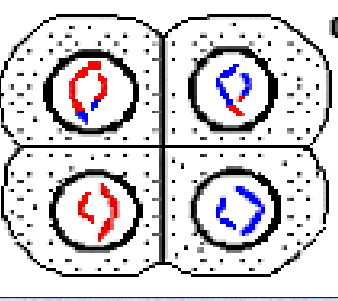
______ II
Cell division is complete. _____ haploid daughter cells are obtained. Note that each is genetically ______.
telophase, four, different
_____ produces ______ germ or sex cells;
crossing over and independent assortment of
chromosomes also occur, resulting in four
genetically variable cells.
______ produces identical _____ somatic cells.
meiosis, haploid, mitosis, diploid
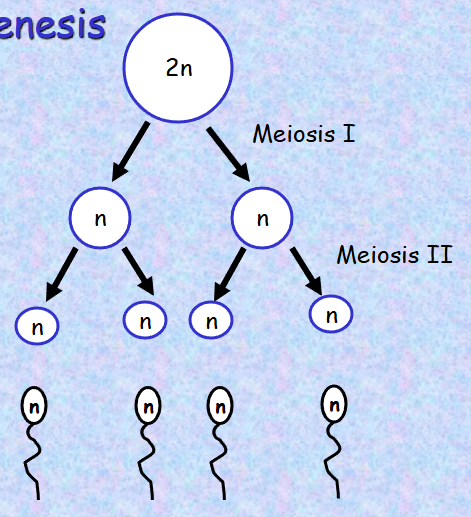
The form of meiosis that produces sperm cells is called ________, which produces _____ mature sperm
spermatogenesis, four
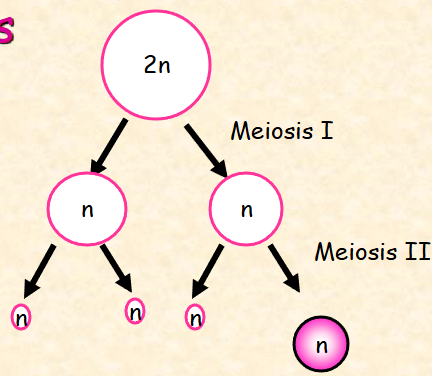
The form of meiosis that produces egg cells is called ________, which produces _____ non-functional polar bodies and only ____ functional egg.
oogenesis, three, one
_____ used a species of pea plant to monitor traits of
parent plants and how they were passed to offspring.
The traits Mendel monitored in the peas included the _______ or physical characteristics of an individual such as color & texture of seeds, pods, color & position of blossoms, and stem length. This is determined by the _______ or the genetic makeup of the individual
mendel, phenotype, genotype
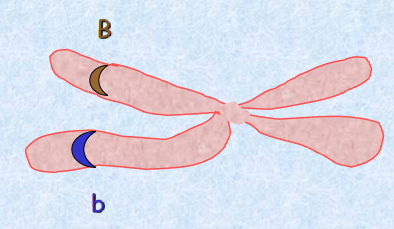
_______ are different forms of a gene located on separate but related ____ of the chromosome. EX: one allele results in brown eye color phenotype and the other results in blue eye color phenotype.
Dominant traits means that only ___ allele is required to produce the phenotype.
alleles, arms
Genotype designations:
YY: _______ ________
Yy: ________ _________
yy: _______ ______
homozygous dominant, heterozygous dominant, homozygous recessive
By cross-fertilizing pea plants and observing the first generation progeny, Mendel would then allow the offspring to self-pollinate. What he found in these so-called F1 and F2 generations was a predictable set of outcomes.
Mendel’s proportional analysis was ground-
breaking. Because of it, we can use a tool called a
________ ______ to predict ratios of genotypes and
phenotypes in offspring.
punnet square
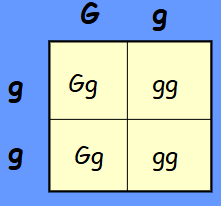
In this example, there is a 50% probability that the offspring will be heterozygous dominant and a 50% probability it will be homozygous recessive for the trait.
Such a prediction (analyzing one trait at a time) is called a _______ ______
monohybrid cross
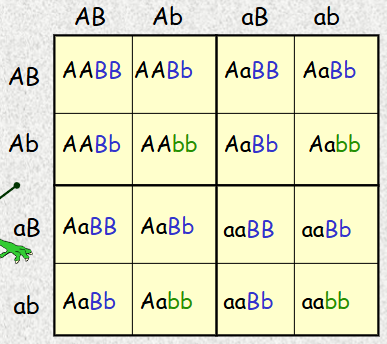
This is an example of two traits in a punnet square, called a _______ _____.
dihybrid cross
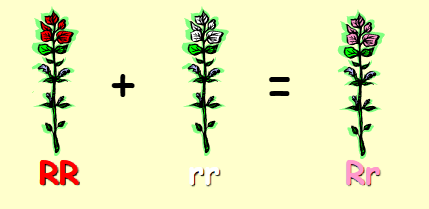
Other means of inheritance:
_______ Dominance
There are situations where neither allele is
dominant, but both are incompletely dominant.
The classic example of incomplete dominance is the
crossing of red snapdragons with white snapdragons
to produce pink offspring. RR (red) + rr (white) = Rr (pink). This is due to there being less red pigment than there normally would be.
incomplete
Other means of inheritance:
___________
In this situation, both alleles are expressed ______.
The classic example is blood typing. Blood types refer
to certain proteins found on the surface of red blood
cells. Alleles can code for proteins A or B.
It is possible for both
alleles to be inactive and code for
neither protein. This is the O blood
type
codominance, equally
______ inheritance or multiple alleles EX: Skin color and height
One trait is affected by two or more sets of alleles.
Genotypes & Phenotypes:
AABB Very dark skin
AABb or AaBB Dark
AaBb or Aabb or aaBB Medium brown
Aabb or aaBb Light
Aabb Very light
Example: skin color
polygenic
______ - one gene can have many effects
In Mendel's pea plants, seed coat color was
always associated with specific flower and axil colors.
pleiotropy
______ Laws:
Law of ______- Alleles separate ________ the
formation of gametes, or egg and sperm (this is what
we now perceive as homologous chromosomes that
separate during meiosis).
Law of ________ Assortment - individual traits are
transmitted _______ being affected by others (what
we now know as the random alignment of chromosomes
during Metaphase I of meiosis).
segregation, before, independent, without
proteins are composed of ____ _____ linked together by ______ bonds.
protein production takes place in 2 main areas: the ______ and on _______ (either on the ER or the cytoplasm)
proteins amino acids, peptide, nucleus, ribosomes