Lines, Tubes, Drains, and Ostomies (2A03)
 Call Kai
 Learn
Learn Practice Test
 Spaced Repetition
 Match
Match Flashcards
 Knowt Play
1/22

There's no tags or description
Looks like no tags are added yet.
Name | Mastery | Learn | Test | Matching | Spaced | Call with Kai |
|---|
No analytics yet
Send a link to your students to track their progress
23 Terms
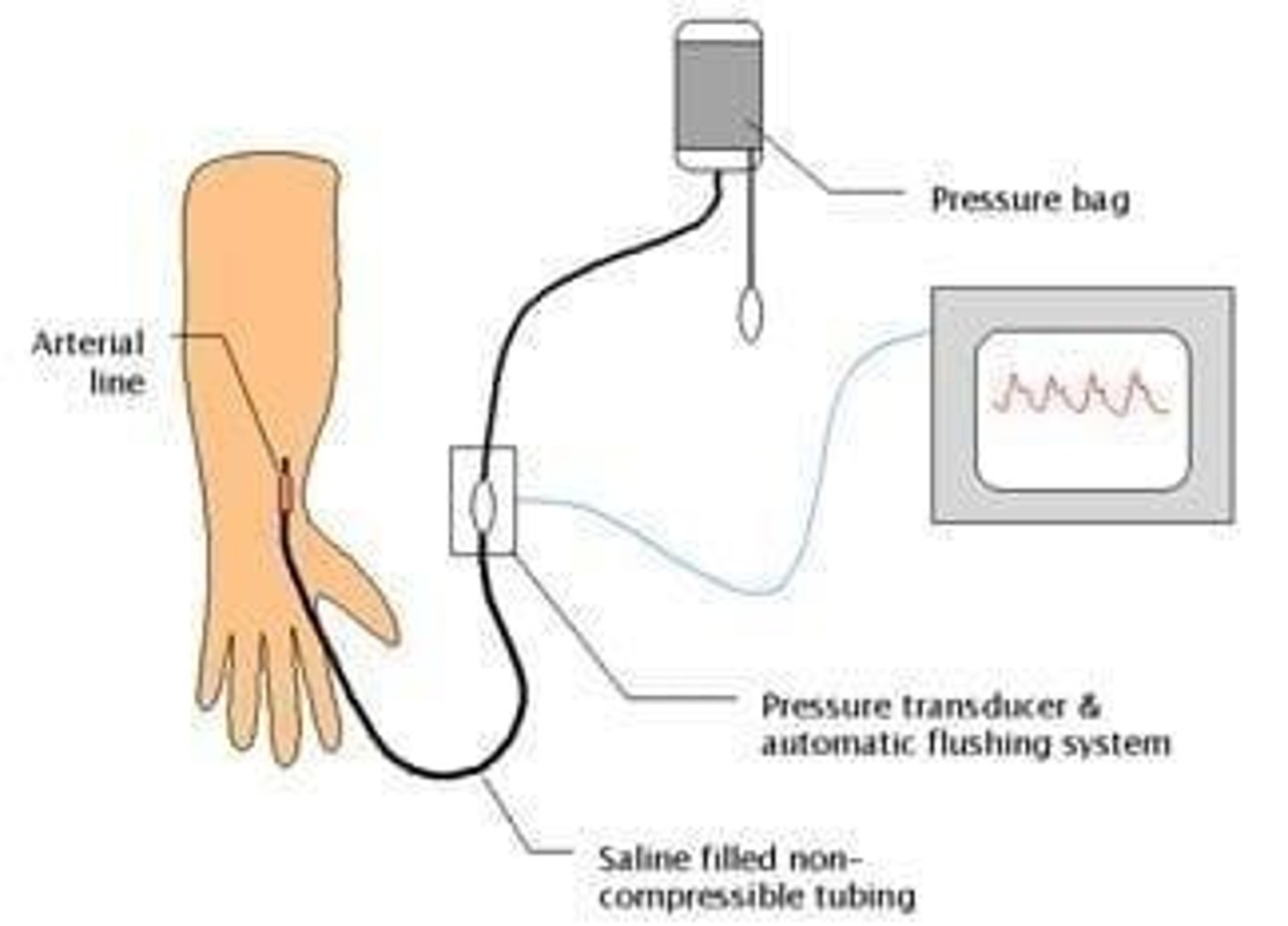
What are peripheral arterial lines (PAL)?
Used for acute measurement of blood pressure or regular blood monitoring in critically ill and/or hemodynamically unstable patients.
What are peripheral intravenous lines (PIV)?
Small flexible catheter inserted into a vein, commonly located in the lower portion of the arm or back of the hand, used for administering fluids and/or necessary medications.

What are central venous catheters/ central lines (CVC)? Where are they placed?
- Deliver long-term medication, frequent blood transfusions, total parenteral nutrition (TPN), and fluids that may cause damage to the intima of peripheral veins.
- Inserted into a large peripheral vein to the superior vena cava just above the right atrium.
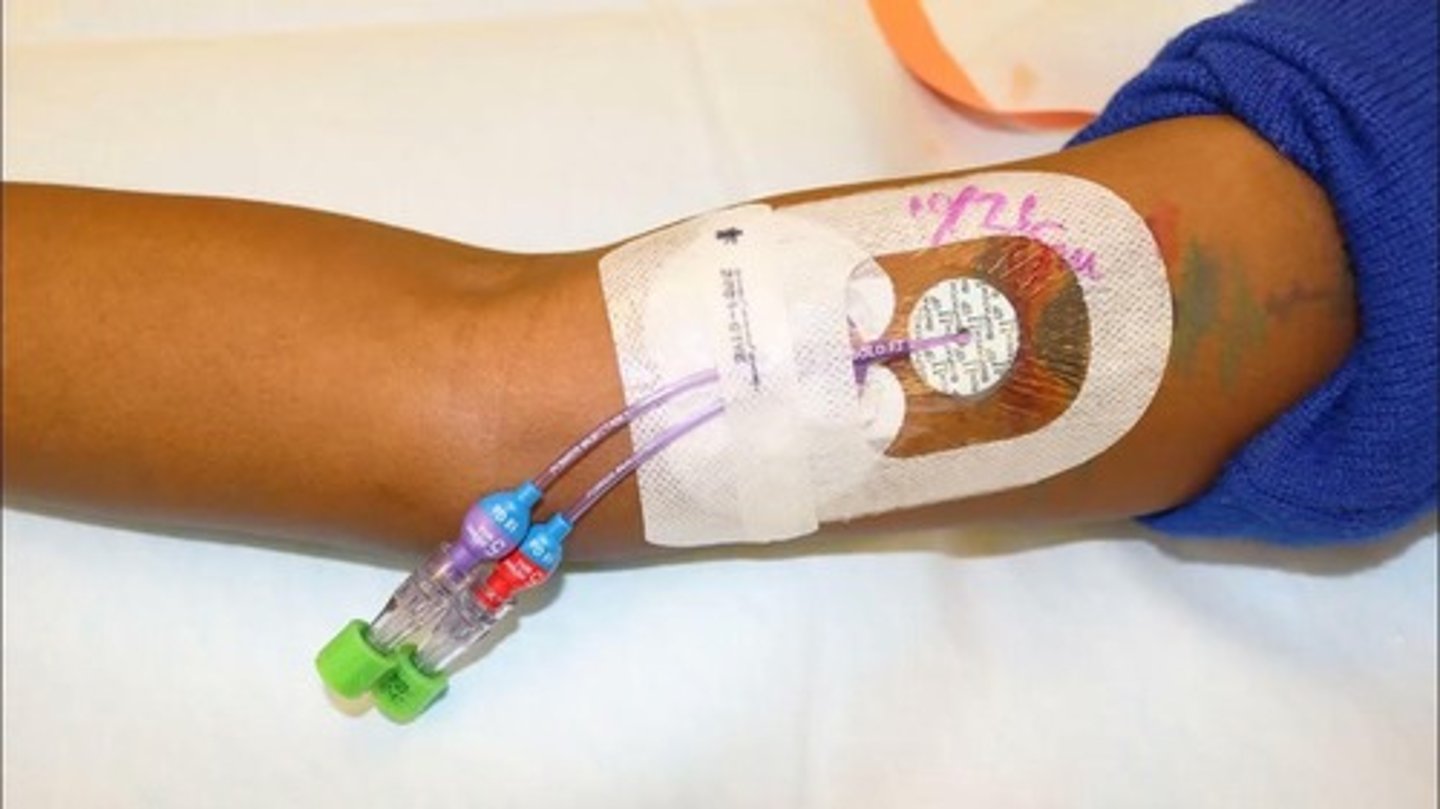
What are peripherally inserted central catheters (PICC)?
PICC line placed from antecubital insertion point, can have 1-3 lumens and can be power rated.
What are non-tunneled CVCs? Where can they be placed? (HINT: 3)
Used for temporary access and can be placed in the subclavian, femoral, or internal jugular veins
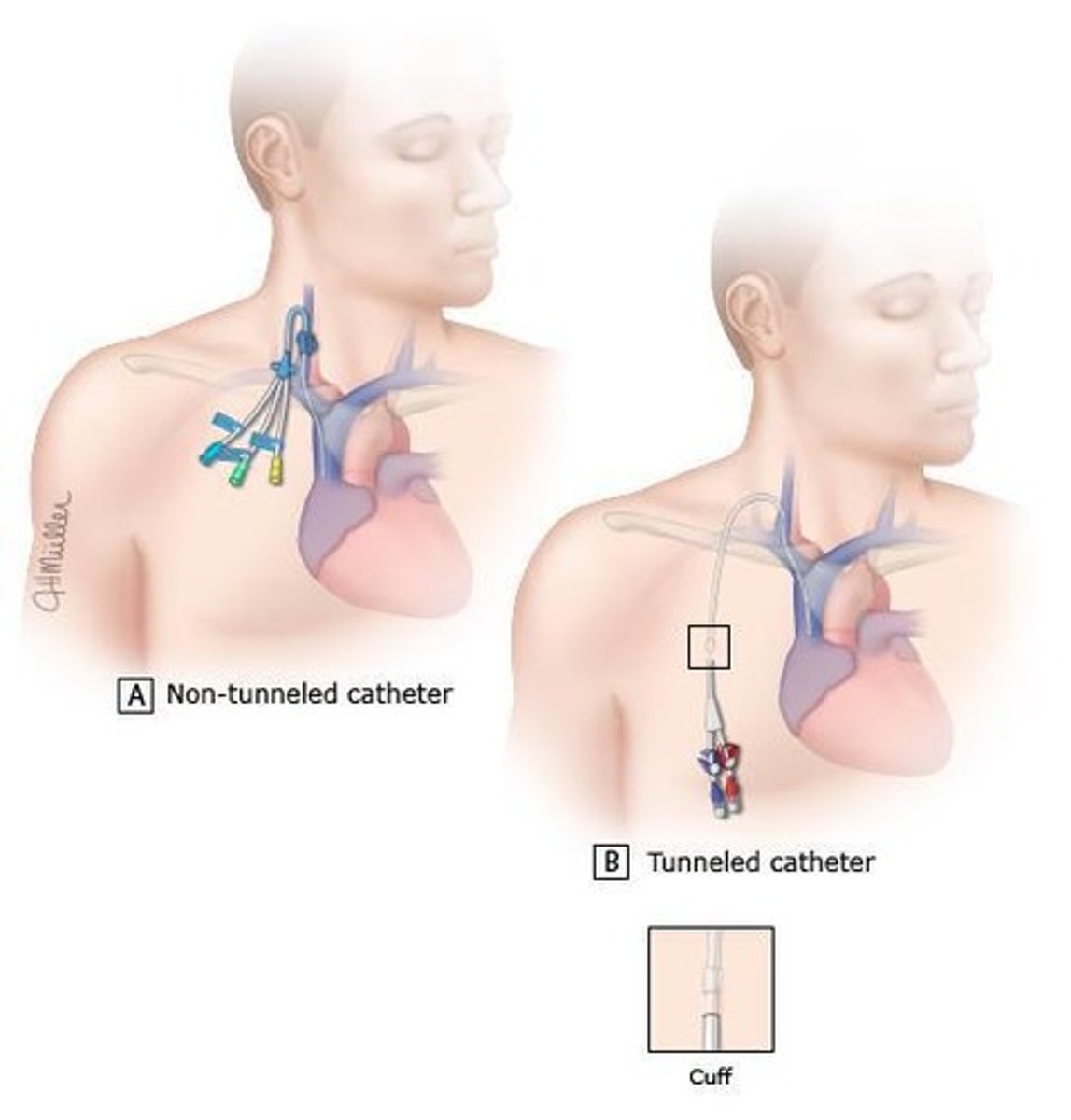
What are tunneled CVCs? Where can they be placed? (HINT: 3)
Partially placed underneath the skin and meant for longer-term use
(can also be placed in the subclavian, femoral, or internal jugular veins)
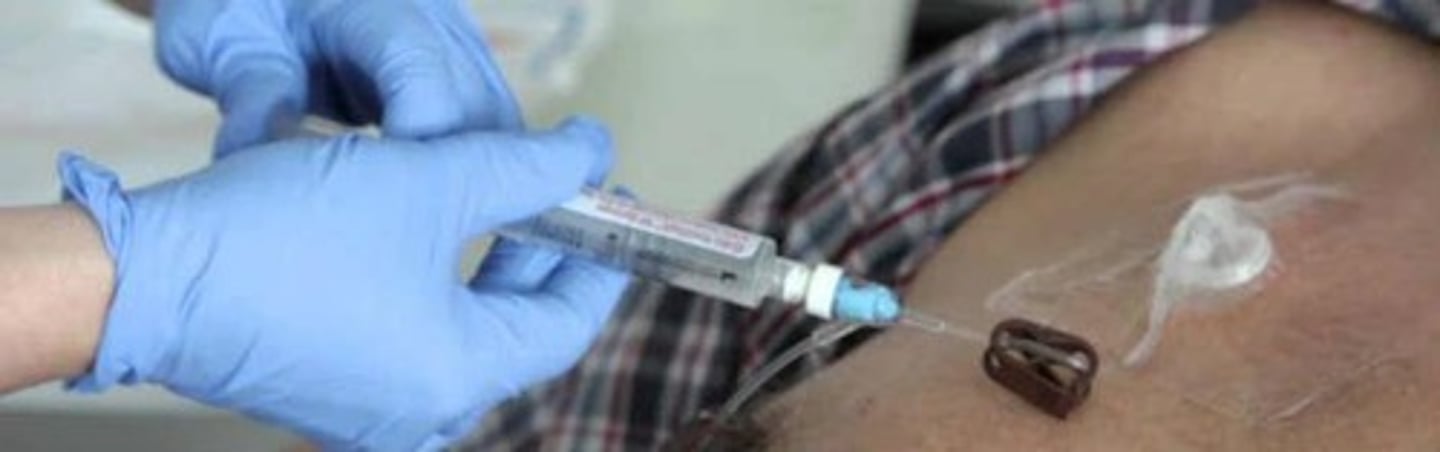
What is an implanted port?
- Implanted reservoir in chest or arm with a catheter tunneled to access a vein, used for long-term venous access and provides the lowest rate of infection. Prevents clots
- When not in use, reservoir is Heparin locked. When needed, reservoir accessed w/ special access needle
What are nasogastric tubes (NG) (HINT: 2)? Where are they inserted from and to? Name 1 type.
- Aids in removal of gastric contents and air in the stomach, and administers feedings/medications to patients who cannot swallow safely
- Inserted through nasopharynx or oropharynx into stomach
- Types: Salem-Sump, SBFT, Dobhoff tube
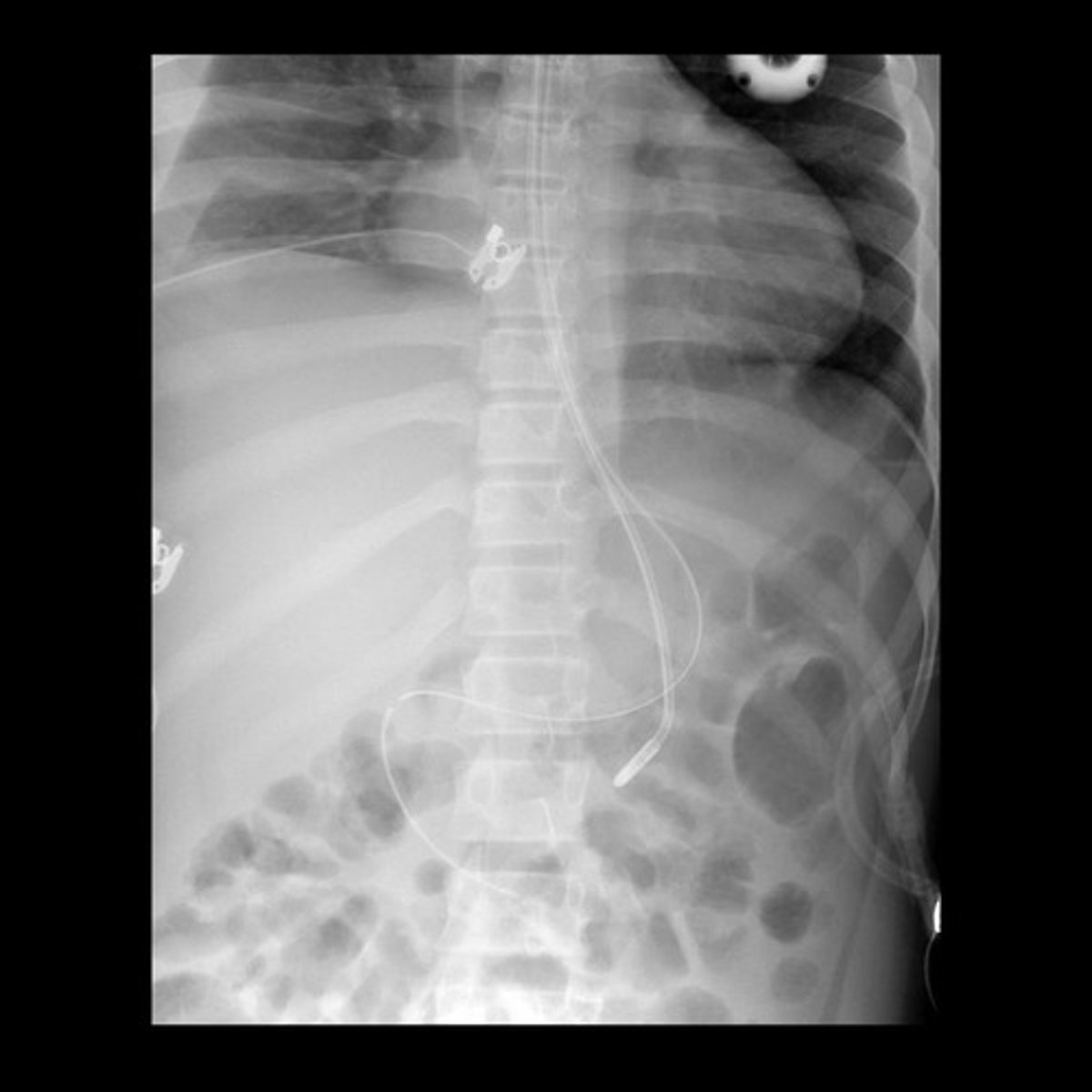
What are PEG tubes?
Percutaneous endoscopic gastrostomy tube inserted through the abdominal wall directly into the stomach or portion of small intestine, used for long-term feeds.
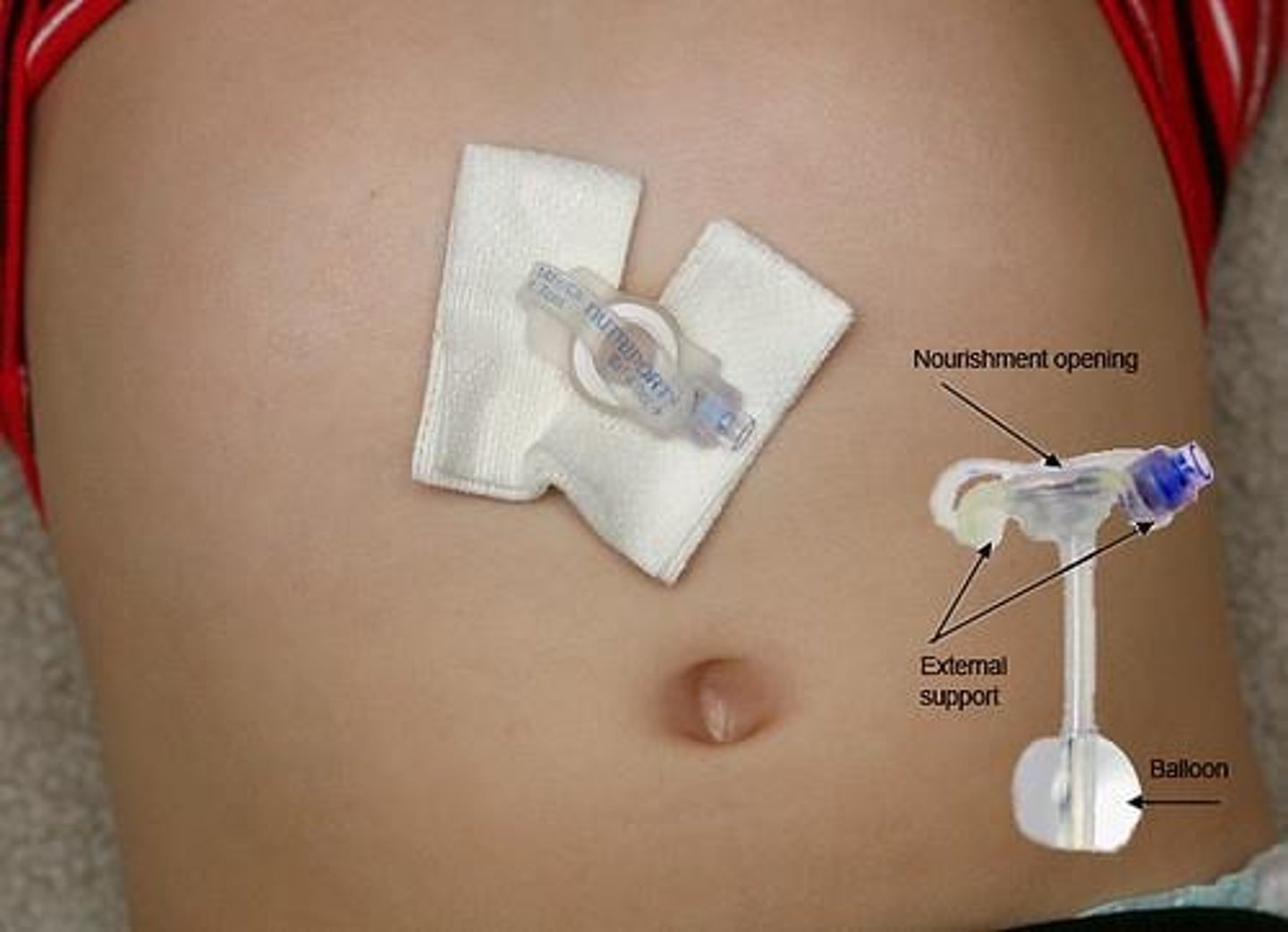
What are urinary catheters? Name 2 instances when they are used.
Used to drain the bladder in cases of urinary incontinence, urinary retention, during/after surgery, or other medical conditions (multiple sclerosis, spinal cord injury, dementia).
What are chest tubes?
A hollow, flexible tube placed into the chest to drain blood, fluid, or air from around the lungs, allowing the lungs to fully expand.
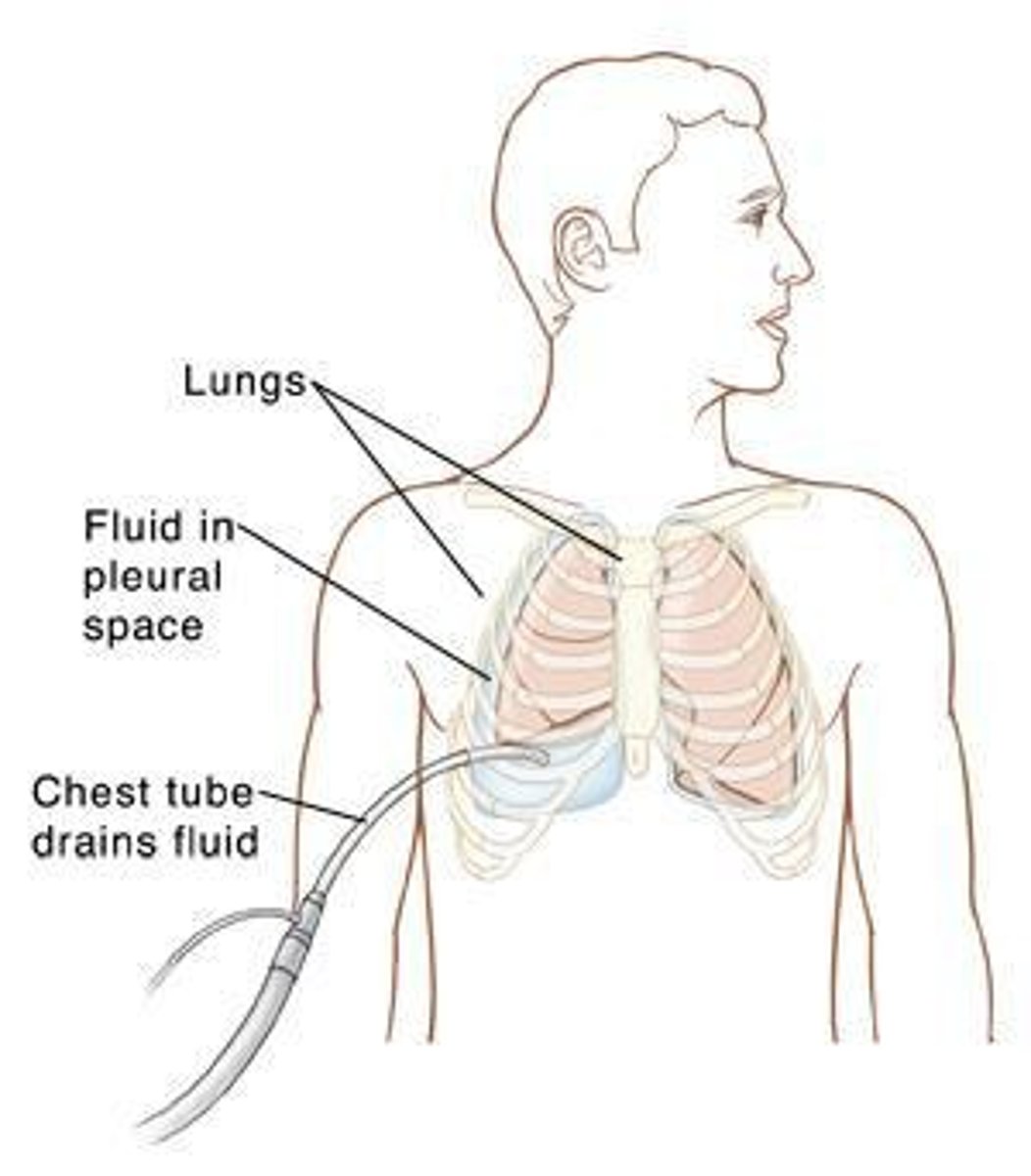
What should be kept in mind when moving a patient with a chest tube?
1. Assess collection chamber to ensure it is in an upright position and at a lower level than the insertion site at all times during transport
2. Ensure tubing is free of kinks and occlusions at all times
3. Stabilize lengths of tubing by lopping gently and securing it to the cot/bed to prevent from catching on anything
What are tissue drains? What are the 2 m/c types?
- Placed at or near wound sites or operative sites when large amounts of drainage are expected
- Types: Jackson-Pratt (JP) and Hemovac
- Maintains constant, low negative pressure by squeezing and slowly expanding a bulb to create low pressure suction.
What is an ostomy?
A surgical opening (stoma) from an area inside the body to the outside, which can be permanent (when organ needs to be removed) or temporary (when organ needs time to heal)
What is a stoma?
An opening, either natural or surgically created, which connects a portion of the body cavity to the outside environment
(suffix = -ostomy)
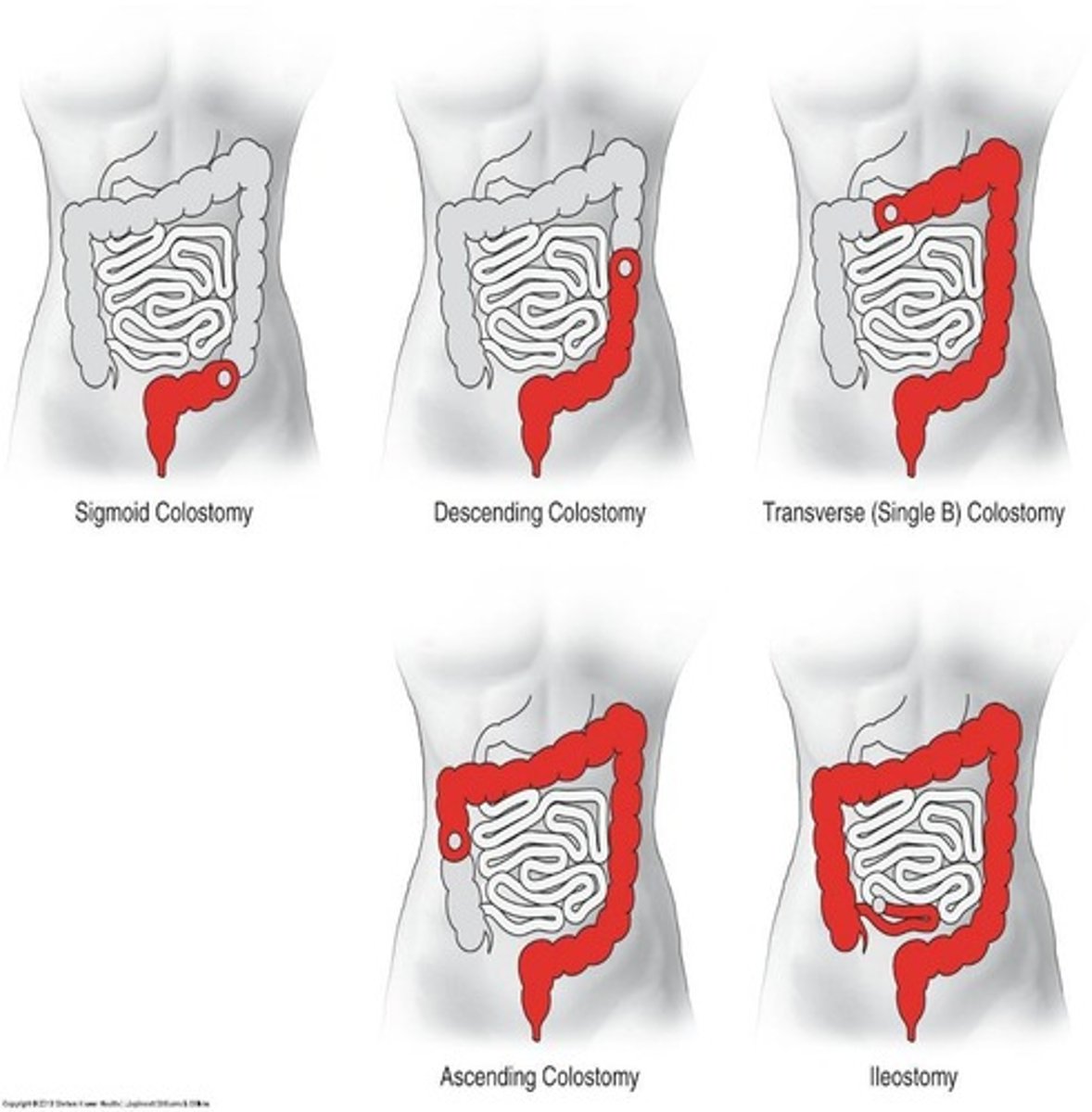
What is a colostomy? Name 1 condition that requires a colostomy.
- An opening from the colon (large intestine) created when a portion of the colon or the rectum is removed and the remaining colon is brought to the abdominal wall
- Required for diverticulitis, ulcerative colitis, cancer, and trauma
What is a urostomy?
A general term for a surgical procedure that diverts urine away from a diseased or defective bladder.
What is a nephrostomy?
A tube that diverts urine that is not able to flow to the bladder due to disease process.
How should HCWs assist patients with "ostomies"
- Caring for patients with ostomies requires sensitivity and a matter-of-fact attitude, as it causes a major change in body image
- Check for potential problems (infection, leaking bag)
- Take the patient's lead: pt has lots of training with their ostomy bag
What is a tracheostomy?
An opening surgically created through the neck into the trachea to provide an airway (breathing tube) and remove secretions from the lungs, commonly done under general anesthesia
What is the role of the MRT with tracheostomy patients?
Suctioning equipment should be nearby at all times in case of emergency for tracheostomy patients, and secretions are suctioned by an RN, RT, or physician but MRTs should be prepared to assist
TRUE or FALSE: Closed body cavities are sterile.
TRUE: Be mindful of dressings and adhere to strict aseptic technique if need to remove/change dressing
Where should drainage bags be kept?
Should be kept lower than the cavity being drained to promote flow.