Artificial Pancreas 4
 Call Kai
 Learn
Learn Practice Test
 Spaced Repetition
 Match
Match Flashcards
 Knowt Play
1/11

There's no tags or description
Looks like no tags are added yet.
Name | Mastery | Learn | Test | Matching | Spaced | Call with Kai |
|---|
No analytics yet
Send a link to your students to track their progress
12 Terms
What are the insulin pumps (tubed & tubeless) and glucose monitors design considerations
sources of error
risks of error
how would you address the errors
design improvements
therapeutic
aesthetic
priority (demographic)
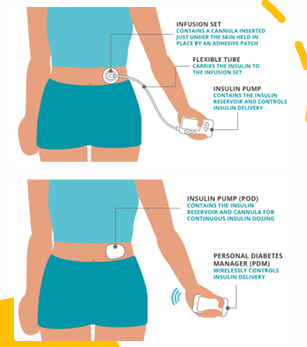
What benefits/drawbacks are associated with technologies of artificial pancreas? How could these impact the monitoring of disease progression
Artificial pancreas technology can improve monitoring of diabetes by providing continuous, detailed glucose data, allowing earlier detection of deterioration and better assessment of disease progression. However, drawbacks include technical limitations, data overload, and privacy concerns, and long-term user experience must also be considered when judging benefit.
What is a consideration that should be used for monitoring of condition
long-term reporting of user experience
What are potential things that could be done for artificial pancreas in the future
APS (CGM & IP) will no doubt develop further and benefit users greatly. But….
Will we ever be able to cure type 1 diabetes? An artificial pancreas will always need an exogenous insulin supply for the pump
Stem cells – the dream of creating a new “biological” organ
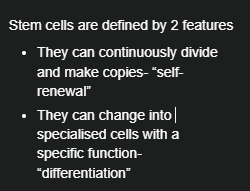
What are stem cells?
Stem cells are defined by two key features self-renewal and differentiation
Can beta cells derived from pluripotent stem cells produce insulin as efficiently as primary (normal) cells
In a study when SC-b cells were transplanted into mice they matured and showed similar function to primary beta cells after 6–10 weeks
Further research looked to produce cell clusters capable of secreting insulin and glucagon
Mature b-cells function as glucose sensors matching insulin output to plasma glucose concentration.
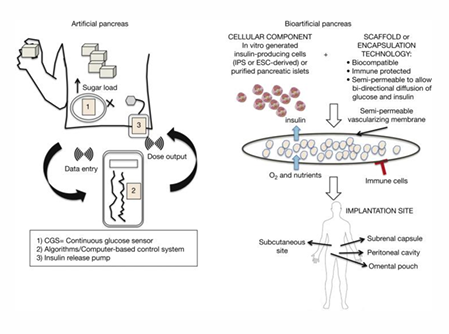
Can we build a “biological” pancreas with stem cells?
The artificial pancreas uses electronics to measure glucose and deliver insulin, while the bioartificial pancreas uses living insulin-producing cells protected inside an implanted biomaterial device.
Immune therapy- can we prevent T1DM developing
Current research is looking to develop treatments that reprogramme the immune system so that it does not destroy b-cells & avoids progression to a clinical state
What does T1DM involve
autoimmune destruction of B cells
what are markers of disease and progression
there are a variety of autoantibodies which are clinical markers of disease and progression
What is more preferable prevention or artificial pancreas
prevention would be preferable to an artificial pancreas but currently unlikely
How can one target immunotherapy
Engineers and biologists have developed new methods of detecting autoantibodies- which will allow us to target immunotherapy