Integumentary System
 Call Kai
 Learn
Learn Practice Test
 Spaced Repetition
 Match
Match Flashcards
 Knowt Play
1/147

There's no tags or description
Looks like no tags are added yet.
Name | Mastery | Learn | Test | Matching | Spaced | Call with Kai |
|---|
No analytics yet
Send a link to your students to track their progress
148 Terms
cutio-
skin
integumento
cover
clysis
wash or irrigate
corio-
true skin
maculo
large spot
pilo-, tricho-
hair p
physis-
growth
pruritis-, psoriasis
to itch
rhytido-
wrinkle
sarco-
fleshy
steato-
fat
theleo- , papillo-
nipple, nipple-like
vesico-, cysto-
blister, sac
what is keratin
protein-based substance that gives the outer skin a tough, waterproof, tight, protective layer
what are melanocytes
cells that produce melanin, which is the coloring material of the skin
the upper region of the dermis is composed of
a nipple like structure referred to as the papillary layer, it helps keep the skin stay together and forms ridges and grooves
the connective, elastic tissue within the skin allows
stretching as the body moves
the subcutaneous layer stores
fat for energy, w sweat glands help regulate body temperature
what causes our skim hair to stand up straight
arrector pili muscle when it contracts
meissner’s corpuscles function
detect superficial pressure, such as from an insect on the skin’s surface
stratum corneum:
top horny outer layer contains keratin-disjunction part of the skin that is shed
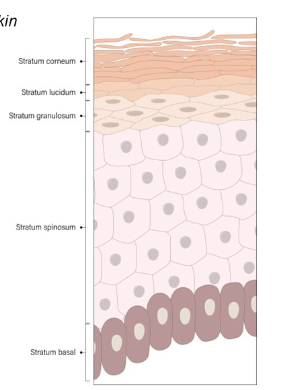
stratum lucidum
middle transparent layer below corneum and above the granulosm
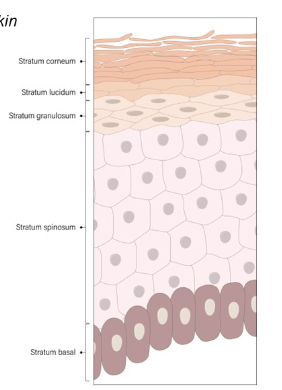
stratum granulosum
inner or deepest part of epidermis with columnar cells that divide and replace the rest of the epidermis
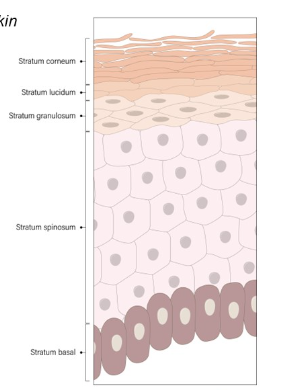
stratum spinosum
spiny cells above basal layer
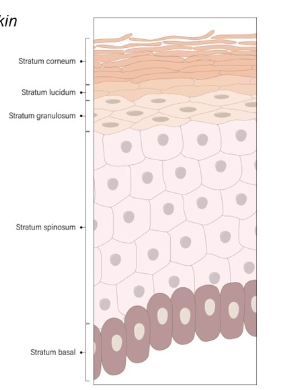
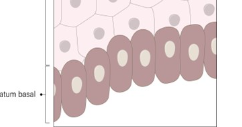
stratum basale
deepest with kerato/hyalin granules
what in the sun causes more melanin to be produced
ultraviolet light, gives us the tan
Dermis:
contains connective tissue, blood vessels, nerves, sweat glands, and sebaceous glands
ruffini corpuscle
aka bulbous corpuscles, pick up sensation of heat
krause corpuscles:
aka bulboid corpuscles, pick up sensation of cold
pain receptors
any one of free nerve endings throughout the body that warn of potential harm. Located chiefly in the epidermis and in the epithelial coverings of certain mucous membranes
Meissner’s corpuscles
pick up the sensation of touch
Pacinian corpuscles:
aka lamellar corpuscles, pick up the sensation of pressure deep within the skin
what does the adipose tissue within the dermis do
along w arteries and veins, supplies nutrients
why do smokers have wrinkled skin
smoking causes vasoconstriction and cuts off normal blood supply to the skin
onycho-, unguino-
nail
what are splinter hemorrhages/blood blisters
are under the nails and are usually the result of injury, but it could indicate infectious endocarditis
common procedures of dermatoplasty
blepharoplasty (eyelift)
facioplasty (fcelift)
rhinoplasty (nose job)
Dermabrasion
removal of scars with a revolving wire brush, sandpaper, or chemicals
often used to reduce acne scars, tattoos, or wrinkles
what are the types of skin injections
intramuscular (90* straight down)
subcutaneous ( 45* angle in)
intravenous (25* angle in)
intradermal (15* angle in)
skin turgor
‘swelling’
a test for skin resilience by pinching, compression, or other distortions
if the skin returns to normal appearance at a specific speed then the body has adequate fluid, or it is not dehydrated
ab/rasion
away/scrape
to roughen or remove by friction. a common type is chafing
laceration
to tear. often irregular and jagged
occurs when the skin experiences pressure, stretching or a blow, causing tearing
ex: perineal lacerations occur during birth
Lentigo
freckle
small brown or yellow brown macule on the skin caused by exposure to the sun. It can grow on the surface of the skin and become larger
one form is noninvasice malignant melanotic freckle
Contusion
bruise
any injury caused by a blow, in which the skin is not disrupted or broken. Usually caused by blow to the body and is characterized by swelling, pain, and discoloration.
apply cold and firm bandage to limit swelling. after 48 hrs apply heat and gentle massage
contracture
contraction or shortening of muscle fibers which causes atrophy or shrinking of that particular body tissue
usually causes extreme scar tissue or keloid tissue formation over the body joint, causing joint fixation and partial or total loss of joint flexion and extension
caused by burns, and may lead to body paralysis or muscle spams
Burn
1st degree- similar to sunburn
2nd degree- blisters caused by sunburn or caustics
3rd degree- destruction of skin with charring of underlying tissues; caused by fires
4th degree- causes partial or complete destruction pf epidermis and underlying tissues like muscles, ligaments, tendons and bones
Bulla
thin walled, fluid filled lesion
larger than 1 cm
ruptures easily
associated w noninfectious diseasest
Tumor
firm mass or swelling
may be malignant or benign
macule
round, flat pigmented area
associated q measles and scarlet fever
noninfectious types are freckles, and petechia
Nodule
a large, solid, raise area of skin
larger than1 cm
xanthomas and fibromas
papule
round, solid, and raised
less than -.5 cm
seen in rubella
plaques
flat, solid lesion planes
may be formed by mass of papules
2 or more cm in diameter
psoriasis and lichen
pustule
round raised pus filled lesion
acne produces pustules called comedones
patch
distinguished from a macule through size
larger than 0/5 cm
vitiligo
vesicle
clear fluid filled lesion
less than 0.5cm
closely spaced
seen in contact dermatitis and herpes
wheals
aka hives
raised red itchy areas with clearly defined edges that are transient
caused by allergic reactions
fissure
secondary lesions
linear crack that extends into the dermis
develop cracked lips and athlete’s foot
keloids
secondary lesion
excessive scar tissues
raised often red and on the surface of the skin
lichenification
secondary lesion
thickened area of skin that forms after intense scratching
scales
secondary lesion
flaky, dry, silvery or white forms of shredding keratin cells
seen in eczema, seborrhea. dermatitis, psoriasis and ichthyosis
scars
secondary lesion
connective tissues that remain after a skin lesion has healed
aka cicatrix
result from trauma
ulcer
secondary lesion
deep depression that extends into the dermis
decubitus ulcers are pressure ulcers
ulcerations are related to STIs
crusts
secondary lesion
thickened, dried areas of broken pustules or vesicles
viewed as scabs that form over vesicles
appear in impetigo and chicken pox
erosion
secondary lesion
superficial, scooped out areas that do not extend into the dermis
excoriation
secondary lesion
reddened abrasion, usually from itching
seen w insect bites and scabies
Blister
fluid below or within the epidermis often caused by fever or friction
cheilosis are lip and mouth blisters scales and fissures. cheilitis is inflamed and cracked skin
treatment: mild antiseptic, protective dressing, may be punctured to relieve pressure
Boil
necrotic or inflamed tissue forming a core of material that is either extruded, reabsorbed, or surgically removed
common cause is staphylococcus bacteria
pain, swelling, redness. irritation or squeezing spreads infection
treatment: moist heat, bed rest, topical and or systemic antibiotics, surgical incision, drainage
acne
inflammatory disease of the skins sebaceous glands and hair follicles
increase in androgen in both sexes increases these pilosebaceous glands i=activity, causing juvenile acne
pimples and pustules form comedones (blackheads) = discolored dried sebum plugs of the excretory skin ducts or hair follicles
skin debris and waxy oil cause acne with cysts, nodules, and scars
treatment: benzoyl peroxide, salicylic acid, clindamycin, erythromycin, uv light. cleansing, peels, incision and drainage
Types of cysts
conjunctival: develop under the conjunctiva covering of the global portion of the global portion of this eye membrane over the sclera
epidermal: caused by hair follicle blockage and contain large amounts of epidermal tissue, hair, and oil
mucoid: caused by degenerating connective tissue and usually occur in the vertebra or distal finger joints
Epidermoid cyst
common benign cavity lines by keratinizing epithelium and filled w cheesy material composed of sebum and epithelium debris
caused by closure of oil gland, oil duct, and poor circulation
usually on head or near anus, common in scalp or neck
excised surgically and antibiotic may be used drainage not advised
Pilonidal cyst
abscess or cyst of the head or anal areas
recognized by a depression or dairy dimple
sinus of fistula often develops and becomes infected draining through the sinus and or into a cavity
fistula may develop in spinal tract
treatment: antibiotics for infection or surgical excision
Milium
white pinhead papules on face or trunk that are keratin filled cysts
form below the skin
often disappear
Striae Gravidarum
aka stretch marks
red or purple depression in skin
treatment for rash
antihistamines
urticaria
hives or nettles
pruritic skin eruption w severe itchy pale wheals
caused by allergy, insect bites, pollens, drugs, exercise, inhalants, stress, heat or cold, physical, neurologic factors
treatment: avoid triggers, antihistamines, steroids
Eczema
noninfectious superficial dermatitis of u/k cause
vesicles, redness, swelling, itching, pustules appear and lead to dry scales, crusts, and scabs. characterized by itching and burning
exacerbation BY TEMP CHANGE, HUMIDITY, STRESS, PERFUMES, DETERGENTS
Psoriasis
pink or dull red lesion and silvery scaling
associated w arthritis
idiopathic and not controlled by topical agents.
NF-alpha blockers, phototherapy, corticosteroids, cyclosporine
actinodermatisis:
inflammation of skin caused by exposure to radiation, especially from the sun
acrodermatitis
extremities, height, pointed skin inflamed
childhood form of dermatitis
accompanied by diarrhea, hair loss, lesions
if enteropathy, may be fatal for 1-3 yrs old
Cradle cap
thick, yellow, greasy scaling of the scalp
treatment: apply oil or ointment to soften scalp and shampoo frequently
Phytophotodermatitis
inflammation of skin caused by plant oils and a light activated sensitive reaction
most common plants that cause this rash are citrus fruits, wild parsnips, and rue
Photodermatitis
sensitivity of epithelium to light
may occur as a result of an allergic reaction as a symptom of an immune disorder, as a result of chemical exposure, or individual may be born w a predisposition for this condition
Verruca
warts
benign epidermal nipple like skin tumors caused by papillomavirus
can be plana, senilis, carcinoma, acuminata
treatment: removal w sharp spoon curette under local anesthesia, cryotherapy, salicylic acid, electrosurgery
papilloma acuminata: genital form that leads to cervical cancer
callus:
thick or thin horny mass of condensed epithelial cells in stratum corneum which overlie any bony body prominence
usually caused by pressure or friction
conic form: compressed dermis, making it thin and tender
treatment: surgical paring and chemical peels of excess keratin if needed to thicken skim
Corn
cone shaped horny mass of condensed epithelial cells which compress underlying dermis, making it thin and tender
can become soft bc of foot perspiration
treatment: relief from pressure, surgical paring, chemical peels of excess keratin material
caused by long term friction and pressure
Bunion
abnormal enlargement of join at beginning big toe w bursitis
caused by joint inflammation, chronic pressure, degenerative joint, bone diseases, and heredity
Merocine gland
apart/secretes
sweat glands; form i cell and pass through membrane into a duct
a porcine gland
above/secretes
mammary glands and sweat glands in axilla and genital area; form within the cell and the ends break off w secretion
eccrine gland
out/secretes
all sweat glands
holocrine gland
whole/secretes
sebaceous glands; the cell and its secretions are exuded
endocrine gland
within/secretes
7 hormone glands; they are ductile; hormones enter directly into the blood
exocrine gland
out/secretes
saliva and pancreas; the juices flow out of a duct into a new body part, such as from the proximal pancreas into the duodenum
lymph nodes
lymph is a watery fluid originating in organs and tissues that circulate to the lymph vessels and are filtered by lymph glands or nodes
lymph enters the blood stream at the junction of the internal jugular and subclavian veins
lymph contains chyle, erythrocytes, and leukocytes
Capillaritis
inflammation of the body’s capillary beds
results in a distinctive set of dark brown or reddish, flat lesions and across the affected area, generally the legs
does not generally cause any damage to the body and will generally resolve itself within a few months
Dyshidrosis
sweating disorder that leaves vesicle eruption on skin, usually on the hands and feet, that cause intense itching
treatment: to control sweating by use of absorbent socks and well-ventilated socks, corticosteroids applied at night, phototherapy, and immune suppressing lotions like pimecrolimus, box for serve cases
dehydration usually follows..
prolonged diarrhea, fever, vomiting, and diabetic ketoacidosis
caused by fluid deprivation, excess loss, sweating, loss of electrolytes, or injection of hypertonic solution
Gangrene
death of tissue due to insufficient blood supply. May be disrupted due to infection, injury, coagulation i=disorder, boils, frostbite, diabetes, and Raynaud’s disease
types: gas, bacillus, moisture or dryness, previous infection, vasomotor, disturbance, extensive injury
Ichthyosis
fish like skin, which is dry, hyperkeratotic, scaly
may infect older people, frequent bathers, or be acquired as part of several syndromes including lymphoma and multiple myeloma
fungus infections of feet are often referred to as mild pedal ichthyosis
treatment: topical moisturizers, anti-keratinizing meds, potentially skin grafts
Xeroderma
dry/skin
roughness and dryness of skin
xeroderma pigmentosa: found in children, pigment discoloration, ulcers, cutaneous, muscular atrophy, extreme sensitivity to uv light,
Lichen Planus
any papular, scaly, nonmalignant, chronic skin disease
pimples/papules: small flat purplish or white often becoming plaques w fine gray lines
characterized by itchy pinhead read patches