Genetic Mutations, Gene Expression, and Regulation in Biology
 Call Kai
 Learn
Learn Practice Test
 Spaced Repetition
 Match
Match Flashcards
 Knowt Play
1/80

There's no tags or description
Looks like no tags are added yet.
Name | Mastery | Learn | Test | Matching | Spaced | Call with Kai |
|---|
No analytics yet
Send a link to your students to track their progress
81 Terms
What are mutations?
Changes in the genetic material of a cell that can alter phenotypes.
What is the primary source of genetic variation?
Mutations.
What can cause new phenotypes?
Any disruption in normal function and production of cellular products.
What are large scale mutations?
Chromosomal changes.
What are small scale mutations?
Nucleotide substitutions, insertions, or deletions.
What is a point mutation?
A change in a single nucleotide pair of a gene.
What is a substitution mutation?
The replacement of one nucleotide and its partner with another pair of nucleotides.
What is a silent mutation?
A change that still codes for the same amino acid due to redundancy in the genetic code.
What is a missense mutation?
A change that results in a different amino acid.
What is a nonsense mutation?
A change that results in a stop codon.
What is a frameshift mutation?
When the reading frame of the genetic information is altered, often leading to disastrous effects on proteins.
What is an insertion mutation?
A mutation where a nucleotide is added to the DNA sequence.
What is a deletion mutation?
A mutation where a nucleotide is removed from the DNA sequence.
What is nondisjunction?
When chromosomes do not separate properly during meiosis, resulting in an incorrect number of chromosomes.
What genetic condition is an example of nondisjunction?
Down Syndrome (trisomy 21).
What is translocation in genetics?
A segment of one chromosome moves to another chromosome.
What is an inversion mutation?
A segment of a chromosome is reversed.
What is a duplication mutation?
A segment of a chromosome is repeated.
What is a deletion mutation in chromosomes?
A segment of a chromosome is lost.
How do mutations relate to natural selection?
Mutations are subject to natural selection, which can enhance survival and reproduction.
What is horizontal gene transfer?
The exchange of genetic material between prokaryotes.
What is transformation in genetics?
The uptake of DNA from a nearby cell.
What is transduction in genetics?
Viral transmission of genetic material.
What is conjugation in genetics?
Cell to cell transfer of DNA.
What is transposition in genetics?
Movement of DNA segments within and between DNA molecules.
What is gel electrophoresis?
A technique used to separate DNA fragments by size using an electric current.
What is the purpose of PCR?
To make several copies of a specific DNA segment.
What is DNA sequencing?
The process of determining the order of nucleotides in DNA.
What is gene expression?
The process by which the information encoded in a gene is turned into a functional product, usually a protein or RNA.
How can the same genotype produce different phenotypes?
Different genes are expressed at different levels in different cells, influenced by environmental conditions.
What determines the phenotype of a cell or organism?
The combination of genes expressed and the level of expression.
What are housekeeping genes?
Genes that are constitutively expressed to maintain basic cellular functions.
What is the role of inducible genes?
Inducible genes can be turned on or off based on environmental and internal cues.
What is the primary level of gene regulation in prokaryotes?
Regulation occurs primarily at the level of transcription.
What are operons?
Clusters of related genes that can be regulated and transcribed together under a single promoter.
What are the three parts of an operon?
Promoter, Operator, and Structural Genes.
What is the function of a repressor in gene regulation?
A repressor is a regulatory protein that reduces transcription when bound to the operator.
What is an example of a repressible operon?
The trp operon in E. coli, which controls the synthesis of tryptophan.
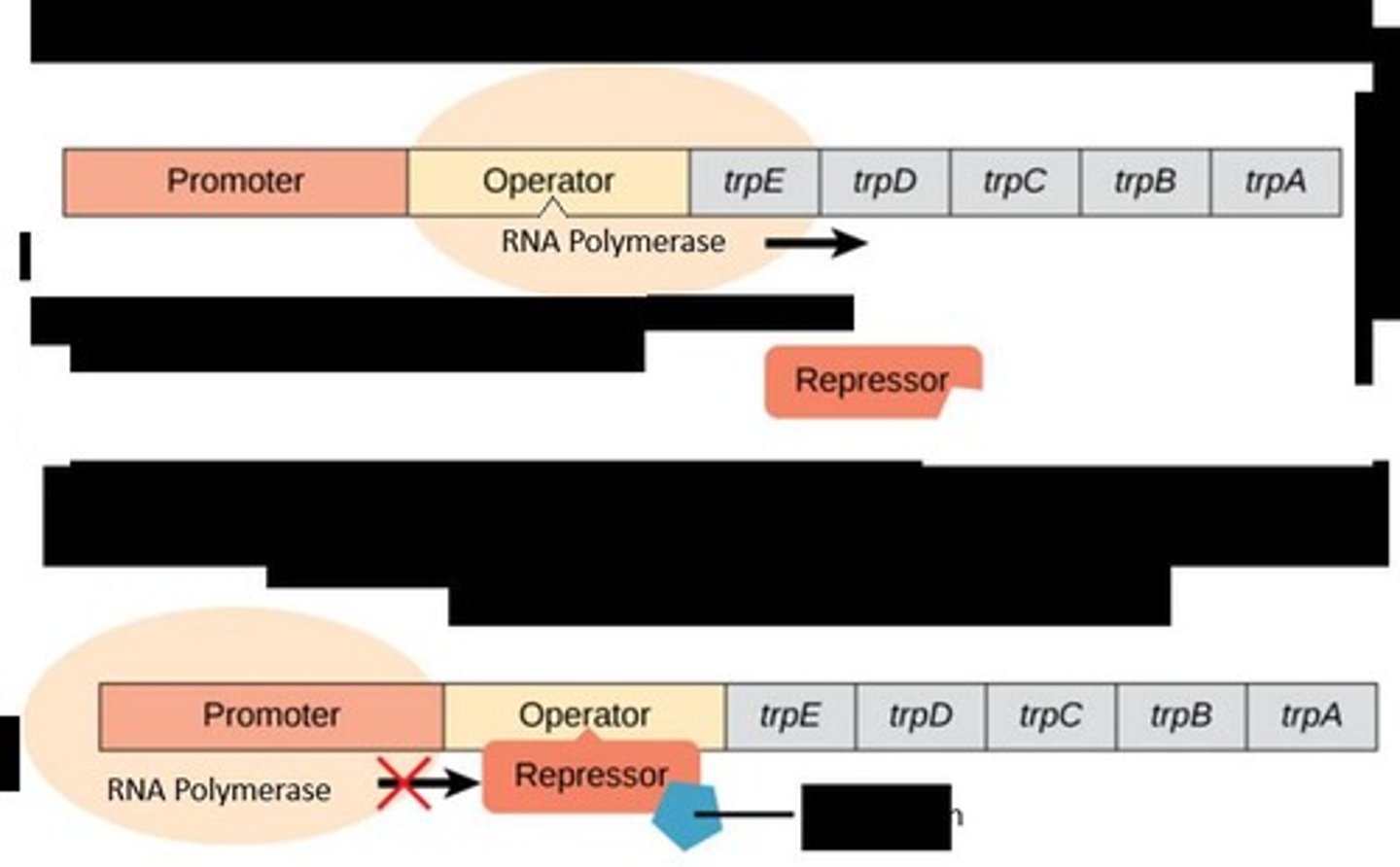
What happens to the trp operon when tryptophan levels are high?
The repressor binds to the operator, blocking RNA synthesis.
What is an example of an inducible operon?
The lac operon in E. coli, which is activated in the presence of lactose.
What occurs when lactose is present in relation to the lac operon?
Lactose is converted to allolactose, which binds to the lac repressor, allowing transcription.
What is the role of cAMP in the regulation of the lac operon?
cAMP activates CAP, which enhances RNA polymerase binding for strong transcription.
What is the difference between repressible and inducible operons?
Repressible operons are usually on but can be turned off; inducible operons are usually off but can be turned on.
What is variable expressivity?
The phenomenon where the same genotype can result in different phenotypes in different individuals.
What is the significance of gene regulation?
It helps cells save energy and resources, respond to environmental changes, and develop different cell types.
What is the function of regulatory genes?
They produce regulatory proteins that control the expression of other genes.
What is the effect of glucose on the lac operon?
When glucose is present, the lac operon is not transcribed, even if lactose is present.
What is the role of RNA polymerase in gene expression?
RNA polymerase binds to the promoter to initiate transcription of the gene.
What is the operator in an operon?
The on/off switch that controls the transcription of the operon.
What happens to the lac operon when glucose is low?
The cAMP-CAP complex binds to DNA, enhancing transcription of the lac operon.
Why is gene expression important for cellular function?
It allows cells to produce necessary proteins and respond to environmental changes.
What is the difference between negative and positive regulation?
Negative regulation reduces transcription, while positive regulation increases transcription.
How does the environment influence gene expression?
Environmental factors can induce or repress the expression of certain genes.
What is the significance of the trp operon in bacteria?
It regulates the synthesis of tryptophan based on its availability in the environment.
What is the role of allolactose in the lac operon?
Allolactose acts as an inducer that inactivates the lac repressor, allowing transcription.
What is the role of repressors in gene regulation?
Repressors decrease or block transcription.
What do activators do in gene regulation?
Activators increase transcription.
How do cells in a multicellular organism develop different specialized cell types despite having the same DNA?
Through differential gene expression influenced by internal and external cues.
What are cytoplasmic determinants?
mRNA and proteins from the maternal egg cytoplasm that direct early animal development.
What effect do cytoplasmic determinants have on daughter cells?
They lead to different patterns of gene expression due to unequal distribution.
What is induction in the context of early development?
Cell-to-cell signals that cause a change in gene expression in nearby cells.
What are morphogens?
Signaling molecules that diffuse through developing tissues, forming a concentration gradient that influences gene expression.
How does the concentration of a morphogen affect a cell's response?
The response depends on the concentration of the morphogen the cell is exposed to.
What is chromatin remodeling?
The modification of chromatin structure to make DNA more accessible for transcription.
What is histone acetylation?
The addition of acetyl groups to histones, which loosens DNA and enhances transcription accessibility.
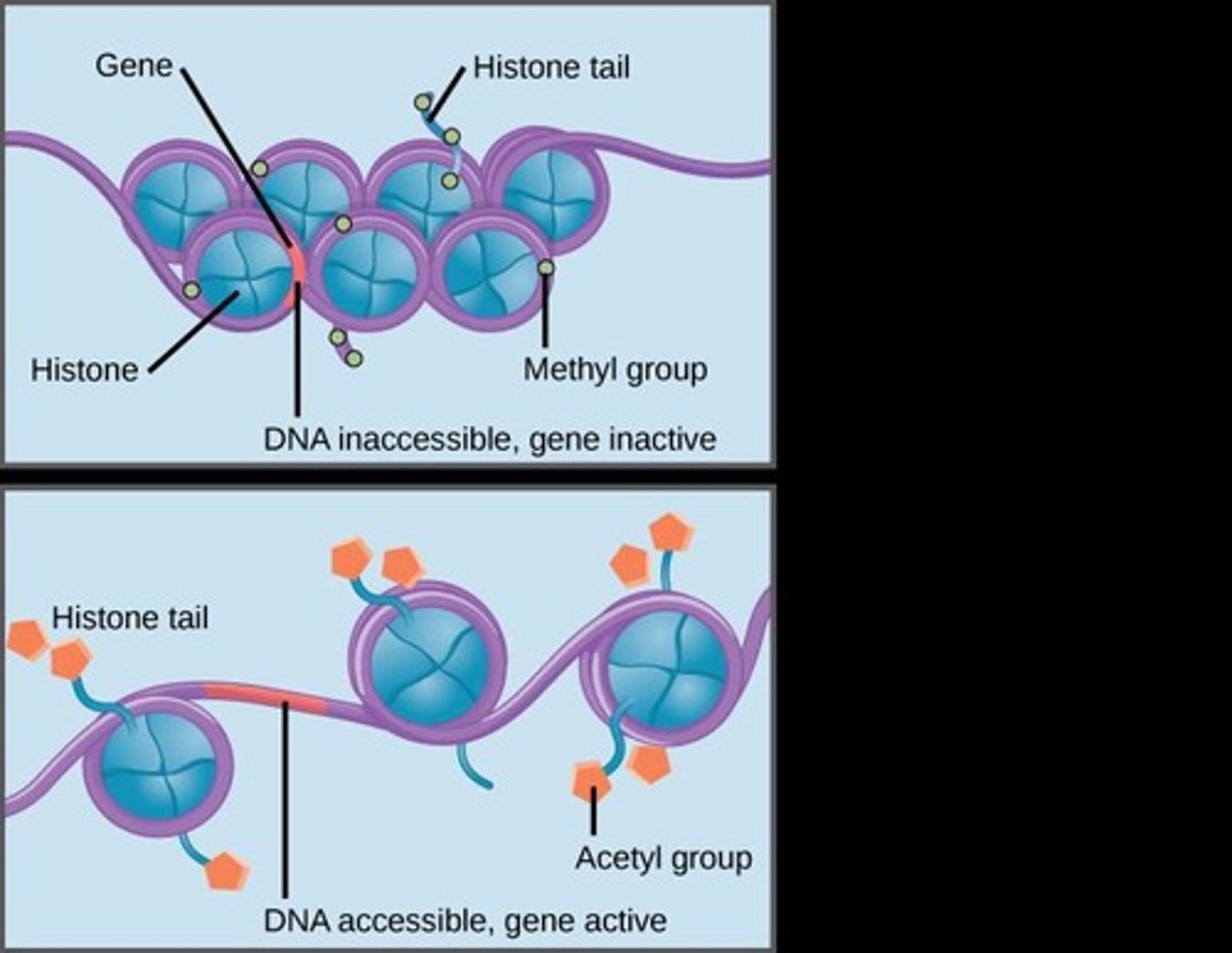
What is DNA methylation?
The addition of methyl groups to DNA that causes chromatin to condense, reducing transcription.
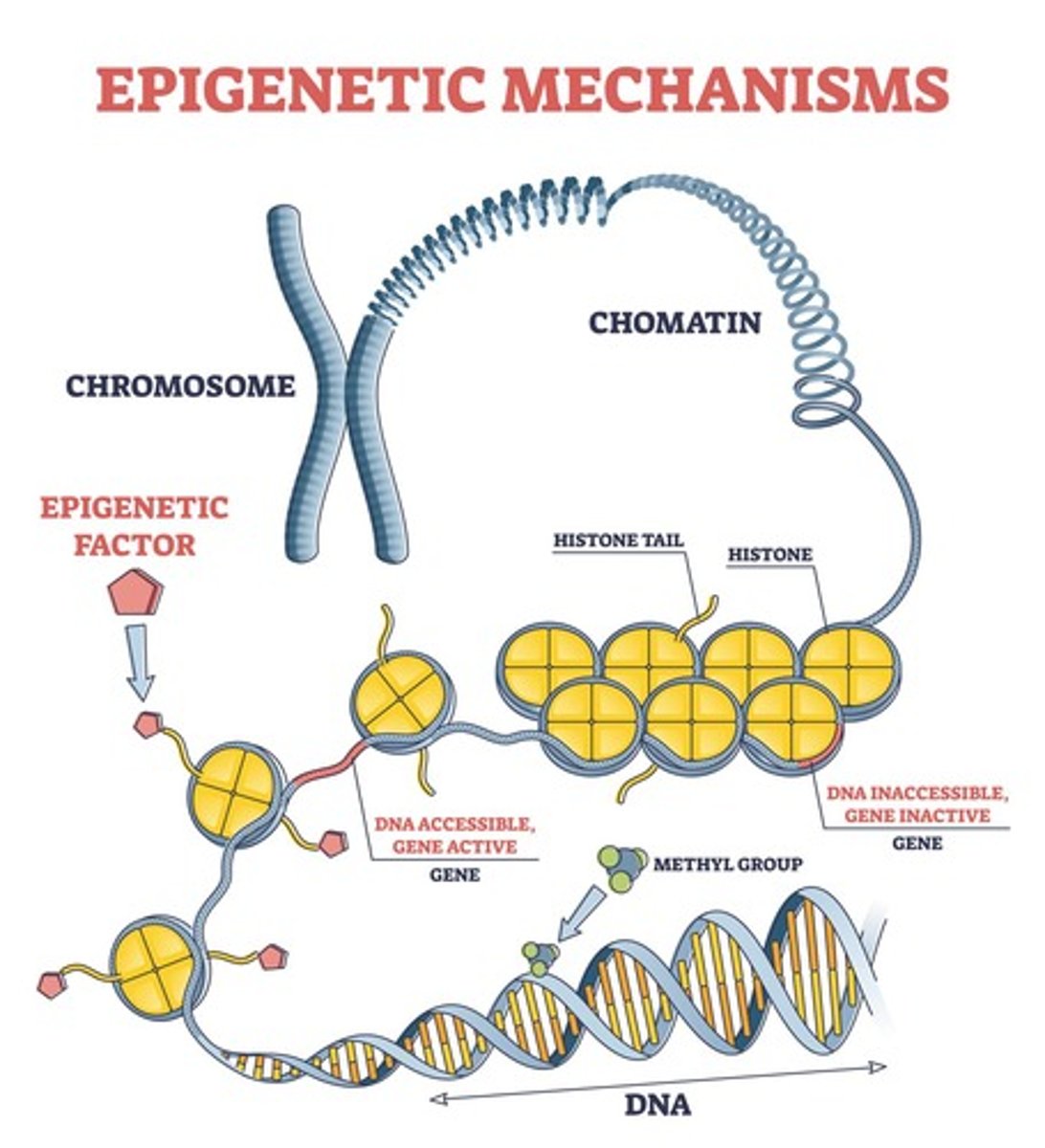
What is epigenetic inheritance?
Inheritance of gene expression changes that do not involve changes in the nucleotide sequence.
What are transcription factors?
Proteins that bind to control elements to regulate gene transcription.
What are enhancers?
Distal control elements that can increase the rate of transcription when bound by activators.
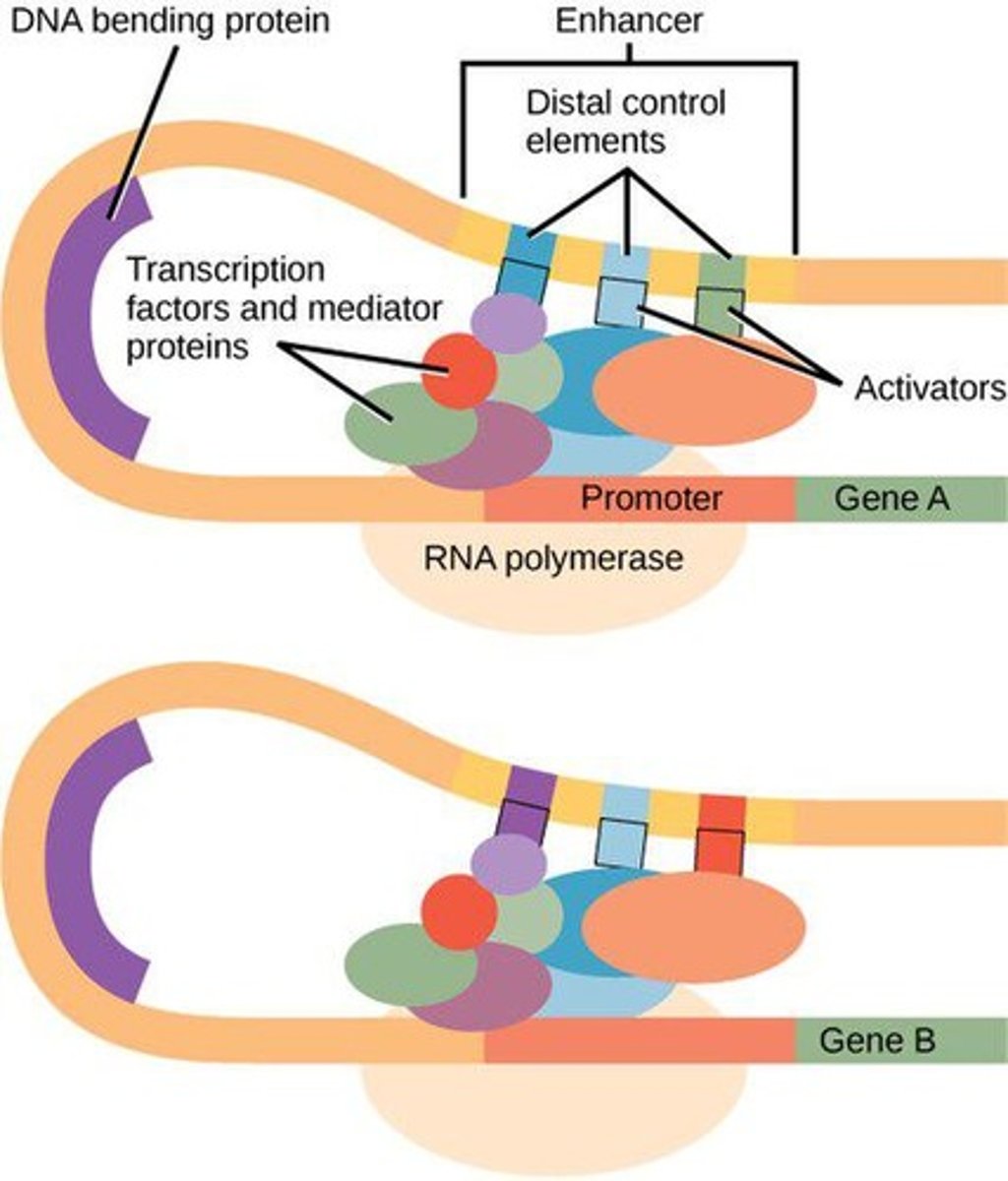
How can groups of genes be regulated together?
If they share common control elements recognized by the same transcription factors.
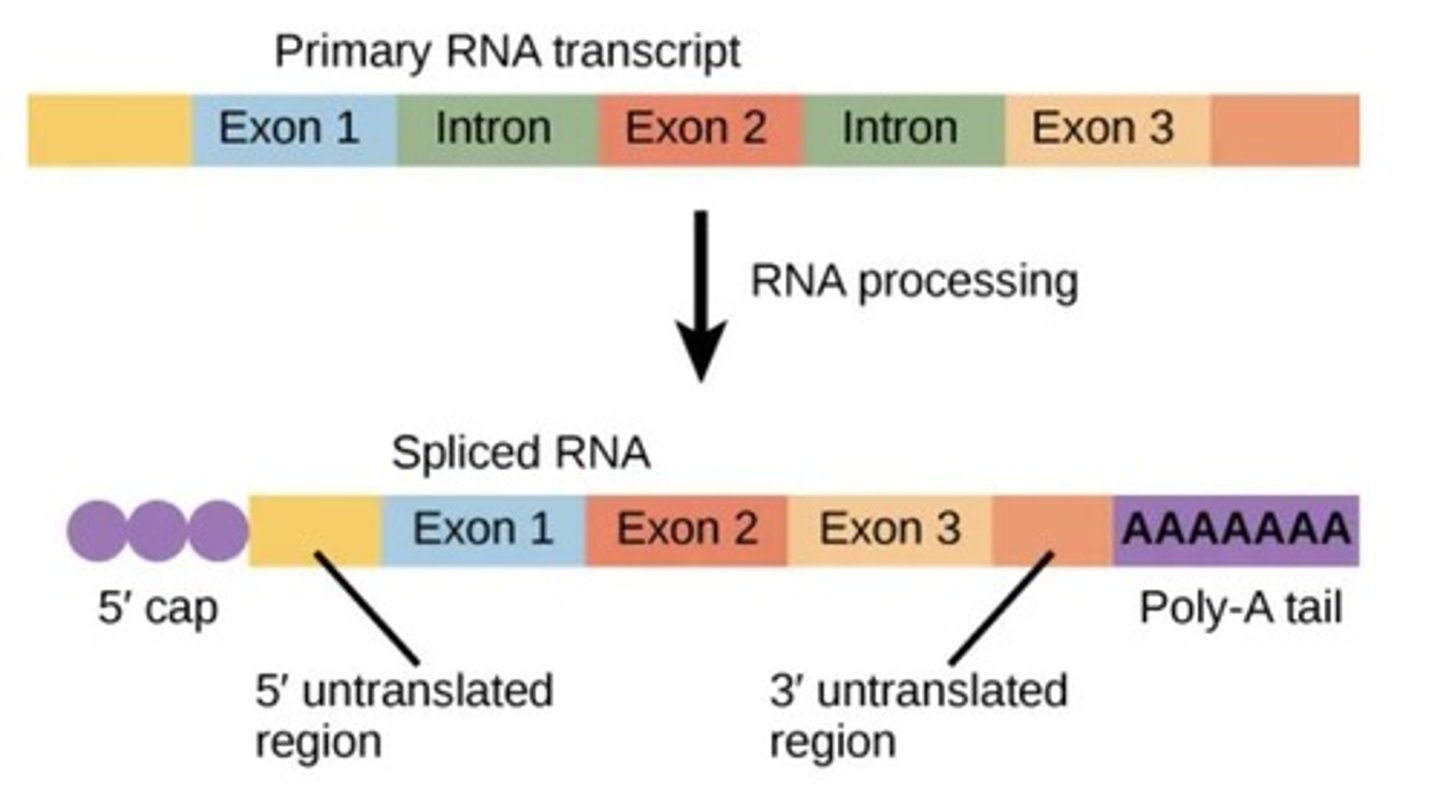
What is RNA processing?
The addition of a poly-A tail and 5' cap, and alternative splicing of pre-mRNA.
What role do microRNAs and small interfering RNAs play in gene regulation?
They can bind to mRNA to degrade it or block translation.
How can translation initiation be blocked?
By regulatory proteins binding to the 5' cap or poly-A tail, preventing ribosome attachment.
What is post-translation modification?
Changes to proteins, such as the addition/removal of phosphate groups or chemical tags for degradation.
What is the significance of differential gene expression?
It allows cells with the same DNA to become specialized in structure and function.
What is the main focus of gene regulation in eukaryotes?
Most gene regulation occurs at the transcription level.
What is the role of transcription factors in gene expression?
They bind to control elements to regulate the transcription of specific genes.
What are the two types of cues that influence early gene expression patterns?
Internal cues (cytoplasmic determinants) and external cues (inductive signaling).
What is the outcome of sequential gene expression during development?
It ensures the correct order and timing of gene activation during development.
How does chromatin structure affect gene expression?
Tightly wound DNA is less accessible for transcription, while loosely wound DNA is more accessible.
What is the effect of regulatory proteins on translation?
They can prevent ribosome binding and thus block the initiation of translation.