Previous Units
 Call Kai
 Learn
Learn Practice Test
 Spaced Repetition
 Match
Match Flashcards
 Knowt Play
1/89

There's no tags or description
Looks like no tags are added yet.
Name | Mastery | Learn | Test | Matching | Spaced | Call with Kai |
|---|
No analytics yet
Send a link to your students to track their progress
90 Terms
Reproduction
Passing on copies of genetic information
asexual reproduction
cloning= identical copies
sexual reproduction
2 parents, diverse offspring
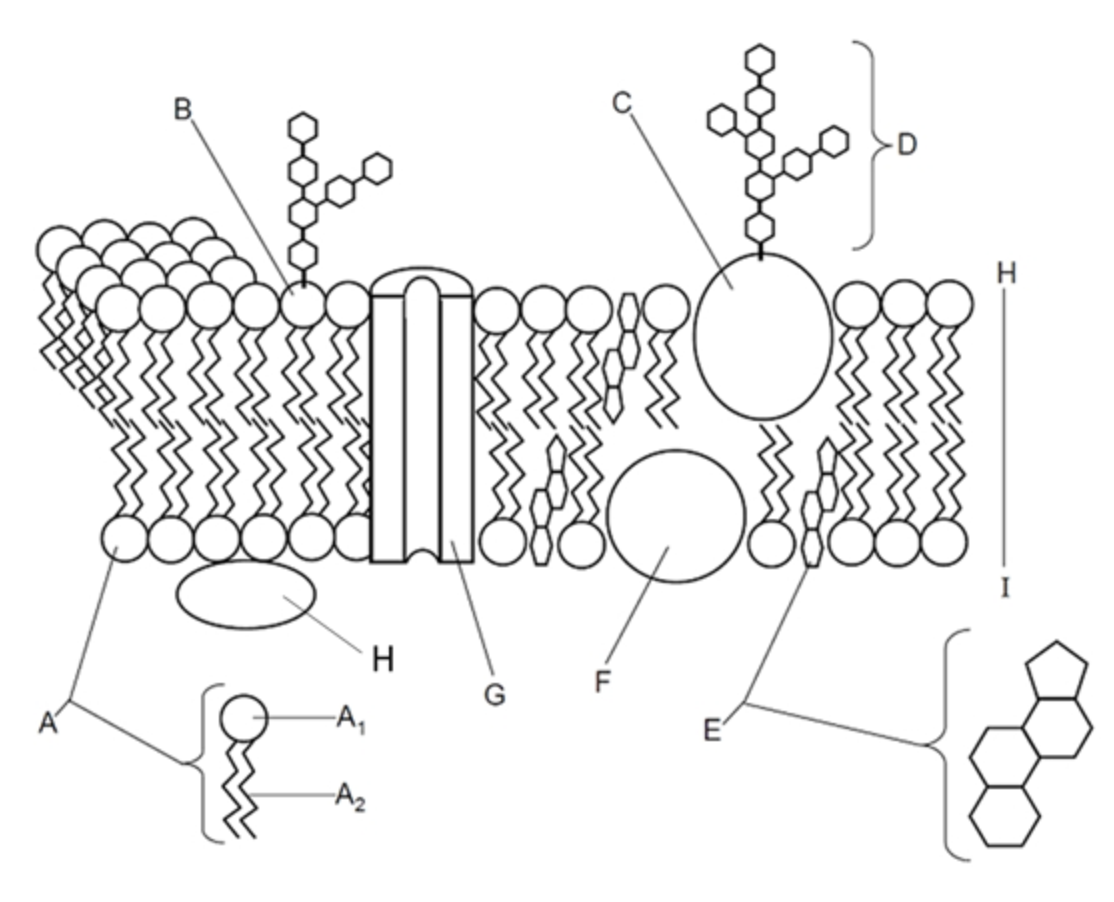
carbohydrates
sugars, hydrophilic, energy storage and structure; lots of -OH, rings with oxygen embedded
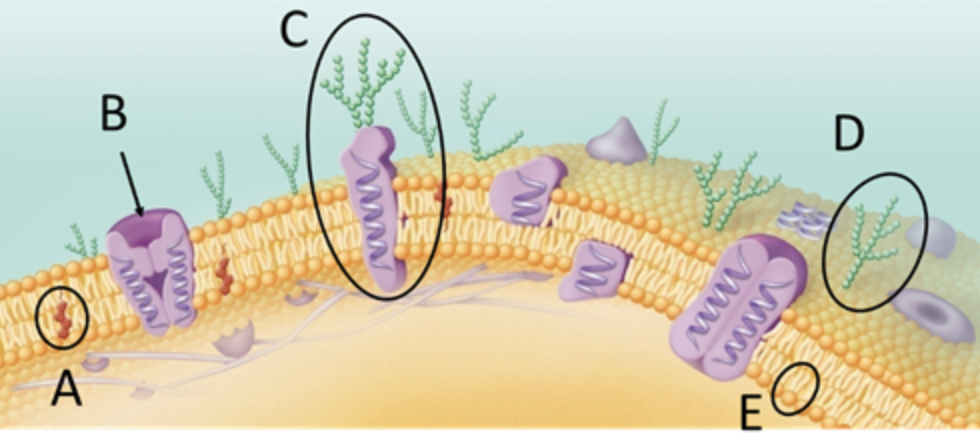
glycosylation
the process where carbohydrates are attached to proteins or lipids in living cells
glycolipid
carbohydrates attached to lipids
glycoproteins
carbohydrates attached to proteins
N-linked glycoproteins
Crucial for protein folding, quality control, and immune modulation
O-linked glycoproteins
Involved in cell-to-cell recognition and forming protective mucus barriers
prokaryotes
primitive, bacteria (and archaea), small in size, circular DNA, lacking membrane-bound organelles, no nucleus
nucleoid
DNA rich region
ribosomes
assembles proteins
plasma membrane
acts as the cell’s gatekeeper regulating what can enter/exit, inner most layer
cell wall
determines cell shape, prevents cell from rupturing, made of peptidoglycans, middle layer
glycocalyx
helps evade a host’s immune system, stores water, outer most layer
pili
attaches one bacteria to another for gene transfer, transfers DNA between cells
flagella
enables the bacteria to “swim”
circular DNA
shape of prokaryotic cells DNA
gram positive bacteria
stain purple, have a thicker cell wall that captures the stain
gram negative bacteria
stain pink, have a thinner cell wall, also have a 2nd outer plasma membrane
cells can’t produce proteins
how does antibiotics target ribosomes
cells can’t perform specific functions
how does antibiotics target specific enzymes
cell can no longer regulate what enters or exits
how do antibiotics target the plasma membrane
cell takes on so much water it ruptures
how does antibiotics target the cell wall
enzymes
helps speed up chemical reactions by lowering the activation energy
ribozymes
acts an an enzyme but is made of RNA
protein
what kind of molecule is enzymes
RNA
what kind of molecule is ribozymes
activation energy
energy needed to push start a reaction
enzyme-substrate complex
substrate held in position in the enzymes active site
substrate
starting material
product
what is being formed
allosteric site
on/off switch
active site
where the chemical reaction occurs
competitive inhibition
molecule that can fit into the active aite, no reaction but it blocks the active site for the substrate
noncompetitive inhibition
molecule that binds to the allosteric site and switches off the enzyme, distorts the active site shape
negative
enzymes are often regulated by what kind of feedback loop
prosthetic group
permanently attach
coenzyme
organic, often vitamins, helps adjust the shape of the active site
cofactor
inorganic, Zn or Mn, atom helps adjust the shape of the active site
substrate binding specificity
enzymes are highly specific, affinity for its substrate
temperature, pH, substrate concentration, and the presence of inhibitors or activators
factors that impact enzyme function
by ensuring that specific reactions happen in the right place
how do enzymes functions influence where they are located in the cell
hypothesis
an educated guess or explanation for a phenomenon
must be logical, testable, and falsifiable
requirements for a hypothesis
statement format, what is being tested, what is being measures, our prediction
hypothesis structure
null hypothesis
there is no impact or change from the treatment
alternative hypothesis
there is a change or impacts from the treatment
reject the null or alternative
do you prove a hypothesis correct of reject a hypothesis that isn’t supported by the data
theory
an idea based on multiple studies, can be used to make predictions/explanations
law
statement of fact, it hold under specific circumstances, rare in biology common in chemistry and physics
ask a question/make an observation, research, develop a hypothesis, experiment, analyze results, reject the hypothesis, report results
scientific method steps
create and test a hypothesis
what is the purpose of scientific method
pH
H+ concentration of a substance
more, lower
higher the H+ concentration the _____ acidic and the _____ the pH
acids
molecules that release H+
bases
molecules that release OH or bind H+
buffer
maintains a constant pH by acting as an acid or base
as basicity increases, pOH levels decrease
pOH scale
as acidity increases, pH levels decrease
pH scale
lower
the higher the pH the _____ the pOH
more
the more acidic a solution the _____ H+ there is
more
the lower the pH the ____ H+ concentration
hydrolysis
water splitting, exergonic reaction, release energy
dehydration (condensation)
endergonic reaction, often requires an energy input
chemical reaction
the change in the composition of distribution of atoms of a substance, with consequent alterations in properties
reactants
a chemical substance that enters into a chemical reaction with another substance
products
a molecule that results from the completion of a chemical reaction
viruses
specific intracellular infectious agent
genetic info, capsid, envelope
parts of a virus
genetic information
contains all of the info to build parts and assemble new viruses, double stranded or single stranded, DNA OR RNA
capsid
protein coat- provided the virus with its shape, helps protect its nucleic acid
envelope
stolen membrane- stolen from a host cell, helps hide the virus from the hosts immune system
helical, polyhedral, spherical, complex
virus shapes
complex
virus shape- 2 shapes combined, virus that targets bacteria
helical
protein/capsid shape
lytic cycle
kill the host cell
lysogenic cycle
leave a living host cell
decomposition
hydrolysis is an example of what reaction type
envelope
Which part of a virus is a membrane taken from a host cell?
complex
what is the shape of bacteriophage
synthesis
what type of reaction involves the production of a larger product by combining smaller reactants
base
A substance that can take up hydrogen ions or release hydroxide ions in water is a(n)
redox
A reaction that transfers an electron from molecule to another is a(n)
catabolic
Which type of reaction often releases energy from the substrate?
redox reaction
The electron transport chain (ETC) is an example of a(n)
capsule
what organelle helps evade a host's immune system in a bacteria cell
clone
A genetically identical individual formed by asexual reproduction