Test 3

0.0(0)
Studied by 0 people
call kaiCall Kai
learnLearn
examPractice Test
spaced repetitionSpaced Repetition
heart puzzleMatch
flashcardsFlashcards
GameKnowt Play
Card Sorting

1/76

encourage image

There's no tags or description

Looks like no tags are added yet.

Last updated 7:03 AM on 4/28/26
Name
Mastery
Learn
Test
Matching
Spaced
Call with Kai

No analytics yet

Send a link to your students to track their progress

77 Terms

1
New cards

the “sublime”

awe inspiring experience (i.e. when we watch a horror film or get on a rollercoaster; you want to survive it but still experience it)

  • irrational nature

  • irrational consciousness: nightmares

  • tragic events: shipwrecks, murder

  • tragic heroes, martyrs

2
New cards

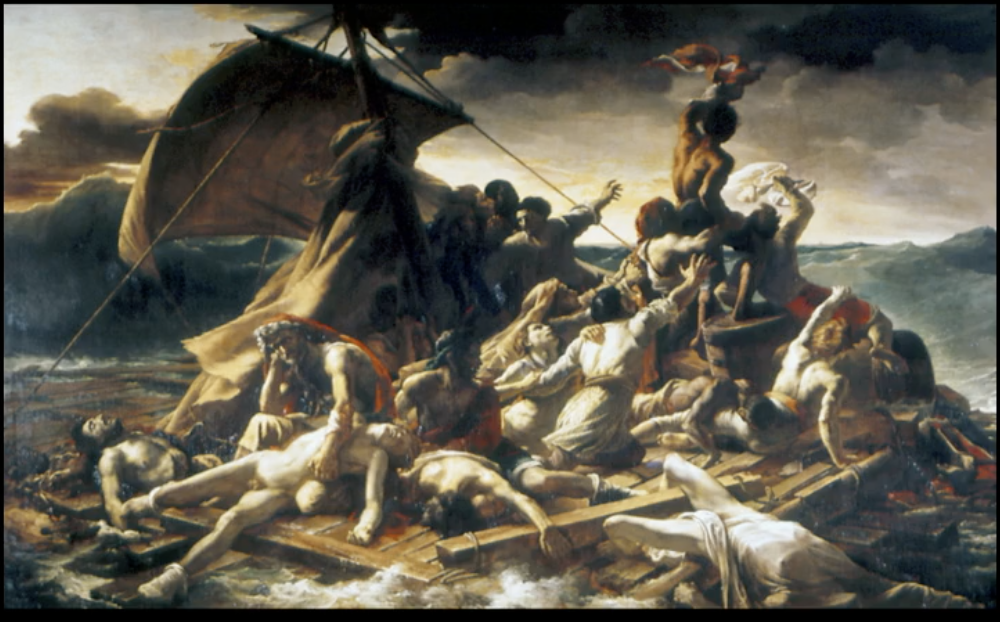
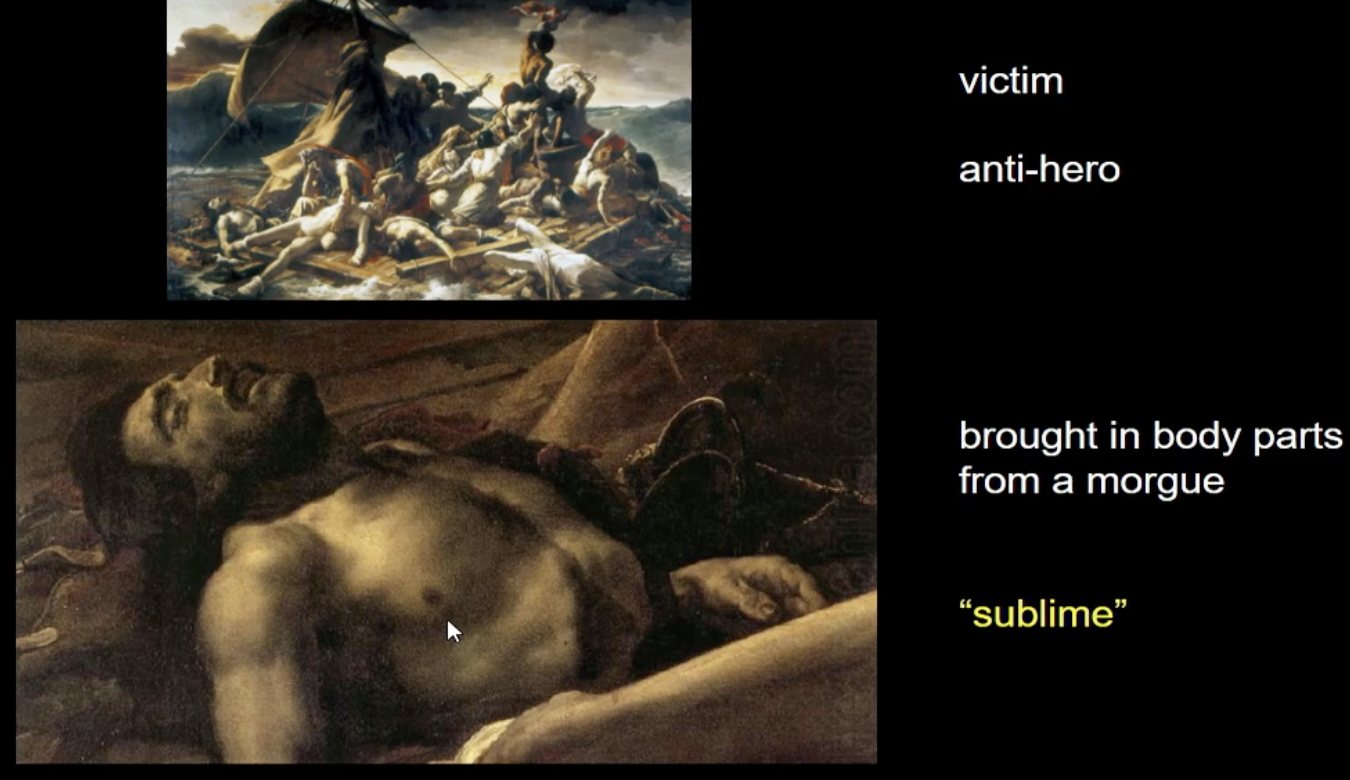
Theodore Gericault, The Raft of the Medusa, 1819

  • only about 250 of 400 people could fit into the lifeboats. Only 150 set adrift but only 15 people survived (BY CANNABALISM)

  • SUBLIME: tragic story; cannabalism

  • let romantic artists pose as tragic victims

  • Celebrated as heroes, journalist interview

    ● Antihero (cannibalism) sublime (they ate each other)

    ● Life-size scale

    ● Full-scale rafts built and models got body parts from the morgue

    ● Parallel viewer's vantage point

  • did PREPARATORY STUDY of corpses for painting
<ul><li><p>only about 250 of 400 people could fit into the lifeboats. Only 150 set adrift but only 15 people survived (BY CANNABALISM)</p></li><li><p>SUBLIME: tragic story; cannabalism</p></li><li><p>let romantic artists pose as tragic victims</p></li><li><p>Celebrated as heroes, journalist interview</p><p>● Antihero (cannibalism) sublime (they ate each other)</p><p>● Life-size scale</p><p>● Full-scale rafts built and models got body parts from the morgue</p><p>● Parallel viewer's vantage point</p></li><li><p>did PREPARATORY STUDY of corpses for painting</p></li></ul><img src="https://assets.knowt.com/user-attachments/579d7c99-a4a5-4c02-84c2-c07c19f41fbc.png" data-width="100%" data-align="center"><p></p>
3
New cards

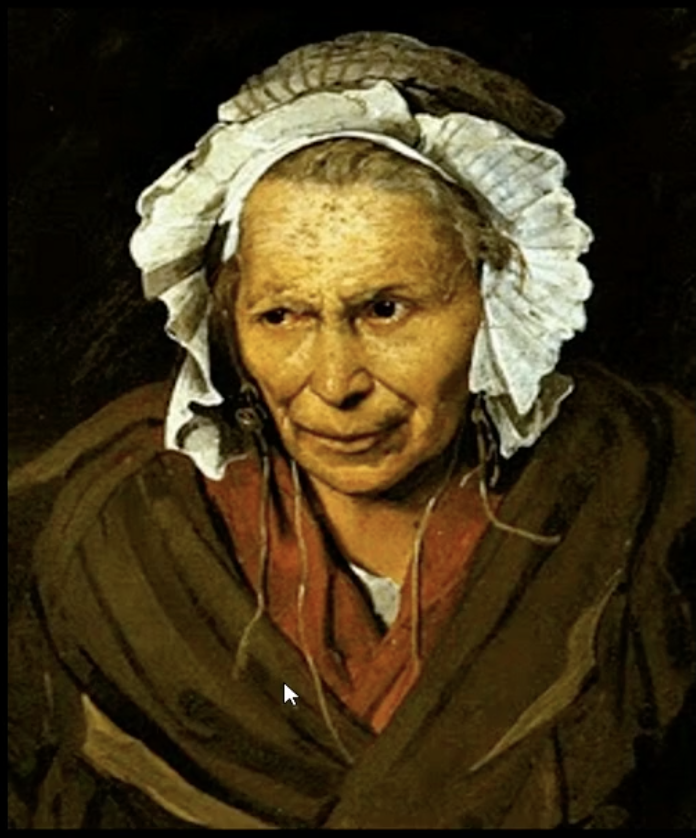
Gericault, Portraits of the Insane, “Envy,” 1822-23

Psychopathology (different kinds of obsessions)

● Monomania (obsessions)

● Physiognomic measurements (measurement of the parts of the face)

Sublime, portrait of irrationality (a portrait of mental illness), the painter is having a

sublime experience

Physiognomies measurement
<p>Psychopathology (different kinds of obsessions)</p><p>● Monomania (obsessions)</p><p>● Physiognomic measurements (measurement of the parts of the face)</p><p>Sublime, portrait of irrationality (a portrait of mental illness), the painter is having a</p><p>sublime experience<span><br><br>Physiognomies measurement</span></p>
4
New cards

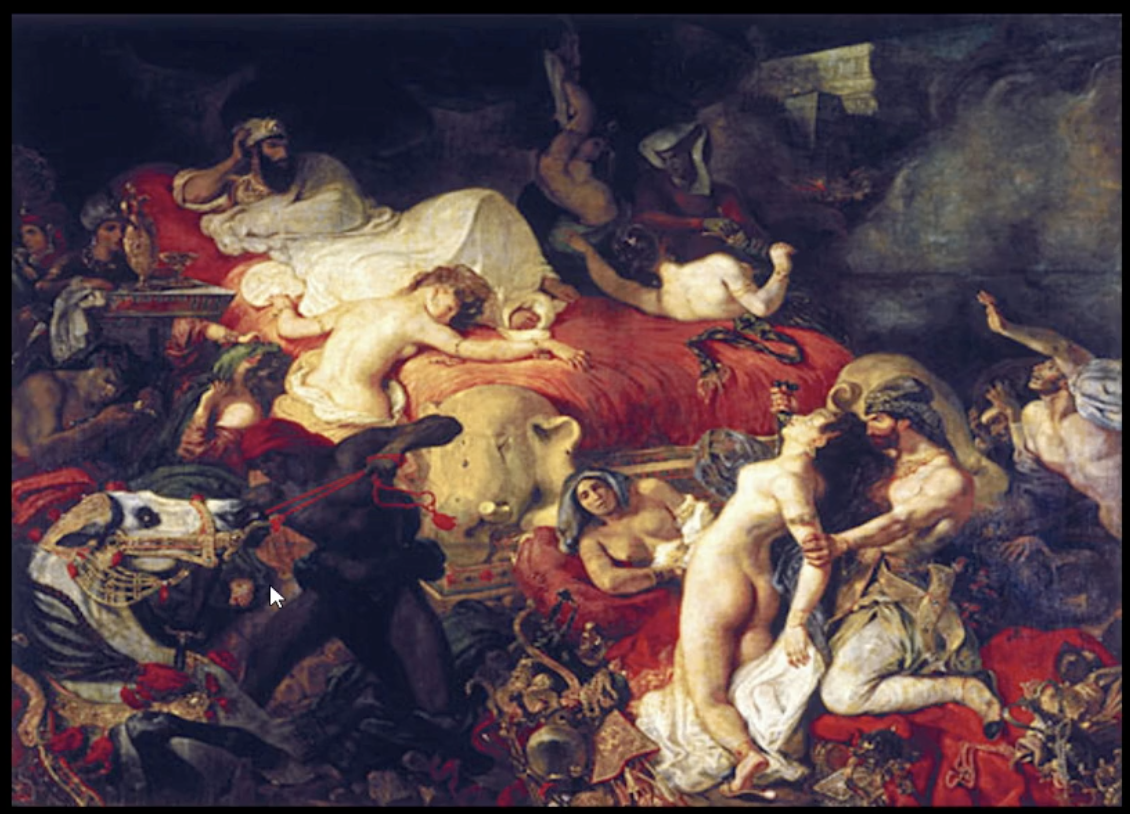
Eugene Delacroix, The Death of Sardanapalus, 1826

Ancient story, Mass suicide, irrational action, sublime

● Tenebroso (smoke, shadows) , sublime

Moment: MURDER

● Waiching deaths of other we watch someone having a sublime experience (watching the murder of everything he values)

● Red all over the painting, but Absence of blood (?)

● **Life scale painting
<p>Ancient story, Mass suicide, irrational action, sublime</p><p>● Tenebroso (smoke, shadows) , sublime</p><p>Moment: MURDER</p><p>● Waiching deaths of other we watch someone having a sublime experience (watching the murder of everything he values)</p><p>● Red all over the painting, but Absence of blood (?)</p><ul><li><p></p></li></ul><p>● **Life scale painting</p>
5
New cards

Delacroix, Medea, 1838

literary story: abandoned by her husband Jason and took revenge by murdering her two children by Jason

  • Euripides (filicide motivated by insanity)]

Mythological story; sublime

● Foreground, viewers' vantage point, shadow over her face (a way of saying she has gone insane)

● Red, not blood

● Sublime

<p>literary story: abandoned by her husband Jason and took revenge by murdering her two children by Jason</p><ul><li><p>Euripides (filicide motivated by insanity)]</p></li></ul><p>Mythological story; sublime </p><p>● Foreground, viewers' vantage point, shadow over her face (a way of saying she has gone insane)</p><p>● Red, not blood</p><p>● Sublime</p><p></p>
6
New cards

Caspar David Friedrich, Cloister in the Snow, 1810

the landscape as “sublime”

contrast of scale: human vs. nature

  • humans are so small theyre vulnerable (and are not the main focus)
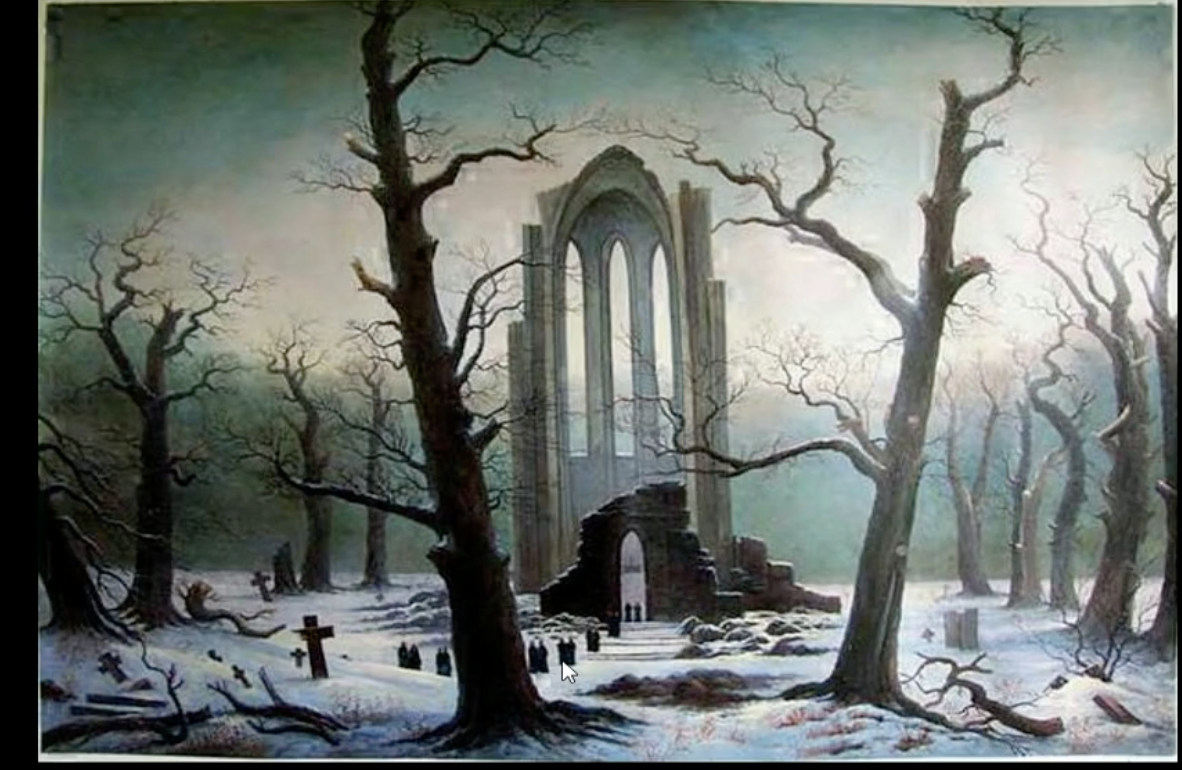
<p>the landscape as “sublime”</p><p>contrast of scale: human vs. nature</p><ul><li><p>humans are so small theyre vulnerable (and are not the main focus)</p></li></ul><p></p>
7
New cards

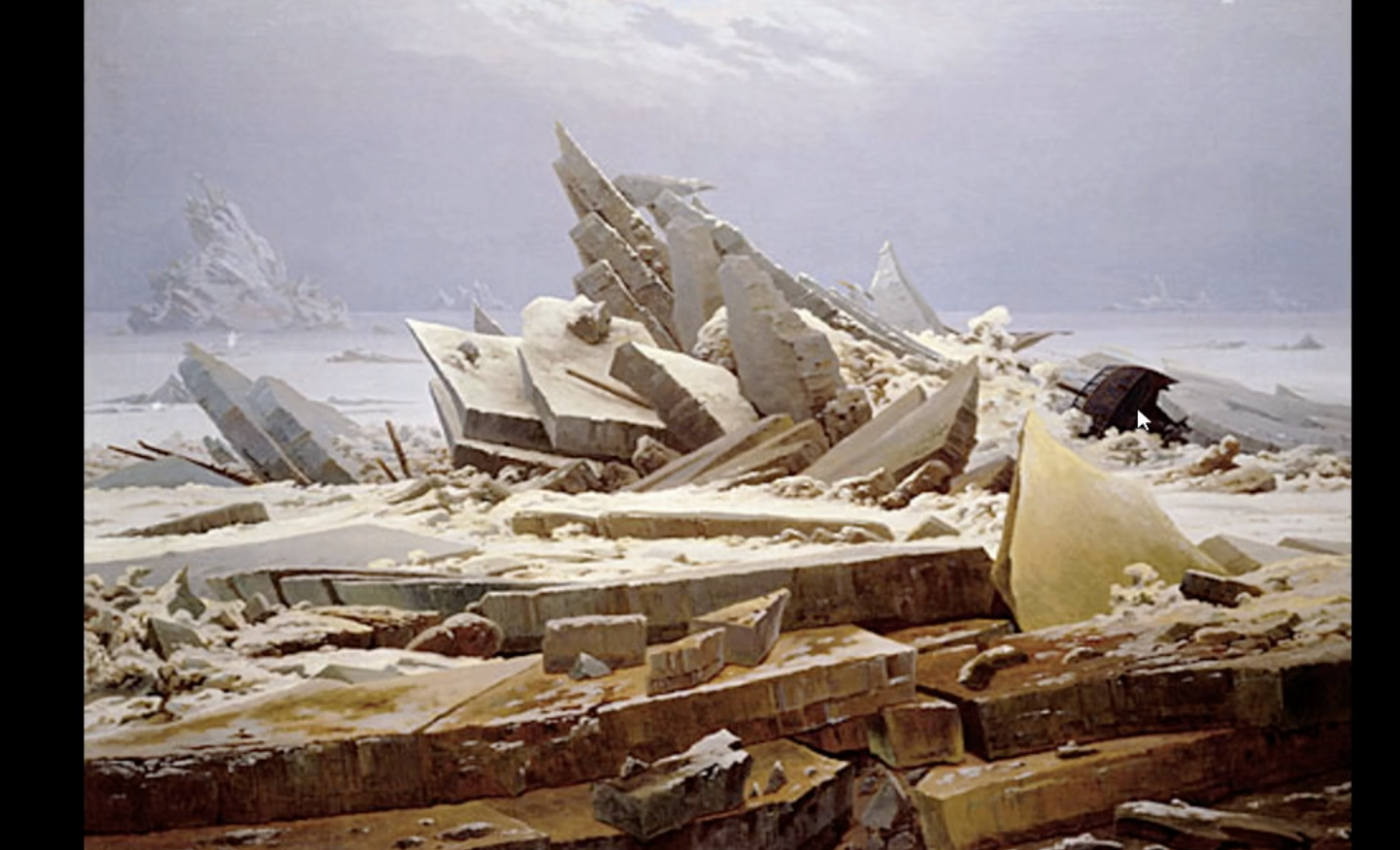
Caspar David Friedrich, Wreck of the “Hope”, 1824

William Parry's ships lost in North Pole expedition

● is the FRANKENSTEIN cover
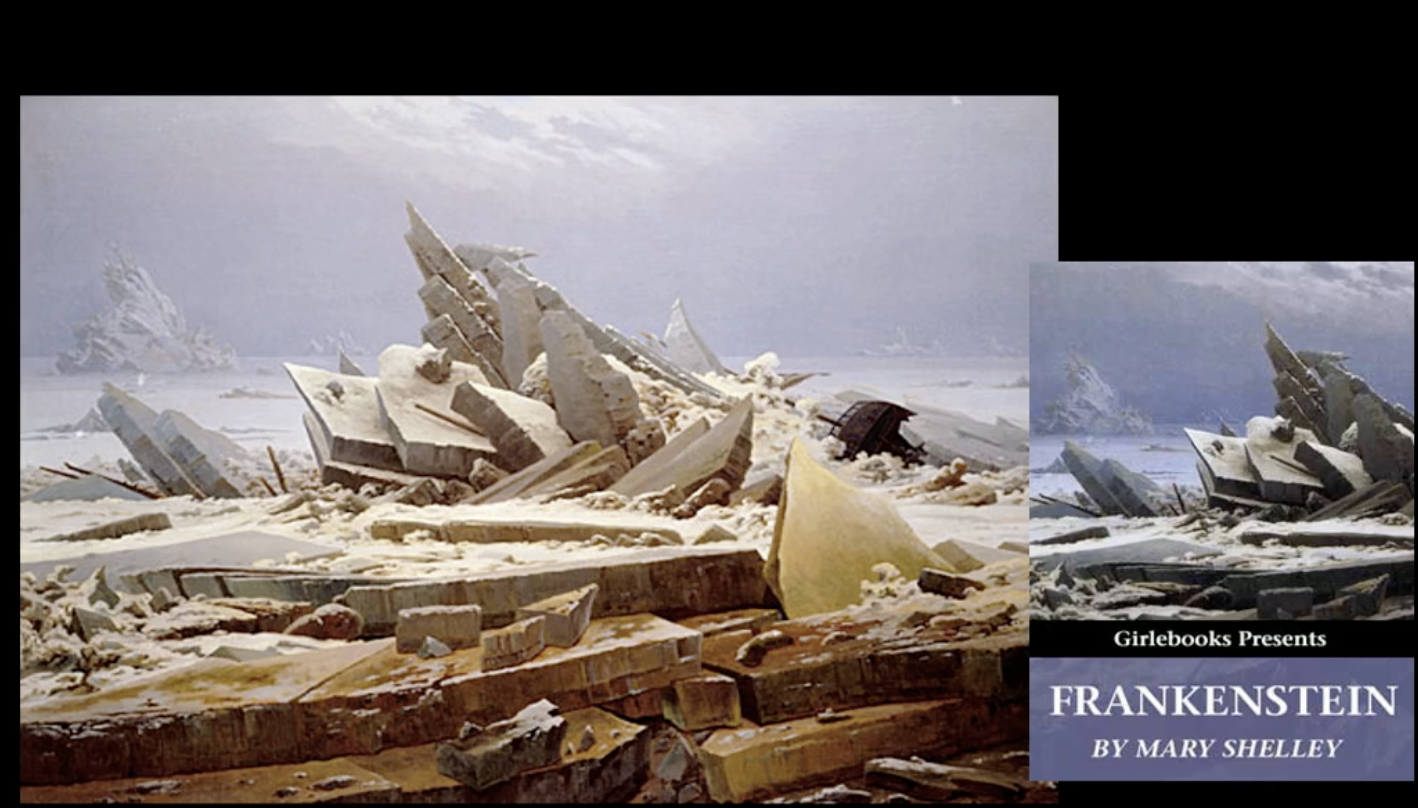
<p>William Parry's ships lost in North Pole expedition</p><p>● is the FRANKENSTEIN cover</p><p></p><img src="https://assets.knowt.com/user-attachments/12a8a979-3c37-4e0d-81b4-2e9f237fb419.png" data-width="100%" data-align="center"><p></p>
8
New cards

Caspar David Friedrich, Wanderer, 1818

"sublime" nature

sublime experience: We watch someone having a
sublime experience

deep background space vanishing point
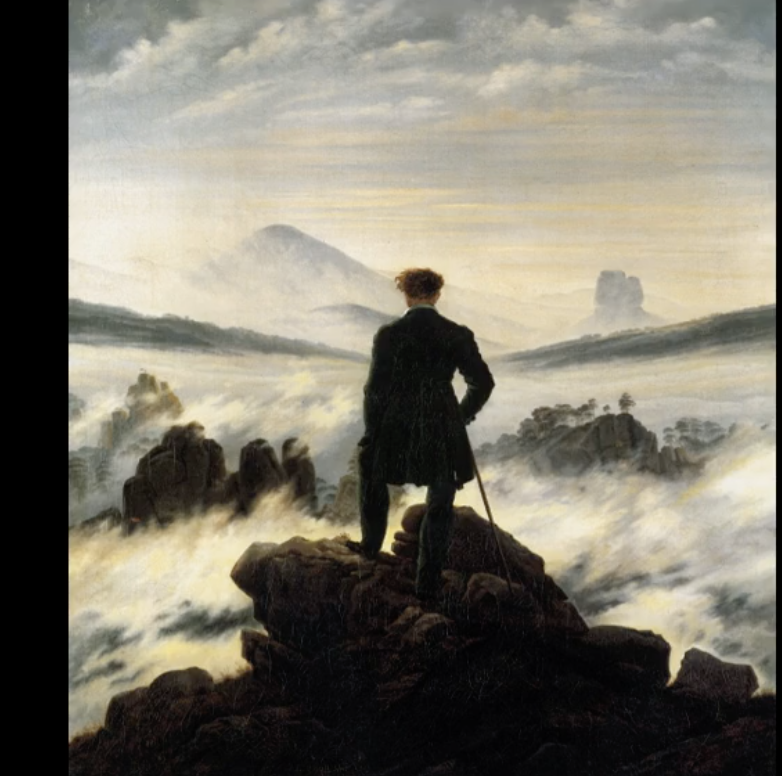
<p><span>"sublime" nature<br><br>sublime experience: We watch someone having a<br>sublime experience</span></p><p><span>deep background space vanishing point</span></p>
9
New cards

J.M.W. Turner, Burning of the Houses of Parliament series, 1835

Painted life during houses of parliament burning down

On 16 October 1834 the Houses of Parliament along the Thames River in London caught fire and burned down.

It burned for five hours and attracted massive crowds.

The painter J.M.W. Turner set up his easel and painted the event.

The "Sublime":

Monumental scale of fire

Reflection in water of fire
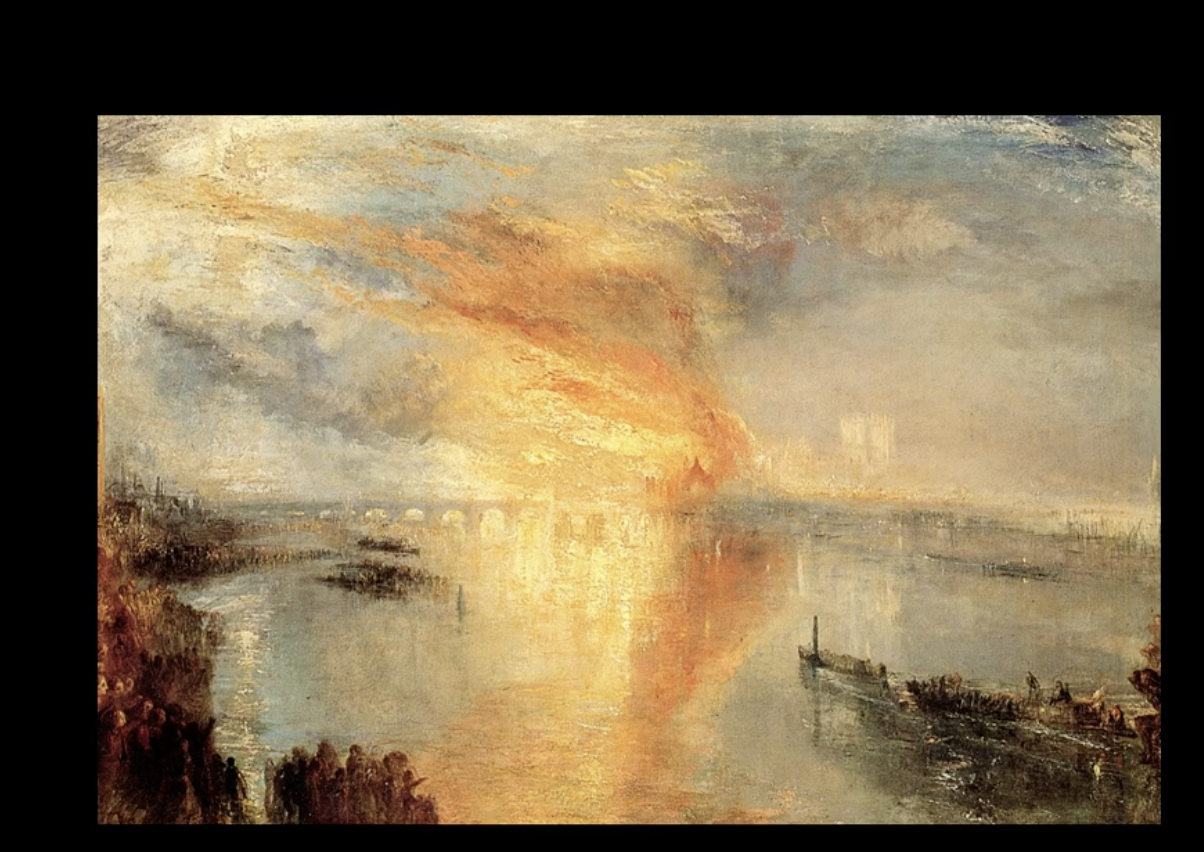
<p>Painted life during houses of parliament burning down</p><p>On 16 October 1834 the Houses of Parliament along the Thames River in London caught fire and burned down.</p><p>It burned for five hours and attracted massive crowds.</p><p>The painter J.M.W. Turner set up his easel and painted the event.</p><p>The "Sublime":</p><p>Monumental scale of fire</p><p>Reflection in water of fire</p>
10
New cards

Turner, Slave Ship

1781:

ship: Zong; had 133 slaves,

133 slaves thrown overboard

lighten load collect insurance

coincided with meeting of British Anti Slavery Society

Turner included a poem he had written (wanted authories to take on an anti slave position)
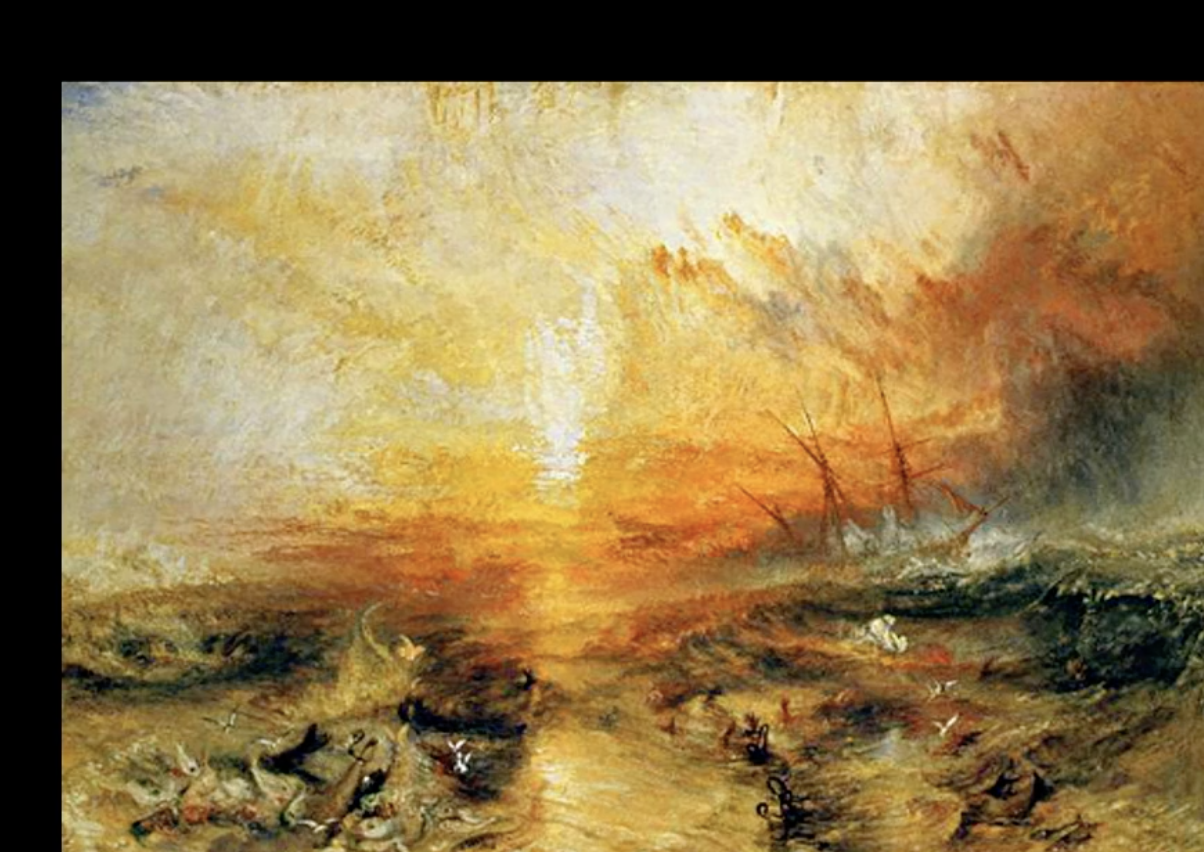
<p>1781:</p><p>ship: Zong; had 133 slaves, </p><p>133 slaves thrown overboard</p><p>lighten load collect insurance</p><p>coincided with meeting of British Anti Slavery Society</p><p>Turner included a poem he had written (wanted authories to take on an anti slave position)</p>
11
New cards

Turner, Rain, Steam and Speed, 1844

the "sublime":

nature vs technology (human built bridge)

storm, mist VS. human-made:
bridge, locomotive:

Industrial Revolution

Bridge in picture
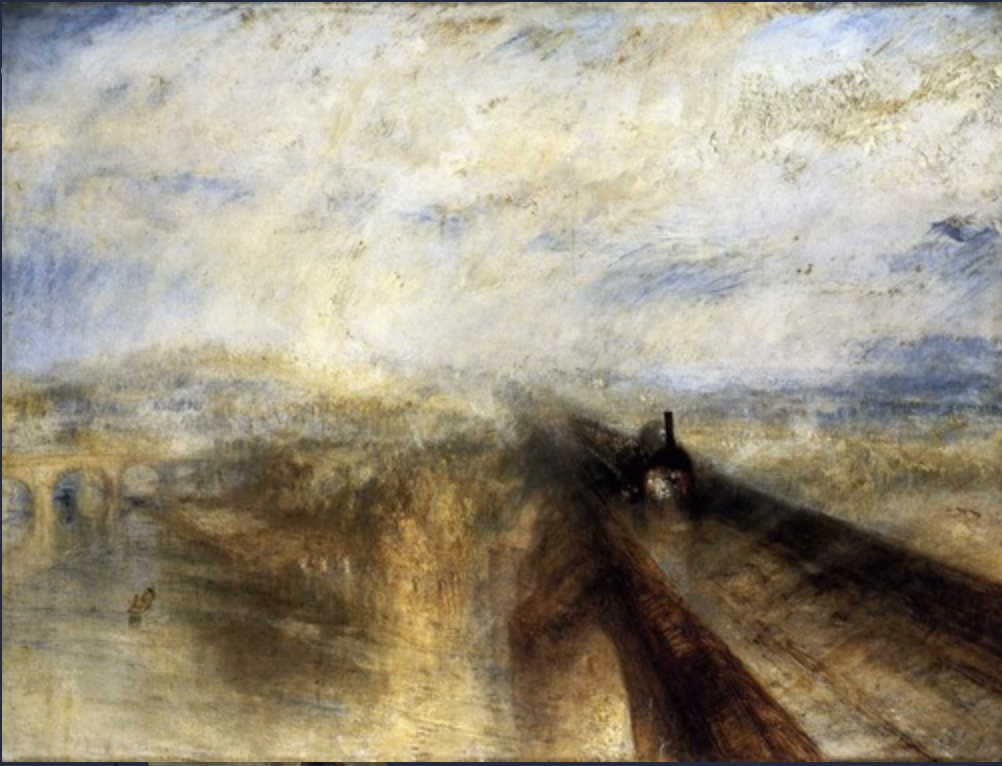
<p>the "sublime":<br><br>nature vs technology (human built bridge) <br><br>storm, mist VS. human-made:<br>bridge, locomotive:<br><br>Industrial Revolution<br><br>Bridge in picture</p>
12
New cards

John Constable, Wivenhoe Park, 1817

Pantheism
"is the view that Nature and God are identical"
that God, the creator, is present in his creation, Nature

God-created:
clouds, trees, water, animals human-created using natural resources:
- boats,
- fences,
- bridges,
- dams,
- domestic
- animals

Tress in clouds, clouds in trees

birds in leaves (everything repeated, everything coming together)
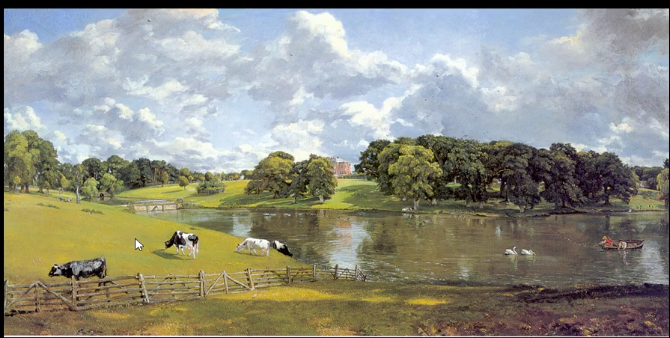
<p>Pantheism<br>"is the view that Nature and God are identical"<br>that God, the creator, is present in his creation, Nature<br><br>God-created:<br>clouds, trees, water, animals human-created using natural resources:<br>- boats,<br>- fences,<br>- bridges,<br>- dams,<br>- domestic<br>- animals<br><br>Tress in clouds, clouds in trees</p><p>birds in leaves (everything repeated, everything coming together)</p>
13
New cards

Pantheism

"is the view that Nature and God are identical"
that God, the creator, is present in his creation, Nature

14
New cards

John Constable, The Haywain, 1821

Natural Resources

haywain: wagon for carting hay;

human inventions:
wheel mill: for harnessing water, domesticated animals
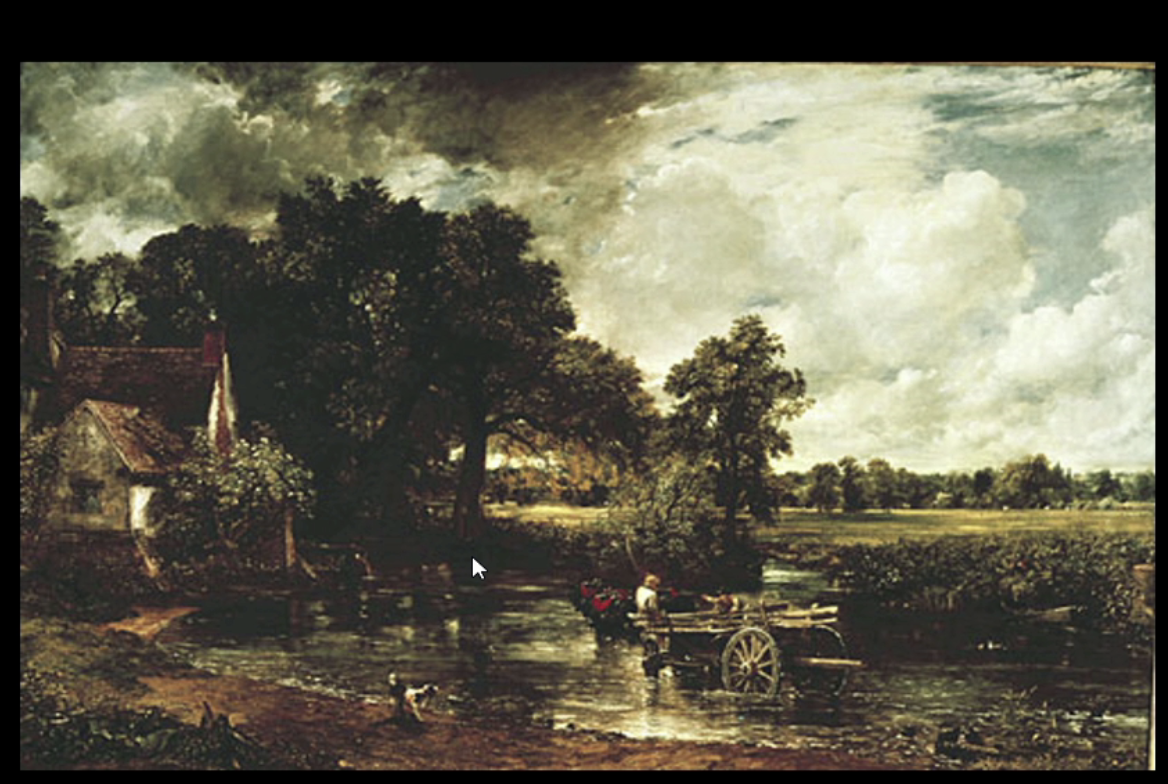
<p>Natural Resources<br><br>haywain: wagon for carting hay;</p><p> human inventions:<br>wheel mill: for harnessing water, domesticated animals</p>
15
New cards

Constable, Clouds, 1821

cloud studies

sublime experience with Pantheism message
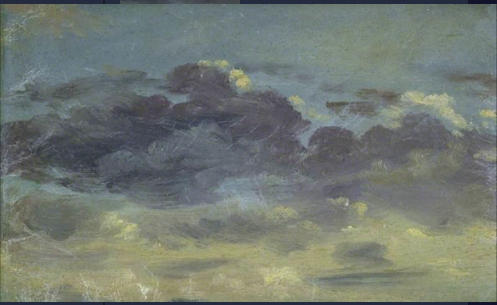
<p>cloud studies</p><p>sublime experience with Pantheism message</p>
16
New cards

John Kensett, Morning on the Hudson, 1827

(American) Romanticism

Hudson River (Eastern US)

The Hudson River School
*a mid-19th c. American art movement
*a group of landscape painters whose aesthetic vision was influenced by Romanticism

*depict the American landscape as a pastoral setting, where human beings and nature coexist peacefully
*the beauty of the landscape and the possibilities of coexistence express sublimity

panorama: extended wide-angle view
monumental
scale
background
focus
- vanishing point
- infinity

Nature vs. human inventions

Pastoral: happy co-existence

Monumental scale: largeness of American landscape
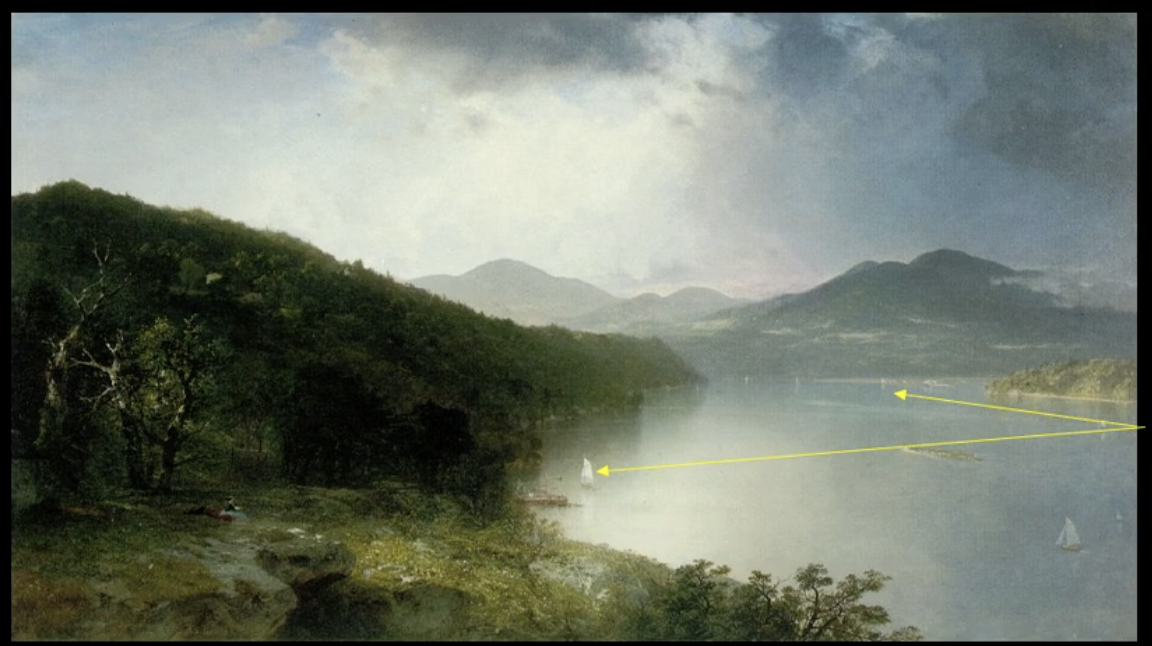
<p><span>(American) Romanticism</span><br><br><span>Hudson River (Eastern US)</span><br><br><span>The Hudson River School</span><br><span>*a mid-19th c. American art movement</span><br><span>*a group of landscape painters whose aesthetic vision was influenced by Romanticism</span><br><br><span>*depict the American landscape as a <strong>pastoral setting</strong>, where human beings and nature coexist peacefully</span><br><span>*the beauty of the landscape and the possibilities of coexistence express sublimity</span><br><br><span>panorama: extended wide-angle view</span><br><span>monumental</span><br><span>scale</span><br><span>background</span><br><span>focus</span><br><span><strong>- vanishing point</strong></span><strong><br></strong><span>- infinity</span><br><br><span>Nature vs. human inventions</span><br><br><span>Pastoral: happy co-existence</span><br><br><span>Monumental scale: largeness of American landscape</span></p>
17
New cards

The Hudson River School


*a mid-19th c. American art movement
*a group of landscape painters whose aesthetic vision was influenced by Romanticism

18
New cards

pastoral landscape

ex) shown in Morning on the Hudson

happy-coexistence

where human beings in nature coexist peacefully (the beauty of coexistence represents the sublime)

19
New cards

Expansionism

Manifest Destiny was the 19th century American belief that the pioneers/settlers were destined to expand across the North American continent, from the Atlantic Seaboard to the Pacific ocean. Advocates of Manifest Destiny believed "that Expansionism was not only wise but that it was readily

apparent (manifest) and unavoidable (destiny)." American expansionism was promoted by John L. O'Sullivan in an essay which first used the phrase Manifest Destiny. In 1845, he published a piece entitled Annexation : in it he wrote it is "our manifest destiny to overspread the continent"

20
New cards

American Progress, 1872

Manifest Destiny was the 19th
century American belief that the
pioneers/settlers were destined to
expand across the North American
continent, from the Atlantic
Seaboard to the Pacific ocean.
Advocates of Manifest Destiny
believed "that Expansionism was
not only wise but that it was readily
apparent (manifest) and
unavoidable (destiny)."
American expansionism was
promoted by John L. O'Sullivan in
an essay which first used the
phrase Manifest Destiny. In 1845,
he published a piece entitled
Annexation : in it he wrote it is "our
manifest destiny to overspread the
continent"

"This painting (circa 1872)
called American Progress,
is an allegorical
representation of the
modernization of the new
west.
The female represents the
United States, leading
civilization westward with
American settlers,
stringing telegraph wire as
she travels; and she holds
a school book.
The different economic
activities of the pioneers
are highlighted and,
especially, the changing
forms of transportation."
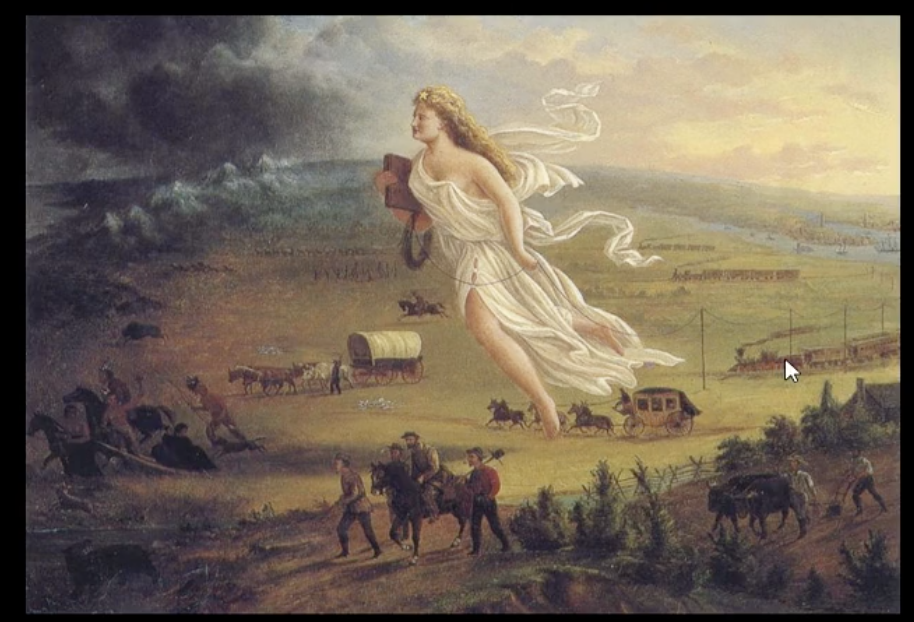
<p><span>Manifest Destiny was the 19th</span><br><span>century American belief that the</span><br><span>pioneers/settlers were destined to</span><br><span>expand across the North American</span><br><span>continent, from the Atlantic</span><br><span>Seaboard to the Pacific ocean.</span><br><span>Advocates of Manifest Destiny</span><br><span>believed "that Expansionism was</span><br><span>not only wise but that it was readily</span><br><span>apparent (manifest) and</span><br><span>unavoidable (destiny)."</span><br><span>American expansionism was</span><br><span>promoted by John L. O'Sullivan in</span><br><span>an essay which first used the</span><br><span>phrase Manifest Destiny. In 1845,</span><br><span>he published a piece entitled</span><br><span>Annexation : in it he wrote it is "our</span><br><span>manifest destiny to overspread the</span><br><span>continent"</span></p><p><span>"This painting (circa 1872)<br>called American Progress,<br>is an allegorical<br>representation of the<br>modernization of the new<br>west.<br>The female represents the<br>United States, leading<br>civilization westward with<br>American settlers,<br>stringing telegraph wire as<br>she travels; and she holds<br>a school book.<br>The different economic<br>activities of the pioneers<br>are highlighted and,<br>especially, the changing<br>forms of transportation."</span></p>
21
New cards

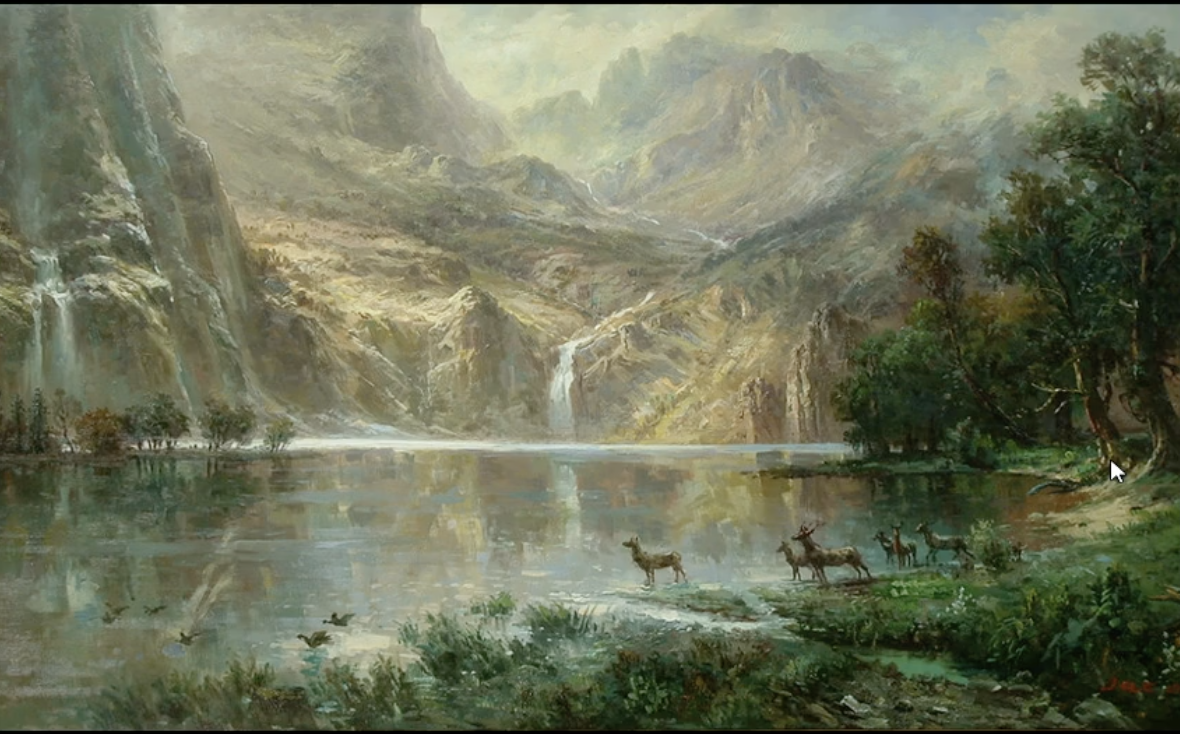
Albert Bierstadt, Among the Sierra Nevada Mountains, California, 1868

6 x 10 ft

traveled as propaganda for manifest destiny presents the "wild west" as peaceful, abundant, pastoral "sublime"

  • Propagandizing Manifest Destiny

<p><span>6 x 10 ft</span><br><br><span>traveled as propaganda for manifest destiny presents the "wild west" as peaceful, abundant, pastoral "sublime"</span></p><ul><li><p>Propagandizing Manifest Destiny</p></li></ul><p></p>
22
New cards

Frederic Church, Niagara Falls, 1877

the "sublime":
the power of nature absence of human rainbow monumental
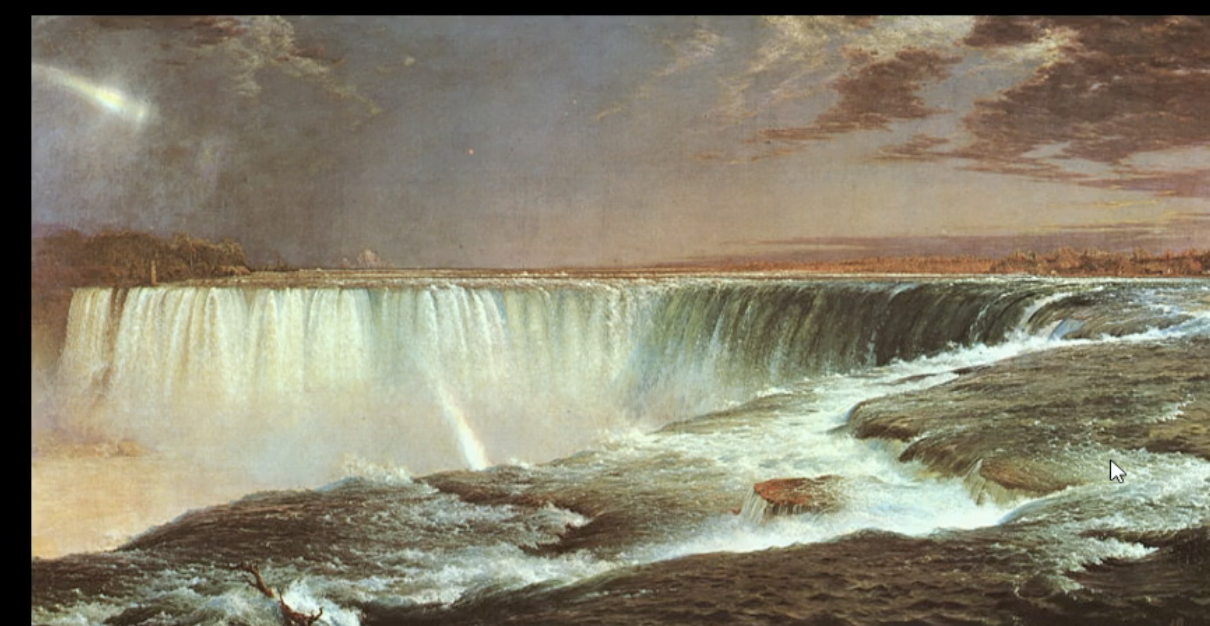
<p><span>the "sublime":<br>the power of nature absence of human rainbow monumental</span></p>
23
New cards

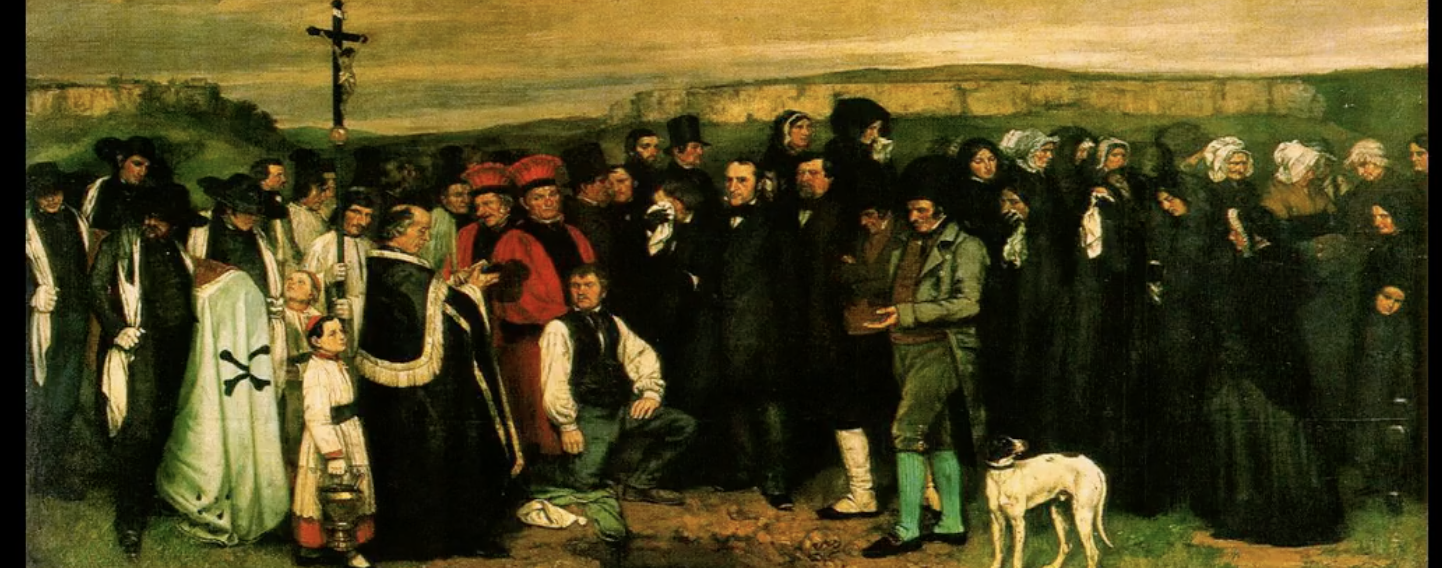
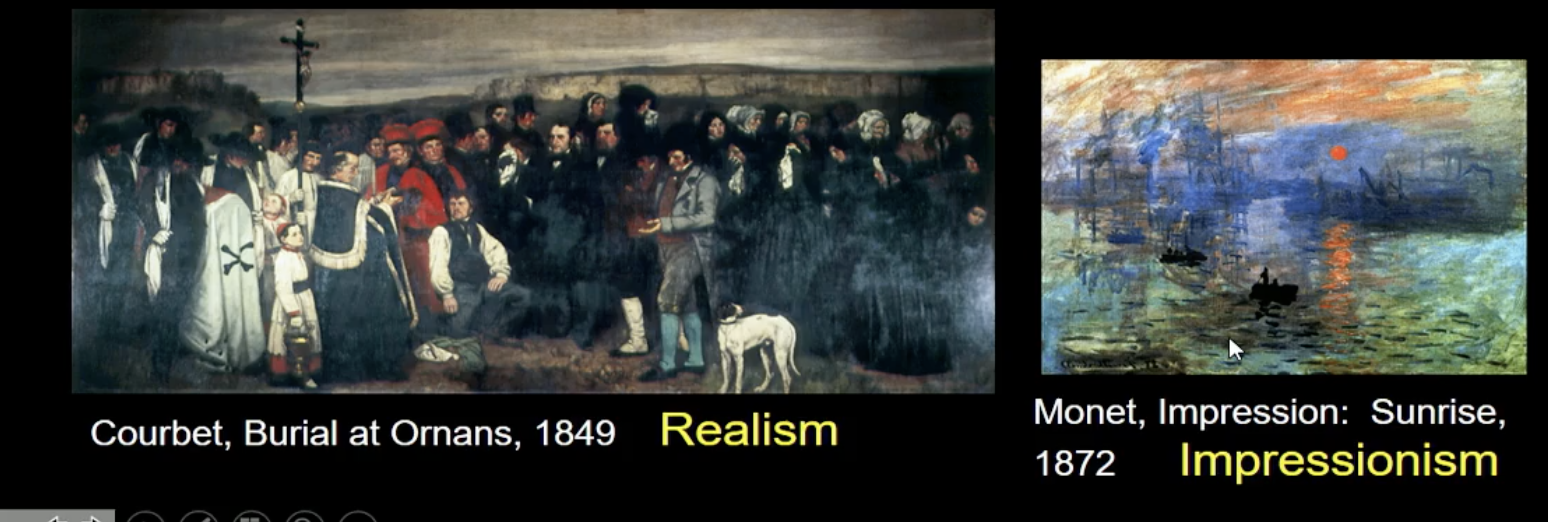
Gustave Courbet, Burial at Ornans, 1849

“show me an angel and I’ll paint on e”

After being rejected in the exhibition space of the Universal Exhibition held in Paris in 1850, Courbet organized a personal exhibition, in a building built at his own expense, which he called "The Pavilion of Realism".

life-size scale

event actually witnessed by Courbet

"One must be of one's time"

"contemporanelty":
- only events one can witness
- no mythological stories
- no religious historical events depicted

no drama, no key moment, or pivotal moment (just depicting exactly what he saw)

Dog: the "ordinary" boredom "slice-of-life"

Positivism
<p>“show me an angel and I’ll paint on e”</p><p><span>After being rejected in the exhibition space of the Universal Exhibition held in Paris in 1850, Courbet organized a personal exhibition, in a building built at his own expense, which he called "The Pavilion of Realism".</span><br><br><span>life-size scale</span><br><br><span>event actually witnessed by Courbet</span><br><br><span>"One must be of one's time"</span><br><br><span>"contemporanelty":</span><br><span>- only events one can witness</span><br><span>- no mythological stories</span><br><span>- no religious historical events depicted</span><br><br><span>no drama, no key moment, or pivotal moment (just depicting exactly what he saw)</span><br><br><span>Dog: the "ordinary" boredom "slice-of-life"</span><br><br><span>Positivism</span></p>
24
New cards

contemporaneity

““one must be of one’s time”

only events one can witness

no myhtological stories

no religious historical events depictured

25
New cards

Pavilion of Realism

After being rejected in the exhibition space of the Universal Exhibition held in Paris in 1850, Courbet organized a personal exhibition, in a building built at his own expense, which he called "____ ____ ___".

26
New cards

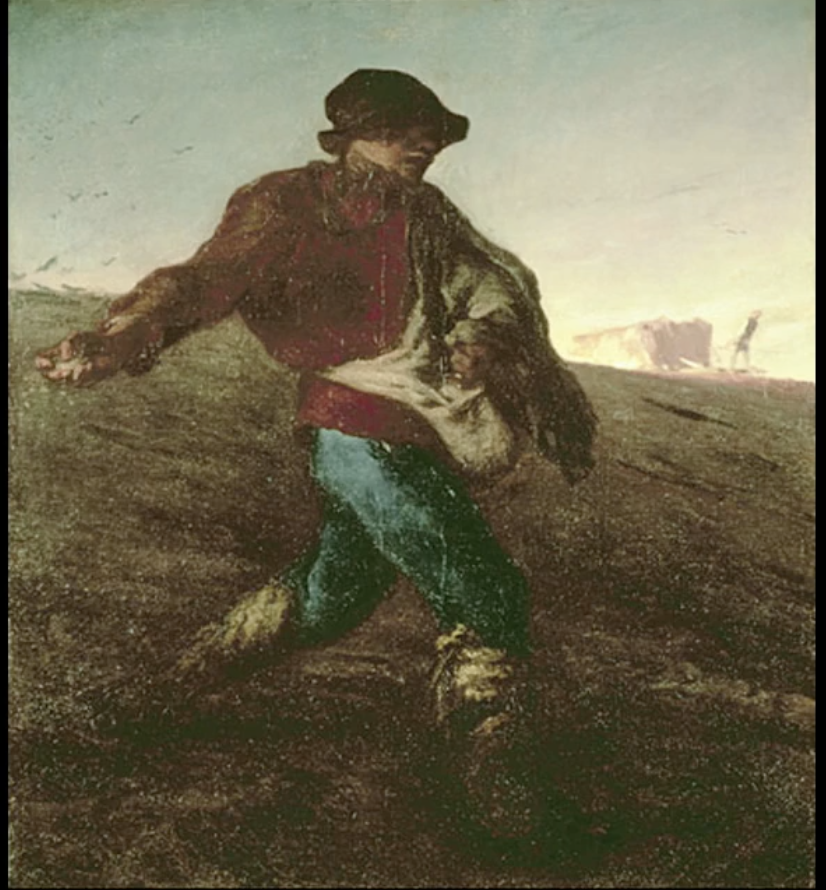
Jean Francois Millet, The Sower, 1850

"en plein air"

"In the open air: painting out of doors, painting by observing

"contemporaneity"

"act of sowing seed"
no face shown
- (not individualistic)
all body:
- focus on gesture

*not "heroic"
*not sublime

"factual"

"based on observation

Positivism
<p><span>"en plein air"</span><br><br><span>"In the open air: painting out of doors, painting by observing</span><br><br><span>"contemporaneity"</span><br><br><span>"act of sowing seed"</span><br><span>no face shown</span><br><span>- (not individualistic)</span><br><span>all body:</span><br><span>- focus on gesture</span><br><br><span>*not "heroic"</span><br><span>*not sublime</span><br><br><span>"factual"</span><br><br><span>"based on observation</span><br><br><span>Positivism</span></p>
27
New cards

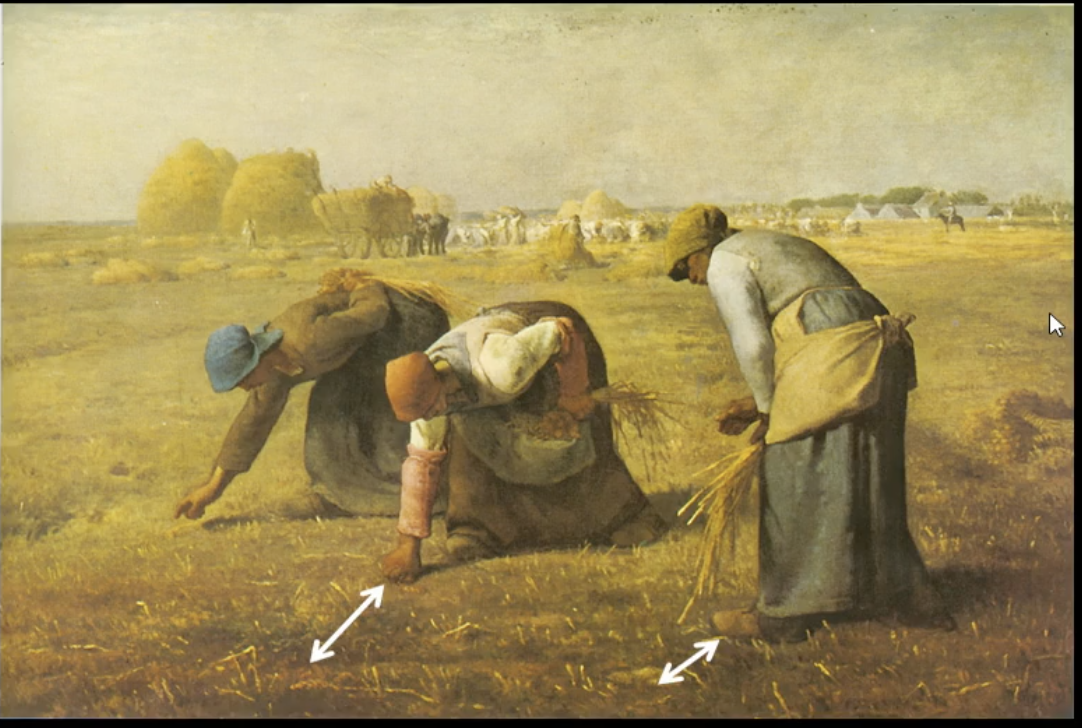
Millet, The Gleaners, 1857

"gleaning":
picking up the remains after a harvest

not "heroic"

all bodies, no faces: absence of the individual

not "sublime"

a scene without a narrative
<p><span>"gleaning":</span><br><span>picking up the remains after a harvest</span><br><br><span>not "heroic"</span><br><br><span>all bodies, no faces: absence of the individual</span><br><br><span>not "sublime"</span></p><p></p><p><span>a scene without a narrative</span></p>
28
New cards

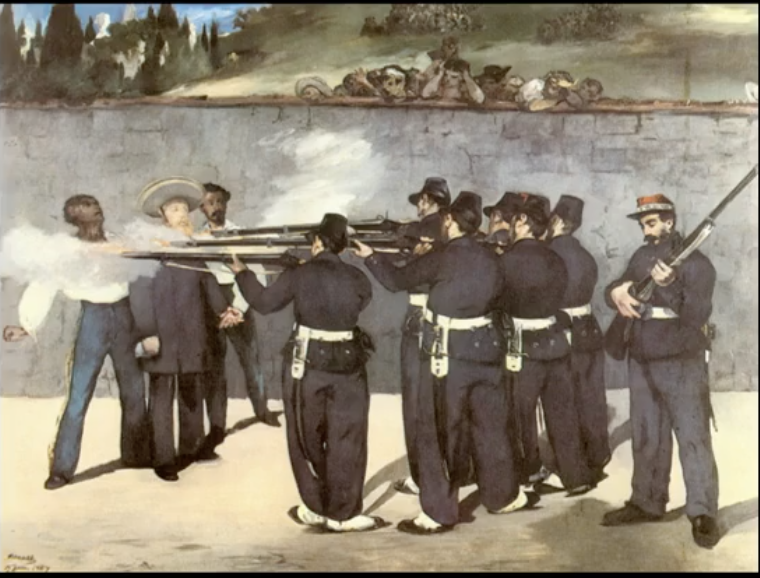
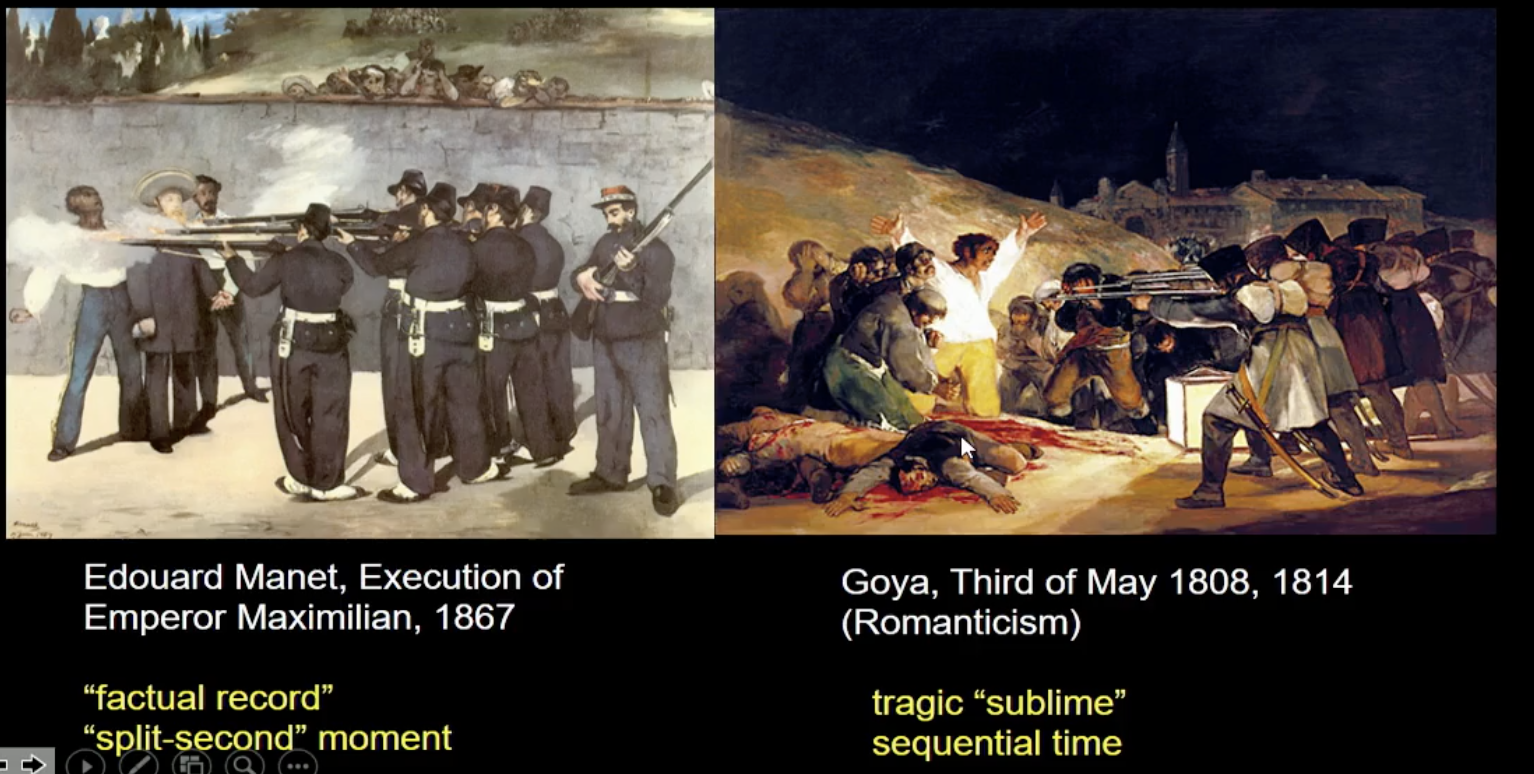
Edouard Manet, Execution of Emperor Maximilian, 1867

Maximilian I of Mexico: born Archduke Maximillan of Austria proclaimed Emperor of Mexico, 1864

(many foreign governments, including that of the U.S, refused to recognize his government)

defeated, executed, after capture by the Liberals, in 1867

contemporary event

not a hero,
not a victim

photographic record of "split-second moment" of rifle firing

*puff of smoke
*delayed reaction
<p><span>Maximilian I of Mexico: born Archduke Maximillan of Austria proclaimed Emperor of Mexico, 1864</span><br><br><span>(many foreign governments, including that of the U.S, refused to recognize his government)</span><br><br><span>defeated, executed, after capture by the Liberals, in 1867</span><br><br><span>contemporary event</span><br><br><span>not a hero,</span><br><span>not a victim</span><br><br><span>photographic record of "split-second moment" of rifle firing</span><br><br><span>*puff of smoke</span><br><span>*delayed reaction</span></p><p></p><img src="https://assets.knowt.com/user-attachments/5f47d7ff-4964-499c-993e-7ef9de89d9bd.png" data-width="100%" data-align="center"><p></p>
29
New cards

“en plein air”

30
New cards

Positivism:

motive for Realism

Hippolyte Taine: “the world is reducible to facts,” “facts can be trusted”

"a philosophical system, asserts that the only authentic knowledge is that which is based on the senses, experience and positive verification."

"reality is what one can see"

"optical realism":
Edouard Manet: provable with photography

"visuality"

31
New cards

optical realism

“reality is what one can see,” “visuality”

Edward Manet: provable (proving reality) with photography

32
New cards

Manet, Le Dejeuner sur l’herbe (Luncheon on the Grass), 1863

Background: Manet's wife, Suzanne Leenhoff

Naked woman: his favorite model Victorine Meurent.

Right Man w/ Hand Out: Manet's brother Eugene Manet
(Instantaneous Moment)

Center Man: his future brother-in-law, Ferdinand Leenhoff

Cropping

Flash Effect:
in photographic sessions, magnesium flash powder ignited to produce a bright flash of light for illumination:
- Diminished Shadows
- In photographic sessions magnesium flash powder
- Ignited to produce a bright flash of light for illumination
- Painterly Brushstrokes
- "not things, but light reflections"

influences from photography:
- used a camera
- painted from the photograph,
*not "en plein air"
- instantaneous'moment
- cropping
- flash effect
- painterly brushstrokes:
* "light reflections"

Salon des Refuses
(Salon of the Rejected)
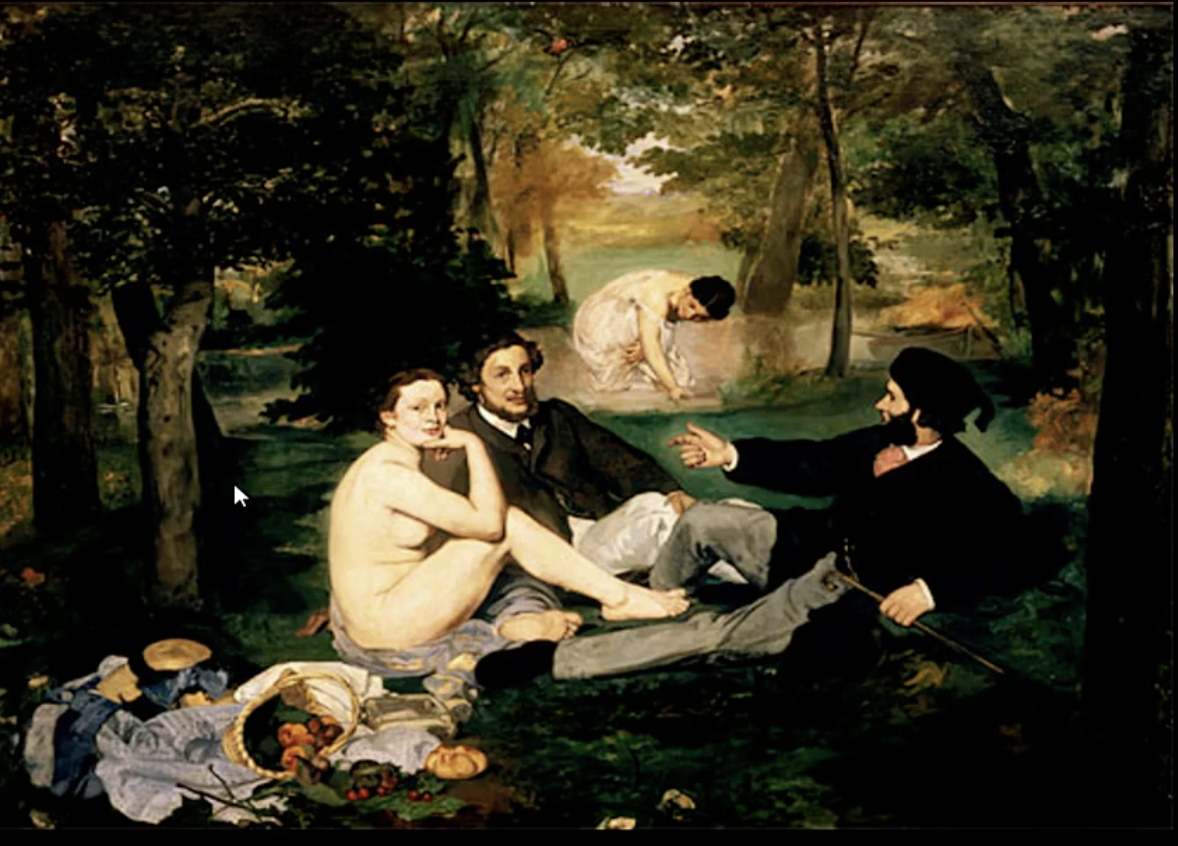
<p><span>Background: Manet's wife, Suzanne Leenhoff</span><br><br><span>Naked woman: his favorite model Victorine Meurent.</span><br><br><span>Right Man w/ Hand Out: Manet's brother Eugene Manet</span><br><span>(Instantaneous Moment)</span><br><br><span>Center Man: his future brother-in-law, Ferdinand Leenhoff</span><br><br><span>Cropping</span><br><br><span>Flash Effect:</span><br><span>in photographic sessions, magnesium flash powder ignited to produce a bright flash of light for illumination:</span><br><span>- Diminished Shadows</span><br><span>- In photographic sessions magnesium flash powder</span><br><span>- Ignited to produce a bright flash of light for illumination</span><br><span>- Painterly Brushstrokes</span><br><span>- "not things, but light reflections"</span><br><br><span>influences from photography:</span><br><span>- used a camera</span><br><span>- painted from the photograph,</span><br><span>*not "en plein air"</span><br><span>- instantaneous'moment</span><br><span>- cropping</span><br><span>- flash effect</span><br><span>- painterly brushstrokes:</span><br><span>* "light reflections"</span><br><br><span>Salon des Refuses</span><br><span>(Salon of the Rejected)</span></p>
33
New cards

Influences from photography

instantaneous moment, “flash effect”

34
New cards

Claude Monet, Impression: Sunrise, 1872

"light reflections"

"not things...not a harbor, not boats, not water, not fog, not clouds..

light reflected off of the boat,
light reflected through the water,
light reflected through the fog,
light reflected through the
clouds...at sunrise"

Impressions:
"painted light effects":
-color of light
(what pigments can represent the colors of light?)
-texture of light
(what brushstrokes can represent the texture of light?)
-adjacent blends for solid
-complementary contrasts for shadows, borders
- texture of light? painterly brushstrokes

Adjacent Blends: blue/blue green/green blends represents (solid, continuous) light reflected off/through the water; blue/blue violet/violet also included

Complementary Contrasts:
Orange:
- light reflections on (and discontinuous with) the water - light (sun) rising within and separate from the fog
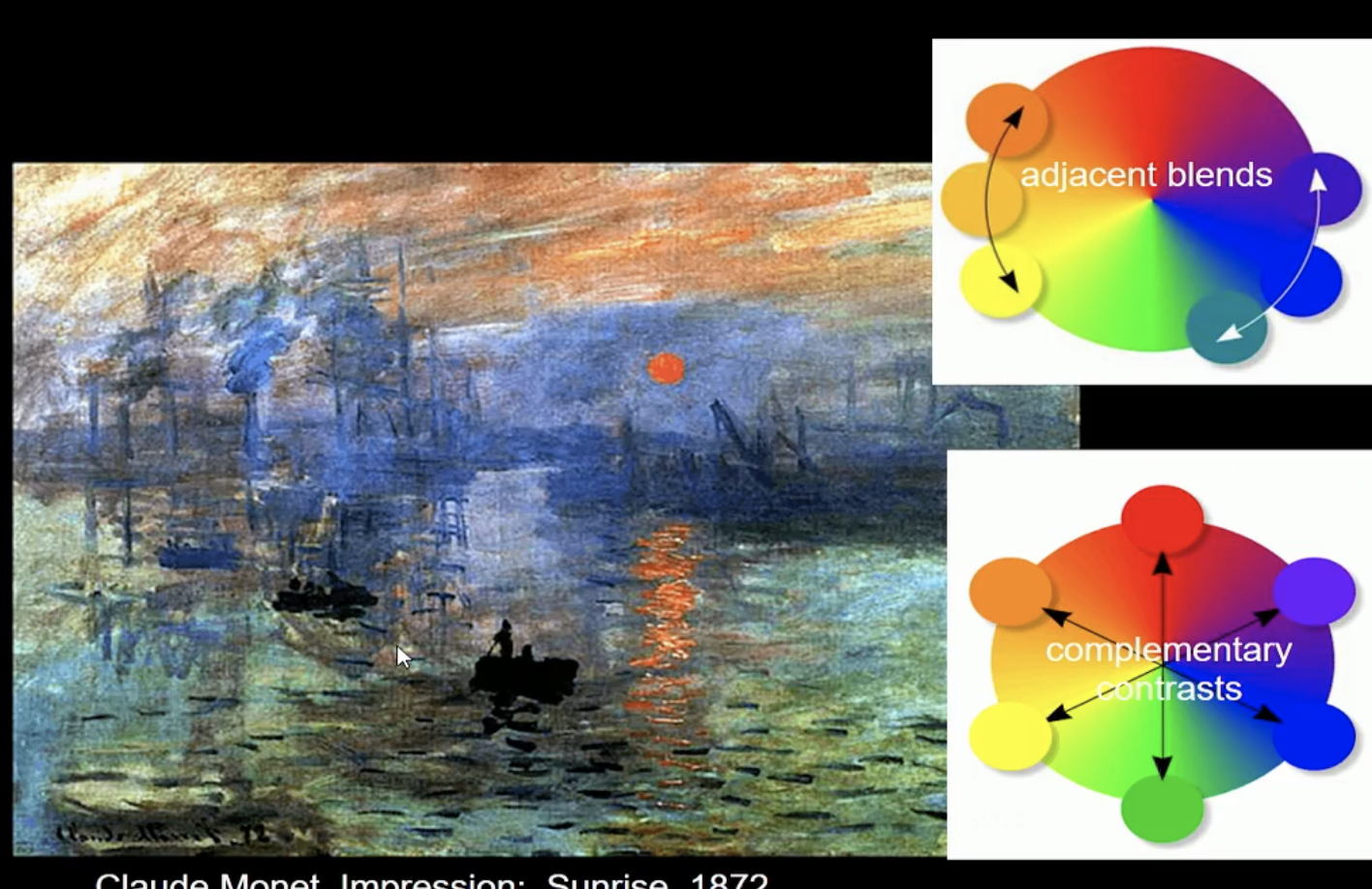
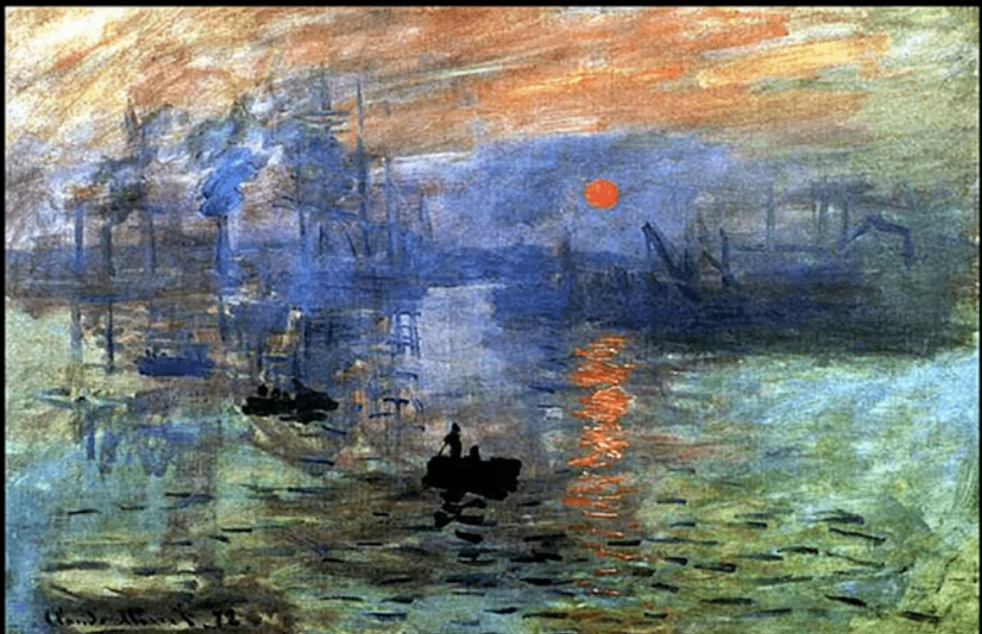
<p>"light reflections"<br><br>"not things...not a harbor, not boats, not water, not fog, not clouds..<br><br>light reflected off of the boat,<br>light reflected through the water,<br>light reflected through the fog,<br>light reflected through the<br>clouds...at sunrise"<br><br>Impressions:<br>"painted light effects":<br>-color of light<br>(what pigments can represent the colors of light?)<br>-texture of light<br>(what brushstrokes can represent the texture of light?)<br>-adjacent blends for solid<br>-complementary contrasts for shadows, borders<br>- texture of light? painterly brushstrokes<br><br>Adjacent Blends: blue/blue green/green  blends represents (solid, continuous) light reflected off/through the water;  blue/blue violet/violet also included<br><br>Complementary Contrasts:<br>Orange:<br>- light reflections on (and discontinuous with) the water - light (sun) rising within and separate from the fog</p><img src="https://assets.knowt.com/user-attachments/9670da41-f23d-40d1-9169-0895dcdf2aa2.png" data-width="100%" data-align="center"><p></p>
35
New cards

impressions

“painted light effects”

36
New cards

Impressionism

An artistic movement that sought to capture a momentary feel, or impression, of the piece they were drawing

"light reflections"

37
New cards

Optical Theory

facts about light
- transmission of colors
- absorption, reflection

  • visual perception

    Incoming light has RGB to make white light
    Red apple skin - surface absorbs green and blue
    Red light is reflected, while the other colors are absorbed
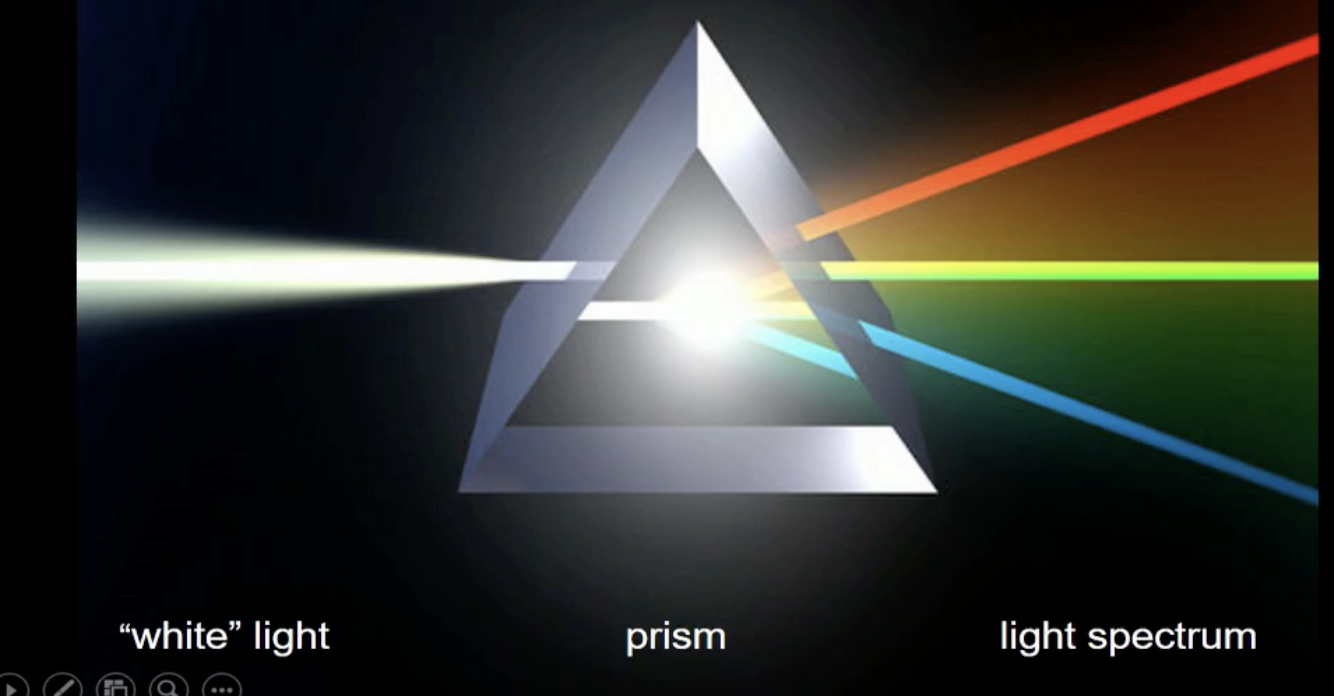
<p><span>facts about light<br>- transmission of colors<br>- absorption, reflection</span></p><ul><li><p><span>visual perception<br><br>Incoming light has RGB to make white light<br>Red apple skin - surface absorbs green and blue<br>Red light is reflected, while the other colors are absorbed</span></p></li></ul><p></p>
38
New cards

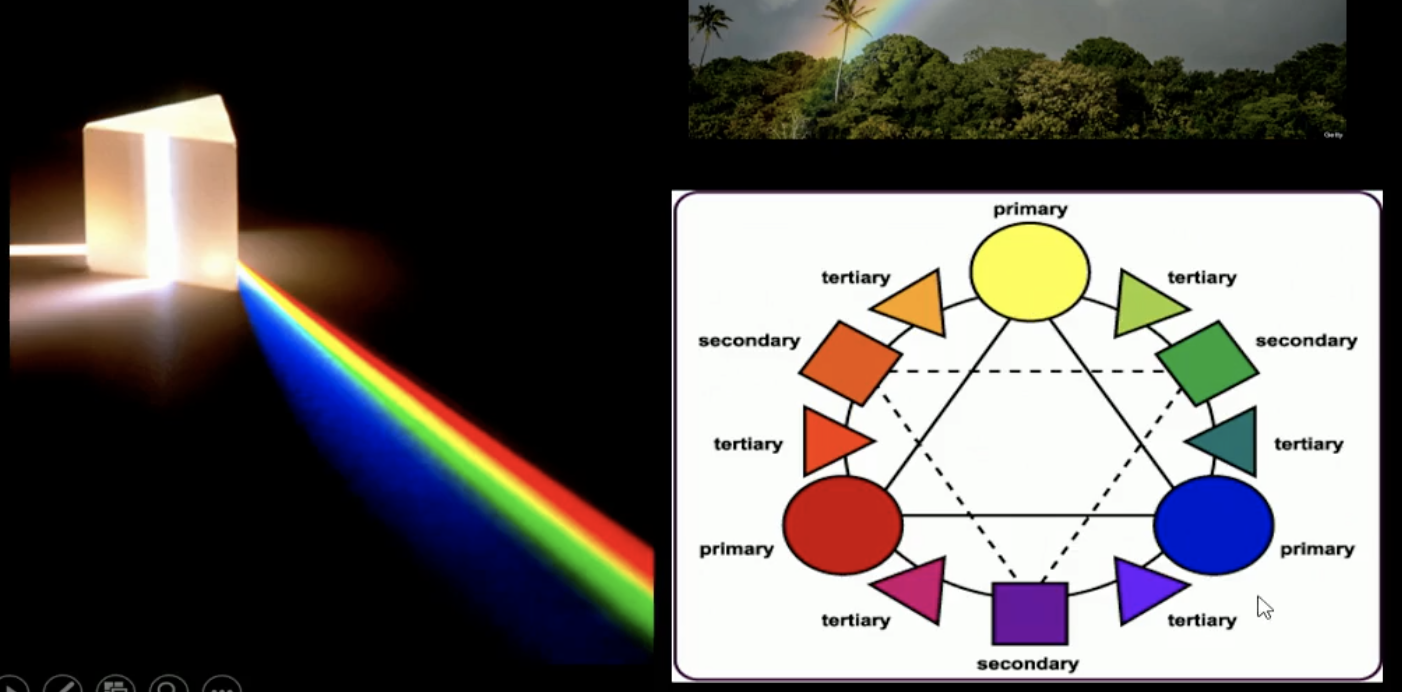
Color Theory

- components of color
- color diagrams

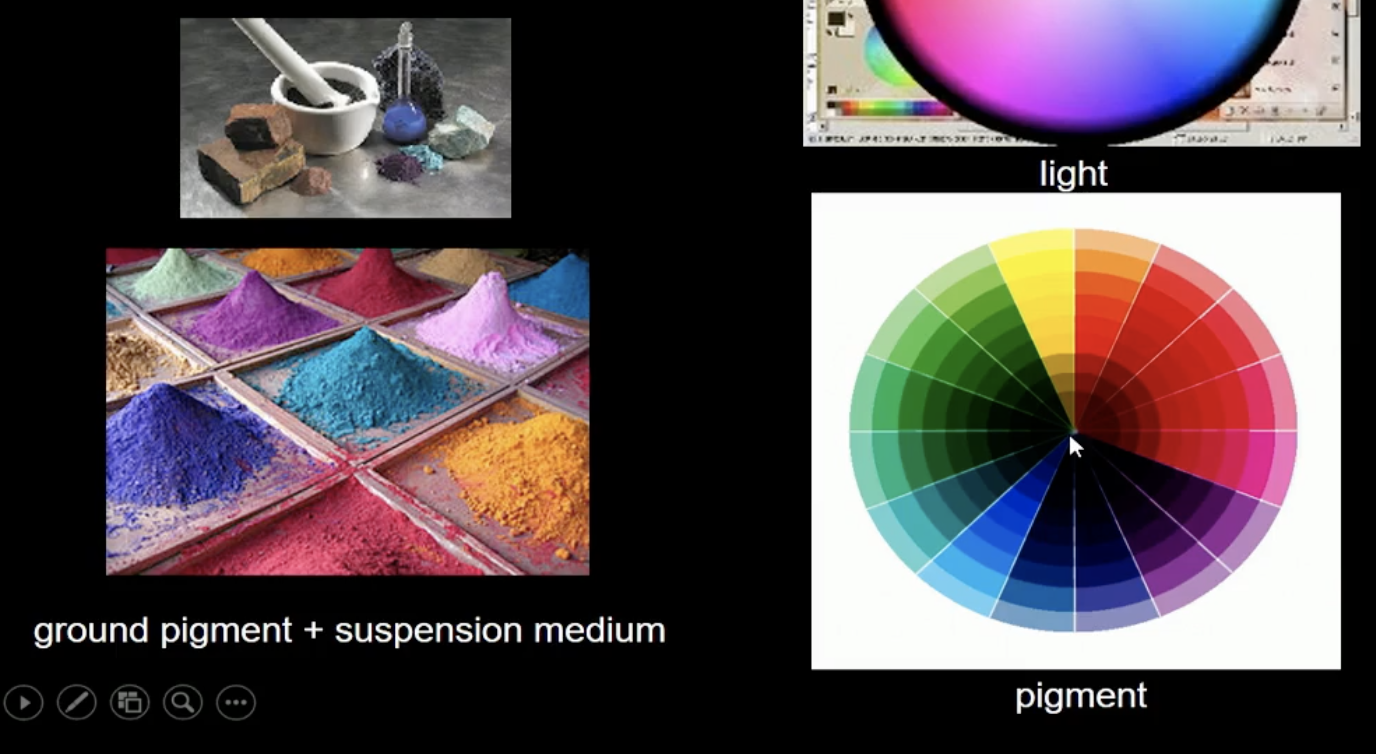
How to represent:
colored light ->colored pigment

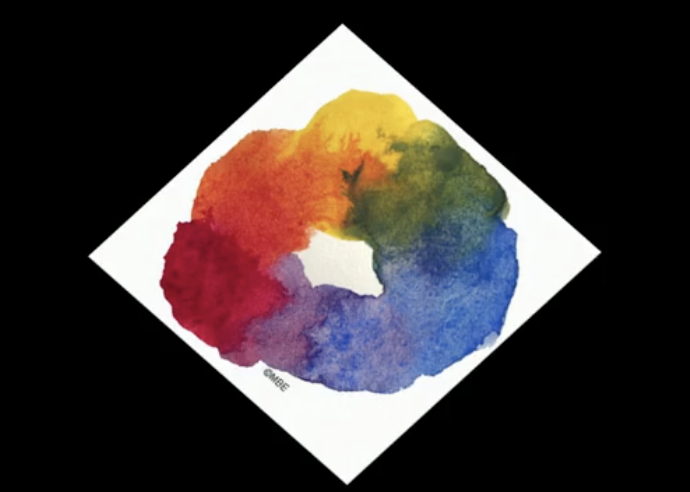
primary colors: red, yellow, blue

secondary colors:
- mixtures of two primary colors
- orange, violet, green

tertiary colors:
- mixture of a primary color with a secondary color
<p><span>- components of color<br>- color diagrams<br><br>How to represent:<br>colored light -&gt;colored pigment <br><br>primary colors: red, yellow, blue<br><br>secondary colors:<br>- mixtures of two primary colors<br>- orange, violet, green<br><br>tertiary colors:<br>- mixture of a primary color with a secondary color</span></p><img src="https://assets.knowt.com/user-attachments/028a4d0c-c2b0-4731-a829-2a59017a373e.png" data-width="100%" data-align="center"><p></p>
39
New cards

Color Science

facts of color interaction

Paint:
What are the relations between colored pigment?
*can blend, mix == adjacent blends"


*cannot blend, cannot mix == "complementary contra
40
New cards

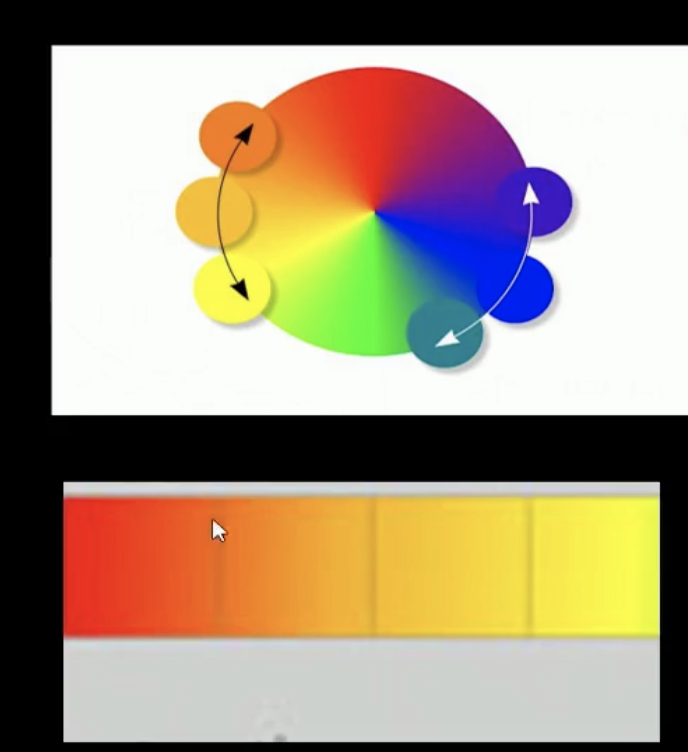
adjacent blends

are colors that can blend or be mixed with each other

mixable
- solid
- surface
<p><span>are colors that can blend or be mixed with each other</span><br><br><span>mixable</span><br><span>- solid</span><br><span>- surface</span></p>
41
New cards

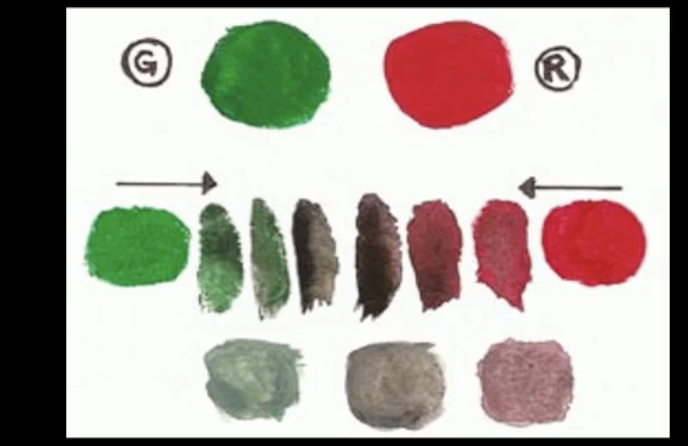
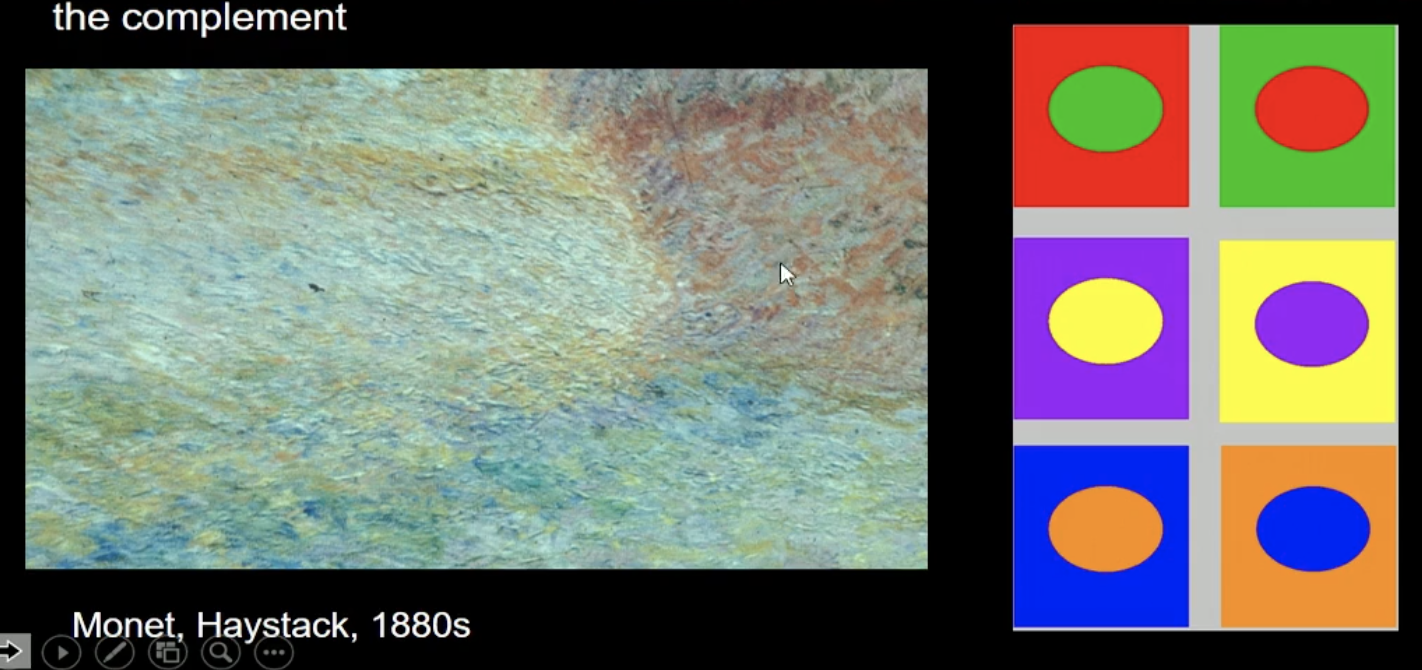
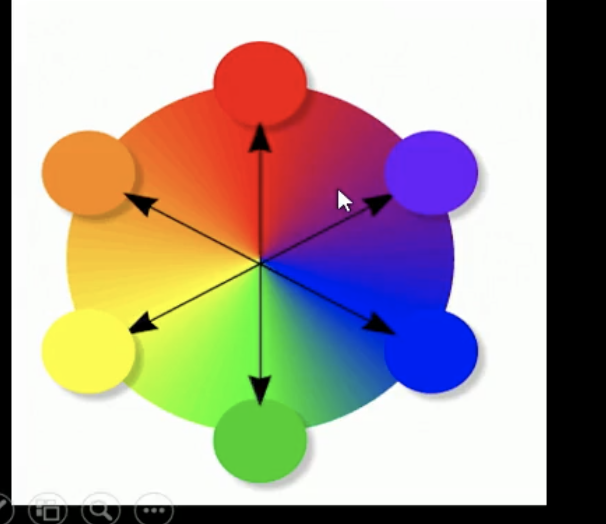
complementary contrasts

color pairs that have nothing in common with each other in the light spectrum pigment colors that cannot mix

red/green
yellow/purple
blue/orange

unmixable
- borders
- boundaries
- shadows
<img src="https://assets.knowt.com/user-attachments/330c1641-22b6-491e-ae49-1ba658bf5494.png" data-width="100%" data-align="center"><p><span>color pairs that have nothing in common with each other in the light spectrum pigment colors that cannot mix</span><br><br><span>red/green</span><br><span>yellow/purple</span><br><span>blue/orange</span><br><br><span>unmixable</span><br><span>- borders</span><br><span>- boundaries</span><br><span>- shadows</span></p>
42
New cards

What does Realism and Impressionism have in common?

contemporaneity in content

influence from Positivism "optical realism"
43
New cards

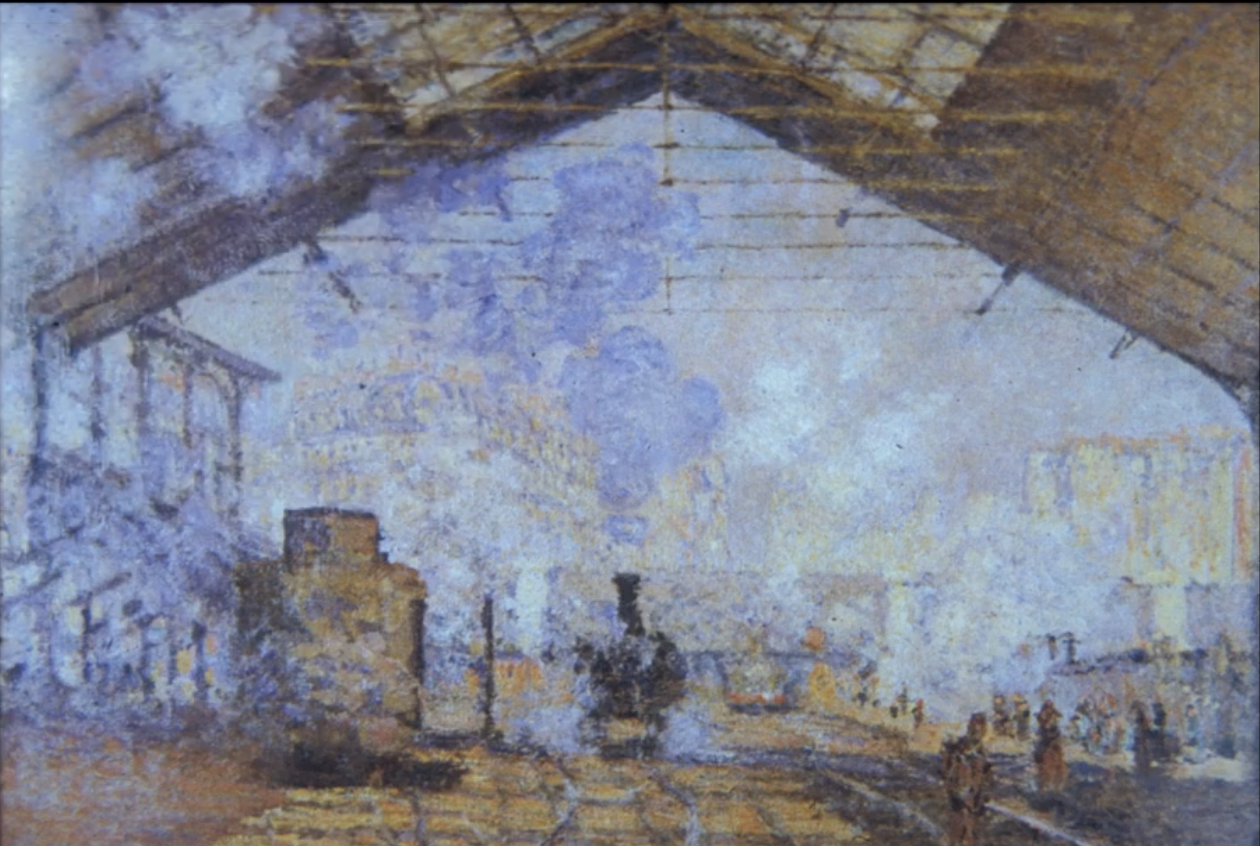
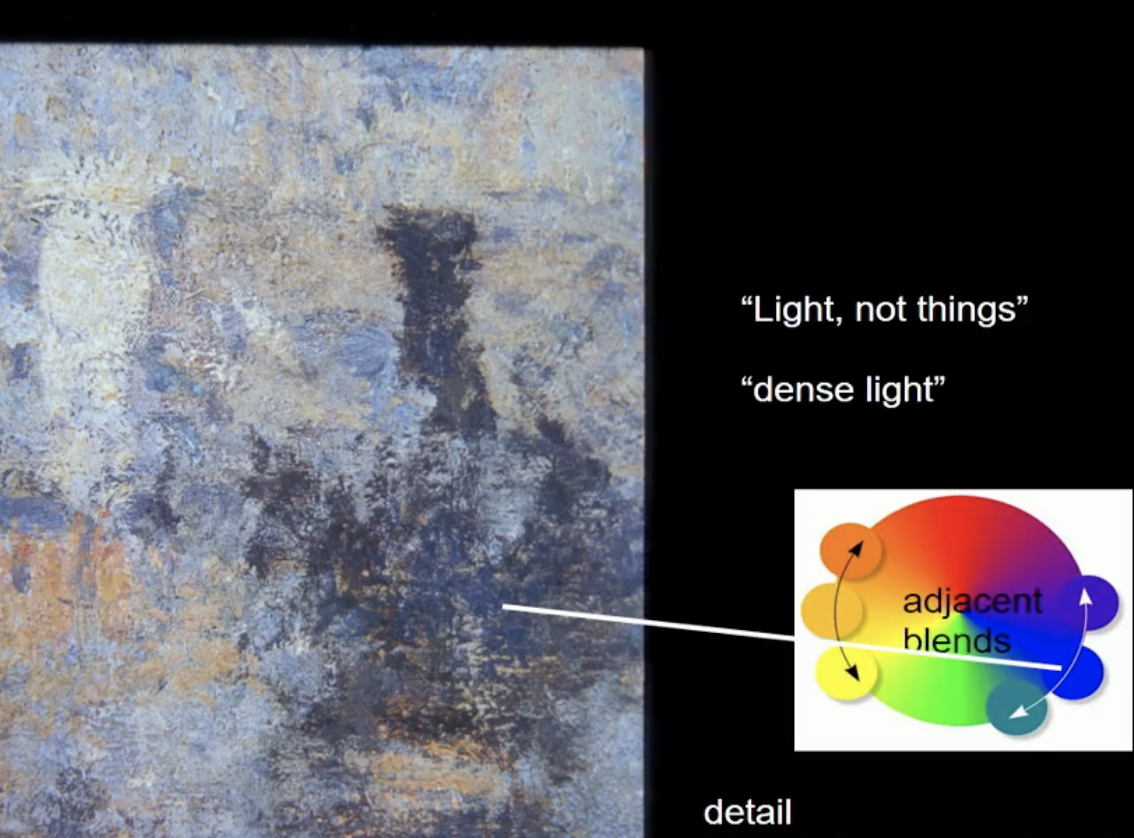
Monet, St. Lazare Train Station, 1877

"Light, not things"

Detail

Only used blue and orange colors

"Dense light"

Adjacent Blends
<p><span>"Light, not things"</span><br><br><span>Detail</span><br><br><span>Only used blue and orange colors</span><br><br><span>"Dense light"</span><br><br><span>Adjacent Blends</span></p><p></p><img src="https://assets.knowt.com/user-attachments/250a89d7-ca25-4eb8-b30e-4ce9f76fb0b6.png" data-width="100%" data-align="center"><p></p>
44
New cards

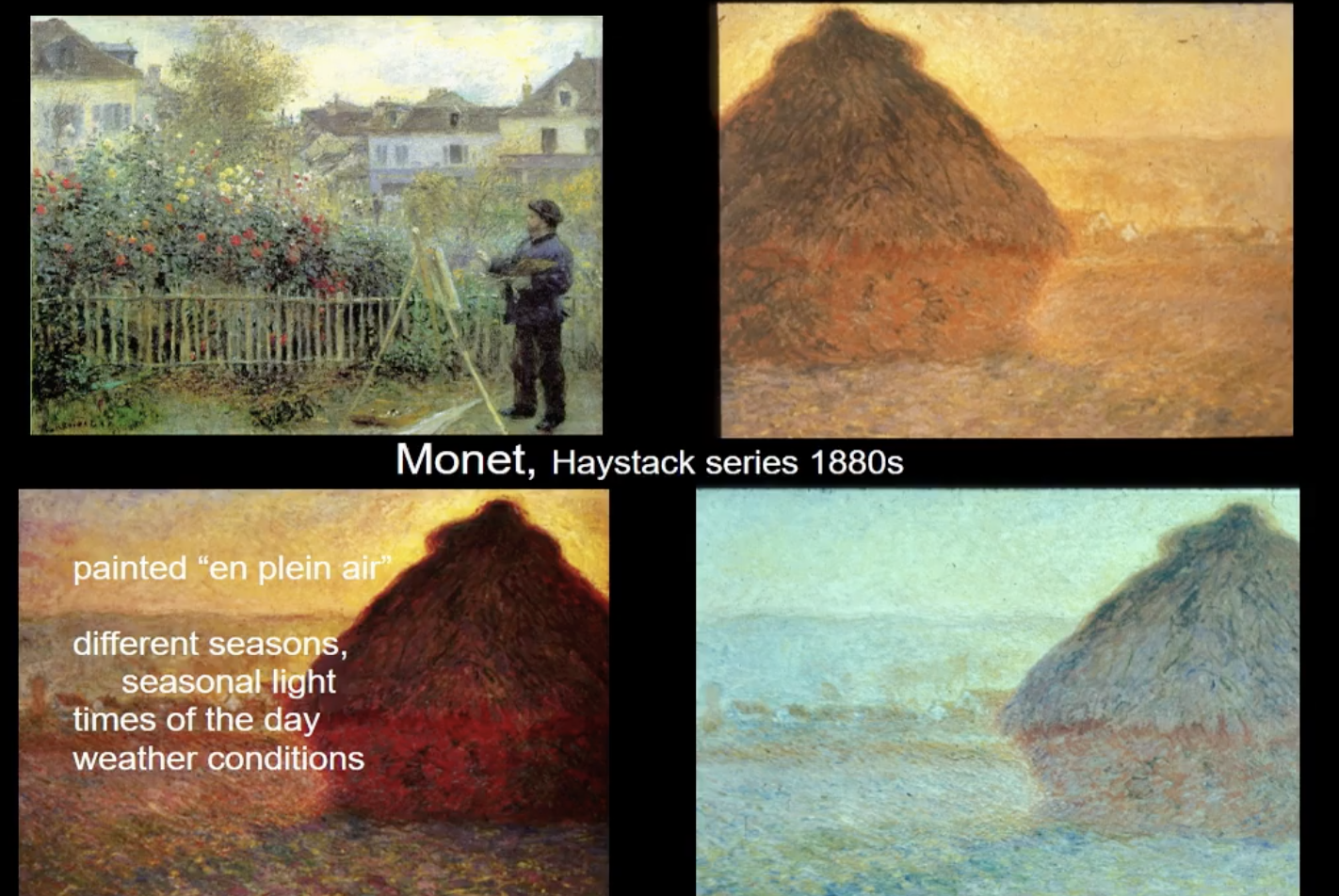
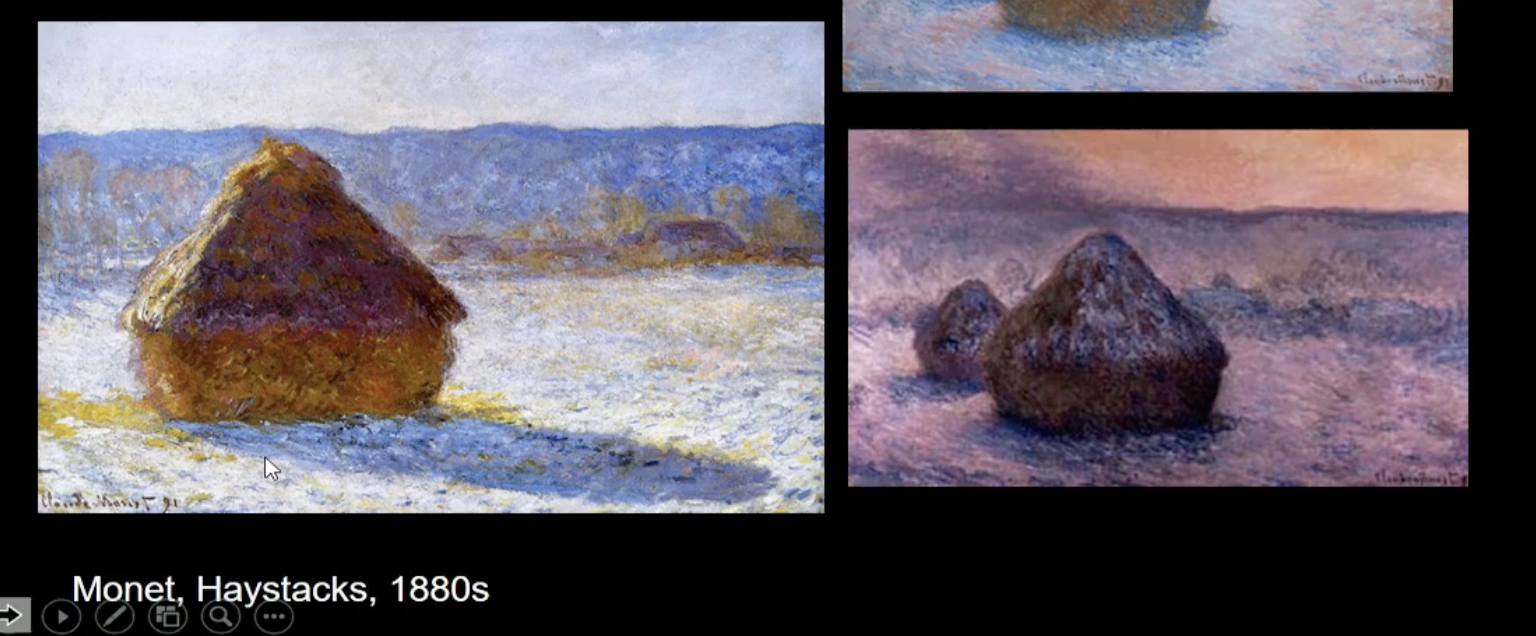
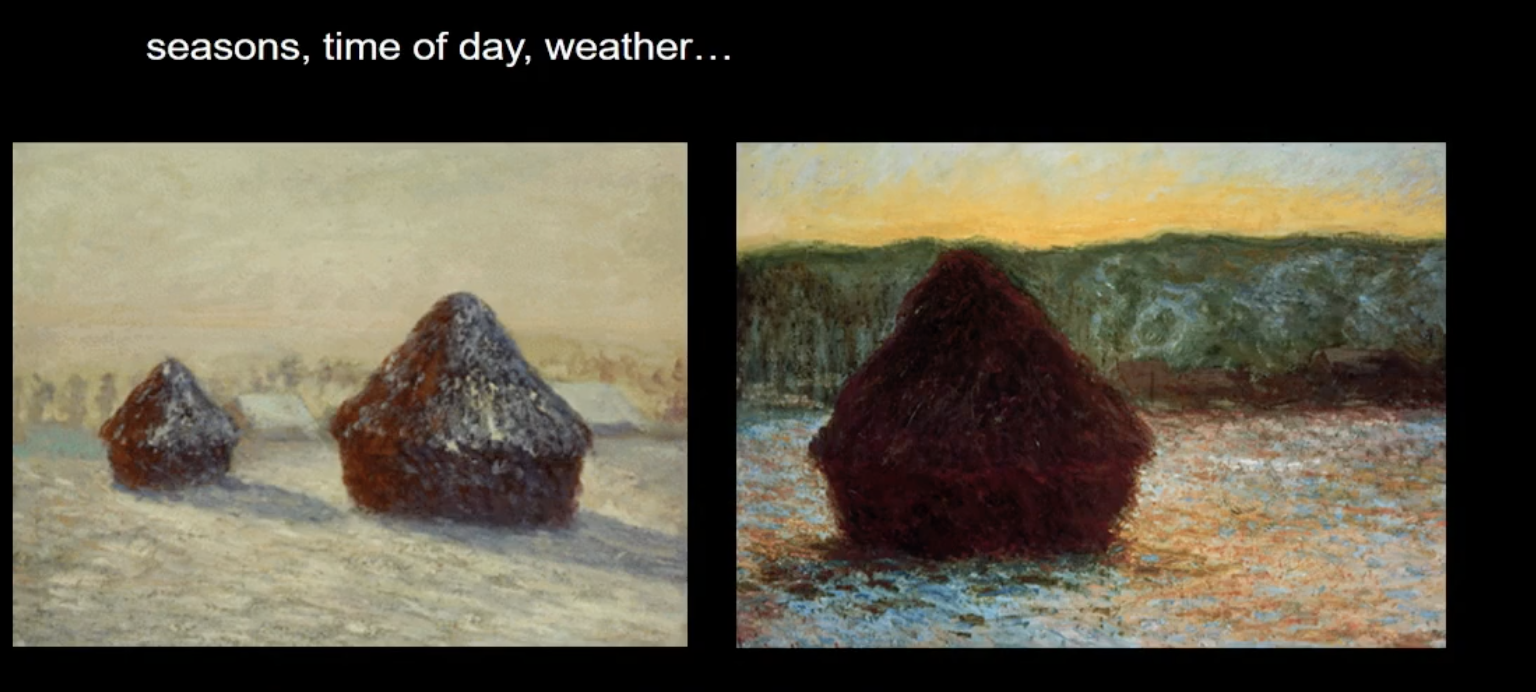
Monet, Haystacks series, 1880s

painted "en plein air

different seasons,
seasonal light
times of the day
weather conditions

"Not things"
"Light reflections"

Accurate "Color Science"
Detail:
Homogeneous brushtrokes used:
- Painterly brushstroke, same size and shape
- contiguius color: paint applies adjacent next to each other
On the surface: "of light"

"law of shadows"
- shadows are not colorless, but are the refracted color of the light gathering in the borders/boundaries = shadows
- the complement (complementary contrasts) and primary

Seasons, time of day, weather..
<p>painted "en plein air<br><br>different seasons,<br>seasonal light<br>times of the day<br>weather conditions<br><br>"Not things"<br>"Light reflections"<br><br>Accurate "Color Science"<br>Detail:<br>Homogeneous brushtrokes used:<br>- Painterly brushstroke, same size and shape<br>- contiguius color: paint applies adjacent next to each other<br>On the surface: "of light"<br><br>"law of shadows"<br>- shadows are not colorless, but are the refracted color of the light gathering in the borders/boundaries = shadows<br>- the complement (complementary contrasts) and primary<br><br>Seasons, time of day, weather..</p><img src="https://assets.knowt.com/user-attachments/bfa0e6e5-fa29-4f5e-b57a-922d8a646bf9.png" data-width="100%" data-align="center"><p></p>
45
New cards

homogeneous brushstrokes

Painterly brushstroke, same size and shape brushstroke

used in Haystack series by Monet

46
New cards

contiguous color

paint applies adjacent next to each other

used in Haystack paintings

47
New cards

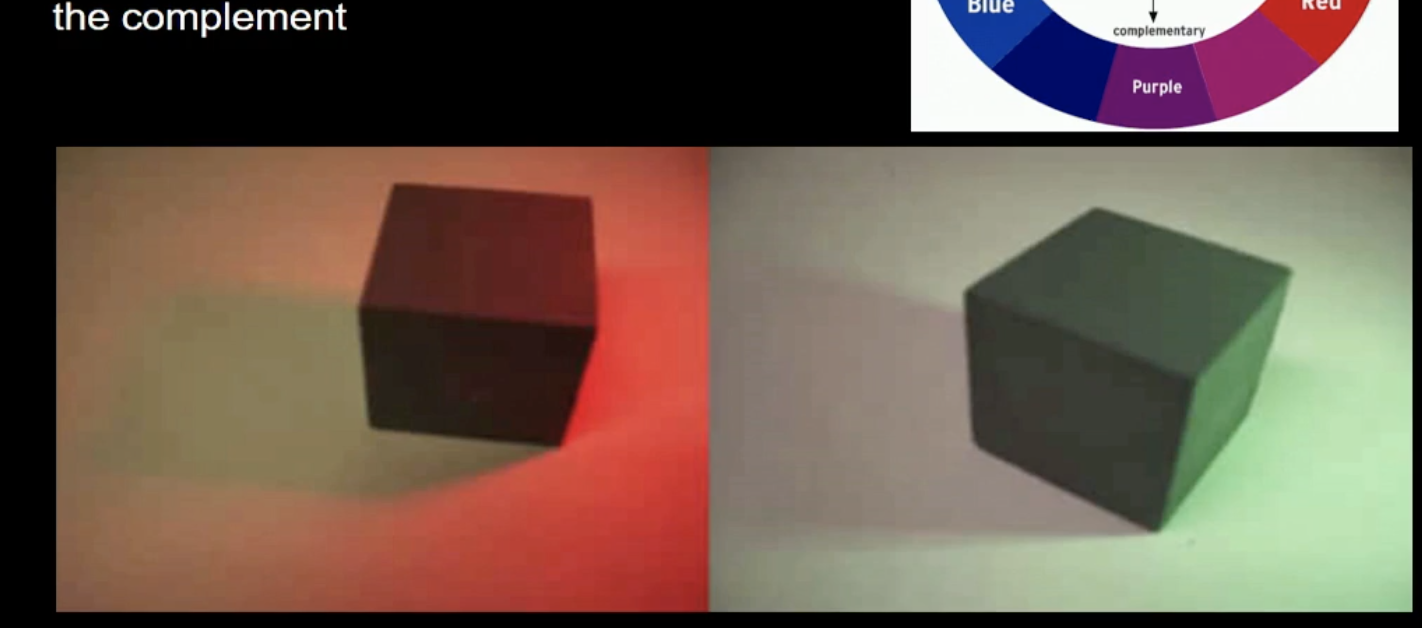
“law of shadows”

- shadows are not colorless, but are the refracted color of the light gathering in the borders/boundaries = shadows
- the complement (complementary contrasts) and primary

used in haystack series
<p>- shadows are not colorless, but are the refracted color of the light gathering in the borders/boundaries = shadows<br>- the complement (complementary contrasts) and primary</p><p>used in haystack series</p><img src="https://assets.knowt.com/user-attachments/5887f2ca-2ab2-4a1b-91d1-dd164213f0ab.png" data-width="100%" data-align="center"><img src="https://assets.knowt.com/user-attachments/df9055ba-1d3e-4b03-bd92-43fd1fb90e97.png" data-width="100%" data-align="center"><p></p>
48
New cards

Monet, Rouen Cathedral series, 1894
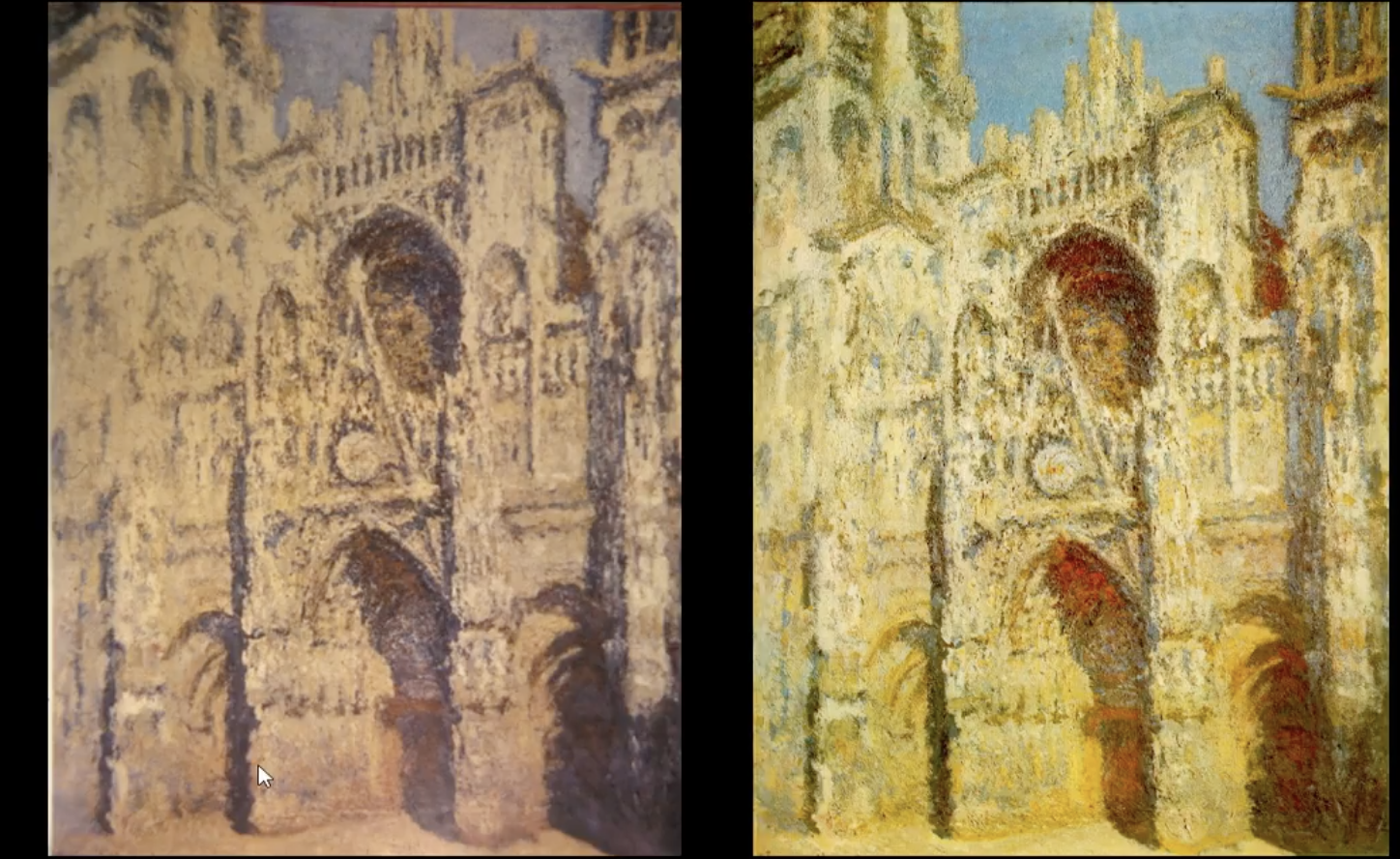
Homogeneous Brushstrokes

really intense shadows
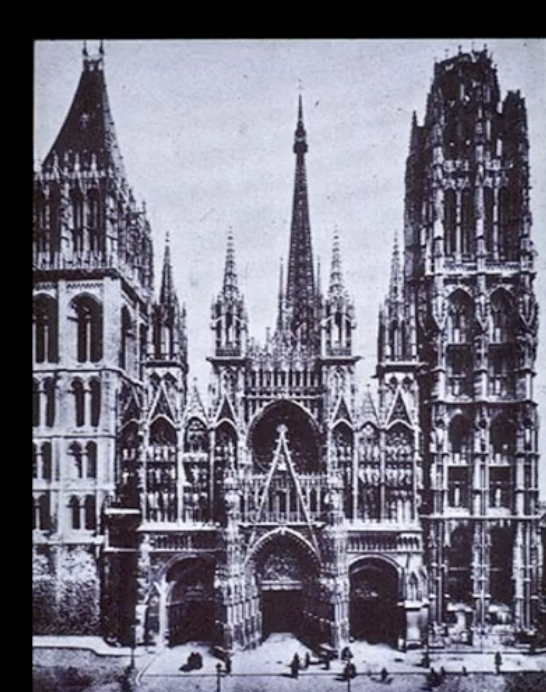
<img src="https://assets.knowt.com/user-attachments/03a54b92-e74c-4b9e-b37e-b6d896a86b05.png" data-width="100%" data-align="center"><p><span>Homogeneous Brushstrokes</span></p><p><span>really intense shadows</span></p>
49
New cards

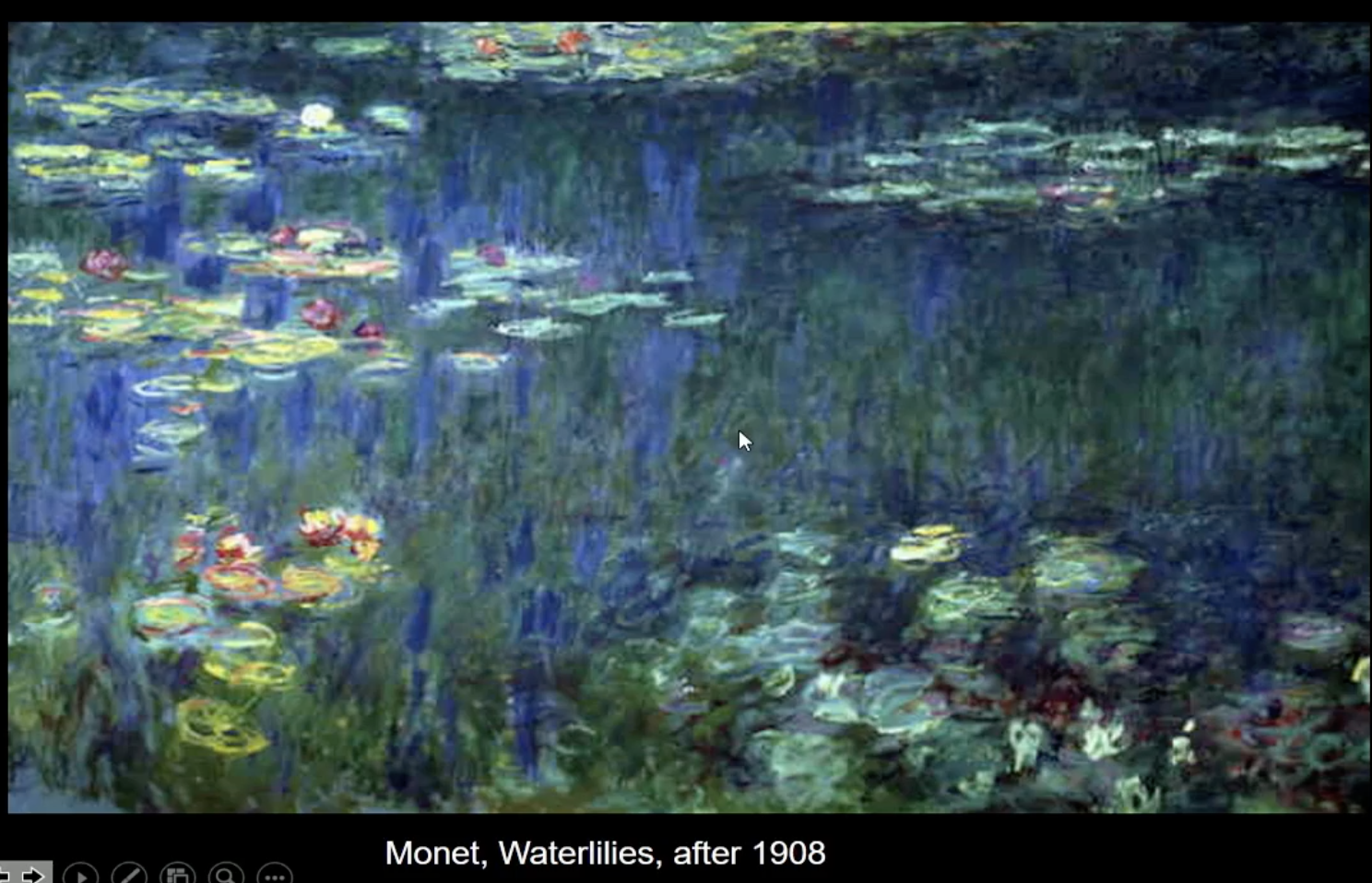
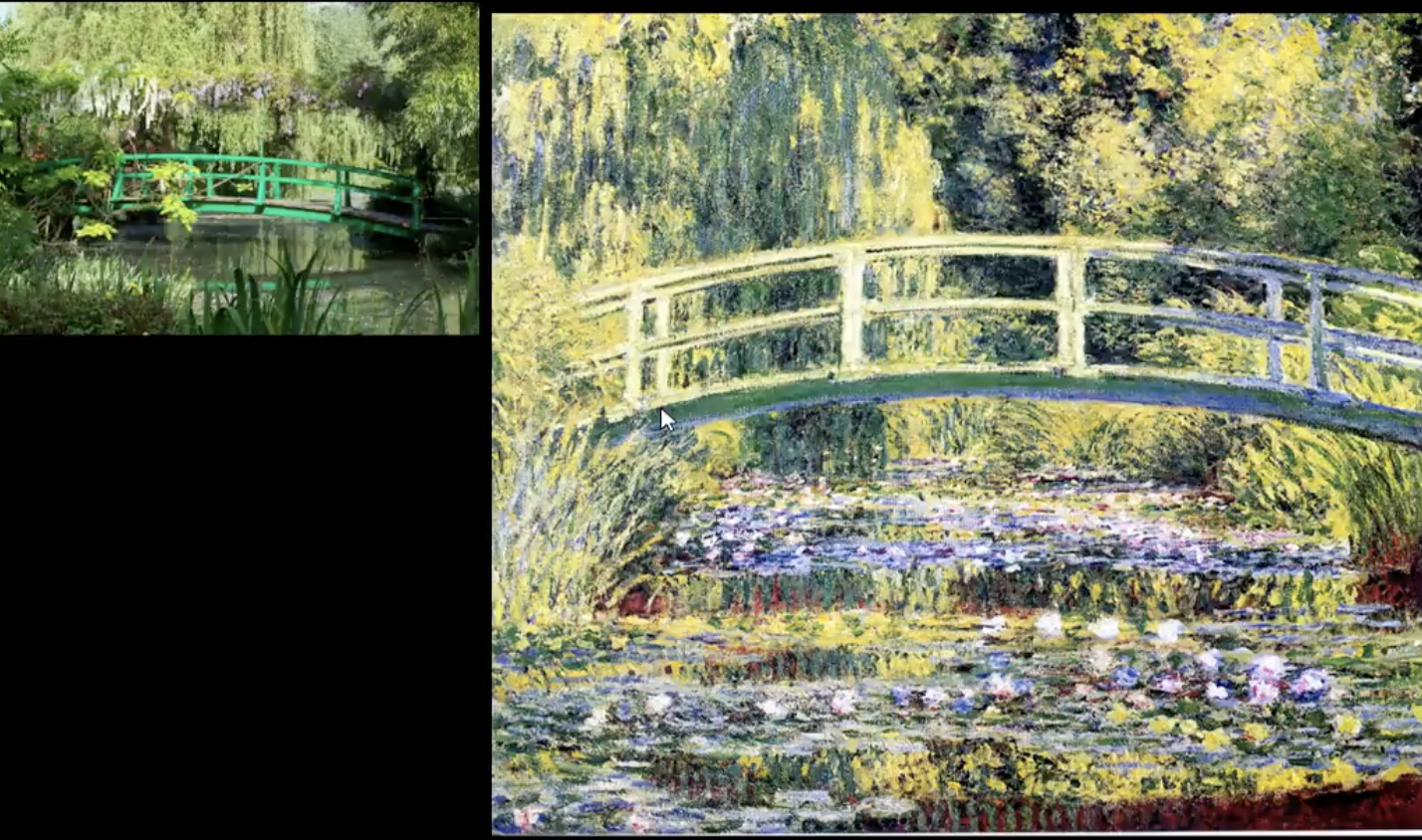
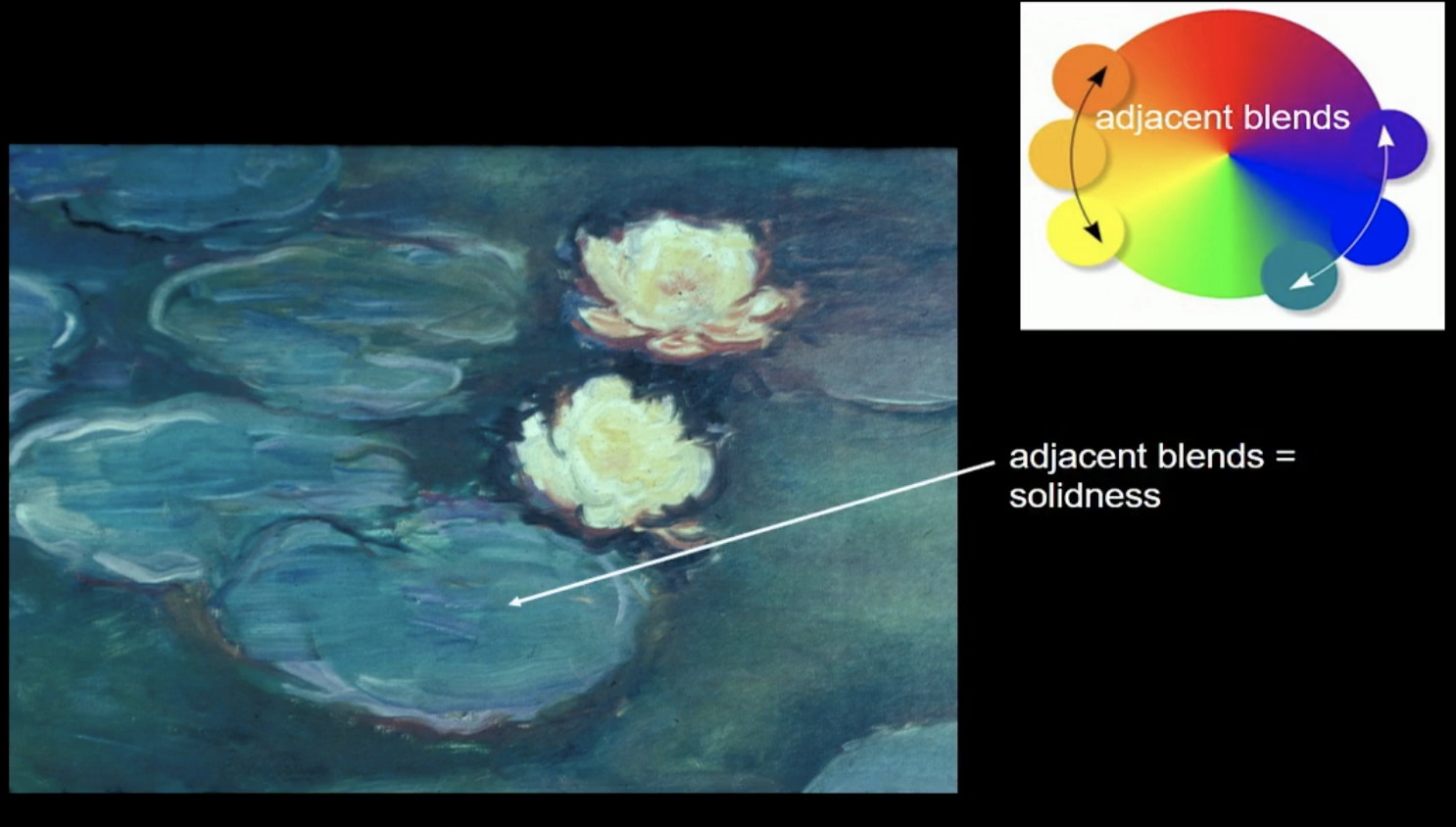
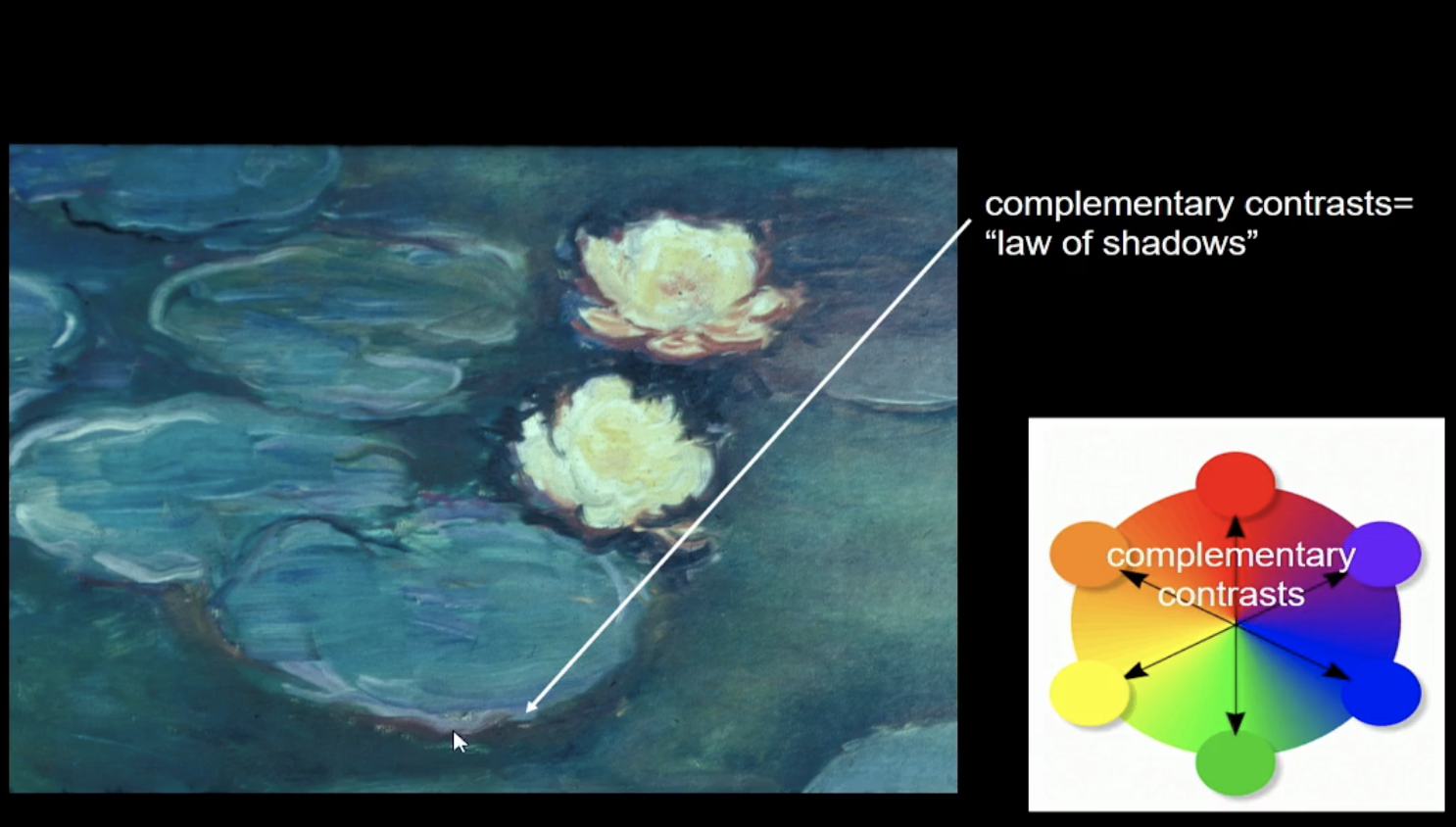
Monet, Waterlilies series, 1899; after 1908

Adjacent Blends=Solidness

Law of Shadows

Applying paint in layers

Glazing (after 1908)

Contiguous (after 1908)

Impressionism
"painted light effects"
"light, not things"
accurate use of Color Science to
represent light:
adiacent blends :
solidness of light
complementary contrasts
"Law of Shadows'
<p>Adjacent Blends=Solidness<br><br>Law of Shadows<br><br>Applying paint in layers<br><br>Glazing (after 1908)<br><br>Contiguous (after 1908)<br><br>Impressionism<br>"painted light effects"<br>"light, not things"<br>accurate use of Color Science to<br>represent light:<br>adiacent blends :<br>solidness of light<br>complementary contrasts<br>"Law of Shadows'</p><p></p><img src="https://assets.knowt.com/user-attachments/71f29351-739c-45a9-9511-a697441f1599.png" data-width="100%" data-align="center"><img src="https://assets.knowt.com/user-attachments/269ef32d-4b82-40d3-8ce9-8c9fb4c8a140.png" data-width="100%" data-align="center"><img src="https://assets.knowt.com/user-attachments/e439dd4e-90ab-4db9-b3ca-e04f693a10d8.png" data-width="100%" data-align="center"><p></p>
50
New cards

glazing

applying paint in layers on top of each other

51
New cards

Auguste Renoir, Le Moulin de la Galette, 1876

Windmill of the cake

Impressionism:
- "painted light effects"
- light, not things
- accurate use of Color Science

Society of Irregularists:
- Light reflects in different patterns:
* staric things
* animated tuings
- irregular patterns

Woven color: contiguous color/glazing
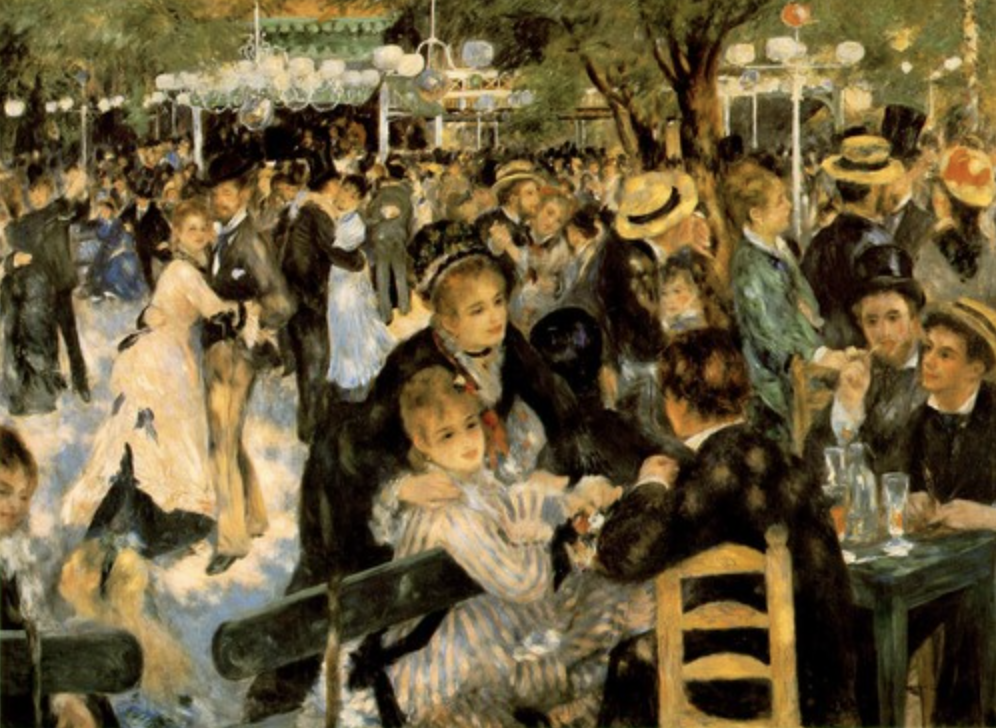
<p><span>Windmill of the cake<br><br>Impressionism:<br>- "painted light effects"<br>- light, not things<br>- accurate use of Color Science<br><br>Society of Irregularists:<br>- Light reflects in different patterns:<br>* staric things<br>* animated tuings<br>- irregular patterns<br><br>Woven color: contiguous color/glazing</span></p>
52
New cards

Renoir, The Bather, 1878; 1886

"Things"
Impressions: "light reflectiosn not things"

"Woven color": mixing the application of paint with alternations of contiguous color (next to each other) and glazing (paint applied in layers)
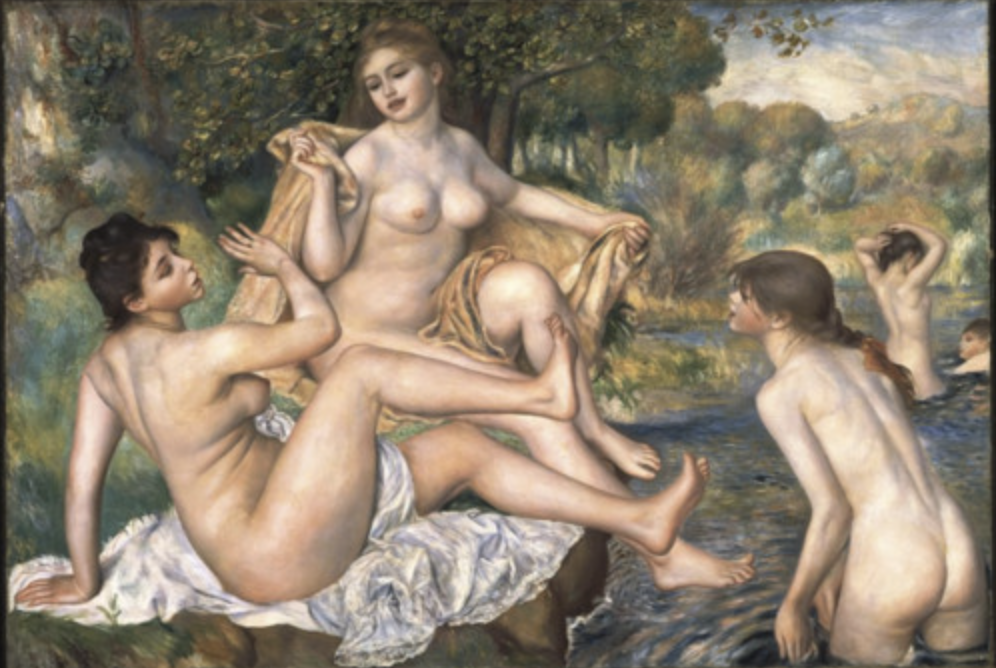
<p><span>"Things"<br>Impressions: "light reflectiosn not things"<br><br>"Woven color": mixing the application of paint with alternations of contiguous color (next to each other) and glazing (paint applied in layers)</span></p>
53
New cards

Society of Irregularists; “woven color”

54
New cards

Neo-Impressionism

(late impressionism)

A late-19th century movement growing out of Impressionism. Though interested in capturing the effects of light and atmosphere, these artists also introduced the ideas of color theory and optics into their works. Pointillism was a common technique.

55
New cards

Georges Seurat, A Sunday on La Grande Jatte, 1886

"Chromo-
luminarism":
Color/Light
Neo-Impressionism:
Late Impressionism

Divide Brushstrokes
Inrervals

Optical Mixture

divided color
orange=yellow = red
green =blue + yellow
purple/violet=blue = red

Got idea of canvas from:
Magnification of rods and cones on retina

Color blindness test included same configuration

Color Science:
Goethe, color
diagrams; optical
perception, 1810

Eugene
Chevreul, 1839
about shadows

Ogden Rood,
Modern
Chromatics, 1879
divided color

Seurat, drawing from notebook

Charles Henry:
EQUILIBRIUM:
"RELAXATION"
* balance of
horizontal/
vertical lines

*balance of
descending/
ascending lines
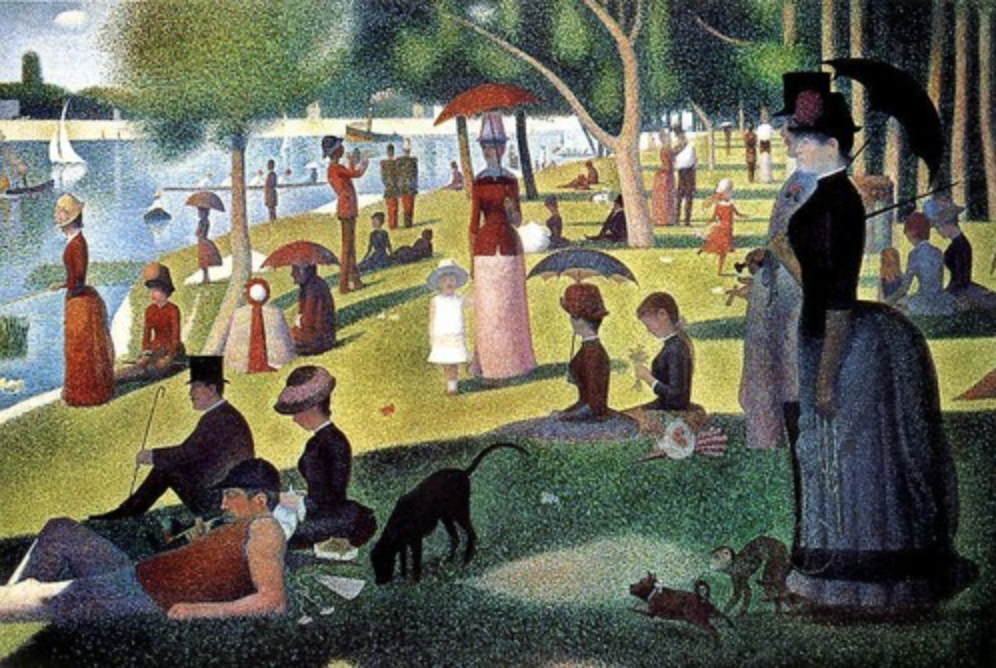
<p><span>"Chromo-</span><br><span>luminarism":</span><br><span>Color/Light</span><br><span>Neo-Impressionism:</span><br><span>Late Impressionism</span><br><br><span>Divide Brushstrokes</span><br><span>Inrervals</span><br><br><span>Optical Mixture</span><br><br><span>divided color</span><br><span>orange=yellow = red</span><br><span>green =blue + yellow</span><br><span>purple/violet=blue = red</span><br><br><span>Got idea of canvas from:</span><br><span>Magnification of rods and cones on retina</span><br><br><span>Color blindness test included same configuration</span><br><br><span>Color Science:</span><br><span>Goethe, color</span><br><span>diagrams; optical</span><br><span>perception, 1810</span><br><br><span>Eugene</span><br><span>Chevreul, 1839</span><br><span>about shadows</span><br><br><span>Ogden Rood,</span><br><span>Modern</span><br><span>Chromatics, 1879</span><br><span>divided color</span><br><br><span>Seurat, drawing from notebook</span><br><br><span>Charles Henry:</span><br><span>EQUILIBRIUM:</span><br><span>"RELAXATION"</span><br><span>* balance of</span><br><span>horizontal/</span><br><span>vertical lines</span><br><br><span>*balance of</span><br><span>descending/</span><br><span>ascending lines</span></p>
56
New cards

Charles Henry

57
New cards

Seurat, The Models, 1887

Image Quotation (image inside image)

Inhibition: downward movement
* descending lines
* cool colors
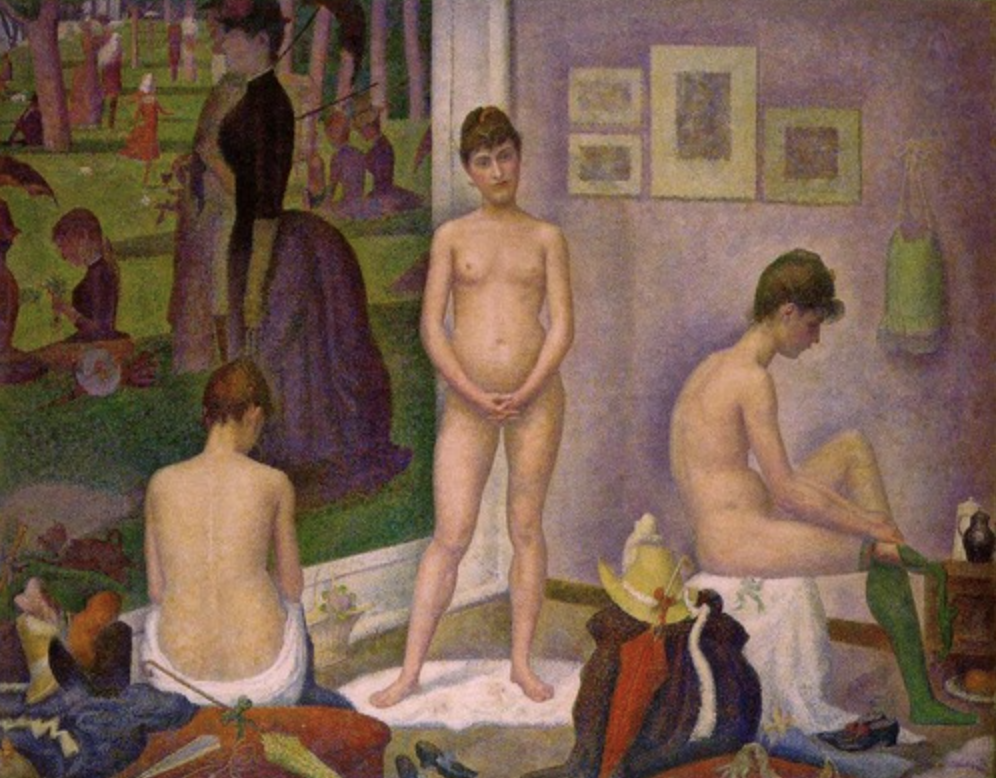
<p><span>Image Quotation (image inside image)<br><br>Inhibition: downward movement<br>* descending lines<br>* cool colors</span></p>
58
New cards

Seurat, The Kick, 1890

Dynamogeny
*ascending lines
*warm colors

Divkded brushtrokes intervals
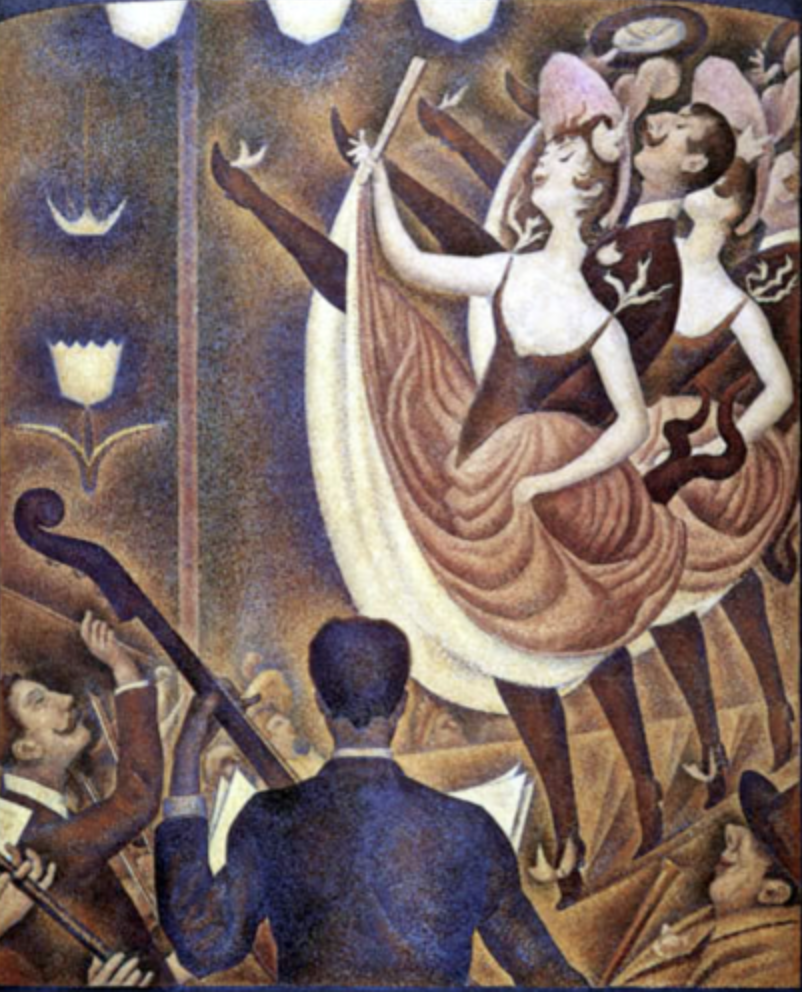
<p><span>Dynamogeny<br>*ascending lines<br>*warm colors<br><br>Divkded brushtrokes intervals</span></p>
59
New cards

Georges Seurat, The Circus, 1891

Dynamogeny
*ascending lines
*warm colors

Dicide brushstrokes
Divided colors
Intervals

Detail of Frame: signed paintings with brushstrokes
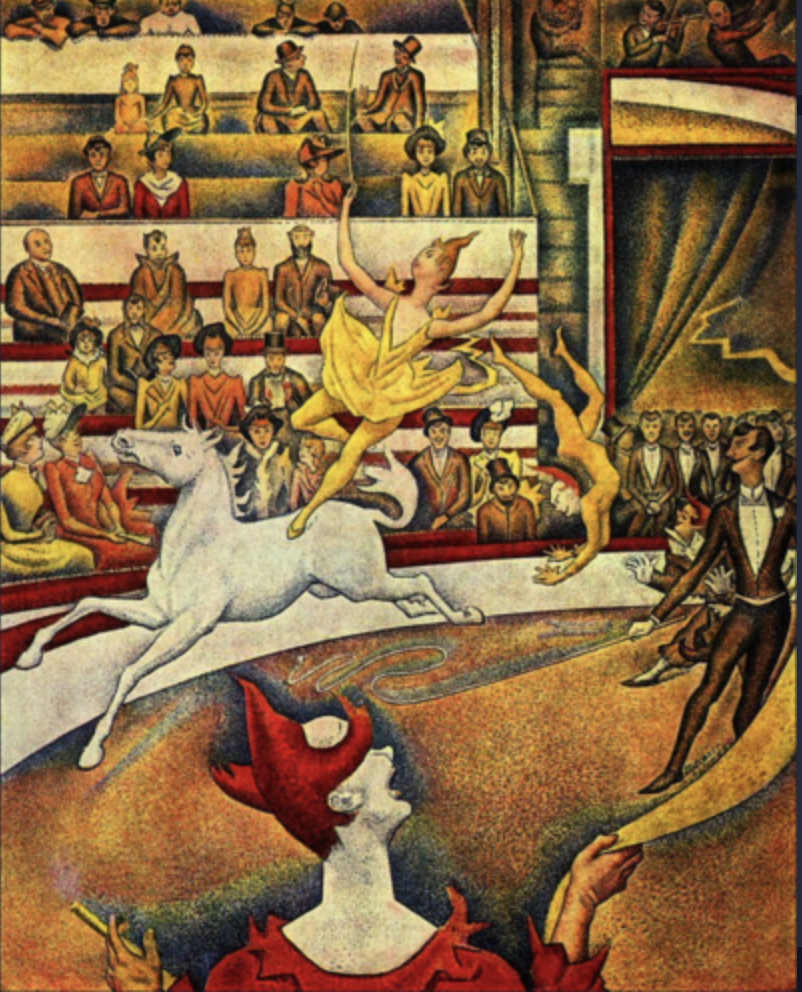
<p><span>Dynamogeny</span><br><span>*ascending lines</span><br><span>*warm colors</span><br><br><span>Dicide brushstrokes</span><br><span>Divided colors</span><br><span>Intervals</span><br><br><span>Detail of Frame: signed paintings with brushstrokes</span></p>
60
New cards

Stephane Mellarme

"Paint not the thing itself, but the effect it produces"

Tried to get public open to new content

Effect: Light & Mood

Move away from things

61
New cards

Post-Impressionism

A late nineteenth-century style that relies on the Impressionist use of color and spontaneous brushwork but that employs these elements as expressive devices.

62
New cards

Paul Cezanne, Self-Portrait, 1879; 1879

Rejected early painting, accepted late

Late 1879:
- "realization of the motif"

*Mallarme: "Paint not the thing itself, but the. effect it produces to paint the wallpaper in the face and the face in the wallpaper

* to paint the wallpaper in the face and the face in the wallpaper

* "equivalence": comparison, substitution
* wallpaper pattern = face

- motif = pattern
- "to realize" = "to achieve"

in colors, textures
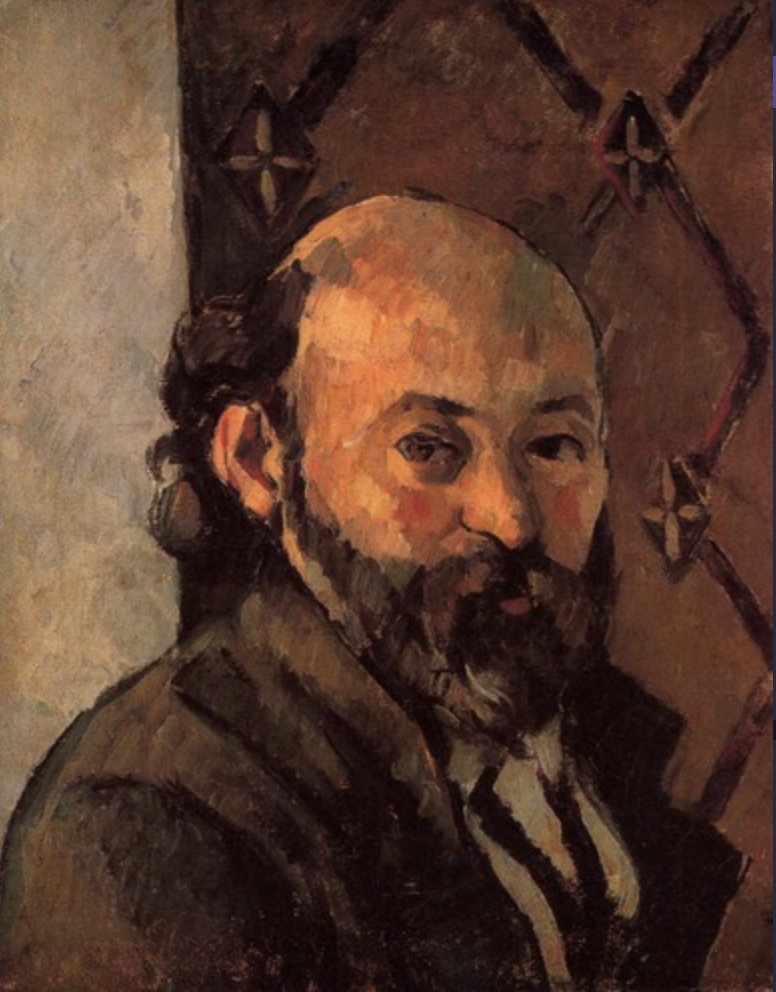
<p><span>Rejected early painting, accepted late<br><br>Late 1879:<br>- "realization of the motif"<br><br>*Mallarme: "Paint not the thing itself, but the. effect it produces to paint the wallpaper in the face and the face in the wallpaper<br><br>* to paint the wallpaper in the face and the face in the wallpaper<br><br>* "equivalence": comparison, substitution<br>* wallpaper pattern = face<br><br>- motif = pattern<br>- "to realize" = "to achieve" </span></p><p><span>in colors, textures</span></p>
63
New cards

Cezanne, Mme. Cezanne in a Red Armchair, 1893

"realization of the motif"

Stephan Mallarme:
"Paint not the thing itself, but the effect it produces."

"equivalence": comparison, substitution

"equivalence":
woman=coffeepot
woman = teacup with spoon
hands =gesture of hands on tablecloth
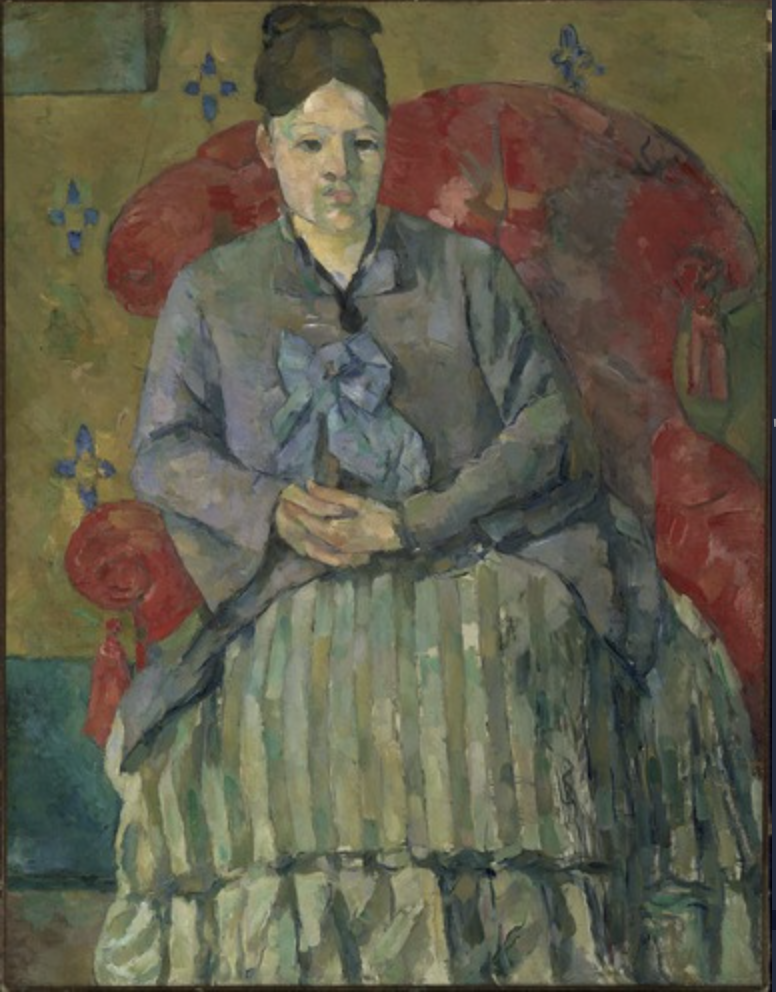
<p><span>"realization of the motif"<br><br>Stephan Mallarme:<br>"Paint not the thing itself, but the effect it produces."<br><br>"equivalence": comparison, substitution<br><br>"equivalence":<br>woman=coffeepot<br>woman = teacup with spoon<br>hands =gesture of hands on tablecloth</span></p>
64
New cards

Cezanne, Mme. Cezanne with a Coffeepot, 1898

65
New cards

Cezanne, Still-life with compotier, 1882

"equivalence"

"the folded napkins looked like snowy mountains"

* napkin=mountains

multiple view points

- parallel view point

- high view point

"duration of time"

homogenous brushstroke:

square

still-life:

"the folded napkins looked like snowy mountains"

mountains->landscape

napkins->still-life
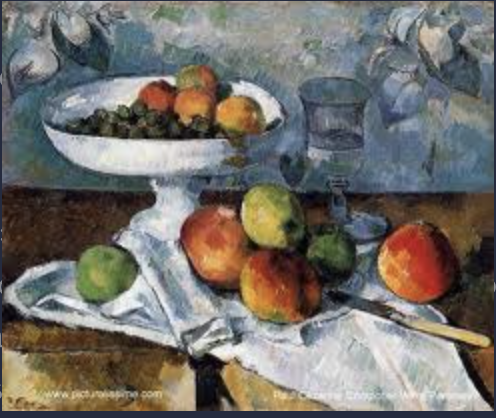
<p>"equivalence"</p><p>"the folded napkins looked like snowy mountains"</p><p>* napkin=mountains</p><p>multiple view points</p><p>- parallel view point</p><p>- high view point</p><p>"duration of time"</p><p>homogenous brushstroke:</p><p>square</p><p>still-life:</p><p>"the folded napkins looked like snowy mountains"</p><p>mountains-&gt;landscape</p><p>napkins-&gt;still-life</p>
66
New cards

Cezanne, Mt. Ste.-Victoire series, 1872; 1880s; 1902-1904

'...I found the mountain in the sky and the sky in the mountain"

rock=mountain

rock=sky

equivalence:
"mountain" shaped brushstroke
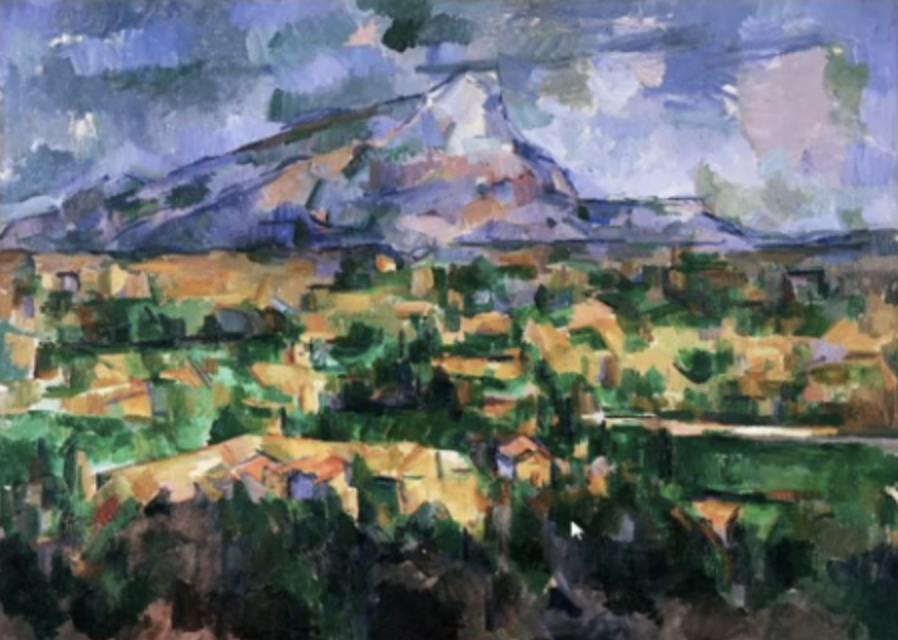
<p><span>'...I found the mountain in the sky and the sky in the mountain"<br><br>rock=mountain<br><br>rock=sky<br><br>equivalence:<br>"mountain" shaped brushstroke</span></p>
67
New cards

Cezanne, The Large Bathers, 1906; Bathers series, 1890-1906

Black/white scan or Cezanne

"equivalence":
- landscape =portrait
- tree trunk = hair
- clouds = eyes

arbitrary colors:
- not descriptive
- not imitative

"The landscape thinks itself through me and I am its consciousness."

Stephane Mallarme: "Paint not the thing itself, but the effect it produces."

"equivalence":
"finding the face in the landscape
and the landscape in the face"
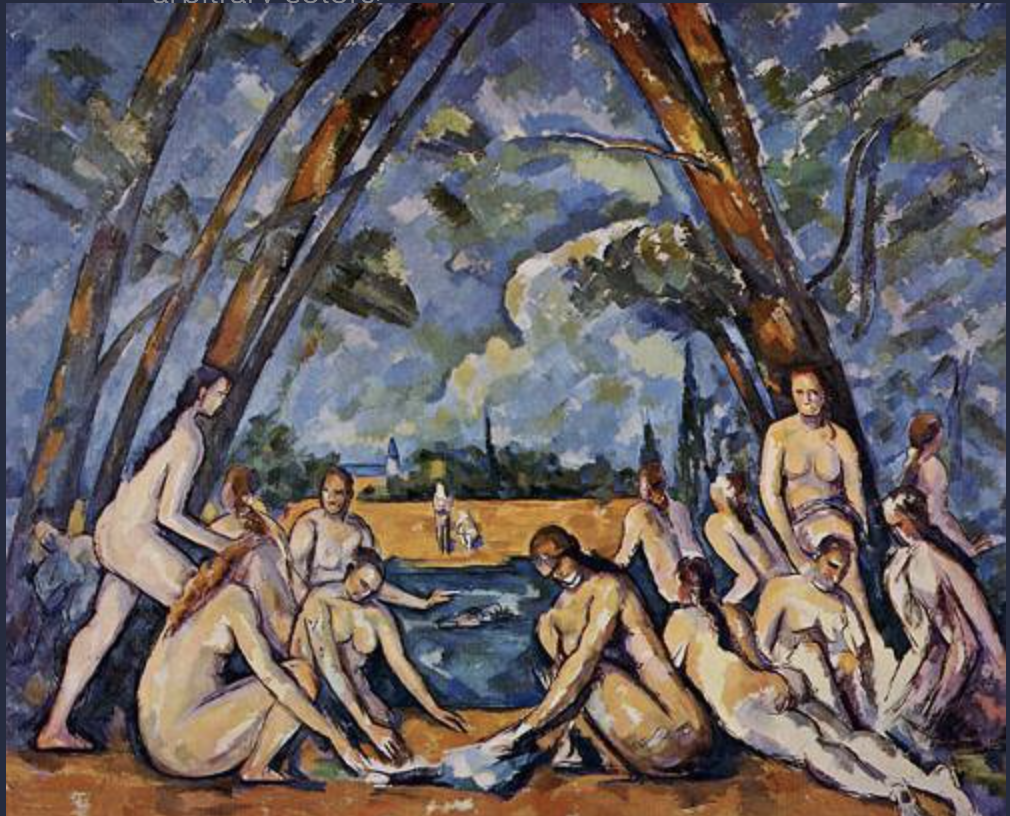
<p><span>Black/white scan or Cezanne<br><br>"equivalence":<br>- landscape =portrait<br>- tree trunk = hair<br>- clouds = eyes<br><br>arbitrary colors:<br>- not descriptive<br>- not imitative<br><br>"The landscape thinks itself through me and I am its consciousness."<br><br>Stephane Mallarme: "Paint not the thing itself, but the effect it produces."<br><br>"equivalence":<br>"finding the face in the landscape<br>and the landscape in the face"</span></p>
68
New cards

Edgar Degas, The Tub, 1886

Equivalence

Multiple View Points

Low View
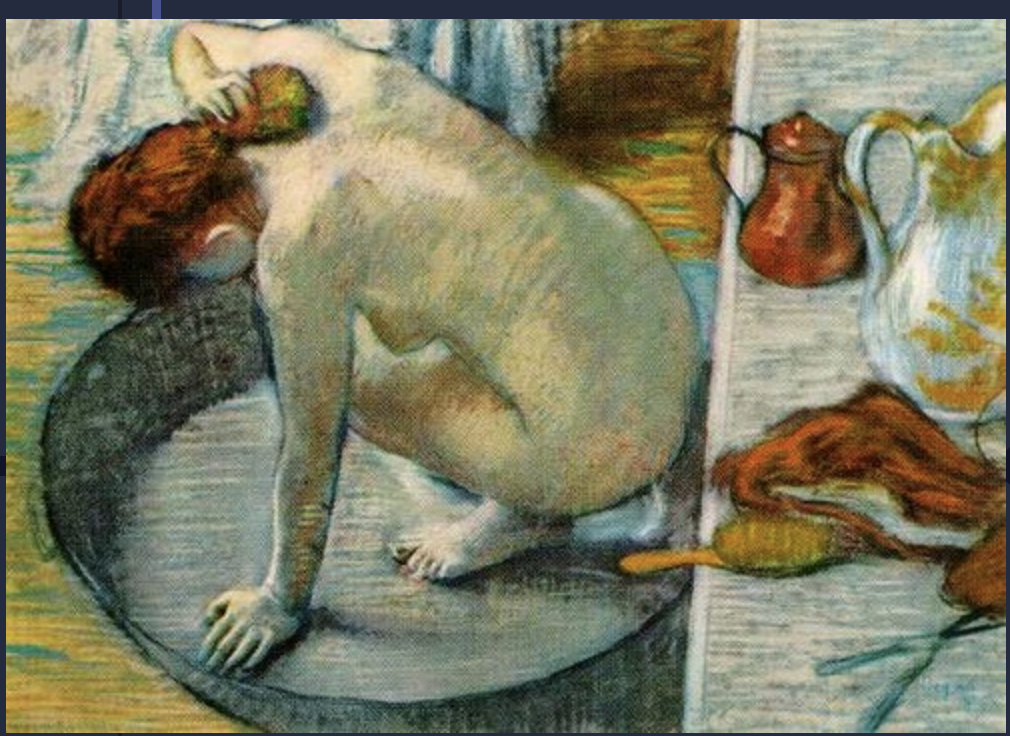
<p><span>Equivalence<br><br>Multiple View Points<br><br>Low View</span></p>
69
New cards

Mary Cassatt, The Bath, 1892

Stephan Mallarme:
"Paint not the thing itself, but the effect it produces."

"equivalence"

"embracing line":
maternal, protective
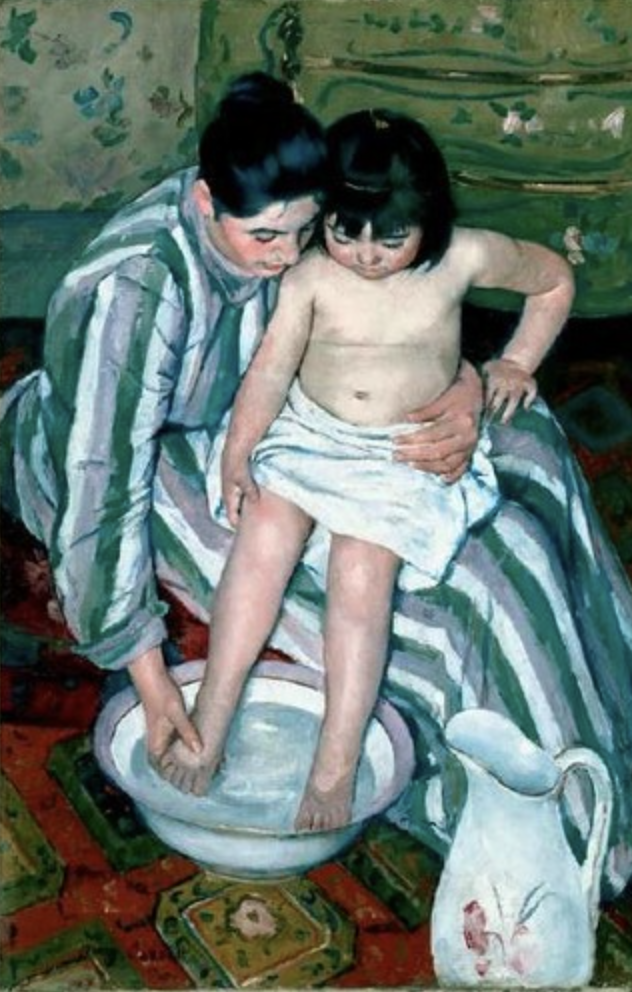
<p><span>Stephan Mallarme:</span><br><span>"Paint not the thing itself, but the effect it produces."</span><br><br><span>"equivalence"</span><br><br><span>"embracing line":</span><br><span>maternal, protective</span></p>
70
New cards

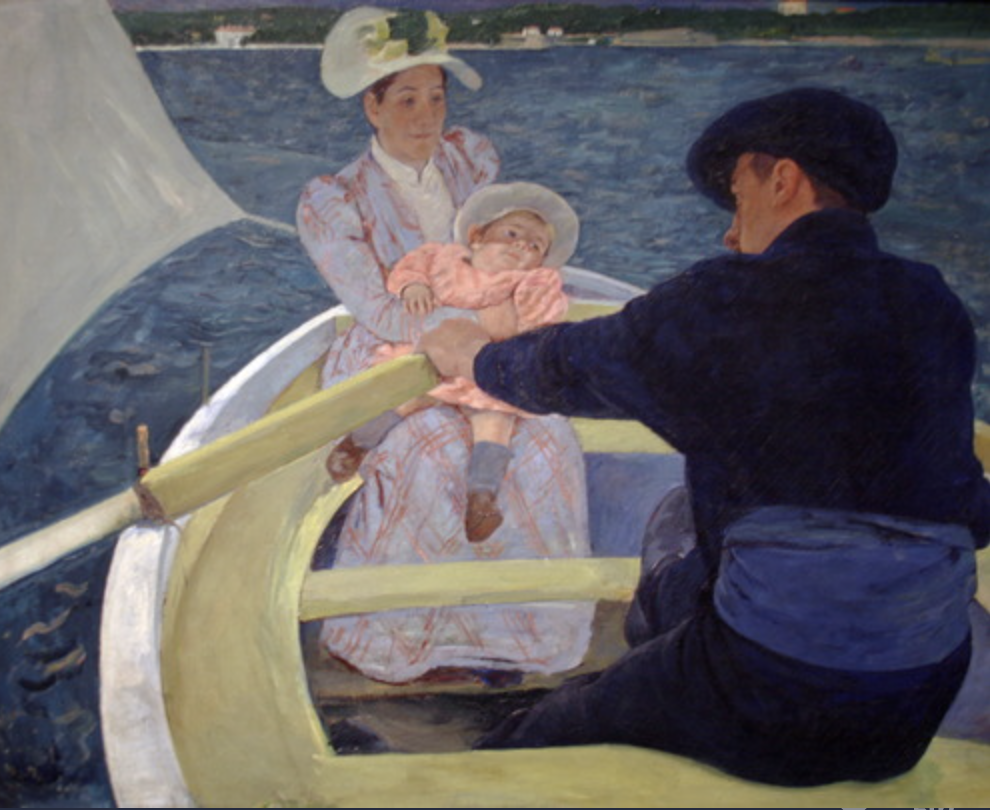
Mary Cassatt, Boating Party, 1894

knowt flashcard image
71
New cards

Vincent Van Gogh, The Night Café, 1888

Mallarme: "Paint not the thing itself, but the effect it produces."

"equivalence"

"I have tried to express the terrible passions of humanity by means of blood red and green, " Van Gogh wrote.
"Everywhere there is the clash and contrast of colors....the café is a place where one can ruin oneself, go mad or commit a crime.....a place of nausea."

glazing:
- red on top of green - dark
- yellow on top of purple - light
- complementary contrasts:
do not mix;
separate = (dizziness) nausea

Makes owner ghost like
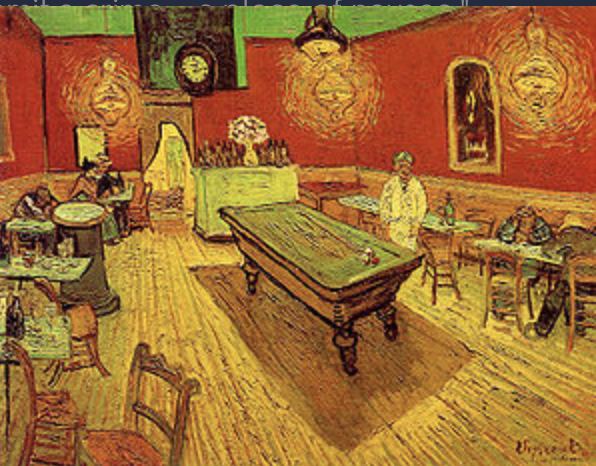
<p><span>Mallarme: "Paint not the thing itself, but the effect it produces."<br><br>"equivalence"<br><br>"I have tried to express the terrible passions of humanity by means of blood red and green, " Van Gogh wrote.<br>"Everywhere there is the clash and contrast of colors....the café is a place where one can ruin oneself, go mad or commit a crime.....a place of nausea."<br><br>glazing:<br>- red on top of green - dark<br>- yellow on top of purple - light<br>- complementary contrasts:<br>do not mix;<br>separate = (dizziness) nausea<br><br>Makes owner ghost like</span></p>
72
New cards

Vincent Van Gogh, Bedroom at Arles, 1888

Van Gogh:
"This could as well be my self-portrait.

"equivalence":
self-portrait: "Instead of trying to reproduce exactly what I have before my eyes, I use color more arbitrarily so as to express myself forcibly."

Included is actual painting of him and his brother

Viewer's Vantage Point: high
Floor: Glazing

Absence shown in bed

Stephane Mallarme: "Paint not the thing itself, but the effect it produces."
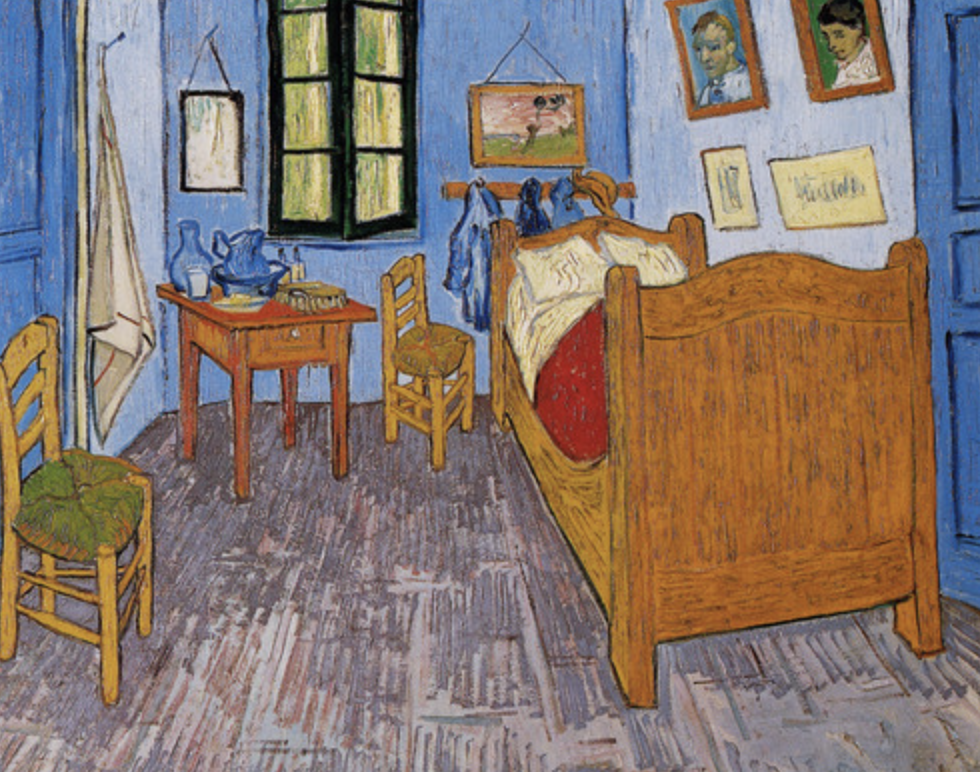
<p><span>Van Gogh:</span><br><span>"This could as well be my self-portrait.</span><br><br><span>"equivalence":</span><br><span>self-portrait: "Instead of trying to reproduce exactly what I have before my eyes, I use color more arbitrarily so as to express myself forcibly."</span><br><br><span>Included is actual painting of him and his brother</span><br><br><span>Viewer's Vantage Point: high</span><br><span>Floor: Glazing</span><br><br><span>Absence shown in bed</span><br><br><span>Stephane Mallarme: "Paint not the thing itself, but the effect it produces."</span></p>
73
New cards

Van Gogh, Starry Night, 1889

equivalence: continuously dynamic brushstrokes

equivalence: "the tree.....like flames"
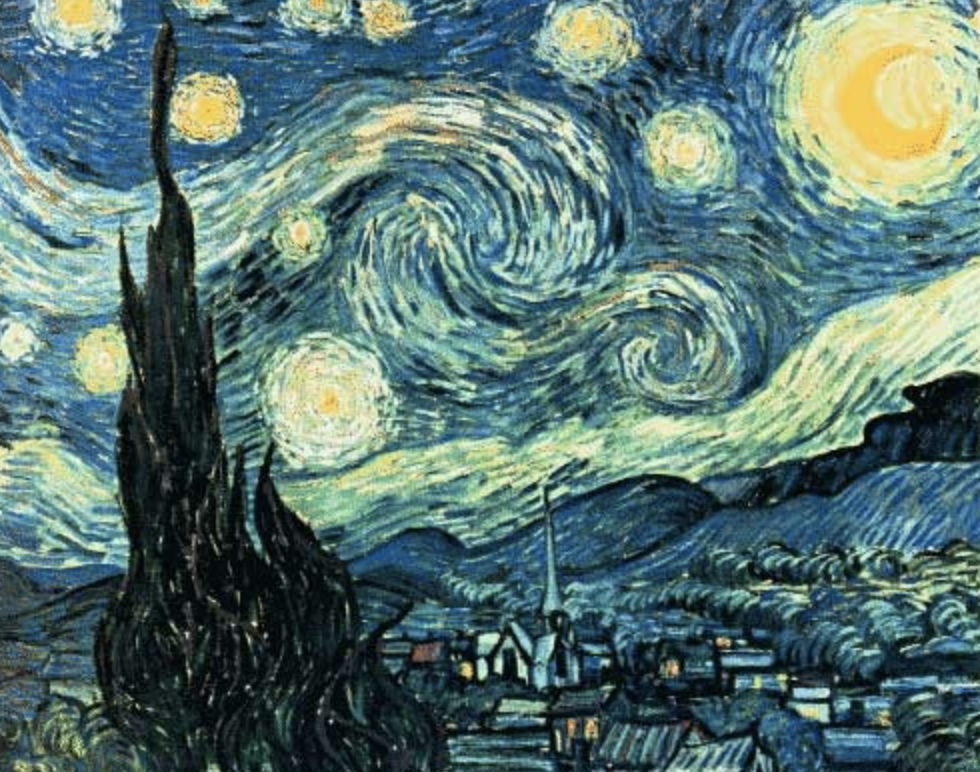
<p><span>equivalence: continuously dynamic brushstrokes</span><br><br><span>equivalence: "the tree.....like flames"</span></p>
74
New cards

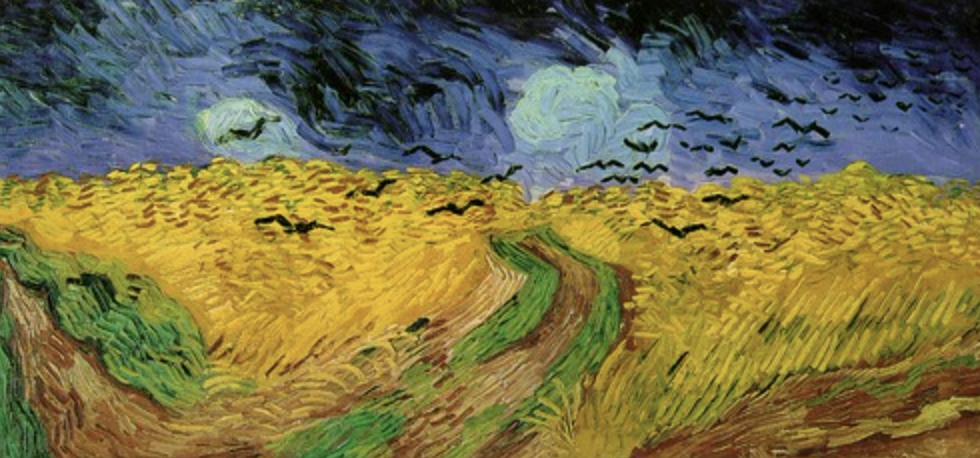
Van Gogh, Crows over the Wheat Field, 1890

equivalence: crows, flight of crows = patterns in wheat
<p><span>equivalence: crows, flight of crows = patterns in wheat</span></p>
75
New cards

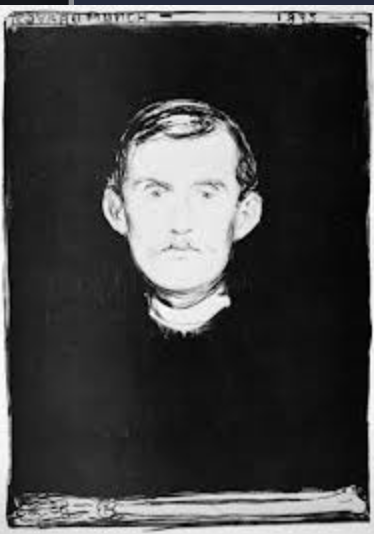
Edvard Munch, Self-Portrait with Skeleton Arm, 1888

"my art...the study of the soul, that is to say the study of my own self"

equivalence
<p><span>"my art...the study of the soul, that is to say the study of my own self"<br><br>equivalence</span></p>
76
New cards

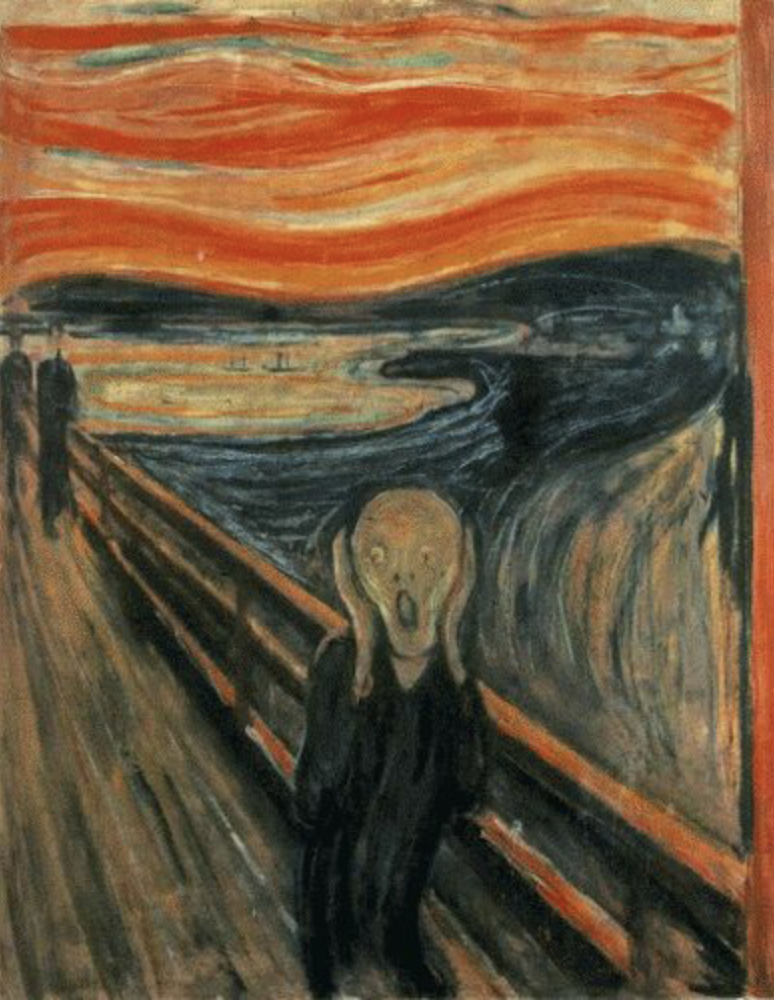
Edvard Munch, The Cry (The Scream), 1893

"I was walking down the road with two friends when the sun set; suddenly, the sky turned as red as blood."

"I stopped and leaned against the fence, feeling unspeakably tired. Tongues of fire and blood stretched over the bluish black fiord. My friends went on walking, while I lagged behind, shivering with fear. Then I heard the enormous, infinite scream of nature"

equivalence:
- scream
- blood red = sky
- skull: death's head
-(sound wave) patterns, colors.

planimetric separation:
- foreground (engaged eye)
- middle ground (protagonist?)
- background (sound wave)

arbitrary colors:
- The Complementary Colors (opposites)
- blue/orange
- glazing

Stephane Mallarme: "Paint not the thing itself, but the effect it produces."
<p><span>"I was walking down the road with two friends when the sun set; suddenly, the sky turned as red as blood."<br><br>"I stopped and leaned against the fence, feeling unspeakably tired. Tongues of fire and blood stretched over the bluish black fiord. My friends went on walking, while I lagged behind, shivering with fear. Then I heard the enormous, infinite scream of nature"<br><br>equivalence:<br>- scream<br>- blood red = sky<br>- skull: death's head<br>-(sound wave) patterns, colors.<br><br>planimetric separation:<br>- foreground (engaged eye)<br>- middle ground (protagonist?)<br>- background (sound wave)<br><br>arbitrary colors:<br>- The Complementary Colors (opposites)<br>- blue/orange<br>- glazing<br><br>Stephane Mallarme: "Paint not the thing itself, but the effect it produces."</span></p>
77
New cards

Edvard Munch, The Dance of Life, 1899

*a series called the Frieze of Life.

Munch wrote:
"Through them all there winds the curving shore line, and beyond it the sea, while under the trees, life, with all its complexities of grief and joy, carries on 'The three major themes of
Love
Anxiety
Death"

Munch: "shadows and rings of color emphasize an aura of fear, menace, anxiety, or sexual intensity"

L->R:
- "the virgin" - black glazed with white, "vibrating"
- "the sexually mature woman" - black glazed with red, "puddling"
- "the widow" - red glazed with black, "sharp, painful"

"equivalence":
-colors for ages
-brushstrokes for moods