Endocrine 1 Final: WE Adrenal
 Call Kai
 Learn
Learn Practice Test
 Spaced Repetition
 Match
Match Flashcards
 Knowt Play
1/158

There's no tags or description
Looks like no tags are added yet.
Name | Mastery | Learn | Test | Matching | Spaced | Call with Kai | Chat |
|---|
No analytics yet
Send a link to your students to track their progress
159 Terms
There are 4 primary functions that the adrenocorticotropic hormones serve in the body:
1. ___ and ___ balance
electrolyte, water
There are 4 primary functions that the adrenocorticotropic hormones serve in the body:
2. suppression of the ___ response
immune
There are 4 primary functions that the adrenocorticotropic hormones serve in the body:
3. regulation of ___ levels
glucose
There are 4 primary functions that the adrenocorticotropic hormones serve in the body:
4. alleviation of ___
stress
Positive Inducers of Adrenal Axis:
1. ___ (strongest inducer)
2. ___ ___ (~8am)
stress, early morning
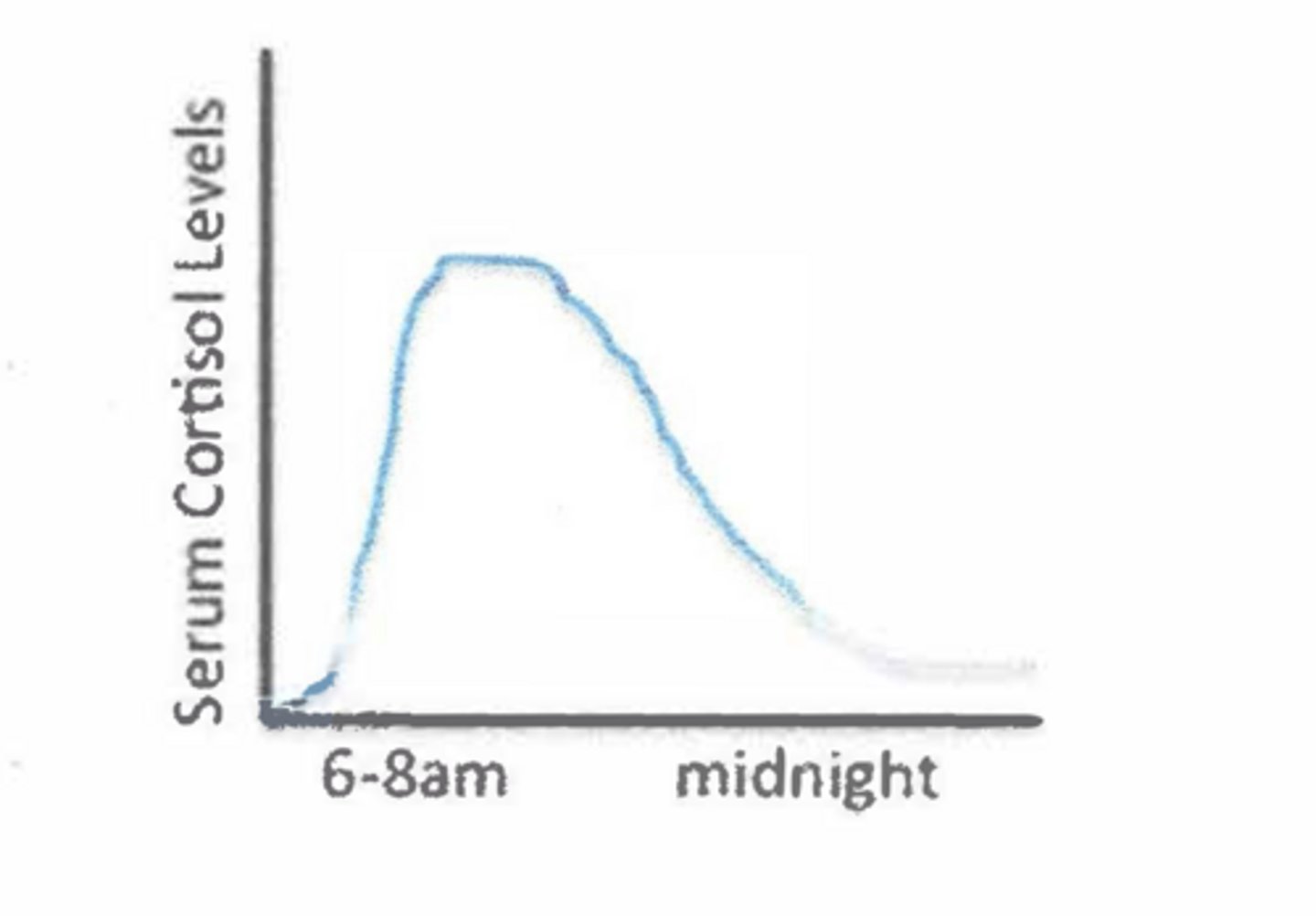
Note that serum cortisol levels peak in the ___ and trough at night. Exercise, coffee, staying up late, etc can increase levels
morning
Therefore, dose glucocorticoids ___ in the morning and ___ at night
high, lower
Positive Inducers of Adrenal Axis:
3. Hypoglycemia (low sugar <__mg/dL)
80
Positive Inducers of Adrenal Axis:
4. Hyponatremia (low Na+ → induces axis to release ____ → leading to increased Na+ ____ to try and keep it in the body)
aldosterone, reabsorption
Positive Inducers of Adrenal Axis:
5. _____ and ____ (low blood volume caused by hyponatremia → induces the axis to release aldosterone → increases H2O retention/bp)
hypotension, dehydration
Positive Inducers of Adrenal Axis:
6. ___ (this is where dexamethasone suppression test is utilized)
obesity
Positive Inducers of Adrenal Axis:
7. ___ (high K+ → induces axis to release aldosterone → leading to increased K+ ___)
hyperkalemia, secretion
Positive Inducers of Adrenal Axis:
9. ___ blood pH (acidic pH (high H+) → induces axis to release aldosterone → leading to increased H+ ___)
low, secretion
cortisol, aldosterone, dexamethasone
Negative Regulators of Adrenal Axis (via feedback inhibition):
1. ____ (endogenous)
2. ____ (endogenous)
3. ____ (pure GC)
HPA Axis
1. A trigger (eg stress, dehydration) enters the hypothalamus and causes release of corticotropin releasing hormone (___) or corticotropin releasing factor (___)
CRH, CRF
HPA Axis
2. CRH or CRF interact with their receptors located on the ___ ___ ___
anterior pituitary gland
HPA Axis
3. Activation of CRHr or CRFr leads to release of adrenocorticotropic hormones (___) from the anterior pituitary gland
ACTH
HPA Axis
4. ATCH then activates the ACTH receptor located on the ___ __
adrenal cortex
HPA Axis
5. When the ATCHr is activated, this stumulates Gs protein → stimulates adenylyl cyclase → converts ATP to ___
cAMP
HPA Axis
6. Increase in cAMP leads to activation of protein kinase A (___)
PKA
HPA Axis
7. PKA triggers ____ mobilization, including cholesterol uptake via ___
cholesterol, endocytosis
HPA Axis
8. Cholesterol is converted to ___
pregnanolone
HPA Axis
9. Pregnanolone ultimately results in the production of ___, ___, and the weak ___
aldosterone, cortisol, androgens
High levels of aldosterone results in ___ ___ on the hypothalamus
negative feedback
Weak androgens = dehydroepiandrosterone (___) and androstenedione from the adrenal cortex
DHEA
Where is the adrenal gland located?
-on top of the __
kidney
3 layers of the adrenal gland
1. Zona ___ (outermost)
2. Zona ____
3. Zona ___ (innermost)
glomerulosa, fasciculata, reticularis
Zona glomerulosa (outermost)
-secretes ___
aldosterone
Zona glomerulosa (outermost)
-secretes aldosterone, resulting in ↑___+, __, and __
Na, H2O, bp
If there was a hypersecreting tumor in the Zona glomerulosa , this would result in hypersecretion of ___
aldosterone
hypersecreting tumor in the Zona glomerulosa → hypersecretion of aldosterone leads to the following:
-____
-____
-___ [H+] in blood
-____ K+ and H+ secretion
HTN, hypokalemia, low, high
Zona fasciculata (middle layer)
-secretes ___ and the weak androgen ___
cortisol, DHEA
Zona reticularis (inntermost layer)
-secretes ___ and the weak androgen ___
cortisol, DHEA
If there was a hypersecreting tumor in the Zona fasciculata/Zona reticularis, this would result in hypersecretion of ___ and weak ___
cortisol, androgens
hypersecreting tumor in the Zona fasciculata/Zona reticularis → hypersecretion of cortisol leads to the following:
-increased ___
glucose
hypersecreting tumor in the Zona fasciculata/Zona reticularis → hypersecretion of androgens leads to the following:
-___ (e.g., pubic axillary hair growth, coarse skin, deep voice)
virilization
The steroids produced from the adrenal cortex fall into 2 categories: ___ and ___
corticosteroids, androgens
Corticosteroids
1. ___ (carbohydrate-metabolizing)
2. ___ (Na+ retention)
glucocorticoids, mineralocorticoids
Androgens
1. _____
2. ____ (causes virilization-e.g., pubic axillary hair growth, coarse skin, deep voice)
androstenedione, DHEA
Drugs used diagnostically to determine the etiology of suppressed corticosteroid levels:
1. ____ (brand =Acthrel)
2. ____ (generic= Cosyntropin, brand =Cortrosyn)
CRH, ACTH
Primary Corticosteroid Suppression occurs at level of ___ ___
adrenal gland
Secondary Corticosteroid Suppression occurs at level of ___ ___
anterior pituitary
Tertiary Corticosteroid Suppression occurs at level of ___
hypothalamus
Although CRH and ACTH can be used clinically, their use is limited due to ___, short __-___ (as peptide hormones), and adverse effects such as ___ with ACTH
immunogenicity, half-lives, hyperpigmentation
All of the following peptides come from the same protein:
1. ACTH - stimulates cortisol release
2. γ-___ -melanocyte-stimulating hormone
3. γ-___ -fat metabolism
4. β-___ -stress relief
MSH, lipotropin, endorphin
ACTH can cause hyperpigmentation because it is proportional with melanocyte-stimulating hormone (__)
MSH
ACTH can cause hyperpigmentation. This may present as ___, ___, or __ on skin
bronzing, freckles, patchiness
Relative Potencies of Corticosteroids
-____ and ___ (GC = MC)
cortisol, cortisone
Relative Potencies of Corticosteroids
-____ (MC>GC)
fludrocortisone
Relative Potencies of Corticosteroids
-____, ___, and 6α-____ (GC>MC)
prednisone, prednisolone, methylprednisolone
Relative Potencies of Corticosteroids
-____, ___, and ____ (Pure GC)
triamcinolone, betamethasone, dexamethasone
Relative Potencies of Corticosteroids
-___ (Pure MC)
aldosterone
Corticosteroids exert their effects on thh body via mineralocorticoid receptors (type __) or glucocorticoid receptors (type ___)
I, II
____ is the endogenous agonist for the mineralocorticoid receptor
____ is the endogenous agonist for the glucocorticoid receptor
aldosterone, cortisol
Mineralocorticoid receptors (type I)
-these receptors are more __ in their distribution throughout the body
restricted
Mineralocorticoid receptors (type I)
-because these receptors are involved in electrolyte balance, then it should be no surprise they are located on ___, ___, __ glands, ___ glands, ___ gland, and ___
kidney, colon, salivary, sweat, pituitary, hypothalamus
Mineralocorticoid receptors (type I)
-are also ___ receptors that regulate the expression of specific proteins
cytoplasmic
Mineralocorticoid receptors (type I)
-are also cytoplasmic receptors that regulate the expression of specific proteins via their actions on aldosterone response elements (___) in genes
AREs
Mineralocorticoid receptors (type I)
-because the effects of corticosteroids depend upon protein synthesis, their effects are usually ___ (>3 hours)
delayed
Aldosterone–Mineralocorticoid Receptor (MR) Pathway
1. Signal for pathway = ___ (due to hypovolemia--characterized by low H2O and low ___)
hypotension, Na+
Aldosterone–Mineralocorticoid Receptor (MR) Pathway
2. ___ is released from the hypothalamus
3. ___ is released from the anterior pituitary
CRH, ACTH
Aldosterone–Mineralocorticoid Receptor (MR) Pathway
4. ___ is released from the zona glomerulosa of the adrenal cortex
aldosterone
Aldosterone–Mineralocorticoid Receptor (MR) Pathway
5. Aldosterone, due to its __ nature, is able to traverse the plasma membrane and bind to the mineralocorticoid receptor located in the ___
lipophilic, cytoplasm
Aldosterone–Mineralocorticoid Receptor (MR) Pathway
6. The aldosterone–MCR complex ___ and then binds to ___ on DNA, leading to activation of gene ____.
dimerizes, AREs, transctiption
Aldosterone–Mineralocorticoid Receptor (MR) Pathway
7. The production of mRNAs from gene transcription results in the translation of ____ (including Na+/K+/ATPase, Na+, or K+ channels)
proteins
Aldosterone–Mineralocorticoid Receptor (MR) Pathway
8. Translation of proteins including Na+/K+/ATPase, Na+, K+ channels ultimately increases sodium reabsorption back into the ___ (remember stimulus for pathway was low sodium in the blood)
blood
Note that the sodium channel that transports Na⁺ from the tubular lumen → into the nephron cells is called the amiloride-sensitive sodium channel because it can be inhibited by the ____ amiloride, which reduces sodium reabsorption.
diuretic
Glucocorticoid receptors (type II)
-these receptors are widely dispersed throughout the body including ___, ___ ___, ___, ___, and ___ tissue
hypothalamus, pituitary gland, liver, muscle, adipose
Cortisol stimulates ____, ___, and ___ by binding to the GCR
glycogenolysis, proteolysis, lipolysis
Cortisol stimulates glycogenolysis, proteolysis, and lipolysis, which ultimately increases blood ___
glucose
Glucocorticoid receptors are steroid receptors that ___ and regulate the expression of specific proteins via their actions on ___ ___ ___ (GREs)
dimerize, glucocorticoid response element
Glucocorticoid receptors regulates genes involved in ___-___ and ___ regulation
anti-inflammation, glucose
Glucocorticoid receptors (type II)
-because the effects of corticosteroids depend upon protein synthesis, their effects are usually ___ (>3 hours)
delayed
Glucocorticoid Receptor Pathway
1. Cortisol circulates in the blood mostly bound to blood proteins. When needed, cortisol dissociates from the blood protein and the free cortisol diffuses into the ___
cell
Glucocorticoid Receptor Pathway
2. The GCR in the cytoplasm of the cell is complexed (ie unavailable). When cortisol binds to the GCR, it causes the receptor to become ____ (free/active form).
uncomplexed
Glucocorticoid Receptor Pathway
3. The cortisol-GCR translocates into the ___ of the cell
nucleus
Glucocorticoid Receptor Pathway
4. The cortisol–GCR complex ___ and then binds to ___ on DNA, leading to activation of gene ____.
dimerize, GREs, transcription
Glucocorticoid Receptor Pathway
5. The production of mRNAs from gene transcription results in the translation of proteins (involved in ___ metabolism or ___ regulation)
glucose, immune
Remember, glucocorticoids are classified by their ability to metabolize ___ and thus increase ___ ___ levels
carbohydrates, blood glucose
effect of too little cortisol
-___ proteolysis
-___ lipolysis
-____ gluconeogenesis
-____ glycogenolysis
decreases, decreases, decreases, decreases
too little cortisol ultimately ___ blood glucose
decreases
effect of too much cortisol
-___ proteolysis
-___ lipolysis
-____ gluconeogenesis
-____ glycogenolysis
increases, increases, increases, increases
Effects of Glucocorticoids on the Immune System
1) prevents leukocyte ___ ("anti-inflammatory")
migration
Effects of Glucocorticoids on the Immune System
2) stabilizes ___ ___ (reducing histamine release + cytokines, decreasing allergies)
mast cells
Effects of Glucocorticoids on the Immune System
3) prevents vascular ___ (decreases swelling)
leakage
Remember, mineralocorticoids are classified by their ability to retain ___
sodium
Mineralocorticoids also promote the secretion of __+ and __+
K, H
Mineralocorticoids affect sodium, and because Na+ is osmotically active substance, ___ will follow the sodium and modulate blood pressure
water
What disease state is characterized by hyposecretion of corticosteroids?
Addisons
Addison's Disease
-patients may experience myopathy/weakness and ↓ blood pressure due to reduced ____ effects
mineralocorticoid
Addison's Disease
-patients may experience hypotension (from decreased Na+) due to reduced ____ effects
mineralocorticoid
Addison's Disease
-patients may experience normal/inflammatory immune response due to reduced ____ effects
glucocorticoid
Addison's Disease
-patients may experience altered electrical activity in the muscle, CNS, and cardiac system due to reduced ____ effects
mineralocorticoid
When the electrical activity is altered due to reduced mineralocorticoids, this is especially dangerous in the heart, as ___ K+ levels can lead to MI
high
Addison's Disease
-patients may experience hypoglycemia due to reduced ____ effects
glucocorticoid
Addison's Disease
-patients may have low lipid levels due to reduced ____ effects
glucocorticoid
Addison's Disease
-patients may have hyponatremia due to reduced ____ effects
mineralocorticoid
Addison's Disease
-patients may have hyperkalemia due to reduced ____ effects
mineralocorticoid
Addison's Disease
-patients may have have increased H+ levels and decreased pH due to reduced ____ effects
mineralocorticoid
Addison's Disease
-patients may have high H+ due to reduced ____ effects