Y11 SEHS cardiovascular system
 Call Kai
 Learn
Learn Practice Test
 Spaced Repetition
 Match
Match Flashcards
 Knowt Play
1/16

There's no tags or description
Looks like no tags are added yet.
Name | Mastery | Learn | Test | Matching | Spaced | Call with Kai |
|---|
No analytics yet
Send a link to your students to track their progress
17 Terms
Diastole
Filling/full. - Heart refills.
80 blood pressure avg.
atrial/ventricular
Systole
Pumping (pressure outside) - Contracts.
120 blood pressure avg.
atrial/ventricular
High blood pressure danger?
Heart is very active
Heart attack risk
Muscle damage risk
Higher risk of blood clot
Low blood pressure bad?
Heart not active enough
low oxygen to body
lightheaded-dizzy
Arteries
Away from heart
Because of high pressure:
Thick walls - narrow shute - smooth path - no pores
Veins
To heart (veins)
Slower flow, lower pressure:
Thin walls allow muscles to compress and move blood
Wide lumen (space) to store more blood
Valves to prevent backflow
No pores
blood composition
55% plasma
45% cellular components
osmosis
movement of solvent from low to high solute concentration.
therefor from high to low solvent concentration across semipermeable membrane
concentration gradient
difference concentration between 2 regions
facilitated diffusion
cells have channels; if open allows for …
plasma
water
nutrients
proteins
waste
hormones
Ions
antibodies
cellular components
erythrocyte: red blood cells
leukocytes: macrophages and whatnot
platelets: for blood clotting
hypertonic solution
higher solute concentration
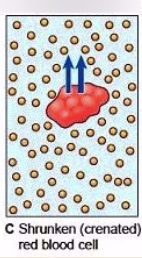
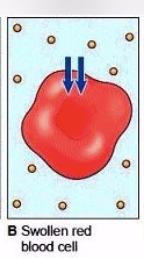
hypotonic solution
Lower solute concentration
Red blood cells swell and could pop.
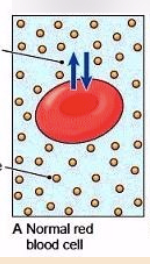
isotonic
equal solute concentration
An organ system
consists of different organs that together carry out a particular bodily function (include: the respiratory and cardiovascular systems)
Ventilation
is the movement of air into and out of the lungs and is either active (muscle contraction) or passive (muscle relaxation)