psychotherapy exam 4
 Call Kai
 Learn
Learn Practice Test
 Spaced Repetition
 Match
Match Flashcards
 Knowt Play
1/43

There's no tags or description
Looks like no tags are added yet.
Name | Mastery | Learn | Test | Matching | Spaced | Call with Kai |
|---|
No analytics yet
Send a link to your students to track their progress
44 Terms
Motivational interviewing
Interview style to create constructive conversation
Promote empathy and growth
Identify values and aspirations
Collaborative, confrontational, directive
Key concepts in MI
Readiness to change, ambivalence, resistance
MI principles
Rolling with resistance, expressing empathy, supporting self efficacy, developing discrepancy
MI method
Responding to resistance
Open ended questions, affirmations, reflections, summaries
Increasing change talk
Explore internal conflict
Explore discomfort
Intention behavior relationship
Self reported intention is the biggest predictor of behavior change
Theory of planned behavior
A person’s belief about behavior influence intention, which determines if the person will enact the behavior
Belief - intention- behavior
3 components that influence intention
Attitudes, subjective norms, perceived behavioral control
Theory of planned behavior
If the three components are shifted towards quitting a behavior then you are more likely to quit and vice versa
Continuum of control
How much of this behavior is under the person’s control
No control to volitional control
Modifying perceived behavioral control
Increase confidence, improving outcome expectations
Comparison of psychotherapies
Most have a small to tiny effect size difference, besides CBT over behavioral (0.22) and psychotherapy over pharmacotherapy (0.2)
Average heterogeneity between psychotherapies
36%
Evidence based approach effectiveness
Improve outcomes among people experiencing psychological problems
Don’t show much difference for improving outcomes btwn each other
Therapeutic techniques
Specific skills or activities used in psychotherapy
Treatment mechanisms
Factors changed by treatment that improve outcomes
Specific effects
Treatment effects brought about by that specific form of psychotherapy
Common factors
Treatment effects that occur due to factors common in all psychotherapies
All therapies involve
Relationship btwn client and therapist
Credible and effective treatment
Structured procedures and rituals
A healing context
Contribution to effectiveness of common factors
50%
Component testing
Removing one part of a therapy and testing to see if it improves or worsens the efficacy
Ways to individualize therapy
Match to disorder
Match to kind of person
Client resistance and reactance
Due to an ambivalence towards behavior change
High resistance leads to worse therapy outcomes
How to combat resistance and reactiveness
Clinician directiveness- increase or reduce
Asking about their preferences in clinical role, treatment, etc
Culturally adapted therapy
Tailoring an ebt around a specific ethnic culture
Environment on behavior
Behaviors highly influenced by social factors
Social factors can determine health
Can increase harmful behaviors
Lower social position contributes to
Increased vulnerability to risk factors
Decreased access to key resources
Marginalization
Exclusion of minorities from mainstream resources and positions of power
Allostatic load
Chronic stress that causes slow wear and tear to the body and contributes worse mental and psychological health outcomes
Addressing environmental barriers
Bring psych services to under serviced communities
Indemnifying and appreciating environmental barriers that prevent change
Developing treatment plans that work around this
Increasing cultural competency
Cycle of avoidance
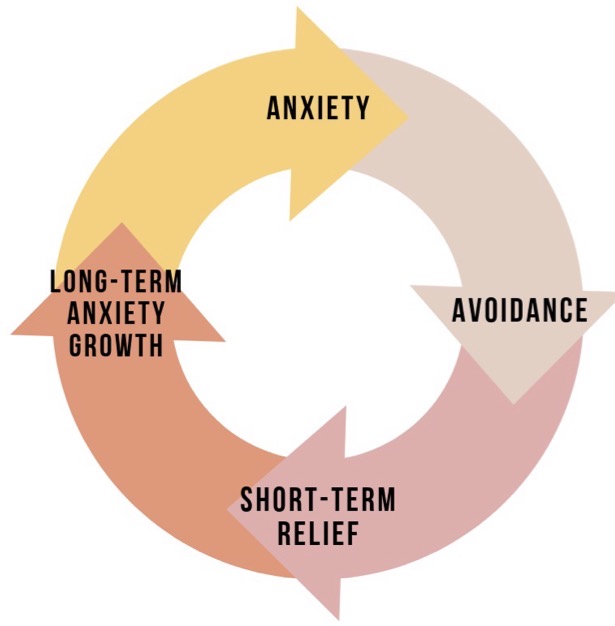
Addressing procrastination
Increase congruence btwn selves
Challenging negative self talk
Engaging in mindfulness to promote self reg7
Shifting
Switching between tasks or response rules
Inhibition
Suppression of an automatic response to make a more task specific response
Updating
Replacing old information with new relevant information
Working memory
Actively maintaining and manipulating information across a short delay
Domain interaction
Diversity, unity, top down processing
Executive function impairments
In psychopathology
Difficulties maintaining focus on goals and top down processing and self regulation
Improving executive functioning
Real world strategies
Stimulant medication
Goal management training
Therapy with fewer executive functioning demands
Is behavior change sustainable
Psychotherapy effects diminish over time
Maintenance is required to prevent relapse
5 areas that contribute to maintenance
Motivation, self regulation, habit, resources, environment and social factors
Predictors of maintenance motivation
Desire to continue
Gratification or enjoyment from the new behavior
Satisfaction with outcomes
Identity and value congruence
Intrinsic motivation
Self regulation vs habit
Self regulation is needed in the beginning to become habit
Psychotherapy termination
Mutual termination is the goal
Should be clear when and how
Collaborative and checked in on