Real NCCT Questions
 Call Kai
 Learn
Learn Practice Test
 Spaced Repetition
 Match
Match Flashcards
 Knowt Play
1/124

There's no tags or description
Looks like no tags are added yet.
Name | Mastery | Learn | Test | Matching | Spaced | Call with Kai |
|---|
No analytics yet
Send a link to your students to track their progress
125 Terms
Small red spots appear near the tourniquet on a patients arm. This is MOST likely to indication of
A. A collapsed vein
B. Edema
C. Hematoma
D. Petechiae
D. Petechiae
Which vacutainer has the EDTA additive that is used for hematology and Immunohematology testing?
A. Green
B. Yellow
C. Orange
D. Lavender
D. Lavender
Phlebotomy techs must ensure that the samples of blood, urine, or swabs are quickly delivered to the correct laboratory department, which include the following; except for which one?
A. Nuclear medicine
B. Microbiology
C. Blood bank
D. Hematology
A. Nuclear medicine
A phlebotomist has orders to collect blood specimens from a patient who has IVs in his right forearm and in the left antecubital area. Where should the phlebotomist collect a venous blood specimen?
A. Distal to the IV in the left arm
B. Above the IV in the left arm
C. The middle or ring finger of right hand
D. In the antecubital area of the right arm
A. Distal to the IV in the left arm
When a patient experiences a negative situation that does not reach the level of a sentinel event, but does come from a mistake or other negative situation, this is known as which term?
A. Cause of concern
B. Unfortunate event
C. Reason to leave
D. Reportable incident
D. Reportable incident
A phlebotomist must follow transmission based precautions for which of the following patients?
A. Patient with meningitis
B. Patient with multiple sclerosis
C. Patient with diabetes
D. Patient with lupus
A. Patient with meningitis
The phlebotomist has a requisition for chemistry and coagulation testing. Which of the following is the correct tube selection and order of draw?
A. Red, light blue
B. SST, Royal blue
C. Light blue, SST
D. Red, royal blue
C. Light blue, SST
The physician has ordered a PT and CBC for an adult patient with diagnosis of thrombophlebitis. The phlebotomist should collect the evacuated tubes in which of the following orders?
A. Lavender, light blue
B. Red, light blue
C. Light blue, lavender
D. Light blue, red
C. Light blue, lavender
Which capillary blood collection container described as being smaller than a vacutainer, made of either clear or amber plastic and a color coded top, which may be free of additives or have different ones for different tests?
A. Microtainer
B. Butterfly
C. Catheter
D. Blood bag
A. Microtainer
The phlebotomist is performing a venipuncture on an apprehensive school age child. Which of the following approaches should the phlebotomist use to calm the child?
A. Direct the child’s questions to the parent and have the parent explain
B. Tell the child she has to do this, but it won’t hurt
C. Explain the procedure and reassure the child that the parent can stay with her
D. Allow child to clean the puncture site and giver her a sticker
C. Explain the procedure and reassure the child that the parent can stay with her
Which of the following sites should the phlebotomist use for a newborn screening blood collection?
A. Antecubital area
B. Superficial scalp vein
C. Lateral or medial plantar surface of the heel
D. Lateral surface of the great toe
C. Lateral or medial plantar surface of heel
An inpatient with a left-sided mastectomy has a hematoma in the left arm and an active IV in the right arm. Which of the following is an appropriate site for venipuncture?
A. Proximal to the IV
B. Distal to the IV
C. Proximal to the hematoma
D. Distal to the hematoma
B. Distal to the IV
For which of the following tubes must the phlebotomist prep the site with providing iodine or chlorhexidine?
A. A light blue tube with sodium citrate
B. A yellow tube with ACD
C. A lavender tube with EDTA
D. A yellow tube with SPS
D. Yellow SPS
Which task should a phlebotomist complete prior to daily use of POCT instrument?
A. Ensure the QC was performed within the last month
B. Run the test patient sample
C. Calibrate the instrument
D. Perform QC on the instrument
D. Perform QC on the instrument
The phlebotomist applies pressure to the venipuncture site using gauze. After two minutes he observes that bleeding has not stopped. The NEXT appropriate action would be to
A. Wrap the arm with a pressure dressing
B. Elevate the arm while applying pressure
C. Continue to apply pressure while bending the arm at the elbow
D. Notify the physician immediately
B. Elevate the arm while applying pressure
To help prevent a hematoma at the site after drawing blood, which of the following actions should the phlebotomist take?
A. Have the patient bend the elbow to hold Cotten gauze on the site
B. Clean the site with an alcohol prep
C. Apply direct pressure with Cotten gauze
D. Ask the patient to make a fist
C. Apply direct pressure with Cotten gauze
MOST laboratory testing errors occur during the
A. Post- analytical phase
B. Analytical testing phase
C. Patient prep to lab arrival pre-analytical phase
D. Data processing and record keeping phase
C. Patient prep to lab arrival pre-analytical phase
Which of the following should be included on a patients laboratory requisition?
A. Test priority
B. Patient signature
C. Chief complaint
D. Insurance information
A. Test priority
Which of the following actions is a HIPAA violation?
A. Shredding completed collection lists
B. Putting a note in the laboratory reminding staff that a certain patient has a cold agglutinin
C. Disposing of extra patient tube labels in a regular trash can
D. Storing a fully stocked collection tray in the clinical laboratory
C. Disposing of extra patient tube labels in a regular trash can
After centrifuging a blood specimen, the phlebotomist notes the serum has a reddish appearance. Which of the following has occurred?
A. The specimen is contaminated with neutrophils
B. A Buffy coat has formed and discolored the serum
C. The specimen is hemolyzed
D. The finding is normal
C. The specimen is hemolyzed
Which of the following patient information should a test requisition form include?
A. Admission date
B. Sample storage requirements
C. Patients blood type
D. Latex sensitivity
D. Latex sensitivity
Why is it important for phlebotomy techs to strictly follow the CLSI order of draw?
A. To prevent patient allergic reactions including anaphylaxis
B. To prevent confusion in labeling the many vacutainers used.
C. To prevent the patient from confusing the many tubes and tests
D. To prevent cross- contamination of additives between tubes
D. To prevent cross-contamination of additives between tubes
Which of the following is another term for “clean technique”?
A. Fertile state
B. Medical asepsis
C. Impurity care
D. Septic practice
B. Medical asepsis
An older adult patient arrives to have blood drawn. While assessing the arms for venipuncture, the phlebotomist notices scar tissue in the ante cubital areas and is unable to palpate a vein. Which of the following is an appropriate alternative course of action?
A. Perform a capillary puncture on the lateral thumb
B. Use a larger gauge needle to penetrate through the scar tissue
C. Draw blood from the hand using a winged infusion set
D. Draw blood from the hand using an evacuated tube system
C. Draw blood from the hand using a winged infusion set
Which of the following equipment is MOST appropriate for drawing CBC from a 5 year old patient?
A. 23g Vacutainer and a light blue top tube
B. 25g vacutainer and a light blue top tube
C. 23g vacutainer and a lavender top tube
D. 25g vacutainer and a lavender top tube
C. 23g vacutainer and a lavender top tube
DNA samples for whole genome sequencing, paternity tests, hereditary disease carrier screening, and pharmacogenomics can be obtained by using which non-invasive (without venipuncture) method?
A. Ultrasound
B. Photogrammetry
C. Buccual swab
D. Fluoroscopy
C. Buccual swab
During palpitation of a large vessel in the forearm, the phlebotomist detects a vibration sensation. The phlebotomist should then
A. Use a syringe blood collection set up with minimal plunger pressure
B. Select a smaller gauge needle for the draw site
C. Choose a different collection site
D. Use a lower angle of penetration with a butterfly
C. Choose a different collection site
Which of the following techniques should the phlebotomist use when performing a venipuncture on a geriatric patient with loose skin?
A. Using a sharper angle and slower needle insertion to decrease rolling
B. Pulling the skin taut using gentle and sufficient pressure to anchor the vein
C. A tighter tourniquet to anchor more fragile veins
D. Vigorous massaging of the arm to increase blood flow in the veins
B. Pulling the skin taut using gentle and sufficient pressure to anchor the vein
Which of the following is the reason for wiping off the FIRST drop of blood from the patient's finger with gauze when performing a capillary puncture?
A. The first drop of blood may contain traces of tissue fluids.
B. The first drop of blood contains too much oxygen.
C. The first drop may be contaminated by the lancet.
D. The first drop of blood contains more platelets and clots faster.
A. The first drop of blood may contain traces of tissue fluids
Venipuncture should be avoided on an arm with
A. an elbow splint.
B. alopecia.
C. excessive hair.
D. muscular hypertrophy.
A. An elbow splint
Which of the following is the minimum PPE requirement when drawing lab work on a patient with suspected HIV?
A. Mask only
B. Gown, gloves, and mask
C. Gloves only
D. Gloves and mask only
C. Gloves only
Which blood collection tube has the Heparin additive?
A. orange
B. yellow
C. green
D. lavender
C. Green
Which of the following are accurate steps in disease transmission? [Select 3]
A. A portal for entry/exit
B. A way of transportation
C. An insusceptible host
D. An absence of pathogen
E. An infectious agent
A, B, E
Which of the following is the proper way of collecting a blood culture with a winged infusion set on an adult?
A. Anaerobic must be drawn first.
B. The maximum blood volume is 3-7ml.
C. A discard tube should be drawn prior to collection.
D. Aerobic must be drawn first.
D. Aerobic must be drawn first
The phlebotomist is instructed to perform a capillary stick for newborn screening. Which of the following collection devices should the phlebotomist use?
A. Evacuated tube
B. Finger stick lancet
C. Heel stick lancet
D. Butterfly needle and syringe
C. Heel stick lancet
Gray-topped sodium fluoride tubes should not be used to collect alanine aminotransferase (ALT) or aspartate aminotransferase (AST) because the anticoagulant
A. causes hemolysis.
B. increases lipemia.
C. destroys many enzymes.
D. prevents hemoconcentration.
C. Destroys many enzymes
The phlebotomist arrives at an inpatient room to collect a blood sample. There is an isolation cart located outside the room. The phlebotomist washes her hands and puts on the following personal protective equipment: gown, gloves, and mask. Which of the following types of precautions are being used for this patient?
A. Contact Airborne
B. Contact Droplet
C. Contact Droplet Airborne
D. Standard Airborne
B. Contact droplet
If a patient has measles, which of the following is a required addition to the standard precautions?
A. N95 respirator
B. Fluid resistant apron
C. Double gloves
D. Surgical mask
A. N95 respirator
When inserting a needle during venipuncture, the bevel should be in which of the following positions in relation to the vein?
A. Down
B. Right
C. Left
D. Up
D. Up
After choosing the most appropriate site for phlebotomy, the tourniquet is placed to help find the best vein. What may happen if the tourniquet is left tight on for more than one minute?
A. hemophilia
B. iatrogenic anemia
C. alequot
D. hemoconcentration
D. Hemoconcentration
The phlebotomist preps the median cubital vein for a venipuncture procedure. How should the phlebotomist prep the patient's skin?
A. Wipe the area lightly from top to bottom in a spiral motion.
B. Wipe the area lightly from bottom to top.
C. Apply concentric circular friction, working from the outside inward.
D. Use back-and-forth friction, applied horizontally or vertically.
D. Use back and forth friction, applied horizontally or vertically
What is the NEXT step when a STAT test has been ordered for the patient, but the patient is not in their room?
A. Consult the nurse
B. Locate the patient
C. Postpone the collection
D. Reschedule the test
B. Locate the patient
Which of the following is a critical requirement for an informed consent form?
A. Attached copy of the patient's birth certificate.
B. The patient's written description of the procedure.
C. A printout of the patient's complete chart notes.
D. Patient's (or legal guardian's) signature with date.
D. Patients (or legal guardian) signature with date
A phlebotomist was collecting a CBC and BMP on a patient with a prominent vein, when the serum tube did not fill. After redirecting and trying another serum tube which did not fill, the phlebotomist went on to collect a PST tube and an EDTA tube and filled them completely. Which of the following is the MOST likely reason the serum tubes did not fill?
A. The wrong tube type was collected.
B. An expired tube was collected.
C. The seal on the needle was broken.
D. The tubes were collected in the incorrect order of draw.
B. An expired tube was collected
After selecting the appropriate location to collect a blood sample, how many inches above that location should the phlebotomist tie the tourniquet?
A. more than 6 inches
B. 1 to 2 inches
C. 5 to 6 inches
D. 3 to 4 inches
D. 3 to 4 inches
Which of the following actions is an example of compliance with Quality Control (QC) guidelines?
A. Check glucometer controls monthly.
B. Ensure supplies in venipuncture trays are no more than one month beyond the expiration date.
C. Ensure reusable supplies in venipuncture trays are recycled.
D. Check controls on urinalysis reagent strips daily.
D. Check controls on urinalysis reagent strips daily
Which of the following precautions should be used for a patient with pulmonary TB?
A. Standard and droplet
B. Droplet and contact
C. Contact and airborne
D. Airborne and standard
D. Airborne and standard
The rubber sleeve at the end of a ETS venipuncture needle allows for
A. drawing a single tube.
B. slower draw of the specimen.
C. faster draw of the specimen.
D. drawing multiple tubes.
D. Drawing multiple tubes
What is the term for when medical tests are performed where the patient is (e.g, hospital room) and, not required to have the specimen collected or tested in a laboratory?
A. H1N1
B. POCT
C. CLSI
D. COLA
B. POCT
Each visit (encounter) of the patient to the clinic, hospital, or lab should be described in the patient's electronic health record (EHR) or electronic medical record (EMR) and signed by the healthcare person caring for the patient at that time. This is known as what term?
A. extrapolation
B. documentation
C. storyline
D. checklist
B. Documentation
While performing a venipuncture, immediately before removing the needle, the phlebotomist should
A. gently invert the evacuated tubes.
B. activate the needle safety mechanism.
C. apply a gauze pressure dressing.
D. release the tourniquet.
D. Release the tourniquet
Which of the following is a site preparation solution required for collecting blood cultures and blood alcohol levels?
A. Soap and water
B. Povidone-iodine
C. Isopropyl alcohol
D. Hydrogen peroxide
B. Providing-iodine
The phlebotomist is drawing plain red, purple, green, and blue top tubes. Upon completion of the blood draw the phlebotomist noticed that he missed an order requiring an SST. The phlebotomist should share the
A. green
B. red
C. purple
D. blue
B. Red
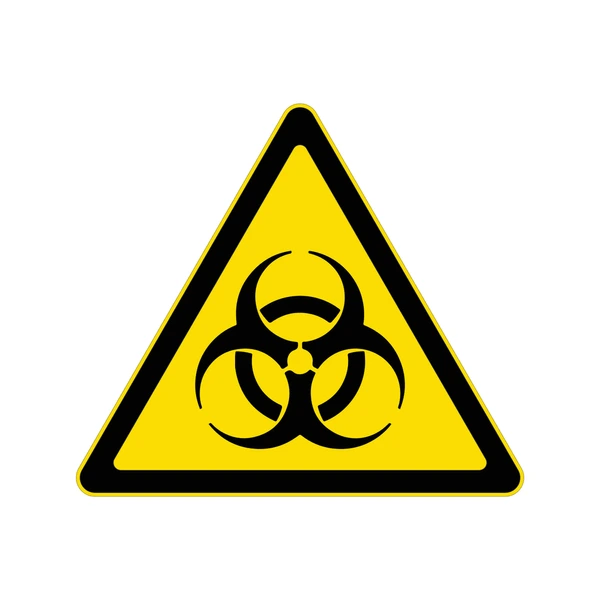
A patient notices this symbol on a container in the room and asks what it means. The phlebotomist should tell the patient the symbol means
A. isolation precautions required.
B. radiation in use.
C. biohazard material present.
D. emergency eye wash station.A. isolation precautions required.
B. Biohazard material present
Which of the following information is required information on a laboratory test requisition for a blood specimen?
A. Source of the sample
B. Patient's social security number
C. Diagnosis
D. Name of the physician
D. Name of the physician
While performing a venipuncture in the antecubital space, the patient verbalizes an extreme amount of pain and the blood in the collection tube is noted to be bright red. Which of the following sites is MOST likely to have been inadvertently punctured?
A. Ulnar artery
B. Brachial artery
C. Cephalic vein
D. Basilic vein
B. Brachial artery
Which of the following is the correct method for transferring blood from a syringe into evacuated tubes?
A. Uncap the evacuated tubes, place them into a tube rack and transfer blood from the syringe using a syringe transfer device.
B. Remove the hypodermic needle from the syringe and transfer the blood into capped evacuated tubes by pushing on the syringe plunger.
C. Remove the hypodermic needle from the syringe after activating the safety device and transfer the blood into capped evacuated tubes using a syringe transfer device.
D. Uncap the evacuated tubes, place them into a tube rack and transfer the blood from the syringe through the hypodermic needle.
C. Remove the hypodermic needle from the syringe after activating the safety device and transfer the blood into capped evacuated tubes using a syringe transfer device
Which one of the following specimen types is primarily used to perform CLIA-waived point-of-care testing for glucose?
A. Capillary blood
B. Serum
C. Venous blood
D. Plasma
A. Capillary blood
What should be used for hygiene if water and soap are not available to clean the healthcare worker's hands between patients?
A. pumice stone, water
B. alcohol-based sanitizer
C. extra virgin olive oil
D. lotion with glycerin
B. Alcohol based sanitizer
A phlebotomist has received a requisition to collect specimen for a Bilirubin from a premature newborn patient. Which of the following is the BEST device for this collection?
A. Syringe and needle
B. 1.00 mm lancet
C. Winged infusion set
D. 3.00 mm lancet
B. 1.00 mm lancet
These are details of correctly labelling a sample before taking it to the lab, except which one?
A. Label the container while still with the patient who can verify their name/DOB on each sample.
B. Include the date and time of the sample collection.
C. Place each vacutainer individually in a biohazard bag with a copy of the order with each one.
D. Place the label on the sample container, not the lid.
C. Place each vacutainer individually in a biohazard bag with a copy of the order with each one
A patient on coumadin therapy is at the lab for a weekly coagulation test. Which of the following tubes should the phlebotomist collect for this test?
A. Red top
B. Light blue top
C. Green top
D. Lavender top
B. Light blue top
While performing a venipuncture to obtain a CBC and PTT, the phlebotomist punctures the skin, advances the needle, inserts the tube, but does not see a blood return. The phlebotomist should NEXT
A. release the tourniquet.
B. adjust the bevel up.
C. advance the needle further.
D. try another tube.
D. Try another tube
The phlebotomist needs to draw a blood culture, sedimentation rate, PTT, and a glucose test. Which of the following is the correct order of draw?
A. Gray, light blue, lavender, red
B. Red, yellow, light blue, lavender
C. Yellow, red, lavender, gray
D. Yellow, light blue, lavender, gray
D. Yellow, light blue, lavender, gray
A patient presents to have a diagnostic HIV test drawn. Which of the following forms of consent must the phlebotomist obtain prior to venipuncture?
A. Implied
B. Expressed
C. Informed
D. Verbal
C. Informed
The phlebotomist has an order to collect CBC with differential, PTT, basic metabolic panel, and blood cultures. Place the the collection tubes in the correct order of draw.
Lavender
Blood culture bottles
Red
Light blue
2, 4, 3, 1
A patient has an order for a routine 24-hour urine, with no other special instructions. During the patient education process, the phlebotomist must tell the patient that the process must begin
A. and end with an empty bladder.
B. and end with a full bladder.
C. with a full bladder and end with an empty bladder.
D. with an empty bladder and end with a full bladder.
A. And end with an empty bladder
Before drawing a patient, the phlebotomist notices a droplet of dried blood on the arm of the phlebotomy chair. Which of the following should the phlebotomist do?
A. Use a gloved hand to scrape up the blood, clean with disinfectant, then absorb with paper towel.
B. Moisten the droplet with water, clean with anti-microbial soap, then dry with paper towel.
C. Use an alcohol pad to wipe the dried droplet of blood, then dry with paper towel.
D. Use disinfectant to moisten the droplet, absorb with paper towel, then clean with disinfectant.
D. Use disinfectant to moisten the droplet, absorb with paper towel, then clean with disinfectant
According to CLSI, which is the correct order of draw for a lavender top, a light green top, a red top, and an orange top?
A. lavender, orange, red, light green
B. light green, red, orange, lavender
C. orange, lavender, light green, red
D. red, lavender, light green, orange
B. Light Green, red, orange, lavender
A tourniquet was left on the arm for an extensive period of time before the performance of a venipuncture. Which of the following is MOST likely to occur?
A. The blood specimen will be hemolyzed.
B. The blood specimen will be hemoconcentrated.
C. The patient will develop a hematoma.
D. The patient will have excessive bleeding.
B. The blood specimen will be hemoconcentrated
These are correct reasons why is it important to completely fill a vacutainer with blood for lab tests, except which one?
A. To avoid test interference from air bubbles or other contaminates.
B. To meet the accurate blood-to-anticoagulant ratio.
C. To provide enough blood to accurately complete the specific test.
D. To give adequate room for the blood volume to expand.
D. To give adequate room for the blood volume to expand
What does it mean to "invert" a vacutainer tube?
A. Shaking it quickly enough to mix the blood until it bubbles.
B. Lay it on the counter and quickly roll it back and forth.
C. Gently tipping the color top from up, to down, then back up.
D. Standing it in the tray, top down until the blood clots.
C. Gently tipping the color top from up, to down, then back up
What is used to safeguard healthcare personnel when treating a patient who has a highly transmissible disease?
A. PPE
B. OTC
C. NKA
D. HPI
A. PPE
Which of the following is the appropriate blood collection device for obtaining a blood spot collection on an infant?
A. Evacuated tube
B. Lancet
C. Micro-collection container
D. Syringe
B. Lancet
A patient with an order for a blood draw presents with burns covering both arms. Which of the following is the phlebotomist's BEST option for collecting the largest amount of blood for this patient?
A. Evacuated tube
B. Filter paper (PKU) card
C. Microcollection container
D. Capillary tube
C. Microcollection container
After checking the patient's identity, it is obvious that the lab orders do not match the patient. What should the healthcare worker do if the lab orders are for the wrong patient?
A. Have another healthcare worker collect the specimen.
B. Call OSHA and the American Hospital Association.
C. Notify the nurse/supervisor and do not do the test/specimen collection.
D. Get the lab specimen the order lists anyway.
C. Notify the nurse/supervisor and do not do the test/specimen collection
These steps should be taken immediately if a healthcare worker is splashed in the eyes with blood, fluids, etc., except for which one?
A. Close and cover eyes for 30 minutes.
B. Remove contacts if wearing them.
C. While rinsing eyes, have a coworker notify the supervisior and a doctor.
D. Flush, rinse eyes at eyewash station or with normal saline for 15 minutes
A. Close and cover eyes for 30 minutes
Avoid inserting the needle in these places for phlebotomy, except which site?
A. bruised skin
B. freckled skin
C. scarred skin
D. burned skin
B. Freckled skin
Which of the following actions by the phlebotomist is the FIRST line of defense in preventing the spread of microorganisms?
A. Use aseptic technique when drawing up a medication
B. Wear non-sterile gloves when performing venipuncture
C. Wear sterile gloves when changing a dressing
D. Perform regular hand hygiene
D. Perform regular hand hygiene
Which of the following situations requires corrective action before test results can be given to the doctor?
A. Both controls are between 1 SD and 2 SD on the high side and are drifting up each day.
B. Normal glucose is in control at 2 SD on the low side and abnormal glucose at 2 SD on the high side.
C. Both controls are between 1 SD and 2 SD on the low side.
D. Normal glucose is at 3 SD on the high side and abnormal glucose is 2 SD on the low side.
D. Normal glucose is at 3 SD on the high side and abnormal glucose is 2 SD on the low side.
Which of the following POC laboratory tests is within the CLIA defined scope of practice for a phlebotomist?
A. Strep test and urine reagent strip
B. Cell differential and urine sediment
C. Urine dip and cell differential
D. Strep test and urine sediment
A. Strep test and urine reagent strip
When drawing a blood alcohol specimen, which of the following should be used to clean the arm?
A. Benzalkonium chloride
B. Tincture of iodine
C. ChloraPrep
D. Isopropyl alcohol
A. Benzalkonium chloride
After performing a venipuncture on a patient the phlebotomist notices the patient is bending his elbow to hold the gauze in place. This action is contraindicated because bending the elbow is likely to
A. create a hematoma.
B. result in hemorrhage.
C. cause bacterial infection.
D. cause hemostasis.
A. Create a hematoma
The patient on hemodialysis with a left AV shunt has undergone a right sided mastectomy and has an order for a STAT glucose. After consulting with the physician the phlebotomist is told to perform a capillary draw. Which of the following sites should the phlebotomist use?
A. Left ring finger
B. Right middle finger
C. Left thumb
D. Right little finger
A. Left ring finger
Which of the following is an appropriate draw site for an adult patient with a central line?
A. Palmar side of the wrist
B. Plantar surface of the heel
C. Dorsal side of the hand
D. Distal phalanx of the fifth finger
C. Dorsal side of the hand
A 17-month-old presents for a routine capillary stick to determine lead levels. The point of draw should be the
A. toe.
B. thumb.
C. finger.
D. heel.
C. Finger
These options show acceptable options for obtaining capillary puncture or venipuncture from infants and young toddlers, except for which one?
A. For infants over 1 month old and children, apply a local, topical anesthetic to numb the pain.
B. Restrain infants in a cradle pad to limit their movement during the collection.
C. Allow them to sit in a regular phlebotomy chair so they feel grown up and brave.
D. Have a parent or another tech restrain the child on the exam table or sitting in the phlebotomy chair
C. Allow them to sit in a regular phlebotomy chair so they feel grown up and brave.
Which of the following actions should the phlebotomist take to make a vein more prominent when attempting to select a venipuncture site?
A. Firmly tap the arm several times and palpate with a non-gloved finger.
B. Leave the tourniquet in place and ask the patient to dangle the arm for one minute.
C. Apply a warm compress to the area for 5 minutes.
D. Apply firm pressure to the arm from the shoulder to the elbow.
C. Apply a warm compress to the area 5 min
The phlebotomist is asked to draw blood from a patient with an IV in the right arm whose left arm is inaccessible. The phlebotomist may draw without a physician's approval from the
A. right arm proximal to the IV site.
B. IV line.
C. right arm distal to the IV site.
D. foot.
C. Right arm distal to the IV site
How long should pressure be applied on the venipuncture site for a patient on Coumadin therapy?
A. 5 min
B. 1 min
C. 3 min
D. 10 min
A. 5 min
A physician has ordered STAT hematology, chemistry, and coagulation tests on a patient. Which of the following tubes are needed for these procedures? (Select the three (3) correct answers.)
A. Green
B. Yellow
C. Light blue
D. Gray
E. Lavender
A, B, E
A two-year-old toddler was brought into the lab for Hct and Hgb. Which of the following sites should be used for the dermal puncture?
A. Index finger of non-dominant hand
B. Left great toe
C. Right heel
D. Middle finger of non-dominant hand
D. Middle finger of non-dominant hand
The proper technique to anchor a vein is to use the non-dominant thumb
A. and forefinger to stretch the skin above and below the site.
B. and forefinger to apply direct downward pressure above and below the site.
C. to pull the skin toward the wrist.
D. to apply direct downward pressure.
C. to pull the skin toward the wrist.
A phlebotomist has received a requisition to draw a bilirubin on an infant with jaundice. The phlebotomist should
A. protect the specimen from light.
B. invert the specimen immediately.
C. transport the specimen on ice.
D. draw a waste tube.
A. Protect the specimen from light
Which of the following is a likely complication from repeated phlebotomy procedures in the same area?
A. varicose veins
B. petechiae
C. thrombosis
D. vein sclerosis
D. Vein sclerosis
When disposing of hazardous materials, the phlebotomist must adhere to the guidelines and standards set forth by
A. FDA.
B. OSHA.
C. CMS.
D. CLIA.
B. OSHA
Which sample is collected using the following instructions: the phlebotomy tech should get the sample in the morning before the patient has had anything to eat, drink, smoke, and before brushing their teeth or using mouthwash. The patient should cough up and spit the sample from the lungs into the sterile container for lab testing.
A. sputum
B. urine
C. gastric fluid
D. spinal fluid
A. Sputum
A phlebotomist must collect type and screen, STAT electrolytes, D-dimer, and estrogen. Which of the following correctly lists the appropriate additives for these tests in the CLSI recommended order of draw?
A. Non-additive, sodium citrate, lithium heparin, potassium EDTA
B. Silica, sodium citrate, sodium heparin, potassium EDTA
C. Sodium citrate, non-additive, lithium heparin, potassium EDTA
D. Sodium citrate, silica, sodium heparin, potassium EDTA
Sodium Citrate, non-additive, lithium heparin, potassium EDTA
What type of tourniquet and gloves should the phlebotomy tech use if the patient is allergic to latex?
A. nitrile
B. cotton
C. recycled
D. Silk
A. Nitrile
Keeping contaminated equipment and suppiles away from the phlebotomist's clothing to prevent pathogen transmission to the next patient is an example of which of the following?
A. Disinfection
B. Medical asapsis
C. Surgical asapsis
D. Sanitization
B. Medical asapsis