A&P Lab 1 (Chapter 8-9)
 Call Kai
 Learn
Learn Practice Test
 Spaced Repetition
 Match
Match Flashcards
 Knowt Play
1/74

Earn XP
Description and Tags
The Muscular system part 1 & 2
Name | Mastery | Learn | Test | Matching | Spaced | Call with Kai |
|---|
No analytics yet
Send a link to your students to track their progress
75 Terms
What are the 6 terms for ‘muscle size’?
Brevis
Longus
Vastus
Maximus
Minimus/minimi
minor
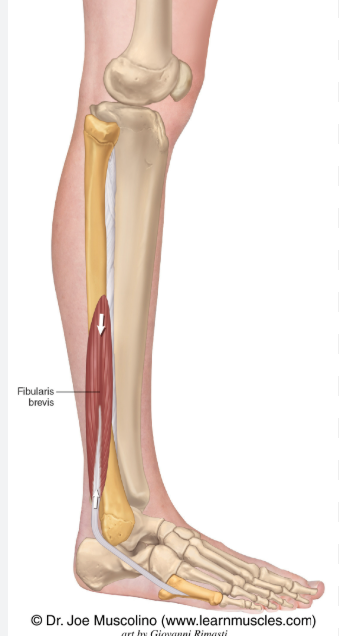
Brevis
short
example: Fibularis Brevis (Fibularis has fibula in the name, so thats the location and brevis means short, so its a short muscle attached to the fibula bone/outer side of your leg)
longus
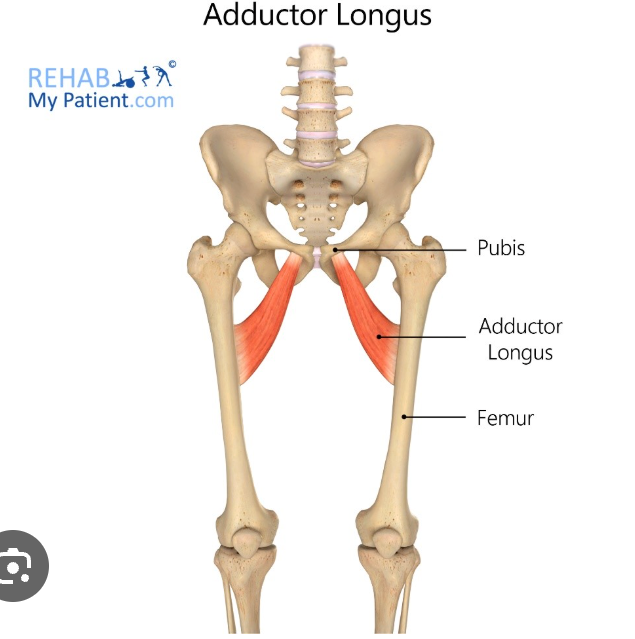
long
example: adductor longus (a long muscle that draws a body part (arm, leg, finger, or thigh) toward the midline of the body)
Vastus
wide/large
example: vastus lateralis
Maximus
largest
gluteus maximas
Minimus/Minimi
smallest
example: gluteus minimus
Minor
small
example: pectoralis minor
What are the 8 muscle locations?
anterior
external
infra
intercostal
posterior
profundus
superficialis
supra
anterior
toward the front (ventral)
external
toward the outside
infra
below
intercostal
between the ribs
posterior
toward the bask (dorsal)
Profundus
deep (think of profoundly deep)
superficialis
nearer the surface (think of superficial)
supra
above
What are the 9 muscle actions?
abductor
adductor
depressor
erector
extensor
flexor
levator
pronator
supinator
abductor
pulls AWAY from midline
adductor
pulls toward the midline
depressor
pulls down
erector
holds erect/straight
extensor (think of increase)
increases angle between bones
flexor (think of flexing your muscle - it decreases the angle between two bones)
decreases angle between bones
levator (think of levitate - meaning raise)
raises a body part
pronator
turns palm posteriorly (dorsal)
supinator
turns palm anteriorly (ventral) (the correct anatomical position)
what are the 13 muscle body regions?
abdominis
brachii
capitis
carpi
cervicis
digitorum/digiti
femoris
gluteal
hallucis
oculi
oris
pectoralis
pollicis
abdominis
abdominal area
brachii
arm area
capitis
head area
carpi
wrist area
cervicis
neck area
digitorum/digiti
related to fingers or toes
femoris
femur or thigh
gluteal
butt
hallucis
great toe
oculi
eye area
oris
mouth area
pectoralis
chest area
pollicis
thumb
What are the 4 muscle fiber orientations?
oblique
orbicular
rectus
transversus
oblique
at an angle
orbicular
circular
rectus
straight
transversus
across/transverse
what are the 3 muscle heads?
biceps
triceps
quadriceps
biceps
two heads
triceps
three heads
quadriceps
four heads
The number of heads refers to the number of separate proximal attachments (origins) that converge into a single muscle belly and distal tendon.
What are the 5 muscle shapes?
deltoid
quadratus
rhomboid
serratus
trapezius
deltoid
triangular
quadratus
rectangle-shaped
rhomboid
rhomboid-shaped
serratus
serrated or jagged
trapezius
trapezoid-shaped
What are the 8 muscles that contribute to facial expressions?
epicranial aponeurosis
zygomaticus major/minor
levator labii superioris
risorius
mentalis
orbicularis oculi
orbicularis oris
buccinator
epicranial aponeurosis location and function?
large sheet of connective tissue that links the frontalis and occipitalis
function: raises eyebrows and skin of forehead
what are the 3 muscles of the mouth? function?
zygomaticus major/minor
levator labii superioris
risorius
function: move the lips and surrounding skin
mentalis location and function?
location: chin
function: elevates and wrinkles the chin skin
primary function: express negative emotions (like doubt or displeasure)
orbicularis oculi location and function?
location: encircles the eye
function: moves the skin and soft tissues around the eyes - responsible for blinking and squinting
orbicularis oris function?
function: controls movements for eating, drinking and speaking
Buccinator location and function?
location: cheek muscle
function: compresses the cheeks against teeth and manipulates food during chewing
Muscles of the head and neck
Muscle of mastisfication & mouth movement
Masseter and temporalis: primarily elevators for biting and chewing
Swallowing muscles:
regional muscles groups coordinate chewing and swallowing; together they move food from oral cavity to esophagus
Head and neck movers
Sternocleidomastoid rotates and flexes head
trapezius extends the head and moves the neck through wide range of motion
What are the 3 muscles of the vertebral column? What are the muscles critical for?
erector spinae
runs along the vetebral column and posterior (back) ribs; primary extensor of the spine
transversopinal group
deep to erector spinae; fills grooves between transverse and spinous processes. includes semispinalis
quadratus lumborum
large, deep muscle enabling vertebral column extension and lateral bending
Critical for both locomotion and posture
What are the 3 muscles of the trunk?
Diaphragm
primary muscle of respiration
function: contracts to increase thoracic volume and drive inhalation
External intercostals
location: between ribs
function: elevates the rib cage during inhalation (breathing in), increasing thoracic volume
Internal costals
Location: deep to external intercostals
function: depress the ribs during for forces exhalation (breathing out)
what are the 4 muscles of the trunk (in order)?
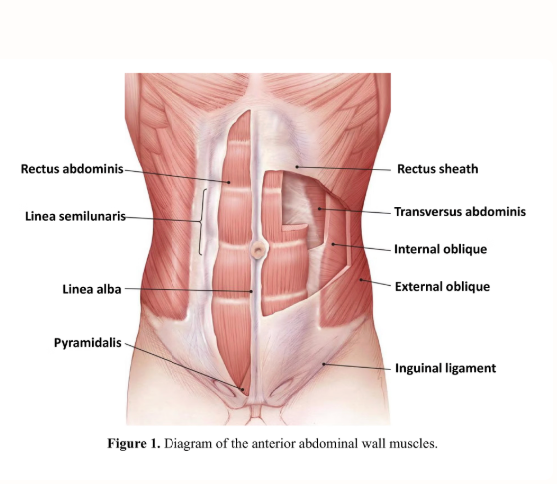
rectus abdominis
enclosed in rectus sheath
function: flexes the trunk
external & internal obliques
diagonal fibers
function: rotates and laterally flexes the trunk
tranversus abdominis
deepest layer
compresses the abdomen and stabilizes the core
Linea Alba
connective tissue at the abdominal midline, separating left and right rectus muscles
What are the 5 muscles of the shoulder and arm (from shoulder to arm, in order)?
scapular movers
humeral movers
elbow movers
anterior forearm movers
posterior forearm movers
what are the 6 scapular movers?
Serratus anterior, pectoralis minor, trapezius, levator scapulae, rhomboid major & minor
what are the 8 humeral movers?
Pectoralis major, latissimus dorsi, teres major, coracobrachialis, and rotator cuff: teres minor, supraspinatus, infraspinatus, subscapularis
what are the 4 elbow movers?
Biceps brachii, brachialis, brachioradialis (flex); Triceps brachii (extend)
what are the 3 anterior (ventral/front) forearm movers?
Wrist flexors (flexor carpi radialis, flexor carpi ulnaris) and finger/thumb flexors (flexor digitorum superficialis & profundus) in the deep layer
what are the 3 posterior forearm movers?
Wrist extensors (extensor carpi radialis longus, extensor carpi ulnaris) and finger/thumb extensors (extensor digitorum, extensor pollicis longus) in the deep layer.
What muscles move the thigh and knee?
Anterior: Flex Thigh
Iliopsoas and sartorius flex the thigh at the hip.
Quadriceps: Extend Knee
Rectus femoris, vastus lateralis, vastus medialis, vastus intermedius extend the leg at the knee.
Medial: Adduct Thigh
Adductor magnus, adductor longus, pectineus, and gracilis adduct the thigh and assist hip/knee flexion.
Gluteal : Extend & Rotate
Gluteus maximus, medius, and minimus extend, abduct, and rotate the thigh.
Hamstrings: Flex Knee
Biceps femoris, semitendinosus, semimembranosus flex the leg at the knee.
Deep Posterior: Rotate
Piriformis and quadratus femoris laterally rotate the thigh.
What muscles move the ankle and foot?
Tibialis Anterior
Located on the anterior leg.
Function: dorsiflexion of the foot at the ankle (lifts the foot upward toward the shin).
Gastrocnemius & Soleus
Powerful calf muscles that plantar flex the foot (pointing the foot downward).
Essential for walking, running, and jumping.
Plantaris
A small, slender muscle that assists the gastrocnemius in plantar flexion of the foot at the ankle.