BIOL-L 112 Chapter 13 - Meiosis
 Call Kai
 Learn
Learn Practice Test
 Spaced Repetition
 Match
Match Flashcards
 Knowt Play
1/66

There's no tags or description
Looks like no tags are added yet.
Name | Mastery | Learn | Test | Matching | Spaced | Call with Kai |
|---|
No analytics yet
Send a link to your students to track their progress
67 Terms
Genetics
The scientific study of heredity and hereditary variation
Genes
Hereditary units containing coded information
Genes are the genetic link to what?
Our parents
What do our genes program?
Specific traits that emerge as we develop from fertilized eggs to adults
The genetic program is written in what language?
DNA (AGTC nucleotides)
Most genes program cells to synthesize what?
Specific enzymes and other proteins whose cumulative actions produce an organism’s inherited traits
Gametes
Vehicles that transmit genes from one generation to the next
Karyotype
an individual’s complete set of chromosomes, or a laboratory-produced image displaying these chromosomes arranged in pairs by size, shape, and number. Used to detect genetic disorders.
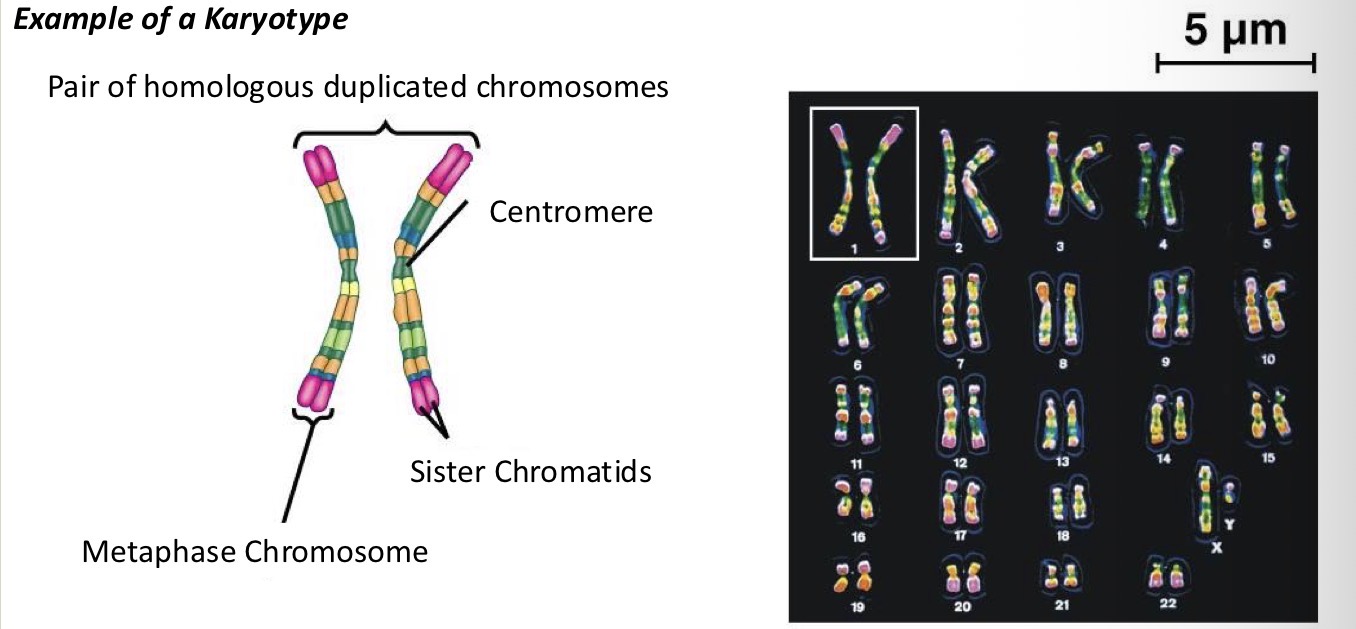
Most DNA is found where?
In chromosomes within the nucleus
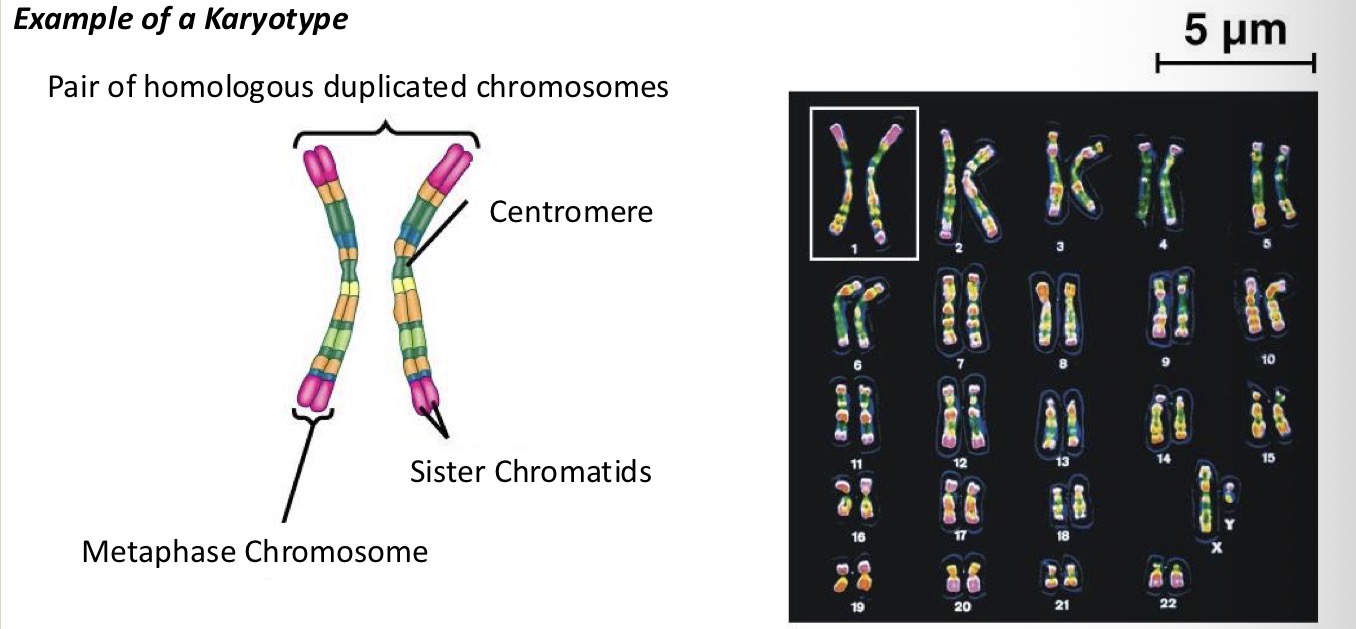
What species is this individual?
Human
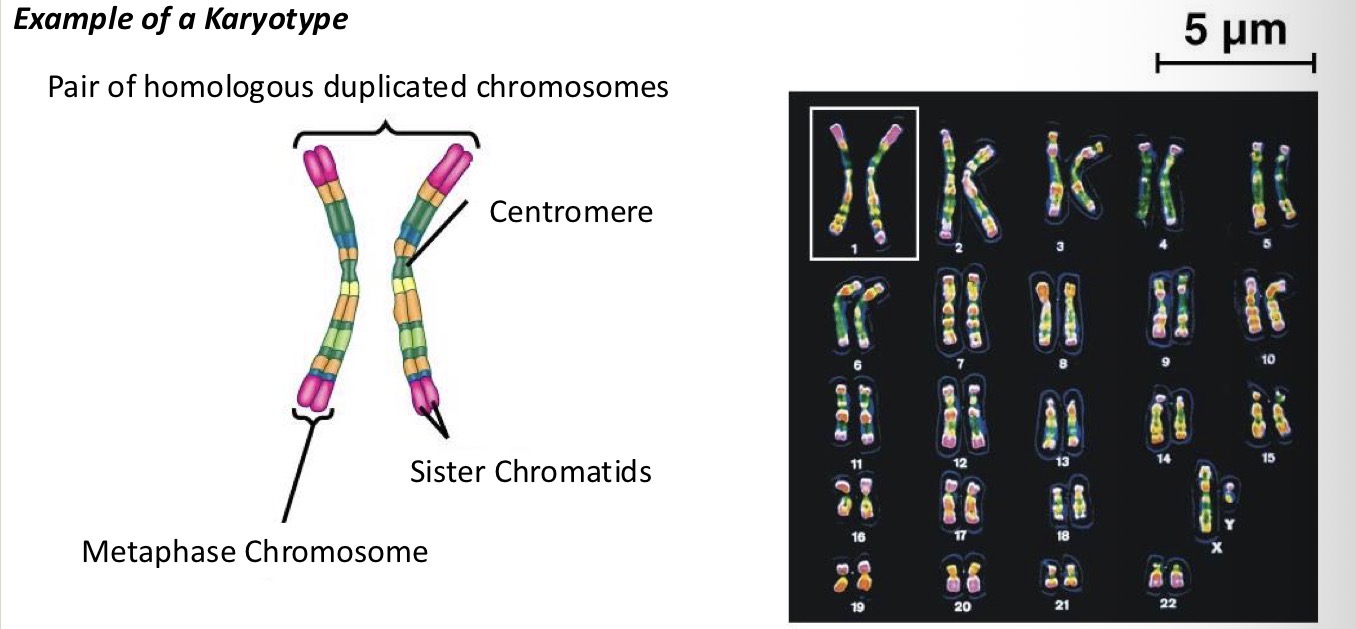
What is the sex of this individual?
Male
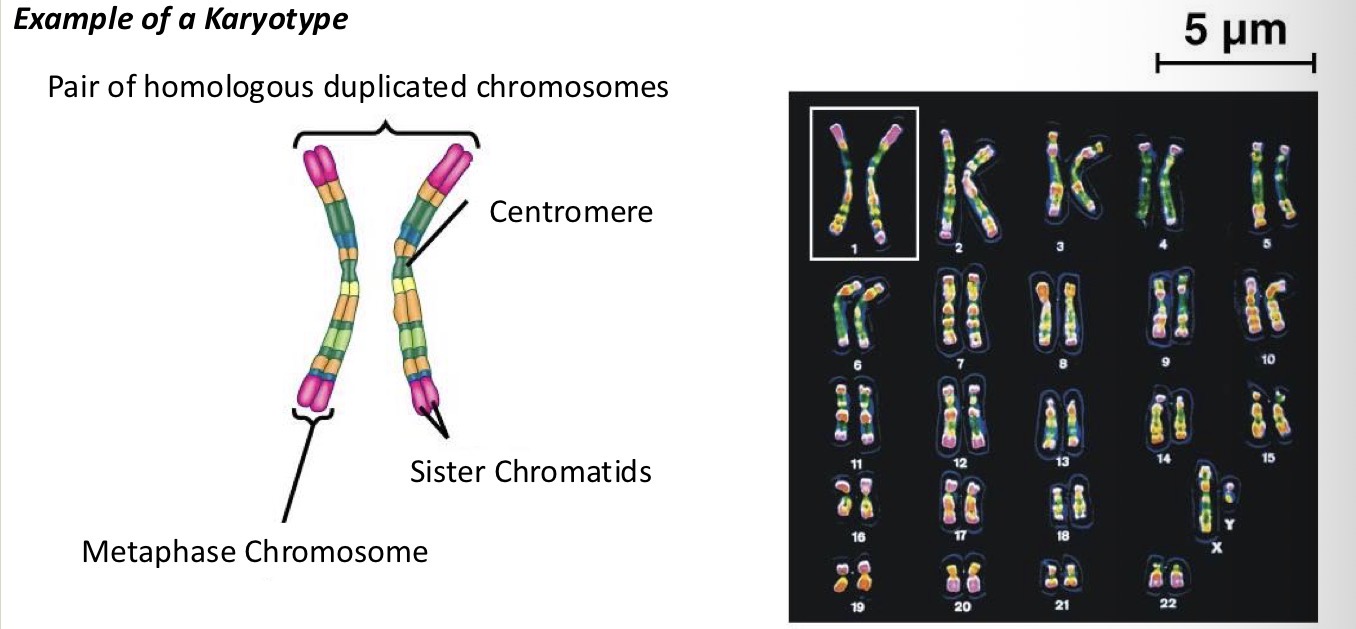
Why are there 2 copies of each autosome (chromosomes 1-22) and 2 sex chromosomes?
One copy comes from the male parent, the other copy comes from the female parent
What are the sex chromsomes?
XX for female, XY for male
What is a description of chromosomes?
Example of a 2n cell depicted right after chromosome replication (G2 phase)
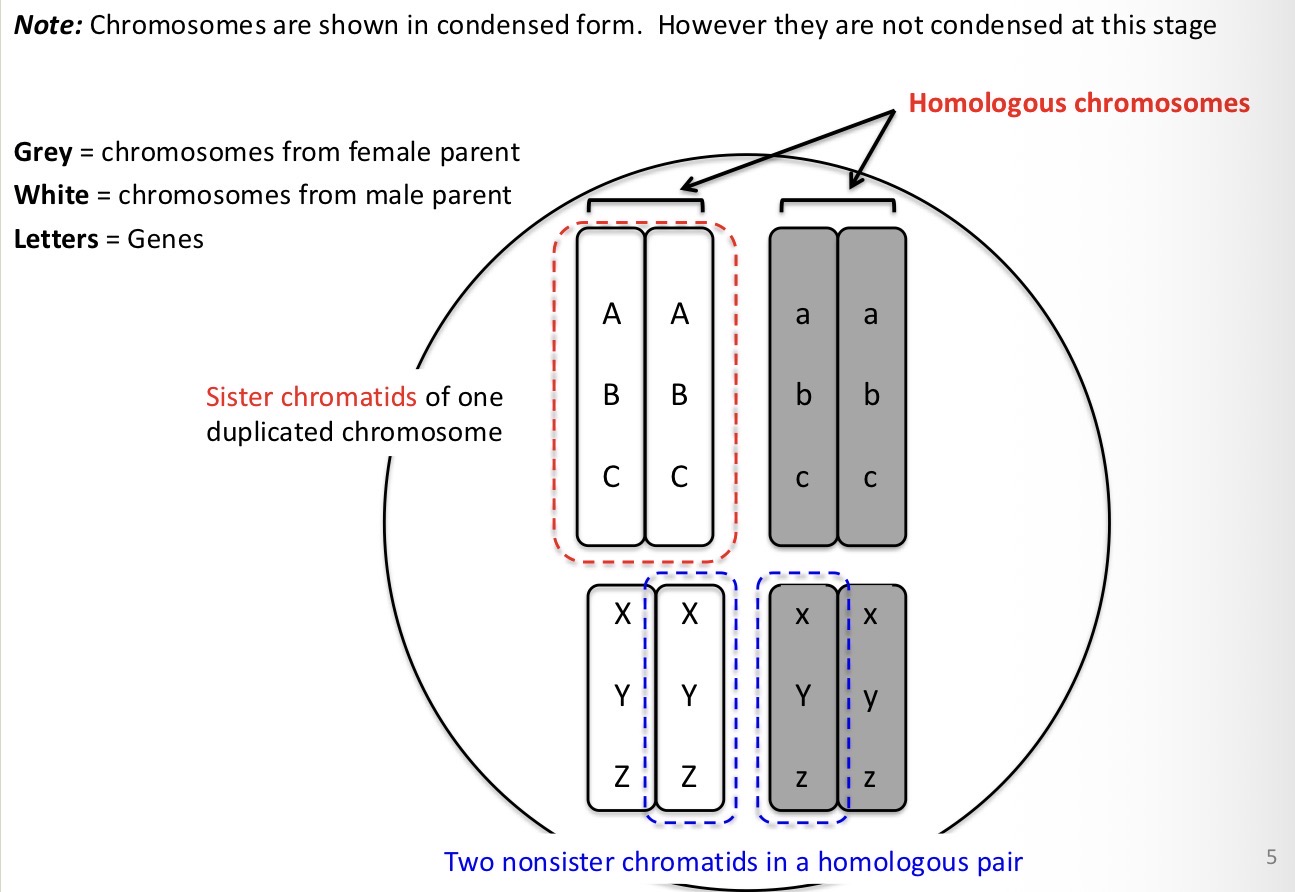
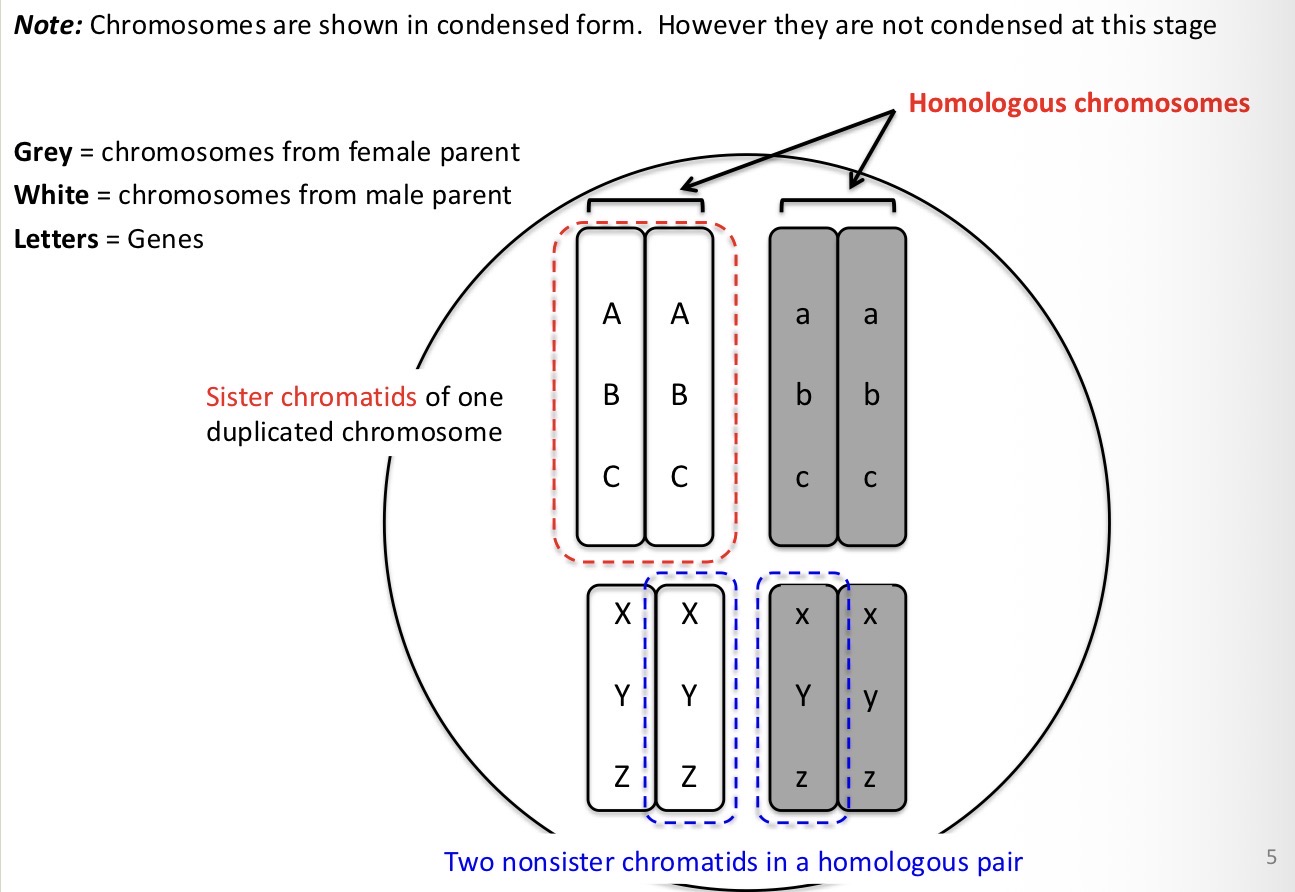
What are homologous chromosomes?
A pair of chromosomes of the same length, centromere position, and staining pattern
Fill in the blank: Homologous chromosomes contain genes controlling the ____ inherited characters at the ____ location on the chromosome (loci)
Same; same
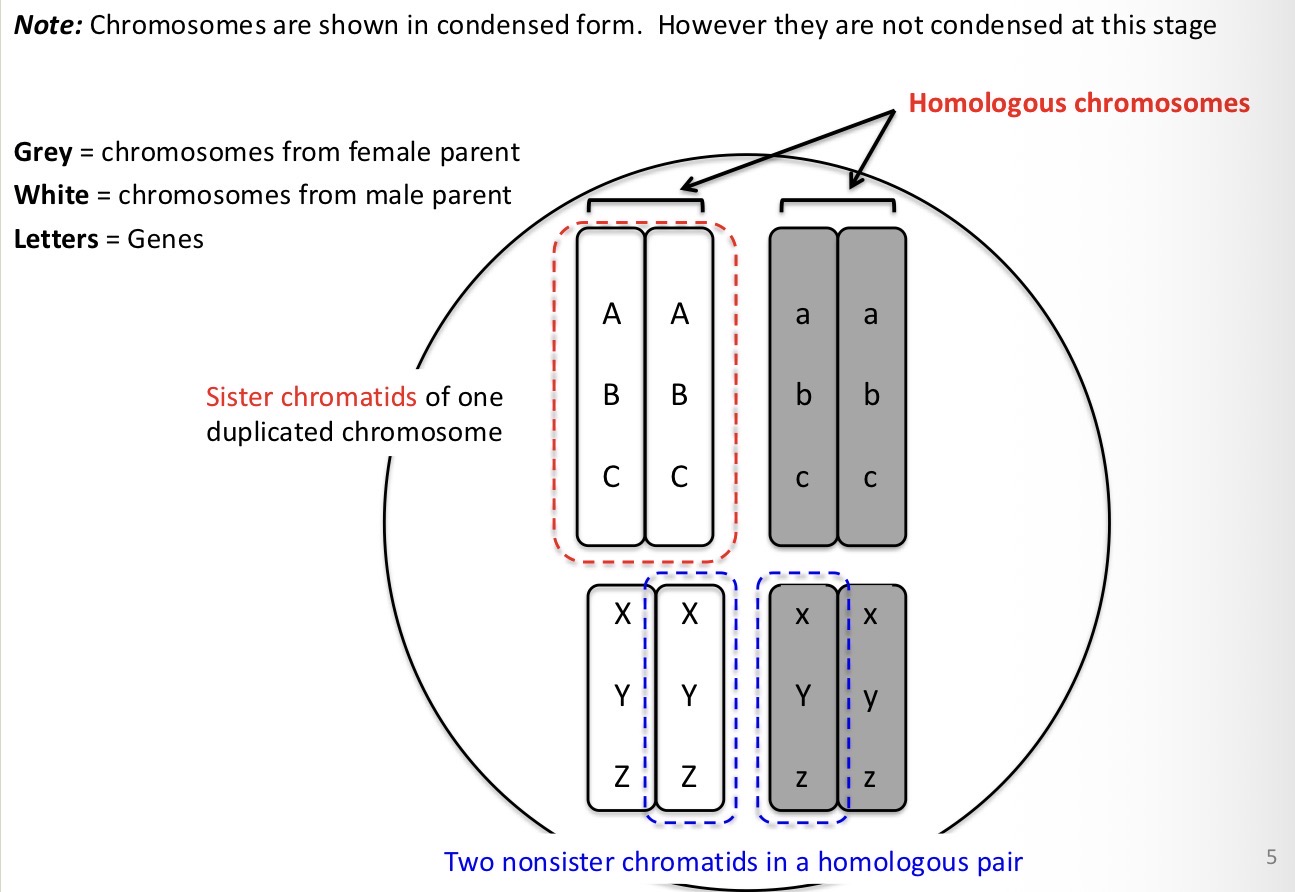
What are alleles?
Different versions of the same gene (A and a)
Asexual reproduction produces what kind of offspring?
Offspring are usually genetically identical to the parent cell (exceptions are due to mutations)
Sexual reproduction produces what kind of offspring?
Two parents give rise to offspring that have unique combinations of genes inherited from both parents
How does asexual reproduction occur?
A single individual passes copies of all its genes to its offspring without fusion of gametes
What are some types of asexual reproduction?
Fission, budding, fragmentation, and parthenogenesis
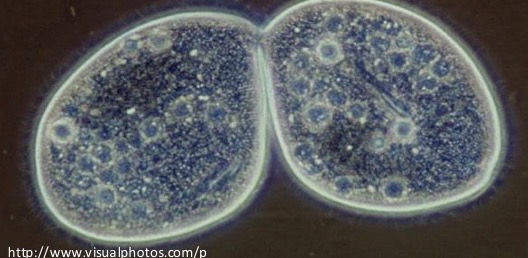
Binary Fission
The two paramecium are identical
In sexual reproduction, are siblings identical?
Offspring vary genetically from siblings and from both parents
Reproduction in sexual reproduction involves the fusion of what?
Gametes
How are gametes generated?
Via meiosis
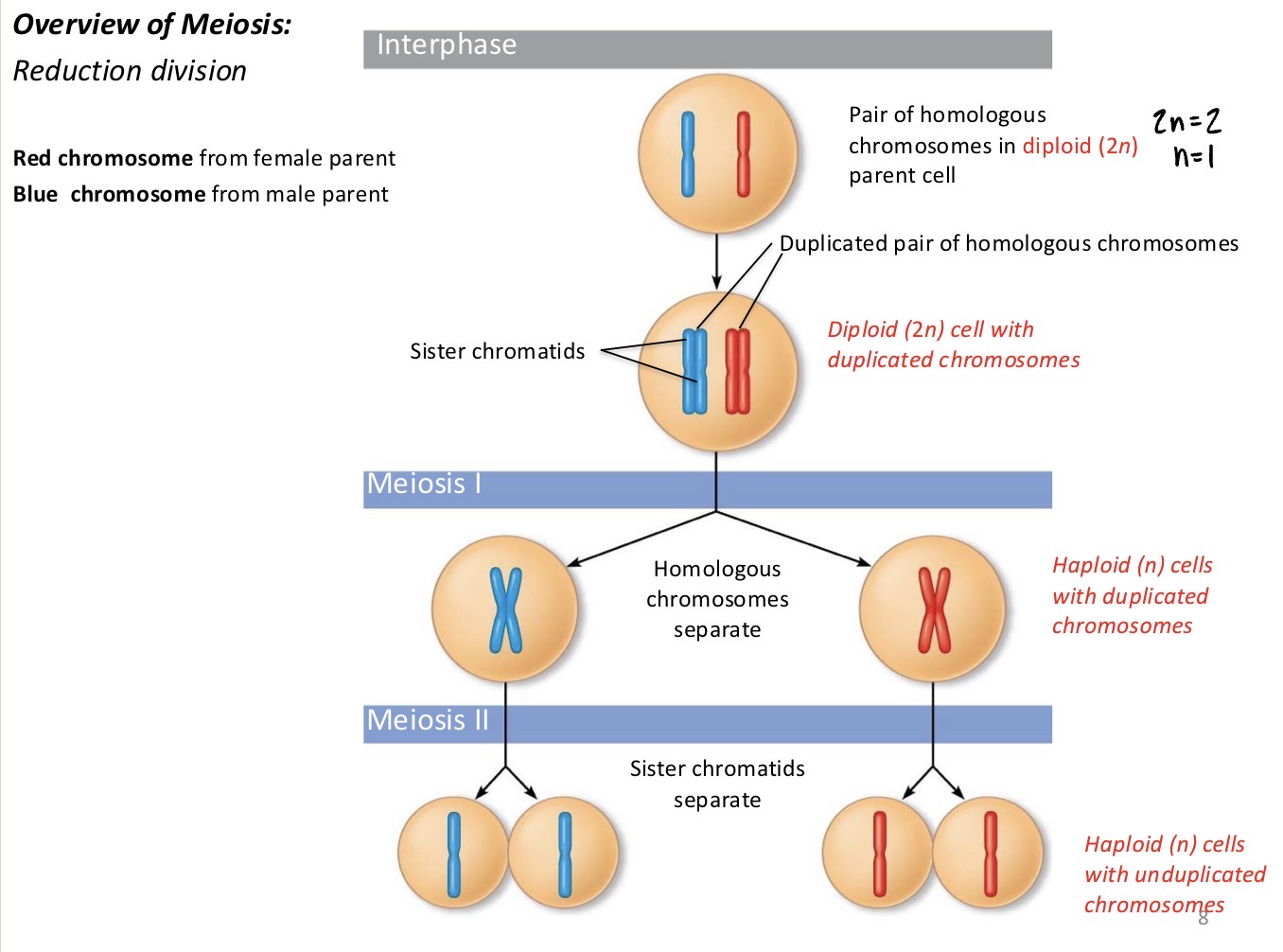
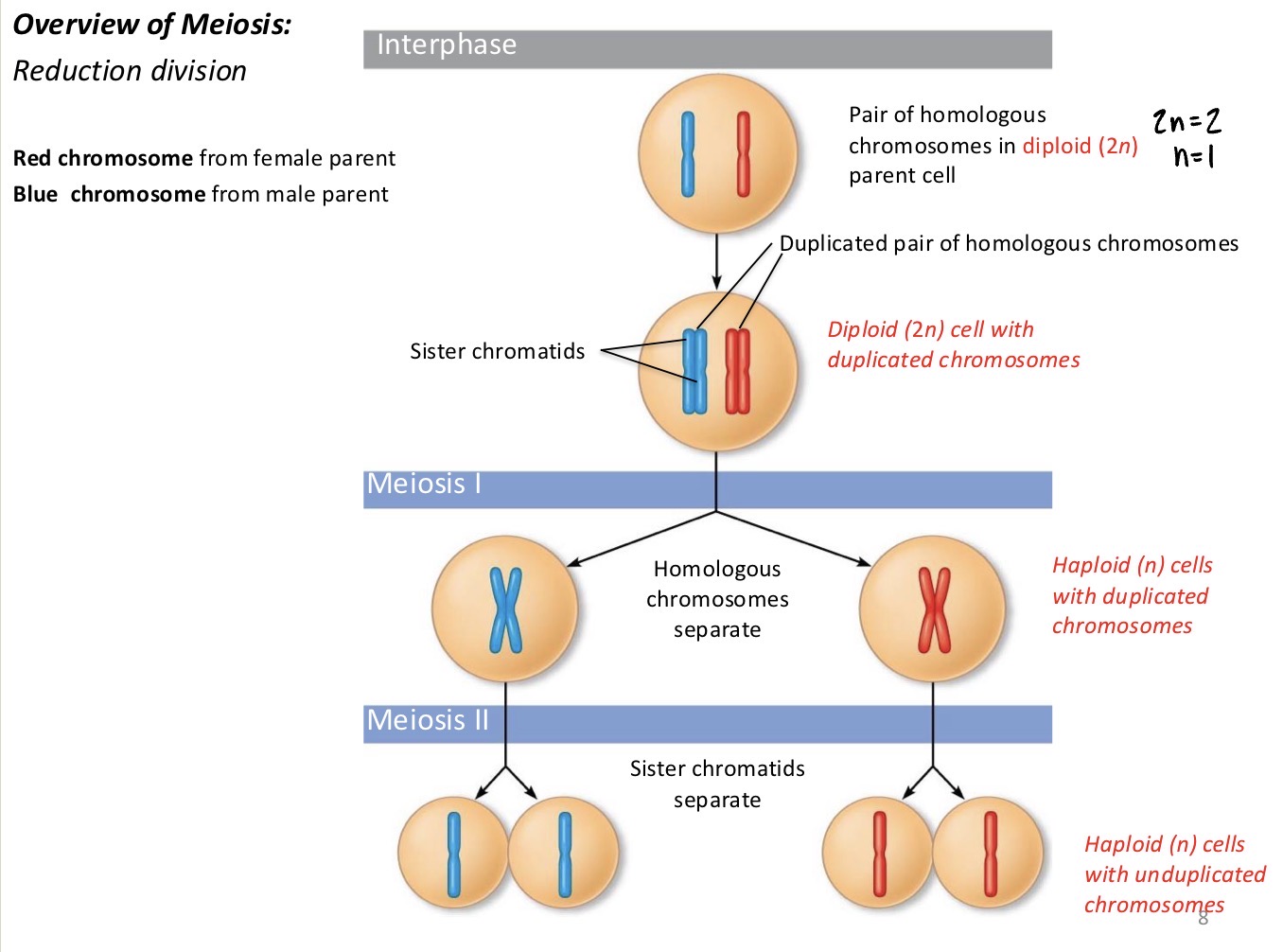
Meiosis I
Separation of homologous chromosomes
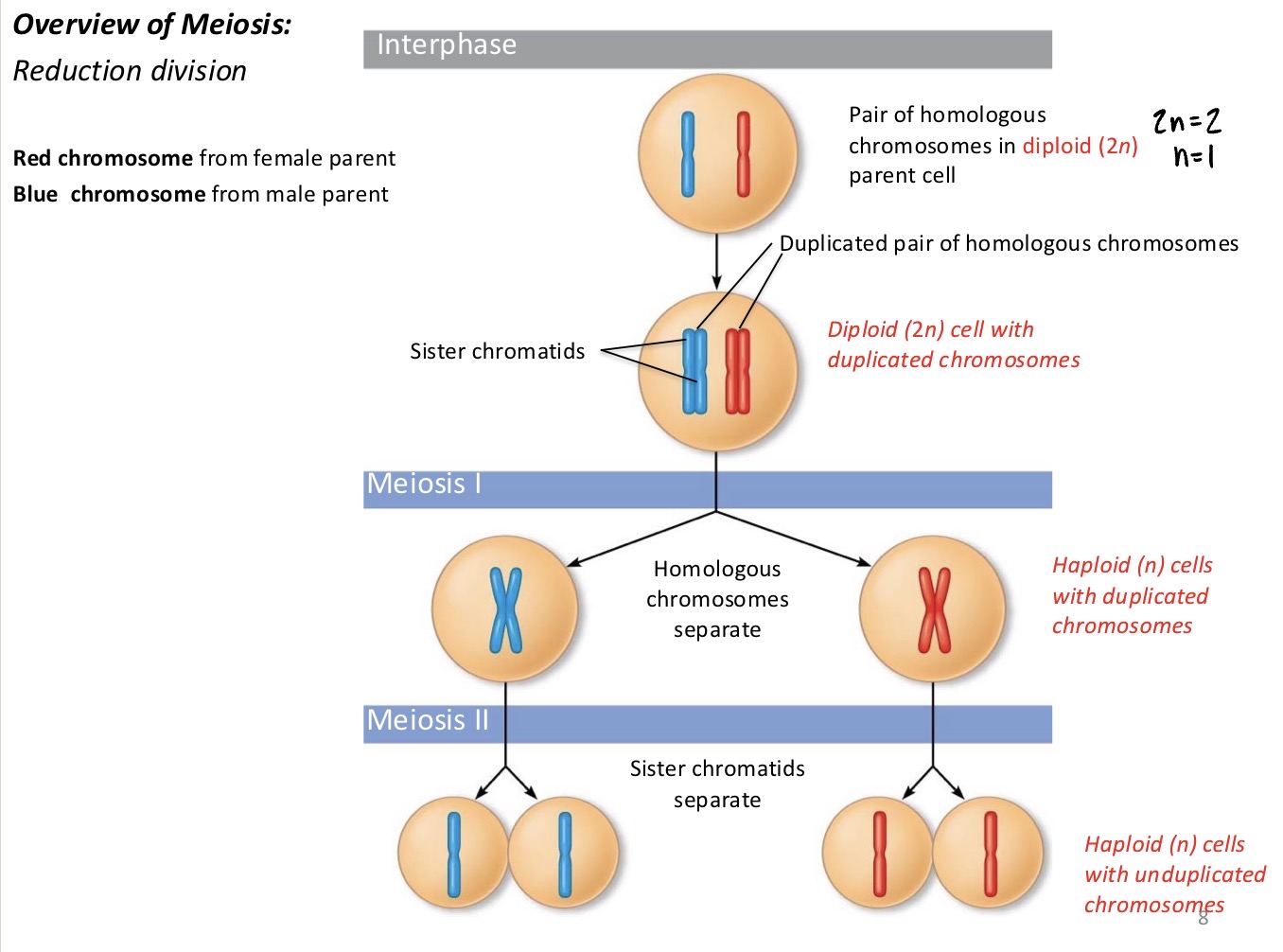
Prophase I
Chromosomes condense and homologous chromosomes align gene by gene. This stage also entailed centrosome movement, spindle formation, and nuclear envelope breakdown (as in prophase and prometaphase of mitosis). Homologous pairs move as unit towards the metaphase plate.
What is synapsis? When does it occur and when does it end?
Synapsis involves crossing over between nonsister chromatids within the homologous pair. It takes place during prophase I and ends in mid-prophase and chromosomes move apart slightly.
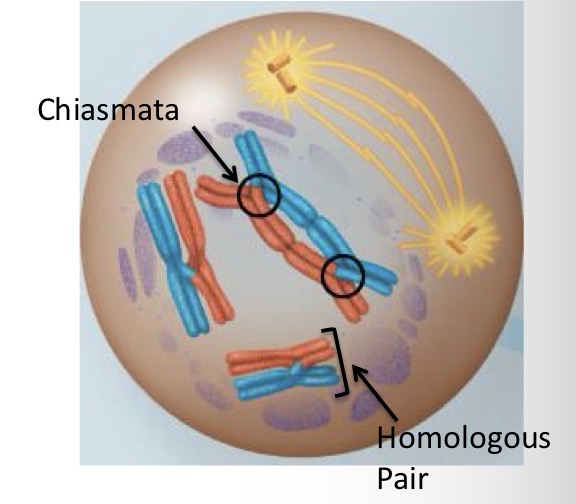
Chiasmata
Points where crossing over has occurred
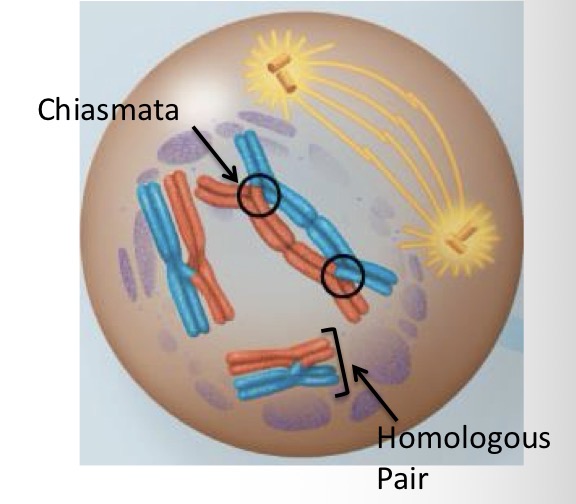
What do cohesion proteins do?
Hold sister chromatids together
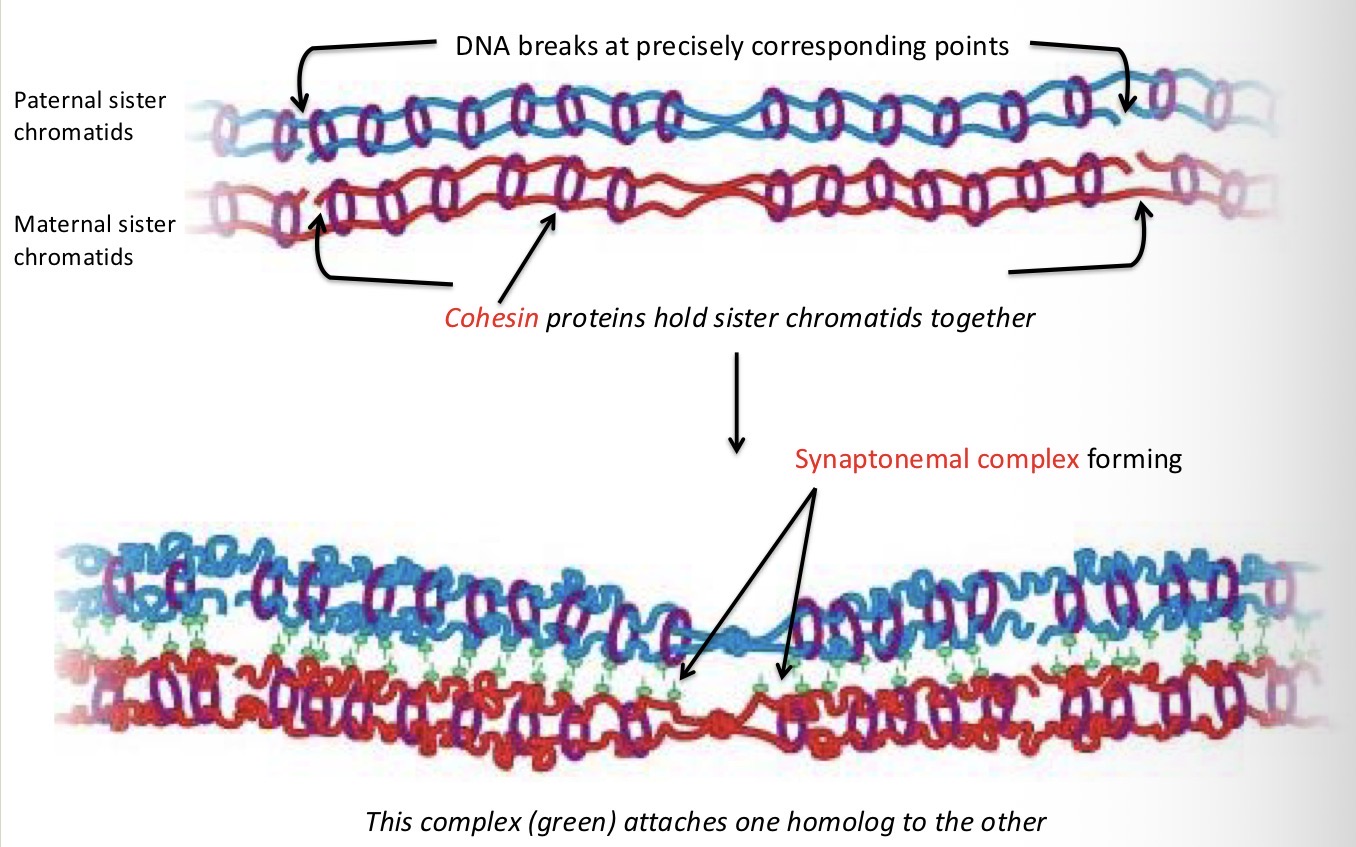
When DNA breaks at precisely corresponding points during crossing over and synapsis, what forms?
Synaptonemal complex
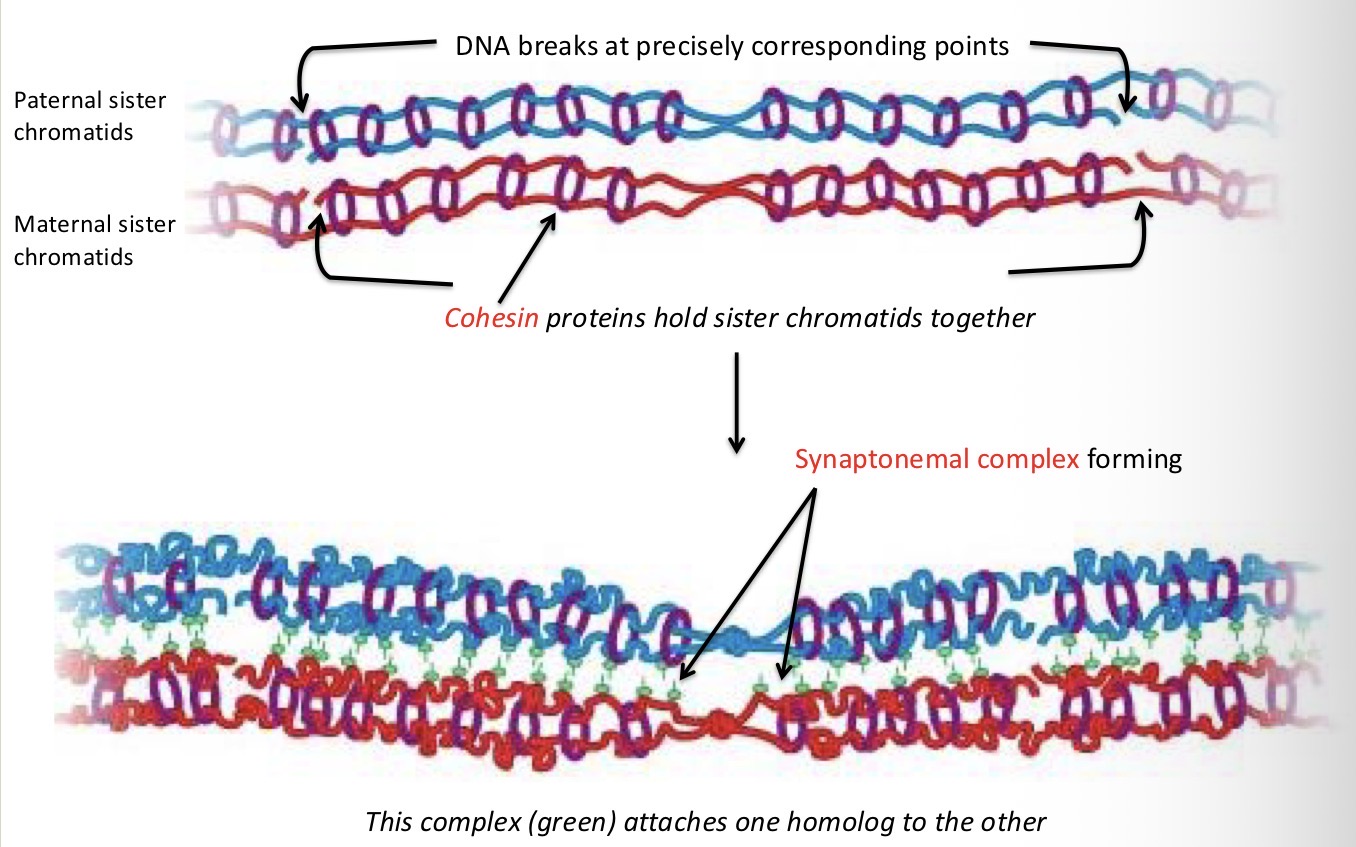
Synaptonemal complex
This complex (green) attaches one homolog to the other
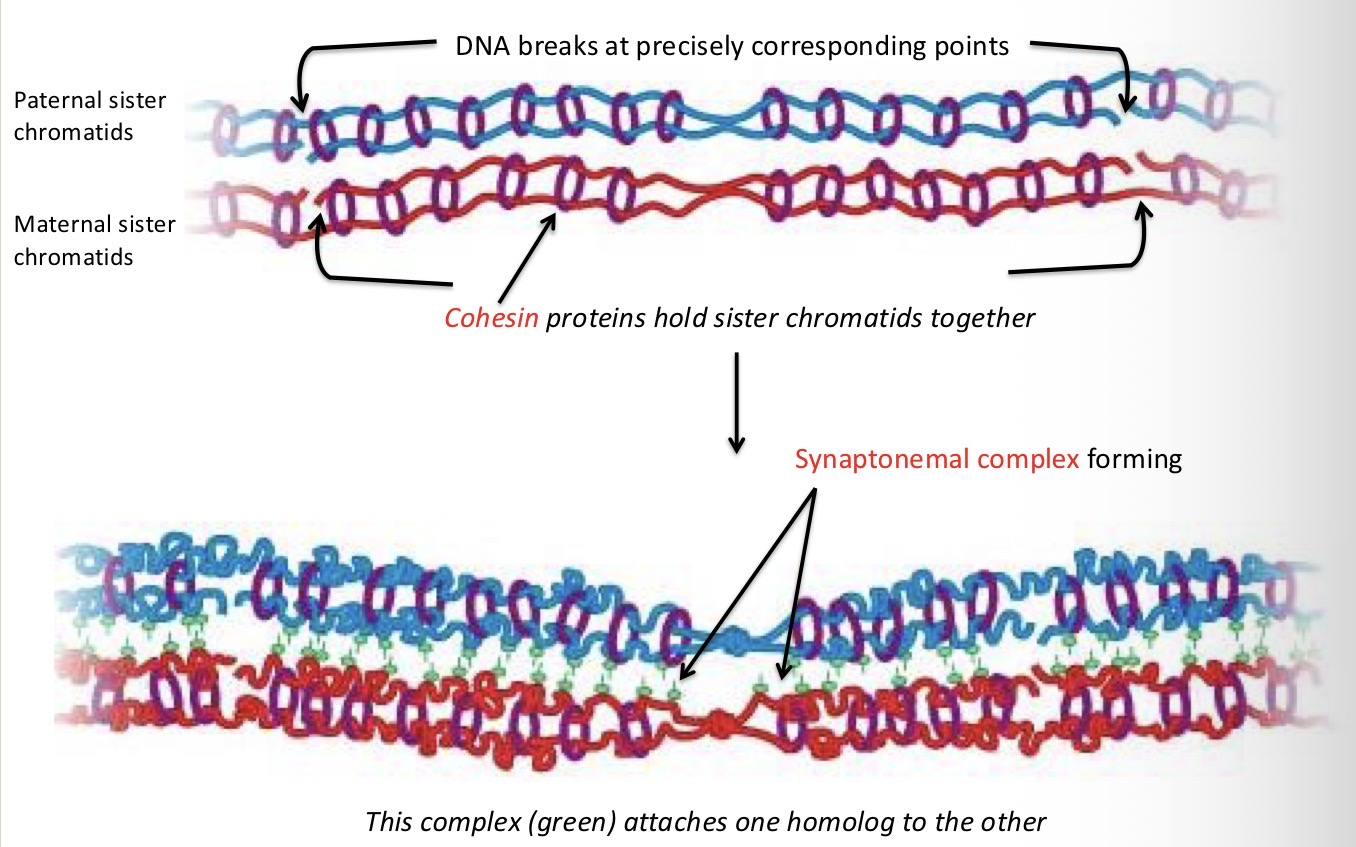
When is the synaptonemal complex fully formed?
It is fully formed during synapsis
How does crossovers specifically work?
Broken DNA ends are joined. However, crossing over connects the corresponding ends of nonsister chromatids.
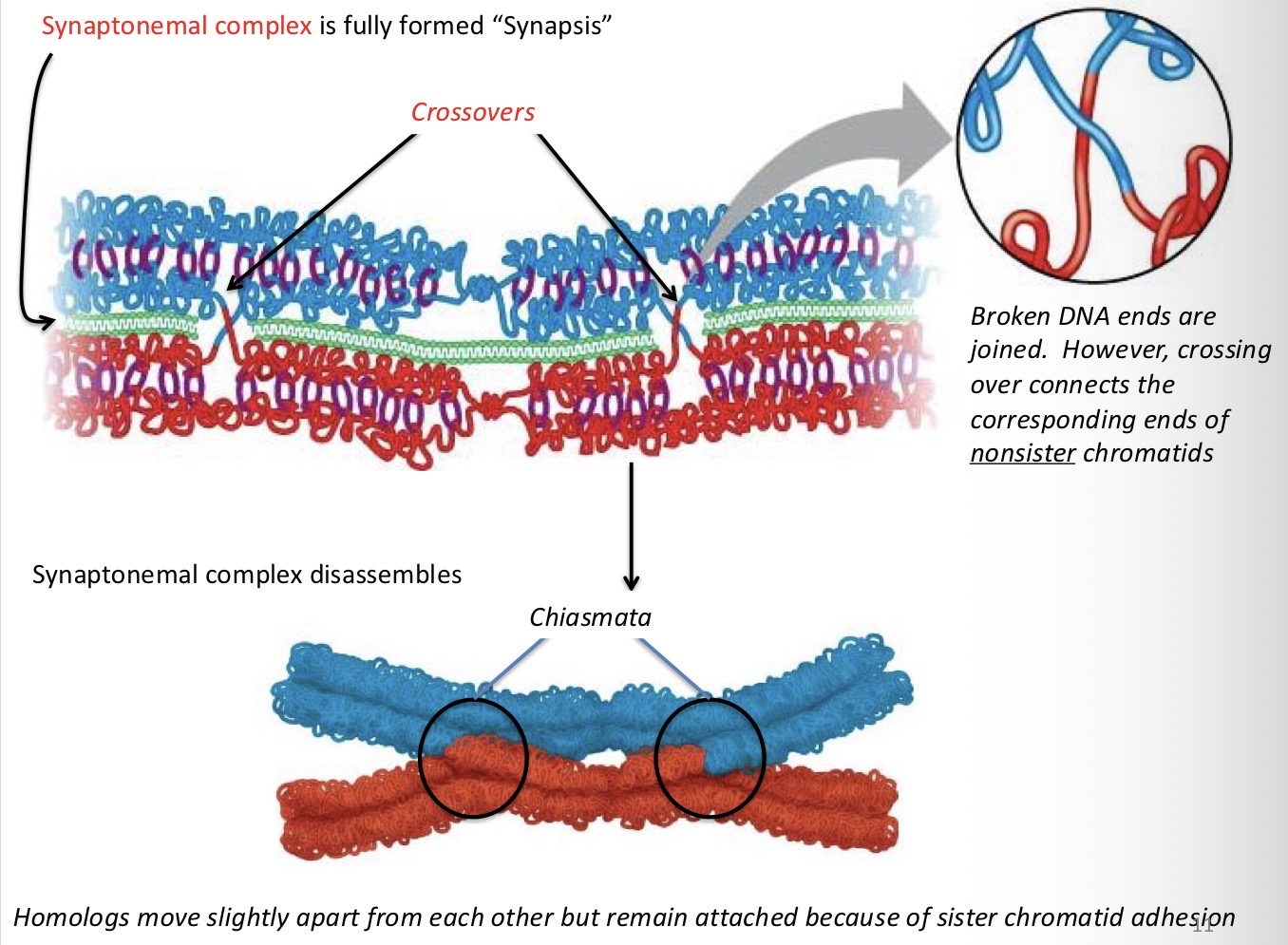
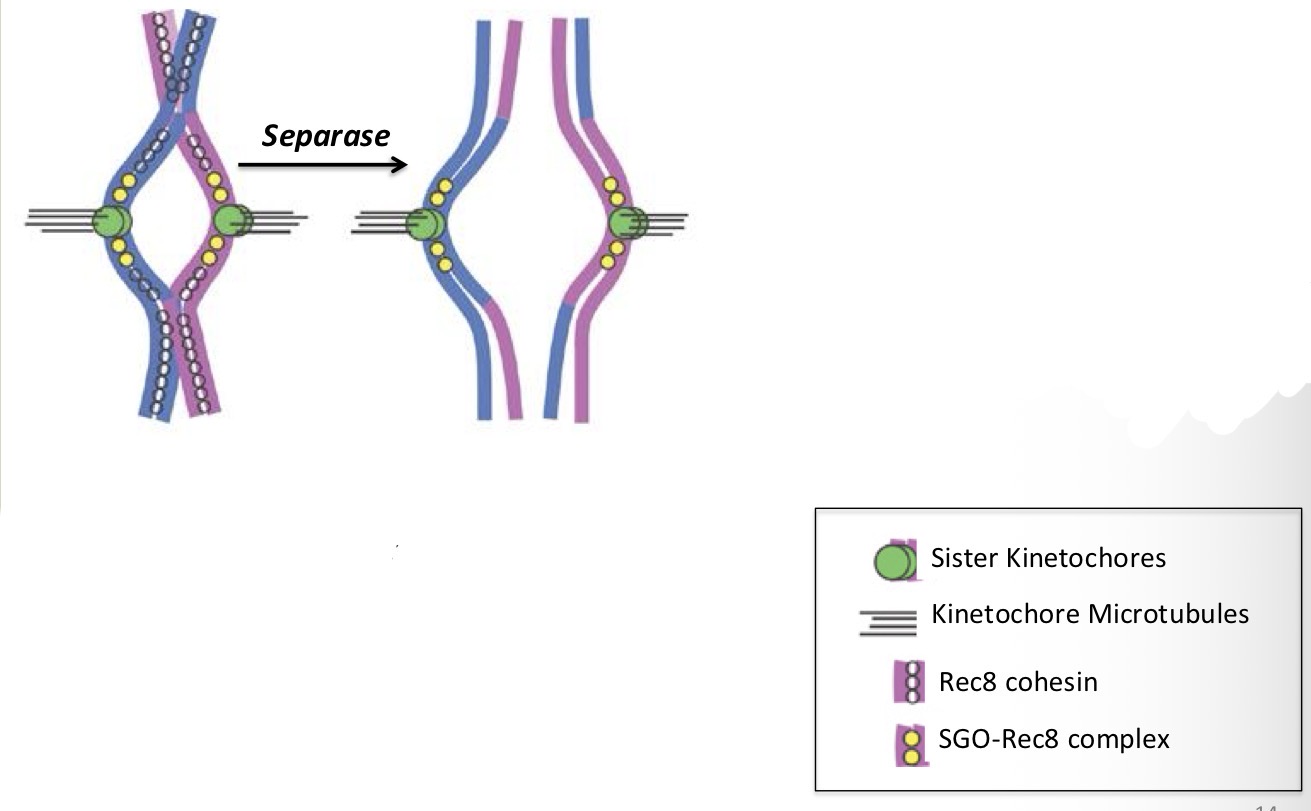
Rec8 cohesion
The protein that hold sister chromatids together
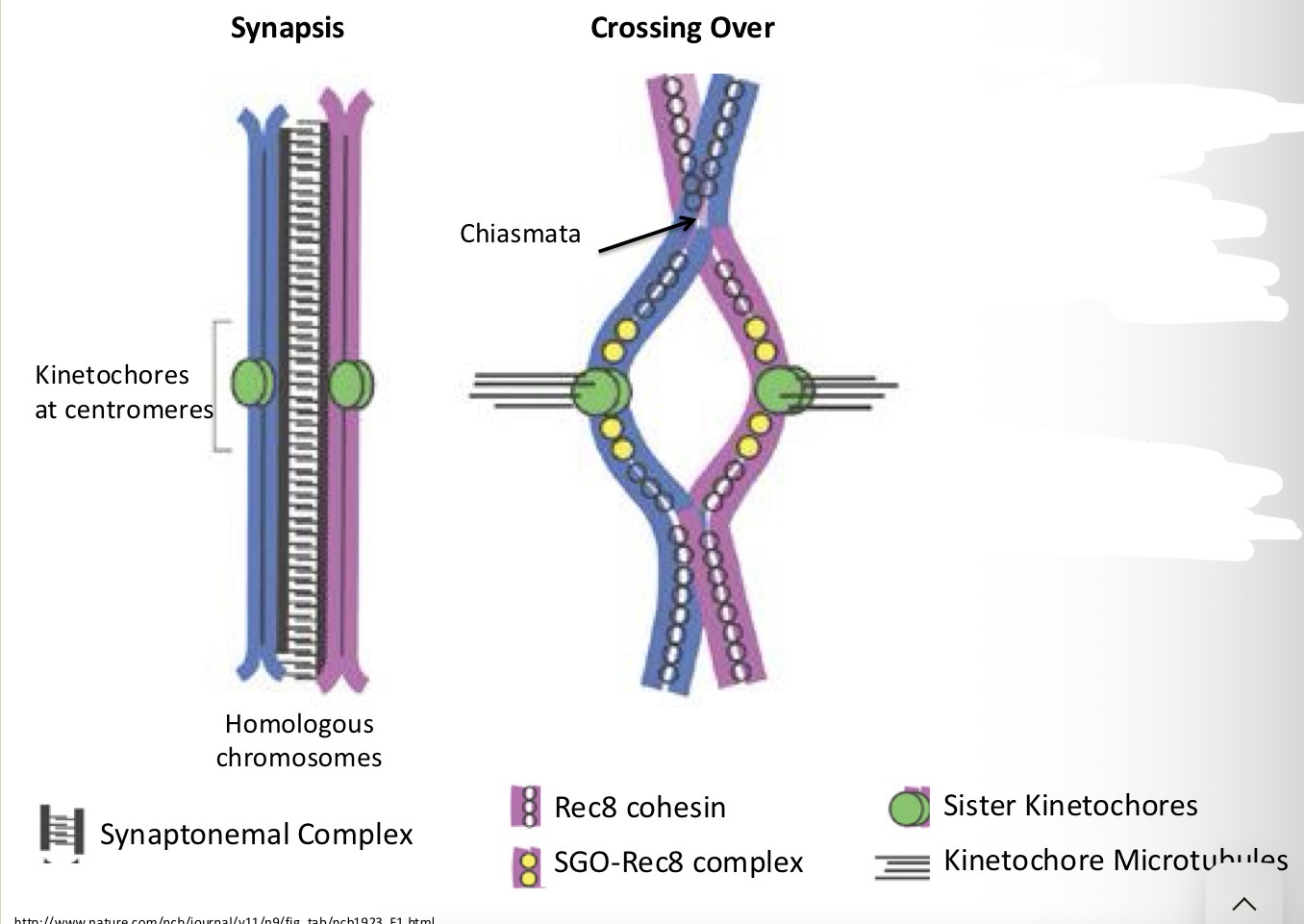
After crossing over, homologous chromosomes are attached at chiasmata because of ____
Rec8 cohesion
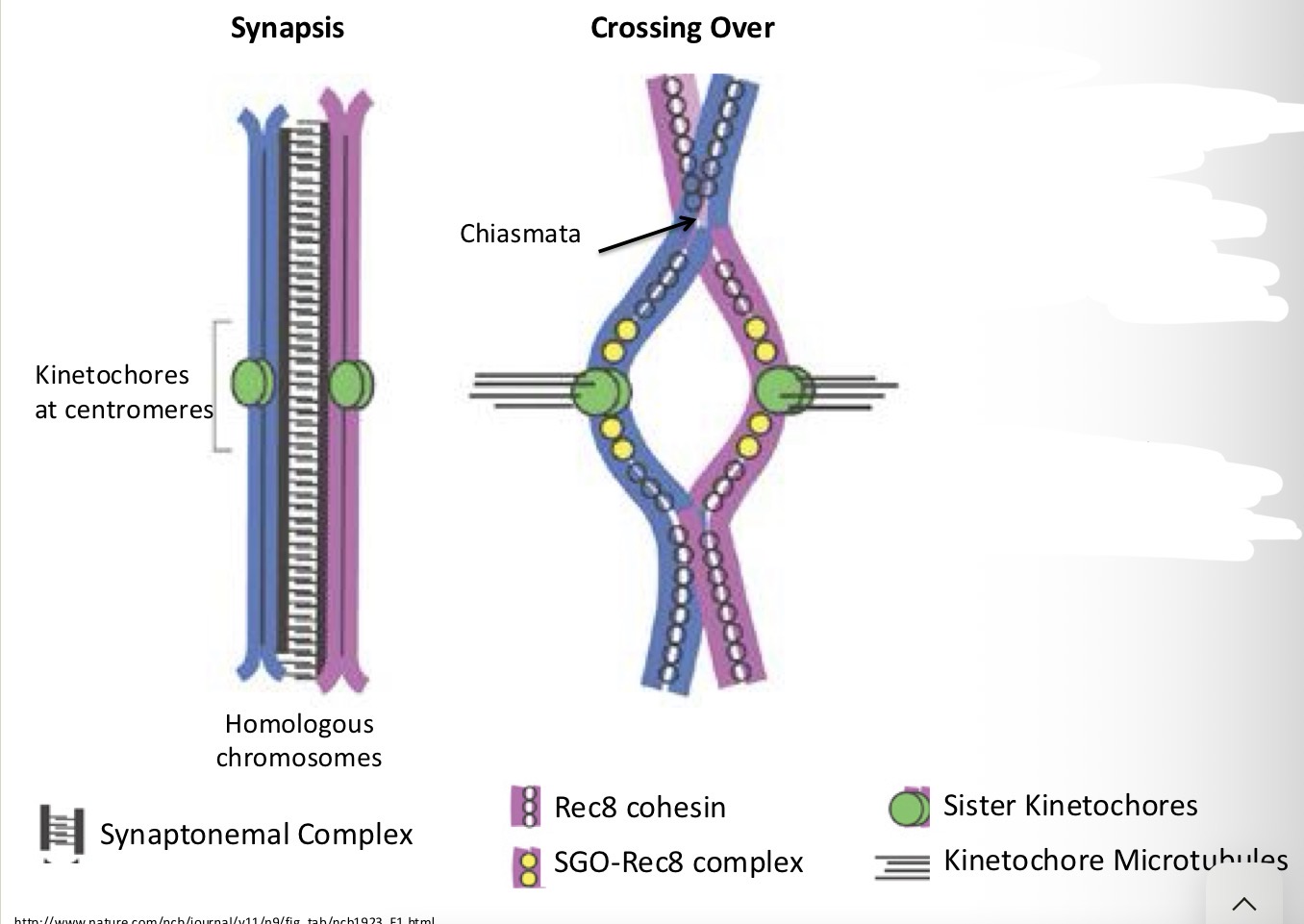
What occurs in late prophase I?
Kinetochore microtubules originating from each pole attach to the 2 kinetochores
Metaphase I
Pairs of homologous chromosomes are arranged on the metaphase plate with one chromosome in each pair facing each pole. Both chromatids of one homolog are attached to kinetochore microtubules extending from one pole. Those of the other homolog are attached to kinetochore microtubules extending from the opposite pole.
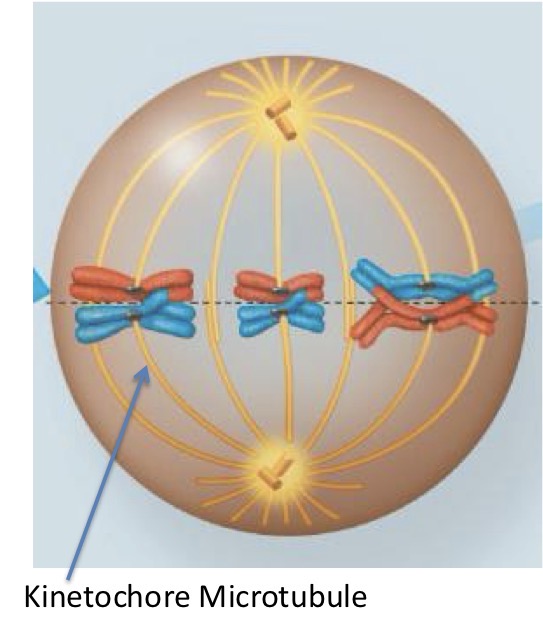
Anaphase I
Breakdown of Rec8 cohesion by the enzyme, separase, allows the arms of homologs to separate. Sister chromatids move as a unit towards the same pole.
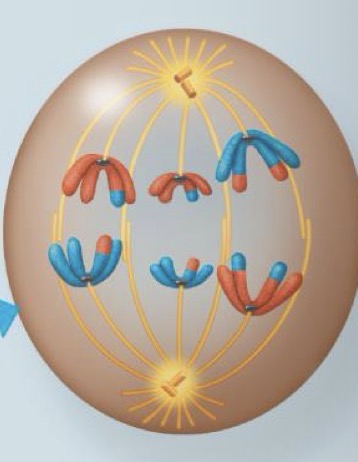
SGO protects what? And when is it degraded?
Rec8 at centromere. SGO is degraded after Anaphase I is complete.
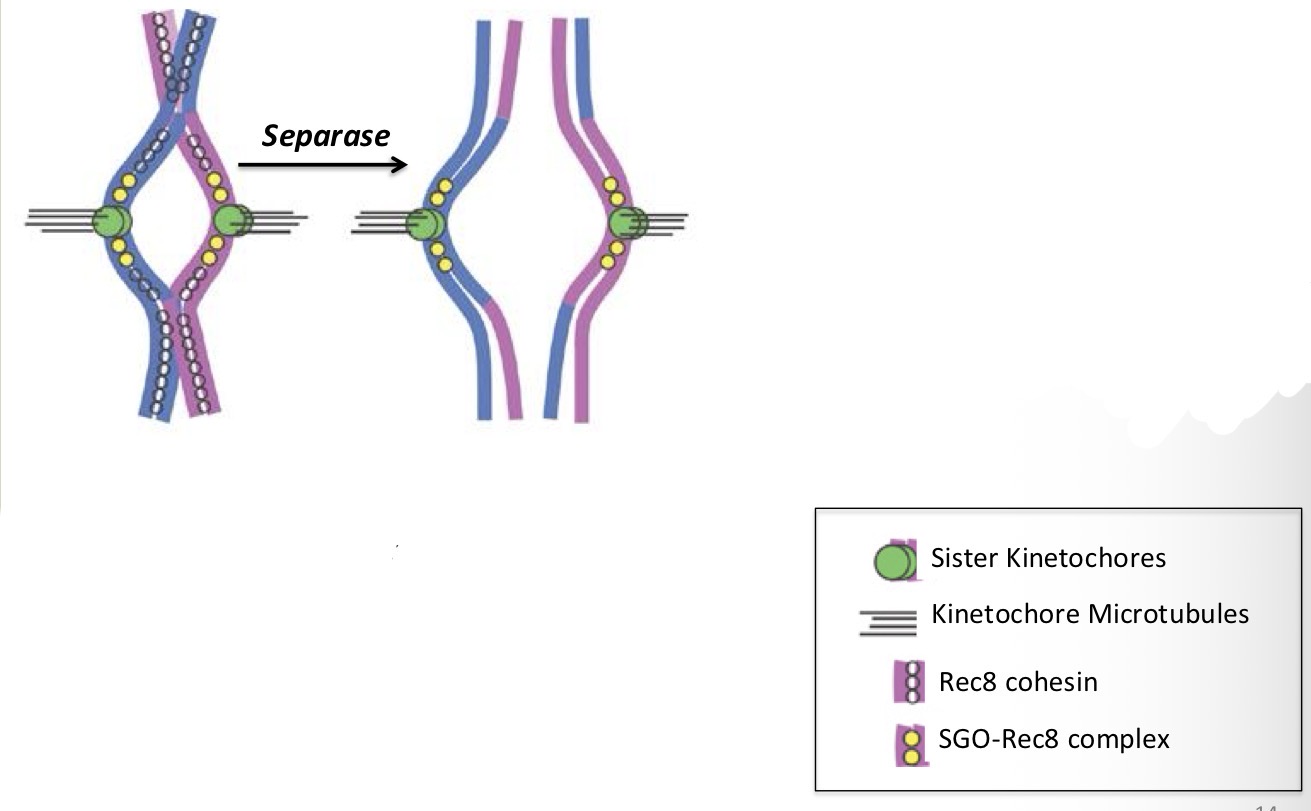
Separase
An enzyme that breaks down Rec8 cohesion
Telophase I
At the beginning of telophase I, each half of the cell has a complete haploid set of replicated chromosomes. Each chromosome is composed of 2 sister chromatids.
Cytokinesis occurs simultaneously with telophase I, forming 2 daughter cells.
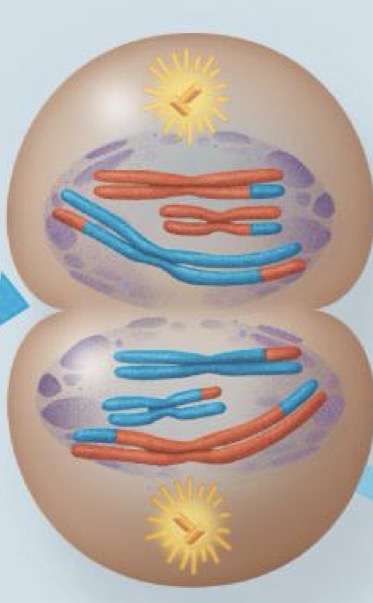
Are sister chromatids identical or different during telophase I?
They’re different due the crossover that occurred in Prophase I
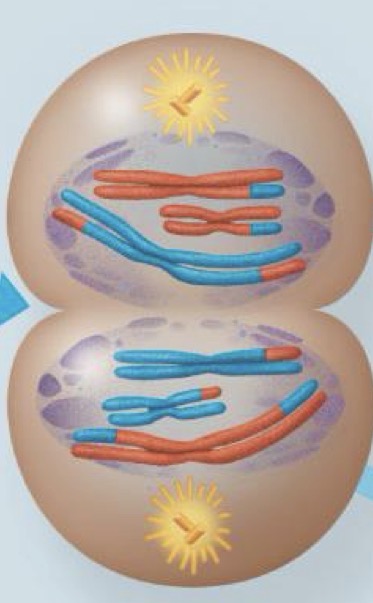
What does n=?
3
Meiosis II
Separation of sister chromatids
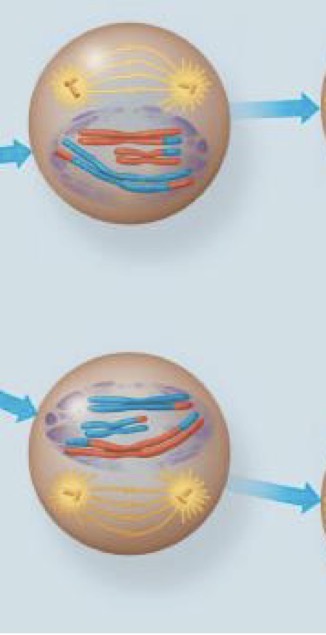
Prophase II
Spindle apparatus forms. Chromosomes are still composed of 2 sister chromatid associated at the centromere. Chromosomes move towards metaphase II plate.
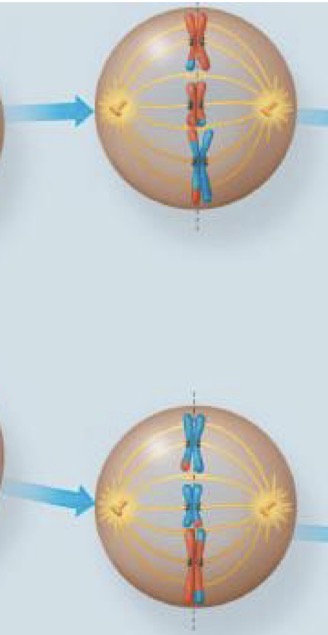
Metaphase II
Chromosomes are aligned on metaphase plate as in mitosis. The kinetochores of the sister chromatids are attached to microtubules extending from opposite poles.
Anaphase II
Lack of SGO allows the enzyme, separase, to degrade Rec8 at centromere region of sister chromatids. Enables sister chromatids to separate. Chromatids move towards opposite poles as individual chromosomes.
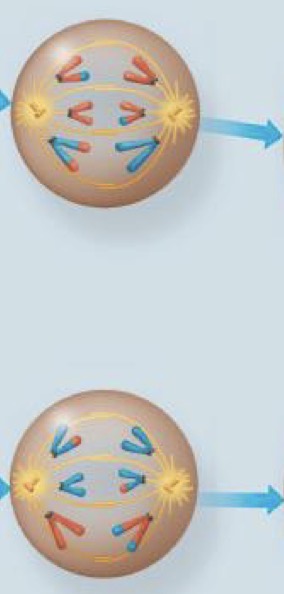
When does SGO degrade?
After anaphase I
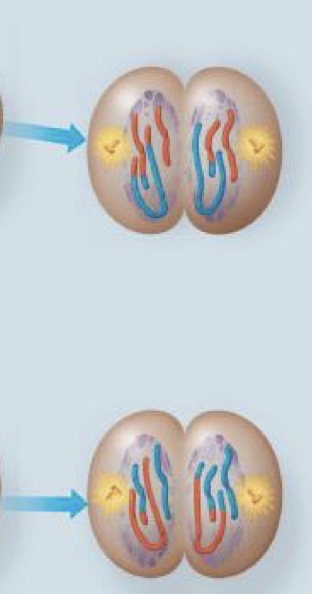
Telophase II and Cytokinesis
Nuclei form, the chromosomes begin to decondense, and cytokinesis occurs
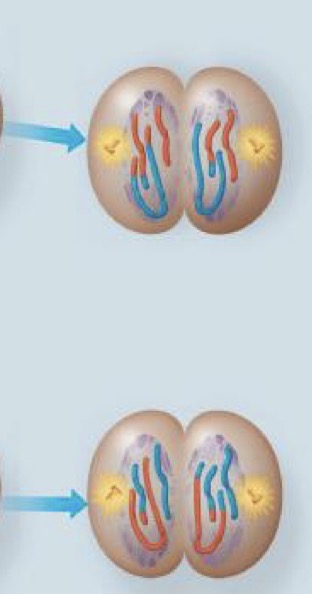
At the end of meiosis what does 1 parent produce?
4 genetically different daughter cells
The 3 events that are unique to meiosis occur during what stage?
During meiosis 1
The 3 events that are unique to meiosis that occur during meiosis I:
Synapsis and crossing over
Homologs line up on the metaphase plate
Homologs separate during anaphase I
When does DNA replication occur in mitosis versus meiosis?
Mitosis: occurs during interphase before mitosis begins
Meiosis: occurs during interphase before meiosis I begins
Number of divisions in mitosis versus meiosis?
Mitosis: 1, including prophase, metaphase, anaphase, and telophase
Meiosis: 2, each including prophase, metaphase, anaphase, and telophase
Synapsis of homologous chromosomes
Occurs during prophase I along with crossing over between nonsister chromatids; resulting chiasmata hold pairs together due to sister chromatid cohesion
Number of daughter cells and genetic composition in mitosis versus meiosis?
Mitosis: 2, each diploid (2n) and genetically identical to the parent cell
Meiosis: 4, each haploid (n), containing ½ as many chromosomes as the parent cell; genetically different from the parent cell and from each other
Role in the animal body in mitosis versus meiosis?
Mitosis: enable multicellular adult to arise from zygote; produces cells for growth, repair, and, in some species, asexual reproduction
Meiosis: produces gametes; reduces # of chromosomes by ½ and introduces genetic variably among the gametes
How do we account for the genetic variation that exists between offspring of organisms that reproduce sexually?
Independent assortment of chromosomes
Crossing over
Random fertilization
1 and 2 occurs during generation of gametes. 3 occurs during generation of zygotes
Independent assortment of chromosomes during metaphase I?
Generates genetic variability in gametes
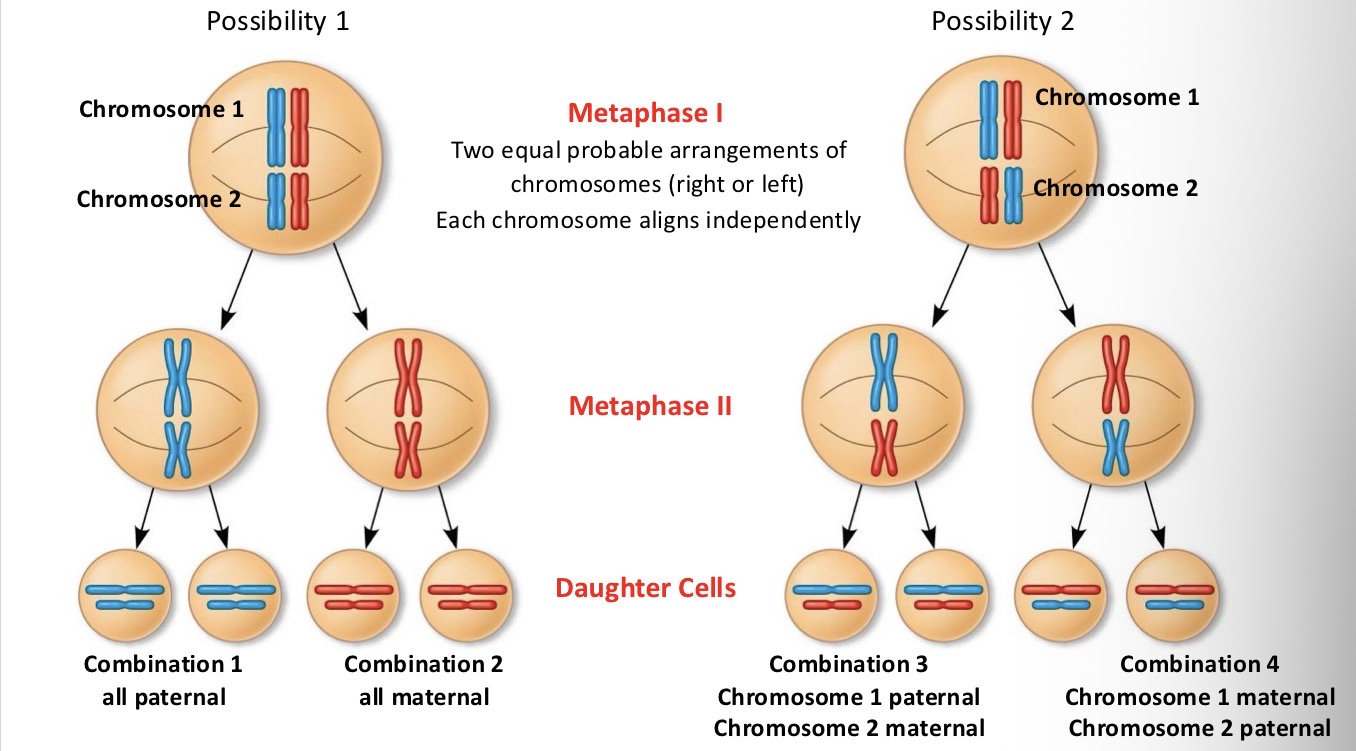
How can we quantify the # of possible gamete combinations?
2^n, where n=number of chromosome pairs
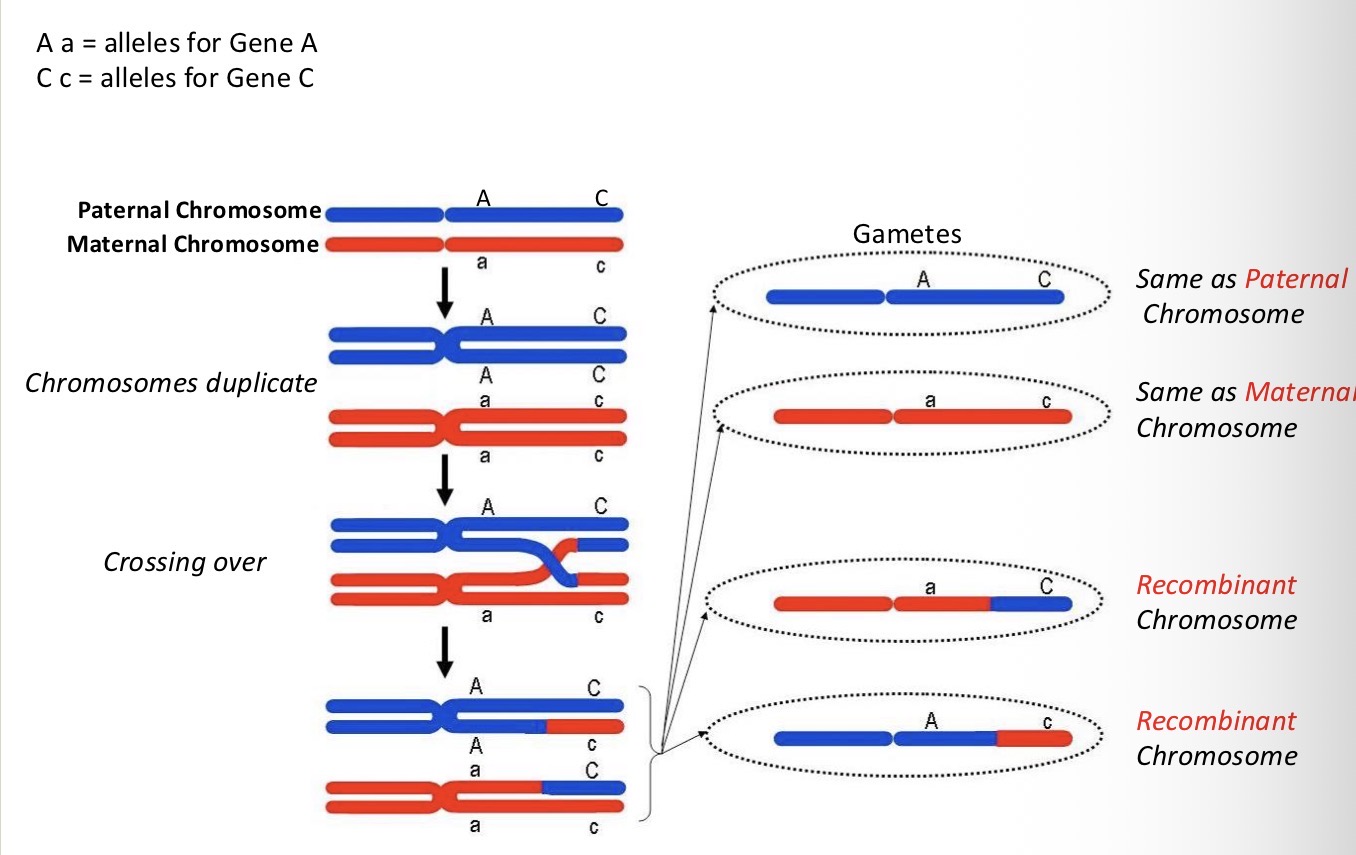
Crossing over generates …
Recombinant chromosomes that carry genes from both paternal and maternal chromosomes
Random fertilization
Generates genetic variability in offspring
Number of gamete combinations in an egg and sperm?
Egg = 2^n = 2²3 = 8.4 million possible gamete combinations
Sperm = 2^n = 2
Number of zygote combinations = ?
2^23 × 2^23 =70 trillion possible zygote combinations. On top of this is the variation brought about by crossover.
Why is genetic variation in offspring important?
Populations evolve through differential reproductive success of its variant member. Individuals best suited for a local environment leave the most offspring - this transmitting their genes. As environment changes the population may survive if, in each generation, at least some of its members can cope effectively with the new conditions. Different combinations of alleles may work better than those that previously prevailed. The ability of sexual reproduction to generate genetic variation is one of the most commonly proposed explanation for why sexual reproduction has persisted.
Mutations
The original source of different alleles, which are then mixed and matched during meiosis