Cattle Oestrus and Ovulation Synchronisation I and II (TV4101, Lecture 2-3 Notes)
 Call Kai
 Learn
Learn Practice Test
 Spaced Repetition
 Match
Match Flashcards
 Knowt Play
1/22

There's no tags or description
Looks like no tags are added yet.
Name | Mastery | Learn | Test | Matching | Spaced | Call with Kai |
|---|
No analytics yet
Send a link to your students to track their progress
23 Terms
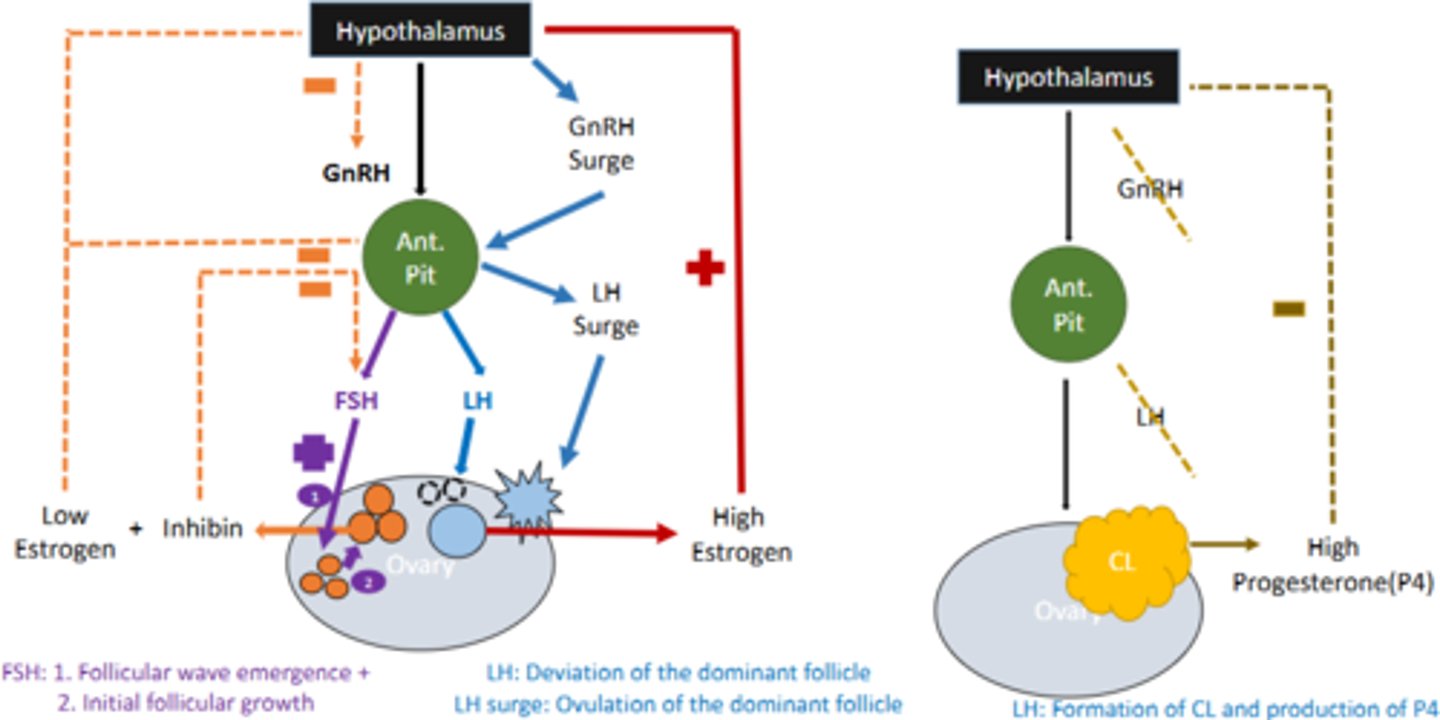
Describe the hypothalamus-pituitary-ovarian axis
FSH - supports follicular growth (granulosa cells).
LH - facilitates ovulation (theca cells).
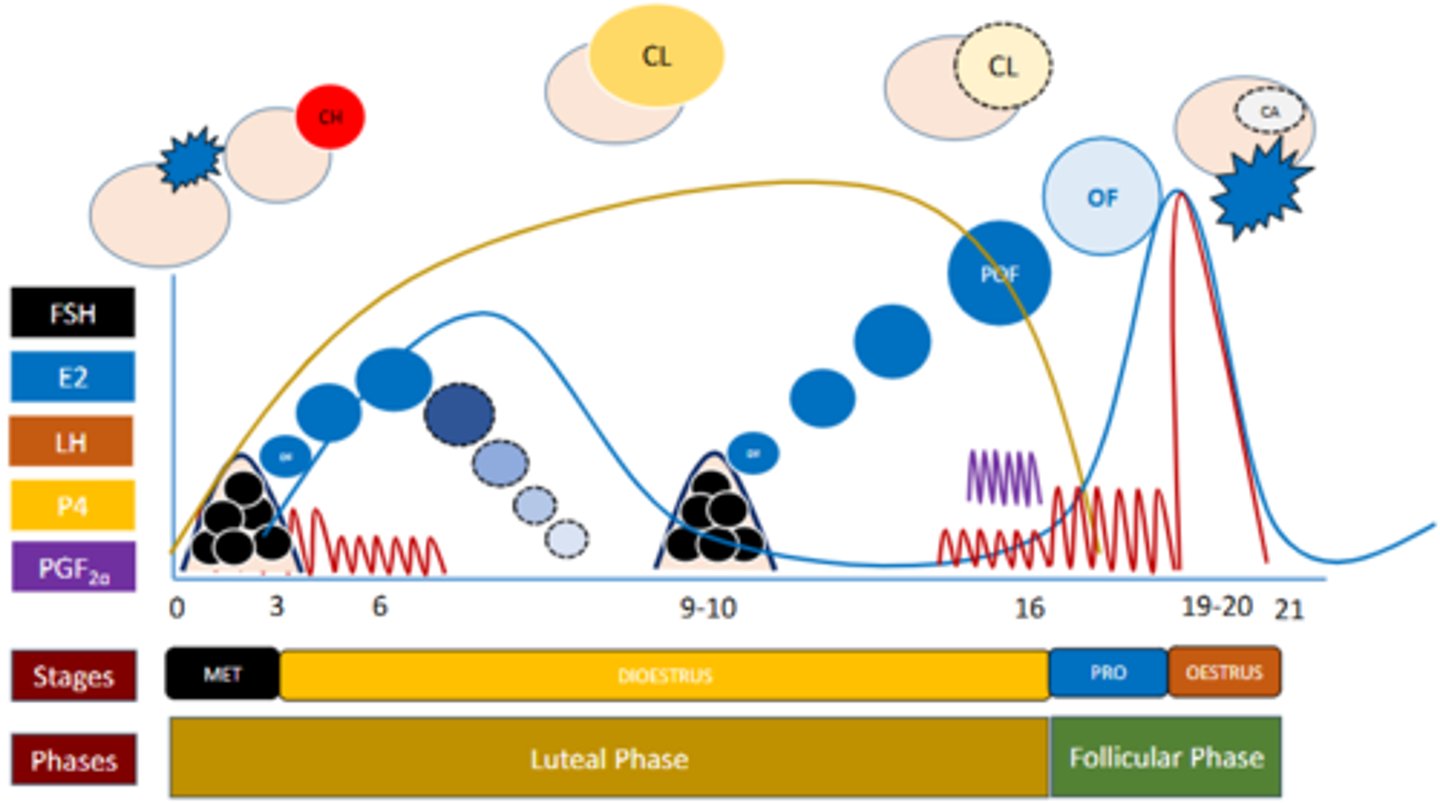
Provide and overview of the oestrous cycle
Compare and contrast oestrus and ovulation synchronisation
Oestrus synchronisation - all cows to come into oestrus around same time.
Ovulation synchronisation - all cows to ovulate around same time.
*24 to 30hrs between oestrus to ovulation!
Discuss prostaglandin (PGF2α) for oestrus synchronisation
- Cows from day 7 and heifers from day 5 of the estrous cycle
- Less responsive during metestrus or early diestrus and at/after spontaneous luteolysis
- Aim to cause luteolysis prior to atresia of the first follicular wave emergence
i.e. CL death > drops in progesterone > animals enters proestrus > enters estrus > insemination at detected oestrus
- Ideal for cycling animals, will cause abortion in pregnant animals
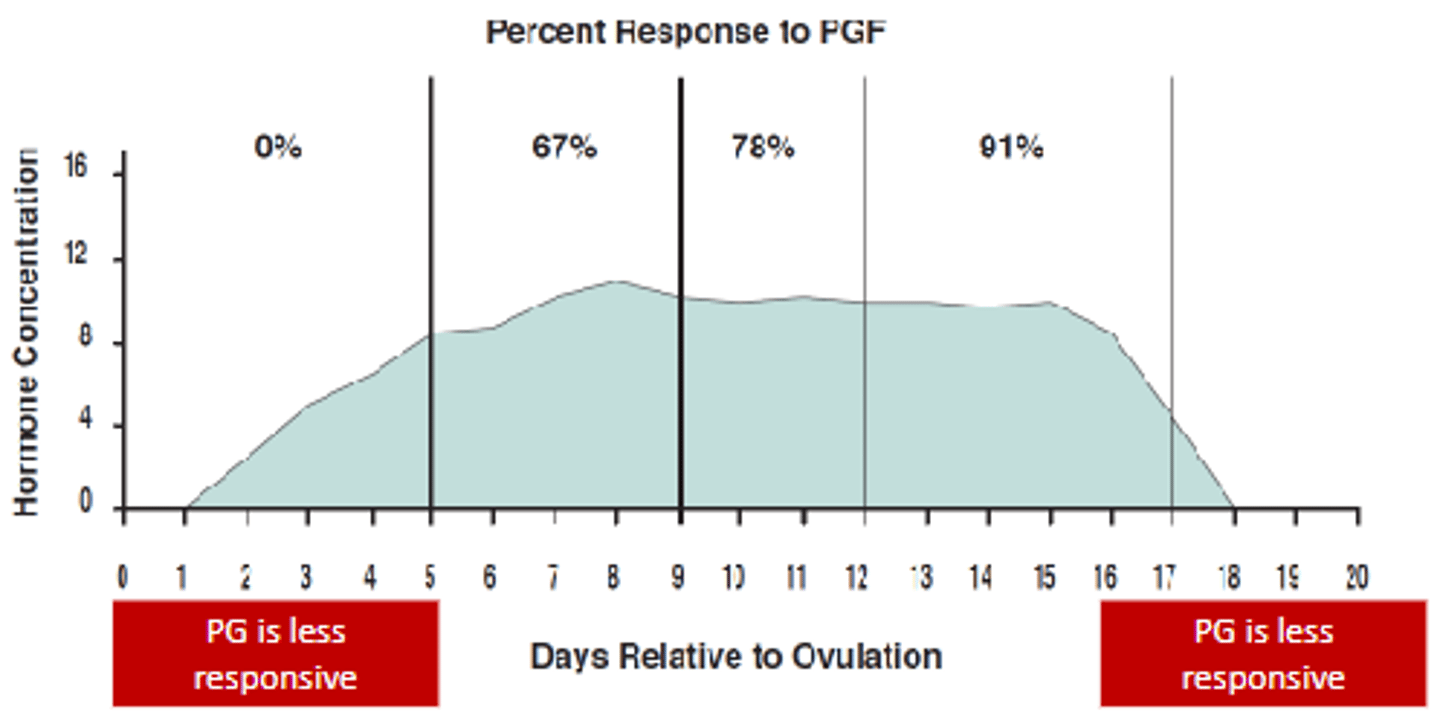
Explain why there is variation between oestrus interval with prostaglandin synchronisation
i.e. dependent on the phase of follicular development at administration.
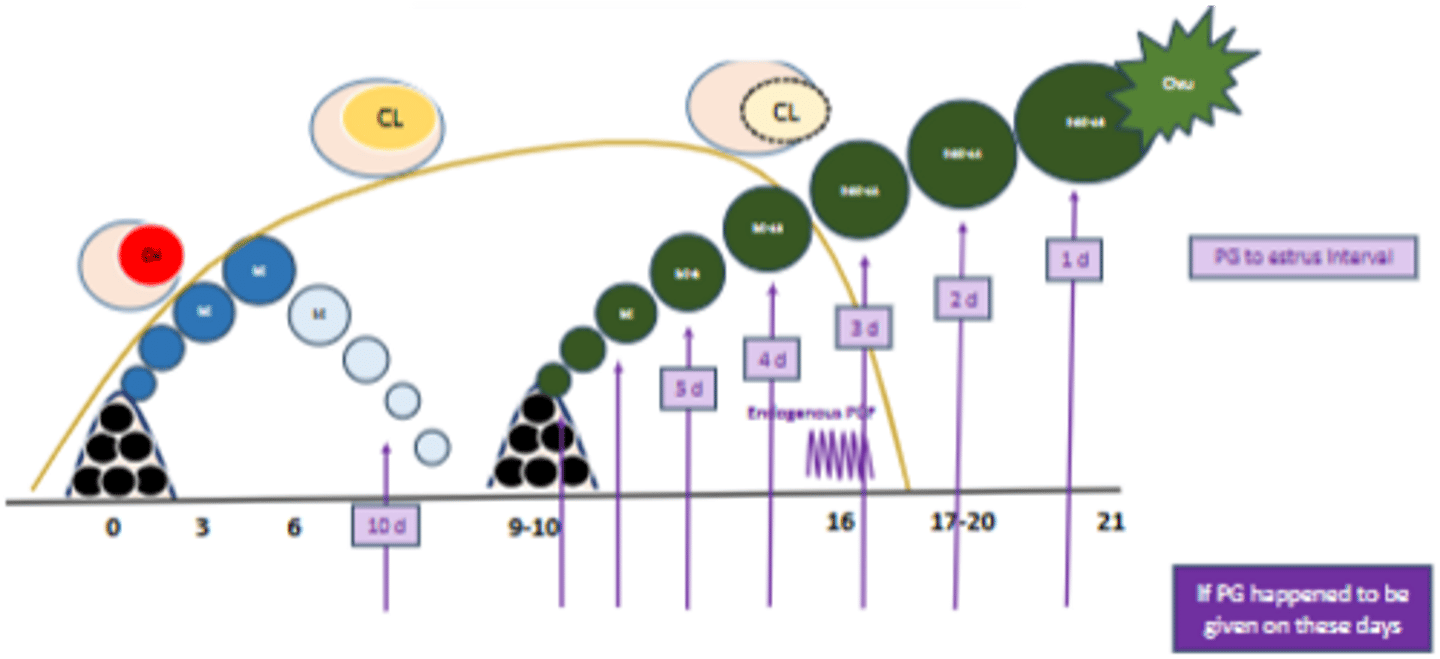
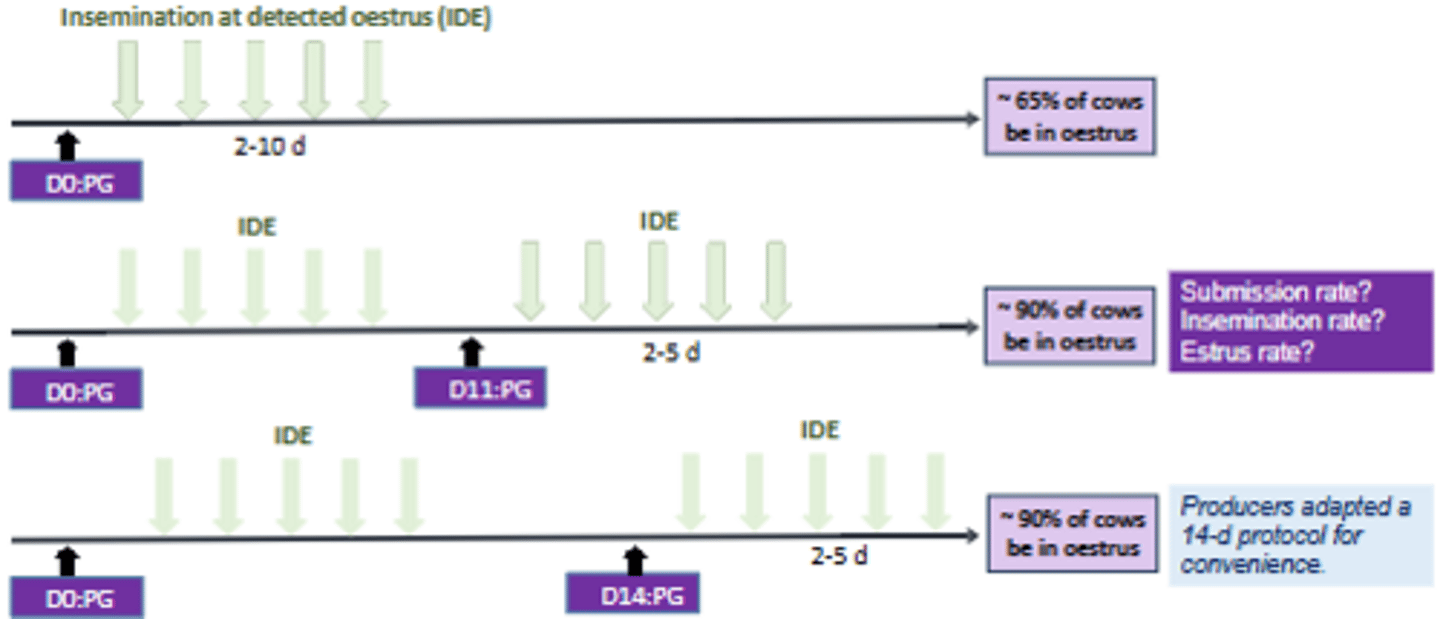
Compare and contrast single and double prostaglandin protocols
i.e. a two injection prostaglandin protocol is more effective, with little difference between 10 and 14-day redosing.
Discuss progesterone (P4) for oestrus synchronisation
- Effective in non-cycling (anoestrus) cows, can be inserted up to 12 days in total
- P4 acts like artificial CL, suppressing follicular maturation (through inhibition of GnRH) and thereby expression of oestrus, removal of P4 (i.e. administration of prostaglandin) leads to initiation of follicular phase (proestrus and oestrus)
- More expensive

List the advantages and disadvantages of oestrus synchronisation
Advantages
- Confines period for oestrus detection
- Breed as a group at the end of the voluntary waiting period
- Facilitates the use of AI
- Facilitates synchronised calving
Disadvantages
- Lower conception rates
- Cost and labour requirements
Describe the principles of synchronisation of ovulation for fixed-timed AI (FTAI)
Luteolysis = only caused by endogenous or exogenous prostaglandin (from day 5-7).
*P4 concentration < 0.5-1.0 ng/mL at time of AI (or reduced conception rate)
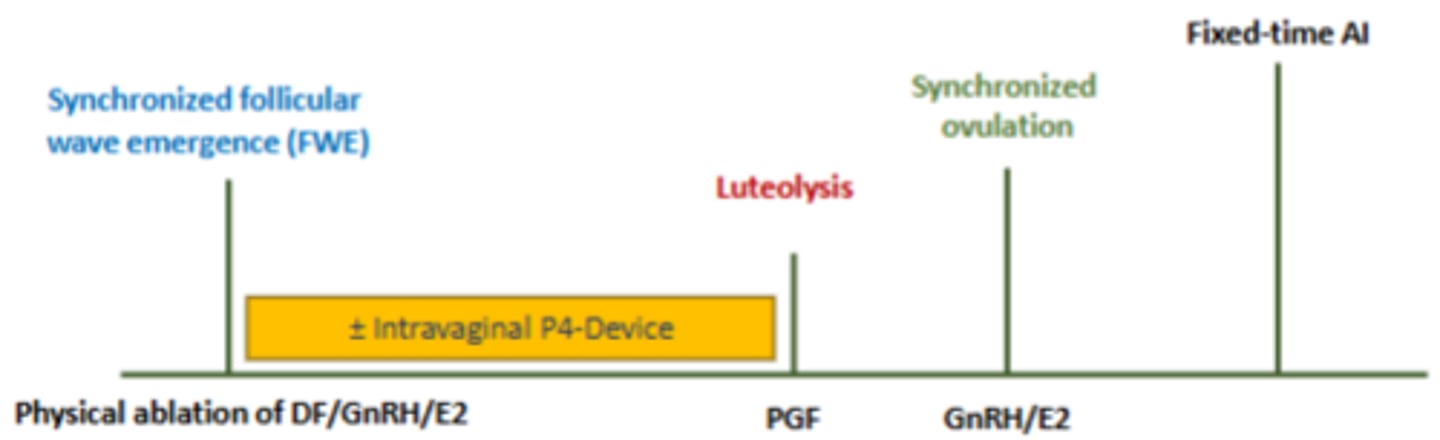
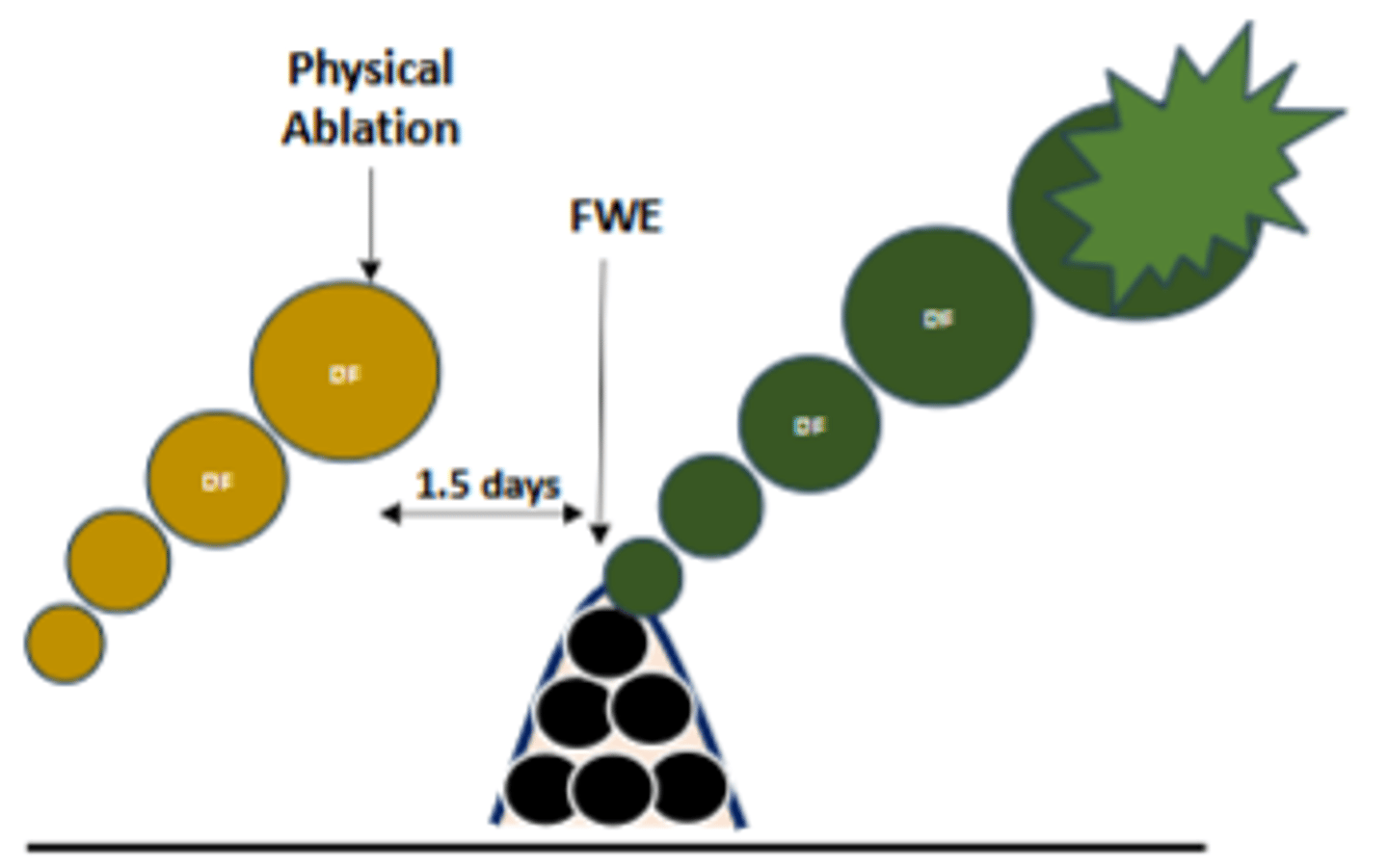
Discuss physical ablation-induced follicular wave emergence
- Dominant follicle ≥ 10 mm is physical ablated transrectally via palpation of the ovary
- E2 produced by this follicle decreases, FSH rises and follicular wave emerge in about 1.5 days
Discuss GnRH-induced follicular wave emergence
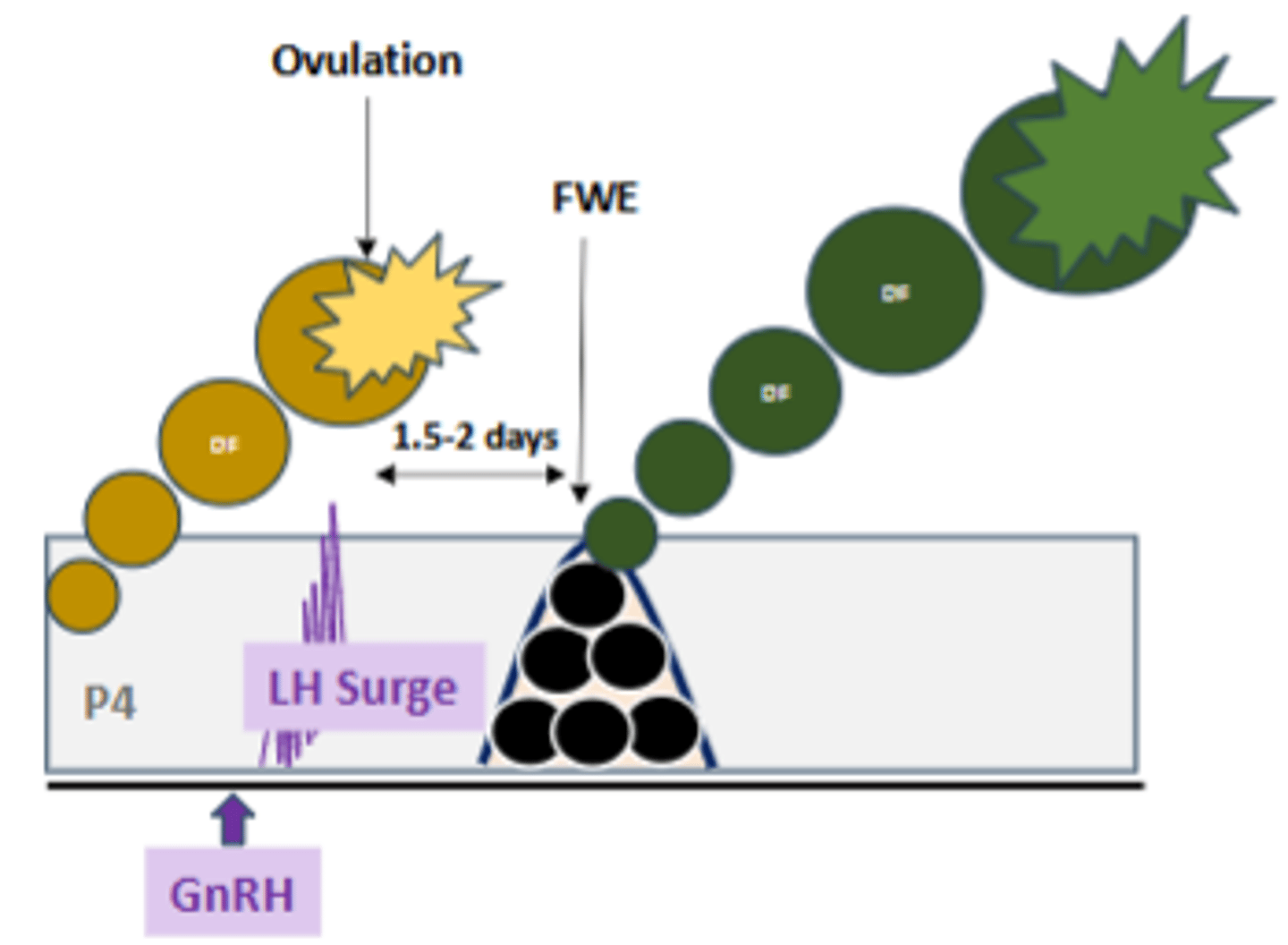
- GnRH injection causes LH surge for ovulation or luteinization of the dominant follicle that is ≥ 8.5-10.0mm in diameter, E2 produced by this follicle decreases FSH rises and follicular wave emerge in about 1.5-2 days
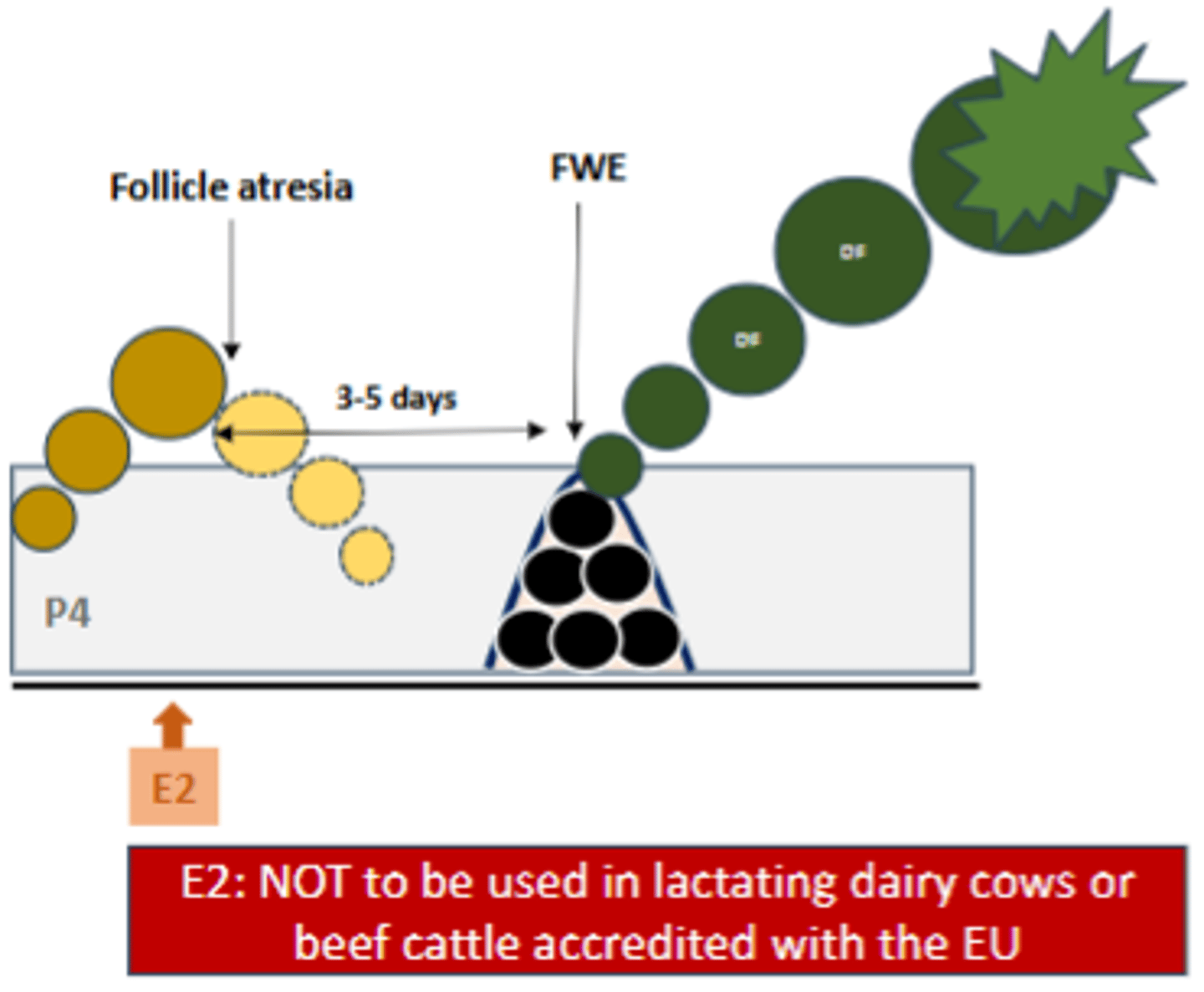
Discuss oestradiol-induced follicular wave emergence
- Under high P4, E2 has negative feedback effects on GnRH, FSH, and LH, FSH-dependent small to medium sized follicles and LH-dependent dominant follicles all regress
- Exogenous E2 is metabolised and there is no more endogenous E2 as follicles have regressed, FSH rises and follicular wave emerge in about 3-5 days
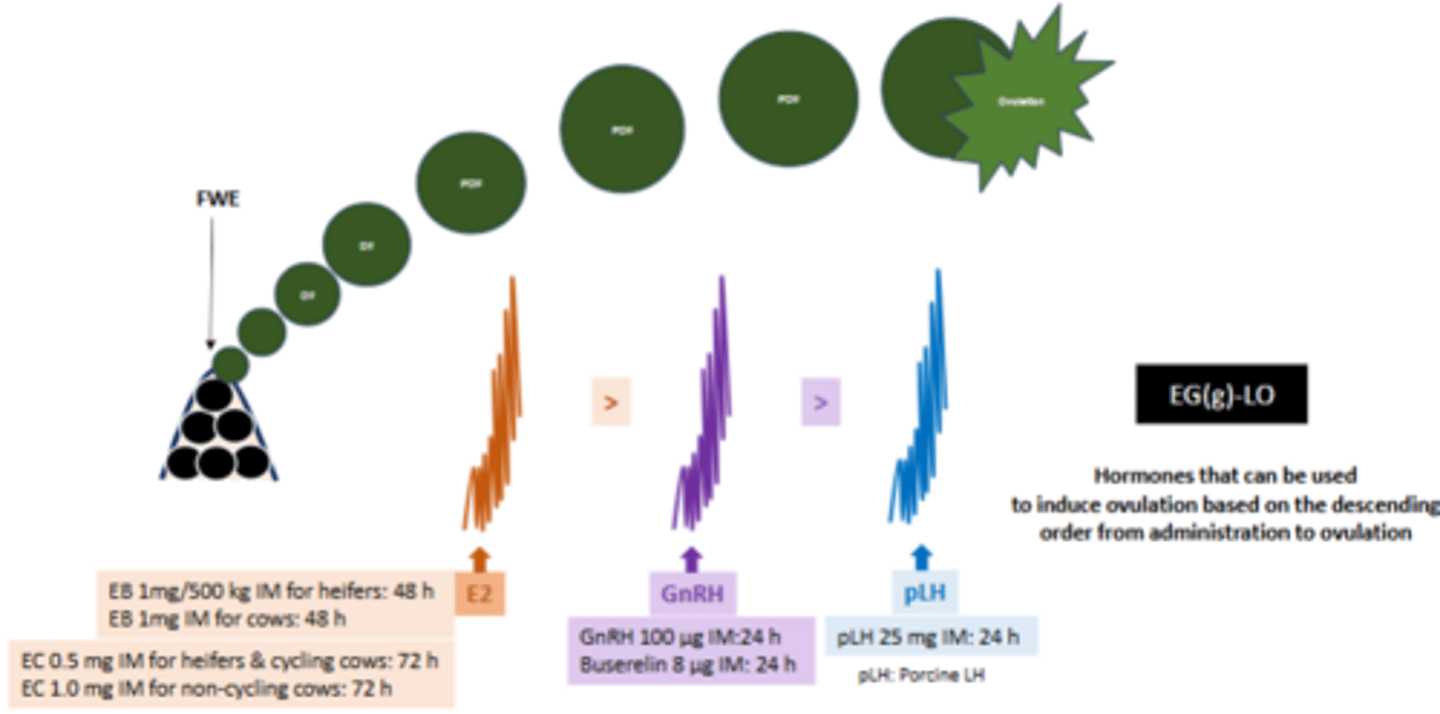
Discuss injections for synchronised ovulation
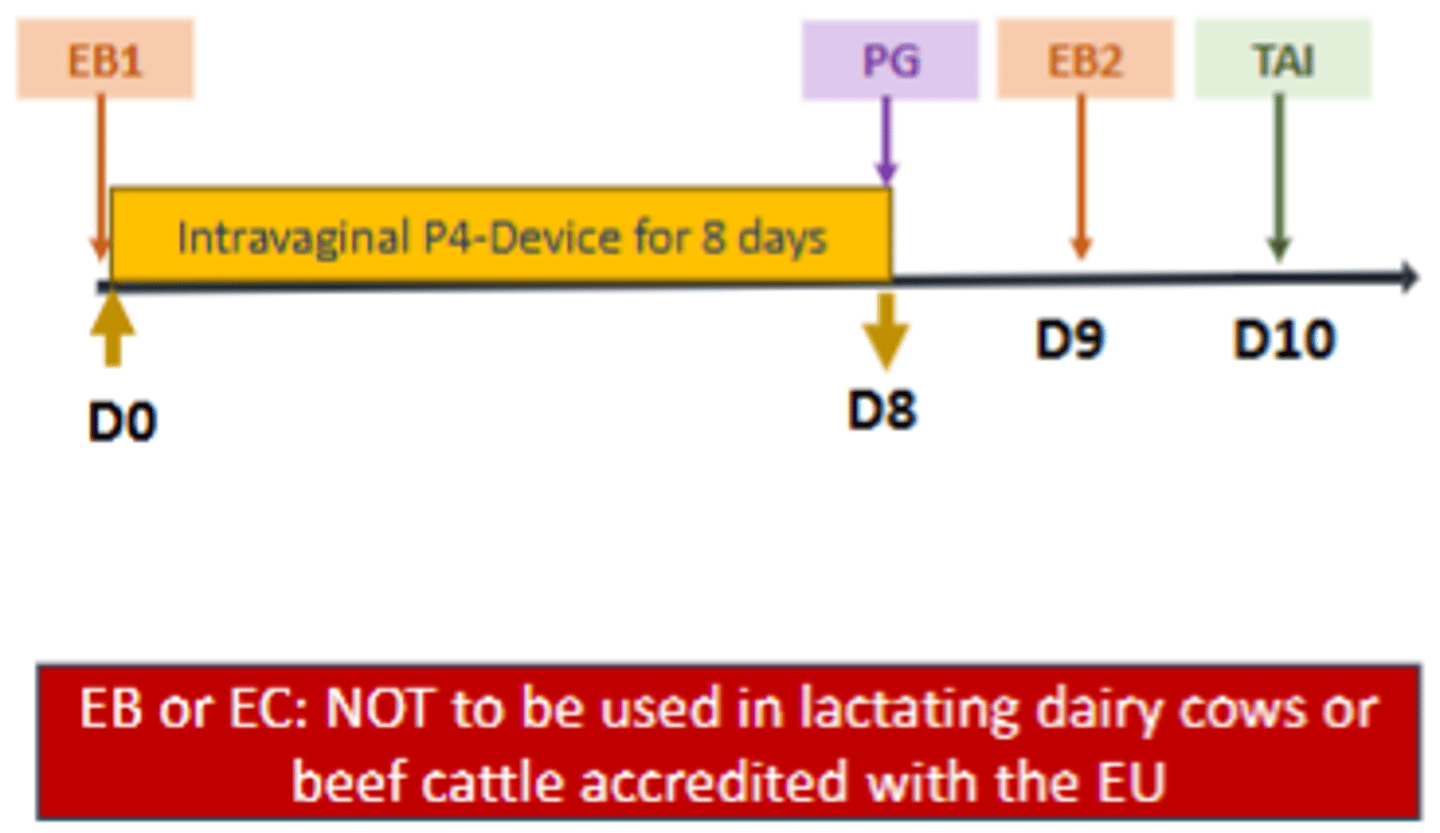
E2 = beef production (consider residues in meat and milk)
i.e. EB-induced LH surge is quicker, larger, and last for shorter compared to EC-induced LH surge.
GnRH = dairy production
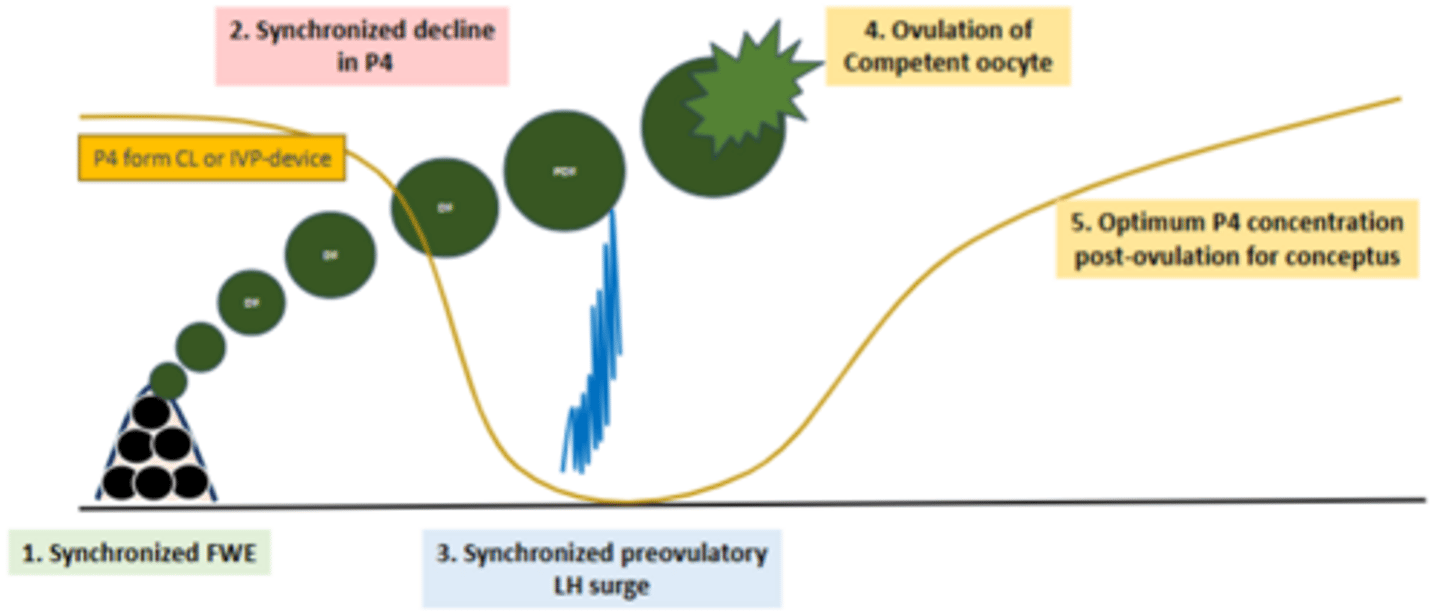
Summaries strategies to achieve synchronised ovulation
i.e. GnRH forces all-sized follicles to ovulate within 24hrs.
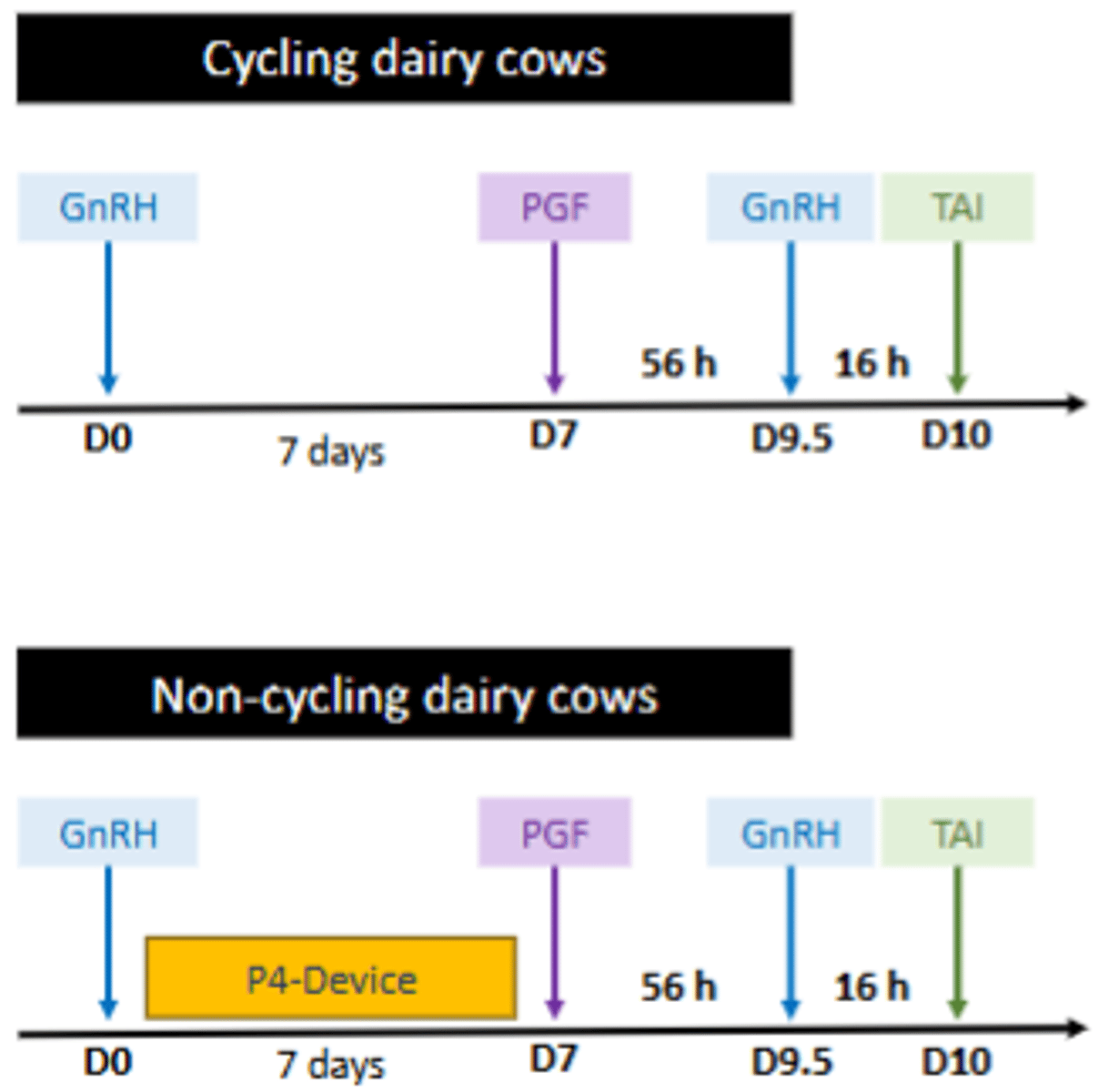
Discuss the OvSynch56 protocol
- Interval from PGF to last GnRH is 56hrs and interval from last GnRH to AI is 16 h
- Cycling cows may not benefit but non-cycling cows may benefit from exogenous P4 supplementation, not recommended to use in heifers
- A second PGF on D8 of the protocol may slightly improve the conception rate
- Cows that are in oestrus after PGF and prior to TAI, can be inseminated based on AM/PM rule
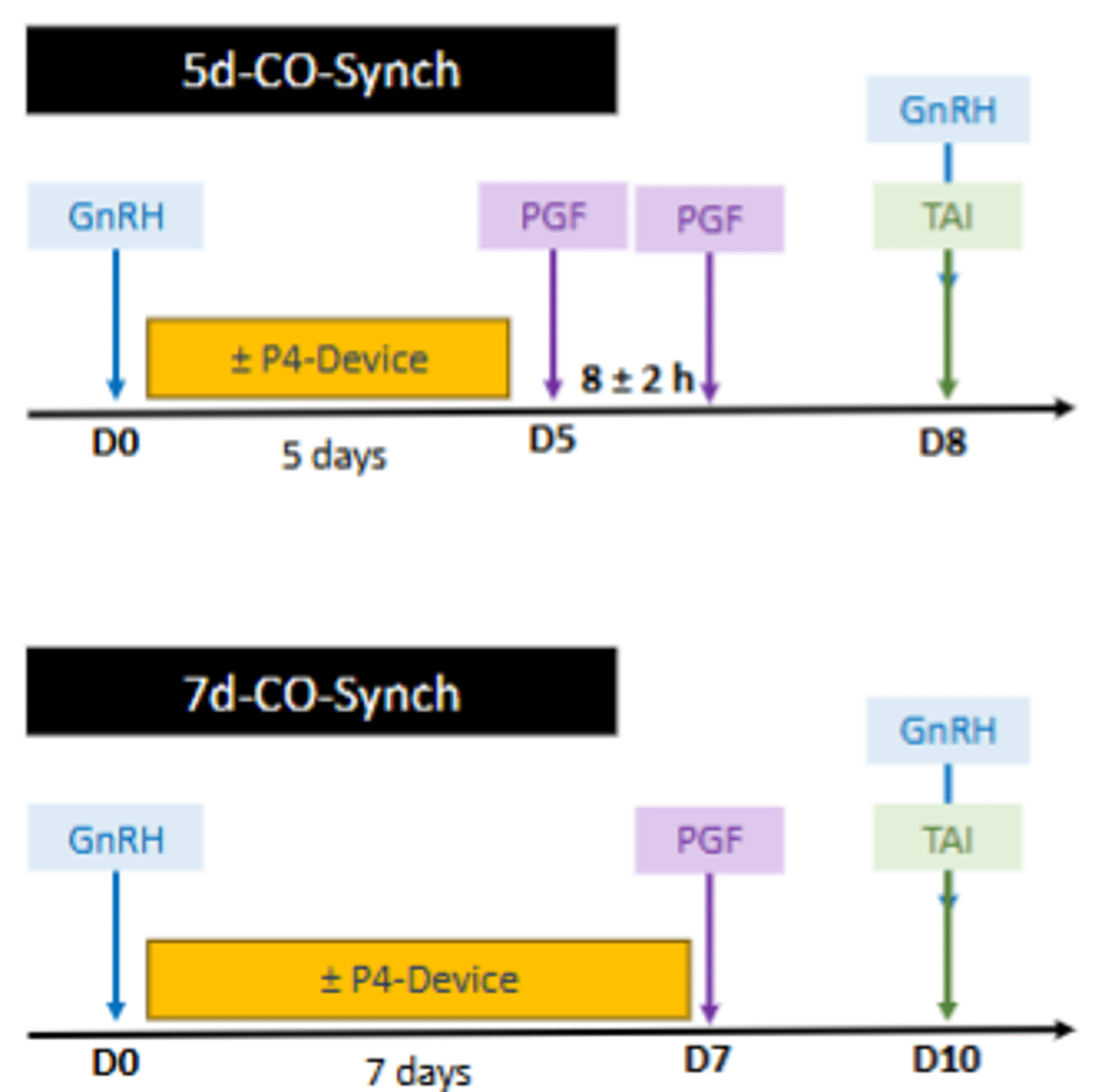
Discuss the CO-Synch protocol
- Administer the last GnRH and perform TAI on the same day
- 5d protocols require 2 PGF injections to ensure complete luteolysis
- Interval from first PGF to TAI is generally about 72 h for cows and about 62 h for heifers
- Exogenous P4 is beneficial for heifers and non-cycling cows
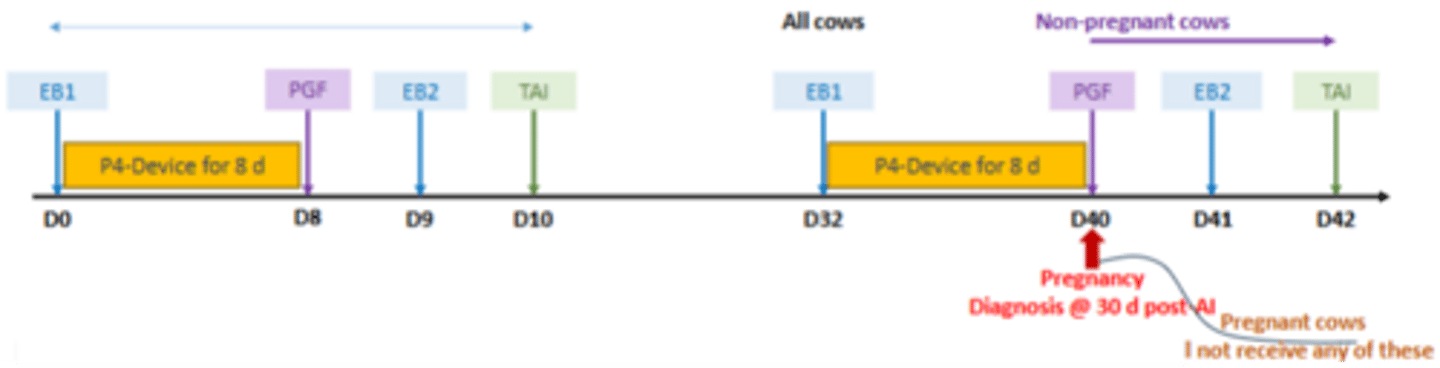
Discuss the oestradiol protocol in beef cattle
- Interval between EB and PG is 8 days
- Interval between EB and TAI is 24hr
Why is presynchronisation required?
Cows that are in diestrus with a dominant follicle responsive to the first GnRH of OvSynch have higher synchrony for FWE, luteolysis and ovulation.
This increases the pregnancy rates for Presynchronisation-OvSynch protocols for TAI than OvSynch alone.
Discuss the Presynch-OvSynch protocol
Presynchronisation is done by giving 2 PGF injections 14 days apart

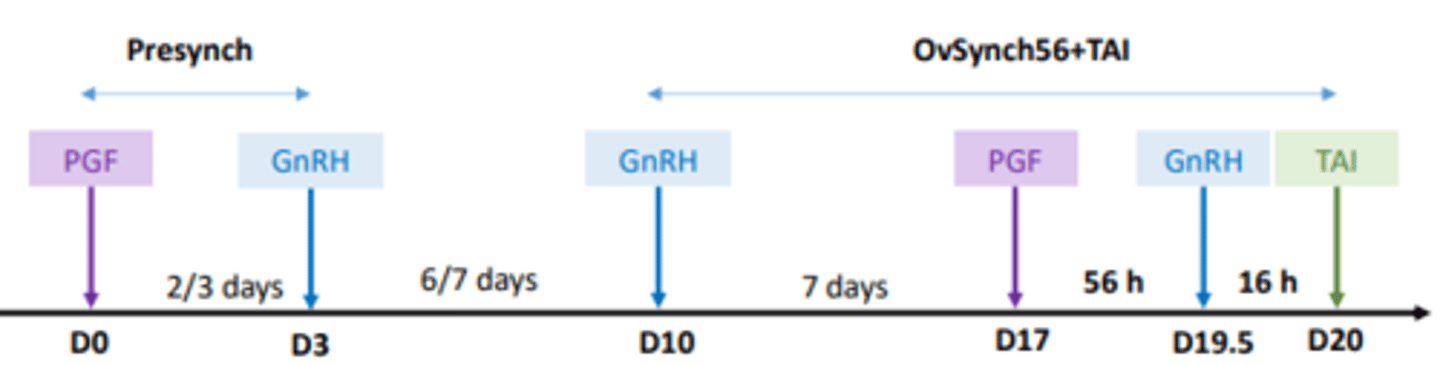
Discuss the G6G/G7G protocol
- Presynchronization is done by administration of PGF and GnRH at 2/3 days interval for cycling and non-cycling cows
- OvSynch+TAI initiated 6/7 days later from the GnRH injection of Presynch
Discuss the Double OvSynch protocol
- Presynchronization is done by implication of OvSynch protocol without performing TAI on D10 for cycling and non-cycling cows
- OvSynch+TAI initiated 7 days later from the second GnRH injection of the first OvSynch

Discuss resynchronisation with PD in dairy cows
- Ovsynch-56+TAI initiated at the end of the farm-specific VWP (60 days)
- All cows will receive GnRH 7 days prior to pregnancy diagnosis
- Empty cows will receive PGF on the day of pregnancy diagnosis and complete the Resynch protocol
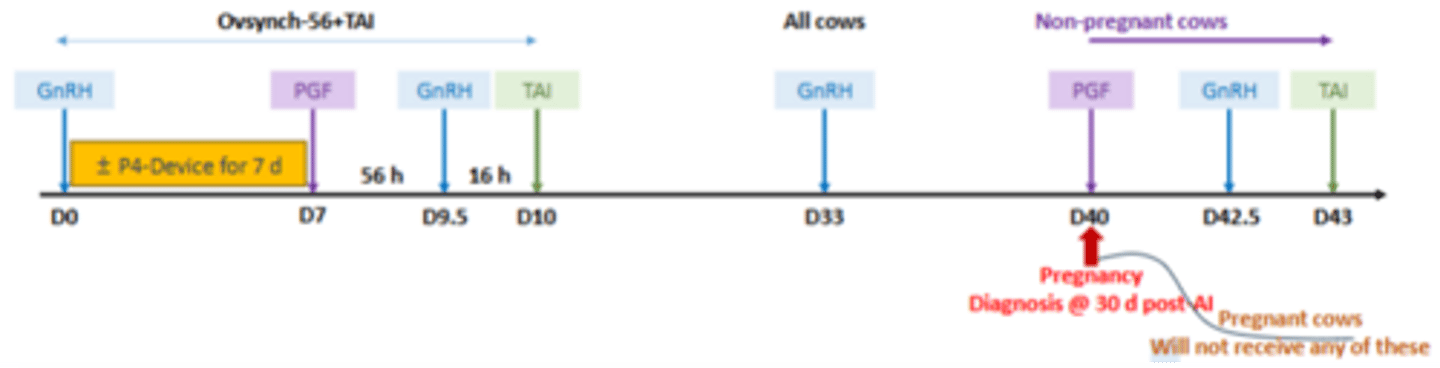
Discuss resynchronisation with PD in beef cows
- All cows will complete EB + P4 protocol for TAI
- All cows will receive EB 8 days prior to pregnancy diagnosis
- Empty cows will receive PGF on the day of pregnancy diagnosis and complete the Resynch protocol