OCHEM Ch. 5 Alkene Addition Reactions
 Call Kai
 Learn
Learn Practice Test
 Spaced Repetition
 Match
Match Flashcards
 Knowt Play
1/19

Earn XP
Description and Tags
Name | Mastery | Learn | Test | Matching | Spaced | Call with Kai |
|---|
No analytics yet
Send a link to your students to track their progress
20 Terms
alkenes
act as nucleophiles
two groups add across a C=C double bond
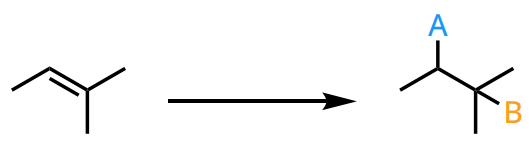
Regiochemistry
the study of regioselectivity in chemical reactions, which identifies the preferred direction of bond formation when multiple, non-equivalent, positions are possible
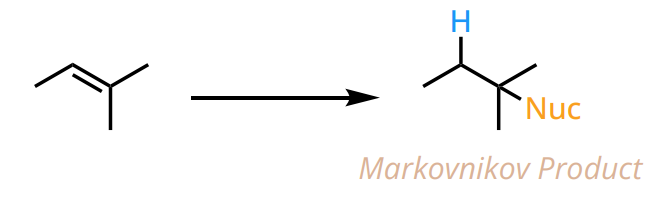
regiochemistry: Markovnikov
nucleophile adds to more substituted carbon
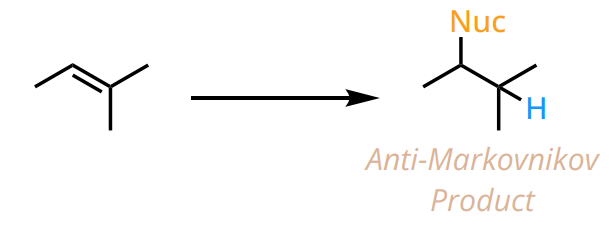
regiochemistry: Anti-Markovnikov
nucleophile adds to less substituted carbon
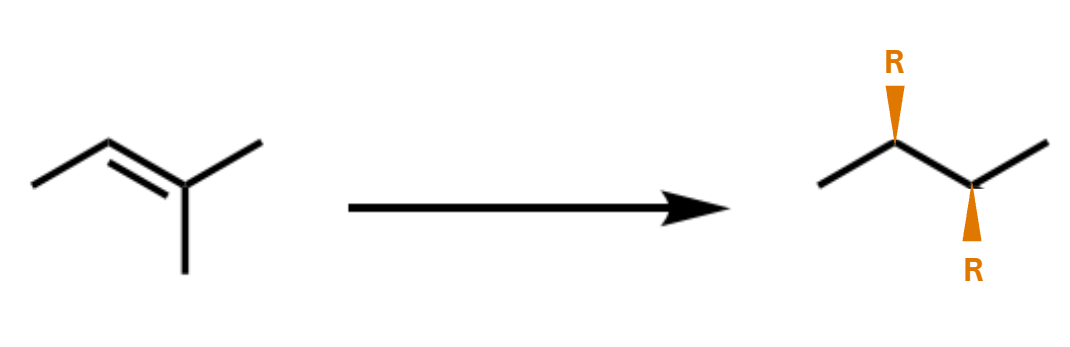
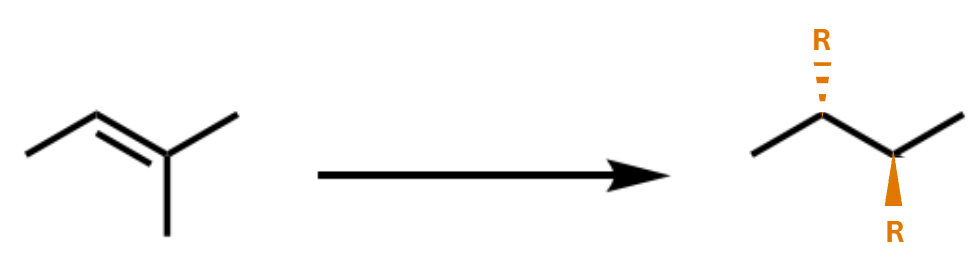
stereochemistry: Syn Addition
both groups add to the same face
stereochemistry: Anti Addition
groups add to oppostite faces
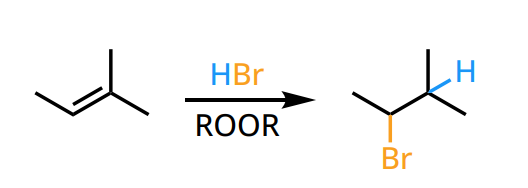
radical addition (w/ ROOR)
regiochemistry: Anti-Markovnikov
limitations: only HBr + ROOR (peroxide)
radical mechanism (no carbocation)
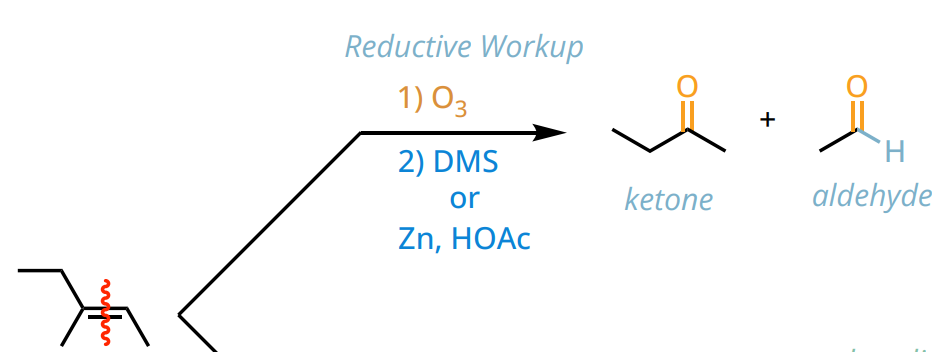
oxidation reactions: ozonolysis reductive workup
converts alkene → aldehydes/ketones
reagents: 1. O3 2. DMS or Zn, HOAc
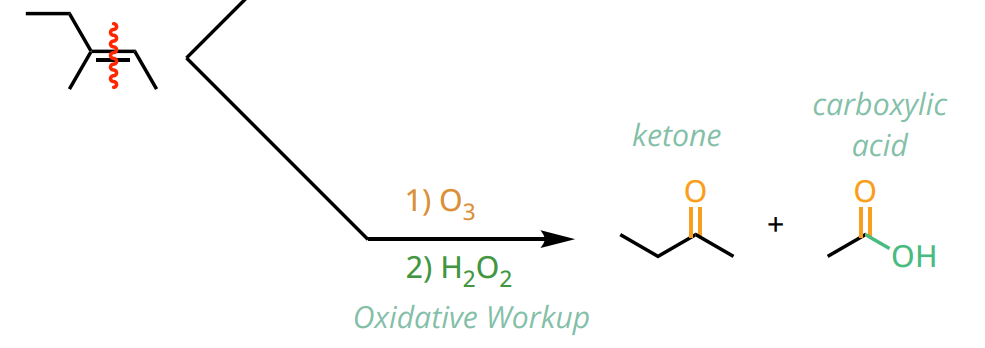
oxidation reactions: ozonolysis oxidative workup
converts alkene → carboxylic acids/ketones
reagents 1. O3 2. H2O2 or 1. KMnO4 2. H3O+
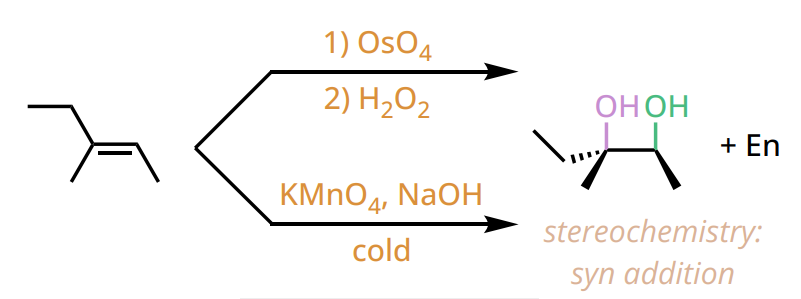
syn dihydroxylation (OH-OH)
stereochemistry: (OH) Syn addition
reagents: 1. cold KMnO4 2. NaOH or 1. OsO4 2. H2O2 or NaHSO3
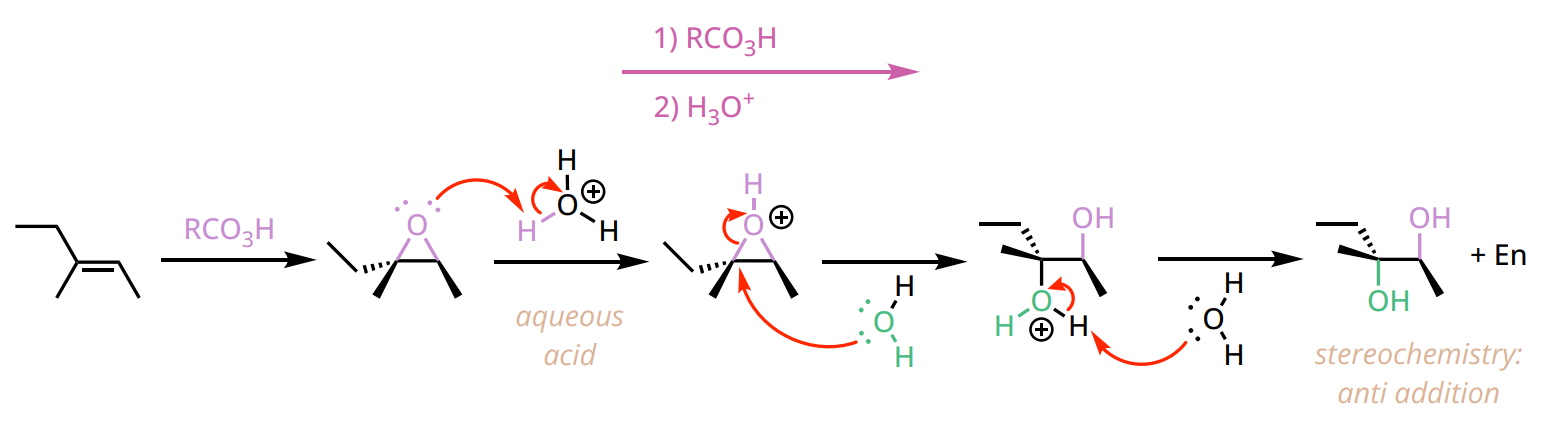
Anti Dihydroxylation (OH-OH)
stereochemistry: Anti addition
reagents: 1. RCO3H 2. H3O
steps:
forms epoxide with mCPBA
reacts with H3O+ or NaOH
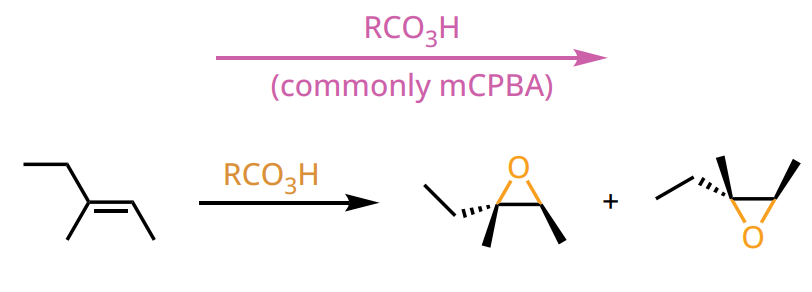
expoxidation
forms epoxide (3-membered ring with O)
both enantiomers formed
if chiral center created
reagent: RCO3H (ex: mCPBA)
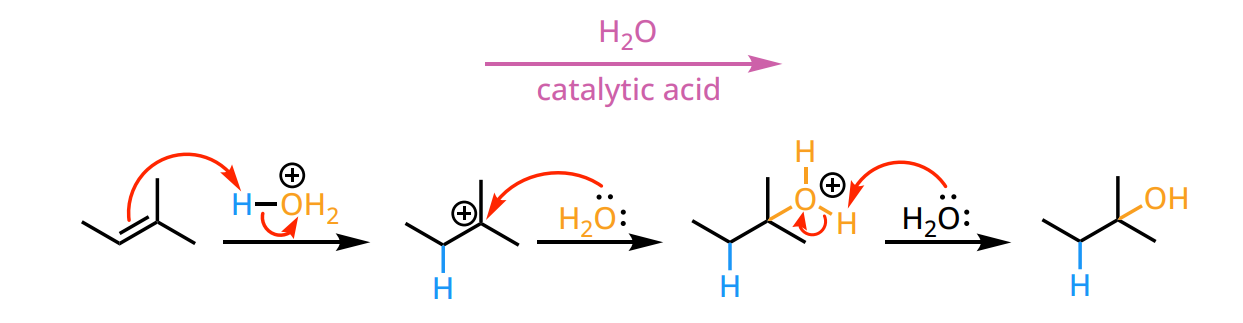
acid-catalyzed hydration
regiochemistry: Markovnikov
intermediate: carbocation, rearrangements possible
reagents: H3O+ / H2SO4 + H2O
oxymercuration-demercuration
regiochemistry: Markovinikov
no rearrangements
steroselectivity: 2 or 4 stereoisomers possible
reagents: 1. Hg(OAc)2, H2O, THF 2. NaBH4
Markovnikov addition of a single OH group that is anti to the H atom added with no rearrangements

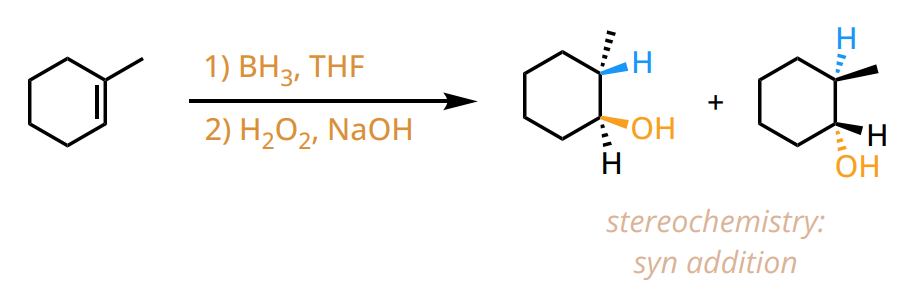
hydroboration-oxidation
regiochemistry: Anti-Markovnikov
no rearrangements
stereochemistry: Syn addition
reagents: 1. BH3, THF; 2. H2O2, NaOH
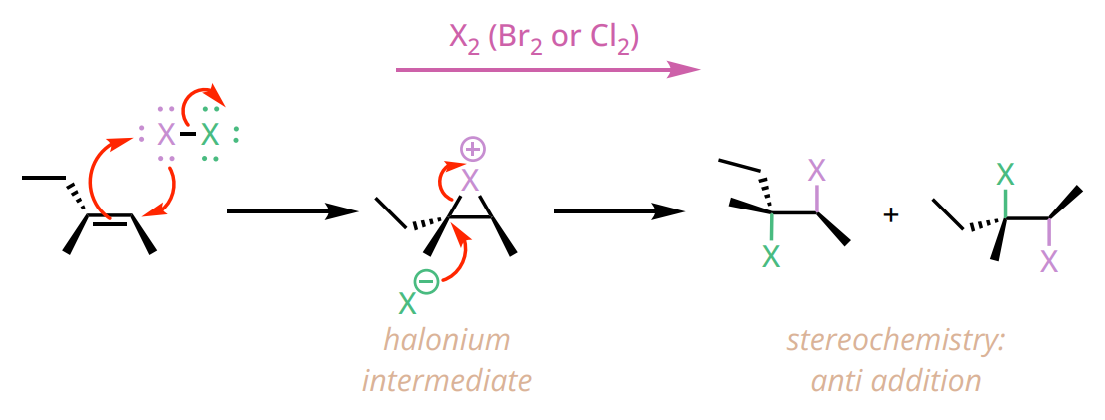
dihalogenation (X-X)
sterochemistry: Anti addition
reagents: Br2 or Cl2 in CCl4
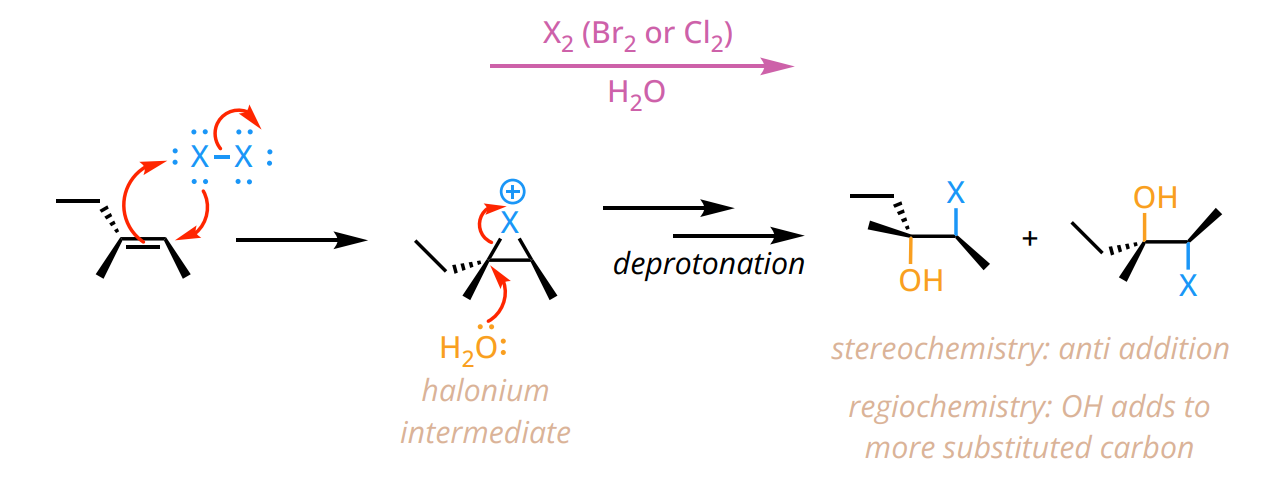
halohydrin formation (X-OH)
stereochemistry: Anti addition
regiochemistry: OH adds to more substituted C (Mark.)
reagents: Br2 or Cl2 in H2O
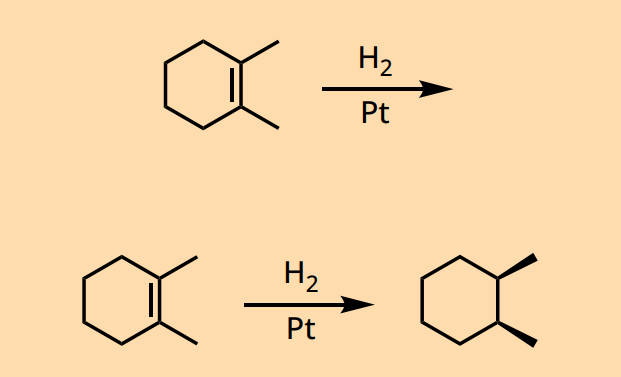
catalytic hydrogenation (H-H)
sterochemistry: Syn addition
converts alkene → alkane
both enantiomers form if chiral center is present
reagents: H2 + metal catalyst (Pd, Pd/C, Pt)
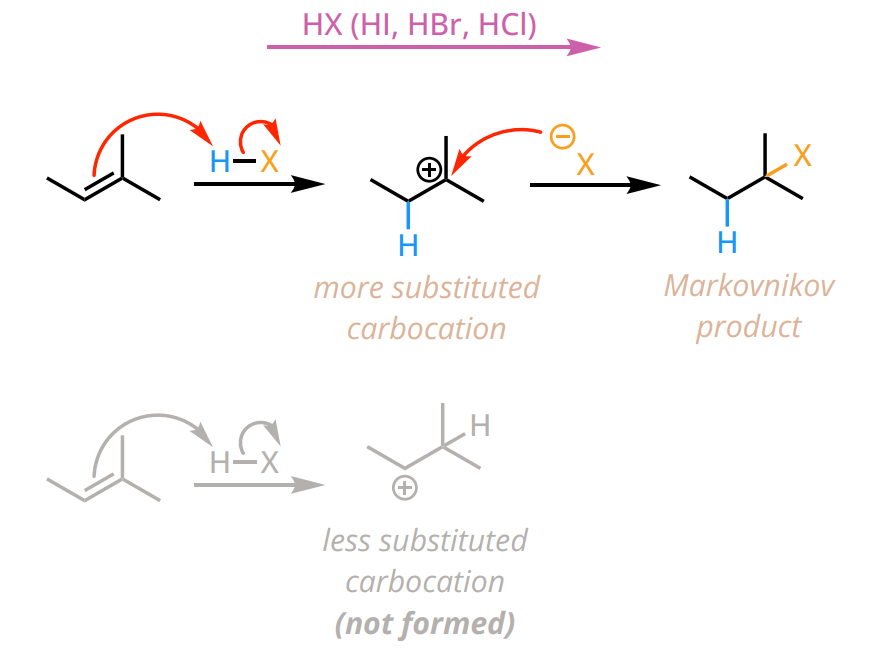
hydrohalogenation (H-X)
regiochemistry: Markovnikov
intermediate: Carbocation, rearrangements possible
stereoselectivity: None, racemic if chiral center forms
reagents: HX (HCl, HBr, HI)
add H to the alkene C that produces the most stable carbocation (least substitutions)
Reacting an alkene with HOT _______ will result in oxidative cleavage (oxidizing conditions). The conditions at which KMnO4 is reacted with alkenes are very important for the type of reaction it will perform.
KMnO4