ATI TEAS
 Call Kai
 Learn
Learn Practice Test
 Spaced Repetition
 Match
Match Flashcards
 Knowt Play
1/57

There's no tags or description
Looks like no tags are added yet.
Name | Mastery | Learn | Test | Matching | Spaced | Call with Kai |
|---|
No analytics yet
Send a link to your students to track their progress
58 Terms
Cranial cavity
Center for nervous system operations
Thoracic cavity
Central hub for respiratory and cardiovascular system
Spinal cavity
Pathway for neural communications
Pelvic cavity
Houses repro organ, parts of the digestive and urinary system
What does inferior
Lower half of body
Superior
Upper half of body
Posterior/dorsal
Back side of body
Anterior/ventral
Front side of body AKA NIPPLES
Proximal
Closer to the structure
Ex) the patella is proximal to the ankle because the patella is closer to the main body
Distal
Farther away from structure
Ex) fingers are distal to the chest because the chest is closer to the structure of the body
Medial
Closer to the middle of the body
Ex) sternum is medial to the ribcage
Lateral
Further away from midline of body
Ex) the rib cage is lateral to the sternum (breastbone)
Superficial
closer to the skin
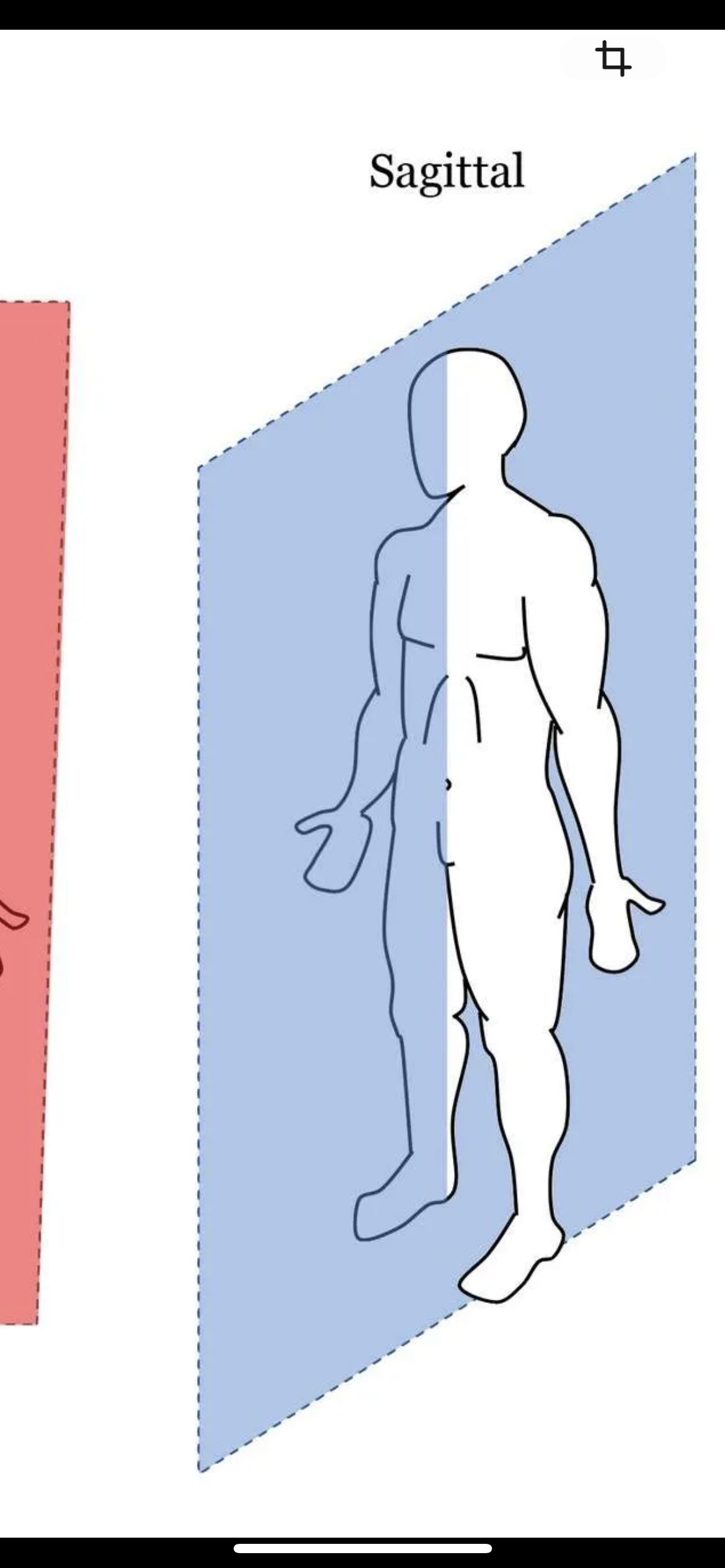
Saggital plane
Vertical plane that divides the body into left and right halves
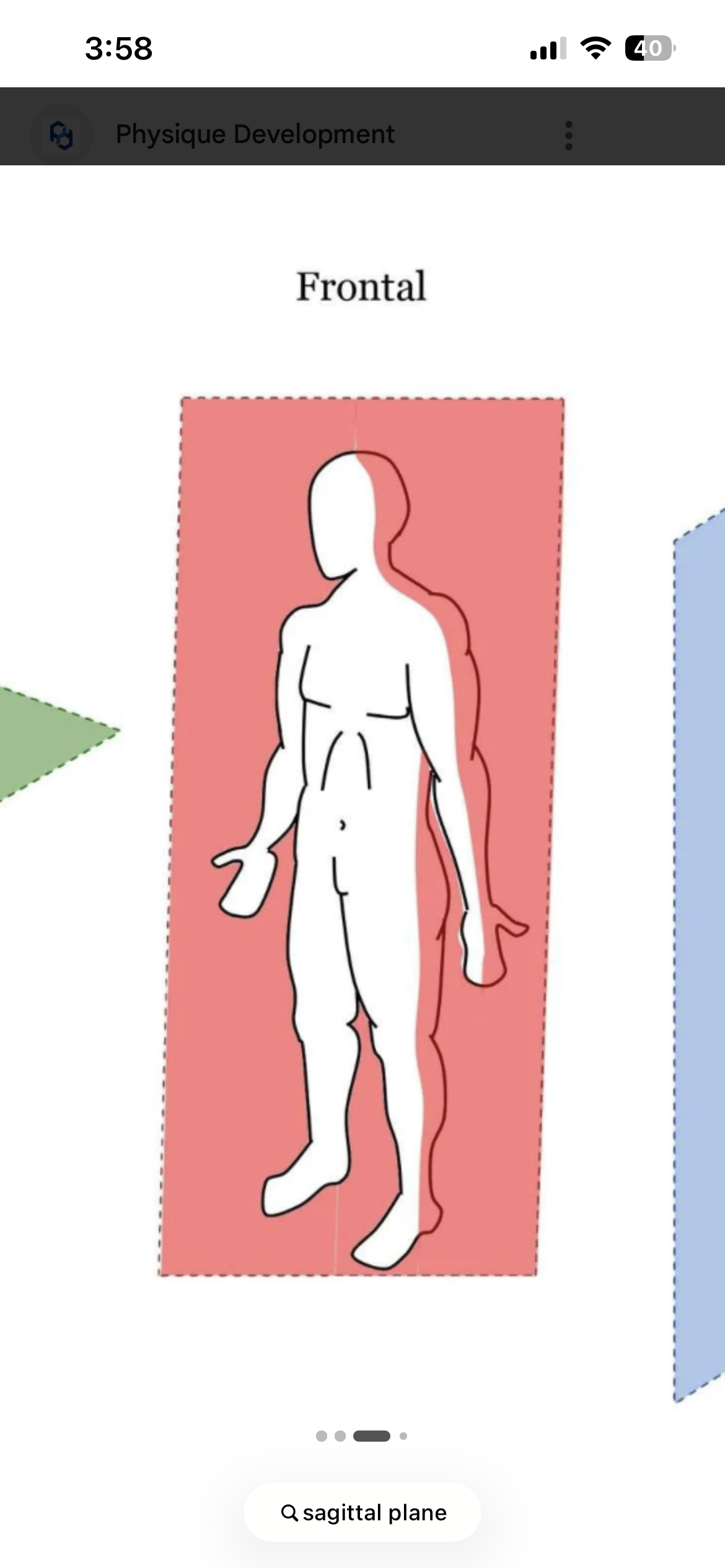
Coronal (frontal) plane
Divides body into anterior and posterior halves
(Front and back)
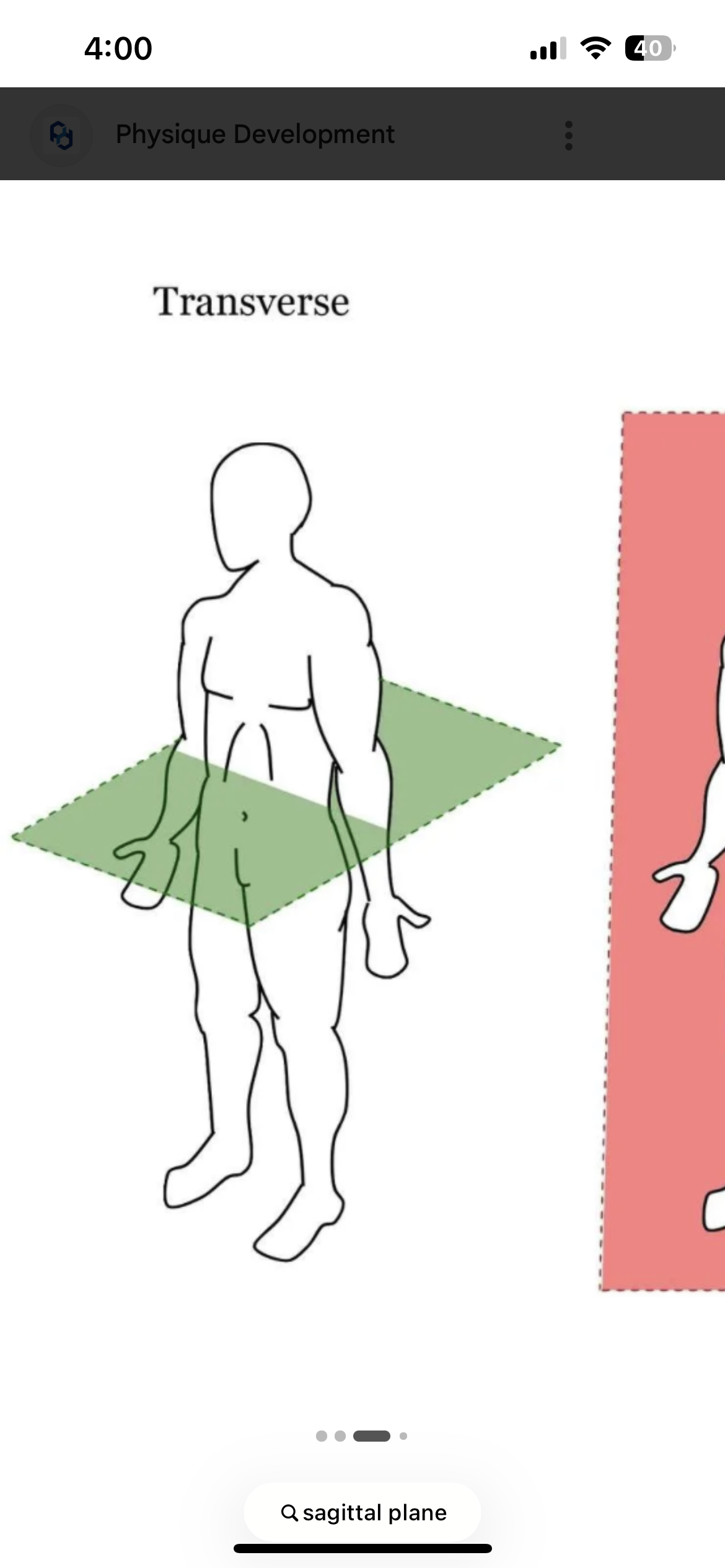
Transverse (horizontal) plane
Divides body into superior and inferior halves (top of body and bottom of body)
The maintenance of normal blood sugar is what type of feedback mechanism
Negative feedback
Define negative feedback mechanism
Counteracts change to main homeostasis
When blood sugar levels rise, pancreas secretes insulin to promote uptake of glucose into cells. =DECREASE in blood sugar levels
When blood sugar levels are low, pancreas secretes glucagon to promote the release of glucose from stored glycogen in liver. =INCREASE in blood sugar levels
What part of the body can increase and decrease blood sugar levels to maintain homeostasis?
Pancreas
What does the pancreas release when your body senses that your blood sugar levels are too high
Insulin to promote uptake of glucose into cells
This will decrease ur blood sugar levels
What does the pancreas release when your body senses that your blood sugar levels are too low
glucagon from stored glycogen in the liver. Will bring back your blood sugar levels
What is homeostasis
Balance in body
Atria
Upper chambers of heart that receives blood
Ventricles
Left and right lower halves of heart . Blood pumped OUT to rest of body
Valves
Connects the four chambers
Ensures one way flow of blood
PREVENTS BACKFLOW
Tricuspid valve
A valve that is situated at the opening of the right atrium into the right ventricle
resembles mitral valve
Consists of the triangular membranous flaps
Pulmonary valve
The exit door from the right ventricle
leads blood onto a pathway through pulmonary artery to the lungs where they pick up oxygen
aortic valve
Where blood is propelled to aorta, the main highway to distribute oxygen to the rest of body
The process of blood flow through the heart
Deoxygenated blood enters the heart through the superior vena cava (upper body) and inferior vena cava (lower body).
It goes into the right atrium → through the tricuspid valve → into the right ventricle.
The right ventricle contracts and pushes blood through the pulmonary valve → into the pulmonary arteries → to the lungs where it becomes oxygenated.
Oxygenated blood returns through the pulmonary veins → into the left atrium.
It flows through the bicuspid (mitral) valve → into the left ventricle.
The left ventricle pumps blood through the aortic valve → into the aorta → to the rest of the body.
How does blood flows step from heart to body in order
Body → Super vena cava / inferior vena cava → right atrium → Tricuspid valve → right ventricle → Pulmonary Valve → Pulmonary Artery → Lungs → Pulmonary Veins → left atrium → Bicuspid (Mitral) → left ventricle → Aortic Valve → Aorta → Body
Define blood grouping
Determines blood type
Blood group A can ACCEPT blood FROM?
A or O
Blood group A can DONATE to what
A and AB
Blood group B can ACCEPT blood FROM?
B and O
Blood group B can DONATE to?
B and AB
Blood group AB can DONATE blood to?
AB
Blood group AB can ACCEPT blood FROM?
A,B, AB, O
(ALL)
Blood group O can ACCEPT blood FROM?
O
Blood group O can DONATE blood to?
A, AB, B, O
(All)
Which blood group is universal DONOR
O
Which blood group is universal accepter
AB
Function of blood
Transportation , regulation, protection
Homeostasis
Process where organisms maintain a stable environment
What happens after platelets aggregate at a damaged blood vessel site
Platelets stick together and form a platelet plug
Respiratory system
Process of gas exchange o2 in co2 out
Includes TRACHEA TRUNK
BRONCHI (two big branches)
Bronchioles (branch ends)
Alveoli (leaves of the tree)
Upper respiratory tract
Gateway into respiratory system
Includes:
Nasal cavity (Has hair/mucus)
Pharynx
Larynx
Function of nasal cavity
Has hair and mucus to filter air and attack dust
Function of pharynx
Shared chamber for food and air
also directs air down the right path
Function of larynx
Voice box and prevents food from entering respiratory tract
Lower respiratory tract
Where gas exchange occurs
trachea
Bronchi/bronchioles
Alveoli
Function of trachea
Windpipe Supported by rings of cartilage to keep it open 24/7
Function of bronchi and bronchioles
Branching arms (bronchi) guiding air through into multiple branches (bronchioles)
Function of alveoli
Where exchange of o2 and co2 happen
Two breathing mechanisms
Inspiration and expiration
Which body system works with the respiratory system to aid in blood ph regulation
Kidneys from the URINARY SYSTEM
kidneys excrete H+ ions and reabsorb bicarbonate ions.
Respiratory system adjusts blood ph by varying the rate of breathing, which changes the levels of co2 in blood (affecting carbonate and bicarbonate levels)
Gastrointestinal system
Aka digestive system
Responsible for digestion, absorbing nutrients, and elimination
Digestive system pathway
Mouth (begins in oral cavity, mouth tongue and teeth break down food
Pharynx (welcomes the food and directs it into esophagus
Esophagus (tube that serves as entryway to stomach
Stomach (churns the food and breaks it down further with the help of gastric juices
Small intestine (where nutrient absorption takes place. Enzymes help break food down into simpler substances )
Large intensities ( reabsorbs water electrolytes and transfoms food into solid waste)
Rectum (where solid waste is stored until it exits out of body)